
The Rise of the Multi-Hyphenate Event Host
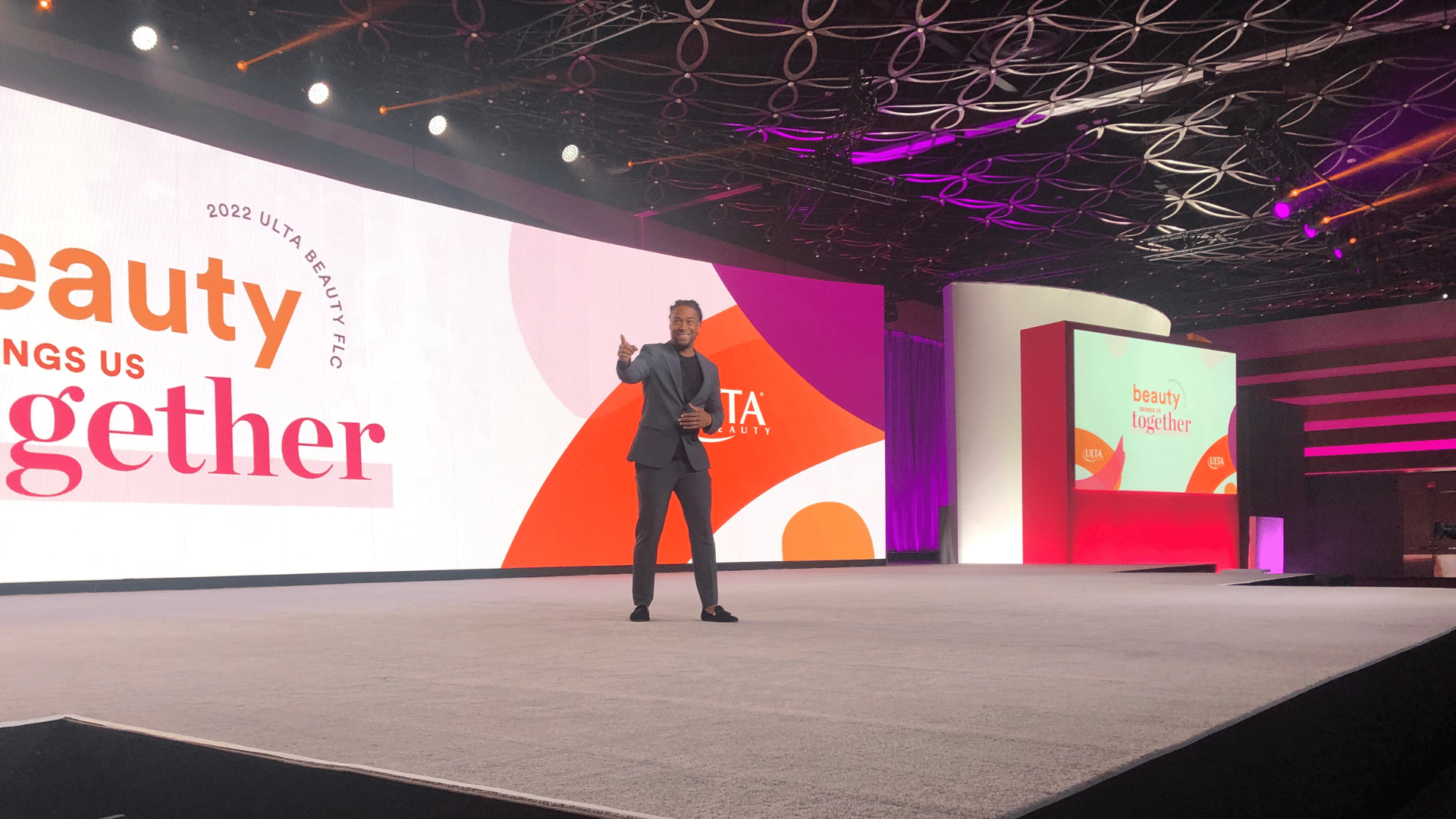
The traditional model of corporate event entertainment used to look like a lineup of specialists. One DJ for the music. One emcee for the program. One entertainer for the interactive moments. Three vendors, three contracts, three points of contact, three separate personalities the audience had to reconcile in real time. In 2026, that model is being replaced by something meaningfully different: the multi-hyphenate event host. One person who does the DJ set, hosts the emcee moments, and runs the interactive engagement. Same event, same energy arc, one operator. The shift is real, it is documented across the industry, and it is producing measurably better corporate events at similar or lower cost.
Industry coverage of the specific hybrid role now uses category terminology like “Keynote DJ” to describe operators who combine multiple functions under one hire. Coverage of the hybrid model captures the trend directly: the hybrid Keynote DJ approach combines structured emceeing with high-energy hosting and musical direction, applying DJing techniques (musical cues, tempo shifts, and branded sound moments) to manage energy between sessions while also handling introductions and house announcements, reducing the need for multiple hires by pairing reliable run-of-show control with audience engagement strategies. That’s one operator’s version. The category is broader. This piece walks through why the multi-hyphenate model is having a moment, what distinguishes a legitimate multi-hyphenate from someone who just added hyphens to a bio, and how corporate planners should evaluate the hire.
Want a multi-hyphenate corporate event host who actually does each role at professional depth? Contact DJ Will Gill.
Key Takeaways
- The multi-hyphenate event host combines DJ, emcee, and audience engagement roles in a single hire. The category has moved from niche to mainstream in 2026.
- Legitimate multi-hyphenates are rare. Most people claiming multiple roles are strong at one and weak at the others. The distinction matters at hire time.
- Economics favor multi-hyphenate hires for events under 1,000 attendees. Above that threshold, specialists often become necessary for scale reasons.
- The biggest hidden benefit is coordination: no handoff gaps between DJ and emcee, no dead air at transitions, one voice reading the room in real time.
- Vet multi-hyphenates by asking for depth in EACH claimed role, not just breadth. A pro can talk specifically about all three. A pretender talks generally about all three.
1. Why the Multi-Hyphenate Event Host Is Having a Moment
The rise of the multi-hyphenate is not a random stylistic shift. It is a structural response to four converging pressures that corporate event planners are all feeling at once.
The four pressures driving the shift:
- Vendor coordination overhead has become expensive. Industry data on the scope is direct: mid-size corporate events require coordinating 8 to 15 different vendors, with each vendor requiring separate contracts, insurance verification, timeline coordination, and quality management, and communication complexity increasing exponentially as vendor count rises. Consolidating three of those vendors into one is meaningful relief.
- Executive ROI pressure has hardened. Every vendor line item is being defended against a business outcome. A single hire that produces defensible ROI is easier to justify than three hires whose individual contributions are hard to attribute.
- Attendee expectations have shifted toward continuity. The 2026 audience notices handoff gaps that the 2018 audience did not. A single operator running the room across DJ moments, emcee moments, and interactive moments produces a more cohesive experience.
- Vendor consolidation as a broader industry trend is real. Industry coverage of the consolidation shift confirms the pattern is not confined to entertainment: the supplier side is shifting too, with big mergers and partnerships across the industry combining multiple services under one brand, making it easier to find partners who can take care of multiple event needs without cobbling together a patchwork team, especially where timing and coordination are everything and one team handling multiple related functions means fewer misalignments.
All four pressures compound. The result is that the multi-hyphenate model, which used to be seen as a compromise, is now increasingly seen as a strategic advantage. Corporate planners who first booked a multi-hyphenate host out of budget necessity are now booking one out of preference.
This shift is part of the broader 2026 corporate entertainment landscape covered in the 6 corporate event entertainment trends reshaping 2026 analysis. The multi-hyphenate host is not a trend in isolation. It is one specific expression of the broader convergence of AI-enabled coordination, ROI pressure, attendee expectations, and vendor consolidation that is reshaping the industry as a whole.
2. What a Multi-Hyphenate Event Host Actually Is (vs. Adding Hyphens to a Bio)
The category has attracted a lot of people who are strong at one role and calling themselves multi-hyphenate anyway. The distinction between a legitimate multi-hyphenate and someone just adding hyphens matters, because the failure modes are very different.
A legitimate multi-hyphenate event host is:
- Genuinely trained in each role. Not “does DJing sometimes.” Actually trained in professional DJing, professional emcee craft, and professional interactive engagement, with documented experience in each.
- Able to execute each role at professional depth. Same standard a specialist would deliver, not a diluted version.
- Equipped for each role. Professional DJ rig with redundancy. Professional mic setup with tech-rider capability. Interactive engagement infrastructure (games, polling, contest systems).
- Insured and contractable for each role. Not “we can do that too if you want.” Actual insurance coverage, formal contracts, and delivery track record in each function.
- Practiced at the transitions between roles. A DJ pivoting to emcee mode mid-event and back again is a specific craft. The transitions are where amateur multi-hyphenates fail most visibly.
Someone just adding hyphens to a bio is:
- Strong in one role, thin in the others. They call themselves “DJ-emcee-host” but 90 percent of their bookings are actually just DJ work. The other roles are aspirational bio decoration.
- Unable to give specific examples of each role at corporate events. Their DJ portfolio is deep. The emcee portfolio is wedding introductions or club shout-outs. The engagement portfolio is a few group photo prompts.
- Under-equipped for the secondary roles. A wireless mic and enthusiasm are not the same as an emcee’s tech-rider awareness or a team-building host’s interactive infrastructure.
- Uncomfortable with the transitions. When the moment calls for a shift from DJ mode to emcee mode, they hesitate, fumble the tone, or drop the energy.
The distinction is critical because a bad multi-hyphenate is worse than three good specialists. If the DJ is competent but the emcee moments feel amateur, the event’s polish drops. Corporate audiences notice. The whole thesis of the multi-hyphenate model collapses if the operator cannot execute each role at specialist-level depth.
Recognizing this distinction is one of the more subtle vendor evaluation problems in corporate event planning. It intersects with the broader inventory of common vendor-selection failures covered in the 9 most common corporate event entertainment mistakes analysis. Booking a “multi-hyphenate” who is actually a single-role operator with an ambitious bio is one specific expression of that broader failure category.
3. The 4 Roles the Modern Corporate Multi-Hyphenate Combines
A working multi-hyphenate corporate event host combines four functions that historically were separate hires:
- 1. DJ / Music Programming. Live music curation across the event’s energy arc. Room reading, tempo modulation, walk-on tracks, transitions between segments, closing peaks. Not a Spotify playlist on autopilot. Actual live programming that responds to the room. For a deeper look at how a corporate DJ actually reads and responds to a mixed audience in real time, the operational framework is covered in the how to tell if a corporate DJ can read a mixed audience analysis.
- 2. Emcee / Master of Ceremonies. Opening the show, introducing speakers, managing transitions, keeping the run-of-show on time, delivering Voice of God announcements, and holding the room’s attention across the full program. This role requires scripting precision, executive-tone awareness, and improvisational skill.
- 3. Audience Engagement / Interactive Host. Live polling, audience Q&A moderation, gamified engagement moments, breakout facilitation, energy-injection interventions during the mid-afternoon slump. Interactive engagement has evolved into its own category, with specific mechanics that separate pros from pretenders. The 5 core mechanics that always work at corporate events are covered in the 5 game mechanics that always win at corporate events analysis.
- 4. Interactive Team-Building Host. Full production of custom corporate game show formats: Family Feud-style, Jeopardy-style, custom buzzer-based competitions, real-time leaderboards, contestant management on stage. This role has emerged as a distinct category in its own right, with specific vetting criteria that most planners overlook. The commercial argument for hiring a specialized team-building host is covered in the corporate audience-engagement hosts as the hidden engagement lever analysis.
The multi-hyphenate model consolidates these four functions into one operator. The math of doing so is not just about vendor count reduction. It is about the specific coordination benefit of one operator holding the full energy arc of the event, with continuous room-reading across every moment rather than three specialists coordinating handoffs.
Not every corporate event needs all four roles. A small executive retreat may need only emcee and DJ. A large product launch may need all four plus a keynote speaker. The multi-hyphenate value is the flexibility to activate any combination of the four in a single booking, rather than assembling a bespoke team for each event’s specific mix.
4. The Economics: Why Single-Hire Multi-Hyphenate Usually Beats Multiple Hires
The dollar math of multi-hyphenate vs. multiple specialist hires is not always intuitive. The single hire is not always cheaper as a sticker number. But the total cost of ownership almost always is, once the hidden costs of coordinating multiple vendors are properly accounted for.
Specific cost dynamics:
- Direct fee savings. A multi-hyphenate typically charges less than the sum of three specialists at equivalent quality. Not always by a huge margin, but reliably by 15 to 30 percent.
- Coordination overhead reduction. Coverage of the specific overhead cost is direct: the administrative burden of managing multiple contracts, invoices, insurance certificates, and compliance requirements can overwhelm even experienced planners, with budget overruns happening when vendors add unexpected charges or when poor coordination leads to duplicate services (like discovering the venue provides basic audio equipment when a separate AV company was already contracted), and quality control becoming difficult when managing multiple relationships simultaneously.
- Single-contract efficiency. One contract to negotiate. One insurance certificate to verify. One point of contact for the day-of. One check to write. One person to give feedback to. The administrative time cost of managing three vendors is real, even when it does not show up on the P&L.
- No cross-vendor conflicts. Multiple vendors sometimes duplicate services (venue AV vs. hired AV, DJ walk-on music vs. emcee’s playlist, decorator lighting vs. AV team lighting). A single operator eliminates the duplication.
- No handoff-gap risk. Every vendor handoff is a risk moment. Combining three vendors into one eliminates two handoffs entirely.
The failure to account for coordination overhead is why cost comparisons between multi-hyphenate and multi-vendor approaches often mislead. Industry coverage of the specific scale where coordination overhead breaks planners is direct: most event planners can effectively manage up to 5 vendors per event using spreadsheets or notebooks, but beyond that the coordination overhead grows fast, requiring dedicated systems to avoid missed payments, forgotten confirmations, and lost contact details when tracking 10 to 15 vendors across multiple simultaneous events. Consolidating three entertainment vendors into one is meaningful relief.
The economics also favor multi-hyphenate hires against the specific comparison the finance team is running. Three separate vendor invoices are three separate line items to audit, and each one is subject to the “cheapest quote wins” pressure that produces predictably bad outcomes.
The full economic argument for right-priced entertainment (whether multi-hyphenate or specialist) and the 6 hidden costs that make the cheapest option the most expensive is covered in depth in the why booking the cheapest DJ costs the most analysis. The multi-hyphenate model is one specific application of the broader economic principle: single high-quality vendors deliver more value than multiple cheap ones.
5. The Coordination Benefits Most Planners Don’t Calculate
Beyond the direct cost savings, the multi-hyphenate model produces a set of coordination benefits that most planners do not budget for but consistently experience once they book one.
Specific benefits:
- Zero handoff gaps. The moment when the DJ hands off to the emcee is a common failure point at multi-vendor events. Even 10 seconds of dead air kills the energy. A multi-hyphenate does the transition seamlessly because they are on both sides of it.
- One voice reading the room. A specialist DJ reads the room from the booth. A specialist emcee reads it from the stage. Multi-hyphenate reads it from both positions across the entire event, with continuous calibration.
- Unified brand voice. The DJ’s musical taste, the emcee’s tone, and the engagement host’s persona all inevitably differ across three vendors. A multi-hyphenate delivers one consistent voice across all four functions.
- Simplified briefing process. One pre-event call. One run-of-show review. One do-not-play conversation. One walk-on approval process. Not three of each.
- Fewer approval loops with executives. Executive stakeholders review one vendor’s approach, not three. Time savings compound across multiple planning cycles.
- Real-time adaptability. When the keynote runs long and the run-of-show slips, a multi-hyphenate can compress the DJ set, extend the emcee segment, and pivot the engagement moment without needing to coordinate three separate vendors’ schedules.
Industry coverage of the underlying coordination benefit of vendor consolidation captures the pattern at a broader level: consolidation is not about handing every task to one company, it is about grouping together the parts of your event that rely on each other so much they are better managed under the same roof, with fewer moving parts also meaning smoother onsite changes when you need to swap a panel, extend a break, or reconfigure the stage. The entertainment stack (DJ, emcee, team-building host) is one of the clearest examples of interdependent functions that benefit from consolidation.
One specific coordination benefit that most planners underweight: the do-not-play list applies to only one operator instead of coordinating across three. Everything on the list, from explicit content to cancelled artists to executive vetoes, is executed by one person with one library and one context. There’s no risk of the emcee playing walk-on music that the DJ would have flagged. There’s no scenario where the engagement host queues up a track that violates the DJ’s brief.
For a fuller look at how to build a proper do-not-play list (which becomes meaningfully simpler when one operator implements it), the framework lives in the how to build a do-not-play list without killing the vibe analysis. The multi-hyphenate hire simplifies the execution meaningfully.
6. Red Flags: When “Multi-Hyphenate” Is Marketing, Not Capability
The distinction between a legitimate multi-hyphenate and an aspirational one shows up in specific, predictable ways. Planners who know what to look for can filter effectively before signing a contract.
Red flags that “multi-hyphenate” is marketing, not capability:
- 1. The portfolio is deep in one role and thin in the others. Ask for 3 recent examples of each role at corporate events. A pro can name specific engagements for each. A pretender’s examples for the secondary roles are vague or from very different contexts.
- 2. The bio uses “and” instead of documented depth. “DJ, emcee, and host” is a bio claim. “Corporate emcee with 600+ documented conference bookings AND corporate DJ with Fortune 500 client references AND team-building host with custom-format production experience” is depth.
- 3. The pricing feels too low for three roles. A legitimate multi-hyphenate typically prices at 60 to 80 percent of what three specialists would cost combined. Someone charging a single-role rate for three roles is not delivering three roles.
- 4. The gear inventory is thin. Full multi-hyphenate work requires professional DJ rig (with backup), wireless mic system, engagement infrastructure, and interactive game show gear. A minimal setup usually means minimal role depth.
- 5. They cannot articulate the specific craft of each role. Ask what makes a good corporate emcee. Ask what makes a good team-building host. Ask what makes a good corporate DJ. A pro gives specific answers to each. A pretender gives generic ones.
- 6. No references from Fortune 500 or industry-tier corporate events. Multi-hyphenate work at corporate scale is different from multi-hyphenate work at weddings, birthday parties, or nightclub events. Ask for corporate-specific references and verify them.
- 7. The transitions are underdeveloped. Ask how they transition from DJ mode to emcee mode mid-event. A pro can describe the specific mechanics. A pretender says “I just switch.”
The pattern is the same one that applies to vendor vetting across the entertainment industry: pros give specifics, pretenders give platitudes. The multi-hyphenate space attracts more platitudes than most because the multi-role positioning is trendy and easy to claim.
A useful sanity check: if the multi-hyphenate cannot answer specific questions about ONE of the three roles as well as a specialist could, they are effectively a single-role operator with hyphens added. That is not necessarily a bad thing if you only need that one role, but do not pay a multi-hyphenate premium for it.
7. When You Actually Still Need Separate Specialists
The multi-hyphenate model is not universally the right call. Certain event types and scales still justify booking separate specialists. Understanding when to make each choice is the point.
Specialists are usually the better call when:
- The event is massive (2,000+ attendees) with multiple concurrent stages. A single multi-hyphenate cannot physically be in two rooms at once. Multi-stage events need role-specific coverage of each stage.
- One role requires world-class specialization. A brand activation with a headliner DJ who is a household name is a different job than a corporate DJ set. If you need name recognition or celebrity draw in one specific role, book that specialist separately.
- The event has an unusual and specific engagement format. If the audience engagement is a highly specialized format (immersive theater, VR experience, live-action puzzle event), that specialist role is not something a multi-hyphenate can absorb.
- The DJ is a co-marketed talent draw. If the DJ’s name is on the invite for attendee recruitment, they are functioning as a headliner and should be booked separately for that role.
- The emcee is a celebrity or public figure. If a company brings in a well-known public speaker or media personality as the emcee for brand association, that role stays separate.
- The event budget is high enough that specialists produce meaningful additional value. At the top end of the market, specialists in each role can produce measurable incremental impact that justifies the coordination overhead.
Industry coverage of when to consolidate vs. specialize is direct on the tradeoff: consolidation should not extend to every task, and for certain highly specialized needs like broadcast-level production or medical compliance, a dedicated expert can still be worth the extra coordination, with the risk being that comfort with a single partner can reduce pressure for innovation or competitive pricing and create a single point of failure if that partner drops the ball. The same logic applies to entertainment.
The right framework: multi-hyphenate is the default for corporate events under 1,000 attendees where the entertainment functions as an integrated part of the program. Specialists are the right call for events above that scale, or where one specific role requires world-class depth that a generalist cannot deliver. The middle ground (500 to 2,000 attendees, standard corporate program) is where the decision gets genuinely nuanced.
8. How to Vet a Multi-Hyphenate Event Host
A working vetting framework for a multi-hyphenate corporate event host, separate from how planners vet single-role specialists:
Specific questions to ask:
- “Give me 3 recent corporate events where you executed each role.” Not “give me 3 events.” Give me 3 events for EACH role. A legitimate multi-hyphenate can point to specific bookings for DJ, for emcee, and for engagement/team-building host at corporate scale.
- “How do you transition from DJ mode to emcee mode mid-event?” A pro describes specific mechanics (setup arrangement, mic cueing, energy calibration). A pretender waves at the concept.
- “What gear do you bring for each role?” A pro lists specific equipment for each function. A pretender lists a generic PA and a wireless mic.
- “Do you have insurance and formal contracts for each role?” A pro says yes and can show COIs. A pretender says “I’ll figure it out.”
- “What is the biggest mistake multi-hyphenate hosts make at corporate events?” A pro can name specific failure modes (the transitions, the tone shifts, the equipment). A pretender says “just being unprepared.”
- “What corporate clients have booked you specifically for all four roles?” A pro can name Fortune 500 or industry-tier references. A pretender names weddings, birthday parties, or vague “corporate clients.”
- “How do you handle the case where the room needs you to be a DJ but the run-of-show says you should be emceeing?” A pro has a specific real-time judgment framework. A pretender says “I’d follow the run-of-show.”
Specific evidence to request:
- Footage of the operator running each role at a corporate event. Not just DJ footage. Not just emcee footage. Ideally the same event, showing the transitions.
- References from Fortune 500 or industry-tier-matching corporate clients. Ideally from clients who used them for multiple roles at the same booking.
- A tech-rider that reflects all four functions. Full DJ rig, professional mic setup, engagement infrastructure, game show production capability.
- A pre-event brief format that covers all four functions. A pro brings a briefing template that treats each role separately. A pretender brings a generic DJ brief.
The rise of the multi-hyphenate event host is one of the most consequential shifts in corporate entertainment in the past 5 years. It is being driven by real structural pressures (coordination overhead, ROI scrutiny, attendee expectations, vendor consolidation) and it is producing measurably better events at similar cost. The category has attracted legitimate operators who have trained for each role at professional depth, and it has attracted opportunists who added hyphens to a bio without adding capability. The distinction between the two is the entire point of the vetting process.
For a fuller service-line breakdown of what a legitimate multi-hyphenate corporate event operator actually delivers across DJ, emcee, and audience engagement functions (and how to structure the brief so all four roles get the calibration they need), the full scope lives on the corporate event DJ services page. The specific deliverables are the ones that separate legitimate multi-hyphenate work from aspirational marketing claims.
The right multi-hyphenate hire eliminates handoff gaps, unifies the brand voice across the entire event, simplifies the briefing process, and produces a more cohesive attendee experience than three specialists working from three different playbooks. The wrong one produces an event that reads as amateur in every direction because the operator was stretched thin. Vetting is what separates the two. Book the pro. Skip the hyphens without depth.
Frequently Asked Questions
What is a multi-hyphenate event host?
A multi-hyphenate event host is a single operator who executes multiple traditional entertainment roles at a corporate event. The most common combination is DJ, emcee, and audience engagement or team-building host in one hire, replacing what used to require three separate specialists with three separate contracts. Some multi-hyphenates extend further into speaker, keynote, or facilitator roles. The category has emerged as a mainstream corporate event hire in 2026, driven by coordination overhead, ROI pressure, and attendee expectations for continuity across the event’s energy arc.
Why is the multi-hyphenate host trending in 2026?
Four converging pressures: vendor coordination overhead has become expensive (mid-size corporate events already coordinate 8-15 vendors), executive ROI pressure has hardened (single hires with defensible outcomes are easier to justify), attendee expectations have shifted toward continuity (audiences notice handoff gaps in ways they did not previously), and the broader vendor consolidation trend across the industry is normalizing multi-role providers in adjacent categories. All four pressures compound, making the multi-hyphenate approach a strategic advantage rather than a compromise.
Do multi-hyphenate hosts save money vs. hiring separate specialists?
Almost always, when total cost of ownership is properly calculated. Direct fee savings run 15 to 30 percent versus the sum of three equivalent-quality specialists. Beyond that, coordination overhead reduction (one contract vs. three, one insurance verification, one point of contact, one briefing process) delivers additional savings that finance teams rarely quantify but planners always experience. The largest hidden savings comes from eliminating cross-vendor conflicts and handoff-gap risk that produce visible event failures at multi-vendor events.
When should I still hire separate specialists?
Six situations call for specialists: events above 2,000 attendees with multiple concurrent stages, events requiring world-class specialization in one specific role, events with unusual engagement formats (immersive theater, VR experiences), events where the DJ is a co-marketed talent draw, events where the emcee is a celebrity or public figure, and top-of-market events where budget justifies specialists producing measurable incremental value. Below those thresholds, the multi-hyphenate model is typically the better call for standard corporate programs.
How do I know if a multi-hyphenate is legitimate vs. just claiming multiple skills?
Ask for depth in each role, not just breadth. Request 3 recent corporate events for each function separately (DJ, emcee, engagement, team-building host). Check portfolio depth per role. A legitimate multi-hyphenate can name specific bookings for each function at corporate scale. A pretender has deep DJ credentials but their emcee portfolio is wedding introductions and their engagement portfolio is a few group photo prompts. Also check gear (are they equipped for each role?), insurance (do they carry it for each function?), pricing (does it feel appropriate for three roles or suspiciously low?), and transitions (can they describe the specific mechanics of switching between roles mid-event?).
Can one person really do DJ, emcee, and audience engagement games well at the same event?
Yes, when the operator has trained for each role at professional depth. The three functions are related enough that a legitimate multi-hyphenate can execute all three at specialist-level quality within a single event’s arc. The DJ role uses room-reading and energy programming. The emcee role uses stage presence and program management. The engagement role uses interactive facilitation and contest hosting. The skills overlap significantly. What makes it work is proper training in each function, appropriate gear for each function, and practiced transitions between them. The failure mode is not the concept. The failure mode is operators who claim the capability without having built it.
What Corporate Clients Are Saying

About the Author
William “DJ Will Gill” Gilbert is a corporate DJ, emcee, and event-engagement expert. The Wall Street Journal has featured his work using virtual events to support employee morale, and he is a Forbes Next 1000 honoree. He pioneered a 3-in-1 booking model combining professional emcee, open-format DJ, and interactive team-building segments in a single engagement for Fortune 500 corporate clients including AT&T Business, CDW, Virgin Galactic, NeoGenomics, PepsiCo, PayPal, Ulta Beauty, Salesforce, Lenovo, and the United Nations, with 2,520+ five-star Google reviews from corporate clients across the United States. He is also the founder of THEAIDJ, an AI-powered playlist generation tool built for DJs and event planners.
Book Will’s 3-in-1 multi-hyphenate corporate event package at djwillgill.com/contact.