
How To Tell If a Corporate DJ Can Actually Read a Mixed Audience | DJ Will Gill
How does a corporate DJ read a mixed audience? Reading a mixed audience means programming for coexistence: familiar hooks across decades, clean edits, energy that invites without excluding, and constant floor-watching to adjust in real time. He holds 2,520+ five-star Google reviews and has performed for Google, Amazon, Salesforce, PayPal, Pepsi, and the United Nations.
Every corporate DJ claims they can read a room. The website says it. The agent says it. The contract proposal says it. Most of them are wrong. Reading a truly mixed corporate audience (Gen Z interns standing next to Gen X department heads, sales team next to engineering team, clients in the same room as employees, four generations and six musical preferences all at once) is a different skill than running a wedding reception or a club night. It is also a skill that most DJ portfolios do not prove. The highlight reel shows the dance floor packed. It does not show the 30 minutes before the dance floor filled, when the DJ was reading which corner of the room was warming up and which was not. That diagnostic moment is the actual skill. Planners almost never see it in the sales process.
The result is that the planner books a DJ, the room shows up mixed, the DJ defaults to the same wedding setlist they use every weekend, the older guests check out at song three, the younger guests check out at song six, and the floor never recovers. Industry coverage of crowd-reading craft is direct on what separates a pro from a pretender: despite modern technology and preplanned crates, most DJs leave space for improvisation, and the ability to abandon a planned direction in favor of what the room needs is what separates good sets from unforgettable ones, with flexibility building trust between artist and audience. The question is how to actually test for that flexibility before you sign the contract. This piece walks through the questions, signals, and scenarios that filter the DJs who can read a mixed corporate audience from the ones who claim they can.
Want a corporate DJ with documented experience reading mixed audiences across Fortune 500 events? Contact DJ Will Gill.
Key Takeaways
- Audience reading is the corporate DJ skill that most portfolios do not prove. The highlight reel shows the packed floor, not the diagnostic moments before the floor filled.
- A truly mixed corporate audience is multi-generational, multi-role, multi-cultural, and often mixed external and internal. Different rules apply than at a wedding or club night.
- Reference calls reveal more than demos. Six specific signals are worth asking about explicitly.
- The single best evaluation tool is a specific scenario test. Describe your actual audience to the DJ and ask how they would open the room.
- “I can play everything” is a portfolio claim. “I can read anything” is a craft claim. Filter for the second, not the first.
1. Why “Reading the Room” Is the Skill Most Corporate DJ Portfolios Don’t Prove
Watch a typical corporate DJ highlight reel and you will see the same five seconds repeated: dance floor packed, lights flashing, DJ hands in the air, room cheering. That moment is the easy part. The hard part happens 20 minutes earlier, when the dance floor is empty, the room is divided into clusters of conversation, the older guests are still seated, and the DJ has to decide which song will pull the first 5 people up without alienating the rest. That diagnostic moment is the actual skill. It does not show up on the highlight reel because it does not look impressive on video.
Industry coverage of crowd-reading craft frames the underlying point directly: crowd reading is the ability to gauge the mood, energy, and preferences of your audience in real time, observing body language, engagement levels, and reactions to different genres, with energy signals like whether people are dancing, bobbing their heads, or standing still, and engagement signals like whether the audience is interacting or checking their phones, informing the next track selection. Those signals are invisible on video. They are visible in references and in conversation.
What planners should infer from a DJ’s highlight reel:
- The DJ has filled a dance floor at least once. That is the minimum. Almost every DJ in business has.
- The DJ knows how to edit a video. Highlight reels do not prove craft. They prove production quality.
- The lighting setup is impressive. Visual production quality is real but it is a separate skill from audience reading.
What highlight reels do NOT show: the DJ scanning a room before the set, choosing the opening genre based on who is in the room, adjusting after song two because the older guests did not move, and rebuilding the energy across the next 15 minutes. That is the skill you are actually paying for. The evaluation has to look elsewhere.
2. What a Truly Mixed Corporate Audience Looks Like
“Mixed” at a corporate event is more layered than most planners realize. The DJ is not just bridging two age groups. They are bridging multiple overlapping dimensions:
- Generational mix. Gen Z (22-year-old interns), Millennials (the largest cohort at most corporate events), Gen X (department heads), and Boomers (executives, board members, sometimes spouses). Each generation has different sonic anchors. Industry coverage of multi-generational events flags the layered nature directly: corporate guest lists are often broad, with executives, newer hires, longtime staff, spouses, clients, and community partners all in the same room, requiring music familiar enough to connect with a wide audience while still feeling current, with pacing that avoids alienating quieter guests or boring more social ones.
- Role and department mix. Sales team energy is different from engineering team energy is different from finance team energy. The DJ has to read which department is leading the floor on a given track.
- Cultural and language mix. Multinational companies have employees from dozens of countries. Latin music, Bollywood, K-pop, Afrobeats, Spanish-language Top 40 all have audiences in the same room.
- External and internal mix. Clients, partners, vendors, prospects in the same room as employees. The DJ has to manage the energy without making external guests feel like they are at a company party they were not really invited to.
- Mood and intent mix. Some attendees are there to dance. Some are there to network. Some are there because attendance was mandatory. The DJ has to serve all three simultaneously.
A wedding DJ reads one mix (multi-generational, single occasion, mostly cooperative audience). A club DJ reads a different one (single demographic, hours-long peak energy, voluntary attendance). A corporate DJ at a mixed-audience event is reading all of the above at the same time. The skill is qualitatively different.
A corporate event entertainment trend report frames the strategic stakes: a professional understands that a corporate party is a multi-generational event with interns wanting the latest viral hits and senior executives appreciating timeless classics, with the interactive element being about musical inclusivity, using sophisticated software to track guest preferences and live room-reading techniques to ensure every person feels included. Most corporate DJ failure modes happen when the operator treats the audience as a single block.
3. The Six Audience-Reading Signals to Look For in Reference Calls
References reveal what demos cannot. A 15-minute call with a previous corporate client surfaces the audience-reading craft directly. Six specific signals to ask about explicitly:
- 1. Did the DJ adjust the set based on what they saw in the room? Ask: “Did the DJ play roughly the same set you would have expected, or did they shift mid-event based on what was working?” The right answer mentions a specific adjustment. The wrong answer is “they played a great set.”
- 2. Did the DJ keep the older guests on the floor without losing the younger ones? Ask: “Were both your senior executives AND your newer hires on the dance floor at any point during the night?” If the answer is “mostly the younger crowd danced,” the DJ optimized for one demographic.
- 3. Did the DJ handle requests gracefully (or at all)? Ask: “Did anyone request songs, and how did the DJ handle the requests?” A pro acknowledges requests without derailing the set. A pretender either ignores requests or plays every request and loses the energy curve.
- 4. Did the DJ read the energy in the room or just play through the setlist? Ask: “Was there a moment during the night when the energy dropped and the DJ recovered it?” Specific recovery stories are the strongest signal of audience-reading craft.
- 5. Did the DJ talk to the room appropriately, or stay silent, or talk too much? Ask: “How was the DJ on the mic?” Industry coverage of corporate DJ presence captures the bar: a skilled DJ or MC can read the room, adjust music in real time, manage transitions, and invite the right level of energy without making anyone uncomfortable, which is a major difference between a playlist playing in the background and entertainment that helps the room connect.
- 6. Did the DJ communicate before the event about the audience makeup? Ask: “Did the DJ ask you about your audience before the event, and what did they ask?” A pro asks specific questions about demographics, role mix, cultural makeup, and event goals. A pretender does not ask at all, or asks generic questions.
A pattern across all six signals: the references should be able to give you specific stories. Generic praise (“they were great, everyone had fun”) is not a positive signal. It is the absence of one.
4. Specific Questions to Ask Before You Book
Beyond references, a 20-minute pre-booking call with the DJ themselves filters most pretenders. Specific questions that surface the audience-reading craft:
- “Tell me about a corporate event you played where the room was completely different from what you expected.” A pro tells the story specifically: the audience surprised me by being more X, I adjusted by doing Y, the result was Z. A pretender deflects: “Every room is different, I just play what works.”
- “How would you open a 200-person corporate event with a 50/50 mix of sales team and engineering team, average age 40, with executives at the back tables?” A pro names a specific opening genre and explains the choice. A pretender says “I’d feel out the room.”
- “What do you do when the dance floor empties out 30 minutes into the set?” A pro has 3 to 4 specific recovery plays. A pretender says “It depends on what’s happening.”
- “Tell me about the time you got a request you knew would tank the floor.” A pro has a specific story. A pretender says “I always play requests.”
- “What percentage of your set is pre-planned vs improvised?” A pro gives a working ratio (typically 60% framework, 40% live reading). A pretender says either “100% pre-planned” (rigid) or “100% improvised” (no preparation).
- “What do you do if the executives at the back tables never come up to the dance floor?” A pro names specific tactics: walk-around energy management, lower-key first-dance moments, mic engagement that pulls them in. A pretender says “I’d just focus on the people who are dancing.”
The pattern across all six questions: pros give you specifics. Pretenders give you platitudes. The specificity is the signal.
5. Red Flags That Show Up in DJ Demos (and What They Tell You)
Most DJ demo videos are designed to impress, not to inform. Specific red flags worth noticing:
- Every clip is the peak moment. Highlight reels showing only the dance floor at capacity are hiding the diagnostic moments. Ask for footage from the FIRST 30 minutes of a set.
- The DJ is always at the front of the booth, fists in the air. This is the showman pose, not the operator pose. A DJ reading the room is usually looking at the audience, not at the camera.
- The audience in the clips is always under 30. Single-demographic crowds prove single-demographic skill. Ask for footage of an event where the audience was mixed-age.
- No mic work shown. A corporate DJ usually has some mic engagement. The absence of mic work in demos can mean either the DJ does not use the mic (a real skill gap) or that the demo only shows pure music moments (which obscures their full deliverable).
- Generic stock music underneath the highlight reel. Some DJs use generic music in their demos to avoid copyright issues. But also some use it because they do not have rights-cleared footage of their actual sets. Either way, you are not seeing what they actually played. Ask for raw footage with original audio.
- All footage is from one venue or one event type. Repeated venue and event type suggests a narrow range. Industry coverage of corporate DJ skill development frames the underlying point: the best way to practice reading a crowd is to stay observant during every live set, no matter the size of the crowd, with house parties, weddings, and corporate events each offering different learning opportunities and reactions to different tracks or transitions. Range across event types is the signal.
- No before-and-after dance floor shots. A pro will sometimes show a clip of the room before they opened up and the same room 30 minutes into the set. That comparison is the actual proof of audience-reading skill.
A working test: ask the DJ for 60 seconds of unedited footage from the first 15 minutes of any corporate set. Most cannot or will not provide it. The ones who can are the ones who have the craft to defend the footage.
6. The Difference Between “I Can Play Everything” and “I Can Read Anything”
Every corporate DJ website says “extensive music library” or some variant of “I can play any genre.” This is true and meaningless. A 200,000-track library does not prove the DJ knows which 8 tracks will open a specific mixed corporate room at 7pm. Library size is a portfolio claim. Selection judgment is a craft claim. The two are not the same.
Industry coverage of professional DJ libraries makes the underlying point that range matters but is not enough on its own: a music library should be diverse, spanning various genres and eras, with classics, current hits, and unexpected gems mixed to keep everyone engaged, with smooth transitions between songs maintaining the flow of the set. Range is the foundation. Selection is the craft layered on top.
A working test for the difference:
- The “I can play everything” DJ. Plays a Top 40 mix from a USB drive. Mixes by tempo. Reads the floor only in terms of “are people dancing?” Treats every corporate event roughly the same.
- The “I can read anything” DJ. Plays a curated set selected for the specific audience. Mixes by energy, key, and demographic anchor track. Reads the floor in terms of “which segment is moving and which is sitting?” Treats every corporate event differently.
The cleanest way to test which type of DJ you are talking to: ask them what they would NOT play at your event. A pretender struggles to answer or names obvious extremes (“nothing explicit, nothing too obscure”). A pro names specific tracks or genres that would NOT land for your specific audience, and explains why. The negative selection is harder than the positive selection. Pros can do both.
A corporate DJ who can articulate what they would NOT play at your event has thought about your audience. A DJ who only talks about what they would play has thought about their library.
7. Test the DJ With a Specific Scenario Before Signing
The single best evaluation tool is a specific scenario test. Describe your actual upcoming event in detail and ask the DJ to walk through how they would approach it. The pro answers with specifics. The pretender gives generic confidence.
A working scenario brief to send to candidate DJs:
“Our annual recognition event is October 14th. 320 attendees: ~60% Millennials, ~25% Gen X, ~10% Gen Z, ~5% Boomers. Sales team is 40% of the room, engineering is 35%, marketing and admin together are the rest. We have 15 international team members from 6 countries. The night runs 6:30pm cocktails, 7:30pm dinner, 8:30pm awards, 9:30pm dance floor opens. Awards run 60 minutes with 18 categories. We need the DJ to play cocktail hour music, transition into dinner, sting in/out of awards, then open the dance floor at 9:30. How would you approach this?”
What a pro response includes:
- Specific genre choices for each program phase. Cocktail hour gets a different texture than dinner than awards stings than dance floor opening.
- A plan for the international team members. Specific cultural anchor tracks the DJ would weave in.
- An awards stings plan. Pre-planned walk-on music tied to each award category, with backup tracks.
- An opening dance floor strategy. What the first three songs would be and why.
- Recovery plays. What the DJ would do if the floor does not fill in the first 15 minutes.
- A request handling protocol. Whether requests are taken, how they are filtered, when they are played.
- Specific questions back to the planner. About the executives’ musical preferences, about the year’s theme, about the leadership team’s stage presence.
What a pretender response includes: “Sounds like a great event! I’d play crowd-pleasers and read the room.” That sentence is the disqualifier. A pro will spend 20 minutes on the email response. A pretender will spend 90 seconds.
8. The Mixed-Audience Briefing That Filters Pretenders Out
A working pre-booking brief that filters most pretenders out within the first hour of evaluation. Send this to every candidate DJ before signing. The responses will tell you who can read mixed audiences and who is faking it.
The mixed-audience briefing template:
- 1. Audience demographics in detail. Age breakdown, role and department mix, cultural makeup, external vs internal mix, expected mood and intent breakdown.
- 2. The event’s narrative arc. What is leadership trying to achieve? What is the year’s theme? What does the post-event Monday recap need to say?
- 3. The full run-of-show. Cocktail, dinner, content moments, awards, dance floor. Times and durations.
- 4. The “do not play” list. Specific tracks, artists, or themes that should not appear. Industry coverage of corporate DJ briefing notes the importance of giving the DJ direction in advance: a pre-event call with the DJ should cover everything the playlist needs to deliver and everything it needs to avoid.
- 5. The known cultural anchors. If you have international team members, leadership preferences, or recurring inside-baseball tracks (the song the company plays at every year’s open, the closing track that has become tradition), name them.
- 6. The “what is success” definition. Is success a packed dance floor? Is success the executives staying past 10pm? Is success the post-event survey score? Different success metrics drive different DJ strategy.
- 7. The previous year’s data. What worked at last year’s event? What did not? What did leadership flag in the post-event review?
The DJ’s response to this brief is the evaluation. A pro engages with each section specifically. A pretender skims and replies with “Got it, this looks great, we’ll be ready.”
Reading a mixed corporate audience is a real skill that most DJ portfolios do not prove. The good news is that the skill is testable. Reference calls reveal it. Pre-booking questions reveal it. Scenario tests reveal it. Specific briefings reveal it. The DJ who can read a mixed audience answers with specifics, asks back with specifics, and brings a framework rather than a vibe. The DJ who cannot answers with confidence but no substance. Filter for the substance and the right hire emerges quickly. The room will tell you on the night whether you got it right. The framework above lets you tell before you sign.
What Corporate Clients Are Saying
About the Author
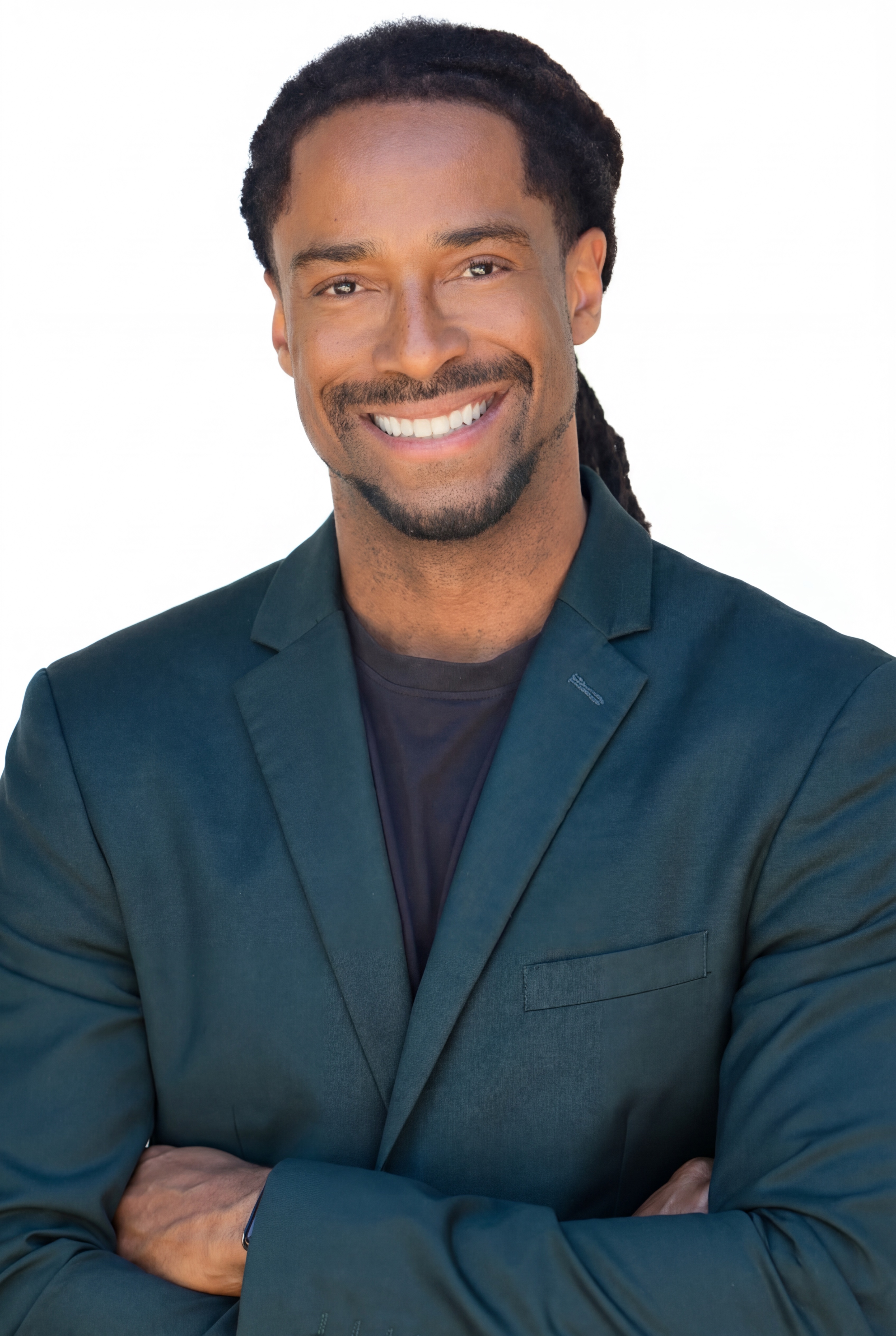
William “DJ Will Gill” Gilbert is a corporate event DJ, emcee, and audience-engagement expert featured by The Wall Street Journal for his work helping virtual events strengthen company morale. He is also a Forbes Next 1000 honoree. He has provided DJ entertainment for Fortune 500 recognition galas, sales kickoffs, product launches, and milestone celebrations nationwide, engaging audiences that range from Gen Z interns to senior executives. He has earned more than 2,520 five-star Google reviews from corporate clients across the United States. He also founded THEAIDJ,, an AI-powered playlist generation tool for DJs and event planners.
Book Will for your next mixed-audience corporate event at djwillgill.com/contact.