
Corporate Game Show Hosts: The Hidden Engagement Lever Planners Miss | DJ Will Gill
A corporate game show host is the professional who runs interactive, game-show-style engagement at company events: framing the games, reading the room, pulling reluctant departments into play, and converting a format into actual participation. The best ones are not standalone vendors; at DJ Will Gill events the corporate game show host, DJ, and emcee are one performer, so the games plug into the full program instead of standing alone.
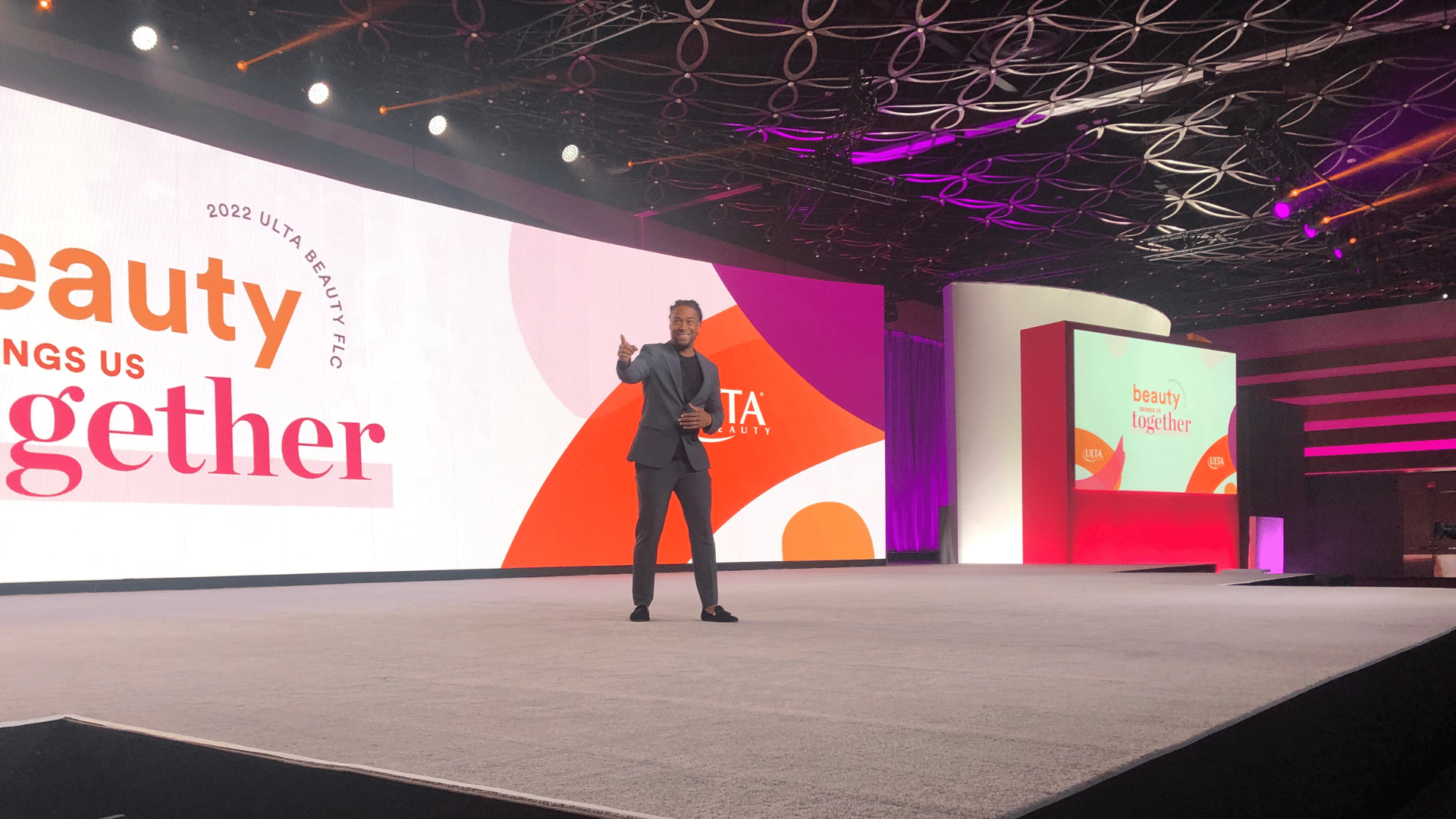
Most corporate event planners who book a game show spend their planning energy on the visible elements. The format (Family Feud or Jeopardy style?). The gear (buzzers, leaderboards, projection, lighting). The branding (custom backdrop, company-specific questions, branded prizes). The category. The budget. All of that work matters. None of it predicts whether the game actually lands. The variable that predicts whether the room engages is the variable planners spend the least time on: the host. A great host with average gear and a generic format produces a memorable corporate event. An average host with state-of-the-art gear and a perfectly customized format produces a corporate event nobody talks about Monday morning. The host is the engagement lever. Most planners treat the host as a default.
The industry mostly markets game shows as turnkey experiences: the package includes the gear, the format, and a host. The host is described as “professional” and “experienced” and then the marketing moves on to talk about the buzzers. Industry coverage of corporate game show production captures this default framing directly: corporate game show packages bring the studio production of classic TV game shows to events, complete with digital scoring, lighting, sound effects, and a professional team-building host, with customized game shows designed to promote communication, energize teams, stimulate problem solving, and build morale. That positioning sells gear well. It underweights the human running the show. This piece walks through why the corporate team-building host is the most underrated entertainment hire, what separates pros from pretenders, and how to brief one so the booking actually delivers what the planner is paying for.
Want a corporate team-building host who is the engagement multiplier, not a generic facilitator? Contact DJ Will Gill.
Key Takeaways
- The corporate team-building host is the engagement multiplier on the game’s investment. Same gear, same format, different host produces completely different events.
- audience-engagement hosts are a distinct entertainment category. They are not generic emcees. They are not motivational speakers. They are not internal volunteers with a microphone.
- Six core skills separate pros from pretenders: room reading, improvisation, time management, technical glitch recovery, audience interaction, and corporate-appropriate tone control.
- Internal volunteers (a CEO, an HR lead, a popular department head) almost always underperform paid hosts, because hosting is craft, not a personality trait.
- The single best test of a host candidate is asking them what they do when the technology fails mid-game. A pro has 3 specific recovery plays. A pretender deflects.
1. Why the Interactive Team-Building Host Is the Most Underrated Entertainment Hire
A corporate event budget for a game show usually breaks down into roughly five buckets: gear, format/software, host, prizes, and customization. The host bucket is almost always the smallest. Planners treat the gear as the “real” investment (it is physical and visible) and the host as a service add-on (they show up, run the show, leave). The reverse is closer to the truth. The gear is necessary but commoditized. The host is what determines whether the gear gets used to its potential.
Industry job-skill profiling for professional audience-engagement hosts captures the underlying skill density: a professional team-building host needs excellent public speaking, improvisation, and audience engagement skills, typically supported by experience in broadcasting or performing arts, with charisma, quick thinking, and strong interpersonal skills helping create a lively rapport with contestants and viewers, while challenges include managing unexpected technical glitches, handling unpredictable contestant behavior, and maintaining audience engagement throughout. None of those are skills the gear provides. All of them are what the host brings.
A working comparison of where the value actually sits:
- The gear is rentable. Buzzers, leaderboards, projection systems, lighting, custom backdrops. All available from multiple vendors at predictable prices. Commoditized.
- The format is licensable. Jeopardy-style trivia, Family Feud-style face-offs, Wheel of Fortune-style puzzles. The formats are well-known and easily reproduced.
- The customization is templatable. Company-specific questions, branded visuals, industry-specific content. Most game show companies have repeatable processes for this.
- The host is not replaceable. Two hosts running the same gear, the same format, and the same customized content will produce two completely different events. The variance is enormous.
Treating the host as commoditized when the host is the only non-commoditized element of the investment is the most common corporate game show hire mistake. The downstream effect is reliable: the planner books the package, the package shows up, the room engages at 30 percent of its possible capacity, and the planner concludes “game shows are okay but not amazing.” The actual conclusion should be “the host underperformed the gear.” The two are routinely confused.
2. What a Corporate Interactive Team-Building Host Actually Does (vs an Emcee or Internal Volunteer)
Planners often conflate three different roles: the corporate team-building host, the event emcee, and the internal volunteer host. They are not the same job. Each role has overlapping skills but a distinct primary function. Confusing them produces the wrong hire for the actual need.
- The event emcee. Runs the full event program. Introduces speakers. Manages transitions between segments. Holds the room across multiple hours. Generalist with room-operations skill.
- The internal volunteer host. A senior leader or popular employee who agrees to run a game segment “for fun.” Strong on company knowledge and audience familiarity. Weak on game-specific craft, recovery instincts, and time management under pressure.
- The corporate team-building host. Specialist in live game operations. Trains specifically for the mechanics that make game shows work. Builds energy in measured peaks. Manages contestants on stage. Recovers when technology fails mid-game. Adjusts the pacing to the room’s actual energy.
Industry coverage of the formal category distinction is direct: while both TV audience-engagement hosts and TV talk show hosts require strong on-camera skills and media experience, their roles differ in content focus, with audience-engagement hosts leading interactive competitions and talk show hosts facilitating conversations and interviews. The same category logic applies at corporate events. An emcee facilitates the program. A team-building host leads competition. The two are related crafts but distinct skill sets.
What the corporate team-building host specifically delivers that an emcee or internal volunteer rarely can:
- Real-time contest officiating. Adjudicating buzzer-in order, handling ambiguous answers, managing point disputes. Specific craft.
- Energy modulation across rounds. Hosts know when to push pace, when to slow down for drama, when to inject surprise.
- Contestant management on stage. Pulling the right energy out of an introvert. Reining in the contestant who is dominating. Reading body language to know when someone wants out of the spotlight.
- Tech-failure recovery. Buzzer malfunction, projection drops, audio cuts, software crashes. Pros have specific recovery plays. Internal volunteers freeze.
- Audience inclusion when the contestants are on stage. The audience is not just spectating. The host pulls them into reactions, side-questions, audience-team scoring. Internal volunteers usually forget the audience exists once the contestants are at the podiums.
The role distinction matters because the wrong hire produces the wrong outcome. A great emcee running a game show is a competent emcee running a game show. A great internal leader running a game show is a great internal leader doing something they were not trained for. Neither is a great team-building host.
3. The 6 Skills That Separate Pros From Pretenders
A working list of the 6 skills that separate professional corporate audience-engagement hosts from anyone with a microphone and a script:
- 1. Room reading at game-pace. A pro reads the room every 30 to 60 seconds and adjusts the energy curve, the difficulty of the next question, or the tone of the next bit accordingly. A pretender runs the script as written regardless of how the room is responding.
- 2. Improvisation under pressure. The contestant gives an answer that is funny but wrong. The buzzer misfires. The team picks a category nobody expected. A pro has improv moves for all of these moments. A pretender pauses, looks at the production team, or breaks character to ask for help.
- 3. Time management without sacrificing energy. Game shows usually have hard time constraints: 30 minutes, 45 minutes, 60 minutes. A pro hits the time mark within 60 seconds without rushing the final segment. A pretender either runs long (cutting the closing high) or rushes the back half (killing the energy curve).
- 4. Technical glitch recovery. The single highest-stakes skill. When the buzzers stop working, the leaderboard freezes, or the projection drops, the host has roughly 15 seconds before the room’s attention collapses. A pro has 3 specific recovery plays. A pretender stops the show.
- 5. Audience interaction without singling people out. A pro pulls the audience into the game through collective moments (audience scoring, opinion polls, group reactions). A pretender either ignores the audience or singles out individual attendees in ways that make them uncomfortable.
- 6. Corporate-appropriate tone control. Knowing when to be high-energy and when to dial it back. Avoiding humor that would land at a comedy club but not at a corporate event. Managing executive sensitivities without sterilizing the show. This is the skill that separates corporate audience-engagement hosts from event entertainers who do other settings.
Industry coverage of the host skill stack reinforces these specific competencies: strong communication skills and the ability to multitask are essential, as hosts frequently collaborate with production crews, contestants, and live audiences to create an entertaining and seamless experience, introducing contestants, explaining the rules, asking questions, and keeping the audience engaged throughout, with charisma and communication skills essential for making the show entertaining and enjoyable.
None of the 6 skills above are visible on a host’s website. All of them are testable through the right vetting questions, which the later sections cover.
4. The Hidden ROI: What a Specialized Host Adds That Generic Hosts Can’t
The financial math on the specialized host hire is often clearer than planners realize. Most corporate game shows cost more than just the host fee. Industry pricing data shows that the full cost stack is significant: on average, booking a professional game show for a corporate event costs $500-$1000, with the exact price varying depending on location, event size, and the type of game, with game shows that require more elaborate setups coming at a higher price. That is the entry-level pricing. Corporate events with custom branding, multi-hour production, and Fortune 500 sensitivities usually run multiples of that figure for the package alone. The host fee inside that package is the smallest controllable variable.
What the specialized host adds against that fixed package cost:
- Higher audience engagement per minute. The same 45-minute slot delivers either lukewarm participation or full-room energy. The host determines which.
- Better post-event survey scores. The game show is usually the moment attendees mention specifically in post-event surveys. A pro host turns it into a positive mention. A pretender turns it into a neutral one.
- Lower technical-failure cost. When the gear fails (which happens at roughly 1 in 10 corporate game shows), a pro recovers in 15 seconds. A pretender derails the program for 5 minutes.
- Better photo and video moments. The shareable moments from the event are usually game show moments. A pro produces more of them. The marketing value of those moments often exceeds the host’s incremental fee.
- Stronger leadership perception. Senior executives and clients notice host quality at corporate events. Their judgment of the planner reflects what they see. A great host reflects on the planner positively.
Industry coverage of corporate game show outcomes documents the business case: customized game shows are designed to boost employee engagement and morale, encourage collaboration and communication, break the ice at conferences and meetings, reinforce learning for training applications, promote brands at conferences, and create memorable shared experiences, with formats scalable from small team meetings to 2,000-plus participant conferences. The host is the variable that determines whether those outcomes actually land or just look good on the proposal.
The hidden ROI of upgrading the host is rarely captured in the budget conversation because it does not show up as a line item. It shows up as the difference between an event that worked and an event that did not.
5. Why Internal Volunteers Almost Always Underperform
A common planner shortcut: instead of hiring a professional team-building host, recruit a popular senior leader, an HR partner, or a personable team member to host the game. The logic is that the internal voice will connect with the audience better than an outsider. The logic is usually wrong.
Internal volunteer hosts almost always underperform paid professionals for predictable reasons:
- Hosting is craft, not a personality trait. Being funny in meetings does not transfer to being funny under stage lights with a buzzer countdown. The skills are different.
- The volunteer has a day job. They prep the game during their nights and weekends. Their preparation depth is whatever they could fit in around their primary role. A pro has prepped this exact mechanic dozens of times.
- Internal volunteers cannot be brutally honest with the room. When the contestant gives a wrong answer, when the energy drops, when the room needs a sharp redirect, the volunteer often softens the moment because they have to work with these people Monday morning. The pro can be direct because they leave when the event ends.
- Recovery skill is missing. When the technology fails, the volunteer freezes or apologizes. The pro pivots to an audience interaction, a story, or a banter moment that holds the room.
- Power dynamics distort the game. If the host is the CEO, the contestants behave differently. Bad answers go uncorrected. Easy wins are awarded. The game’s competitive integrity collapses.
- The volunteer cannot replace themselves. If the executive volunteer cancels the day before the event, the planner has no fallback. The pro team-building host has a substitute in their network or comes from a company with backup hosts.
There are specific cases where internal volunteers work well: small intimate team-building exercises where the audience is fully familiar with the volunteer’s style, training-focused game shows where company-specific knowledge matters more than entertainment craft, and informal cultural moments where the internal voice is the point of the exercise. Outside those cases, the math on the volunteer host is almost always wrong.
The fix is simple. If the event has business stakes (recognition, sales kickoff, client appreciation, executive-attended awards), the host is hired. The internal volunteer’s role is to introduce the host, present the prizes, or co-emcee the warm-up. They do not run the game itself.
6. How to Vet a Corporate Interactive Team-Building Host Specifically
A working vetting framework for a corporate team-building host, separate from how planners vet generic emcees or DJs:
Specific questions to ask:
- “How many corporate game shows have you hosted in the past 12 months?” A pro answers in the dozens. A pretender answers in single digits or deflects.
- “What do you do when the buzzers stop working mid-game?” The single best skill test. A pro names 3 specific recovery plays. A pretender deflects to “I work with the production team.”
- “How do you handle a contestant who is dominating and not letting their team play?” A pro has specific tactics: side-bench rotation, audience-team scoring, polite pivot lines. A pretender says “I try to keep things fair.”
- “How do you adjust if the room is not engaging in the first 5 minutes?” Pro has specific adjustments: difficulty re-calibration, audience-pull moments, energy-injection bits. Pretender says “I just keep going.”
- “What is your default time-management approach for a 45-minute show that needs to end on the clock?” A pro names their pacing system. A pretender says “I just watch the clock.”
- “How do you handle politically or culturally sensitive content showing up in player answers?” A pro has a redirect protocol. A pretender either avoids the question or admits they wing it.
- “What is one thing you would NOT do at our event, knowing the audience?” A pro names a specific tactic or content they would avoid for THIS room. A pretender says “I’m flexible, I can do anything.”
Specific evidence to request:
- Footage from a corporate event game show. Not a wedding. Not a comedy club. Corporate-specific.
- References from Fortune 500 or industry-tier-matching clients. Same logic as DJ vetting.
- Sample of how they handle a custom company-specific brief. Send a short hypothetical and ask for a 20-minute response.
- Names of the game show formats they have hosted, not just descriptions. Family Feud-style, Jeopardy-style, custom buzzer-based, custom puzzle-based. A pro has run many. A pretender has run one.
A pro engages with each question specifically. A pretender deflects, gives generic confidence, or pivots to talk about the gear. The specificity is the signal.
7. The Briefing That Sets Up Your Host for Success
Once the right host is booked, the briefing determines whether they perform at their ceiling or just at their floor. Most planners send the run-of-show and the question list and consider the host briefed. Both documents are necessary. Neither is sufficient.
A working corporate team-building host brief should include:
- 1. The event’s primary goal. Team building? Knowledge reinforcement? Closing energy peak before the dance floor? The host’s hosting style adjusts based on the goal.
- 2. The audience composition. Generational mix, role mix, executive presence, external vs internal split, cultural composition.
- 3. The energy arc of the broader event. Is the game the first energy moment of the night? Or does it follow a 60-minute keynote? The host paces differently in each case.
- 4. The “do not say” list. Recent layoffs, ongoing legal matters, leadership transitions, political flashpoints. The host needs to know what the audience is sensitive to.
- 5. Known cultural anchors. The company’s inside jokes, signature phrases, recurring traditions. The host can weave these in for maximum room ownership.
- 6. The success metric for the game specifically. Full room participation? A specific cohort engaged (sales team, engineering team, executives)? Photo-worthy moments for marketing? Each metric drives different host strategy.
- 7. The technical and recovery plan. Who is the tech lead on site? What is the fallback if buzzers fail? What does the host do if the leaderboard freezes? Walk through the failure modes in advance.
Industry coverage of corporate game show preparation supports the deep-briefing approach: a corporate game show team building event is structured like a classic television game show, including a host, teams, points, and interactive challenges, with core benefits enhancing communication, collaboration, morale, and stress relief on corporate teams when the game styles (trivia, puzzles, physical or creative tasks) are matched to the specific group. The match between game style and group is mostly determined by the host based on what they have been told. A thin brief produces a generic show. A thick brief produces a tailored one.
A 30-minute pre-event call between the planner and the host, walking through this brief, is one of the highest-leverage uses of planning time before a corporate event game.
8. Common Mistakes That Waste the Host Hire
Even after the right host is booked and briefed, recurring execution mistakes waste the investment. The most common ones:
- 1. No tech rehearsal before the event. The host walks in 30 minutes before the show, finds the buzzers are not configured to their preferred timing, and has to adapt mid-show. A 60-minute pre-event tech rehearsal eliminates this.
- 2. Scheduling the game show in the wrong slot. Right after a long keynote when the audience is fatigued is a bad slot. Right before food service when stomachs are growling is a bad slot. Right after dinner when the room has hit its second wind is a great slot.
- 3. The host has no pre-event interaction with the audience. A pro will often work the room during cocktail hour, picking up names, getting a feel for personalities, identifying potential contestants. Locking them in a green room defeats this advantage.
- 4. Cutting the host’s intro short. The first 90 seconds of the show is where the host sets the energy, explains the rules, and signals to the room what kind of experience to expect. Compressing this kills the pacing.
- 5. Overcrowding the run-of-show. Squeezing a 45-minute game into a 30-minute slot because the agenda ran long. Either commit to the full slot or postpone the game. Compressing the time sacrifices the experience the host is being paid to deliver.
- 6. No public recognition of the winning team. The competitive mechanic only feels real if there is visible victory. The host should announce, the trophy should be presented, the photo should be taken. Skipping the recognition drops the value of the entire game.
- 7. Using the host only for the game. A pro corporate team-building host often has emcee and engagement skill that extends beyond the game itself. Use them for transitions, for hosting the awards, for energy reset moments. The booking is for the day, not just the game slot.
- 8. Treating the post-event debrief as optional. A 15-minute call with the host after the event captures specific feedback the planner can use for next year. Skipping it loses institutional knowledge.
Corporate audience-engagement hosts are the engagement multiplier on the game investment. The gear is commoditized. The format is licensable. The customization is templatable. The host is the only non-replaceable element of the production. Treating the host as the smallest line item in the budget produces predictable underperformance. Treating the host as the strategic variable produces events the audience actually remembers.
The shift in planner thinking is small but consequential. Stop budgeting the host as a service add-on. Start budgeting the host as the engagement multiplier. Vet specifically for corporate game show experience, not just emcee or DJ background. Brief in depth, not just in logistics. Trust the host with the room, give them the space to actually do their job, and the game’s investment compounds rather than dilutes. That is the hidden engagement lever most corporate event planners do not realize they have access to. Once they pull it, the event lands differently. Once they do not, the event lands like the last one.
What Corporate Clients Are Saying

About the Author
William “DJ Will Gill” Gilbert is a corporate event DJ, emcee, and audience-engagement specialist featured by The Wall Street Journal for his work helping virtual events boost company morale. He is also a Forbes Next 1000 honoree. He has designed and hosted custom corporate game shows for Fortune 500 clients including AT&T Business, CDW, Virgin Galactic, NeoGenomics, PepsiCo, PayPal, and the United Nations, with 2,520+ five-star Google reviews from corporate clients across the United States. He is also the founder of THEAIDJ, an AI-powered playlist generation tool built for DJs and event planners.
Book Will to host your next corporate game show at djwillgill.com/contact.