
Why the Future of Corporate DJ Prep Is Human Plus AI | DJ Will Gill
What does the future corporate DJ workflow look like? The future workflow is human plus AI: machine-assisted preparation and playlist intelligence, with the live read, hosting, and crowd work staying fully human. Will Gill runs this hybrid model today, pairing his patent-pending AIDJ app with the 3-in-1 live show.
A quiet argument has been settled across the professional corporate entertainment market over the last twenty-four months, and most planners have not seen it happen yet. The argument was about whether AI would replace human corporate DJs, whether AI would fail to matter at all, or whether AI would become a working partner in the human professional’s prep workflow. The market has now answered. Neither extreme won. The working answer is human plus AI, meaning a professional human corporate DJ using AI tools to compress the mechanical prep layer while retaining full editorial, judgment, and execution control. This is not a compromise position between two ideologies. It is what happens when a working professional actually tries to run a Fortune 500 corporate event schedule in 2026 using either the “all-human, no AI” or the “full AI automation” approach, and discovers that both extremes structurally fail.
This piece is the strategic framework for why the human plus AI model has become the professional standard for corporate DJ preparation in 2026, and where the model is heading in the next five years. The historical arc of how corporate DJ prep evolved to this point. The three failed models the market has already tested and rejected. The specific taxonomy of prep tasks under the human plus AI model (which tasks are fully human, which are human-led with AI assistance, which are AI-led with human audit). Why humans remain structurally irreplaceable in corporate DJ work. Why AI is now structurally necessary at scale. What THEAIDJ is specifically doing at the tool layer to serve this model. What corporate planners should look for in 2026 vendor evaluation. And where the human plus AI arc is likely to run over the next five years. If you have read how AI speeds up corporate DJ pre-event preparation, this piece is the strategic framing that gives that practical framework its theory of the industry.
Looking for a corporate DJ operating the human plus AI model this piece describes? Contact DJ Will Gill.
Key Takeaways
- Neither extreme wins. All-human traditionalism is unsustainable at 2026 corporate scale (library sizes, prep-hour requirements, coordination overhead have all grown past what unassisted human labor can serve at professional quality). Full AI automation fails at corporate stakes (brand-voice judgment, real-time room reading, executive relationship management, and multi-vendor coordination all remain structurally human). The AI-hostile middle position is the worst outcome (no compression benefit AND no craft signal).
- The working model is human plus AI. Every prep task falls into one of three categories: fully human (brief absorption, brand-voice judgment, executive coordination, sequence editing, event execution), human-led with AI assistance (candidate curation, contingency staging, brand-safety vetting), or AI-led with human audit (library-scale BPM and key analysis, harmonic compatibility scoring, energy profiling, similar-song discovery, whole-set sequencing drafts).
- The broader business-technology trend confirms this pattern. IDC 2026 FutureScape research shows around 40 percent of roles in the Global 2000 will involve direct engagement with AI agents by 2026. Forbes Council coverage frames the transition explicitly as automation to augmentation, from replacement to enhancement, and from mechanization to collaboration.
- Human craft remains structurally irreplaceable in corporate DJ work. Room reading intuition trained across hundreds of events. Brand-voice calibration under Fortune 500 stakes. Executive relationship management. Real-time contingency response. Multi-vendor coordination. Emcee moments at the intersection of music and narrative. All fully human. AI does not perform any of these to professional standard.
- Corporate planners in 2026 should treat “AI-integrated prep workflow” as a professional-quality signal, not a substitution risk. A DJ who has thoughtfully integrated AI has redirected prep time from mechanical work to craft. A DJ who is AI-hostile is either producing lower-quality prep, doing lower volumes, or absorbing the personal cost that shows up as event-day fatigue.
1. The Historical Arc: Where Corporate DJ Prep Has Been
Understanding why the human plus AI model has become the professional standard in 2026 requires understanding the arc corporate DJ prep has traveled to get here. The category has moved through five distinct eras in twenty years, and every era’s dominant workflow has been shaped by what the underlying technology and market conditions made possible. The 2026 workflow is not an isolated design decision. It is the current terminus of a long professional evolution.
The five eras, in working shorthand:
- Pre-2010, the physical crate era. Corporate DJ prep was primarily a physical labor problem. Building sets meant selecting from a curated vinyl or CD library. Library scale was limited by what a working DJ could physically transport. Prep was slow, tactile, and constrained by carry weight. Brand-safety vetting was largely by memory.
- 2010 through 2019, the digital library era. Serato, Rekordbox, Traktor, and equivalent platforms moved DJ libraries into digital-catalog format. Library scale exploded (10,000+ track libraries became routine). Manual BPM and key analysis became a real time investment. Prep hours started expanding to serve the growing library. Corporate work began to require documented brand-safety vetting rather than working from memory.
- 2020 through 2022, the pandemic virtual boom. Corporate virtual events flooded the market. Streaming platforms (Spotify, Tidal, Apple Music) became live-set integration points. Library scale expanded again (streaming catalogs run into tens of millions of tracks). Manual analysis at streaming scale became impossible. The first commercial AI-assisted DJ tools began appearing.
- 2023 through 2025, the AI-as-add-on era. AI-powered features began integrating into professional DJ software. BPM and key detection became automated. Harmonic compatibility scoring appeared. Whole-set sequencing suggestions arrived. But AI was still treated as an optional add-on, not a core part of the workflow. Some DJs used it heavily; others ignored it entirely.
- 2026 forward, the human plus AI professional standard. The market is now separating professionals who have integrated AI thoughtfully from professionals who have not. Corporate planners who understand the shift are beginning to treat AI-integrated prep as a quality signal. The human plus AI model is becoming the professional baseline, not an option.
Each era’s dominant workflow was rational given its underlying conditions. The vinyl-carrying club DJ of 1998 was not being backward; that DJ was working the tools of the era. The all-digital streaming DJ of 2020 was not showing off; the tools required it. The human plus AI DJ of 2026 is not embracing hype; the working economics of Fortune 500 corporate prep at 2026 scale genuinely require both.
The specific market context in which this evolution is happening (which shapes both the pressure on professional DJs to adopt AI-assisted workflows and the pressure on planners to book DJs who have) is covered in the corporate event entertainment trends 2026 analysis. The industry evolution and the professional workflow evolution are two views of the same underlying market shift.
2. The Three Failed Models: Why Neither Extreme Wins
Before naming the model that works, it is worth being explicit about the three models the market has already tested and rejected. Understanding why each failed clarifies what the human plus AI model is actually solving.
Failed model one: All-Human Traditionalism. The purist position that AI has no legitimate role in corporate DJ prep. Some professionals genuinely hold this view. It is defensible on craft-preservation grounds and honest on skill-development grounds. It also fails at 2026 scale. A single corporate DJ serving Fortune 500 clients with 15,000+ track libraries, streaming access to tens of millions of additional tracks, brand-safety vetting requirements, multi-day summit prep, and virtual-event tech overhead cannot do the mechanical layer manually at professional quality. Something gives. Either library-scale analysis gets abbreviated (quality drops), or prep hours expand into unsustainable personal cost (burnout follows), or booking volumes contract (business shrinks). None of these is a good outcome. Traditionalism at 2026 scale is a slow-motion professional collapse.
Failed model two: Full AI Automation Optimism. The opposite position that AI can and will handle everything. This position had its moment in 2020 through 2022 when AI DJ tools started producing surprisingly competent outputs and speculation ran ahead of reality. The market tested the position and rejected it at corporate stakes. Coverage of the specific pattern from a leading business-technology industry publication: the real transformation does not come from replacing people with machines, it comes from designing systems where humans and AI enhance each other’s strengths, the most durable AI strategies are not built around substitution, but augmentation, across industries and especially in complex, high-stakes environments, we are seeing that the most successful outcomes emerge when human expertise and machine intelligence work together, according to McKinsey, while 62% of organizations are at least experimenting with AI agents, only 39% report EBIT impact at the enterprise level, why? well, while fully automated systems promise speed and scale, they struggle with context, data alone does not equal understanding. The 62 percent experimenting versus 39 percent seeing EBIT impact split is telling. Full-automation ambition consistently produces less business value than augmentation-focused deployment. This is not unique to corporate DJ work. It is the general pattern of enterprise AI adoption in 2026.
Failed model three: The AI-Hostile Middle Ground. The worst of the three. Professionals who make no serious effort to adopt AI tools but also cannot serve a 2026 scale with manual workflow. They neither compress the mechanical layer nor signal thoughtful AI integration as a quality marker. Their prep quality drifts down as scale demands rise. Their event-day performance shows fatigue. Their competitive position erodes as adjacent professionals adopt human plus AI workflows and pull ahead on both economics and quality. This is not a stable position. It is a transitional discomfort zone that resolves in one of two ways: adopt human plus AI, or exit the professional tier.
The specific dynamic by which competing on stubbornly cheaper pricing produces worse outcomes for planners than paying professional rates (which applies with force to the AI-hostile middle ground, since the position’s economics do not sustain professional quality) is covered in the why the cheapest DJ costs the most analysis. Extreme positions and stubborn middle positions both compress margins in ways that eventually manifest as event-day quality problems.
3. The Human Plus AI Model: What It Actually Looks Like
The working model that has emerged as the professional standard is human plus AI, and it has a specific structure that is worth naming explicitly. Every corporate DJ prep task falls into one of three categories.
Category one: Fully human tasks. Work that has no AI involvement because AI cannot perform it at corporate stakes.
- Client briefing absorption and back-briefing to the planner
- Brand-voice calibration and tonal register selection
- Executive walk-on preference conversations
- Sequence editing for narrative arc and callback structure
- Real-time room reading during event execution
- Emcee delivery and voice-over moments
- Multi-vendor coordination (emcee, host, AV, production, planner)
- Contingency response during live execution
- Post-event debrief and iteration capture
Category two: Human-led with AI assistance. Work where the professional makes the decisions but uses AI as an accelerator on specific sub-tasks.
- Track candidate curation from analyzed libraries
- Contingency set staging (parallel sets for likely pivots)
- Brand-safety vetting (AI screens candidates, human makes final judgment on fringe cases)
- Playlist export configuration (AI generates, human reviews and finalizes)
- Rehearsal preparation (AI-assisted sequencing informs the rehearsal set, human runs the rehearsal)
Category three: AI-led with human audit. Work where AI does the substantive analysis and produces an output that a human then audits and edits.
- Library-scale BPM and musical key detection
- Harmonic compatibility scoring across track pairs
- Energy profile analysis and dynamic scoring
- Similar-song discovery based on sonic characteristics
- Whole-set sequencing draft proposals
- Draft playlist generation from seed parameters
Coverage of the specific taxonomy pattern from a business-technology industry analysis on human-AI workflow design: every AI-driven workflow needs human validation stages, this layered process ensures speed without sacrificing quality, the most successful companies treat AI like a team member that learns over time, augmented intelligence improves when feedback is built into the system, one major barrier in 2026 isn’t technology, it’s mindset, when employees see AI as a collaborator instead of a threat, productivity increases significantly. The taxonomy pattern is not unique to corporate DJ work. It is the general shape of professional human plus AI workflows across knowledge-work industries in 2026.
The specific practical breakdown of how much time compression the AI-led-with-human-audit category actually delivers in corporate DJ prep (which is the companion practical piece to this strategic framing) is covered in the how AI speeds up corporate DJ pre-event preparation analysis. This section defines the taxonomy. That piece quantifies the working compression by task.
4. Why Humans Are Structurally Irreplaceable in Corporate DJ Prep
The human plus AI model requires being clear about why humans remain structurally necessary, not merely traditionally involved. If the human contribution to corporate DJ prep were only tradition-based (the way things have always been done), AI would eventually replace it. The reason AI will not replace the human contribution is that the human contribution is doing genuinely different work than AI is capable of doing at professional stakes.
Specific structural reasons human work remains irreplaceable in corporate DJ prep:
- Room-reading intuition is embodied experience, not pattern recognition. The professional who has read 600+ corporate rooms across every industry, every audience demographic, and every event format develops a sense for what a specific room needs in a specific moment that is not reducible to features an AI could ingest. It lives in the professional, not in the data.
- Brand-voice judgment at Fortune 500 stakes requires contextual understanding AI does not have. Whether a specific track fits a pharmaceutical company’s tone versus a tech startup’s tone versus a financial services firm’s tone requires understanding the industry, the client, the specific event’s brand goals, and the executive team’s preferences simultaneously. This is real judgment work.
- Executive relationship management is inherently human. The CEO calls the DJ personally to discuss the walk-on song. The head of communications requests a change to the do-not-play list a week before the event. The CMO wants the after-party programming aligned with the sponsor’s brand. These are relationships. They are not automation targets.
- Real-time adaptation during execution is not offloadable. Speaker runs long. Awards ceremony reshuffles. The executive team calls a schedule change. The DJ makes the call in real time based on contextual signals AI cannot access. This is the specific work event execution that is required.
- Multi-vendor coordination is human trust work. Working with the emcee, host, AV team, and production crew during load-in and the event is professional relationship work. Coordination protocols matter. Personal reliability matters. AI cannot substitute for a working professional’s word.
- Emcee moments live at the intersection of music and narrative. Speaker introductions, awards ceremony scripts, transitional patter. AI can draft. AI cannot deliver at professional stakes with the specific vocal register, timing, and audience-connection the moment requires.
Coverage of the specific philosophical framing for why creative-professional human contribution remains structurally necessary from a leading business-technology industry analysis on human-AI collaboration: we are moving from a period of AI-powered automation to augmentation, from replacement to enhancement and from mechanization to collaboration, as we bump up against the limitations on the current generation of AI tools, employers are reconsidering the roles of humans and machines, and how these roles can complement one another, this upskilling must also be done with a clear understanding of what these tools can’t do, a March 2026 article from Business Insider suggests that some of these failures have been due to an overinflated sense of what AI technology promises, this can contribute to worker dependency and essentially deskill workers. The deskilling warning is real. Professionals who over-rely on AI without maintaining the human craft layer degrade over time. The human plus AI model specifically protects against deskilling by keeping the judgment, editorial, and execution layers fully human.
The specific craft-signal test for whether a corporate DJ can read a mixed executive audience (which is the specific irreplaceable-human work the human plus AI model protects time and capacity for) is covered in the how to tell if a corporate DJ can read a mixed audience analysis. The point of AI compression on mechanical prep is not to reduce the professional to a technician. It is to preserve the professional’s capacity for the exact craft work AI cannot do.
5. Why AI Is Structurally Necessary in 2026 Corporate DJ Prep
The symmetric argument. Human craft is irreplaceable. AI participation is now structurally necessary. Both are true. The reason AI has moved from “nice to have” to “structurally required” over the last twenty-four months is that the mechanical prep workload at 2026 corporate scale exceeds what unassisted professional human labor can absorb at professional quality.
Specific structural pressures that have made AI participation necessary:
- Library scale has outgrown manual analysis capacity. Professional corporate DJ libraries in 2026 routinely exceed 15,000 tracks with streaming-catalog access to tens of millions more. Manual BPM and key detection across libraries of that size is not a productivity question; it is a physical impossibility inside reasonable prep windows.
- Catalog turnover is faster than professional listening time. New tracks are released faster than any working professional can audition. AI-assisted similar-song discovery is now the only viable way to keep prep-relevant awareness of catalog evolution.
- Multi-day and multi-session bookings have grown as a share of corporate work. A three-day summit that would have consumed 60+ hours of manual prep is now feasible with AI-assisted prep in a fraction of the time, without quality compromise. Professional viability at a multi-day scale increasingly depends on compression.
- Corporate rate pressures require operational efficiency. Cost inflation across the corporate event stack has compressed vendor margins. AI compression on the mechanical prep layer is one of the few operational efficiencies available to working professionals without degrading service quality.
- Client expectations for prep quality have expanded. Brand-safety vetting is now more thorough. Rehearsal expectations have grown. Content deliverables are baked into contracts. AI on the mechanical layer preserves time for the human layer to meet the expanded expectations.
- Coordination overhead has grown across the event ecosystem. Multi-vendor coordination, hybrid event complexity, and multi-track programming have all expanded the non-prep coordination time professionals must invest. AI compression on prep is one way to protect coordination time.
The specific broader business context in which AI adoption is compressing operational overhead across knowledge-work industries is worth naming for perspective: coverage of the specific enterprise-scale adoption pattern from an industry technology market research firm: for leaders and professionals, the 2026 question is not “Will AI take my job?” but “How quickly can my organisation and my skills adapt to human-AI collaboration?”, according our 2026 FutureScape for the AI-enabled Future of Work around 40% of roles in the G2000 will involve direct engagement with AI agents by 2026, fundamentally reshaping how entry, mid-level, and senior jobs are designed. Forty percent of Global 2000 roles engaging directly with AI agents is a genuine categorical shift. Corporate DJ work is one professional category among many navigating the shift. The professionals who navigate it well are the ones who understand both the necessity and the limits.
The specific pricing dynamic in which the total virtual event budget stack has grown in 2026 (partially because of the technology cost inflation this section describes, which itself is one of the drivers of the AI necessity argument) is covered in the why virtual corporate entertainment rates are rising in 2026 analysis. Economics and technology are linked. AI compression on the mechanical prep layer is partially a response to the cost pressures rising across the broader event ecosystem.
A specific note on framing: this section is not arguing that AI is desirable in corporate DJ prep. It is arguing that AI is now structurally necessary at the 2026 scale. That distinction matters. Necessity is not the same as universal desirability. Professionals who could not adopt AI in earlier eras were adapting to different underlying conditions. Professionals in 2026 who do not adopt are increasingly not making a stylistic choice; they are absorbing an unsustainable personal cost.
6. THEAIDJ: The Purpose-Built Tool for the Human Plus AI Model
The specific product this framework has produced: THEAIDJ (theaidj.com), a USPTO patent-pending playlist generation platform (Application No. 19/202,496) designed from day one for the human plus AI corporate DJ workflow this piece describes. THEAIDJ is not general-purpose AI music software. It is a specialist’s prep tool for the professional operating the human plus AI model.
What THEAIDJ specifically does inside the human plus AI taxonomy:
- Category-three work (AI-led with human audit) is where THEAIDJ operates. Library-scale BPM and key analysis, harmonic compatibility scoring, similar-song discovery, and draft playlist generation. The tool produces output. The human working professional audits, edits, and takes responsibility.
- Programs music by tempo, key, and harmonic similarity rather than genre tags. This matters because corporate audiences are harmonically sensitive in ways club or wedding audiences are not. Tempo-and-key logic produces coherent sets across the tonal range corporate work requires. Genre-based tools produce playlists that feel superficially varied but harmonically incoherent.
- Integrates directly with Spotify via Google OAuth. Generated playlists export cleanly to Spotify without manual re-entry. The professional’s final playlist arrives in the performance rig, ready for the human editorial and execution layer.
- Built by working corporate DJs, tested against real event schedules. Every product decision has been shaped by whether it saves time on actual bookings versus adding friction. The tool exists because I use it. If it did not save me hours per event, it would not have shipped.
- Not positioned as an AI DJ replacement. The tool is deliberately not marketed as “AI does the DJing.” It is a working professional’s prep tool. Event execution remains fully human. This is the human plus AI model expressed as a specific product design decision.
Coverage of the specific general-market pattern that THEAIDJ is a domain-specific expression of, from a business-technology industry analysis on human plus AI enterprise deployment: AI is shifting from a replacement model to an augmentation model, empowering employees rather than displacing them, the next era of enterprise performance isn’t AI or humans, it’s humans plus AI, working in symbiosis, human-AI symbiosis is not about delegating everything to a machine, it’s about bringing together complementary strengths to create outcomes neither could achieve alone. That framing describes the general enterprise pattern. THEAIDJ is the corporate DJ-specific tool expressing the same principle at the professional workflow layer.
A specific note on positioning: THEAIDJ works for DJs and event planners. Planners who want to explore music programming for their own events (before or independent of a DJ booking) can use the tool to sketch out ideas, understand tempo and key relationships in their audience’s music preferences, and communicate more precisely with vendors about programming intent. The tool is not gatekept to DJs only. It is the human plus AI framework made available at the tool layer.
Try THEAIDJ at theaidj.com. Feedback from working DJs and event planners actively shapes the product roadmap. If you use it and something is missing that would meaningfully change the human plus AI workflow, tell me.
7. What Corporate Planners Should Look for in 2026 Vendor Evaluation
The planner-side implications of the human plus AI standard are practical. Corporate planners in 2026 are increasingly encountering DJ and entertainment vendors across the full range from AI-hostile traditionalist to full-automation optimist, with the human plus AI professionals in the middle. The evaluation task is not to identify the “AI DJ” or the “traditional DJ” and pick between them. The evaluation task is to identify professionals operating the human plus AI model at professional standard.
Specific vendor evaluation criteria for the human plus AI standard:
- Ask specifically about the AI-assisted prep workflow. Which tasks does the DJ use AI for? Which does the DJ still do manually? A specific answer signals a thoughtful workflow. A vague answer signals either avoidance or bluffing.
- Test the taxonomy question. Ask which prep tasks are fully human, which are human-led with AI assistance, and which are AI-led with human audit. A working professional operating the model can answer this in concrete terms. A DJ making side-skill AI claims cannot.
- Ask about the specific AI-doesn’t-do-this categories. A DJ operating the model can articulate what AI does not handle in their workflow. Vague answers (“AI does everything now”) signal danger; that professional either does not know the limits or is overselling.
- Look for evidence of maintained human craft. Room-reading track record. Executive relationship references. Complex-event portfolio. The human plus AI model works when the human craft layer is genuinely strong. AI compression on a weak human craft foundation produces mediocre events efficiently.
- Check for coordination discipline. Multi-vendor coordination, hybrid handling, run-of-show alignment. These are professional disciplines AI cannot compress. The DJ’s ability to handle them is a direct signal of the human layer’s quality.
- Watch for the deskilling signal. A DJ who cannot explain what they do without referencing their AI tools may be over-reliant. A DJ who describes their process, then mentions AI as one tool in it, is operating at professional standard.
The consolidation angle matters here. A DJ operating the human plus AI model AND holding the multi-hyphenate DJ-emcee-engagement structure compounds the operational advantages. AI compression on prep buys back time. Multi-hyphenate consolidation buys back coordination overhead. Both together produce a professional operator who can deliver more value per booking than either would alone.
The specific operational framework for the multi-hyphenate model (which pairs particularly well with the human plus AI prep discipline this piece describes, because both models are structurally about compressing overhead and expanding capacity for the work that determines event outcomes) is covered in the how to run a conference where your DJ, emcee, and engagement host are the same person operational manual. AI plus multi-hyphenate is the specific professional configuration corporate planners in 2026 should be actively looking for.
8. The Next Five Years: Where This Is Heading
Closing with the forward look. The human plus AI model is not the terminal state of corporate DJ prep. It is the current professional standard for 2026. The direction of travel over the next five years has some specific likely trajectories worth naming.
Working predictions for corporate DJ prep, 2026 through 2030:
- AI tools will get meaningfully better at the AI-led-with-human-audit layer. Harmonic analysis will get more precise. Similar song discovery will improve. Whole-set sequencing drafts will require less human editing. The category-three work will compress further.
- Human craft will become more valuable, not less. As AI handles more of the mechanical layer, the professionals with genuine craft will separate further from the ones without it. The value differential between a strong human plus AI operator and a mediocre one will widen.
- The AI-hostile middle ground will contract. Professionals unwilling to integrate AI will exit the top tier of corporate work by attrition. The professional standard will move.
- Multi-hyphenate operators using AI compression will have compounding advantage. The combination of AI-assisted prep plus a consolidated DJ-emcee-engagement structure will produce operational economics that fragmented, non-AI-assisted competitors cannot match.
- Corporate planners who understand the shift will hire better. Planners who know to evaluate for human plus AI operators will book stronger vendors more consistently than planners who default to legacy vendor lists.
- New AI tools will emerge that address specific gaps. The current tooling handles library analysis and playlist generation well. It handles brand-safety vetting less well. It handles executive-preference modeling barely at all. Future tools will target the gaps.
- The deskilling risk will grow with AI capability. Professionals over-relying on increasingly capable tools may degrade the human craft layer over time. The professionals who explicitly protect their craft development will separate from those who do not.
- Planner education will lag professional adoption. Working DJs will run human plus AI workflows two to three years ahead of when the average corporate planner understands what to look for. Planners who close the education gap early will secure the best talent at the best prices.
The through-line of the next five years is that the human plus AI model is stable, but the composition inside it is changing. AI handles more of the mechanical layer. Humans handle more of the strategic and craft layer. Both intensify their specialization. The result is a professional standard that produces better corporate event outcomes than either full-human or full-AI could produce, at economics that neither extreme could sustain.
For a service-line look at what a corporate DJ operating the human plus AI model plus the multi-hyphenate consolidation actually delivers to corporate planners in 2026, the current deliverables are on the corporate event DJ services page. The framework this piece describes is not theoretical. It is a working professional configuration available for booking now. The next five years will make it the professional standard. The next few months are when planners who understand it first will secure the leverage.
Frequently Asked Questions
What does “human plus AI” corporate DJ prep actually mean in practice?
A specific taxonomy where every prep task falls into one of three categories: fully human (brief absorption, brand-voice judgment, executive coordination, sequence editing, event execution, multi-vendor coordination), human-led with AI assistance (candidate curation, contingency staging, brand-safety vetting, playlist export), or AI-led with human audit (library-scale BPM and key analysis, harmonic compatibility scoring, energy profiling, similar-song discovery, whole-set sequencing drafts). The professional makes editorial and execution decisions. AI accelerates the mechanical analysis layer. Both are structurally necessary at 2026 corporate scale.
How is this different from AI DJ tools that automate playlist generation?
Full-automation AI DJ tools attempt to replace the human editorial and execution layer. They produce technically competent sets and fail at corporate stakes because they cannot handle brand-voice judgment, executive relationship management, real-time room reading, or multi-vendor coordination. The human plus AI model uses AI on the AI-led-with-human-audit tasks specifically, then hands the output to a working professional who edits, sequences, coordinates, and executes. THEAIDJ is designed as a human plus AI tool, not a full-automation replacement. The distinction matters because it determines whether the tool serves professional work or attempts to substitute for it.
Will AI eventually replace human corporate DJs entirely?
No, not at Fortune 500 corporate stakes. Human room reading, brand-voice judgment, executive relationship management, real-time contingency response, multi-vendor coordination, and emcee craft all require embodied experience and contextual understanding AI does not have. Broader business-technology industry analysis reaches the same conclusion for creative-professional work generally: augmentation succeeds where substitution fails. The Forbes Council coverage frames the trajectory as automation to augmentation, not automation replacing everything. Corporate DJ work is one professional category among many following this pattern.
What should corporate planners look for in a DJ who claims to use AI?
Ask specifically about the AI-assisted prep workflow. Which tasks does the DJ use AI for, and which does the DJ still do manually? A specific answer signals thoughtful workflow. A vague answer signals bluffing. Test the taxonomy: ask which prep tasks are fully human, human-led with AI assistance, and AI-led with human audit. Ask what AI does not do in the DJ’s workflow. Look for evidence of maintained human craft: room-reading track record, executive relationship references, complex-event portfolio. AI compression on a weak human craft foundation produces mediocre events efficiently. Watch for the deskilling signal: a DJ who cannot explain their process without referencing tools may be over-reliant.
Why does the human plus AI model matter for events where the audience never sees the prep?
The prep model shows up in the event itself. A DJ operating the human plus AI model arrives with more reserve for real-time work because the mechanical prep layer was compressed. Programming actually reflects tempo and key logic, not genre intuition. Contingency response is faster because parallel sets are staged. Brand-safety vetting is more thorough because AI screening catches things that human ear-scanning misses. Multi-day bookings are more manageable. The audience does not see the prep. The audience sees the polish, coordination, and craft that the prep model made possible. The prep discipline is a leading indicator of event execution quality.
How does THEAIDJ specifically fit the human plus AI framework?
THEAIDJ operates in category three (AI-led with human audit) of the taxonomy. It handles library-scale BPM and key analysis, harmonic compatibility scoring, similar-song discovery, and draft playlist generation. The tool produces output. The human working professional audits, edits, sequences, and takes responsibility for the final playlist. THEAIDJ is deliberately not positioned as an AI DJ or automation replacement. It is a professional’s prep tool for the human plus AI workflow. It programs music by tempo, key, and harmonic similarity rather than genre tags, which matters because corporate audiences are harmonically sensitive in ways club or wedding audiences are not. USPTO patent-pending (App. No. 19/202,496). Spotify export via Google OAuth. Try it at theaidj.com.
What Corporate Clients Are Saying
About the Author
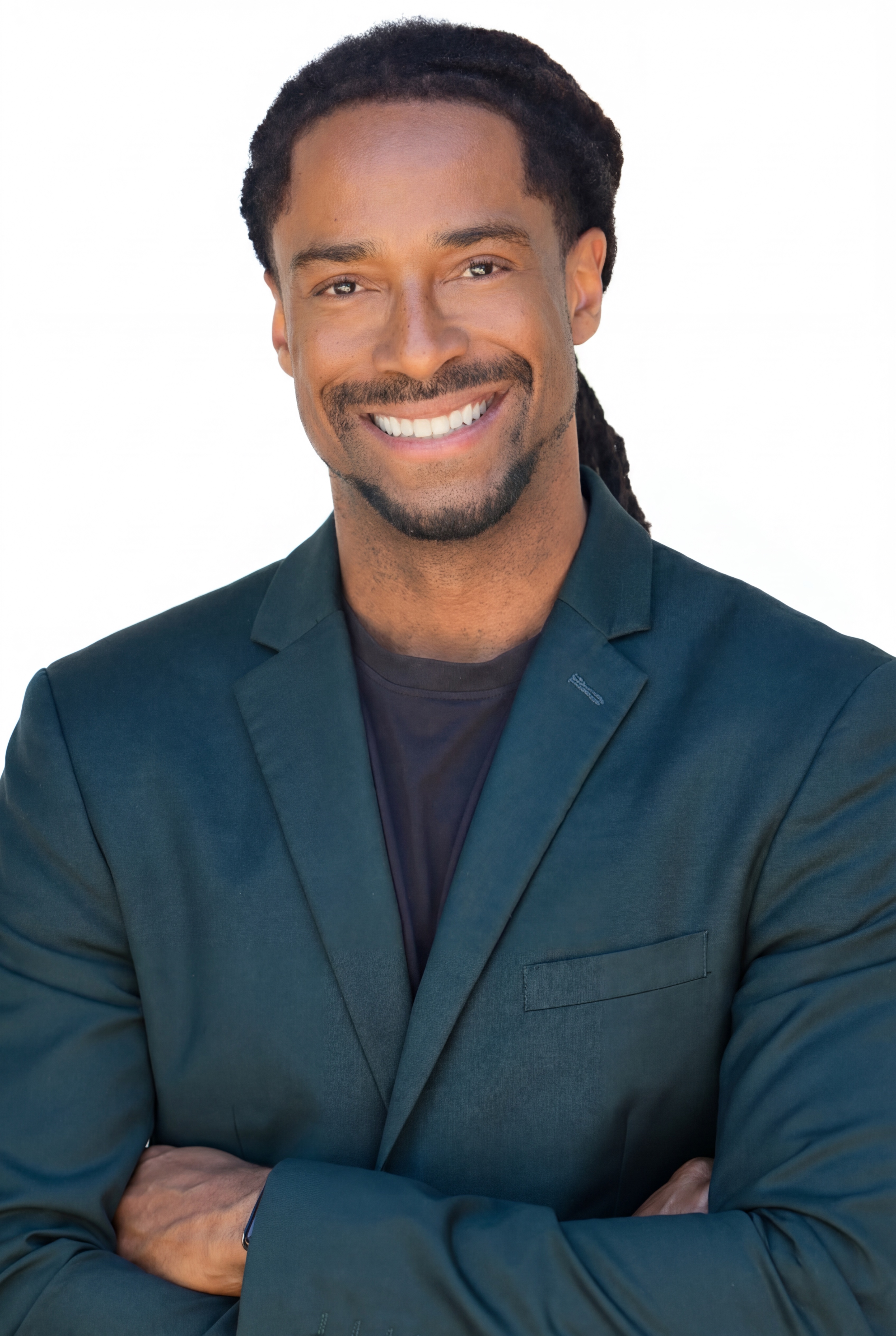
William “DJ Will Gill” Gilbert is a corporate event DJ, emcee, and engagement specialist. Named a Virtual DJ-Emcee by The Wall Street Journal, he develops virtual event experiences that support stronger employee morale. He is also recognized as a Forbes Next 1000 honoree. He pioneered the 3-in-1 booking model that combines professional emcee, open-format DJ, and interactive team-building host in a single engagement for Fortune 500 corporate clients including AT&T Business, CDW, Virgin Galactic, NeoGenomics, PepsiCo, PayPal, Ulta Beauty, Salesforce, Lenovo, and the United Nations, with 2,520+ five-star Google reviews from corporate clients across the United States. He is the founder of THEAIDJ, an AI-powered playlist generation platform.