
How AI Speeds Up Corporate DJ Pre-Event Preparation | DJ Will Gill
How does AI fit into corporate DJ pre-event preparation? AI accelerates the homework: audience analysis, playlist drafts matched to demographics, and agenda-timed set maps that the DJ then curates with human judgment. Will Gill builds AI into his prep workflow and his patent-pending AIDJ app while keeping the live read human.
Corporate DJ pre-event preparation is one of the most under-recognized labor categories in the entertainment industry. Planners see the DJ arrive on load-in day, set up equipment, and execute the event. What planners rarely see is the 10, 15, sometimes 20 hours of prep work per event that produced the “seamless execution” they experienced. Reading the run-of-show line by line. Vetting music against brand-safety guidelines. Building walk-on tracks for each keynote speaker. Programming award-ceremony music beds. Constructing energy arcs for networking hours and after-party sets. Cross-referencing tempo and key for every transition. Preparing backup libraries. This is not glamorous work. It is essential work. And in 2026, a specific portion of it is finally being compressed by AI in ways that materially change what corporate DJs can deliver.
This piece is a working framework for how AI actually accelerates corporate DJ pre-event preparation in 2026, and what that acceleration means for the planners booking those DJs. What the real prep workload is and why it takes as long as it does. Where AI meaningfully speeds up specific prep tasks and where it does not. The concrete time-savings by task category. The critical things AI does not do (and should not attempt to do) at a corporate scale. Why the downstream beneficiary of AI-assisted DJ prep is not just the DJ but the planner and the audience. And, most importantly, what an “AI-assisted, human-led” corporate DJ workflow actually looks like in 2026, because that is the practical shape of the future of this category. I built THEAIDJ specifically because I was living the prep-workload problem this article describes. Every argument here is one I have tested against my own event schedule.
Booking a corporate DJ who uses AI to arrive better-prepared? Contact DJ Will Gill.
Key Takeaways
- Professional DJ prep is a significant labor category. Late-2025 industry survey data cited by professional DJ networks shows top-tier DJs averaging 8 to 12 hours per week on setlist curation for major gigs alone, before any of the corporate-specific overhead is counted.
- AI compresses the mechanical layer of corporate DJ prep (harmonic analysis, tempo matching, energy profiling, similar-song discovery, whole-set sequencing) while leaving the creative and coordination layer entirely under human control.
- AI does NOT replace the corporate DJ. It compresses the parts of prep that drain time and mental capacity so that the DJ arrives on event day with more reserve for the work AI cannot do: real-time room reading, executive coordination, brand-voice judgment calls, and the emcee craft that lives at the intersection of music and moment.
- The downstream beneficiary of AI-assisted DJ prep is the planner and the audience, not just the DJ. A better-prepared, better-rested DJ produces measurably better event outcomes at the coordination and craft level, where corporate events actually succeed or fail.
- THEAIDJ is a USPTO patent-pending, purpose-built playlist generation tool that programs music by tempo, key, and harmonic similarity rather than genre tags, with Spotify export via Google OAuth. Built by working corporate DJs for the specific corporate DJ prep workflow this article describes.
1. The Real Time Cost of Corporate DJ Pre-Event Preparation
The starting point for understanding why AI matters here is understanding the actual labor scale of professional DJ prep. Most planners assume prep is a light overhead. The industry data says otherwise.
Coverage of the specific labor figure from an AI-in-DJing industry analysis: late 2025 survey data from professional DJ networks showed that top-tier DJs average 8 to 12 hours per week on setlist curation for major gigs alone, a 90-minute set, hundreds of candidate tracks, genre, mood, tempo, harmonic key, energy arc, crowd prediction, these aren’t separate variables you solve in sequence, they interact, changing one shifts the others, it’s less like solving a math problem and more like adjusting a mobile sculpture mid-hang, where touching any single element sends everything else into motion. That is 8 to 12 hours per week baseline. Corporate work adds substantial overhead beyond that baseline: brand-safety vetting, executive walk-on programming, run-of-show alignment, sponsor requirements, do-not-play lists, and the industry-specific tone calibration that a nightclub set never requires.
Specific prep tasks that consume time in corporate DJ work:
- Run-of-show absorption. Reading the full production document. Mapping every segment, transition, break, and speaker to a specific musical need.
- Brand-safety vetting. Cross-referencing every candidate track against corporate communications guidelines, industry-specific sensitivities, and any client-supplied do-not-play list.
- Executive walk-on programming. Each keynote speaker gets an intentional walk-on track. That track must match the executive’s personal preferences (when known), the audience energy, the segment’s content, and the corporate tone. Multiple candidates per speaker, often iterated with the planner.
- Awards ceremony music beds and stingers. Category announcements, winner walk-ups, envelope-open moments. Each needs its own micro-composition, timed to seconds.
- Networking hour architecture. Background music that supports conversation. Tempo, volume, and genre calibrated to the specific room and demographic.
- After-party set construction. Dance-floor programming with energy arcs, callback structure, and crowd-diverse track selection.
- Transition beds between segments. Music for the 30-to-60-second gaps between speakers, sessions, and program shifts.
- Contingency library preparation. Backup tracks for every category, staged and ready in case the primary programming has to shift live.
A serious corporate event booking (one full day, executive audience, awards segment, networking, and after-party) can absorb 15 to 25 hours of DJ prep before the DJ arrives on load-in day. This is real professional labor. It is largely invisible to planners because it happens in the DJ’s studio or living room, and the deliverable is the event, not a document that shows the labor. But it is a substantial time investment, and it is the specific investment that AI can meaningfully compress.
The specific coordination challenges that make corporate DJ prep more demanding than club or wedding DJ prep (which include much of what this section describes and add the multi-vendor coordination layer on top) are covered in the communication breakdown between DJs, emcees, and hosts analysis. The prep workload documented in this section assumes the DJ is also coordinating with an emcee, a host, and a production team. That coordination is on top of the prep hours, not included in them.
2. What Corporate DJ Prep Actually Involves at the Track-Selection Layer
Zooming in on the track-selection layer specifically, because that is where AI compression happens most cleanly. Every track a corporate DJ programs into an event has to satisfy multiple simultaneous constraints. Each constraint requires analysis. The analysis is where the hours go.
Specific track-selection constraints in corporate work:
- Tempo (BPM) compatibility. Adjacent tracks in a set need compatible tempos. Wide tempo jumps (a 90 BPM track next to a 128 BPM track) require intentional handling. In a two-hour set with 30 tracks, that’s roughly 29 tempo-adjacency decisions.
- Harmonic key compatibility. Tracks in incompatible keys clash audibly when transitioned. Harmonic mixing requires knowing the key of every candidate track and knowing which key transitions are consonant, which are neutral, and which produce dissonance.
- Energy profile. Every track has an inherent energy level (dynamic range, spectral density, transient intensity). Building an energy arc across a set requires knowing where each track sits and sequencing them intentionally.
- Similar-track discovery. Finding tracks that “feel like” a known good track, but are less overplayed, less genre-tagged, or better fit for a specific moment. This is a search problem across a music library that a human ear can only scan slowly.
- Brand-safe lyric vetting. Every candidate track’s lyrics must be scanned for content that violates the corporate client’s guidelines. This is a slow, manual process without automation.
- Do-not-play matching. Cross-referencing every track against the client’s do-not-play list. Depending on list length, this alone can consume hours.
- Whole-set sequencing. Even after every track is chosen individually, the sequence needs to work as a set. Track A into Track B into Track C into Track D. Every transition point is a decision.
Coverage of the specific layers of this analysis from an AI-DJ tool industry analysis: modern systems perform extensive audio signal processing on every track, they extract a wealth of information: harmonic content: identifying the key, chord progressions, and overall musicality, this allows for truly coherent harmonic mixing, where tracks are not just beat-matched but also melodically compatible, rhythmic structures: beyond BPM, AI analyses groove patterns, swing, and rhythmic complexity, energy and intensity metrics: algorithms quantify the energy of a track based on dynamic range, spectral density, and transient information, this provides a quantifiable measure of how a track might impact a crowd, allowing DJs to build energy arches with precision. That is a clean description of the analytical layer AI now handles automatically. Human ears do the same work but not at this scale, not this fast, and not this consistently.
The specific reason tempo (not genre) is the actual variable that determines whether music programming holds a corporate room (which is directly relevant to why AI-based tempo analysis compresses prep meaningfully) is covered in the why tempo beats genre during networking hours analysis. Corporate DJ prep at the highest professional standard already programs around tempo and key. AI accelerates the analysis; it does not change the underlying discipline.
3. Where AI Actually Speeds Up the Prep
Not all prep tasks benefit equally from AI acceleration. Some tasks are inherently mechanical (analysis and matching against known parameters) and are exactly what AI is good at. Others are inherently judgment-based (brand-voice fit, executive relationship management, real-time contingency) and remain squarely in human hands. The distinction matters because it determines both what AI usefully compresses and what an “AI-assisted DJ” still has to do.
Specific prep tasks where AI meaningfully compresses time:
- Automated BPM and key detection across a full library. What used to require several minutes of manual analysis per track happens near-instantly, at library scale.
- Harmonic compatibility scoring. Every track pair in the library gets a compatibility score. The DJ can filter for compatible tracks in seconds rather than hunting through crates.
- Energy profile analysis. Every track gets an energy score. Building an energy arc becomes a filter-and-sort operation, not a manual audition-and-compare.
- Similar-song discovery. “Find me tracks that feel like this one but are less obvious” becomes a query. The AI returns candidates that share sonic characteristics beyond genre tags.
- Whole-set sequencing suggestions. The AI can propose an ordering that optimizes for harmonic flow, tempo progression, and energy arc across the entire set. The DJ then adjusts.
- Playlist export to performance platforms. Direct integration with Spotify (via Google OAuth) and other services means the AI-generated playlist arrives in the performance rig without manual re-entry.
Coverage of the specific characterization of what AI does versus does not do from a leading AI-DJ industry analysis: AI is doing something genuinely useful in the setlist space, and it’s not the thing people worried about when they first heard AI DJ tools, it’s not replacing instinct, it’s handling the parts of the process that drain instinct before you ever get to use it, the intuitive, obsessive, deeply human part of curation will always have its place, probably should always have its place, but the mechanical overhead, the cross-referencing and key-checking and energy-arc calculating, that burden is lifting. That is a clean framing. AI compresses the mechanical layer. Instinct, judgment, and craft remain human.
Additional market validation from the AI-DJ tool review space: modern AI DJ tools can instantly and accurately analyze any track’s BPM (Beats Per Minute), musical key, and even more complex elements like chord progressions and rhythmic patterns, this analysis happens in real-time or near-real-time, providing detailed musical information that would take experienced DJs several minutes to determine manually, this feature represents a genuine game-changer for creating seamless mashups and professional remixes, the technology eliminates the guesswork from key matching and tempo alignment, allowing producers to focus on creative decisions rather than technical troubleshooting. That is the specific value proposition. Not creativity substitution. Guesswork elimination. Which returns time to the DJ for the work that actually requires creativity.
The specific reason this compression matters in a virtual event budgeting context (because DJ prep time is a real component of the event cost stack that AI-assisted DJs can partially reallocate to higher-value work) is covered in the virtual event entertainment budgets: what they actually cost in 2026 analysis. Time is a cost. Compressing time on mechanical tasks and reallocating it to craft is a real economic shift, not a marketing story.
4. Time-Savings by Category in Concrete Terms
Moving from abstract to concrete. The specific time compression varies by task, but general working ranges from my own workflow and from documented industry data land approximately as follows. These are working estimates, not lab measurements. Actual compression depends on library size, tool choice, and event complexity.
Working estimates of time compression by prep task:
- Library-wide BPM and key analysis. Manual: several minutes per track, often unfinished for library scale. AI-assisted: entire library analyzed in the time it takes to make coffee. Compression: roughly 90+ percent.
- Similar-song discovery for a specific mood or moment. Manual: 30 to 60 minutes of crate-digging to find 5 to 10 candidates. AI-assisted: seconds to return dozens of candidates. Compression: roughly 80 to 95 percent, though the DJ still audition-filters the results.
- Whole-set sequencing draft. Manual: 2 to 4 hours to build a coherent 2-hour set from a candidate crate. AI-assisted: minutes to generate multiple draft sequences to iterate on. Compression: roughly 70 to 85 percent, with the DJ retaining full editorial control.
- Transition-point evaluation. Manual: audition each transition one at a time. AI-assisted: harmonic compatibility scores flag likely-good and likely-problematic transitions in advance. Compression: roughly 60 to 80 percent, though final transition polish is still auditioned by ear.
- Playlist export to performance platforms. Manual: re-enter track lists into performance software. AI-assisted: direct export via Spotify integration and equivalent. Compression: roughly 90+ percent.
- Contingency library staging. Manual: build alternative playlists by hand. AI-assisted: generate parallel candidate sets from the same seed parameters, ready to deploy live. Compression: roughly 70 to 85 percent.
Aggregating across a serious corporate event booking, the total prep-time compression from AI-assisted workflow lands in a working range of 40 to 60 percent for the mechanical portion of prep. Which means, in absolute terms, an AI-assisted DJ can reclaim roughly 6 to 12 hours per major corporate booking that would otherwise go to library-scale analysis, candidate hunting, sequencing drafts, and format-shifting. That reclaimed time is not “saved” in the sense of leaving the workflow. It is redirected to work AI cannot do: brand-voice calibration, executive relationship management, real-time contingency planning, and the room-reading craft that AI cannot execute.
This time-reallocation is the specific mechanism by which AI-assisted corporate DJ workflows produce measurably better event outcomes. Not by doing the DJ’s job faster. By reducing the mechanical labor tax so that more of the DJ’s professional capacity is available for the work that actually determines whether the event lands. Coverage of the specific market-context framing on this from an AI-DJ tool industry analysis: let’s be honest, most DJs would rather be behind the decks than behind a keyboard, beyond the booth, AI is a powerhouse for creating promotional content, from generating videos for social media clips or YouTube to writing compelling copy for your event descriptions, AI tools can handle the heavy lifting, freeing you up to focus on what you do best: the music. Substitute “the corporate event” for “the music” and the frame maps directly to corporate work.
5. What AI Does Not Do (And Why That Matters for Corporate)
The honest section. AI has real limits, especially in a corporate context, and pretending otherwise damages the credibility of the AI-assisted framing. There are specific categories of DJ work where AI does not help, does not scale, and should not be trusted at a corporate event tier.
Specific tasks where AI does not meaningfully help corporate DJ work:
- Real-time room reading. The AI cannot see the executive audience’s body language, sense the energy shift when the CEO enters, or read the mood shift after a difficult announcement. That is real-time human perception and remains fully human.
- Brand-voice judgment calls. Deciding whether a specific track fits a pharmaceutical company’s tone versus a tech startup’s tone requires contextual understanding that AI does not reliably have at corporate stakes.
- Executive relationship management. Handling the CEO’s request for a specific song, working with the head of communications on brand-safety concerns, coordinating with the CMO on sponsor requirements. All human relationship work.
- Emcee moments. Speaker introductions, awards ceremony scripts, transitional patter. AI can draft. AI cannot deliver at professional stakes.
- Real-time contingency response. Speaker runs long. Awards ceremony gets restructured mid-event. Executive team calls an audible. AI cannot make these decisions on the fly with the same contextual judgment a working professional brings.
- The room’s story arc. AI can generate a technically-optimal sequence. Whether that sequence tells the specific narrative the event needs to tell is a human editorial decision.
- Multi-vendor coordination. Working with the emcee, host, AV team, and production crew during load-in and event. Human professional discipline.
Coverage of the specific limit-and-value framing from an AI-DJ industry analysis: the role of the human DJ is not disappearing but rather shifting, for large festivals, exclusive club nights, or bespoke private events, the human touch remains invaluable, we are seeing a new breed of AI-assisted DJs emerge, these professionals use AI for advanced track analysis, suggestion, or even background mixing, while retaining creative control, their focus moves from purely technical mixing to curation, mood direction, and audience interaction, it’s a partnership, not a hostile takeover. That is the correct framing for the corporate market. AI-assisted, not AI-replaced. The DJ’s professional capacity expands into curation, mood direction, and coordination when the mechanical layer is compressed.
The specific room-reading craft (which is exactly the professional discipline AI cannot replicate and that AI-assisted prep protects time for) is covered in the how to tell if a corporate DJ can read a mixed audience analysis. Booking a DJ who uses AI for prep is not booking a lesser DJ. It is booking a DJ who has more capacity for the room-reading work that determines whether the event actually lands.
6. THEAIDJ: A Purpose-Built Corporate DJ AI Prep Tool
The specific commercial disclosure this section makes: I built a tool for this problem. THEAIDJ (theaidj.com) is a USPTO patent-pending playlist generation platform designed for the corporate DJ workflow this article has been describing. It is not the only AI-DJ tool on the market, and it is not the right tool for every use case. It is the tool I built because the tools I was using did not solve the specific problems I face booking 600+ corporate events for Fortune 500 clients.
What THEAIDJ specifically does:
- Generates playlists by tempo, key, and harmonic similarity, not by genre tags. This matters because corporate audiences do not respond to genre in the way club or wedding audiences do. Tempo and key alignment produce coherent sets across the tonal range corporate work requires. Genre-based tools produce playlists that feel superficially varied but harmonically incoherent.
- Integrates directly with Spotify via Google OAuth. Generated playlists export cleanly to Spotify without manual re-entry. Corporate DJ workflows that use Spotify for library access and staging benefit from the direct pipeline.
- USPTO patent-pending underlying algorithm. Application No. 19/202,496. The specific approach to similarity scoring is proprietary. What it produces is a playlist that reflects how a working DJ actually programs, not how a metadata database catalogs.
- Built by working DJs, tested against real event schedules. Every product decision has been shaped by whether it saves time on actual bookings versus adding friction. The tool exists because I use it. If it did not save me hours per event, it would not have shipped.
- Designed for DJs and event planners, not just DJs. Planners who want to explore music programming for their own events (before or independent of a DJ booking) can use the tool to sketch out ideas.
Coverage of the specific market position from the AI-DJ tool review space (which contextualizes where THEAIDJ sits relative to other tools in the category): for AI suggestions specifically, pay attention to: data type: does it lean on BPM and musical key from your library, on online recommendation engines, or on crowd data from other DJs? control: can you lock opener and closer tracks, control how much weight to give tempo vs harmony, and reject suggestions that do not fit the mood? context: does the suggestion system understand the whole set, or only the current track?. Those are the correct evaluation questions. THEAIDJ is optimized for the “understands the whole set” and “musical key from your library” quadrants specifically because that is what corporate work requires.
A specific note on positioning: THEAIDJ is not marketed as an “AI DJ” in the sense of replacing a human. It is a playlist generation and analysis tool that a working DJ uses in the prep phase. The event execution remains fully human. This is the “AI-assisted, human-led” model this article has been describing, expressed as a specific product.
Try THEAIDJ at theaidj.com. Feedback from working DJs and event planners actively shapes the product roadmap. If you use it and something is missing that would meaningfully change your workflow, tell me.
7. Why This Matters for Corporate Planners, Not Just DJs
This is the section corporate planners should read most carefully. AI-assisted DJ prep is not a DJ productivity story. It is a planner outcomes story. The reason planners should care about how their booked DJ handles pre-event prep is that the prep workflow directly determines what the DJ can bring to event day.
Specific planner-side benefits from booking an AI-assisted DJ:
- The DJ arrives with more reserve for real-time work. Prep exhaustion is real. A DJ who has burned 20 hours on mechanical prep before an event has less capacity for the coordination and craft that event day demands. AI-assisted prep protects that capacity.
- The programming actually reflects tempo and key logic, not just genre intuition. Corporate rooms are harmonically sensitive. Tempo-and-key-optimized programming lands differently than genre-tag programming. Planners who care about event polish should care about programming methodology.
- The DJ can respond faster to mid-event pivots. When the executive team calls a schedule change mid-event, an AI-assisted DJ has candidate contingency sets already staged and can shift within minutes. Manual-prep DJs need longer to reconfigure.
- Multi-day and multi-session bookings become substantially more manageable. A 3-day summit that would consume 60+ hours of manual prep becomes feasible with AI-assisted prep in a fraction of the time, without quality compromise. This expands the range of what planners can practically ask a corporate DJ to deliver.
- Brand-safety vetting becomes more thorough, not less. AI-based lyric and metadata screening catches problem tracks that human ear-scanning misses. Corporate planners get more brand-safe programming from AI-assisted prep, not less.
- The DJ has capacity to actually engage with the planner’s brief. When 60 percent of prep time is mechanical, the human editorial layer gets rushed. AI-assisted prep protects time for the strategic brief work planners actually need engaged.
The corollary: planners who want the benefits of AI-assisted DJ prep should look for DJs who explicitly incorporate AI tools into their workflow, not DJs who are AI-skeptical or AI-hostile. This is a genuine professional-quality signal in 2026. A DJ who has integrated AI tools thoughtfully is a DJ who has reallocated prep time from mechanical work to craft. A DJ who has not is a DJ whose prep is either lower quality or lower quantity, or is producing the same quality at higher personal cost that will show up in event-day fatigue.
The specific commercial case for the consolidated multi-hyphenate operator model (which pairs particularly well with AI-assisted prep because a single operator holding DJ, emcee, and engagement functions benefits disproportionately from every hour of prep-time reclamation) is covered in the the rise of the multi-hyphenate event host analysis. AI-assisted prep and multi-hyphenate booking are complementary structural moves. Both compress overhead. Both redirect capacity toward the work that actually determines event outcomes.
8. The Working Framework: AI-Assisted, Human-Led Corporate DJ Prep
To close, the working framework. What an AI-assisted, human-led corporate DJ prep workflow actually looks like in 2026 practice. This is not a theoretical model. This is how I run prep for major corporate bookings.
The workflow, from client briefing to event day:
- Human: Client briefing and run-of-show absorption. Full human read. Human note-taking. Human questions back to the planner about tone, brand register, audience demographic, executive preferences, do-not-play list. Nothing here is automated.
- AI-assisted: Library-scale analysis. Music library gets BPM, key, energy, and similarity scoring in the background. What used to be a manual multi-hour audit runs while I focus on the human briefing above.
- Human: Track candidate curation from the analyzed library. I select the tracks I want to work with. AI provides the analytical layer. Selection is still my editorial judgment based on the brief.
- AI-assisted: Sequence generation. The tool proposes multiple candidate sequences optimized for tempo, key, and energy arc. I audition each. Compression versus manual sequencing is significant.
- Human: Sequence editing and callback structure. The AI sequence is a starting draft. I edit for narrative arc, callback structure, and the specific moments the run-of-show requires. Human craft.
- AI-assisted: Contingency set staging. Parallel sets for likely mid-event pivots (speaker runs long, awards reshuffle, executive schedule change) generated from the same seed parameters. Ready to deploy live.
- Human: Brand-safety and executive-content vetting. Every track cross-referenced against corporate communications guidelines. Every lyric scanned. Human editorial judgment on the fringe cases AI does not catch.
- Human: Playlist export, backup staging, load-in coordination. Direct export where the tools support it. Manual verification. Multi-vendor coordination with emcee, host, AV team.
- Human: Event execution. Real-time room reading. Live sequencing decisions. Emcee moments. Executive coordination. No AI involvement at execution.
- Human: Post-event debrief. What worked. What did not. What to iterate for the next booking. Feedback captured with the planner.
This is the shape of corporate DJ prep in 2026 at the working professional tier. Not “AI does the prep, human executes the event.” That framing is wrong and understates the human craft that AI cannot replace. But not “human does everything, AI is a threat” either. That framing is also wrong and burns human capacity on mechanical work that AI handles more effectively.
The correct framing is: AI compresses the mechanical layer, human expands the craft layer. That is the AI-assisted, human-led model. It is where the market is heading. It is what THEAIDJ was built for. And it is the reason planners booking corporate DJs in 2026 should ask specifically about AI-assisted prep workflows as part of their vendor evaluation.
The specific operational manual for how a multi-hyphenate operator runs the full event execution phase (which is where the reclaimed prep time gets redirected to actually produce better event outcomes) is covered in the how to run a conference where your DJ, emcee, and engagement host are the same person operational manual. The prep discipline described in this article and the execution discipline described in that one are the two halves of the same professional practice. Both matter. AI helps with the first. Human capacity delivers the second.
Frequently Asked Questions
What is corporate DJ pre-event preparation and why does it take so long?
Corporate DJ prep is the labor of building an event’s music programming before the event starts. Reading the run-of-show, vetting brand-safe music, building keynote walk-on tracks, awards ceremony beds and stingers, networking hour architecture, after-party sets, transition beds, and contingency libraries. Late-2025 industry survey data cited by professional DJ networks shows top-tier DJs averaging 8 to 12 hours per week on setlist curation for major gigs alone, before corporate-specific overhead (brand safety, executive preferences, do-not-play lists, run-of-show alignment). A serious corporate event can absorb 15 to 25 hours of prep before load-in day.
What specific tasks does AI actually accelerate in corporate DJ prep?
AI meaningfully compresses the mechanical layer: automated BPM and key detection across an entire library, harmonic compatibility scoring, energy profile analysis, similar-song discovery, whole-set sequencing suggestions, and playlist export to performance platforms. Working compression estimates: 90+ percent on library-wide analysis, 70 to 85 percent on whole-set sequencing drafts, 80 to 95 percent on similar-song discovery. Aggregate across a major booking: 40 to 60 percent compression on the mechanical prep layer, which reclaims roughly 6 to 12 hours per major corporate booking that gets redirected to the craft layer AI cannot replicate.
What is THEAIDJ and how is it different from general AI music tools?
THEAIDJ (theaidj.com) is a USPTO patent-pending playlist generation platform (App. No. 19/202,496) designed specifically for the corporate DJ workflow. It programs music by tempo, key, and harmonic similarity rather than genre tags, which matters because corporate audiences are harmonically sensitive in ways club or wedding audiences are not. It integrates directly with Spotify via Google OAuth for playlist export. It was built by working corporate DJs, tested against real event schedules, and continues to be shaped by feedback from working DJs and planners. It is positioned as a working professional’s prep tool, not as an AI-DJ replacement for human execution.
Can AI replace a corporate DJ?
No. AI does not read rooms in real time. Does not make brand-voice judgment calls at corporate stakes. Does not manage executive relationships. Does not deliver emcee moments. Does not handle real-time contingency response. Does not hold the room’s story arc. Does not coordinate with emcee, host, and production crew during event execution. AI compresses the mechanical layer of prep. Everything from load-in through event execution through post-event debrief is fully human professional work. The correct framing is AI-assisted, human-led, not AI-replaced.
How does AI-assisted prep benefit corporate event planners, not just the DJ?
The DJ arrives with more reserve for the coordination and craft that event day demands, not exhausted from 20 hours of mechanical prep. Programming actually reflects tempo and key logic, not just genre intuition. The DJ can respond faster to mid-event pivots because contingency sets are already staged. Multi-day and multi-session bookings become more manageable. Brand-safety vetting becomes more thorough because AI screening catches things human ear-scanning misses. The DJ has capacity to actually engage with the planner’s strategic brief instead of rushing the editorial layer to make the mechanical layer fit.
What should corporate planners look for in a DJ who uses AI tools?
Ask specifically about their AI-assisted prep workflow. A DJ who has thoughtfully integrated AI tools has reallocated prep time from mechanical work to craft. A DJ who is AI-hostile is either producing lower-quality prep, doing lower quantities of prep, or producing the same quality at higher personal cost that will show up as event-day fatigue. Watch for specific answers: what tools they use, what tasks they still do manually, how they handle brand-safety vetting, what their contingency staging looks like. Vague answers signal side-skill claims. Specific workflows signal genuine professional practice.
What Corporate Clients Are Saying
About the Author
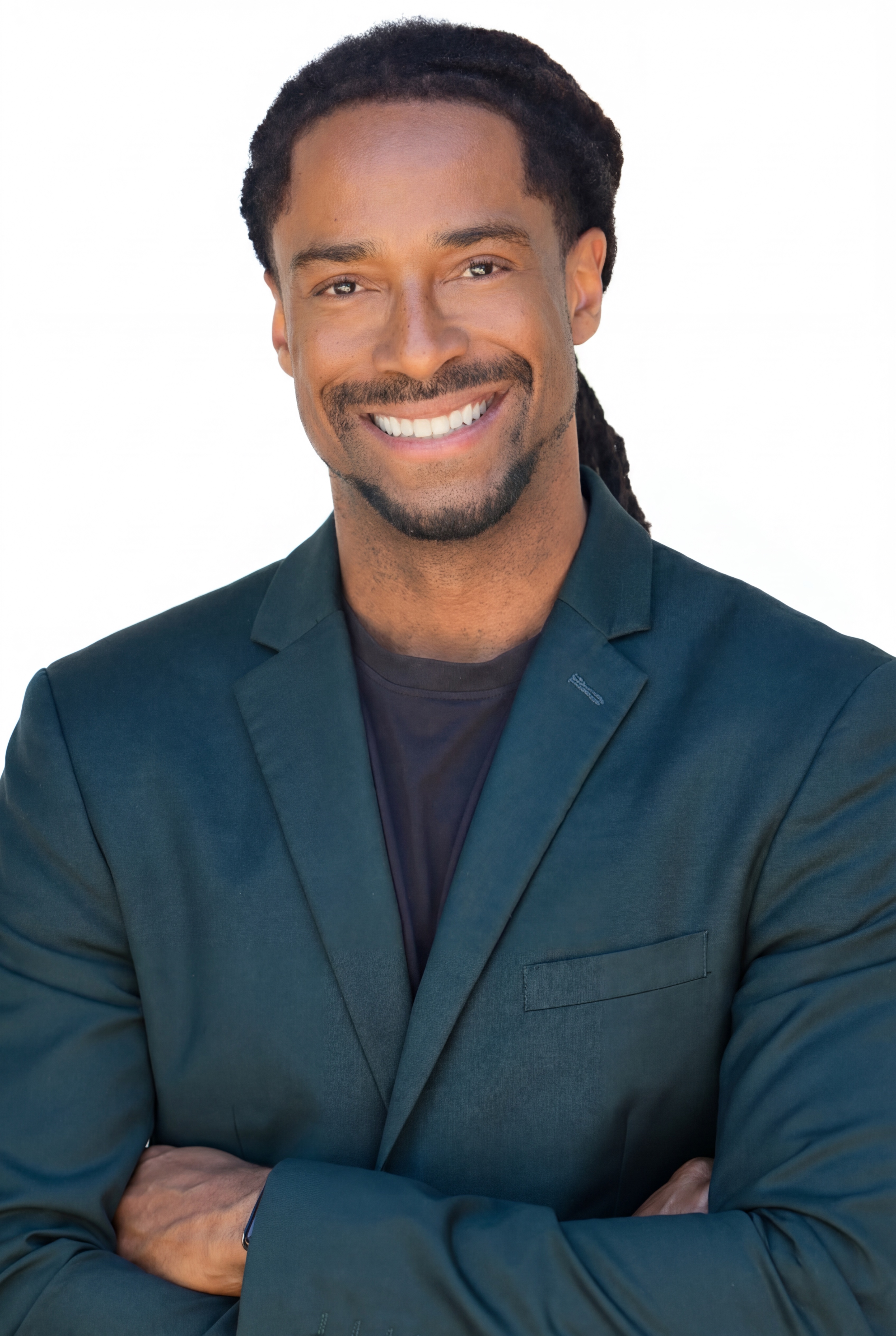
William “DJ Will Gill” Gilbert is a corporate event DJ, emcee, and audience-engagement expert. Recognized by The Wall Street Journal as a Virtual DJ-Emcee, he creates virtual experiences designed to help companies build stronger employee morale. He is also a Forbes Next 1000 honoree. He pioneered the 3-in-1 booking model that combines professional emcee, open-format DJ, and interactive team-building host in a single engagement for Fortune 500 corporate clients including AT&T Business, CDW, Virgin Galactic, NeoGenomics, PepsiCo, PayPal, Ulta Beauty, Salesforce, Lenovo, and the United Nations, with 2,520+ five-star Google reviews from corporate clients across the United States. He is the founder of THEAIDJ.