
Virtual Event Entertainment Budgets: What They Actually Cost in 2026 | DJ Will Gill
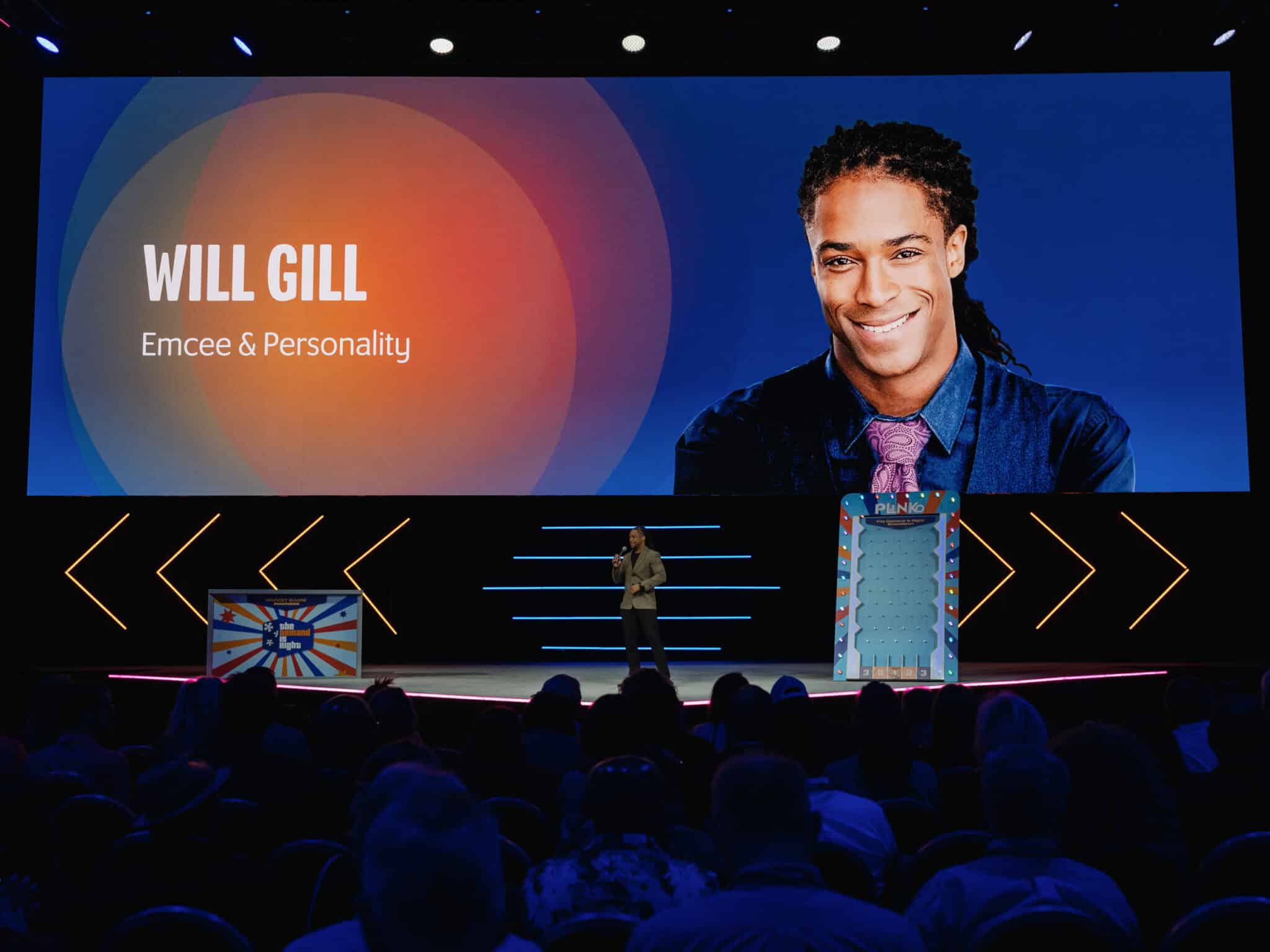
Virtual event entertainment budgeting is where corporate planners consistently overspend on the wrong things and underspend on the right ones. The industry has been through five years of rapid category evolution since 2020, pricing conventions have shifted twice, and most planners are still working from budget templates that no longer reflect what a professional virtual event actually costs to run. The result: entertainment gets treated as a variable cost to squeeze, platform tech gets treated as a fixed cost to accept, and staff time gets treated as a free resource that does not appear on any budget document. All three of those assumptions are wrong in 2026, and getting the allocation right is one of the highest-leverage planning decisions on the entire event.
This piece is a working budget framework for corporate planners booking virtual event entertainment in 2026. What virtual event budgeting is actually made of, and how the cost stack differs structurally from in-person events. What virtual DJs, emcees, hosts, and engagement talent charge across the market this year, using external market data (I am not disclosing my own rates in this piece, and neither should you disclose yours in vendor conversations before you have to). Where the “cheap virtual entertainment” quotes come from and what they cost you downstream. How to allocate a virtual event budget by event tier. The specific red flags in low-cost quotes that should slow down the decision. This is not a piece about how much a good virtual event should cost, because that depends on the event. It is a piece about the mechanics of the budget so you can build one that matches what you actually need.
Building a virtual event budget and want a professional quote to benchmark against? Contact DJ Will Gill.
Key Takeaways
- Virtual event total costs run roughly 25 to 50 percent below comparable in-person events, according to independent industry estimates. That savings comes mostly from venue, catering, and travel, not from talent. Cutting talent to match the in-person budget drop is where most virtual events go wrong.
- External market data puts corporate DJ rates in a wide range from $100 to $200 per hour on the low-market end up to specialist and premium tiers that run substantially higher. Corporate emcee ranges span $500 to $5,000 per event on the standard end, with experienced professionals in the $5,000 to $20,000 range and celebrity talent well beyond that.
- The biggest untracked expense in virtual events is staff time, which typical industry analysis pegs at 20 to 40 hours of preparation per 60-minute event, or roughly $1,500 to $3,000 in hidden internal labor per session at fully loaded rates.
- Virtual entertainment budgets should be allocated as a percentage of engagement outcomes, not as a percentage of leftover budget after tech and platform fees. Under-investing in talent to preserve platform spend consistently produces the “poor experience damages the brand” outcome that the industry warns about.
- Red flags in low-cost virtual entertainment quotes: no virtual-specific reel, no dedicated redundant tech setup, no rehearsal built in, no experience at your event scale, and rates that fall below the professional market floor for the event scope. Below-floor quotes almost always signal downstream problems that cost more than the savings.
1. Why Virtual Event Entertainment Budgeting Is Structurally Different from In-Person
In-person corporate event budgets have a well-understood cost stack that has been stable for two decades. Venue and F&B typically absorb 40 to 50 percent of the total. AV production, entertainment, speaker fees, and staffing distribute across the rest. Coverage of the specific in-person breakdown from a leading corporate event pricing analysis: F&B typically represents 40-50% of event budgets, hotel catering runs $75-$200+ per person per day, basic AV starts at $1,000-$3,000, full production with lighting, video, and sound runs $10,000-$100,000+, internal speakers are free, industry experts charge $5,000-$30,000, celebrity speakers range from $50,000 to $500,000+, entertainment (bands, performers) adds $2,000-$50,000. That is the in-person shape.
Virtual events restructure that stack. Venue disappears. F&B mostly disappears (some virtual events send food kits to attendees, which becomes a per-attendee cost). Travel and lodging for staff and speakers disappears. But new cost categories appear: platform fees, streaming production, dedicated tech support, and virtual-specific engagement design. And entertainment costs, contrary to planner expectations, do not fall proportionally. A good virtual DJ or emcee costs comparable to a good in-person DJ or emcee. The market has not delivered a virtual discount at the talent tier.
Coverage of the overall virtual vs. in-person cost differential from the same corporate event pricing analysis: virtual events typically cost 25-50% less than comparable in-person events, you save on venue, catering, travel, and lodging, however, production and technology costs can be significant, don’t underspend on virtual, poor experiences damage your brand. That 25-to-50-percent savings is real. Where it comes from matters. It does not come from cutting talent. It comes from the disappearance of physical hosting infrastructure. Planners who take the savings AND cut talent are compressing the wrong line item.
Specific ways virtual event budgeting differs structurally from in-person:
- Talent as a proportion of total goes up. Because venue and F&B are removed from the denominator, entertainment and speaker costs become a larger percentage of what remains. This is not a reason to cut talent. It is a reason to price talent correctly.
- Platform and streaming become a real line item. In-person AV was mostly the venue’s problem. Virtual event platforms and streaming production are the planner’s problem, with real recurring costs.
- Tech redundancy costs are non-negotiable. A virtual event that goes down technically is a total loss. In-person events survive minor tech failures. Virtual events do not. Redundancy costs money.
- Rehearsal costs are higher in proportion. Virtual events require more tech rehearsal per unit of run-time than in-person events. Rehearsal time is professional time. Professional time is a cost.
- Staff time expands, not contracts. Planners assume virtual events require less internal labor. Industry analysis says the opposite. More coordination, more tech management, more attendee handling per event.
The specific in-person cost baseline that this piece implicitly contrasts against (particularly for high-cost markets like Las Vegas where venue-driven costs are structurally higher) is covered in the Las Vegas corporate event costs by Strip property analysis. The virtual event pricing conversation is genuinely different from the in-person pricing conversation. Applying in-person mental models to virtual budgeting produces predictable misallocations.
2. The Full Virtual Event Cost Stack in 2026
Before allocating entertainment budget specifically, planners need to understand where entertainment fits in the whole virtual event cost stack. The stack has grown more complex since 2020, and 2026 budgets that ignore recent line items produce shortfalls in exactly the places that produce visible event failure.
Coverage of the current total virtual event cost bands from a leading corporate event budget analysis: virtual event costs vary dramatically based on production complexity, platform features, speaker management, and attendee experience requirements, simple webinars might cost under $2,000, while premium virtual conferences can exceed $250,000, professional virtual events require paid platforms costing $5,000-$50,000+ based on attendee count, features, and customization, basic Q&A is standard, advanced features like virtual networking, gamification, 1:1 video meetings, and AI matchmaking require premium platforms and add complexity. The band is enormous because the range of what “virtual event” describes is enormous. A 30-person internal webinar and a 5,000-person branded multi-track conference are both “virtual events” and their budgets are three orders of magnitude apart.
Coverage of the tiered breakdown by event scale from a virtual event production authority: $2,500-10,000 is the price range if you’re using a provider like Zoom or WebEx to host a single virtual event or managed webinar, this is a good option for smaller events with less production value, if you’re hosting a larger event that includes breakouts, branding, and more interactive features for your attendees, it is better to use a virtual event production company, $10,000-$20,000 is the price range for smaller one-day events managed by a virtual event production company, $20,000-$50,000+ is the price range for a multi-day virtual event managed by a virtual event production company. This is a clean tiering. Most corporate virtual events land in the $10K-$50K band, with genuine flagship events (large conference, product launch, executive summit) going up from there.
The specific line items that make up the stack in 2026:
- Platform fees. Basic tools included in existing video conferencing subscriptions. Professional virtual event platforms in the $5,000 to $50,000+ range per event based on attendee count, features, and customization. Enterprise platforms (ON24, Cvent, Bizzabo) at the top of the range.
- Streaming and production. Webcam presentation is inexpensive. Multi-camera studio production with graphics and switching runs into significant equipment and crew costs.
- Entertainment and hosting talent. Virtual DJ, virtual emcee, virtual team-building host, keynote speakers. Ranges detailed in the next three sections.
- Engagement technology. Advanced polling, gamification, virtual networking, breakout rooms, 1:1 matching. Add-ons or premium platform features.
- Content production. Pre-event video, presentation design, motion graphics, custom branding. Runs $500 to $5,000+ depending on scope.
- Technical support and event management. Dedicated technical producers, speaker support, attendee help desk. Complex events cannot rely on DIY support.
- Internal staff time (usually untracked). The largest hidden cost. Industry analysis pegs this at $1,500 to $3,000 per event at fully loaded rates for a single 60-minute webinar, and it scales sharply with event complexity.
- Content repurposing and follow-up. Post-event asset creation, follow-up email sequences, sales handoff. Often unbudgeted, always required for the event to produce actual pipeline outcomes.
Coverage of the specific staff-time hidden cost from a leading virtual event budget framework: staff time remains the biggest untracked expense, a typical 60-minute webinar requires 20-40 hours of preparation across virtual event marketing, logistics, and follow-up, at $75/hour loaded cost, that’s $1,500-3,000 in hidden labor per event, most virtual event budgets fail before the first attendee logs in, teams allocate 80% of spend to platform fees while ignoring the infrastructure that actually drives pipeline. This is the specific budgeting mistake most planners make. Platform gets 80 percent of the visible budget. Talent and infrastructure get the leftovers. The event produces a technically-competent-and-strategically-empty output.
The specific tech infrastructure requirements for virtual and hybrid events (which affect where hardware, redundancy, and rehearsal costs actually land in the stack) are covered in the hybrid event DJ setup gear that planners forget analysis. Understanding the tech stack is necessary before you can budget it correctly. Under-scoping the tech line items is where the majority of virtual event budget overruns originate.
3. Virtual DJ Pricing Ranges in 2026
Virtual DJ pricing in 2026 tracks in-person corporate DJ pricing closely, with some virtual-specific premiums where dedicated streaming setups, redundant tech, and virtual production experience are required. The idea that virtual DJs should be substantially cheaper than in-person DJs, because “no travel,” is a category error. What the DJ is doing (reading the room, programming music, adjusting energy in real time) is the same job. The delivery medium is different. The market has not priced in a big virtual discount for professional talent.
Coverage of the current in-person corporate DJ market data from a 2026 pricing guide (which anchors the virtual comparison): for corporate events, the pricing often breaks down by the hour, typically falling between $100 and $200 per hour, one analysis found that a standard corporate event DJ costs about $645 for a little under four hours of entertainment, on average, you can expect the cost to hire a DJ to be around $600 for an event, however, this price tag shifts based on several key factors, from how long your party lasts to the specific services you need to create the right atmosphere for your team or clients. That is the general market floor for the corporate DJ category. Professional and specialist tiers run above it. Fortune 500 corporate work is priced above the general market floor because the professional standards required at that tier are higher.
Additional external market data anchoring the standard-corporate DJ range: the average cost of a DJ for a corporate event is around $645 when hired for 3.75 hours, for a smaller corporate event, the cost of a DJ can start at $175 for 2 hours, you may want to add in extras like lighting, a photobooth, a fog machine or emcee services, if you’re looking to save money or are working with a limited budget, you may want to eliminate incorporating some of these additional services. Consumer-focused marketplaces (The Bash, GigSalad, etc.) tend to sit at the general-market end of corporate DJ pricing. Corporate-specialist vendors, virtual production companies, and dedicated corporate DJs sit at higher tiers.
General virtual DJ pricing bands to expect in 2026 (external market data, not this article’s rates):
- Entry-tier virtual DJ. Consumer-marketplace booking. $100-$300 per hour range. Typically single-camera streaming, minimal production, limited backup tech. Appropriate for internal happy hours or low-stakes team virtual events.
- Standard corporate virtual DJ. Corporate-specialist vendor with virtual event experience. Roughly comparable to in-person corporate DJ rates ($645 average for approximately 4 hours per external market data). Multi-camera or professional single-camera setup, backup tech, tested platform experience.
- Executive-tier virtual DJ. Fortune 500 corporate vendor. Half-day, full-day, and multi-day pricing tiers. Full redundant tech stack. Dedicated tech support. Documented experience at scale. Priced above the general market for the professional standards it delivers.
- Premium and celebrity tier. Named talent, hybrid speaker-DJ formats, celebrity crossover talent. Runs into speaker-fee territory.
The specific virtual pricing overhead comes primarily from redundant tech (backup internet, backup rig, backup platform login), longer rehearsal cycles required for virtual production, and the professional expertise required to hold a virtual room the way a physical room can be held. That expertise is genuinely different from in-person expertise. Not more valuable. Not less valuable. Different.
The specific reason virtual event audiences drop out of engagement at a much faster rate than in-person audiences (which affects what you are actually paying for when you hire a professional virtual DJ, because holding attention in a virtual environment is a distinct professional skill) is covered in the why virtual conferences lose attention after minute 12 analysis. Virtual DJ work is not just DJ work delivered through a webcam. It is a specific professional discipline with its own cost structure. Paying professional rates for professional work is the framework that produces professional outcomes.
4. Virtual Emcee and Host Pricing Ranges in 2026
Virtual corporate emcee and host pricing spans a much wider range than DJ pricing, because the emcee category itself spans from small internal event moderators to celebrity hosts commanding six-figure fees. Most corporate virtual events land in the middle of this range: experienced professional emcees delivering polished, on-brand hosting at rates that reflect the professional discipline required.
Coverage of the general corporate emcee market ranges from a comprehensive 2026 pricing guide: on average, corporate event emcee hosting prices in the U.S. range anywhere from $500 to $5,000 per event, for smaller local events or shorter engagements, prices range between $500 and $1,500, larger conferences or high-profile events might require emcees charging $3,000 or more, that said, booking a celebrity or known keynote speaker can easily cost $10-30,000 for the occasion, or more depending on responsibilities. That is the general-market corporate emcee range. Virtual delivery does not systematically discount this range. Virtual production skill is a value-add, not a value-subtract.
Additional external market data on the higher-tier corporate emcee band: typically, experienced emcees with a proven track record can charge anywhere from $5,000 to $20,000 or more for a single event, companies often seek out celebrity MCs to add star power and prestige to their events, well-known personalities from the entertainment industry, sports, or other high-profile fields can command significantly higher fees due to their recognizability and ability to draw larger audiences, celebrity corporate event emcee price fees can range from $20,000 to hundreds of thousands of dollars, depending on their level of fame and demand, the length and complexity of the event play a crucial role in determining emcee pricing, leaders typically charge higher rates for multi-day events or events that require extensive preparation, research, and customization. The multi-day and heavy-prep premium is real. So is the celebrity ceiling, which planners should note is not what most planners are actually shopping for.
And on the broader host and moderator category (which includes virtual conference moderators, facilitators, and hybrid emcee formats): costs can vary widely, typically ranging from $1,000 to $10,000 or more per event, the broad range reflects the diversity of events, host experience levels, and market demands, on the lower end, you might find newer hosts or those working smaller, local events, at the higher end are celebrity hosts, industry experts, or highly experienced professionals working large-scale, high-profile events. That $1,000 to $10,000 range covers most working corporate virtual event bookings for professional hosts.
General virtual corporate emcee pricing bands to expect in 2026:
- Entry-tier virtual emcee. $500-$1,500 per event. Short, straightforward hosting engagements. Small internal events, simple webinars, low-stakes moderation. Limited customization, minimal prep.
- Standard corporate virtual emcee. $1,500-$5,000 per event. Professional hosts with virtual event experience, custom prep, and brand voice alignment. Most mid-size corporate virtual events land here.
- Experienced corporate virtual emcee. $5,000-$20,000 per event. Proven track record with Fortune 500 clients, multi-day capability, deep prep and customization. Half-day, full-day, and multi-day event tiers.
- Celebrity and marquee virtual emcee. $20,000+ per event. Named talent whose recognition is part of the value. Fee scales with the fame differential.
The specific factors that separate a professional virtual emcee from a technically competent but generic host (which affect what you are actually paying for when you compare quotes at the same nominal price point) are covered in the how to engage a remote audience analysis. Two emcees quoting at the same rate are not delivering the same product. Understanding what the difference is before you sign is what makes the budget comparison meaningful.
5. Virtual Interactive Team-Building Hosts, Engagement Talent, and Interactive Formats
Virtual audience-engagement hosts, engagement facilitators, and interactive-format specialists are a smaller and more variable category than virtual DJ or emcee. This is a specialty market. Rates depend heavily on the complexity of the game format, the tech required to run it, the amount of custom development, and whether the game show is being run as a plug-and-play package or built specifically for the client.
Specific pricing considerations in this category:
- Package game show format. Off-the-shelf virtual game show (trivia, feud-style, custom-branded but standard mechanics). $1,500-$5,000 range depending on scale and platform integration.
- Custom game show design. Purpose-built game show integrating client content, brand elements, and event-specific mechanics. $5,000-$15,000+ range depending on custom development required.
- Multi-round or series-format engagement. Recurring engagement across an event day or a multi-day event. Priced as a series rather than a single segment.
- Combined engagement + emcee + DJ package. Multi-hyphenate operator delivering interactive team-building, emcee moments, and virtual DJ programming across the full event. Price is not the sum of three separate rates but reflects the integration value.
- Tech-heavy interactive formats. Formats requiring wheel spins, spotlighting, MMhmm-style overlays, real-time scoring displays, or specialized production. Tech complexity drives cost more than talent cost alone.
Key point on virtual game show pricing: the biggest hidden cost is technical production, not talent. A virtual game show that requires switching between multiple sources, running overlay graphics, spotlighting participants, and integrating scoring often needs a dedicated tech operator behind the scenes. Planners who quote the “talent” for the game show without pricing the “tech” for the game show discover the gap the week of the event.
General virtual game show and engagement talent pricing bands to expect in 2026:
- Entry-tier virtual team-building host. $500-$2,000 for a single-round package format. Standard mechanics, low customization.
- Standard corporate virtual game show. $2,000-$7,500 for a professionally hosted format with some client-specific customization and dedicated tech support.
- Executive-tier custom game show. $7,500-$20,000+ for fully custom design, integrated production, and dedicated tech team.
- Multi-hyphenate combined package. Package pricing reflecting DJ + emcee + engagement across the full event day. Typically priced as a single integrated engagement rather than as summed components.
The specific dynamic that makes virtual events particularly susceptible to dead-air problems (which drive planners to over-book engagement talent and often over-spend on redundant activation) is covered in the how to avoid dead air at hybrid events analysis. Budgeting for engagement is not the same as budgeting for insurance against dead air. One is proactive design. The other is defensive over-spending. Planners often confuse them.
6. The Hidden Costs of Cheap Virtual Entertainment
The single most expensive mistake in virtual event entertainment budgeting is optimizing for the lowest quote without understanding what has been removed to hit that price. The cheapest virtual DJ or emcee quote is almost never the cheapest actual booking, because the missing costs get paid in event-day problems, planner labor, and downstream damage to the brand.
Specific hidden costs when the entertainment quote comes in significantly below the professional market floor:
- No redundant tech setup. A budget virtual DJ running a single laptop and single internet connection has no backup if either fails. When either fails, the event fails. The cost of that failure is not on the quote.
- No rehearsal or minimal rehearsal. Budget quotes typically exclude tech rehearsal time or include only a token pre-check. Rehearsal is where platform-specific issues surface. Without rehearsal, those issues surface during the event.
- No dedicated tech operator. The talent is also managing their own streaming, camera, chat, and platform. Split attention degrades both the tech quality and the hosting quality. Neither is fully professional.
- No virtual-specific reel or credentials. Cheaper vendors often are not virtual specialists. They are in-person specialists working virtually because they have to. The virtual craft is genuinely different and not automatically transferable.
- Higher planner labor cost. Cheap vendors require more hand-holding, more clarification, more back-and-forth. That is your team’s time. Which is expensive.
- Downstream brand damage. A virtual event that visibly fails technically or engagement-fails at the audience level is a brand cost that dwarfs the savings on the entertainment line.
Coverage of the specific downstream-brand-damage warning from a leading corporate event pricing analysis: don’t underspend on virtual, poor experiences damage your brand, the key to successful virtual events is focusing on engagement over production polish, a well-designed interactive experience will outperform a high-budget talking head webinar, invest in what matters to your audience. The industry consensus is clear. The economic incentive to under-spend on talent is strong. The economic cost of doing so is larger than the savings, but it shows up later.
The specific dynamic by which cheap entertainment consistently produces the most expensive events (once downstream costs are counted) is covered in the why the cheapest DJ costs the most analysis. The same principle applies to every entertainment line item on a corporate event budget, but it applies with particular force to virtual events, where the failure modes are more visible and less recoverable than in-person failure modes.
7. How to Allocate a Virtual Event Entertainment Budget
The specific percentage allocation for entertainment in a virtual event budget depends on the event type, but there are working ranges that produce professional outcomes. The percentages below assume an event that has already been correctly scoped (i.e., is not asking a $5,000 budget to produce a Fortune 500 executive summit).
Working entertainment budget allocation percentages by virtual event tier:
- Small internal virtual event ($2,500-$10,000 total). Entertainment allocation of roughly 25-40% of total, with platform and tech taking the balance. At this scale, talent is proportionally the biggest lever on outcome.
- Standard corporate virtual event ($10,000-$25,000 total). Entertainment allocation of roughly 20-35% of total. Platform, tech, and engagement mechanics take a larger share. Talent still the highest-leverage line item.
- Large corporate virtual event ($25,000-$100,000 total). Entertainment allocation of roughly 15-25% of total. Content production, custom platform, and speaker fees become larger line items.
- Flagship or multi-day virtual event ($100,000+ total). Entertainment allocation of roughly 10-20% of total. High-end speaker fees, custom production, and platform investment scale up. Entertainment percentage falls, but entertainment absolute dollars increase.
The general principle: entertainment percentage should scale inversely with total event size (bigger events have more line items competing for share), but entertainment absolute dollars should scale positively with total event size (more attendees and higher stakes require higher talent tier). Planners who scale down both percentage AND absolute dollars produce virtual events that under-perform.
Additional allocation principles that apply across tiers:
- Reserve 5-10% of total budget for the unbudgeted. Tech add-ons, last-minute speaker changes, additional rehearsals, content revisions. This reserve consistently gets spent.
- Budget staff time explicitly. Add roughly $1,500-$3,000 per event at fully loaded rates for internal labor, per industry analysis. This does not go to a vendor but it is a real cost your team is bearing.
- Do not cut rehearsal to save budget. Rehearsal is where virtual events succeed or fail. It is not the line item to compress.
- Prioritize the multi-hyphenate booking where possible. Combined DJ-emcee-engagement talent typically produces better outcomes at lower total cost than three separate specialist bookings. This is true in-person and even more true virtually.
The specific step-by-step framework for structuring the full booking process (including how to evaluate quotes, structure contracts, and coordinate multiple vendors) is covered in the corporate entertainment booking checklist for first-time planners. Budget allocation is one part of the booking process. Getting the allocation right sets the ceiling on event quality. Executing well on the booking process determines whether the allocation actually produces the intended outcomes.
8. Red Flags in Low-Cost Virtual Entertainment Quotes
The final section is diagnostic. Planners will always be comparing quotes across a range. Some cheap quotes are legitimately cheap because the vendor is new or under-priced. Most cheap quotes are cheap because something has been removed from the scope that will show up as a problem later. Learning to spot the difference before signing is a specific professional skill.
Specific red flags in low-cost virtual entertainment quotes:
- No virtual-specific reel or portfolio. If the vendor cannot show you their virtual event work specifically, they are an in-person vendor working virtually. Skill transfer is not automatic. Reel is the specific artifact that demonstrates virtual craft.
- No mention of redundant tech. Backup internet, backup laptop, backup platform login. If none of these appears in the quote or the vendor conversation, redundancy has not been priced. That is a downstream cost either paid by you or paid in event failure.
- Rehearsal not built in. A quote that does not explicitly include tech rehearsal time is a quote that expects you to pay for rehearsal separately or skip it. Both options are bad.
- No experience at your scale. Vendor’s reel shows 20-person virtual happy hours. Your event is a 500-person all-hands. Category-mismatch. The skills do not transfer at scale.
- No experience with your platform. Vendor has never run an event on ON24. Your event is on ON24. Platform-specific expertise is a real thing. Learning-on-your-event is not what you want.
- Rates below the professional market floor for the event scope. If comparable-scope events at other vendors are quoting $5,000 and one vendor is quoting $1,500, understand why. Sometimes the answer is legitimate (newer vendor, off-peak booking, personal referral). More often, something has been removed.
- No emcee moments budgeted for a DJ-only booking (or vice versa). If the scope of the event includes hosting moments but the quote is DJ-only, the emcee work will fall on someone else at additional cost.
- Unclear or missing tech-support arrangement. Who is running the platform, managing the chat, spotlighting speakers, running overlays. If the answer is “the talent handles all of it,” the talent is dividing attention between hosting and tech. Split attention costs quality.
The three-part evaluation rubric from the multi-hyphenate booking framework applies here too. Trained in each function at professional depth. Documented experience at scale in each function. References at your event tier for each function. If the vendor fails any of the three, price and expectation should reflect that.
One final principle: professional pricing exists for professional reasons. Deviations below that pricing almost always come with corresponding scope compressions. Sometimes those compressions match your event’s actual needs and the savings are real. Often, they do not, and the “savings” are actually cost transfers to your team, to the event’s outcome, or to your brand. Understanding what you are actually buying at each quote level is the specific skill this section is trying to build.
For a full look at the range of professional virtual and hybrid corporate event services (with quote-ready specifications rather than published rate cards, because published rates would ignore the event-specific scoping that determines actual pricing), the current deliverables are on the corporate event DJ services page. Every professional in this space quotes to the event, not to a rate card. Getting the scope right is the first step in getting the quote right. Getting the quote right is the first step in getting the outcome right.
Frequently Asked Questions
How much does a virtual event DJ cost in 2026?
External market data anchors general corporate DJ rates at $100-$200 per hour on the low-market end, with average corporate bookings around $645 for approximately 4 hours at consumer-marketplace tier. Virtual delivery does not systematically discount these rates because the professional discipline of holding a virtual room is a distinct skill with its own cost structure. Executive-tier and Fortune 500-vendor virtual DJs typically price above the general market to reflect the professional standards required at that tier: multi-camera or professional single-camera streaming, backup tech stack, dedicated tech support, and documented experience at scale.
How much does a virtual corporate event emcee cost in 2026?
External market data puts corporate emcee ranges at $500-$5,000 per event on the standard end, with smaller local events at $500-$1,500 and higher-profile corporate events at $3,000-$5,000+. Experienced professional emcees with proven Fortune 500 track records typically fall in the $5,000-$20,000 range for a single event, with celebrity talent running $20,000 and up. Virtual delivery does not systematically discount these ranges. Multi-day events and events requiring extensive prep, research, and customization command a premium within the tier.
Why do virtual event entertainment budgets seem lower than in-person budgets?
Because virtual event total budgets are lower (industry estimates put virtual at 25-50% below comparable in-person costs), and planners assume proportional savings across every line item. That assumption is wrong. The savings come from venue, catering, and travel disappearing, not from talent. Cutting entertainment to match the total-budget drop produces virtual events with adequate tech and inadequate talent, which is where the “poor experience damages the brand” outcome comes from. Talent-line-item pricing should be roughly comparable virtual to in-person for equivalent event tier.
What percentage of a virtual event budget should go to entertainment?
Rough working allocations by tier: small internal events ($2,500-$10,000 total) allocate 25-40% to entertainment; standard corporate events ($10,000-$25,000 total) allocate 20-35%; large corporate events ($25,000-$100,000 total) allocate 15-25%; flagship or multi-day events ($100,000+ total) allocate 10-20%. Entertainment percentage falls as total event size grows because more line items compete for share, but entertainment absolute dollars should rise with event size. Cutting both percentage AND absolute dollars produces under-performance.
Cheap virtual entertainment quotes typically remove: redundant tech (no backup internet, no backup laptop), rehearsal time, dedicated tech support (talent runs their own streaming), virtual-specific portfolio and reel, and virtual-craft expertise (in-person specialists working virtually because they have to). Downstream costs: higher planner labor to compensate for vendor gaps, event-day tech failures without redundancy, engagement failures without craft, and brand damage from a visibly amateur virtual event. The savings on the quote are almost always smaller than the downstream costs.
What red flags should planners watch for in low-cost virtual entertainment quotes?
Eight specific red flags: no virtual-specific reel or portfolio, no mention of redundant tech in the scope, rehearsal not built in, no experience at your event scale, no experience with your specific virtual platform, rates significantly below the professional market floor for the event scope, no emcee moments budgeted for a DJ booking (or vice versa) when the event needs both, and unclear or missing tech-support arrangement. If the quote fails multiple red flags, the low price is a scope compression, not a real bargain. Sometimes the compression matches your needs. Usually, it does not.
What Corporate Clients Are Saying

About the Author
William “DJ Will Gill” Gilbert is a corporate event DJ, emcee, and audience-engagement specialist. Recognized by The Wall Street Journal as a Virtual DJ-Emcee, he helps companies foster stronger morale through engaging virtual experiences. He is also a Forbes Next 1000 honoree. He pioneered the 3-in-1 booking model that combines professional emcee, open-format DJ, and interactive team-building segments in a single engagement for Fortune 500 corporate clients including AT&T Business, CDW, Virgin Galactic, NeoGenomics, PepsiCo, PayPal, Ulta Beauty, Salesforce, Lenovo, and the United Nations, with 2,520+ five-star Google reviews from corporate clients across the United States. He has delivered 500+ virtual and hybrid corporate events across every event tier, with virtual-specific redundant tech stacks, multi-camera studio production, dedicated tech operator arrangements, and virtual-craft disciplines refined across every webinar, town hall, sales kickoff, product launch, awards ceremony, and multi-day virtual conference. He is also the founder of THEAIDJ, an AI-powered playlist generation tool built for DJs and corporate event planners programming music across in-person, hybrid, and virtual events.
Book Will’s virtual, hybrid, or in-person corporate event package at djwillgill.com/contact.