
How a Combined DJ-Emcee Creates a Cohesive Event Narrative | DJ Will Gill
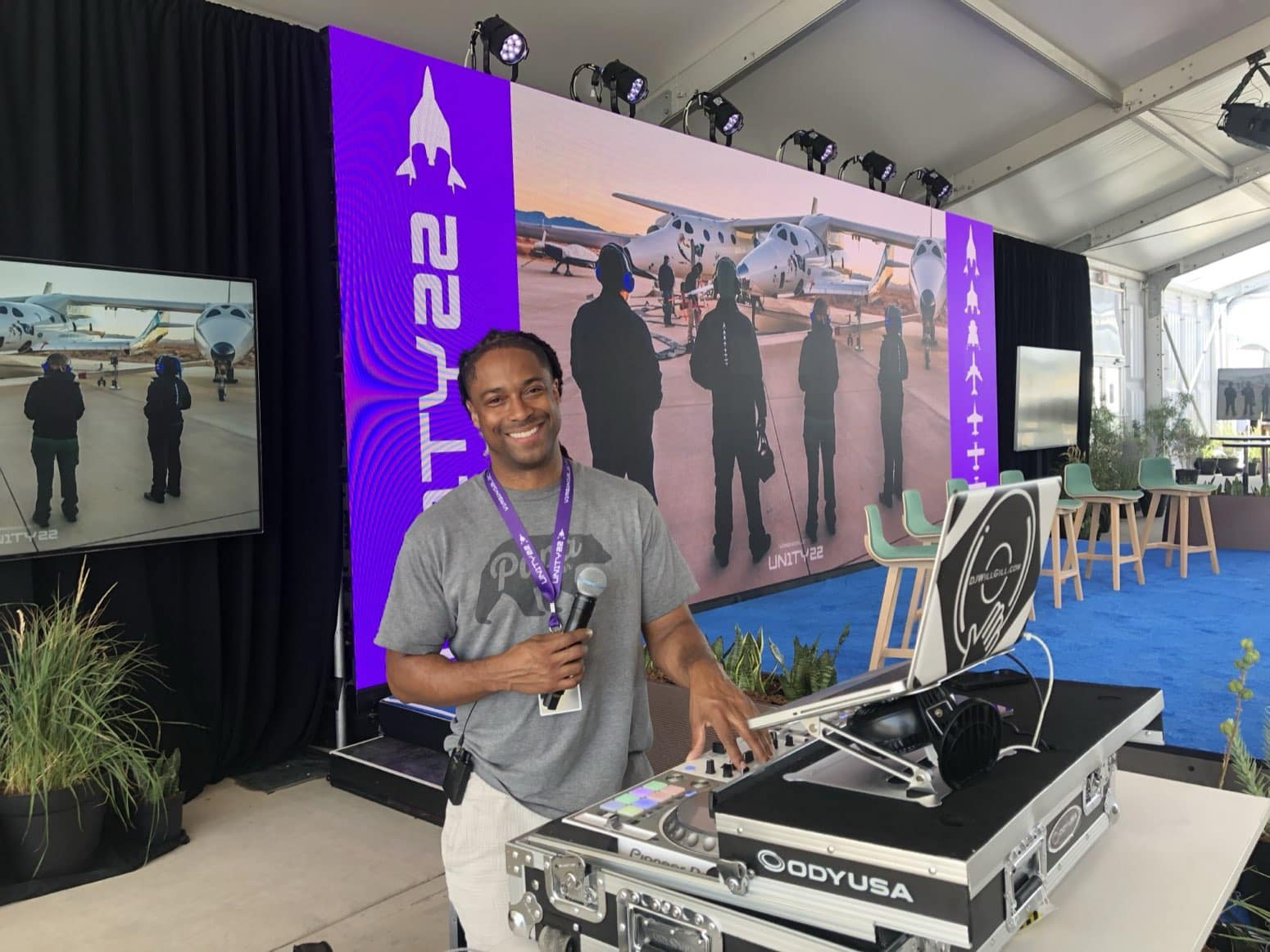
Every corporate event is telling a story, whether the planner intended it to or not. The story is the arc from the moment attendees walk in to the moment they walk out. The tone of the walk-in music. The energy of the opening. The rhythm of the transitions. The emotional temperature of the closing. Whether these elements feel like one continuous experience or a disconnected sequence of vendor deliverables is the difference between an event people remember and an event people forget. And the single biggest structural determinant of that difference, more than budget, more than venue, more than any keynote speaker, is whether the DJ and emcee are the same person.
This piece is about the narrative craft that a combined DJ-emcee brings to a corporate event that separate specialists structurally cannot. What “event narrative” actually means at a corporate level. Why fragmented voices fragment the story. How one operator holds a unified narrative arc across every mode. How music functions as narrative rather than decoration. How emcee moments work as story chapters. How callback structure and thematic continuity emerge from single-operator craft. Why brand voice consistency is much easier with one voice than with three. And what corporate planners can do to activate the narrative potential of the model rather than accidentally suppressing it. This is not a case for the combined DJ-emcee model as cheaper or more convenient. It is a case for the combined DJ-emcee model as narratively different, in a way that shows up in the attendee experience and in the outcomes the event was booked to produce.
Ready to book one operator to hold the narrative arc across your entire event? Contact DJ Will Gill.
Key Takeaways
- Corporate events tell stories whether the planner intended it or not. The tone of the walk-in, the rhythm of the transitions, and the emotional arc of the day are all narrative choices. A combined DJ-emcee makes them consciously. Three separate vendors make them accidentally.
- Separate DJ and emcee bookings fragment the event story because each vendor is optimizing for their own segment, not the full arc. The music does not know what the emcee is about to say. The emcee does not know what the music has been doing.
- A single operator functions as the unified narrator of the event, with music serving as the narrative bed, emcee moments serving as story chapters, and callback structure and thematic continuity emerging naturally from one artistic mind holding all three.
- Brand voice consistency is much easier with one voice than with three. Corporate audiences are sensitive to tonal inconsistency, and three vendors will produce three tones no matter how tightly the brief is written.
- Planners activate the narrative potential by briefing the operator on the story they want to tell, not just the segments they want to execute. Give the operator the event’s central theme, its emotional arc, and its intended takeaway. The operator will build the narrative around it.
1. What “Event Narrative” Actually Means at a Corporate Event
“Event narrative” sounds abstract until you break it down into specifics. It is not a marketing theme, a tagline, or a slide deck template. It is the specific through-line that shapes how attendees experience the day from the moment they walk in to the moment they leave.
Coverage of the specific framework from Forbes Business Council: at the core of every unforgettable event lies a compelling story, narratives permeate every facet of our existence, from myth and legend to cinema, news, and everyday conversations, narrative is international, transhistorical, transcultural, it’s an inherent part of our shared human experience. Applied to corporate events, this means every attendee walks in with a story-detection instinct already active. They are not deciding whether the event has a narrative. They are unconsciously assembling one from whatever cues they receive.
The specific narrative elements of a corporate event:
- The opening. The first 60 seconds of walk-in music, the first words the emcee says, the first energy the room encounters. This sets the tone for everything that follows.
- The rising action. The keynote build. The progression from opening remarks through the first major content moment. The energy pattern that gets the audience invested.
- The core content. The keynotes, panels, and product moments the event was actually booked for. The main plot.
- The interludes. Breaks, networking, meals, engagement segments. The connective tissue between the main plot points.
- The peak moments. The awards presentation. The keynote climax. The reveal. The moments the event is designed to build toward.
- The resolution. The closing energy. The final emcee remarks. The music that plays as attendees walk out.
- The takeaway. What the attendee walks away thinking, feeling, or planning to do. The story they tell colleagues on Monday.
Coverage of the specific point from Forbes Business Council: a well-crafted theme ensures that all elements of the event are cohesive and unified, which will allow your attendees to feel like they’re on a purposeful journey rather than simply attending some sessions. The unified journey is the event narrative. The disconnected sessions are what happens when the narrative is not held.
The specific question this article addresses is: who is holding the narrative during the event? Not the keynote speakers, who own their own segments but not the arc between them. Not the AV team, which handles technical cues but not emotional continuity. Not the venue, which owns the physical space but not the story that unfolds inside it. The narrative belongs to whoever holds the microphone and the music across the entire day. The broader case for consolidating this role into a single multi-hyphenate operator (which shifts more than the coordination overhead) is covered in the the rise of the multi-hyphenate event host analysis.
2. Why Separate DJ and Emcee Voices Fragment the Story
The traditional model books a DJ from one vendor and an emcee from another. Each is a competent specialist. Each executes their function well. And each is, structurally, optimizing for their own segment rather than the event’s full arc. This is not a criticism of specialists. It is a description of what happens when a story has more than one narrator.
Specific ways two-vendor fragmentation shows up:
- The music does not know what the emcee is about to say. The DJ ends a set on a tempo that clashes with the emcee’s incoming tone. The bridge from music to microphone has a rough edge.
- The emcee does not know what the music has been doing. The emcee opens with an energy calibration that assumes the room is where they last checked, not where the DJ has actually brought it.
- Two personalities compete for the room’s attention. The DJ’s stage presence and the emcee’s stage presence are calibrated independently. The result is two attention centers rather than one.
- Callback jokes cannot travel across roles. The DJ hears something funny in the keynote. The emcee makes a reference later. Neither can build on the other because they are not coordinating that layer.
- Brand voice slips between segments. The DJ tone lands one way. The emcee tone lands another. Corporate audiences catch this even when they cannot articulate it. It reads as unpolished.
- Real-time compression is coordinated in real time. When a speaker runs long, the DJ and emcee are figuring out on the fly who compresses what. Coordination costs happen visibly.
Coverage of the specific narrative-fragmentation problem from professional emcee industry framing: connecting disparate topics from one speaker to the next requires more than a simple “thank you,” the facilitator synthesizes key takeaways in real-time, helping the audience digest complex visionary ideas, they use humor and storytelling to maintain engagement during transitions, turning potential dead air into a narrative of transformation, this process turns a series of isolated speeches into a unified, transformative journey for every participant in the room. The emcee is the specific role that either turns the sequence into a journey or leaves it as a sequence. But when the emcee is separate from the DJ, half of the connective tissue is not under the emcee’s control.
The two-vendor model is not broken. It is legacy. It was the default for corporate events for two decades because it was how the industry had traditionally been structured. It still works. But it produces a specific and predictable narrative fragmentation that first-time planners often mistake for “how events feel.” Events do not have to feel like that. The full inventory of the broader planner-misalignment patterns that produce fragmented event experiences is covered in the 9 most common corporate event entertainment mistakes analysis. Fragmentation is one of them.
3. The Single Operator as Unified Narrator
When one professional runs both the DJ set and the emcee segments, something structurally different happens. It is not just that the coordination overhead disappears. It is that the event acquires a single narrator. One artistic mind is holding the full arc. Every music decision is informed by what the emcee is about to say. Every emcee moment is informed by what the music has been doing. The audience does not experience “DJ, then emcee, then DJ.” They experience one continuous voice.
Coverage of the specific approach from a competing multi-hyphenate professional: the skilled host approaches each event with the mindset of a strategic storyteller, studies the flow of the program, the brand’s mission, and the audience’s expectations, then weaves a narrative that ties every speaker, panel, and performance together under one unified experience, this approach turns an agenda into a journey, one that keeps attendees engaged from start to finish. This is competitor validation of the exact thesis: the multi-hyphenate operator produces a unified journey precisely because one professional is holding the narrative arc across every function.
Specific ways the single-operator model produces narrative unity:
- One artistic reading of the room. The operator reads the room continuously across every mode. That reading informs music, emcee, and transitions equally. The room is seen from one vantage point.
- Music and word are one voice. The music the operator plays is expressing the same voice as the words the operator speaks. Same tone. Same brand register. Same emotional temperature.
- Transitions are seamless because they were planned by the same mind. The last beat of the DJ set lands exactly where the first word of the emcee segment needs it. This is a level of transition polish that two-vendor coordination cannot match.
- Real-time narrative decisions are made by one operator. When the room needs energy, the operator can decide within a beat whether the response is a music intervention, an emcee intervention, or a hybrid. No handoff. No coordination.
- The through-line is held by one person. The event’s central theme, its emotional arc, its intended takeaway, all held by one operator who is reinforcing it through every mode all day.
The underlying skill that makes this work is not the ability to DJ. It is not the ability to emcee. It is the ability to read the room continuously across roles and calibrate the response fluidly. This is a different professional skill than either specialist DJ work or specialist emcee work. It is closer to the way a Broadway director thinks about a production than the way a specialist vendor thinks about a service.
The specific room-reading discipline that makes the single-operator model work at professional depth (which is much more granular than most planners realize) is covered in the how to tell if a corporate DJ can read a mixed audience analysis. Reading the room is the underlying craft. The three modes are how that reading gets expressed.
4. Music as Narrative (Not Just Background)
The music at a corporate event is not decoration. It is narrative. Every track choice is a paragraph in the story the event is telling. Under the traditional two-vendor model, the DJ programs music independently of the emcee’s script, which means the music is telling one story and the emcee is telling another. Under the single-operator model, the music becomes part of the narrative that the emcee is developing.
Coverage of the specific point from Forbes Business Council: deepen the immersion in your event’s narrative by engaging all of the senses as much as possible, humans use multiple sensory inputs to experience the world, and your event is no exception, think about elements like soundscapes, music and even scents that align with your narrative and transform your venue into a sensory-rich world that amplifies the message of your event. Music is the primary sensory carrier of the event’s emotional narrative. It is not the backdrop. It is the emotional foreground that the words happen in front of.
Specific ways music functions as narrative in the single-operator model:
- Opening walk-in music sets the emotional register. The tempo, the era, the genre selection, and the volume all tell the audience what kind of event they have walked into before a single word is spoken.
- Keynote walk-on tracks are character introductions. The track choice for each speaker’s walk-on is a narrative choice. It positions the speaker in the story before they say anything. The single operator chooses this track knowing exactly what the speaker’s content is about.
- Transition beds are narrative bridges. The 15 to 30 seconds of music between segments is not empty space. It is the connective tissue that carries the audience from one plot point to the next. The single operator writes these bridges with the incoming and outgoing content in mind.
- Awards moments and reveals get musical punctuation. The stinger that lands under the CEO’s award announcement, the tempo lift under a promotion reveal, the pause before a category winner. These are dramatic choices, not audio decoration.
- Break and lunch sends have emotional intention. The music that plays as attendees head to lunch is not filler. It is either lifting them into networking mode, extending the energy of the last segment, or calming the room after an intense keynote. Each choice is deliberate.
- Closing tracks land the takeaway. The final track the audience hears is the emotional signature they carry out of the room. Choosing it is one of the most important narrative decisions of the day.
Coverage of the specific practice from a competing multi-hyphenate professional: between speaker transitions or during audience breaks, carefully curated music cues re-energize the crowd and maintain atmosphere, these subtle moments of musical storytelling make the event feel alive and thoughtfully produced, whether it’s a high-energy walk-on track for a keynote speaker or a relaxed ambient playlist for a networking session, every sound choice has purpose, this combination of music and emceeing creates a multi-sensory experience where attendees don’t just listen, they feel. Attendees do not consciously parse the music program during the event. But they feel it. And what they feel is either coherent with what the emcee is saying, or not.
The specific principles behind music-as-narrative programming (including why tempo matters more than genre for corporate audiences and how the same music can serve very different narrative functions depending on how it is deployed) are covered in the why tempo beats genre during networking hours analysis. Music is a language. The single-operator model lets one voice speak that language coherently across the day.
5. Emcee Moments as Story Chapters
Under the traditional model, emcee moments are transactional. Welcome. Introduce speaker. Read agenda. Announce break. Thank sponsor. Close. Each moment is executed as a discrete task, without much attention to the arc it belongs to. Under the single-operator model, emcee moments become chapters in the story the event is telling.
Coverage of the specific reframe from professional emcee industry framing: the emcee’s role rests on narrative continuity, connecting various speaker themes to the overarching corporate mission, they’re the architects of engagement who transform a sequence of speeches into a unified brand experience. Every emcee moment is a chance to reinforce or extend the through-line. The single-operator model is where this reinforcement happens most naturally because the operator has been reading the room continuously across every previous mode.
Specific ways emcee moments function as story chapters:
- Opening welcome is the “in medias res” moment. The opening does not introduce the story. It drops the audience into it. The music has already set the tone. The first words of the emcee segment land into that tone and confirm it.
- Speaker introductions are character setups. Not biography recitations. Character setups. The intro tells the audience why this person matters to the story the event is telling and what they are about to contribute.
- Transition segments are chapter breaks. The 30 seconds between one speaker’s close and the next speaker’s introduction is the space where the previous chapter’s meaning gets consolidated and the next chapter gets set up. The single operator is holding both sides of that bridge.
- Callbacks connect chapters. A reference to something the CEO said in the opening keynote, brought back at the closing awards moment, tells the audience the story had structure. This is only possible if one person heard the CEO’s opening and is delivering the closing.
- Real-time observations become plot points. When the operator notices something in the room, in the day, in the executive team’s energy, and brings it into the emcee segment, that observation becomes part of the story the event is telling.
- The closing is the theme reveal. The final emcee segment is where the through-line becomes explicit. What was this day about. What is the audience walking out with. The single operator has been earning this closing all day.
The specific craft of emcee-as-chapter-writer requires professional preparation. Not improvisation. Not personality. Preparation. The best emcee moments feel spontaneous because they were carefully constructed in advance and then delivered with the confidence that only preparation produces.
There is a specific overlap between how a keynote speaker builds a talk and how an emcee builds an event narrative. Both are constructing an arc. Both are managing audience energy across time. Both are earning a takeaway that lands in the closing. The specific framework on what keynote speakers can learn from studying DJs (which applies equally to what emcees can learn from studying DJs, and vice versa) is covered in the why keynote speakers should study DJs analysis. The single operator holds every craft at once.
6. Callback Structure and Thematic Continuity
Callback structure is one of the most powerful narrative tools available at a corporate event and one of the most underused. A callback is a reference back to something that happened earlier in the day. Done well, it makes the audience feel like the day had structure. It makes the closing feel earned. It elevates the event from a sequence of segments to a designed experience.
Under the two-vendor model, callbacks are structurally hard to execute because the DJ heard the moment the callback is referencing but the emcee did not, or vice versa. Under the single-operator model, callbacks become natural because the same person is holding every observation and every reference.
Specific callback structures the single operator can execute:
- Verbal callback to a keynote quote. The CEO said something memorable in the morning keynote. The operator brings it back during the awards segment. The audience feels the connection.
- Musical callback to an earlier track. A snippet of the opening walk-in track dropped under the closing announcement. The audience does not consciously identify it. They feel a completion.
- Callback to a real-time moment. Something funny happened at lunch. Something a specific team celebrated. Something the executive team acknowledged. The operator brings it back at the appropriate later moment.
- Callback to the opening theme. The emcee’s opening set up a specific frame. The closing returns to that frame and completes it. The audience walks out with a sense of narrative closure.
- Callback across sessions. A theme introduced in a morning keynote is picked up in an afternoon transition. The connective tissue is visible to the audience.
- Running gag as thematic anchor. A light bit that recurs across the day, evolving with the room’s energy. The single operator is the one running it. The audience becomes invested in the recurrence.
Callbacks are not tricks. They are the specific narrative technique that makes a day of events feel like one thing rather than many things. Every long-form storyteller uses them. Every good stand-up comic uses them. Every well-written keynote uses them. Corporate event narratives that use them feel professionally produced. Corporate event narratives that do not, feel like they were assembled from parts.
Thematic continuity is the broader category that callbacks belong to. It is the ongoing pattern that the operator establishes early and reinforces throughout the day. Musical genre choices that thread through every segment. Verbal motifs that recur in emcee moments. Energy patterns that build and release predictably enough for the audience to feel the rhythm. All of this is easier to hold when one operator is holding all of it.
There is a specific parallel between how a DJ builds a musical arc across a night and how a well-executed corporate event builds a thematic arc across a day. Both involve variations on established themes rather than a random sequence. The specific framework on thematic continuity in music programming (using decade mashups versus era sets as the case study) is covered in the why decade mashups beat pure era sets at corporate events analysis. The principle transfers directly to how emcee moments are strung across the day.
7. Brand Voice Consistency Across the Full Day
Corporate brand voice consistency is not decoration. It is a specific business outcome. Attendees who experience a consistent brand voice across every moment of an event walk out with a stronger impression of the brand than attendees who experience a jumbled voice. This is the same principle marketing teams apply to their websites, ads, and product copy, extended to the live event environment.
Coverage of the specific brand-voice principle from marketing communication practice: create a brand story guide that lists voice, core messages, and visual rules, apply it everywhere: website, ads, packaging, customer support, and in-product messages, consistency reduces friction and strengthens recognition across the customer journey. Live corporate events are a customer journey. Brand voice consistency at events is the equivalent of brand voice consistency in marketing collateral. It compounds.
Specific brand voice dimensions the single-operator model preserves:
- Tone register. Formal, executive, playful, conservative, high-energy. The single operator holds one register across every mode.
- Language calibration. Vocabulary appropriate to the audience. Industry-specific references landed correctly. Executive humor calibrated to what actually lands with this specific room.
- Musical taste alignment. The music the operator plays is on-brand for the company. Financial services event: different musical vocabulary than tech startup event. Same operator programs both, but the programming shifts.
- Physical presence. How the operator dresses, moves, and physically occupies the space is consistent across every mode. Not switching costumes between DJ mode and emcee mode.
- Content boundaries. What the operator will say and will not say is consistent across the day. One professional judgment call, not two vendors with two different personal comfort zones.
- Executive relationship. How the operator interacts with the executive team, the sponsors, and the audience is one relationship, consistent across every moment.
Coverage of the specific corporate-DJ brand-voice discipline from a competing perspective: corporate DJs maintain a polished tone aligned with brand voice and event protocol, corporate sets usually stay within specific genres or tempos to maintain brand consistency and professional tone. That professional tone extends across every function the operator holds. When the DJ and emcee are the same person, the tone stays professional across every mode. When they are different people, tone shifts are visible in the seams between vendors.
The specific business logic behind brand voice consistency at corporate events is that most events are producing an emotional impression that shapes how attendees think about the brand afterward. That impression is fragile. Inconsistent brand voice damages it. Consistent brand voice reinforces it. The single-operator model produces consistent brand voice not because the operator is more disciplined than three separate vendors would be, but because the operator is one person with one voice.
8. How Planners Activate the Narrative Potential
Booking a combined DJ-emcee does not automatically produce a cohesive event narrative. It creates the possibility of one. Planners have to activate that possibility by briefing the operator on the story they want to tell, not just the segments they want executed. Skip this step and you get a technically competent single-operator execution that is still narratively thin.
Specific ways planners activate the narrative potential:
- Send the operator the event’s central theme. Not the tagline. The actual theme. What is this event fundamentally about. What is the through-line that ties every segment together.
- Describe the emotional arc you want the day to have. Peak moments. Reflective moments. Energy releases. What the audience should feel at each point in the day. Not required, but transformative when included.
- Share the intended takeaway. What do you want attendees walking out thinking, feeling, or planning to do. The operator will reinforce this takeaway all day if they know what it is.
- Give the operator context on the executive keynote content. The CEO’s speech topic. The core message of the closing keynote. The theme the sales VP is building toward. This lets the operator plant setups and land callbacks.
- Trust the operator’s judgment on how to execute. Once briefed, the operator will make hundreds of small narrative decisions across the day. Trust them. This is what you booked the multi-hyphenate for.
- Debrief after the event on what worked narratively. The best operators want this feedback. It makes the next booking better.
The specific pre-event briefing framework, physical setup requirements, run-of-show structure, and day-of coordination principles that make the combined DJ-emcee model actually execute at professional depth are covered in the how to run a conference where your DJ, emcee, and engagement host are the same person operational manual. This is the tactical companion to the narrative craft argument in this piece. The narrative potential is the “why.” The operational manual is the “how.”
One final principle: the combined DJ-emcee model rewards planners who think of their events as stories, not schedules. Planners who send a run-of-show and expect the operator to execute the schedule will get schedule execution. Planners who send a run-of-show plus a narrative brief will get a designed narrative experience. The operator is the same person in both cases. The difference is what the planner asks for.
For a full service-line look at what a professional multi-hyphenate operator delivers when the narrative brief is properly activated across DJ, emcee, and engagement functions, the deliverables are on the corporate event DJ services page. Corporate events are stories waiting to be told. The combined DJ-emcee model is the professional structure that lets them be told at professional depth.
Frequently Asked Questions
What is an “event narrative” at a corporate event?
Event narrative is the through-line that shapes how attendees experience the day. Not a marketing theme or a tagline. The specific arc from walk-in to walk-out that either feels like one continuous experience or a disconnected sequence of segments. The opening, the rising action, the core content, the interludes, the peak moments, the resolution, and the takeaway attendees carry out. Every attendee is unconsciously assembling a story from the cues they receive. The question is whether the event’s operators are designing that story consciously or letting it assemble accidentally.
Why does having separate DJ and emcee vendors fragment the event story?
Because each vendor is optimizing for their own segment, not the event’s full arc. The music does not know what the emcee is about to say. The emcee does not know what the music has been doing. Two personalities compete for the room’s attention. Callback jokes cannot travel across roles because neither vendor heard both sides. Brand voice slips between segments because the DJ tone and emcee tone are calibrated independently. Real-time compression happens in real time, visibly. None of this is a criticism of specialists. It is a description of what happens when a story has more than one narrator.
How does a combined DJ-emcee create a more cohesive event?
One artistic mind holds the full narrative arc across every mode. One reading of the room informs music, emcee, and transitions equally. Music becomes narrative rather than decoration. Emcee moments become story chapters. Callback structure and thematic continuity emerge naturally because the operator has been holding every observation and every reference all day. Brand voice consistency becomes structural rather than aspirational. Transitions land seamlessly because the same mind planned both sides of them. The audience does not experience “DJ, then emcee, then DJ.” They experience one continuous voice.
What is a callback structure in event hosting and why does it work?
A callback is a reference back to something that happened earlier in the day. A verbal callback to a CEO quote from the morning keynote, brought back at the awards segment. A musical callback where a snippet of the opening walk-in track lands under the closing announcement. A callback to a real-time moment from lunch that surfaces in the afternoon transition. Callbacks work because they make the audience feel the day had structure. They make the closing feel earned. Every long-form storyteller uses them. The combined DJ-emcee model is the structural condition that makes them possible because one operator heard the setup and delivers the callback.
Can one person really handle both DJ and emcee roles at professional depth?
Yes, provided they are trained in each function at professional depth. This is a legitimate professional category, not a workaround. Legitimate multi-hyphenates execute each role at specialist-level quality and hold the arc between them at a level that neither specialist alone can. The distinguishing question is whether the operator is trained in each function, has documented experience at professional scale in each function, and has references at your event tier for each function. If the answer to any of those is no, the operator is a specialist with side skills, not a multi-hyphenate. If the answer to all three is yes, they are what you need.
What should planners do to help a combined DJ-emcee execute the narrative well?
Brief the operator on the story you want to tell, not just the segments you want executed. Send the event’s central theme (the actual through-line, not the tagline). Describe the emotional arc you want the day to have. Share the intended takeaway. Give the operator context on the executive keynote content so they can plant setups and land callbacks. Then trust the operator’s judgment on how to execute. Debrief after the event on what worked narratively. Planners who send a run-of-show plus a narrative brief get a designed narrative experience. Planners who send only a run-of-show get schedule execution. Same operator. Different results, depending on what the planner asks for.
What Corporate Clients Are Saying

About the Author
William “DJ Will Gill” Gilbert is a corporate event DJ, emcee, and audience-engagement specialist recognized by The Wall Street Journal as a Virtual DJ-Emcee who helps strengthen company morale. He is also a Forbes Next 1000 honoree. He pioneered the 3-in-1 booking model that combines professional emcee, open-format DJ, and interactive team-building segments in a single engagement for Fortune 500 corporate clients including AT&T Business, CDW, Virgin Galactic, NeoGenomics, PepsiCo, PayPal, Ulta Beauty, Salesforce, Lenovo, and the United Nations, with 2,520+ five-star Google reviews from corporate clients across the United States. He has held the narrative arc across 600+ documented corporate events, with the pre-event briefing frameworks, thematic continuity disciplines, and callback-structure craft refined across every conference, sales kickoff, awards gala, product launch, and multi-day summit. He is also the founder of THEAIDJ, an AI-powered playlist generation tool built for DJs and corporate event planners programming music across in-person, hybrid, and virtual events.
Book Will’s combined DJ-emcee corporate event package at djwillgill.com/contact.