
Why Keynote Speakers Should Study DJs
Keynote speakers study other keynote speakers. They watch TED talks. They hire presentation coaches. They read books on rhetoric, narrative structure, and persuasion. The output is usually a polished 45-minute talk with a clear arc, a memorable thesis, and well-rehearsed gestures. What that training rarely teaches is what happens when the room does not cooperate. The slide does not advance. The audience starts looking at phones at minute 18. A laughter beat that worked in three previous events lands flat in this one. The professional speaker leans on the content because the content is what they trained for. The room continues to drift anyway.
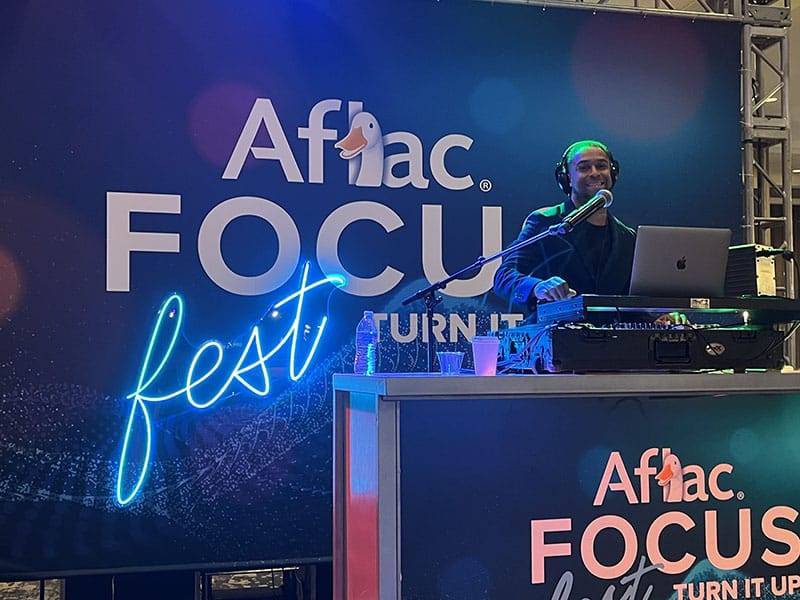
DJs have spent decades solving these specific problems. A working DJ at a corporate event is reading the room every 30 seconds, adjusting energy in real time, building toward climactic moments, recovering when a track tanks the floor, and engineering transitions that most audiences never notice happening. None of that is content craft. All of it is room operations. The argument of this piece is simple: the keynote speakers who pair their content with a DJ’s instincts for room operations deliver the talks people actually remember. Industry coverage of keynote engagement reinforces the underlying point: as a keynote speaker, you are the emotional thermostat of the room, with the audience regulating themselves to match your energy, and ignoring energy shifts is one of the most common mistakes because if the audience starts to disengage, the speaker must adjust in real-time, whether through pacing, storytelling, or interaction. DJs run that adjustment loop continuously. Keynote speakers usually run it twice: at the start and at the close. This piece walks through 6 specific lessons keynote speakers can borrow from professional DJ craft.
Want a stage operator who brings DJ room-reading instincts to keynote and emcee work? Contact DJ Will Gill.
Key Takeaways
- Keynote speakers usually train for content. DJs train for room operations. The two crafts solve different problems, but the second skill set materially lifts the first.
- DJs read the room every 30 seconds. Most keynote speakers read the room at the start and the close. The gap is where talks lose audiences mid-delivery.
- DJs engineer energy curves around the room, not the setlist. The strongest keynotes do the same: build around audience energy, not around content order.
- Transitions are where most professional pros lose the room. DJs train transitions explicitly. Keynote speakers usually do not.
- The crescendo, the drop, the recovery, and the “conversation” framing are all techniques DJs treat as core craft. Keynote speakers borrow these intuitively, but rarely train them deliberately.
1. The Premise: DJs Have Solved Problems Keynote Speakers Are Still Struggling With
The keynote profession is centered on content craft. The speaker brings a thesis, a story arc, supporting evidence, and a memorable close. That work matters. It is also incomplete. Industry coverage of audience engagement gaps frames the recurring problem directly: one of the most common mistakes is making the keynote too one-sided, talking at the audience rather than with them, overloading slides with text, using jargon-heavy language, or failing to build a connection early on, with another major misstep being ignoring energy shifts in the room and not adjusting in real-time. Speakers know about this gap. Most still do not have a deliberate practice for closing it.
DJs have a deliberate practice for almost every dimension of room operations because the dance floor is unforgiving. If the DJ misreads the room, the floor empties. There is no slide to fall back on. No prepared anecdote to retreat to. The DJ either reads the room correctly and the floor stays packed, or they do not and the night collapses in real time. That feedback loop is faster and harsher than the keynote stage, which is exactly why DJs develop room operation skills the speaking profession has not standardized.
Specific problems DJs have solved that keynote speakers are still working on:
- Continuous audience reading, not just opening reads. DJs scan the floor every 30 to 60 seconds. Speakers usually scan twice.
- Energy curve engineering, not just content order. DJs structure sets around energy arcs. Speakers usually structure talks around argument order.
- Deliberate transitions, not just topic shifts. DJs practice transitions specifically. Speakers usually treat them as connective tissue.
- Engineered climactic moments, not just “rising action.” DJs build drops with technical precision. Speakers often hope the punch line lands.
- Recovery without breaking flow. DJs have specific moves for when a track tanks. Speakers often panic when a moment does not land.
- Conversation-as-broadcast framing. DJs treat the room as a two-way exchange. Many speakers still treat it as a one-way delivery.
The 6 lessons below are not about replacing keynote craft with DJ craft. They are about layering DJ-style room operations on top of strong content. The keynote speakers who do this are the ones whose talks people quote on Monday morning.
2. Lesson #1: Read the Room Continuously, Not Just at the Start
Most keynote speakers scan the room twice: when they walk onstage and when they hit their closing line. In between, they are looking at the back wall, the screen, their notes, or their next slide. The audience reading happens early and late, almost never in the middle.
DJs operate the opposite way. The floor is scanned every 30 to 60 seconds. The DJ knows which section of the room is leading the energy, which section is checking out, and what direction the energy is trending. Adjustments happen track by track, sometimes within the same track. Industry coverage of professional audience reading captures the parallel for keynote work: having situational awareness allows speakers, presenters, and event organizers to evaluate engagement levels and make adjustments as needed, with changes in tone, pacing, or energy able to recapture the attention of a distant audience.
What “continuous reading” actually looks like for a keynote speaker:
- Make eye contact with a different section of the room every 90 seconds. Front row, middle, back, left, right. Rotate deliberately, not just to the friendly faces.
- Track three specific signals. Phones face-up vs. face-down. Arms crossed vs. open. Side conversations happening or not. These are the same signals DJs track. They work for speakers too.
- Watch the skeptic section, not the front row. The front row will smile and nod regardless. The back-left third tells the truth about whether the room is with you.
- Adjust before the energy drops, not after. By the time the room has visibly disengaged, the recovery is already harder.
- Have a “shift the pattern” move ready at the 15-minute mark. Attention almost always dips around minute 15 to 20 of a keynote. Plan a tone shift, a story, an audience question, or a movement change for that exact moment.
A keynote speaker who reads the room continuously delivers a different talk to every audience even with the same content. The talk adjusts in real time. The room rewards the attention with attention.
3. Lesson #2: Build the Set Around the Energy Curve, Not Just the Content
A DJ designs a 90-minute set around the energy arc first and the song list second. Open mid-energy, build to a peak around minute 30, sustain, second peak around minute 60, third peak at minute 75, slow close. The specific tracks vary. The energy arc is the structure.
Most keynote speakers structure their talks around argument order: introduction, point one, point two, point three, conclusion. The energy is whatever happens when the argument is delivered. The structure is intellectual, not emotional. The audience experiences the talk as a series of points, not as a journey.
Industry coverage of keynote pacing makes the underlying point directly: pacing is crucial for keeping the audience engaged, with a well-paced keynote speech varying in speed and tone to match the narrative’s emotional flow, allowing for moments of reflection after poignant points and quicker pacing during exciting or informative segments to maintain energy in the room. The DJ-style fix: design the energy arc explicitly, then map the content onto it.
A working energy curve for a 45-minute keynote (borrowed directly from DJ set structure):
- Minutes 1 to 5. Opening hook. Mid-energy. Audience attention is highest at the start. Use it to set the contract.
- Minutes 5 to 15. Build. Energy rises. Story unfolds. The first emotional moment lands around minute 10 to 12.
- Minutes 15 to 22. First peak. The big idea lands. The room is most engaged. This is the moment people will quote later.
- Minutes 22 to 30. Sustain. Energy holds. Detail and supporting evidence fill in. The room is still with you, but no longer at peak.
- Minutes 30 to 38. Second peak. A second emotional moment, often unexpected. This is the moment that surprises the room.
- Minutes 38 to 45. Close. Drop the energy slightly for reflection, then lift for the final line. Audience leaves on the upward curve.
A keynote built on an energy curve is harder to write than a keynote built on an argument outline. The reward is that the audience experiences the talk emotionally, not just intellectually. That is the difference between “great talk” applause and the kind of standing ovation that gets the speaker re-booked.
4. Lesson #3: Transitions Are Where Most Pros Lose the Room
A DJ’s most-practiced skill is the transition between tracks. Bad transitions kill momentum. Good transitions are invisible. Great transitions actually lift the energy. The professional DJ spends more time on transitions than on individual track selection because the transition is where the audience either stays in the experience or drops out.
Keynote speakers rarely train transitions deliberately. The shift from “story” to “data” to “framework” to “story” is treated as connective tissue. Industry coverage of keynote audience drop-off documents the cost: a 2024 study by EventMB indicated that 18% of attendees disengage during poorly managed transitions, with professional moderators preventing this attrition by maintaining a crisp, energetic pace that keeps participants in their seats until the final closing remarks. The same disengagement happens within keynote talks, not just between them.
DJ techniques that translate directly to keynote transitions:
- The bridge phrase. A short phrase or sentence that connects the previous segment to the next without restating the obvious. DJ equivalent: a beat-matched transition that maintains the energy.
- The intentional pause. A 3 to 5 second silence that signals “we are shifting.” Lets the previous point settle and primes the audience for the next. DJ equivalent: dropping the bass for one bar before the next track lifts.
- The movement cue. Walking to a different part of the stage to signal a new section. DJ equivalent: shifting energy through lighting or stage presence.
- The callback. Referencing something from earlier in the talk to land the next point. DJ equivalent: bringing back a track motif from earlier in the set.
- The audience anchor. A direct question or moment of acknowledgment that re-engages the room before introducing the next idea. DJ equivalent: the mic moment that resets the floor.
A keynote with 4 to 6 major segments has 3 to 5 transitions. Each one is a moment where the room can drift. Treat them as their own craft, the way DJs do. Practice the transitions specifically, not just the content within them.
5. Lesson #4: The Drop Is Engineered, Not Improvised
In DJ work, “the drop” is the engineered climactic moment where the music tension releases and the room reacts. Drops are not accidental. The DJ builds tension for 90 to 180 seconds, holds the room on the edge, then lands the drop on a beat the audience is anticipating. The reaction is reliable because the engineering is precise.
Keynote speakers often hope the punch line lands. They have a great point, they deliver it, the room reacts or does not. The structure rarely engineers the buildup with DJ-level precision. Industry coverage of keynote intros captures the relevant principle even at the introduction stage: applying vocal dynamics and the “Crescendo of Anticipation” builds energy and ensures a high-impact stage handover, with the structural framework engineered to spark curiosity and demonstrate professional relevance in 60 to 90 seconds. The same crescendo logic applies to drops within the talk itself.
DJ-style drop engineering for keynote speakers:
- Build for 90 to 180 seconds before the drop. The audience needs anticipation to make the release land. Drops without buildup feel like punch lines without setup.
- Signal that something is coming. A pause, a tone shift, a stage movement, a slight slowdown. The audience needs to feel the tension before the release.
- Hold the moment one beat longer than feels comfortable. The DJ holds the bass cut for one bar before the drop. The speaker can hold the silence for one second longer than instinct says. The room leans in.
- Land the drop on a clean beat, not in the middle of a thought. The line that contains the drop should be self-contained, not the third clause of a longer sentence.
- Allow the reaction to breathe. Do not step on the audience’s response. DJs let the drop ring out. Speakers should let the laughter or applause finish before moving on.
A keynote with 2 or 3 engineered drops is structurally different from a keynote with 2 or 3 hoped-for-punchline moments. The first is reliable. The second is luck.
6. Lesson #5: Recover Without Looking Like You’re Recovering
A DJ track tanks the floor about every 90 minutes on average. The dance floor thins out, the energy drops, the bar starts getting visits. Professional DJs have recovery moves that pull the room back without looking like they are scrambling. The audience usually does not even register that a recovery happened.
Keynote speakers often panic when a moment does not land. A joke falls flat. An audience question goes sideways. A slide does not advance. The amateur reaction is to acknowledge the failure: “well that didn’t work” or “let me try that again.” The professional reaction is to recover invisibly. Industry coverage of keynote energy recovery offers the underlying technique: if you feel energy dipping in the room (people checking phones, disengaging, or shifting restlessly), act quickly by pausing and acknowledging the moment with a question, a humorous comment, or a surprising shift in delivery, telling a story, moving around the stage, or directly involving the audience by asking for their input.
DJ-style recovery techniques for keynote speakers:
- Have 3 “recovery anchors” pre-prepared. Specific stories, surprising statistics, or audience questions you can deploy if a planned moment does not land. DJs call these “safety tracks”: songs that always fill the floor.
- Never name the failure. “That joke didn’t land” amplifies the awkwardness. Just move forward with energy. The room will move with you.
- Use movement to reset. Walk to a different part of the stage. Physical change signals a new beat without any verbal acknowledgment of the previous one.
- Drop the energy briefly before lifting again. Going louder right after a failure makes the failure louder. Drop to a softer tone, let the room recalibrate, then lift.
- Engage the audience directly. A hand raise, a question, a specific call-out. Audience engagement is the strongest single recovery move because it shifts the room from passive observation back to active participation.
A recovery that the audience does not notice is the highest professional standard. Keynote speakers can train this deliberately. Most do not, which is why the failure modes are usually so visible.
7. Lesson #6: The Room Is a Conversation, Not a Broadcast
A DJ treats the floor as a continuous two-way exchange. The DJ plays a track, the audience reacts, the DJ adjusts based on the reaction, the audience reacts to the adjustment, the DJ adjusts again. The information flow is constant in both directions. The audience is participating in the music, not just receiving it.
Many keynote speakers still operate in broadcast mode. They deliver a prepared talk in one direction. The audience receives or does not receive. There is no real-time exchange. Industry coverage of modern keynote design is now flagging this gap directly: interactive elements like polls, partner discussions, and audience reflections divert attention back to the stage when it drifts, with energy from the stage being contagious and the speaker who moves, changes tone, asks questions, and invites reflection keeping the audience alive.
DJ-style conversation techniques for keynote speakers:
- Open with a small ask, not a statement. A hand raise. A simple question. A “show of hands if you have ever…” The first 90 seconds includes a moment where the audience speaks back, even non-verbally.
- Build audience asks into the structure. Not at the end as Q&A. Throughout the talk at strategic moments. Industry coverage frames the structural shift directly: integrating participation into the structure of the session rather than leaving it for the final minutes produces higher engagement and stronger audience recall, transforming the audience from listeners into contributors.
- Acknowledge what you see. “I see a lot of nodding in the third row.” “Half of you just looked at your colleague.” Naming the room’s reactions makes the conversation explicit.
- Adjust based on visible reaction. If a section of the room is leaning in, lean into that thread. If a section is checking out, pivot toward them.
- Treat applause and laughter as music, not interruption. The audience response is part of the talk’s rhythm. Let it land. Build the next beat around it.
A keynote that is a conversation lands differently than a keynote that is a broadcast. The conversation format is closer to how DJs operate at every event. Keynote speakers who borrow it deliver talks that feel personal even at scale.
8. The Cross-Pollination That Bureaus Are Starting to Notice
Speaker bureaus and corporate event programmers are starting to recognize the cross-pollination explicitly. Coverage of hybrid talent at major bureaus is increasingly framing the value: today’s hybrid kickoff requires a dynamic speaker who can command both physical and virtual spaces simultaneously, ideally someone with proven hybrid delivery experience combining thought leadership with entertainment value. “Thought leadership with entertainment value” is bureau code for a content specialist with room operations craft.
The opportunity for keynote speakers:
- Add a “room operations” practice to your existing content practice. Spend deliberate time on reading the room, pacing, transitions, drops, recovery, and conversation framing. Not just on slide redesign and message refinement.
- Study DJ sets the way you study TED talks. Watch how the energy builds. Notice the transitions. Identify the drops. The craft is teachable through observation.
- Get rep on smaller stages. The way DJs build their craft is dance floor by dance floor. Smaller stages let you experiment with the techniques above without the stakes of the keynote slot.
- Work with someone who has both crafts. An emcee or stage operator who runs the room around your keynote multiplies the impact of your content. They are not competing with the keynote. They are setting up the keynote and protecting it.
- Brief planners on the room operations dimension. Many planners do not know to ask about it. Educating them positions you as a more thoughtful keynote candidate.
DJs and keynote speakers are not competing for the same booking. They are working on overlapping problems with different tools. The keynote speakers who study DJs are not trying to become DJs. They are stealing the half of the craft the speaking profession has not standardized yet: continuous audience reading, energy curve engineering, deliberate transitions, engineered drops, invisible recovery, and conversation-format delivery.
The best keynotes already do most of this intuitively. The argument here is that the intuitive version is the floor, not the ceiling. Deliberate practice on these 6 dimensions produces talks that compound their impact. The audience does not just remember the content. They remember the experience. And the speakers who build that experience reliably are the ones planners book three years in a row.
What Corporate Clients Are Saying
About the Author
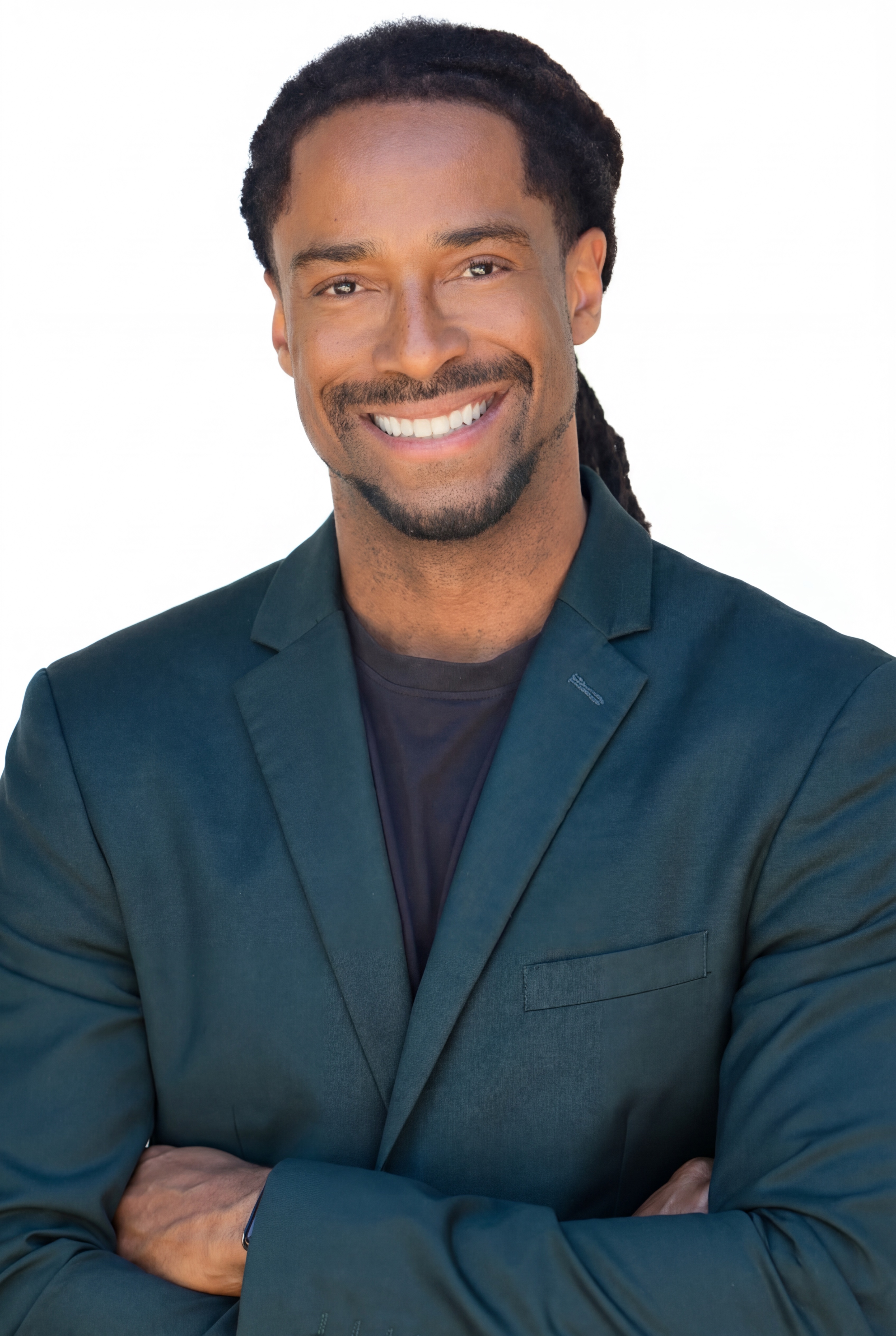
William “DJ Will Gill” Gilbert is a corporate event DJ, emcee, and audience-engagement expert featured by The Wall Street Journal for helping virtual events foster stronger company morale. He is also a Forbes Next 1000 honoree. He works at the intersection of DJ craft and keynote speaking for Fortune 500 audiences, with 2,520+ five-star Google reviews from corporate clients across the United States. He is also the founder of THEAIDJ, an AI-powered playlist generation tool built for DJs and event planners.
Book Will for your next corporate event, keynote stage, or hybrid program at djwillgill.com/contact.