
Virtual Event Entertainment for Global Time-Zone Audiences | DJ Will Gill
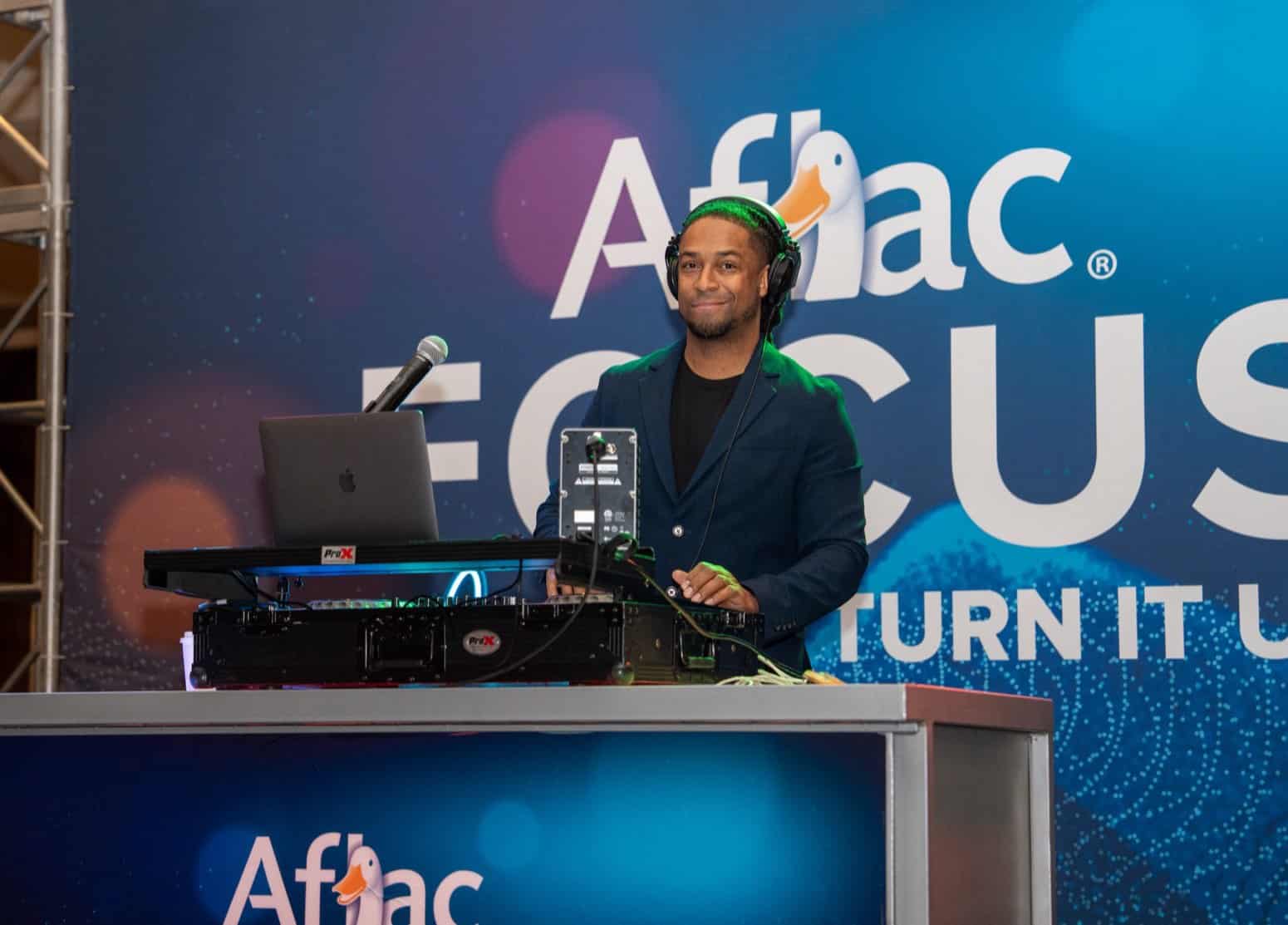
One of the structural realities of Fortune 500 corporate events in 2026 is that many of the largest annual programs run globally. A single corporate leadership summit may include employees from New York, London, Bangalore, Sydney, and Tokyo, with regional teams participating simultaneously across a spread that covers essentially every hour of the 24-hour clock. The problem this creates for event entertainment (DJs, emcees, engagement hosts, and live programming) is that there is no time slot that works well for everyone. When New York’s prime time hits 8 PM Eastern, Singapore is at 8 AM the next morning and Sydney is at 10 AM. When London’s prime time hits 6 PM GMT, Los Angeles is at 10 AM and Mumbai is at 11:30 PM. Every time slot serves some regions and disserves others, and one-time-zone thinking simply does not work for global corporate audiences at scale.
This piece is a working professional’s diagnostic on how corporate entertainment actually functions for global time-zone audiences, drawing on the programming architecture that has become the professional standard for large-scale global virtual corporate events since 2020. The “follow-the-sun” Programming model that repeats and adapts programming across APAC, EMEA, and Americas regions. The multi-track structure that layers regional feeds with global convergence moments. The music curation discipline required to serve global cultural audiences without producing generic bland output. The operational constraint of entertainer and presenter fatigue over 20+ hour programming windows. The technical stack requirements for coherent multi-region delivery. And, at the close, the working framework corporate planners should apply when designing global time-zone virtual events with entertainment programming built into the core structure rather than treated as an afterthought.
Planning a global virtual corporate event with follow-the-sun entertainment programming? Contact DJ Will Gill.
Key Takeaways
- The professional standard for large-scale global corporate virtual events is the “follow-the-sun” Programming model. Framing from a leading virtual event platform industry publication: “Live-streamed global events follow the sun. They repeat and adapt their virtual event schedule from APAC to EMEA to the Americas. Some live sessions may be repeated while others might be replaced by local speakers.” Follow-the-sun is not one long broadcast. It is a coordinated series of regional prime-time programming blocks that hand off across the globe.
- Global virtual event scale is meaningful. Industry projection: The global virtual events market is projected to reach $537.18 billion by 2029. Corporate participation is significant: 21 percent of global events are projected to be fully virtual, and 70 percent of events take on hybrid models. Fortune 500 corporate participation in global virtual programming has moved from pandemic-era emergency response to permanent operational infrastructure.
- Presenter and entertainer fatigue is a operational constraint. Industry framing: “One of the biggest concerns with follow-the-sun events is presenter fatigue. Admissions staff cannot realistically deliver the same presentation three or four times in a single day.” Working professional entertainers for global events cannot deliver the same live performance three or four times across a 24-hour window at professional standard. The programming architecture must design around this operational reality.
- Engagement drop-off is measurable and time-bounded. Industry framing: “Viewer engagement drops noticeably after 30 minutes and falls sharply after 60.” Global event programming that ignores this attention-span data produces predictable audience loss. Working professional global virtual programming structures segments in 20 to 30 minute high-impact modules with clear breaks and hand-offs, not extended continuous broadcasts.
- The technical production complexity of global virtual events is substantial. Industry framing: “Think of it as producing a television broadcast where the studio happens to exist across multiple locations, time zones, and internet connections simultaneously.” Global virtual event production requires broadcast-grade infrastructure, redundant technical stacks, coordinated regional teams, and the operational discipline of running a rolling multi-region broadcast over 20+ continuous hours.
1. The Time Zone Problem: What Global Corporate Audiences Actually Look Like
Start with the problem. A Fortune 500 corporation with meaningful global operations typically has employees, customers, or partners distributed across at least three major time zone regions: The Americas (Eastern through Pacific), EMEA (Europe, Middle East, Africa), and APAC (Asia-Pacific including India, Southeast Asia, China, Japan, Australia). When a global event needs to reach all three regions simultaneously, no single time slot works for everyone.
Coverage of the specific time zone problem framing from a leading professional meetings industry publication (peer discussion among senior meeting managers): Until now, we have transitioned all our in-person meetings to virtual and kept the time zones the same as the original meeting, we have an upcoming meeting that was to be held in Prague but is now virtual, we are unsure how to run the time zone for the meeting, approximately 60 percent of the attendees will be from Europe, with 30 percent from North America (both East and West coast) and 10 percent from Asia, attendees at our meetings are from around the world, some of the meetings have run from 6:00 a.m. to 6:00 p.m. and conference staff covered the 12-hour period (fewer hours per day than a typical in-person meeting), speakers were given the option to present live or upload pre-recorded lectures, in addition, because of the time-zone issue, recordings of each session were offered the day after presentation. The peer discussion captures the working reality: Professional meeting managers wrestling with the programming choices required when a single time slot cannot serve the global distribution.
Specific time-zone realities for major Fortune 500 corporate global audience distributions:
- New York 8 PM Eastern (US prime time) Is Singapore 8 AM (Asia early morning), Sydney 10 AM (Australia mid-morning), Tokyo 9 AM (Japan early morning), London 1 AM (Europe overnight).
- London 6 PM GMT (EMEA prime time) Is New York 1 PM (US midday), Los Angeles 10 AM (US morning), Mumbai 11:30 PM (India late night), Singapore 2 AM (Asia overnight).
- Singapore 8 PM (APAC prime time) Is New York 8 AM (US morning), London 1 PM (EMEA midday), Sydney 11 PM (Australia late), Mumbai 5:30 PM (India late afternoon).
- Every time slot serves some regions and disserves others. There is no globally-optimal single time. This is the structural constraint that requires the follow-the-sun approach.
Additional coverage from a global virtual events industry publication that names the problem in Fortune 500 corporate contexts: Running a global virtual event can feel like planning a dinner party where everyone lives in a different time zone, no matter what time you choose, someone’s going to be joining with a cup of coffee while another has just finished dinner, yet, scheduling remains one of the most critical elements of successful virtual event planning, choose the wrong time, and attendance and engagement can suffer dramatically, so, how do you pick the best time to host a virtual event that welcomes participants from around the world? The answer lies in understanding your audience, analyzing time zone overlaps, and offering flexible participation options such as multiple sessions or on-demand replays, a single event time may have worked for local audiences, but global participation changes the game, instead of committing to one session, consider running your event twice at different times or offering regional editions. The “running the event twice” Or “regional editions” Framing is exactly the approach the follow-the-sun model formalizes.
The vendor consolidation trend that Fortune 500 procurement teams apply to global event programming (which is directly relevant because global virtual events benefit from consolidated operators who can maintain programming continuity across regional handoffs) is covered in the Why corporate planners are consolidating entertainment vendors Analysis. Global virtual programming is one of the event categories where fragmented multi-vendor structures produce the coordination failures consolidated operators prevent.
2. The Follow-the-Sun Programming Model (And Why It’s the Working Professional Standard)
The professional standard for global virtual corporate events is the “follow-the-sun” Programming model. The concept: Rather than choosing one time zone and forcing global audiences to attend at inconvenient hours, the event runs as a coordinated series of regional prime-time programming blocks that hand off across the globe.
Coverage of the follow-the-sun definition from a leading virtual event platform industry publication: “but, if my virtual event is live-streamed, how can I reach a global audience across multiple time zones?” Excellent question, live-streamed global events “follow the sun,” They repeat and adapt their virtual event schedule from APAC to EMEA to the Americas, some live sessions may be repeated while others might be replaced by local speakers, most content will be delivered on-demand or as Simulive (pre-recorded content that is scheduled and presented as live, and includes the ability to interact through chat, Q&A, and emojis), virtual events are internet-based, meaning any attendee data or action can be collected, measured, and analyzed. The phrase “follow the sun” Is the working professional term for this programming architecture. It has become the standard because it is the structure that actually works for global corporate audiences at scale.
Structural elements of the follow-the-sun model:
- Regional prime-time blocks. Programming happens at prime time in each major region: APAC block during APAC business hours, EMEA block during EMEA business hours, Americas block during Americas business hours.
- Handoff moments between regions. Programming beats where the event transitions from one regional focus to the next, often with regional emcees or hosts introducing the incoming region.
- Repeated content with local adaptation. Core keynotes, executive messages, and flagship content repeat across regions, adapted for regional relevance (local language options, regional speaker introductions, region-specific examples).
- Region-specific content unique to each block. Some content only runs in regional blocks, targeted to that region’s audience.
- Global convergence moments. Moments where all regions are live simultaneously (typically brief and strategically timed), including significant executive announcements or unified brand moments.
- Simulive delivery for repeated content. Pre-recorded content presented as live in each regional block, with live interaction (Q&A, chat, polling) still available.
- On-demand availability of all content. Every session available for on-demand viewing shortly after live delivery, extending accessibility to attendees who could not attend live.
Coverage of the phased approach from the same industry publication cited above: Depending how long the program is, another option is to have the meeting take place in phases, with start times staggered around the world, so instead of everyone dialing in for a 12-hour meeting (which for some people will be the crack of dawn and others the middle of the night), could you have three four-hour portions at normal start times staggered around the world? Phase one could be 10 a.m. to 2 p.m. in a U.S. time zone; phase two would be same time in Central European Summer Time; phase three the same time in China Standard Time, it’s a little more work to coordinate three different runs of shows, but if a chunk of content is pre-recorded, it may not be too bad, and you can position it as a baton being passed from region to region, “the sun never sets on The Optical Society meeting”, the point is, it’s much more attendee-friendly to participate, regardless of where people are located, sort of “virtu-local,” For lack of a better term. The example (10 AM to 2 PM U.S. time, then 10 AM to 2 PM CEST, then 10 AM to 2 PM China time) is the practical implementation. The “baton passing” And “sun never sets” Framings capture the working professional narrative structure.
The four-stage rehearsal architecture that professional virtual events require (which is directly relevant because follow-the-sun global events require significantly more rehearsal coordination than single-region virtual events, and the four-stage rehearsal discipline scales to the multi-region programming complexity) is covered in the The virtual corporate event rehearsal checklist Analysis. Global virtual programming is one of the formats where under-rehearsed execution produces the failure modes rehearsal discipline prevents.
3. The Multi-Track Structure: Regional Feeds With Global Convergence Moments
A structural refinement of the follow-the-sun model is the multi-track approach. Rather than a single global feed that follows the sun sequentially, larger and more sophisticated global corporate events run multiple regional tracks in parallel, with moments of global convergence.
Multi-track structural elements:
- Regional feeds running in parallel. APAC feed with APAC-appropriate programming, EMEA feed with EMEA-appropriate programming, Americas feed with Americas-appropriate programming. Attendees join the feed for their region.
- Language track differentiation. Regional feeds may include native-language programming (Mandarin for China audiences, Japanese for Japan audiences, Portuguese for Brazil audiences, Spanish for Mexico and LATAM audiences).
- Culturally-adapted content in each track. Music selection, host style, examples used, humor register all adapted for regional cultural context.
- Shared production infrastructure. Central production team supports all regional feeds, with regional talent (local emcees, regional DJs, regional engagement hosts) fronting each track.
- Convergence moments strategically placed. Executive keynote from global CEO, unified brand announcement, global recognition moment. Attendees across all regions join a single feed briefly for these moments.
- Handoff choreography. Between regional prime-time blocks, formal handoff moments transition the event from one regional focus to the next, often with cross-regional emcee interaction.
Coverage of the broadcast production framing from a professional virtual event production industry publication: Think of it as producing a television broadcast where the studio happens to exist across multiple locations, time zones, and internet connections simultaneously, a professional production covers the entire event lifecycle, pre-production includes goal setting, platform selection, speaker onboarding, and technical rehearsals, the live phase involves camera direction, real-time graphics, audience interaction tools, and moment-to-moment troubleshooting, post-production converts raw footage into polished, repurposable content, every phase requires dedicated expertise, technical infrastructure setup: Encoding hardware, broadcast-grade cameras, audio feeds, and signal routing, speaker and presenter management: Pre-event briefings, connection testing, and live prompter support, content coordination: Slide decks, video playback, lower-third graphics, and branded overlays in sync, audience engagement tools. The specific “television broadcast where the studio exists across multiple locations, time zones, and internet connections simultaneously” Language captures the production complexity global multi-track programming requires.
A working professional case: The PayPal “All Together Gathering” Global program ran 29 hours of continuous programming across all major regions, with music curation, emcee moments, executive introductions, and audience engagement segments coordinated across the full window. That scale (29 continuous hours, global regional handoffs, integrated entertainment across all segments) is the working reference case for what large-scale Fortune 500 global virtual events can look like when the follow-the-sun discipline is applied at professional standard.
The hybrid event gear stack that professional operators bring for multi-region delivery (which is directly relevant because multi-track global events require the technical infrastructure that supports parallel regional feeds and coordinated global convergence moments) is covered in the Hybrid event DJ setup gear that planners forget Analysis. The gear scope for global multi-track events extends significantly beyond single-region virtual event requirements.
4. Music Curation for Global Audiences: The Cultural and Programming Discipline
Music curation for global corporate audiences requires cultural and programming discipline that single-region music curation does not. A playlist that lands well in Manhattan may fall flat in Mumbai. A playlist that works for Sydney may not translate to Sao Paulo. The discipline of global music curation requires cultural competence, regional sensitivity, and programming architecture that respects regional audiences without producing generic bland output.
Music curation considerations for global corporate audiences:
- Regional prime-time programming reflects regional taste. APAC block during APAC prime time includes music with APAC audience relevance (K-pop, J-pop, Bollywood tracks alongside global hits). Not exclusively regional, but represented.
- Cultural sensitivities differ. Content that is unremarkable in one region may be culturally inappropriate in another (religious references, political content, humor register).
- Global hits as unifying thread. Tracks that are broadly recognized across regions serve as the connective tissue across the full global event. Every region shares familiarity with global hits.
- Language considerations. Music with lyrics needs to be evaluated for regional language appropriateness. English-language music dominates global corporate contexts but is not universal.
- Tempo and energy calibration for regional context. Time-of-day appropriate energy varies by region. High-energy dance programming may work for one region’s prime-time slot but not another’s early-morning window.
- Cue moment music selection. Executive introductions, award reveals, and brand moments need music that lands across cultural contexts, not just one regional preference.
- Do-not-play list globalization. Corporate do-not-play list needs global perspective (competitor references, culturally inappropriate content, politically-charged material relevant to regional contexts).
A programming observation: Global music curation benefits substantially from AI-augmented preparation infrastructure. The catalog analysis (millions of tracks across genres and regions), constraint filtering (do-not-play list, brand-safety, cultural appropriateness), and energy sequencing (multi-region calibration) is exactly the work AI playlist tools handle efficiently. Working professional global music curation in 2026 typically combines AI-driven preparation across the full catalog with human judgment on cultural nuance and cue moment selection.
A coordination observation: Multi-region music curation requires coordination with regional teams for cultural verification. Working professional global corporate events typically include regional advisors (local employees, regional partners, cultural consultants) who review music selection for each regional block before finalization. This is not optional discipline for events serving culturally-diverse global audiences.
The 2026 category shift toward AI-augmented pre-event music curation (which is directly relevant because global music curation at scale is one of the working contexts where AI playlist tools deliver disproportionate value) is covered in the How AI playlist tools are changing pre-event music curation Analysis. Global music curation is the use case where the technical infrastructure of AI-augmented preparation and the human discipline of cultural verification produce the working professional standard.
5. Presenter and Entertainer Fatigue: The Operational Constraint
A operational reality that many corporate planners underestimate: Presenters, emcees, and entertainers cannot deliver live performance across 24+ hour global events at the same professional standard they deliver in a single-region 4-hour event. Fatigue is real, professional-quality delivery has natural time limits, and the programming architecture must design around this constraint.
Coverage of the presenter fatigue framing from a global virtual event industry publication: One of the biggest concerns with follow-the-sun events is presenter fatigue, admissions staff cannot realistically deliver the same presentation three or four times in a single day, simulive sessions solve this challenge, with simulive, a pre-recorded presentation is delivered at scheduled times while presenters remain available for live interaction, students still experience a structured, high-quality session while admissions teams can focus on what matters most, live sessions scheduled during the middle of the night for key regions, international students relying only on recordings with no chance to ask questions, admissions teams repeating the same presentations across multiple sessions, missed opportunities to capture engagement signals. The fatigue framing translates directly from admissions staff to corporate emcees, DJs, and audience engagement specialists. Working professionals cannot deliver the same live performance three or four times across a 24-hour window at professional standard. Simulive is the technical solution.
Fatigue management approaches for global virtual event entertainment:
- Regional entertainment talent rotation. Different entertainers front different regional blocks (APAC emcee, EMEA emcee, Americas emcee), each performing during their own prime-time window rather than one entertainer covering all regions.
- Simulive delivery for repeated content. Music sets, entertainer segments, and pre-recorded interactive content that plays as live during each regional block with the entertainer available for live chat interaction.
- Structured rest periods for lead talent. Working professional lead entertainers who anchor multiple regional blocks require rest windows (typically 4 to 6 hours between live segments) to maintain performance quality.
- Backup talent structure. Named backup entertainers ready to step in if lead talent needs to extend rest or handle unexpected situations.
- Regional co-hosts to distribute load. Local emcees and hosts in each region handle regional-specific segments while global entertainment lead focuses on convergence moments and flagship transitions.
- Compressed live performance windows. Even the lead entertainer’s live performance is contained within specific time windows rather than sustained across the full event.
Additional coverage on the audience engagement drop-off pattern from an event platform industry publication: Attention data from multiple studies shows a clear pattern: Viewer engagement drops noticeably after 30 minutes and falls sharply after 60, for truly global audiences, the best approach is to offer: Two live sessions at different times (e.g., one for EMEA, one for Americas), an on-demand replay available within hours of the live session, automated webinars that let attendees choose their own time, the content is pre-recorded but the experience feels live with interactive elements, the on-demand option isn’t a compromise, it’s a strategy, many attendees prefer watching on their own schedule, and on-demand viewers often engage more deeply because they’ve chosen a time that suits them. The engagement drop-off after 30 to 60 minutes reinforces the case for segmented programming (20 to 30 minute high-impact modules) rather than continuous long-form broadcasts.
The real-time recovery techniques that professional emcees deploy when live audience energy drops (which is directly relevant to global events because the fatigue management challenge of multi-region execution produces predictable energy management moments that recovery discipline addresses) is covered in the How to handle a dead room at a corporate event Analysis. Live recovery discipline scales to the operational realities of extended-hours global programming.
6. Technical Stack Requirements for Multi-Region Live Delivery
Global virtual events require substantially more technical infrastructure than single-region virtual events. The stack includes broadcast-grade production infrastructure, redundant technical systems, coordinated regional teams, and operational discipline for extended-hours multi-region delivery.
Technical stack requirements for global virtual events with entertainment programming:
- Broadcast-grade encoding and streaming infrastructure. The technical baseline is closer to television broadcast production than typical webinar infrastructure.
- Redundant streaming paths. Backup streaming infrastructure to prevent single-point failures during 20+ hour events where technical failures are more likely simply due to extended runtime.
- Regional CDN distribution. Content delivery network optimization for regional audience delivery, reducing latency and improving playback quality across the global audience.
- Multi-region talent connectivity. Reliable connectivity for regional talent, which typically requires professional broadcast studios in each region or high-grade home studio setups with backup connectivity.
- Synchronized playback across regions. When global convergence moments happen, all regional feeds need to be synchronized. Sub-second drift is acceptable; multi-second drift produces visible mismatch.
- Real-time engagement infrastructure. Chat, polling, Q&A, and interactive engagement tools working consistently across all regional feeds.
- Multi-language support. Real-time captioning and translation for language track differentiation.
- Recording infrastructure across all feeds. On-demand availability post-event requires comprehensive recording of every regional feed simultaneously.
- Coordinated production teams. Central production team supports all regional feeds with regional producers embedded in each regional talent location.
- Extended-hours technical staffing. Technical operations teams rotate across the 24+ hour window with named handoffs between shifts.
A observation from industry framing on production complexity: Hybrid event solutions blend the best of both worlds: in-person experiences and virtual elements, this approach allows companies to connect with audiences across the globe, making it easier for participants in different time zones to join remotely, no travel required, it’s a perfect fit for global programs aiming to expand their reach, by offering both physical and virtual participation options, hybrid events ramp up engagement, remote attendees can get involved through features like live chats, polls, and Q&A sessions, while those on-site enjoy the energy of a live event, live production teams specialize in adapting physical environments for digital audiences, fine-tuning elements like stage design, lighting, and direction to ensure a polished presentation for both in-person and remote viewers. The reference to production teams “adapting physical environments for digital audiences” Applies with amplified complexity to global events where multiple regional physical or virtual environments feed a coordinated multi-region broadcast.
7. The Programming Techniques for 20+ Hour Global Events
Working professional programming techniques for extended-hours global virtual events. These are the working craft techniques that separate professionally-executed global events from ones that fatigue their audience and their talent.
Programming techniques:
- Segment structure in 20 to 30 minute modules. Engagement data shows drop-off after 30 minutes and sharp decline after 60. Modular structure with clear segment boundaries maintains attention.
- Clear regional block boundaries. Each regional block has a distinct opening, defined program flow, and clear closing. Attendees know when their regional block starts and ends.
- Music-under-transition programming. Music continues under program transitions to maintain energy, prevent dead-air, and provide continuity across segment changes.
- Interactive engagement between content segments. Polls, chat prompts, breakout activities designed to bring attendees back into active engagement after passive content consumption.
- Regional cultural moments strategically placed. Each regional block includes at least one moment that speaks to that region’s cultural context, making regional attendees feel the event was designed for them.
- Convergence moment amplification. Global convergence moments (executive announcements, unified brand messages) get amplified through pre-event promotion, on-screen countdown, and post-moment reflection to maximize impact.
- Handoff choreography that acknowledges what came before. Regional handoffs reference the outgoing region’s content, creating narrative continuity across the sun-following arc.
- Rest windows built into program flow. Not just for talent, for audience. Extended-hours attendees need programmed rest windows or break moments where they can step away without missing content.
- On-demand priority messaging. Clear communication that all content is available on-demand shortly after live delivery, so attendees do not feel they must stay live through inconvenient hours.
- Recap segments in each block. Each regional block includes a brief recap of key moments from the previous regional block, maintaining narrative continuity for attendees who only join their regional prime-time window.
A observation on the “virtu-local” Framing from industry peer discussion: The goal of global follow-the-sun programming is not to force global attendees to engage with content designed for another region. It is to make every attendee feel their regional prime-time block was designed for them, while remaining part of a larger global program. That distinction is subtle but structurally important. Well-executed global events feel locally relevant to each regional audience while maintaining global cohesion.
The consolidated operator model that supports coordinated multi-region programming (which is directly relevant because global events benefit from consolidated operators who can maintain programming voice and coordination continuity across regional handoffs) is covered in the How to run a conference where your DJ, emcee, and engagement host are the same person Analysis. Global programming is one of the event categories where consolidated operator continuity produces measurably better attendee experience.
8. Working Framework for Corporate Planners Designing Global Time-Zone Events
The closing framework. Working discipline for corporate planners designing global time-zone virtual events with entertainment programming integrated into the core structure.
Working framework:
- Map your global audience distribution before designing the program. Registration data, HR headcount by region, or historical event attendance data. Know which regions have what percentage of your audience.
- Confirm the programming model that fits your audience distribution. Single time zone (if 80%+ of your audience is in one region), follow-the-sun sequential (if you have meaningful audience in two or three major regions), multi-track parallel (if you have very large distributed global audience with resources for parallel production).
- Design entertainment as core structure, not filler. Music curation, emcee programming, engagement segments are the glue that holds long-form global events together. Treat them with the same discipline as the flagship keynote content.
- Plan for entertainer fatigue explicitly. Named lead talent with rest windows, regional co-hosts, backup talent, simulive delivery for repeated content. Do not assume one entertainer can deliver at professional standard across 24+ hours.
- Verify cultural appropriateness with regional advisors. Music selection, humor register, examples used. Regional employees, partners, or cultural consultants review before finalization.
- Design segment structure around engagement data. 20 to 30 minute high-impact modules, clear boundaries, active engagement between passive content segments.
- Build technical stack for extended-hours reliability. Redundant streaming, backup connectivity, coordinated technical staffing rotation across the 24+ hour window.
- Communicate time zone information clearly to attendees. Registration in local time, calendar invites in local time, session start notifications in local time. Remove time zone friction.
- Make on-demand access prominent in communication. Attendees who cannot attend live should know they can access every session on-demand shortly after live delivery.
- Book entertainment vendors with global event experience. Global virtual event programming is fundamentally different from single-region programming. Vendors without experience typically produce single-region execution that fails to serve global audiences.
A bottom line for corporate planners: Global time-zone virtual events are one of the event categories where the difference between working professional execution and casual execution is dramatic. Well-executed global events feel intentional, locally relevant, and globally coherent. Poorly executed global events feel like one region’s content forced on other regions at inconvenient hours. The difference is the programming architecture, the entertainment discipline, the technical infrastructure, and the operational discipline of running rolling multi-region coverage over 20+ continuous hours. Corporate planners investing in global virtual events should invest in these dimensions rather than treating them as afterthoughts.
For a service-line look at what a corporate entertainment operator delivers when engaged for global follow-the-sun virtual programming (drawing on 500+ virtual and hybrid corporate event execution since 2020 including the PayPal 29-hour All Together Gathering global program), the current deliverables are on the Corporate event DJ services page. Global virtual events are worth doing well. The audiences they reach are meaningful, the corporate outcomes they support are substantial, and the programming discipline that produces professional execution is documented and repeatable. Working with a vendor who has actually delivered at this scale, rather than one extrapolating from single-region experience, is the working professional distinction that matters at the scale global corporate events operate at.
Frequently Asked Questions
What is a “follow-the-sun” Virtual event and how does it work?
Follow-the-sun is the working professional programming model for global virtual events. Rather than choosing one time zone and forcing global audiences to attend at inconvenient hours, the event runs as a coordinated series of regional prime-time programming blocks that hand off across the globe. Industry framing: “Live-streamed global events follow the sun. They repeat and adapt their virtual event schedule from APAC to EMEA to the Americas. Some live sessions may be repeated while others might be replaced by local speakers. Most content will be delivered on-demand or as Simulive.”
How do you keep entertainment coherent across 24+ hour global events?
Through structural techniques: Regional prime-time blocks with regional talent, clear handoff choreography between regions, music-under-transition programming for continuity, global convergence moments strategically placed, and unified programming voice across the full arc (typically enabled by a consolidated entertainment operator maintaining continuity across regional handoffs). The event should feel like one coherent global program while each regional block feels designed for that region’s audience. Well-executed events feel “virtu-local”, globally cohesive with local relevance.
Can one entertainer perform across all time zones?
Not at professional standard. Industry framing: “One of the biggest concerns with follow-the-sun events is presenter fatigue. Admissions staff cannot realistically deliver the same presentation three or four times in a single day.” Working professional global events typically use regional entertainment talent rotation (different entertainers front different regional blocks), lead talent with structured rest windows, backup talent structure, simulive delivery for repeated content, and regional co-hosts to distribute load. One entertainer covering all regions live is the pattern that produces fatigue-driven quality degradation.
What music curation considerations apply to global audiences?
Regional prime-time programming reflects regional taste with global hits as unifying thread. Cultural sensitivities differ across regions (religious references, political content, humor register). Language considerations for lyrics. Tempo and energy calibration for regional time-of-day context. Cue moment music selection needs to land across cultural contexts. Global do-not-play list needs global perspective. Working professional global music curation typically combines AI-augmented catalog analysis with human cultural verification through regional advisors before finalization.
How do you manage entertainer fatigue in multi-region global events?
Regional talent rotation (different entertainers per regional block), simulive delivery for repeated content, structured rest windows for lead talent (typically 4-6 hours between live segments), named backup talent structure, regional co-hosts to distribute programming load, and compressed live performance windows even for lead entertainers. Simulive solves the “same presentation three or four times” Problem by delivering pre-recorded content as live with entertainer available for chat interaction. Engagement data shows viewer engagement drops after 30 minutes and falls sharply after 60, reinforcing segment structure over extended continuous broadcasts.
What technical infrastructure is required for global virtual event entertainment?
Broadcast-grade encoding and streaming infrastructure (closer to television broadcast than typical webinar), redundant streaming paths for 20+ hour reliability, regional CDN distribution, multi-region talent connectivity (professional studios or high-grade home setups with backup connectivity), synchronized playback across regions for convergence moments, real-time engagement infrastructure across all feeds, multi-language support, comprehensive recording across all feeds, coordinated production teams (central plus regional producers), extended-hours technical staffing with named handoffs between shifts. Industry framing: “Producing a television broadcast where the studio happens to exist across multiple locations, time zones, and internet connections simultaneously.”
What Corporate Clients Are Saying

About the Author
William “DJ Will Gill” Gilbert is a corporate event DJ, emcee, and audience-engagement specialist. The Wall Street Journal Recognized him as a Virtual DJ-Emcee for creating virtual event experiences that help companies strengthen employee morale. He is also a Forbes Next 1000 Honoree. He is also the founder of THEAIDJ, an AI-powered playlist platform designed to help DJs and corporate event planners build music playlists for in-person, hybrid, and virtual events.