
How AI Playlist Tools Are Changing Pre-Event Music Curation | DJ Will Gill
Built by DJs, for DJs.
THEAIDJ is an AI-powered playlist generation platform built for working DJs and corporate event planners. Three simultaneous AI models generate context-aware playlists in seconds, calibrated for corporate audience discipline, brand-safe filtering, and event-specific energy arcs, not consumer streaming behavior.
Pre-event music curation used to be one of the most time-consuming parts of preparing for a professional corporate event. A working corporate DJ preparing for a 500-person Fortune 500 leadership summit might spend six to ten hours across the two weeks before the event: Intake calls with the planner, review of the do-not-play list, coordination with the emcee on cue moments, energy-arc mapping for cocktail hour through dance floor, brand-safety verification on every track, and multiple playlist drafts sent for client review. The creative work (music selection, sequencing, transition planning) was the smallest part of the total effort. Most of the hours went to research, verification, and coordination.
In 2026, that effort profile is changing. AI playlist tools have matured from consumer novelty to legitimate professional infrastructure. The change is not that AI is replacing DJs (it is not, and any working professional will explain why in detail). The change is that AI is now capable of doing the parts of pre-event curation that were previously time-consuming and rules-heavy: Producing context-aware playlist drafts in seconds, applying corporate brand-safety filters that would take hours to check manually, generating multi-genre blends that respect audience demographics, and running through energy-arc structures that used to require the DJ’s mental modeling of the room. This piece is a working professional’s assessment of what has actually changed, where AI playlist tools deliver real value, where they still fall short, and what corporate event planners should understand about the 2026 category shift.
Booking a corporate DJ who uses AI playlist infrastructure as part of professional preparation? Contact DJ Will Gill.
Key Takeaways
- AI playlist tools have matured from consumer novelty to legitimate professional infrastructure in 2026. Industry framing from a corporate event industry publication describes the current dynamic directly: “AI on top and you get predictive playlist curation, mood analysis, and dynamic energy management throughout the night. The DJ still drives, but now they’ve got a co-pilot.” The co-pilot framing captures the working professional pattern.
- The technical shift underlying the category: Modern AI playlist tools have moved far beyond genre tags and BPM matching. Industry analysis: Modern systems perform extensive audio signal processing extracting harmonic content, rhythmic structures beyond BPM including groove and swing patterns, and energy/intensity metrics quantifying dynamic range and spectral density. This provides an unprecedented foundation for informed curation that a human alone cannot process at scale.
- Large language models have transformed the user interface of playlist curation. Industry framing describes the shift: “It’s using Large Language Models (LLMs) to bridge the gap between human language and audio frequencies. It’s not just searching; it’s translating your mood into sound.” Prompted playlists (describe the vibe in natural language, get a curated result) have replaced keyword search as the professional workflow.
- Algorithmic music curation now drives measurable listening share. Industry analysis of Spotify’s platform: “More than 30% of Spotify’s listening activity is estimated to come from algorithmic recommendations.” That baseline consumer statistic matters for corporate DJs because it tells you what the audience is already used to hearing. The algorithmic music landscape is not exotic; it is the mainstream default.
- The corporate event use case is different from the consumer streaming use case in and consequential ways. Corporate audiences have brand-safety constraints, do-not-play lists, energy-arc requirements, and multi-generational demographic mixes that consumer AI playlist tools were not built for. Purpose-built AI playlist tools for the event use case (including THEAIDJ) address the gap that consumer AI DJs do not.
1. The Category Emerges: AI Playlist Tools in 2026
Start with the state of the category. AI playlist curation is not new. Spotify has been algorithmically generating personalized playlists (Discover Weekly, Release Radar, Daily Mix) for nearly a decade. What is new in 2026 is the category of AI playlist tools built for professionals rather than consumers, and the technical maturity that makes them genuinely useful for real professional work rather than novelty demonstrations.
Coverage of the 2026 corporate event AI framing from an event industry publication: Layer AI on top and you get predictive playlist curation, mood analysis, and dynamic energy management throughout the night, the DJ still drives, but now they’ve got a co-pilot, AI is used across the entire corporate event lifecycle: Attendee matchmaking and networking optimization, personalized agenda building, automated content creation for marketing and communications, real-time translation, predictive analytics during events, and production automation including intelligent lighting and camera systems, the most common applications in 2026 are AI-powered matchmaking (used by 42% of planners) and content generation, AI is the most powerful tool the event industry has ever been handed, use it like a tool, not like a replacement for the craft. The 42-percent adoption of AI matchmaking by corporate planners is the data point that tells you AI in corporate events is not speculative. It is operational infrastructure being adopted at scale.
Coverage of the broader consumer-side algorithmic music baseline from a music industry analysis publication: AI algorithms have revolutionized how music is experienced on streaming platforms, by analyzing vast amounts of data on user preferences and listening behaviors, these algorithms can curate personalized playlists that cater to individual tastes, Spotify’s Discover Weekly: Every week, Spotify uses AI to generate a personalized playlist for each user, based on their past listening habits and the habits of those with similar tastes, personalized playlists such as Discover Weekly reportedly generate billions of streams annually, more than 30% of Spotify’s listening activity is estimated to come from algorithmic recommendations, the AI-driven system has significantly increased user retention and listening time, with many users relying on automated playlists as their primary music discovery tool. Consumer streaming has established the baseline expectation. Audiences are already comfortable with algorithmically-curated music, which affects what they expect from event music curation.
The professional-side category is what changed in the last 24 months. Consumer AI playlist tools (Spotify AI DJ, Apple Music radio, Amazon Music, Pandora) were built for individual listening. They optimize for personal preference matching, endless listening sessions, and platform engagement. Professional AI playlist tools address a different problem: How do you rapidly generate context-aware curation for events, audiences, and constraints. That is a different mathematical problem with different data inputs and different quality criteria.
The working professional context of how AI is actually being integrated into corporate DJ preparation workflows (which is directly relevant because the category emergence this section describes is producing new professional practices that consolidated corporate operators are adopting) is covered in the How AI is changing corporate DJ preparation Analysis. The category emergence has practical implications for how working DJs prepare for events, and understanding the shift is important for corporate planners evaluating vendor proposals in 2026.
2. What AI Playlist Tools Actually Do Under the Hood
The technical shift that made professional AI playlist tools viable is genuinely new. Understanding what these tools actually do differently from earlier generations of algorithmic music tools clarifies why the category has grown up quickly.
Coverage of the technical framing from a professional DJ AI industry publication: At its core, AI-driven playlist curation is about deep data analysis, it moves past genre tags and basic BPM matching, modern systems perform extensive audio signal processing on every track, they extract a wealth of information: Harmonic content: Identifying the key, chord progressions, and overall musicality, this allows for truly coherent harmonic mixing, where tracks are not just beat-matched but also melodically compatible, rhythmic structures: Beyond BPM, AI analyses groove patterns, swing, and rhythmic complexity, this ensures a consistent, or intentionally varied, rhythmic flow, energy & intensity metrics: Algorithms quantify the ‘energy’ of a track based on dynamic range, spectral density, and transient information, this provides a quantifiable measure of how a track might impact a crowd, allowing DJs to build energy arches with precision, this level of detailed, objective analysis provides an unprecedented foundation for informed curation, it allows for connections between tracks that a human might miss, simply due to the sheer volume of information to process. That framing captures the technical maturity of the current generation of tools. The professional AI playlist tools of 2026 are not just genre-and-BPM matching engines. They are multi-dimensional analysis engines that model how tracks will actually work together in real-world listening contexts.
Technical capabilities modern professional AI playlist tools bring:
- Multi-dimensional audio analysis. Beyond genre and BPM: Harmonic key, chord progressions, rhythmic groove patterns, spectral density, dynamic range, transient information.
- Harmonic mixing at scale. Track-to-track key compatibility across large catalogs. What used to require Rekordbox key analysis on individual tracks now runs across millions of tracks in seconds.
- Energy arc modeling. Not just “energetic” Versus “chill” Tags, but quantified energy metrics that can be sequenced into deliberate progressions.
- Contextual metadata integration. Venue characteristics, time of day, audience demographic assumptions, and event type all become inputs to curation.
- Multi-genre blending intelligence. Identifying genre-spanning tracks that would work across a corporate audience with mixed demographics without triggering the specific “wrong for this crowd” Pattern that fragments the room.
- Constraint filtering. Do-not-play list application, explicit content filtering, artist-level blocks, and brand-safety verification all handled at query time rather than manual verification.
- Ensemble model outputs. Advanced tools (including THEAIDJ) run multiple AI models simultaneously and reconcile their outputs. Different models catch different patterns. The ensemble is typically better than any single model.
A 2026 professional-tool example: Soundtrack’s AI Playlist Creator combines their music intelligence with LLM-driven prompt processing across a music database of over 125 million songs to generate customized playlists ready to save, edit, and play. That is a technical capability example. 125 million song catalog analysis with LLM-driven prompt processing. Neither piece existed at professional quality five years ago. Both are now standard infrastructure.
3. The Prompted Playlist Revolution: How LLMs Changed the Game
The second technical shift that produced the current generation of AI playlist tools is the integration of Large Language Models into the curation interface. Before LLMs, generating an AI playlist required the user to translate their creative intent into structured inputs: Genre tags, BPM ranges, key selections, artist seeds. That translation was itself work. LLMs eliminated the translation step.
Coverage of the LLM-driven prompted playlist framing from a music industry publication: We’re officially in the era of AI curation, and it’s changing the “vibe” Of our daily lives in ways that feel a lot less like a math equation and a lot more like a digital best friend, remember when you had to spend hours digging through sub-genres to find the perfect “Dark Academia” Or “Synthwave” Tracks? Those days are gone, now, we have Prompted Playlists, you can literally tell your app: “I’m driving through the desert at sunset and I want to feel like the main character in a 70s heist movie, but make it modern,” Instead of just scanning for keywords, the AI actually understands the feeling of a heist movie, it’s using Large Language Models (LLMs) to bridge the gap between human language and audio frequencies, it’s not just searching; it’s translating your mood into sound. That framing captures the interface revolution. Natural language prompts have replaced structured queries as the primary way professionals interact with AI playlist tools.
Coverage of the mood-based workflow from an AI music platform industry publication: The core insight behind Mubert is that content creators don’t think in chord progressions, they think in moods and moments, so instead of asking you to input BPM or key signatures, Mubert lets you work through moods and curated playlists that map directly to how creators actually describe what they need: “tense but not aggressive,” “lo-fi focus,” “cinematic build,” Here’s a practical workflow for content creators: Step 1: Start with the emotion, not the genre, ask yourself what the listener should feel in that moment of your video, game, or podcast, not what instrument you want to hear, emotions translate better as prompts than genre labels, step 2: Use mood-based navigation, the curated playlists surface combinations you wouldn’t have thought to describe and often those surprise you into the right sound faster than explicit searching, step 3: Generate multiple options before committing, AI music is fast enough that you can produce five to ten variations in the time it used to take to audition one stock track, use that speed, the first result is rarely the best result. The “start with emotion, not genre” Workflow is the 2026 professional pattern.
Practical implications for pre-event music curation workflow:
- Natural language event briefs become playlist inputs. “Corporate technology company holiday party, 500 people, mixed millennial and Gen X audience, energetic but sophisticated, no explicit content, avoid holiday classics that feel corny” Becomes a functional query.
- Iteration replaces guesswork. Generate five variations in the time it used to take to source one. Compare. Refine. Regenerate with narrower or wider parameters.
- Complex constraints handled at query time. Multiple filters (energy level, era, genre blend, avoid-list) all applied in a single prompt.
- Cross-genre curation becomes accessible. Professional DJs previously had to maintain deep knowledge across many genres to serve multi-generational corporate audiences. LLMs help even single-genre-specialist DJs bridge across the audience mix.
The real-time working professional discipline of reading and adapting music selection to actual audience response (which is the human capability that AI playlist tools do not replace, and which becomes more valuable when AI handles the pre-event drafting work) is covered in the How to tell if a corporate DJ can read a mixed audience Analysis. The AI-plus-human workflow is: AI produces the starting draft with technical precision, human reads the room and adapts in real time.
4. What Makes Corporate Event Music Curation Different
The current generation of consumer AI playlist tools (Spotify AI DJ, Apple Music radio, and similar) optimizes for individual listening. That is a and well-defined problem. Corporate event music curation is a fundamentally different problem, and the tools that solve one do not automatically solve the other.
Structural differences between consumer AI playlist tools and corporate event music curation requirements:
- Audience is heterogeneous, not personal. Consumer AI DJs optimize for one listener’s preferences. Corporate audiences contain 200 to 5,000 people with different demographic profiles, generational preferences, and cultural contexts. The optimization target is different.
- Brand-safety is non-optional. Corporate events cannot play explicit lyrics, politically-charged tracks, or content that conflicts with corporate values. Consumer platforms serve explicit content freely.
- Do-not-play lists are specific and enforced. Corporate clients frequently maintain artist blocks (competitor references, ex-spouse issues, controversial associations). Consumer platforms do not implement do-not-play discipline.
- Energy arcs follow event agenda, not personal listening. Cocktail hour to dinner to awards to dance floor is a structural sequence. Consumer platforms optimize for continuous personal listening, not agenda-driven arcs.
- Cue moments require precise placement. Award reveals, executive introductions, keynote intros all require music at moments. Consumer platforms cannot integrate with event run-of-show.
- Multi-format programming. The same corporate event may need reception background, dinner ambient, awards fanfare, keynote intro, and dance-floor programming. Consumer platforms typically serve one context at a time.
- Client review and approval cycles. Corporate playlists get reviewed by planners, HR, C-suite. Consumer platforms have no client review interface.
- Recording and licensing compliance. Corporate events with recording, streaming, or hybrid components require music licensing frameworks that consumer platforms do not directly serve.
Coverage of the corporate event music curation labor investment framing from a fashion and event music curation industry publication: The traditional process of sourcing and curating music for runway shows has been a labor-intensive and often serendipitous endeavor, music supervisors and DJs painstakingly sift through vast libraries of tracks, analyze tempos, moods, and thematic connections, often spending weeks or months to assemble the perfect playlist, for fashion houses and event planners, AI-driven music curation promises reduced production times, lower costs associated with licensing, and the potential for entirely novel sonic experiences tailored to brand identities and audience demographics. The “weeks or months” Language captures the traditional effort profile. Purpose-built AI playlist tools for the event use case are addressing the bottleneck that consumer AI DJs do not.
The corporate do-not-play discipline that professional corporate DJs enforce as a core operational practice (which is one of the structural gaps consumer AI playlist tools cannot bridge) is covered in the How to build a corporate do-not-play list Analysis. Corporate audience-safety compliance is the discipline that separates professional event curation from consumer streaming, and it is a discipline that AI playlist tools need to bake in at query time, not layer on afterward.
5. How Pre-Event Music Curation Has Actually Changed
The synthesis section: Given the technical shifts and the corporate use-case requirements, what has actually changed in the workflow of preparing music for a corporate event in 2026 versus 2022?
Working professional pre-event music curation workflow, then versus now:
- Intake to first draft: Previously four to eight hours of research, sequencing, and initial playlist construction. Now: AI-generated first draft in minutes based on the event brief.
- Do-not-play list application: Previously manual checking of every proposed track against the client’s do-not-play list. Now: DNP list becomes an input to the AI query, filtered automatically.
- Multi-genre blending for mixed audiences: Previously required deep personal knowledge of multiple genres. Now: AI handles genre-bridging with attention to genre-spanning tracks that work across demographics.
- Energy arc construction: Previously the DJ’s mental modeling based on experience. Now: AI-quantified energy metrics produce sequencing recommendations, with human review and adjustment.
- Draft revision cycles: Previously each revision required rebuilding significant portions. Now: Parameter adjustments regenerate the draft in seconds.
- Cue moment matching: Previously required DJ-side research and manual placement. Now: AI can suggest cue-appropriate tracks based on brief specifications; human confirms fit.
- Client presentation: Previously took additional hours to produce a client-review-ready playlist artifact. Now: AI tools generate presentation-ready formats with metadata, track notes, and sequencing rationale.
The net time-savings estimate for a mid-complexity corporate event (200 to 500 attendees, mixed program including cocktail through dance floor, client review cycle): Working professional workflow analysis suggests three to five hours of pre-event preparation time compressed to 45 to 90 minutes when AI playlist tools are integrated properly. That is not “AI replaces DJ.” That is AI handling the parts of the workflow that were time-consuming without being creatively differentiating, freeing the DJ to spend more time on the parts that require professional judgment.
Workflow phases where AI adds the most value:
- Initial catalog exploration. AI can survey millions of tracks against event criteria in seconds.
- Constraint filtering. Do-not-play list plus explicit content plus artist blocks applied at query time.
- Genre-blend suggestions. AI catches genre-spanning tracks that even genre-specialist DJs may miss.
- Energy sequencing. Quantitative energy modeling supports sequencing that human intuition alone can miss.
- Alternative generation. When the client rejects a draft, alternative generation is fast.
The coordination discipline that professional corporate DJs bring when multiple event vendors (planner, emcee, engagement host, AV team) need to align on music program (which is directly relevant because AI playlist tools speed up the draft generation phase but do not automate the coordination phase) is covered in the Communication breakdown between DJs, emcees, and hosts Analysis. AI accelerates the drafting; humans still own the coordination.
6. What AI Playlist Tools Cannot Do (Yet)
The honest section. AI playlist tools do things well. They also do not do things, and understanding the gaps is important for corporate planners evaluating vendor proposals and for DJs deciding how to integrate AI into their workflow.
Coverage of the human-versus-AI framing from a corporate event industry publication: “AI will replace event planners by 2027,” Written, invariably, by someone who has never planned an event, event planning is crisis management wearing a cocktail dress, it’s reading a room, it’s knowing that the CEO’s ex-wife is at table 4 and the CEO’s current wife is at table 7 and those tables need to be on opposite sides of the ballroom, the human planner handles politics, emotion, and the thousand micro-decisions that determine whether 500 people have a good night or a bad one, hot take: Most AI-generated “personalized” Experiences still feel robotic, getting a push notification that says “Based on your profile, you might enjoy Session 4B” Doesn’t feel personal, it feels like Amazon recommending you buy another toaster because you bought a toaster, true human connection at events comes from surprising moments, unexpected conversations, and shared experiences that couldn’t have been predicted by an algorithm, the best events in 2026 use AI for the infrastructure and protect the serendipity, use it like a tool, not like a replacement for the craft. That framing applies directly to music curation. The AI handles infrastructure; the human protects serendipity.
Capabilities AI playlist tools do not have:
- Real-time room reading. AI cannot see whether the dance floor is thinning, whether the executive table is engaged, whether the guest speaker’s family is uncomfortable. Human observation of the room and real-time adjustment is fundamental professional craft that AI does not touch.
- Request handling. Someone walks up and asks for a song for their spouse. AI cannot evaluate whether that request fits the moment. Working DJs balance requests against the current arc.
- Cue moment sensitivity. The exact music behind an executive announcement or award reveal requires human judgment about the moment, executive personality, and organizational context. AI can suggest options; humans decide which lands.
- Political and interpersonal awareness. AI does not know about the recent layoffs, the pending merger, the executive divorce, or the workplace controversy. Professional DJs and emcees do, and they route around these dynamics in real time.
- Live improvisation and craft. Actual DJ performance (mix technique, key blending, tempo shifts, seamless transitions) is a craft skill that AI tools support but do not replace.
- Client relationship management. Understanding what the corporate client actually wants (versus what they asked for) is human interpretive work.
- Cultural nuance. Corporate events involving international audiences, religious observances, or cultural contexts require cultural competence that AI can partially model but not fully understand.
- Recovery from unexpected events. When the AV feed drops, the keynote runs long, the executive gets emotional, the wedding proposal happens on the dance floor. AI has no framework for these. Humans do.
A working professional observation: The parts of DJing that AI does not touch are also the parts that generate the memorable moments corporate clients pay for. The AI-generated playlist is the floor of the professional standard. The human DJ’s real-time adaptation is the ceiling. Clients hire working professionals for the ceiling, not the floor.
The real-time recovery techniques that professional emcees and DJs deploy when the room’s energy collapses (which is one of the capabilities AI playlist tools do not have and which is fundamental to professional corporate event execution) is covered in the How to handle a dead room at a corporate event Analysis. Live recovery is human craft. AI playlist tools support the preparation phase; humans own the execution phase.
7. How Working DJs Are Actually Using AI in 2026
The practical section: What does the AI-augmented working corporate DJ workflow actually look like in 2026?
Working professional AI-augmented workflow:
- Client intake still human-driven. Understanding the event, client, audience, and constraints requires human conversation. AI does not run the intake call.
- Event brief translated to AI query. The DJ takes the intake information and constructs a query prompt for the AI playlist tool. Event type, audience demographics, energy expectations, constraints, and cue moments all become inputs.
- First AI-generated draft in minutes. The AI produces a starting playlist that covers the event arc. Track count, genre balance, energy sequencing all present.
- DJ review and adjustment. Professional judgment applied to the draft. Tracks that AI selected but do not fit the moment removed. Alternative selections added. Sequencing refined.
- Client review cycle. Draft sent to planner for review. AI supports rapid regeneration if the client requests changes.
- Final draft locked with cue moments annotated. Tracks for event moments identified. The DJ walks into the event with a working draft and the cue plan.
- Live execution driven by human. The event runs. The DJ reads the room, adapts as needed, handles cue moments, manages requests, and delivers the actual experience. AI is not in the room.
- Post-event debrief. What worked, what did not, what the client wants for next time. AI does not do the debrief.
Coverage of the 2026 professional AI adoption framing from a music industry productivity publication: The best AI tools for music artists in 2026 save time on operational work while keeping creative control with the artist, the pattern is the same: AI does the repetitive work, you make the decisions, most artists either ignore AI entirely or adopt every new tool that launches, both approaches waste time, the first leaves hours of manual work on the table, the second creates a fragmented mess of subscriptions and logins that takes longer to manage than the work it was supposed to replace, the better approach is targeted adoption, identify your actual bottleneck, find the AI tool that addresses it, and skip everything else, adopting every new tool: More tools often means more complexity, not more productivity, be selective, pick 2-3 tools that solve real problems and ignore the rest, expecting AI to replace strategy: AI executes faster, but it cannot define your artistic vision or career direction, over-relying on AI for creative work: Your uniqueness is your competitive advantage, do not automate it away. The “AI does the repetitive work, you make the decisions” Pattern captures the 2026 professional stance. The DJs who thrive in 2026 are the ones who use AI for the repetitive work and preserve their creative judgment for the parts that matter.
A note on the two failure patterns to avoid, matching the industry framing above:
- Ignore AI entirely. Leaves competitive advantage on the table. Working DJs who ignore AI in 2026 are spending three-to-five hours per event on work their AI-augmented competitors are completing in 45 minutes.
- Over-rely on AI. Delivering AI-generated playlists without human curation and event-specific adaptation delivers generic output. Corporate clients paying professional rates deserve professional judgment, not AI defaults.
The consolidated-operator model that combines the DJ, emcee, and engagement disciplines in a single working professional (which is the working professional structure that AI-augmented preparation supports because consolidated operators benefit most from AI-driven preparation time compression) is covered in the How to run a conference where your DJ, emcee, and engagement host are the same person Analysis. Consolidated operators who use AI for preparation and human craft for execution deliver a working professional value proposition that fragmented vendor structures cannot match.
8. What This Means For Corporate Event Planners
The closing section, framed for corporate planners specifically. The 2026 category shift has implications for how corporate planners evaluate vendor proposals, budget for entertainment services, and think about the value of professional DJ work.
Implications:
- AI-augmented preparation is now the professional standard. Corporate DJs who do not use AI-powered playlist tools in 2026 are working slower than their competitors. This does not automatically mean lower quality output, but it does mean higher preparation cost per event, which shows up somewhere.
- Preparation time compression should not automatically compress vendor pricing. AI accelerates the drafting phase but does not accelerate the execution phase. The client-facing work (intake, coordination, event execution, live adaptation) is the same. Pricing should reflect the value delivered, not the tool efficiency of the preparation phase.
- Ask vendors about their AI integration during evaluation. How they use AI in preparation, what tools they use, what they preserve as human judgment, and how they think about the AI-versus-human balance are all diagnostic questions.
- Beware of vendors who over-index on AI as their differentiator. If the vendor’s pitch is “we use AI so we can offer lower prices,” They are competing on cost, not quality. Working professional vendors integrate AI for productivity and preserve their pricing for the professional judgment they deliver.
- Beware of vendors who dismiss AI entirely. If the vendor’s pitch is “we do not use AI, we are old-school,” They are spending time on work their competitors have automated. That time is coming from somewhere: Their preparation hours or their client-facing hours.
- Do-not-play list discipline should still be enforced explicitly. AI-powered DNP filtering is available, but the list needs to be and the vendor needs to confirm it is being applied. Do not assume.
- Brand-safety verification remains a professional responsibility. AI tools filter for explicit content, but nuanced brand-safety concerns (recent news cycles, industry-specific sensitivities, executive-level considerations) still require human judgment.
- The value professional DJs deliver in 2026 is human real-time craft. The parts that AI cannot touch: Room reading, cue-moment execution, request handling, recovery discipline, coordination with other vendors, cultural nuance. Pay for that, because that is what makes events actually work.
A closing observation for corporate planners: The emergence of professional AI playlist tools in 2026 is a legitimate positive development. It compresses the preparation work that was time-consuming without being creatively differentiating, and it frees working DJs to spend more time on the parts of the engagement that require professional judgment. The correct response is not to ask vendors to reduce their prices because they use AI. It is to ask vendors how they use AI to deliver more thoughtful, more customized, more responsive corporate event execution.
For a service-line look at what an AI-augmented corporate DJ, emcee, and engagement operator delivers on the 2026 professional standard this piece describes, the current deliverables are on the Corporate event DJ services page. And for the AI-powered playlist generation tool built for professional event use cases, THEAIDJ is at Theaidj.com. Both represent the 2026 professional standard: AI-augmented preparation, human-driven execution, corporate-specific discipline that consumer AI DJs do not deliver.
Frequently Asked Questions
What are AI playlist tools and how do they work?
AI playlist tools use machine learning to generate curated playlists based on natural language prompts, contextual data, and audio analysis. Modern tools go far beyond genre and BPM matching: They extract harmonic content, rhythmic structures beyond BPM including groove and swing patterns, and quantified energy and intensity metrics. Large language models translate natural language prompts (like “corporate technology company holiday party, mixed millennial and Gen X audience, energetic but sophisticated, no explicit content”) into structured queries. The tool searches large music catalogs (Soundtrack’s platform searches 125 million songs, for example) and returns sequenced playlists ready for review and refinement.
Can AI replace a professional DJ for corporate events?
No. AI playlist tools handle parts of pre-event preparation (initial catalog exploration, constraint filtering, energy sequencing, multi-genre blending) but do not touch the parts of the DJ role that require human judgment: Real-time room reading, request handling, cue-moment execution, coordination with other vendors, cultural nuance, and recovery from unexpected events. Industry framing captures the pattern: “The DJ still drives, but now they’ve got a co-pilot.” AI does the repetitive work; humans make the decisions. Corporate clients paying professional rates deserve professional judgment, not AI defaults.
What is THEAIDJ and how is it different from Spotify’s AI DJ?
THEAIDJ is a purpose-built AI playlist generation platform for working DJs and corporate event planners, USPTO patent-pending (App. No. 19/202,496). Consumer AI DJs like Spotify’s optimize for individual listening (one listener’s preferences, continuous engagement, personal discovery). THEAIDJ optimizes for the corporate event use case: Heterogeneous audiences of 200-5,000 people, brand-safety filtering, do-not-play list enforcement, energy arcs aligned to event agenda, cue moment placement, and multi-format programming across cocktail hour, dinner, awards, and dance floor. THEAIDJ runs three AI models simultaneously and reconciles outputs, versus single-model consumer AI DJs.
Should corporate planners specify AI-generated playlists in their vendor scope?
No. Specify the outcome you want, not the tool. Working corporate DJs in 2026 use AI as professional infrastructure the same way they use professional DJ software, wireless microphones, or event playlist management tools. What matters in the vendor scope: is the DJ producing a client-review-ready playlist draft with appropriate genre blend, do-not-play list compliance, energy arc, and cue moment coverage? How are they handling brand-safety verification? What is their live execution discipline? The tool they use to prepare is secondary to the outcome they deliver.
How much time does AI playlist curation actually save?
For a mid-complexity corporate event (200-500 attendees, mixed program with cocktail through dance floor, client review cycle), working professional workflow analysis suggests three to five hours of pre-event preparation time compressed to 45-90 minutes when AI playlist tools are integrated properly. The compression is in the drafting phase (initial catalog exploration, constraint filtering, energy sequencing, alternative generation). The execution phase (event day, live adaptation, coordination) does not compress. Preparation time savings should not automatically compress vendor pricing because the value delivered is in the execution, not the preparation efficiency.
What are the risks or limitations of AI playlist tools?
Limitations: no real-time room reading (cannot see whether the dance floor is thinning), no request handling judgment (cannot evaluate whether a request fits the moment), no cue moment sensitivity beyond suggestions (cannot decide what music behind an award reveal will land), no political or interpersonal awareness (does not know about recent layoffs, executive divorces, workplace controversies), no live improvisation, no client relationship management, no cultural nuance beyond generic modeling, no recovery from unexpected events. AI playlist tools are professional infrastructure for the preparation phase. Working professional judgment is required for the execution phase.
What Corporate Clients Are Saying
About the Author
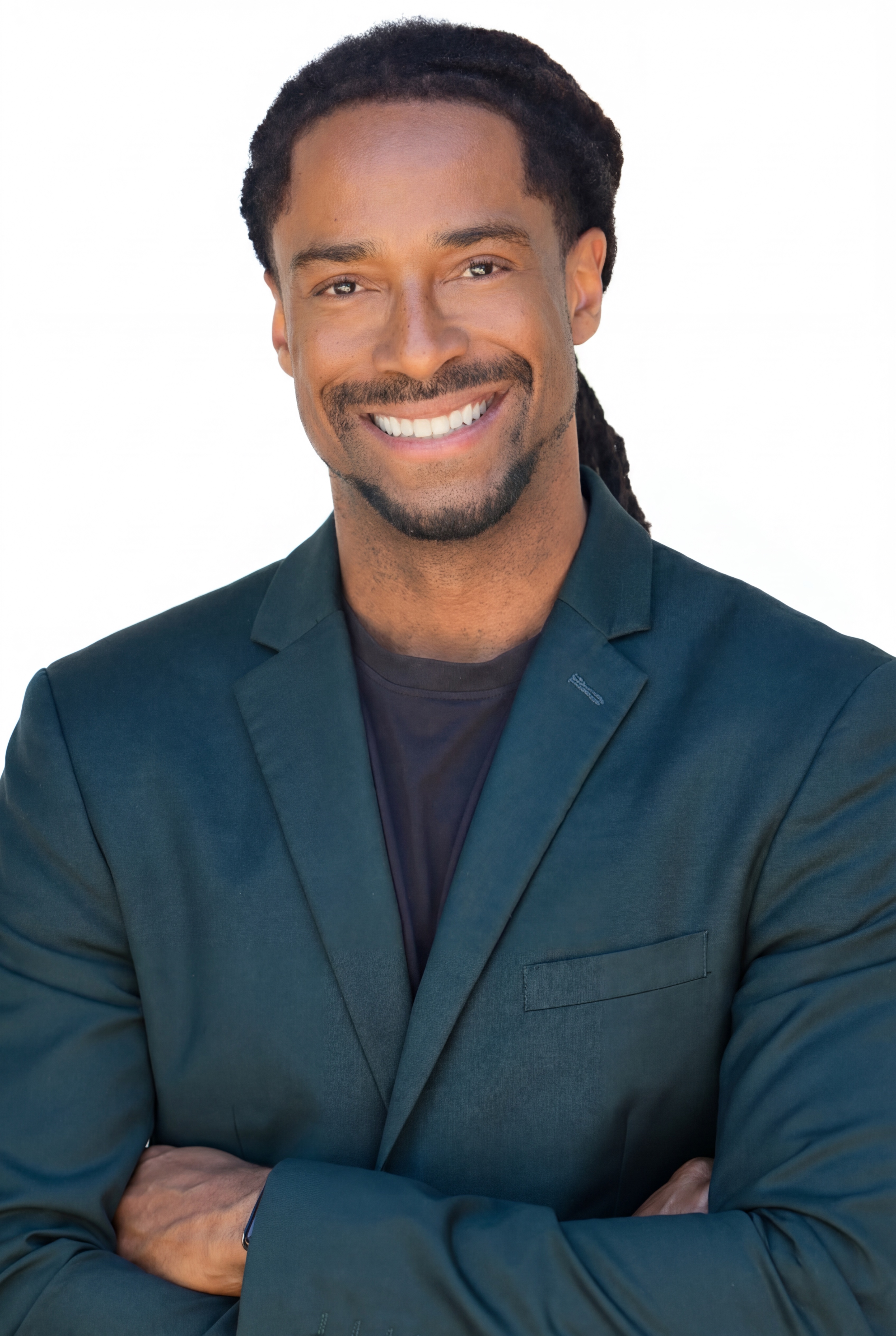
William “DJ Will Gill” Gilbert is a corporate event DJ, emcee, and audience-engagement professional. Recognized by The Wall Street Journal As a Virtual DJ-Emcee, he creates interactive online events that help organizations boost team morale. He is also a Forbes Next 1000 Honoree. He is also the founder of THEAIJ.com An AI-powered playlist generation platform built for working DJs and corporate event planners.