
Why Corporate Planners Are Consolidating Entertainment Vendors | DJ Will Gill
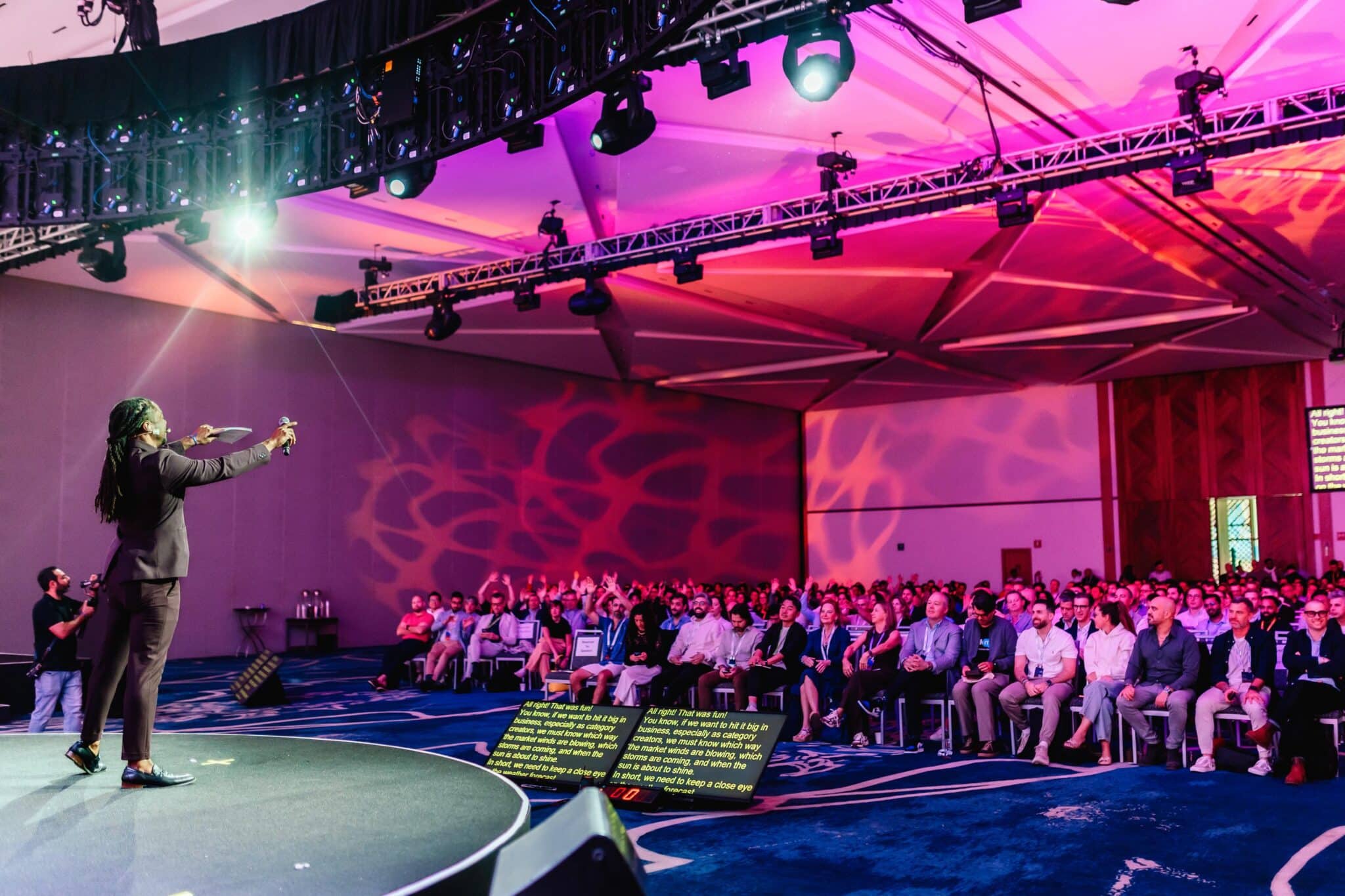
One of the structural shifts in corporate event procurement in 2026 is vendor consolidation. Fortune 500 procurement teams, corporate meeting planners, and internal event teams are actively reducing the number of vendors they contract for individual events, moving from fragmented multi-vendor engagements to consolidated single-vendor arrangements wherever the vendor category and operational scope allow it. The trend is not exotic. It is documented across corporate procurement literature, meetings and events industry reporting, and benchmark data from major surveys of professional planners. And it has implications for how corporate planners think about entertainment vendors: DJs, emcees, audience engagement hosts, and the coordination requirements that traditionally require three or more separate vendor contracts.
This piece is a working diagnostic on why the consolidation shift is happening, what the data actually shows, where entertainment vendors fit in the trend, and what corporate planners should look for when evaluating whether to book a traditional three-vendor entertainment stack or a consolidated single-operator arrangement. The structural forces driving consolidation across corporate categories. The specific numbers on cost, coordination overhead, and procurement pressure. The traditional three-vendor entertainment model and what it actually costs in coordination time and diffused accountability. The consolidated operator model and the value it delivers. Where consolidation genuinely delivers value, and where it has natural limits. And, at the close, the working framework corporate planners should apply when evaluating consolidated entertainment vendor proposals.
Evaluating consolidated entertainment vendor options for your next corporate event? Contact DJ Will Gill.
Key Takeaways
- Vendor consolidation is a corporate procurement priority in 2026. Industry analysis: “68% of technology leaders plan to consolidate vendors, and most organizations are targeting a 20% cut in vendor count, driven by cost control, risk reduction, and simplification.” The trend is not specific to technology procurement; it is broader corporate strategy that is reaching event and entertainment vendor categories.
- Meetings and events industry reporting from 2026 confirms the trend in the event vendor category. Event industry framing: “Continued consolidation in the supplier market will reshape pricing and partnerships.” And separately: “A strategic shift towards fewer meetings with higher average spend per event, allowing professionals to focus budgets on client-facing events that directly boost the bottom line.”
- Cost pressure is a driver. Survey data from Cvent’s 2026 planner sourcing report (1,650 professional planners surveyed): “72% expect event expenses to climb up to 20% from 2025, while 69% say their budgets will rise at a similar rate.” Rising costs without proportional budget growth produces procurement pressure that consolidation directly addresses.
- Consolidation benefits are quantifiable. Cross-industry consolidation data: “3 to 7% reduction in COGS (Cost of Goods Sold), cuts PO touches by up to 40%, 50% fewer procurement errors, 30% reduction in unplanned downtime.” These numbers translate into entertainment vendor procurement as: Fewer contracts to manage, fewer COIs to process, fewer W-9s to route, fewer points of coordination failure on event day.
- The consolidated entertainment vendor model (single operator delivering DJ, emcee, and audience engagement in one contract) is not universally applicable, but where the operator has genuine capability across the disciplines, it delivers structural advantages over the traditional three-vendor model: Single point of accountability, unified brand and voice, integrated run-of-show coordination, faster procurement cycle, and reduced coordination overhead for the planner.
1. The Trend: What’s Actually Happening in Corporate Vendor Consolidation
Start with the trend. Vendor consolidation is not a new concept in corporate procurement, but the pace and scope of consolidation initiatives across corporate categories has accelerated meaningfully in 2025 to 2026. Procurement teams that historically maintained hundreds of active vendor relationships are actively reducing vendor counts. The goal is fewer, deeper relationships with high-performing partners rather than fragmented relationships across many marginally-qualified suppliers.
Coverage of the vendor consolidation framing from a procurement industry publication: Vendor consolidation is a strategic initiative to reduce the number of suppliers your business relies on, by reallocating spend to your most trusted, high-performing partners and retiring those that duplicate services or underdeliver, consolidation turns a fragmented supply base into a focused, value-generating ecosystem, vendor consolidation is now a procurement priority, backed by IT leadership, 68% of technology leaders plan to consolidate vendors, and most organizations are targeting a 20% cut in vendor count, driven by cost control, risk reduction, and simplification, vendor consolidation is the fastest path back to leverage and governance, done well, it reduces spend leakage, strengthens negotiating power, and makes compliance easier because there are fewer moving parts to manage. The 68% and 20% figures are the benchmark data. Consolidation is not a marginal preference; it is a strategic priority backed by the executives who own procurement outcomes.
The translation of that broader procurement trend into the meetings and events industry is well-documented. Coverage from a global meetings and events industry publication: Strong safety credentials will become a key differentiator in procurement, and we expect continued consolidation in the supplier market to reshape pricing and partnerships, the biggest shift in 2025 has been the massive consolidation spike in meetings and events and business travel within Asia, while we’ve watched consolidation roll through North America and Europe for years, companies are now taking the same approach across Asian markets, this is happening in a more measured, regional way rather than a sweeping global approach. The trend is not regional. It has “rolled through North America and Europe for years” Per the industry framing, and is now global. Corporate planners in every major market are operating within procurement environments that increasingly favor consolidated vendors.
The proposal-stage awareness that corporate planners should bring when evaluating vendor structures (which is directly relevant because the consolidation trend affects how proposals should be evaluated and what to look for in vendor delivery capability) is covered in the Red flags in an event entertainment proposal Analysis. When comparing consolidated versus fragmented vendor proposals, the green flags for consolidated operators include verifiable capability across each discipline, not just the ability to check the box.
2. The Numbers: What the Data Actually Shows About the Consolidation Shift
The trend is not directional wishful thinking. It is documented in specific numbers from professional planner surveys and cross-industry consolidation benchmark analyses.
Coverage of the corporate event cost pressure framing from a leading global meetings industry survey publication (1,650 planners surveyed): Attendee engagement is now the leading success metric, with 63% of planners citing it as their primary KPI, financial pressure is intensifying: 72% expect event costs to rise, while 35% say staying within budget is their biggest concern, structured sourcing processes are delivering measurable ROI, with 97% reporting time and cost savings, planners are under pressure to demonstrate that each event delivers tangible business outcomes, whether that means stronger relationships, higher-quality networking, improved knowledge retention, or measurable shifts in brand perception, 58% spend up to five hours using technology to source each event, this paradox reveals that adoption is not automatically translated into efficiency. The implications: 63% attendee engagement as primary KPI plus 72% expecting cost rises plus 35% naming budget as biggest concern creates a procurement pressure profile. Planners need to deliver better experiences with pressured budgets, and consolidation is a lever for both.
Coverage of the consolidation benefits data from a cross-industry vendor consolidation industry publication: Vendor consolidation is the strategic process of replacing fragmented sourcing models with a leaner, more intentional supplier ecosystem, rather than managing hundreds of disparate sources, organizations reduce the number of active vendors to focus on high-performing partners, this shift addresses the common pitfalls of fragmented environments, such as: High administrative overhead, our approach typically delivers a 3-7% reduction in COGS and cuts PO touches by up to 40%, by partnering with us, organizations have seen real-world impacts such as a 30% reduction in unplanned downtime and 50% fewer procurement errors, cost efficiency: Concentrating spend allows for volume pricing and bulk purchasing, leading to significant reductions in the Cost of Goods Sold, operational agility: Reducing the number of vendors slashes the volume of purchase orders, minimizes approval cycles, and simplifies invoicing, resilience and continuity: When done correctly, consolidation strengthens the supply chain. The 3-7% COGS reduction and 40% PO touch reduction translate directly into event vendor procurement: Fewer contracts, fewer invoices, fewer approval cycles, fewer opportunities for coordination failure.
Additional coverage from a corporate event trends industry publication that names the pattern in event procurement: Consolidation: we’re also seeing a strategic shift towards fewer meetings with higher average spend per event, allowing professionals to focus budgets on client-facing events that directly boost the bottom line, payment terms: Suppliers offering extended payment terms of 30+ days post-event are gaining a competitive advantage in winning business, with 85% of event professionals expressing optimism about the sector in 2026 (the highest level in five years according to the Amex GBT Global Meetings & Events Forecast), there’s genuine momentum behind this shift, this confidence isn’t misplaced; it stems from successfully positioning events as business investments that drive measurable outcomes rather than discretionary spending. The specific “fewer meetings with higher average spend per event” Pattern captures the strategic logic. When planners are doing fewer events with more scrutiny per event, each vendor decision matters more, and consolidation becomes structurally more attractive.
The market context for 2026 corporate entertainment pricing (which is directly relevant because rising costs are one of the drivers of consolidation pressure, and understanding the market context helps corporate planners read consolidated versus fragmented vendor pricing accurately) is covered in the Why virtual corporate entertainment rates are rising in 2026 Analysis. The 72% of planners expecting cost rises applies to entertainment vendor pricing specifically. Consolidation is a legitimate lever for managing cost pressure without proportionally compromising quality.
3. The Six Structural Forces Driving Consolidation
The trend has structural causes. Understanding the causes helps corporate planners understand whether their event context is one where consolidation delivers real value or one where it is procurement-driven rather than outcome-driven.
Six structural forces driving corporate entertainment vendor consolidation in 2026:
- Budget pressure without proportional budget growth. The 72% of planners expecting cost rises against 35% naming budget as biggest concern creates a mathematical constraint. Consolidation is a legitimate cost lever because it reduces administrative overhead per event.
- Coordination overhead compounded by lean internal teams. Corporate event teams have shrunk over the past three years. Fewer internal event professionals per organization means fewer hours available for cross-vendor coordination. Consolidated vendors reduce the coordination surface area.
- Procurement policy shifts toward preferred vendor programs. Corporate procurement has increasingly adopted master service agreements, preferred vendor programs, and category management strategies. Entertainment vendor categories are following this pattern.
- Diffused accountability as an operational risk. Fragmented vendor structures produce diffused accountability. When the AV vendor is not responsible for the emcee’s mic sounding right, the emcee is not responsible for the DJ’s music level, and the DJ is not responsible for the keynote speaker’s audibility, coordination failures fall between the vendors and land on the planner.
- Compliance and documentation overhead per vendor. Each new vendor requires a COI review, W-9 processing, insurance verification, background check where applicable, and contract negotiation. In markets with elevated compliance requirements (Chicago, New York, San Francisco), the per-vendor overhead is materially higher.
- Speed of booking pressure. Industry framing: “58% spend up to five hours using technology to source each event.” Consolidated vendors reduce the sourcing time by reducing the specific number of decisions that have to be made.
A note on the second force above: Internal corporate event teams have shrunk in the 2023 to 2026 period. Event industry framing from a corporate event planning industry publication: As corporate teams remain lean, more organizations are outsourcing corporate event planning to professionals who understand both logistics and business strategy, many of our Chicago-based clients are choosing to outsource planning so their internal teams can remain focused on leadership, messaging, and outcomes, not timelines and vendor coordination, a common realization after outsourcing: When internal teams are freed from managing logistics, the quality of the event’s content improves immediately, outsourcing has evolved into a strategic decision, one that protects internal resources while elevating execution. The pattern is that internal teams have less time for vendor coordination, and consolidated vendors are one of the structural responses.
The coordination failure modes that emerge when multiple event professionals contribute to a single event without adequate cross-vendor communication (which is directly relevant to the consolidation trend because coordination failures are the downside of fragmented vendor structures that consolidation directly addresses) are covered in the Communication breakdown between DJs, emcees, and hosts Analysis. Understanding the coordination failure modes clarifies exactly what consolidation is solving for.
4. Where Entertainment Vendors Fit in the Story
Broader corporate procurement consolidation trends apply to entertainment vendors because corporate events typically involve multiple entertainment vendor categories that traditionally operate as separate contracts.
Standard corporate event entertainment vendor stack (traditional model):
- DJ. Music programming for reception, dinner, dance floor, and program transitions. Separate contract, separate rate, separate coordination.
- Emcee or host. Program hosting, executive introductions, energy management between segments. Separate contract, separate rate, separate rehearsal requirements.
- Audience engagement host or team-building host. Interactive segments, team-building activities, gamified engagement moments. Separate contract, separate rate, separate content development.
- Live band or entertainment act. Featured entertainment for program moments. Separate contract, separate rate, separate technical requirements.
- AV production vendor. Sound reinforcement, staging, lighting. Frequently a separate contract even when the entertainment vendors are consolidated.
Under the traditional model, a corporate leadership summit or awards ceremony may involve four to five separate entertainment vendor contracts, each with their own scope of services, insurance requirements, cancellation terms, and coordination requirements. Every one of those contracts is procurement overhead. Every one of those vendors requires event-day coordination. Every point of hand-off between vendors is a potential coordination failure.
A structural observation: The traditional multi-vendor entertainment model is a legacy of an era when corporate events had substantially different resource profiles. Internal event teams were larger, procurement processes were more permissive of vendor sprawl, coordination hours were more available, and the consolidated-capability vendors did not exist at scale. Each of those conditions has shifted, and the traditional multi-vendor entertainment stack is under structural pressure from the same forces driving consolidation across corporate procurement.
The structural distinction between hiring a professional emcee and asking an internal employee to host the event (which is directly relevant because one of the consolidation questions is where the entertainment functions live and who is qualified to deliver them) is covered in the Professional emcee versus internal host Analysis. Understanding the professional emcee role clarifies which parts of the entertainment stack can be consolidated versus which parts require professional discipline.
5. The Traditional Three-Vendor Model (And Its Real Cost)
The traditional model for corporate event entertainment (separate DJ, separate emcee, separate engagement host) has real costs that are frequently underappreciated at the proposal-comparison stage. When corporate planners compare consolidated versus fragmented proposals, the direct pricing is only one dimension. The full cost of the fragmented model includes cost categories that show up somewhere in the budget or in the planner’s own hours.
Hidden costs of the traditional three-vendor entertainment model:
- Three separate proposals to evaluate. Planner time reviewing three proposals, comparing scope, negotiating terms, and processing procurement documentation.
- Three separate contracts to negotiate and execute. Legal review time, procurement processing time, signature routing time.
- Three separate COIs to review. Insurance verification, additional-insured naming coordination, endorsement processing where required.
- Three separate W-9s and vendor payment setup processes. Corporate procurement payment routing overhead, per vendor.
- Three separate pre-event coordination cycles. Intake calls, walkthrough coordination, run-of-show alignment, and content coordination all happen three times.
- Three separate points of accountability on event day. When the DJ, emcee, and engagement host all show up separately with different production requirements, the planner or event manager becomes the coordination hub, spending event-day hours managing hand-offs.
- Diffused accountability when problems occur. The coordination failure mode where each vendor operates within their own scope and the coordination between scopes falls between them, landing on the planner.
- Inconsistent brand voice across the event. Three separate professional voices with three separate presentation styles, sometimes reinforcing each other, sometimes clashing.
- Coordinated rehearsal complexity. Aligning three separate vendors for a single rehearsal window requires scheduling gymnastics.
The direct cost of three separate mid-range corporate entertainment vendors (working DJ, working corporate emcee, working audience engagement host, at typical Fortune 500 rates) is frequently comparable to or higher than the cost of one senior consolidated operator delivering the full stack. Working professional consolidated operators typically price at the higher end of individual specialist pricing but below the sum of three specialists. The planner’s math frequently favors the consolidated option even before considering the coordination savings.
The downstream cost pattern where the cheapest vendor selections produce the largest total-cost overruns (which is directly relevant to the consolidation math because fragmented vendor selection frequently produces the cost compounding described here) is covered in the Why the cheapest DJ costs you the most Analysis. The three-vendor entertainment model frequently produces the pattern where the sum of the parts exceeds the properly-priced consolidated option once coordination overhead is accounted for.
6. The Consolidated Operator Model: One Vendor, Integrated Delivery
The consolidated entertainment vendor model addresses the structural inefficiencies of the traditional three-vendor stack. A single working professional operator delivers the full entertainment scope (DJ, emcee, audience engagement) under one contract, one COI, one point of accountability, and one integrated event-day execution.
Structural advantages of the consolidated operator model:
- Single point of accountability. One vendor owns the entertainment outcome. No diffused accountability across three vendors. When something works or breaks, the responsibility is clear.
- Unified brand voice. One professional voice across DJ transitions, emcee moments, and engagement segments. Corporate audiences experience a coherent professional presence rather than three separate personalities requiring integration.
- Integrated run-of-show coordination. The DJ knows exactly what the emcee is going to say next because the DJ is the emcee. Cue moments, music-under-speech transitions, and engagement segment integration all happen inside one operator’s head.
- Single procurement cycle. One contract, one COI, one W-9, one payment setup. All the compounding compliance and documentation overhead compresses substantially.
- Single pre-event coordination cycle. One intake call, one walkthrough coordination, one run-of-show alignment. Three separate cycles become one.
- Faster booking cycle. One decision rather than three. Reduces the sourcing time that industry data indicates consumes up to five hours per event.
- Better real-time adaptability. When the executive keynote runs long, when the awards segment ends early, when the room energy needs adjustment, one operator can adapt across the DJ, emcee, and engagement functions simultaneously. Three separate vendors require coordination in the moment.
- Consistent quality across the entertainment stack. Rather than one strong DJ and two mediocre supporting vendors, the consolidated operator delivers consistent professional quality across every function they own.
A note on the operator capability requirement: The consolidated model requires the operator to be genuinely capable across DJ, emcee, and audience engagement disciplines. This is a and narrower professional profile than any single discipline. Corporate DJs who claim emcee capability but do not actually deliver at professional emcee standard should not be booked under the consolidated model, because the client is effectively booking a DJ and hoping for adequate emcee output. The structural advantages of consolidation only materialize when the operator delivers real capability across the full scope.
The operational model of running a conference where the DJ, emcee, and audience engagement host are the same working professional (which is directly relevant because it describes the operator profile that makes consolidation actually work) is covered in the How to run a conference where your DJ, emcee, and engagement host are the same person Analysis. Understanding the operational model clarifies exactly what consolidated operators do differently from three-vendor stacks.
7. Where Consolidation Delivers Real Value (And Where It Doesn’t)
The honest section. Consolidation is not universally the right answer. Understanding when it delivers real value versus when the traditional multi-vendor model is genuinely better prevents corporate planners from applying consolidation as a blanket procurement default that ignores event context.
Where consolidation delivers real value:
- Corporate events with DJ, emcee, and engagement scope. The three-function stack that consolidated operators are built for.
- Events with sub-300 attendees and tight coordination requirements. Smaller events benefit disproportionately from unified voice and integrated coordination.
- Multi-day conferences with recurring program segments. The consolidated operator maintains continuity across days. Three separate vendors lose institutional memory between days.
- Corporate leadership summits with executive presence. Executive-appropriate professional discipline is easier to enforce across one operator than three.
- Brand-safety-sensitive events. One point of accountability for brand-safety compliance is simpler to enforce than three.
- Events in markets with elevated compliance requirements. Cities like Chicago, New York, and San Francisco with strict insurance, documentation, and vendor rules produce compounding overhead per vendor that consolidation directly reduces.
Where the traditional multi-vendor model may genuinely be better:
- Very large-scale events (2,000+ attendees) with high-production requirements. Some events legitimately require separate specialists because the scale of each function exceeds what a single operator can deliver.
- Events with celebrity headliner talent. When the entertainment includes a name musician, comedian, or performer, the model is fundamentally different and consolidation of the supporting roles is a different question.
- Events with specialist requirements the consolidated operator does not offer. Cultural or genre-specific music expertise, ceremonial or protocol emcee requirements, or interactive formats may require specialist vendors.
- Events where the client has existing vendor relationships they want to maintain. Preferred vendor programs and long-standing relationships may reasonably override consolidation logic.
- Multi-track conferences with simultaneous programming. When the event has multiple concurrent tracks needing simultaneous entertainment support, one operator cannot cover all tracks.
The decision framework for corporate planners: Consolidation delivers real value when the event scope fits within what a single professional operator can genuinely deliver at professional standard across all functions. It does not deliver value when the operator is stretching beyond their capability, when the event scale exceeds single-operator delivery, or when specialist expertise is legitimately required.
8. Working Framework for Corporate Planners Evaluating Consolidated Vendors
The closing framework. When evaluating whether to book a consolidated entertainment vendor or the traditional multi-vendor stack, the working corporate planner should apply verification discipline. Consolidation only delivers value when the operator actually delivers.
Verification criteria for evaluating consolidated entertainment vendor proposals:
- Verify capability across each discipline separately. Ask for examples of DJ work, emcee work, and audience engagement work at Fortune 500 corporate scale. Do not accept generic claims. Verify each discipline independently.
- Ask for references for the consolidated model, not individual disciplines. References who have booked the operator in the consolidated capacity, not references from single-discipline engagements.
- Confirm proposal scope includes all three functions explicitly. Scope should enumerate DJ, emcee, and audience engagement responsibilities. Vague “entertainment services” Language does not meet the standard.
- Verify the operator’s insurance covers the full consolidated scope. Some individual specialist policies do not cover cross-discipline liability. Confirm the operator’s COI covers the consolidated scope of work.
- Ask about the operator’s approach to fatigue management. A consolidated operator is on-stage or on-mic more of the total event time than any single specialist. Ask how they manage energy across a multi-hour or multi-day engagement.
- Verify the operator has adequate technical support. Even a consolidated operator typically needs technical support (AV coordination, wireless mic backup, playback contingency). Confirm the support structure.
- Compare total cost including coordination overhead, not just direct vendor pricing. The consolidated vendor may cost more or less than three specialists on direct pricing, but the total cost including coordination overhead frequently favors consolidation.
- Ask about event-day contingency handling. When the executive keynote runs long, the AV feed drops, or an unexpected situation emerges, how does the consolidated operator adapt across all three functions simultaneously.
A observation for corporate planners: The consolidation trend is real, the structural forces driving it are real, and the value it can deliver is real. But the vendor selection still matters. A poorly-executed consolidated engagement is worse than a well-executed three-vendor engagement, because the diffused accountability that limits three-vendor failures also limits their upside. A single accountable operator delivering below standard has no vendor next to them to compensate.
For a service-line look at what a genuinely consolidated corporate entertainment operator delivers across DJ, emcee, and audience engagement functions in a single working professional engagement, the current deliverables are on the Corporate event DJ services page. The consolidation shift favors operators who genuinely deliver across the full stack. Corporate planners evaluating vendors in 2026 should apply the verification discipline described above rather than treating consolidation as either a universal default or a universal red flag. Vendor consolidation is a lever. Applied to the right events with the right operators, it delivers meaningful structural value.
Frequently Asked Questions
What is vendor consolidation in the corporate events context?
Vendor consolidation is the strategic reduction of the number of active vendor relationships an organization maintains, reallocating spend to fewer high-performing partners. Industry framing: “68% of technology leaders plan to consolidate vendors, and most organizations are targeting a 20% cut in vendor count, driven by cost control, risk reduction, and simplification.” In the corporate events context, this means moving from fragmented multi-vendor entertainment stacks (separate DJ, emcee, engagement host, live band) to consolidated single-operator engagements wherever the operator’s genuine capability spans the required functions.
How much does the traditional three-vendor entertainment model actually cost?
Direct cost varies by market and vendor tier. The hidden costs beyond direct pricing include: Three separate proposals to evaluate, three contracts to negotiate, three COIs to review, three W-9s to process, three pre-event coordination cycles, three points of accountability on event day, diffused accountability when problems occur, inconsistent brand voice across the event, and coordinated rehearsal complexity. Working professional consolidated operators typically price at the higher end of individual specialist pricing but below the sum of three specialists. Total cost including coordination overhead frequently favors consolidation for the event scopes it fits.
Can one vendor really replace DJ, emcee, and engagement host effectively?
Depends on the operator. The consolidated model requires the vendor to be genuinely capable across DJ, emcee, and audience engagement disciplines at professional corporate standard. This is a narrower professional profile than any single discipline. Corporate DJs who claim emcee capability but do not actually deliver at professional emcee standard should not be booked under the consolidated model. Verification discipline: Ask for examples of each discipline separately, ask for references in the consolidated capacity, confirm scope explicitly enumerates each function, verify insurance covers the consolidated scope.
What are the limits of the consolidated entertainment vendor model?
Consolidation does not fit every event. Structural limits include: Very large-scale events (2,000+ attendees) with high-production requirements that legitimately need separate specialists, events with celebrity headliner talent where the entertainment structure is fundamentally different, events with specialist requirements (cultural or genre-specific music expertise, ceremonial or protocol emcee requirements) that the consolidated operator does not offer, events where the client has existing vendor relationships they want to maintain, and multi-track conferences with simultaneous programming that require multiple parallel operators.
What should corporate planners look for in a consolidated entertainment vendor?
Verifiable capability across each discipline separately (examples of DJ, emcee, and engagement work at Fortune 500 corporate scale), references for the consolidated model, proposal scope explicitly enumerating each function, insurance covering the full consolidated scope, adequate technical support structure, thoughtful approach to fatigue management across the full event, and event-day contingency handling. Compare total cost including coordination overhead, not just direct vendor pricing. The consolidated vendor’s direct price may run above or below three specialists, but coordination overhead frequently favors consolidation.
Does vendor consolidation reduce quality?
Not inherently. Consolidation reduces quality when the operator is stretching beyond their genuine capability, when the event scale exceeds single-operator delivery, or when specialist expertise is legitimately required and the consolidated operator cannot provide it. Consolidation improves quality when it delivers unified brand voice, integrated run-of-show coordination, single-point accountability, and consistent professional standard across every function. The outcome depends on operator selection, not on consolidation as a category. Verification discipline separates operators who genuinely deliver from operators who claim capability they do not have.
What Corporate Clients Are Saying

About the Author
William “DJ Will Gill” Gilbert is a corporate event DJ, emcee, and audience-engagement specialist. The Wall Street Journal Has recognized him as a Virtual DJ-Emcee for creating interactive experiences that help strengthen team morale. He is also a Forbes Next 1000 Honoree and the founder of THEAIDJ, an AI-powered playlist tool for DJs and corporate event planners curating music for in-person, hybrid, and virtual events.