
Keynote Speakers Who Also DJ: The Untapped Format Advantage | DJ Will Gill
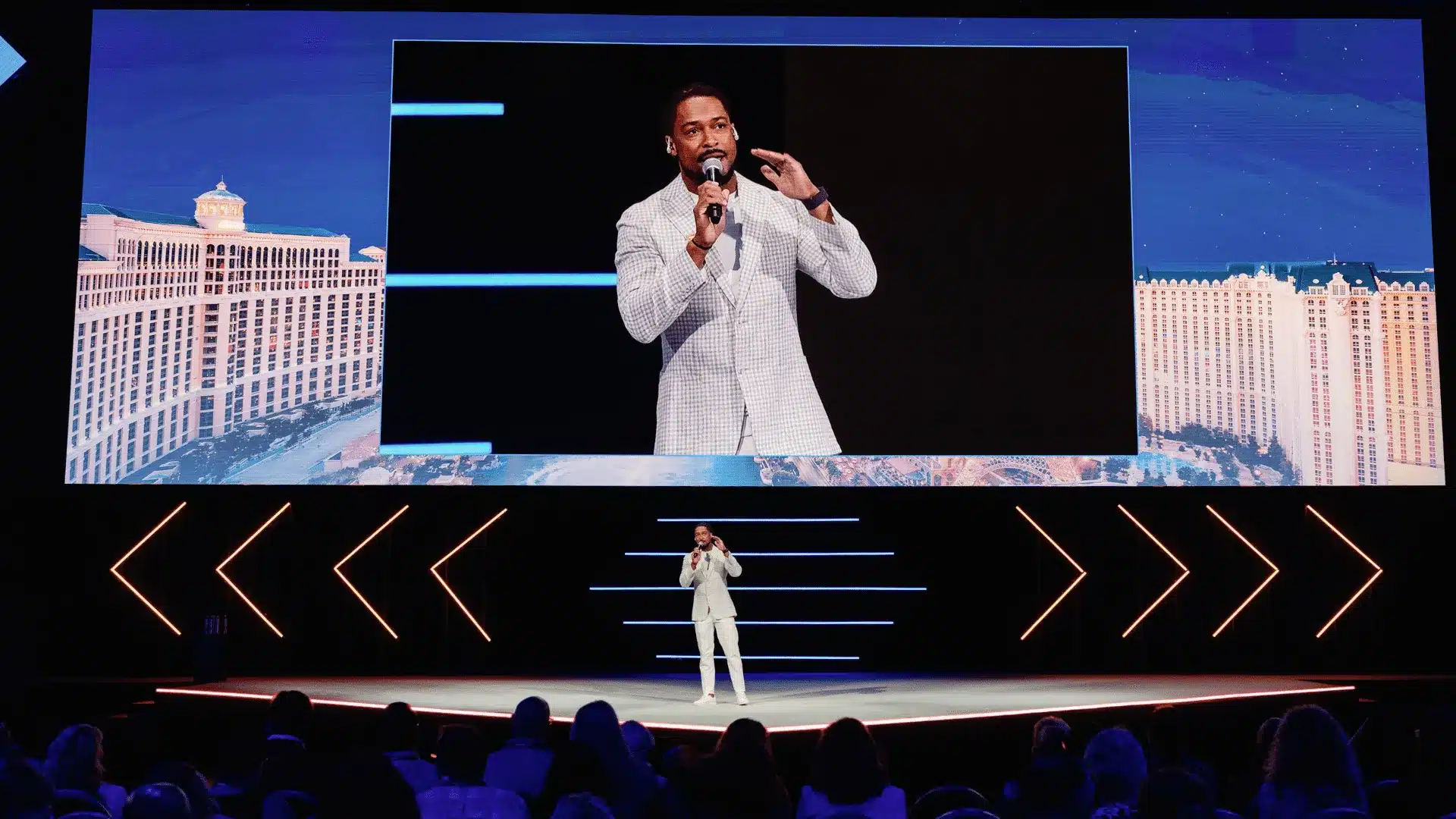
Short answer: one person beats two when that person is trained at professional depth in both crafts, not when a keynote specialist is handed a microphone and asked to host. A genuine speaker and DJ removes the handoff seam where energy resets, collapses two contracts and two travel lines into one, and keeps one accountable voice in the room all day.
Most keynote speakers know one delivery mode. Stand at the front. Deliver the argument. Land the takeaway. Take a few questions. Sit down. That is the format. It has been the format for four decades. It works, most of the time, when the speaker is trained well. It also has structural limits that get exposed the moment the room is bigger than 500, the day is longer than 60 minutes of stage time, or the content is trying to shift emotional temperature rather than just transfer information. There is an underexploited category of professional that transcends those limits by combining serious keynote training with serious DJ training. Not celebrity musicians who speak. Not speakers who like music. Working professionals who have logged real time in both disciplines and can hold a room in ways neither craft alone can produce.
This piece is a professional case for a rare and structurally valuable format: the practicing keynote speaker who also has documented DJ experience at professional scale. What DJing teaches keynote speakers that pure speaking coaching never will. What keynote speaking teaches DJs that pure DJing never will. What the music-anchored keynote format actually looks like on stage. Why DJ-trained speakers can adaptively pace content in ways their peers cannot. Why the format runs longer without losing the room. Why so few professionals hold both credentials, and why speaker bureaus do not have a clean category for the ones who do. And how planners can spot the real dual-craft speaker versus the many speakers who list “DJ” as a hobby on the bio. This is a positioning piece, and I hold both credentials, so treat the argument accordingly. It is also a description of a real format advantage that is showing up in more corporate booking conversations every year, and that planners with sophisticated events should understand.
Booking a keynote and want the DJ-trained option? Contact DJ Will Gill.
Key Takeaways
- This piece is about SKILL overlap in one professional, not ROLE overlap at one event. A keynote speaker who also has professional DJ training brings capabilities their pure-speaker peers cannot. That is not the same as asking one person to keynote AND emcee the same event, which is a separate question with a different answer.
- DJing teaches keynote speakers what specialist speaker coaching structurally cannot: reading rooms without asking questions, calibrating energy in real time, programming long-form arcs, being comfortable with silence, and holding a room’s attention with minimal talking for extended stretches.
- Keynote speaking teaches DJs what specialist DJ training structurally cannot: structuring an argument, landing a takeaway, packaging thought leadership, and delivering language and metaphor at executive scale.
- The music-anchored keynote format uses music as memory hook, emotional bed, and callback structure. Adaptive pacing (compression and extension on the fly by reading the room the way a DJ does) extends the runway significantly beyond what most keynote speakers can hold.
- Legitimate dual-craft speakers are rare because the training paths are separate and speaker bureaus lack a clean category for them. Planners can distinguish real dual-craft professionals from side-skill marketing by demanding documented professional experience at scale in BOTH functions, not just one plus a hobby.
1. Skill Overlap, Not Role Overlap: The Important Distinction
Before making the case for the dual-craft speaker, the frame has to be clean. There is an argument, which I have made elsewhere in this library, that a keynote speaker should generally not also emcee the same event. That argument is about ROLE overlap: putting one professional into two full-day functions at the same event dilutes the impact of both. That warning stands. This piece is a different argument. It is about SKILL overlap: the individual professional whose training combines both crafts brings capabilities to whichever role they are hired for that a pure-craft peer cannot bring. Role overlap is a workflow question. Skill overlap is a training question. Different arguments, different answers.
Concretely: a keynote speaker with documented professional DJ training can deliver a keynote (their booked role) with format advantages that their pure-speaker peers structurally cannot match. That is what this piece is about. It is not an argument that the keynote speaker should then also DJ the after-party, or emcee the awards ceremony, or run engagement segments across the whole day. Those may be smart bookings in some contexts and unwise in others, and the reasoning in the role-overlap piece still applies to those questions.
The market is showing signs of recognizing this skill category. Coverage of the specific format category from a top speaker bureau’s 2026 interactive keynote analysis: interactive keynote speakers turn a keynote into something audiences can participate in, remember, and apply, the speakers featured here use live illusion, music, storytelling, communication exercises, mindset frameworks, negotiation tools, and audience-driven experiences to keep attendees engaged in the room and connected to the message after the event, a 2025 ScienceDirect review on technology-facilitated event engagement found that event technology can shape attendee engagement across cognitive, affective, and behavioral dimensions before, during, and after an event. Speakers who use rhythm, music, and shared musical participation are being categorized as their own interactive-keynote subcategory. The underlying reason is that the format produces different engagement dynamics than speaker-only content.
Additional market validation from a competing dual-craft professional’s positioning: the most memorable keynote speech feels less like a lecture and more like a live performance, where ideas land with the same intensity as a rock star stepping onstage, energy, authenticity, and connection are what separate forgettable presentations from unforgettable ones, the most effective keynote speakers focus on a single core message and reinforce it with examples, humor, and insight, like a great song, a keynote speech needs a strong hook, a compelling build, and a memorable finish. Notice the framing: keynote craft explicitly described through musical craft. A hook. A build. A finish. That is a DJ’s mental model of arc construction imported into speaker craft. This is exactly the crossover this article is naming.
The specific role-overlap warning that stands separately from this skill-overlap argument (which planners should understand before booking a dual-craft professional into multiple functions at the same event) is covered in the why keynote speakers should not double as emcees analysis. This piece is downstream of that one. Both can be true. Skill-overlap advantages are real. Role-overlap risks are also real. Sophisticated planners hold both in mind.
2. What DJing Teaches Keynote Speakers That Pure Speaking Never Will
Traditional keynote-speaker development runs through executive speaker coaching, storytelling workshops, and stage-time repetition. That path builds a specific set of skills. It also has structural blind spots. There are professional capabilities that only develop when someone has spent years standing behind a rig, holding a room for four or five hours at a time, and calibrating audience response to musical decisions in real time.
Specific capabilities that transfer from DJ training to keynote craft:
- Reading rooms without asking questions. A DJ cannot poll the crowd to find out if the last mix worked. They read posture, movement, energy, and the shape of the dance floor. This is a nonverbal room-reading discipline. A speaker who has developed it can walk on stage, take one look at the room, and know whether to push or hold, faster than a pure speaker who is still relying on verbal check-ins.
- Real-time energy calibration. A DJ’s job is to modulate the room’s emotional temperature across the arc of a night. That is a psychomotor skill that lives at the tempo, key, and transition level. A speaker who has developed it can modulate their own delivery in the same way. Verbal tempo, pause length, rhetorical intensity, all become adjustable dials rather than fixed choices.
- Programming long-form arcs. A DJ set is a designed arc. Opening frame, first drop, plateau, build, peak, callback, close. That is architecturally the same shape as a well-designed keynote. Pure speakers know this in theory. DJ-trained speakers have internalized it at a physical level from thousands of hours of executing it on the floor.
- Comfort with silence. Silence in a DJ set is a tool. A held pause between tracks, a break where the crowd hears only their own voices, is often more powerful than sound. Speakers who have used silence as a musical instrument use it differently on stage than speakers who see silence only as absence.
- Holding rooms with minimal talking. A DJ can hold 500 people’s attention for five hours while saying almost nothing. That is a different professional skill than commanding attention through speech. The transferred confidence shows up in how the speaker holds pauses, resists filler, and refuses to over-explain.
- Understanding audience psychology at the physiological level. DJs think about tempo, BPM, arousal, and the physical response of a body to sound. That physiological literacy transfers to how a DJ-trained speaker paces content across audience metabolic states across a day.
Coverage of the specific transfer from a keynote-craft coaching authority (which frames the same skills as speaker development goals even for speakers who do not have DJ training): great keynote speakers don’t just deliver content, they design experiences, they anticipate when their audience is likely to drift and build intentional engagement moments to pull them back in, this could mean a well-placed story, a shift in delivery, or an unexpected moment that re-engages attention, the rhythm of a keynote matters just as much as the content itself, knowing when to pause, when to surprise, and when to invite participation can mean the difference between passive listeners and an audience that is fully present and engaged. The rhythm of a keynote. Knowing when to pause, when to surprise, when to invite. That is a DJ’s mental map of a night, imported into speaker craft. Some pure speakers develop it through years of stage-time. DJ-trained speakers arrive with it because it is what they already do for a living.
The specific room-reading discipline (which is the underlying craft that transfers between DJing and keynote work) is much more granular than most planners realize and is covered in the how to tell if a corporate DJ can read a mixed audience analysis. The same discipline that lets a DJ read a mixed corporate audience is what lets a DJ-trained speaker read a keynote audience continuously across the talk.
3. What Keynote Speaking Teaches DJs That Pure DJing Never Will
The transfer runs both directions. Keynote-craft training builds specific capabilities that pure DJ development does not produce. Both crafts have blind spots. Both benefit from the other’s training path. The dual-craft speaker is not just a DJ who has decided to add speaking. They are a speaker who has done the actual work to develop the argument-construction skills that specialist DJs typically never build.
Specific capabilities that transfer from keynote craft to DJ development:
- Structuring an argument. A keynote earns a takeaway through a specific rhetorical structure: premise, evidence, insight, application. A DJ who has trained in that structure programs their sets and their emcee moments with argumentative shape. Their transitions carry meaning, not just tempo.
- Landing a takeaway. A keynote is judged by what the audience takes away. Speaker training makes that outcome central. A DJ who has trained as a speaker programs their evening with a specific takeaway in mind, whether it is corporate morale, brand recall, or team cohesion.
- Command of language and metaphor. Pure DJ training does not develop language craft. Speaker training does. A DJ-trained speaker can talk about their craft with the vocabulary and metaphorical range that lets executive audiences hear them as thought leaders, not entertainment.
- Managing anxiety at professional scale. Speaking to 2,000 people is a different psychological workload than DJing to the same room. Keynote speaker development includes specific work on stage anxiety, executive presence, and voice command. A DJ who has done that work brings it back to the DJ booth.
- Packaging thought leadership. Speaker development creates the discipline of turning craft insight into publishable frameworks, articles, and IP. Most DJs never develop this. DJ-trained speakers can write about their craft, publish, and build category authority that pure DJs cannot.
- Working with speaker bureaus, corporate procurement, and executive event teams. Speaker training includes the business infrastructure of the speaking industry. DJs whose only experience is nightlife and event vendors do not have that infrastructure. Dual-craft professionals do.
Coverage of the specific presentation-craft discipline from an established storytelling authority in the executive communication space: even the most well-thought-out, well-crafted, audience-centric presentations can lose people if they’re not delivered well, remember Charlie Brown’s teacher in the Peanuts cartoons, if you’re not focused on your presentation’s delivery, you may end up sounding just like him to listeners. Speaker training is delivery training. Delivery is where DJ instincts pay off. Keynote-craft training is what teaches the DJ-trained speaker to construct the argument that their delivery instincts then land.
The full articulation of what happens when you approach speaker development from the DJ side (which is a specific and unusual training path but produces a specific and valuable professional) is covered in the why keynote speakers should study DJs analysis. That piece looks at the transfer from the speaker’s side. This one is the reciprocal from the DJ’s side. Both directions matter. The dual-craft professional is what emerges when someone has done both.
4. The Music-Anchored Keynote Format
The clearest expression of the format advantage is the music-anchored keynote itself: a keynote where music is not decoration but a structural element of the argument. Track choices carry meaning. Musical transitions punctuate content moves. The physical presence of a mixing rig on stage sets a different expectation than a lectern. The audience knows from the first sixty seconds that this is not going to be the standard keynote format.
Specific elements of the music-anchored keynote:
- Track drops as memory hooks. A specific song, deployed at a specific content moment, becomes an audio anchor for a concept. Attendees hear the song later and the content comes back with it. Music is the second-strongest memory retrieval trigger after smell, and speakers who do not use it are leaving the strongest available retention tool on the table.
- Music as emotional bed under content. A slow build under a hard-hitting insight amplifies the insight. Silence under a rhetorical pause deepens the pause. This is film scoring applied to keynote craft. Pure speakers do not have the tools.
- Callback structure anchored in track motifs. A track played at the opening returns at the close. A stinger from the opening becomes the audio signature of the takeaway. The keynote acquires the through-line that DJ sets have and most keynotes lack.
- Walk-on and walk-off moments as designed transitions. The music the audience hears as the speaker approaches and leaves the stage frames the entire talk. Pure speakers depend on whatever the AV team happens to select. DJ-trained speakers program these moments.
- Adaptive segments where music replaces speech. A moment where the speaker steps back from the mic and lets the room feel a track for 30 seconds is a specific rhetorical device. It resets attention. It repositions the speaker as director rather than presenter. It is available only to speakers who are legitimate music curators.
- Post-keynote continuity. The music the audience hears after the keynote ends can carry the mood the keynote established. Most keynotes end and the AV team drops in generic transition music that dissolves the state. DJ-trained speakers can hand off the state deliberately.
Direct market evidence of the category from a top speaker bureau’s positioning of dual-craft speakers: Peter Katz helps organizations raise engagement by turning employee and member stories into a shared keynote experience, his Custom-Built Keynote Concert combines personalized storytelling, live music, and actionable takeaways so audiences feel recognized, reconnected, and ready to contribute, Doug Manuel turns disconnected audiences into active communities through rhythm, story, and shared participation, his keynotes and workshops are built to improve listening, communication, empathy, and team performance, using music and rhythm to make connection feel immediate instead of abstract. The bureau is naming the category. Music-anchored keynote formats are being booked at speaker-bureau tier. The market has moved. Most planners have not caught up.
Even the celebrity end of the market validates the format. Coverage of the top-tier musician-speaker positioning from the industry’s leading speaker bureau’s roster: Ahmir “Questlove” Thompson is a singular cultural force whose dynamic career as an Academy Award-winning filmmaker, six-time Grammy-winning musician, bestselling author, and thought-leading creative visionary makes him one of the most compelling public speakers of our time, with a deep knowledge of music, storytelling, and Black history, and an uncanny ability to connect with audiences of all kinds. Questlove is positioned specifically as musician + DJ + speaker. That is the category. It is a small category. It is a valuable category.
The narrative-craft foundation for how music-anchored formats actually build cohesive arcs across an entire event day (not just a single keynote) is covered in the how a combined DJ-emcee creates a cohesive event narrative analysis. Music-anchored keynote is the single-talk expression of the same underlying principle: music as narrative structure, not decoration.
5. Adaptive Pacing: The DJ-Trained Speaker’s Superpower
The single most valuable capability the DJ-trained speaker brings to a keynote is adaptive pacing. Most keynote speakers hit their material regardless of the audience’s actual state. They have a talk. They deliver the talk. They adjust marginally, if at all. DJ-trained speakers modulate. They compress content when the room is losing altitude. They extend a segment when the room is deep in it. They insert a music-anchored moment to reset before pushing into the next section. This is not improvisation. It is what a DJ does every night: hold the arc, adjust the internal proportions in real time.
Specific dimensions of adaptive pacing in keynote delivery:
- Compression on the fly. The room is engaged but losing focus. Move quickly through the next section. Get to the punch faster. DJ-trained speakers do this without visibly cutting content because they have practiced compressing tracks live.
- Extension on the fly. The room is in a moment. Stay in it longer. Repeat the beat. Give it another breath. DJ-trained speakers know when to hold and when to move.
- Reset via music. The room is drifting. Drop a 30-second musical interlude. Reset attention. Restart with a fresh energy. Pure speakers do not have this tool.
- Callback deployment. A moment from earlier in the talk becomes available again when the room needs re-anchoring. DJ-trained speakers deploy callbacks like re-drops.
- Silence as reset. Pure silence for 5 to 15 seconds is a tool DJ-trained speakers use because they have used it in DJ sets. Most speakers cannot tolerate 5 seconds of silence in a keynote.
- Verbal-to-musical handoff. Ending a section with a music cue that carries the emotional weight the speaker did not need to say verbally. This is a compression tool that adds weight while saving words.
Adaptive pacing is why DJ-trained speakers can run longer without losing the room. Pure keynote speakers hit maximum audience attention at around 30 to 45 minutes and start losing altitude. Adaptive-pacing speakers can hold a room for 60 to 90 minutes because they are continuously calibrating.
The specific programming logic behind why tempo modulation (not just topic variety) is the actual mechanism that holds audience attention across long-form content (which applies equally to how a DJ-trained speaker paces a keynote as to how a corporate DJ paces a networking hour) is covered in the why tempo beats genre during networking hours analysis. Tempo is the underlying variable. Genre is the surface. This is true across DJ work, keynote work, and every hybrid in between.
6. Extended Runway: Why This Format Holds Rooms Longer
Most keynote speakers are booked for 45 to 60 minutes because that is roughly the outer edge of what pure-speaker format can hold at professional quality. Past that window, the audience’s cognitive load exceeds what a single-mode delivery can support. Attention drifts. Follow-through drops. The event moves on to the next segment. The music-anchored keynote format runs longer, structurally, because it distributes cognitive load across multiple modes.
The specific mechanism: speaker mode occupies verbal-cognitive processing. Music mode occupies auditory-emotional processing. Interactive mode occupies participatory processing. Silence mode occupies reflective processing. A pure-speaker keynote runs everything through verbal-cognitive. A music-anchored keynote distributes the load. The audience’s brain gets rest cycles even as attention stays high.
This is the same reason competent DJ sets can hold rooms for four to five hours without audience fatigue while lecture-format content exhausts audiences at 60 minutes. The mode variety is doing the work. The DJ-trained speaker imports this understanding into keynote design.
Specific ways the format extends runway:
- Music interludes function as micro-recovery. 30 to 60 seconds of music between content sections lets the audience process without disengaging.
- Physical variety of presence. Speaker moves between mic, rig, and stage. Visual variety reduces attention fatigue.
- Emotional variety within a single talk. The music-anchored format can move the room through multiple emotional states (curiosity, energy, reflection, humor, resonance) that pure speech has trouble accessing.
- Peer-processing moments. Music breaks let attendees turn to a neighbor and process aloud, which deepens retention.
- Anchor points that segment memory. Each music-anchored section becomes its own memory chunk. Long-form retention improves.
Coverage of the specific engagement-across-time principle from a leading executive presentation-craft firm’s framing: energy is contagious, the way you show up determines whether your audience leans in or tunes out, a keynote’s real impact isn’t measured by applause, but by the actions and conversations it sparks long after the event, if your audience engagement strategy doesn’t extend beyond the stage, you’re missing the most important part, lasting influence. Lasting influence is retention. Retention is what distributed cognitive load produces. The music-anchored format is not just entertaining. It is a memory-optimization design.
The distinction between visible participation (interactivity) and actual cognitive-emotional-behavioral state (engagement) is a foundational concept for understanding why extended-runway formats work when interactive-heavy formats often do not. The full framework on that distinction is covered in the difference between interactive and engaged corporate audiences analysis. Music-anchored keynote produces sustained engagement. Sustained engagement is what runs long. Interactive theater does not.
7. Why the Format Has Not Been Widely Adopted (Yet)
Given the format advantages, the obvious question is why more keynote speakers do not develop DJ credentials and more DJs do not develop keynote credentials. The answer is structural. The two crafts have separate training paths, separate industry infrastructure, and separate professional categories. Bridging them requires investing years in a career path that neither industry natively recognizes as a career path.
Specific structural reasons the format is underrepresented:
- Training paths are separate. Speaker development runs through coaching, book publishing, and speaker-bureau signing. DJ development runs through nightlife, wedding markets, and corporate event verticals. The two paths rarely intersect. Speakers who want to add DJ training start from zero. DJs who want to add speaker training start from zero.
- Speaker bureaus lack a clean category. Bureaus catalog speakers by topic (leadership, innovation, DEI, culture). They do not have a clean category for “keynote speaker with documented DJ training.” Dual-craft professionals fall between the cracks in bureau taxonomy.
- Corporate procurement has no template for the format. A dual-craft booking crosses budget categories, contract categories, and vendor categories that are usually siloed. Planners have to design the booking from scratch each time.
- The financial ceiling for DJ work is much lower than for keynote speaking. A pure DJ has no financial incentive to invest years developing keynote craft when the payoff is a marginal booking-rate lift. A pure keynote speaker has no financial incentive to invest years developing DJ craft when their fees are already at ceiling.
- Cultural gatekeeping in both directions. The keynote industry tends not to take DJs seriously as thought leaders. The DJ industry tends to see keynote work as leaving the craft. Dual-craft professionals face skepticism from both sides.
- Very few operators have done the work. Between all six of the above structural barriers, the actual number of professionals with legitimate professional credentials in both crafts is small. That is precisely why the category is underexploited and structurally advantaged for those who do the work.
The underlying business logic is the same as the multi-hyphenate case at the event-role level: the category is underrepresented not because the format lacks value but because the training paths are misaligned with market recognition. Category-underrepresentation and category-value can coexist for extended periods. The market usually catches up. Early adopters (both professionals and the planners who book them) capture the value gap.
The parallel case for the multi-hyphenate corporate event host category (which faces the same industry-structure barriers and demonstrates the same category-underrepresentation pattern) is covered in the the rise of the multi-hyphenate event host analysis. Both categories face the same headwinds. Both produce the same structural advantage for the professionals who cross the boundary and the planners who book them.
8. How to Spot a Real Dual-Craft Speaker vs. Side-Skills Marketing
The format’s rarity plus its market value creates predictable inflation. Speakers who own turntables list “DJ” as a hobby on the bio. DJs who have given a couple of talks describe themselves as “keynote speakers.” Neither is what this piece is describing. The legitimate dual-craft professional executes each function at specialist-level quality and has the professional history to prove it. Planners evaluating candidates need a specific rubric that catches the difference.
The three-part diagnostic (same rubric the multi-hyphenate case uses, applied here to speaker-plus-DJ):
- Are they trained in each function at professional depth? Not “yes, I love music” (not DJ training). Not “yes, I’ve spoken at a few conferences” (not keynote training). Documented professional training. Speaker coaching engagements. DJ apprenticeships or residencies. Craft-specific development, not enthusiasm.
- Do they have documented experience at professional scale in each function? How many keynotes have they delivered at the event-tier you are booking? How many DJ events at that same tier? A speaker with 200 talks and 10 side-DJ appearances is a speaker with a music hobby. A DJ with 600 corporate events and 10 keynote appearances is a DJ starting to explore speaking. The dual-craft professional has scale in both.
- Do they have references at your event tier for each function? Fortune 500 corporate references in keynote work. Fortune 500 corporate references in DJ work. Not one or the other. Both. From the same organizational tier as your event. This filter catches almost everyone who is not legitimate.
If the answer to any of those three is no, the candidate is a specialist with side skills. Their side skills may still be valuable in the booking. But they should be priced and expected accordingly, not sold as dual-craft. If the answer to all three is yes, they are a legitimate dual-craft professional. Book accordingly.
The specific market signals to look for when a real dual-craft professional is available: press recognition in both categories (WSJ, Forbes, industry awards on the DJ side; speaker-bureau signings, thought-leadership publication on the speaking side), verifiable client rosters at Fortune 500 tier in both, published craft-side thought leadership that demonstrates category authority, and demonstrated cross-craft integration (music-anchored keynote reels, not just separate portfolios of each).
For a service-line look at what a professional operator with cross-craft training delivers when the dual-craft format is the specific booking (as opposed to standard DJ or standard keynote separately), the current deliverables are on the corporate event DJ services page, with keynote-format specifics available on request. The dual-craft category is small. It is growing. Planners who understand what it is and how to spot it will have a booking advantage over planners who do not. The format is underexploited today. It will not stay underexploited forever.
9. The Booking Math: Why One Dual-Craft Booking Beats Two
Everything above is a craft argument. This section is the procurement argument, and it is the one most planners actually have to defend internally. When a program needs both a substantive talk and someone to carry the room between sessions, the default assumption is two line items: a keynote speaker and a separate host. That default is rarely examined. It should be, because the second booking is not simply a second fee. It is a second contract, a second rider, a second set of travel and lodging costs, a second point of no-show exposure, and, most expensively, a seam in the middle of your program that nobody rehearsed.
The handoff is the failure point
Two separately booked professionals meet for the first time at the venue, usually during a compressed technical rehearsal, sometimes not until the show itself. Each one is optimizing for their own segment. Neither owns the transition between them. The result is a predictable pattern: the keynote lands, the room is warm, and then the program stops while a different person walks on, re-establishes their own authority with the audience, and rebuilds the energy from a lower baseline. That reset costs three to five minutes of genuine attention every time it happens. On a full-day agenda with six or seven transitions, the cumulative loss is not trivial, and it lands precisely where planners say they care most.
That last point is measurable. In the 2024 Speaking Industry Benchmark Report, a survey of 340 event organizers and 378 experienced speakers, organizers named audience engagement their number one priority when booking a speaker, at 67 percent, ahead of education for the audience at 49 percent. Engagement is a continuous property of a program, not a property of a single segment. It is exactly what leaks out at the seams between two performers who have never worked together.
What the second booking actually costs
The same benchmark report found the average overall budget for hiring a keynote speaker was $22,449, while just under half of responding organizers budget less than $10,000 for that role. Against that spread, a second on-stage booking is not a rounding error. It is frequently the difference between a program that can afford proven talent and one that cannot.
Market pricing makes the squeeze concrete. According to Talkadot’s State of the Speaking Industry 2026, which analyzed more than a million verified audience survey responses across tens of thousands of engagements between January 2023 and March 2026, the median keynote fee in the corporate segment is $4,500, with the 90th percentile at $10,000. A planner working near the median who books a keynote and a separate host has committed two fees plus two travel lines before a single logistics call has happened. A planner who books one professional trained in both functions has committed one of each, and has the remaining budget available for talent depth rather than headcount.
| Line item | Two separate bookings | One dual-craft booking |
|---|---|---|
| Professional fees | Two | One |
| Travel, lodging, per diem | Two sets | One set |
| Contracts, riders, insurance certificates | Two of each | One of each |
| No-show or travel-disruption exposure | Two independent risks | One risk |
| Ownership of transitions | Shared, in practice unowned | Single accountable party |
| Rehearsal required to align tone | Yes, and rarely scheduled | Internal to one performer |
| Day-of point of contact | Two | One |
The condition that makes this true
This argument has a hard boundary, and it is the same boundary drawn in section 8. Consolidation only works when the single booking is a professional trained to specialist depth in each function. Asking a keynote specialist with no hosting background to also carry your transitions does not save money, it converts a strong keynote into a weak program, which is the case made in detail in why your keynote speaker should not double as your emcee. The two positions are not in tension. One person beats two when the one person is genuinely two professionals. One person loses to two when the one person is one professional being asked to improvise a second craft.
The two-booking model earns its cost when the keynote requires deep domain authority that is the entire reason the audience is in the room, a named researcher, a sitting executive, an author whose specific book is the program’s centerpiece. In that case the talk is the product and the hosting is a separate operational function. Outside that case, the seam is usually paying for itself twice.
What this looks like in practice
Across 600+ documented corporate events for clients including Google, Amazon, Salesforce, PayPal, AT&T, CDW, United Nations, Virgin Galactic, Ulta Beauty and Lenovo, the consolidated model has been the working default rather than an experiment. One professional opens the day, delivers the substantive keynote content, carries every transition with the room’s energy already established, runs the interactive engagement segments, and closes the program. There is no re-introduction, no second authority to establish, and no handoff to rehearse, because the handoff does not exist. Full detail on the speaking side is on the keynote speaker page, and the hosting and program-flow side is on the corporate event emcee page.
Frequently Asked Questions
What is a “keynote speaker who also DJs” and how is it different from a musician who speaks?
A dual-craft professional is trained at specialist-level depth in both keynote speaking and DJing, with documented experience at professional scale in both. This is different from a celebrity musician who occasionally gives talks (their credential is fame, not speaker training) and different from a speaker who happens to own turntables (their credential is speaking, and DJing is a hobby). The dual-craft professional has done the actual training work in both crafts and can execute either function at the level a specialist would.
Doesn’t this contradict advice about not having the same person keynote and emcee?
No. Those are different arguments. This piece is about SKILL overlap in one professional’s training (a keynote speaker who also has DJ training brings capabilities their pure-speaker peers do not). The role-overlap argument is about ROLE overlap at one event (asking one professional to do multiple full-day functions dilutes both). Both can be true simultaneously. A dual-craft speaker can be booked as a keynote (their booked role) with format advantages from their DJ training, without also being asked to emcee, DJ the after-party, or run engagement segments all day.
What does DJing actually teach a keynote speaker that regular speaker training doesn’t?
Reading rooms without asking verbal questions (posture, movement, energy, floor shape). Real-time energy calibration at the tempo and transition level. Programming long-form arcs (opening, drop, plateau, build, peak, callback, close). Comfort with silence as a rhetorical instrument. Holding rooms with minimal talking. Understanding audience psychology at the physiological (tempo, BPM, arousal) level. These are professional capabilities that develop from years behind a DJ rig, not from speaker coaching alone. Pure-speaker training does not build them.
What is a “music-anchored keynote” and what does it look like on stage?
A keynote where music is a structural element of the argument, not decoration. Specific track drops function as memory hooks tied to content. Music beds sit under key insights to amplify emotional weight. Callback structures use track motifs that opened the talk to close it. Walk-on and walk-off are programmed. Adaptive segments let music replace speech for 30-60 seconds to reset audience attention. Physical presence includes a mixing rig alongside the podium. The audience knows within 60 seconds this is not a standard keynote format.
Why is this format not more common at corporate events?
Structural reasons, not value reasons. Speaker training paths and DJ training paths are separate. Speaker bureaus lack a clean category for dual-craft professionals. Corporate procurement has no template for the booking. The financial ceiling of DJ work does not incentivize speakers to add DJ credentials. Cultural gatekeeping runs in both directions (keynote industry skeptical of DJs as thought leaders, DJ industry skeptical of keynote work as leaving the craft). Very few professionals have done the work to develop legitimate credentials in both crafts. The category is small. It is also structurally advantaged for the professionals who cross the boundary and the planners who book them.
How should planners evaluate whether a speaker’s dual-craft claim is real?
Three-part diagnostic. First: are they trained in each function at professional depth (documented speaker coaching AND documented DJ apprenticeship or residency, not enthusiasm)? Second: do they have documented experience at professional scale in each function (matching event tier, not one big number and one small number)? Third: do they have references at your event tier for BOTH functions (Fortune 500 corporate keynote references AND Fortune 500 corporate DJ references, from your organizational tier)? If any answer is no, they are a specialist with side skills, not a dual-craft professional. Price and expect them accordingly. If all three are yes, they are legitimate. Book accordingly.
Is it cheaper to book one person for the keynote and the hosting than two separate performers?
Usually, and the saving is larger than one fee. A second on-stage booking adds a second fee, a second set of travel and lodging costs, a second contract and rider, a second insurance certificate, and a second no-show exposure. For context, the 2024 Speaking Industry Benchmark Report found the average overall keynote budget was $22,449 while just under half of organizers budget less than $10,000 for the role, and Talkadot’s State of the Speaking Industry 2026 puts the corporate-segment median keynote fee at $4,500. Against those numbers the second booking is often the difference between affording proven talent and settling. The saving is only real when the single professional is trained to specialist depth in both functions.
What actually goes wrong when a keynote speaker and a separate host have not worked together?
The transition is unowned. Each professional optimizes their own segment and neither is accountable for the space between them. In practice the keynote lands, the room is warm, the program pauses, and a second person walks on and has to re-establish authority and rebuild energy from a lower baseline. That reset typically costs three to five minutes of real attention per handoff, and a full-day agenda can carry six or seven of them. Organizers rank audience engagement as their top booking priority at 67 percent, and engagement is continuous across a program rather than contained in one segment, so the seams are where it is lost.
Does one person on stage beat two for a full-day conference?
For a full day, the consolidation advantage grows rather than shrinks, because the number of transitions grows. One professional who opens the day establishes an authority and a tone that carries through every subsequent block without re-introduction. The exception is a program whose entire draw is a specific domain expert, a named researcher, a sitting executive, or an author whose book is the centerpiece. There the talk is the product and hosting is a separate operational function worth staffing separately. Outside that case, a single dual-craft professional holds a long agenda more cleanly than two specialists trading a microphone.
What Corporate Clients Are Saying
About the Author
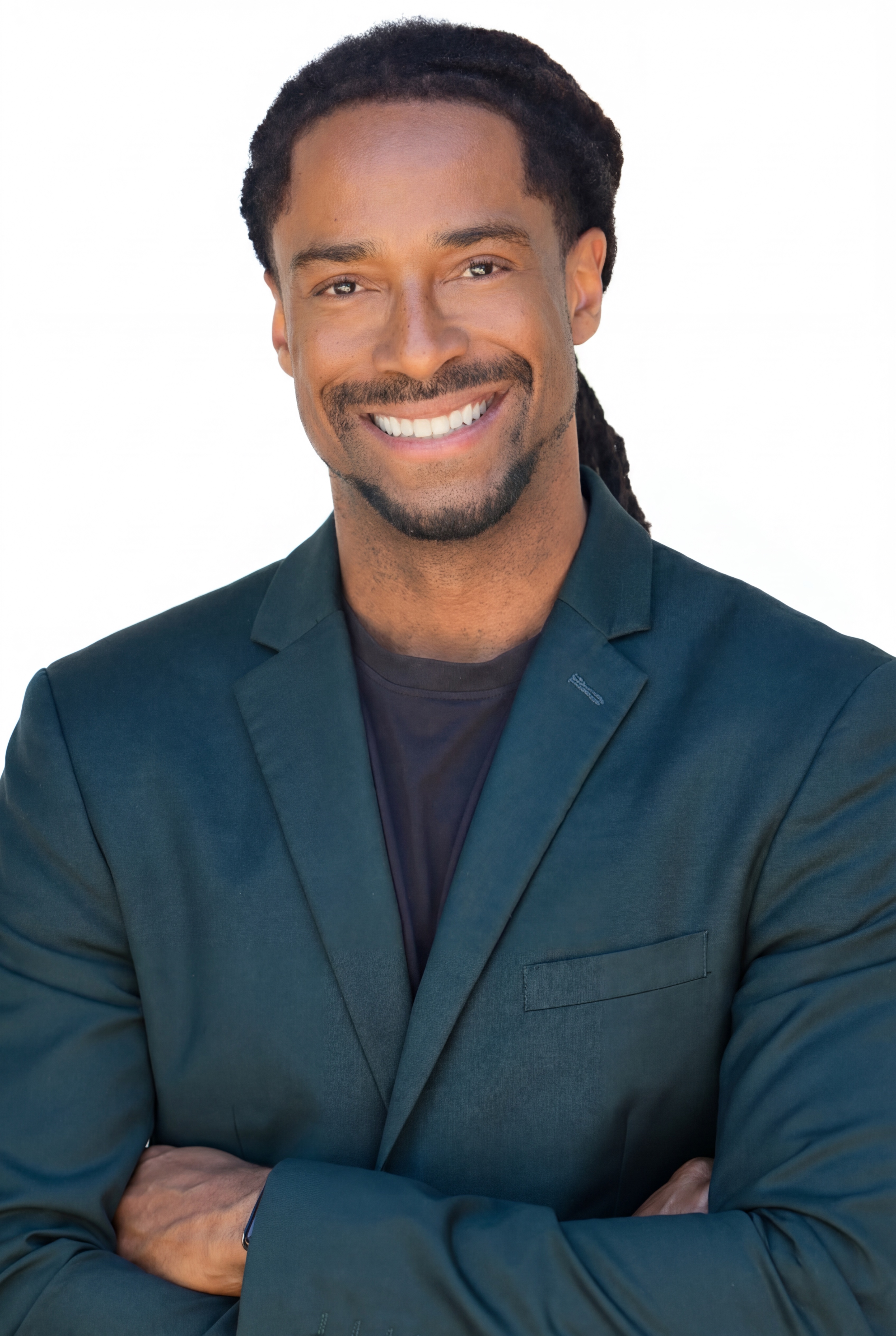
William “DJ Will Gill” Gilbert is a corporate event DJ, emcee, and audience-engagement specialist. The Wall Street Journal has recognized him as a Virtual DJ-Emcee for his work helping companies build morale, and he is a Forbes Next 1000 honoree. He pioneered the 3-in-1 booking model that combines professional emcee, open-format DJ, and interactive team-building segments in a single engagement for Fortune 500 corporate clients including AT&T Business, CDW, Virgin Galactic, NeoGenomics, PepsiCo, PayPal, Ulta Beauty, Salesforce, Lenovo, and the United Nations, with 2,520+ five-star Google reviews from corporate clients across the United States. He has logged 600+ documented corporate events across every audience tier and is now developing thought leadership around the room-reading disciplines, adaptive-pacing frameworks, and music-anchored formats that transfer across DJ, emcee, and keynote crafts. His speaking work brings the crossover positioning developed in this article to conference stages, corporate leadership summits, and youth-development keynote engagements. He is also the founder of THEAIDJ, an AI-powered playlist generation tool built for DJs and corporate event planners programming music across in-person, hybrid, and virtual events.
Book Will’s keynote or combined DJ-emcee corporate event package at djwillgill.com/contact.