
Why Some Virtual Corporate Events Need Two Emcees | DJ Will Gill
Most virtual corporate events run best with a single professional operator holding the emcee, DJ, and audience engagement layer. That is the argument this library has made across multiple pieces, and it is the argument that continues to describe the majority of the corporate virtual event market. But it is not the whole market. There are specific structural conditions that push a virtual event out of the one-operator zone and into a two-emcee model, where booking two professional hosts is the correct professional decision. This piece is a working diagnostic for planners on when a virtual event actually needs two emcees, and why. Not “when two emcees would be nice.” When two are structurally required, and pretending otherwise produces predictable failure modes.
This piece maps the six specific structural cases where a virtual corporate event should be booked with two emcees. The 24-hour follow-the-sun global program that no human can host alone. The bilingual and multilingual corporate audience where language coverage is a structural requirement. The on-camera-host plus off-camera producer-emcee split that has become the professional standard for high-stakes virtual events. The multi-track parallel programming that runs simultaneous breakout sessions. The content-designed dual-perspective format that requires two voices as a matter of narrative structure. The complementary-skill pairing that puts an executive-register host alongside an engagement-register host. And, briefly at the close, what planners should not do when they decide the two-emcee model applies. If your virtual event fits one of these six patterns, the two-emcee model is not a luxury. It is the professional baseline.
Planning a global virtual event and trying to figure out if you need two emcees? Contact DJ Will Gill.
Key Takeaways
- The one-operator model remains right for the majority of virtual corporate events. Two-emcee is a structural exception to that default, not a replacement for it. Booking two emcees on an event where one would suffice adds coordination overhead without adding value.
- The six structural cases where two emcees are professionally required: 24-hour global follow-the-sun programming, bilingual and multilingual corporate audiences, on-camera plus off-camera producer-emcee split, multi-track parallel virtual programming, content-designed dual-perspective formats, and complementary-skill pairing (executive register plus engagement register).
- Global follow-the-sun events are the most obvious case. A live-streamed virtual event repeating across APAC, EMEA, and Americas cannot be hosted by a single human. Human capacity limits and interpreter rotation discipline both require multiple hosts.
- Multilingual corporate town halls at Fortune 500 scale increasingly deploy simultaneous interpretation. Documented case studies show Fortune 500 tech companies deploying interpretation across six or more languages for a single town hall, which fundamentally changes the hosting architecture.
- Planners should not book two emcees without also designing the coordination structure between them. Two emcees who have not been jointly briefed, jointly rehearsed, and given explicit segment ownership produce more coordination failure than one emcee handling everything.
1. The Default Remains: One Operator Is Right for Most Virtual Events
Before making the case for the two-emcee model, the frame has to be clean. This library has made a consistent argument across multiple pieces that the professional standard for most corporate virtual events is a single multi-hyphenate operator holding the DJ, emcee, and audience engagement layers. That argument stands. The reasons it stands (narrative coherence, brand voice consistency, coordination overhead reduction, single-operator authority in real time) do not disappear when we move to two-emcee cases. They just become genuinely outweighed by structural conditions the one-operator model cannot serve.
Concretely: this piece is not arguing against the multi-hyphenate model. It is naming the specific structural exceptions to the multi-hyphenate default. Two emcees at a 60-minute internal town hall is coordination overhead without a purpose. Two emcees at a 24-hour global follow-the-sun program is the professional baseline. The difference is structural, not preferential. Planners who confuse the exception with the default (booking two emcees when one suffices) waste budget and add coordination cost. Planners who confuse the default with the exception (booking one emcee for a genuinely two-emcee event) produce failure modes the one-operator model cannot recover from.
The specific commercial and structural case for the one-operator multi-hyphenate default (which this piece is explicitly not overturning) is covered in the the rise of the multi-hyphenate event host analysis. The default holds for most virtual events. The six cases in this piece are the specific structural conditions where the default should be departed from.
A working definition to anchor the piece: “two emcees” here means two on-stage or on-camera professional hosts sharing hosting responsibility for a single virtual corporate event, either simultaneously or sequentially across the event’s duration. It does not mean an emcee plus an interpreter (that is one-emcee-plus-language-services architecture). It does not mean an emcee plus a keynote speaker (that is emcee-plus-content, which is standard). It does not mean an emcee plus a separate DJ (that is the two-vendor default this library has argued against). It specifically means two professionals both serving in the emcee-host role.
The rest of this piece walks through the six structural conditions that produce a legitimate two-emcee requirement.
2. Case #1: 24-Hour Global Follow-the-Sun Programming
The most obvious structural case is the global follow-the-sun virtual event. A live-streamed corporate program that repeats and adapts across APAC, EMEA, and Americas time zones cannot be hosted by a single human. Human capacity limits are a hard constraint. Sleep is a hard constraint. Even a professional operator at the top of their capacity cannot host a genuinely-live global event for 24 hours straight at a Fortune 500 quality standard.
Coverage of the specific follow-the-sun architecture from a leading virtual event platform’s guidance: but, if my virtual event is live-streamed, how can I reach a global audience across multiple time zones? excellent question, live-streamed global events follow the sun, they repeat and adapt their virtual event schedule from APAC to EMEA to the Americas, some live sessions may be repeated while others might be replaced by local speakers, most content will be delivered on-demand or as Simulive (pre-recorded content that is scheduled and presented as live, and includes the ability to interact through chat, Q&A, and emojis). That is the industry-standard architecture. Live segments cannot be single-hosted. Simulive segments can be produced in advance. Genuinely live regional segments require regional or rotating hosts.
Specific structural components of the follow-the-sun two-emcee case:
- Multiple regional live windows require multiple live hosts. An APAC live window at 9 AM Singapore time is 6 PM the previous day in San Francisco. The San Francisco host cannot be live for that window. The Singapore host can.
- Handoff windows require overlap. The transition between the APAC live window and the EMEA live window is not a hard cut. It requires overlap, briefing, and continuity handling. Two hosts are the structural requirement for a clean handoff.
- Culturally appropriate hosting is not automatic. A host who is native to or deeply familiar with each regional audience produces better outcomes than a rotating single host trying to fake regional familiarity.
- Content adaptation to region requires local judgment. Regional segments frequently swap speakers, add local content, or adjust engagement mechanics. That adaptation is easier with regional co-hosts who understand what will land.
- Rehearsal and prep multiply across regions. Each regional live segment needs its own rehearsal. A single host trying to cover them all burns rehearsal capacity that comes out of live-execution quality.
A specific real-world data point on the labor scale of a genuinely global virtual event: I was named PayPal’s Virtual Event Emcee after hosting their 29-hour “All Together Gathering” in 2020, which remains one of the reference cases for what genuinely global corporate virtual programming looks like at Fortune 500 scale. Even with a single-emcee reference like that one, the practical architecture involved staged co-hosts, producers, and regional support across the run. The 29-hour figure is the run length. The hosting architecture underneath was distributed.
The financial implication is real. Two hosts for a global program is roughly a doubled talent line, and the total virtual event cost stack expands accordingly. Planners who resist the doubled talent line for genuinely global events end up either compressing the program (regional windows collapse into simulive with weaker engagement) or degrading the live experience (single host visibly fatigued across the run).
The specific cost stack implications of expanding virtual event talent line items (which apply directly to two-emcee bookings for global programs) are covered in the virtual event entertainment budgets: what they actually cost in 2026 analysis. Two emcees at global scale is a real budget shift. Planning around it up front is more productive than resisting it and compressing the program.
3. Case #2: Bilingual and Multilingual Corporate Audiences
The second structural case is language. Fortune 500 corporate audiences increasingly include employees whose primary language is not English. Serving those audiences requires either simultaneous interpretation architecture or native-language co-hosting, both of which move the event out of the one-emcee default.
Coverage of the specific corporate use case from a corporate multilingual event industry analysis: a Fortune 500 tech company with offices in 12 countries recently held its annual global town hall, for the first time, they used simultaneous interpretation into six languages: Mandarin, Spanish, French, German, Hindi, and Portuguese, global companies employ talent from diverse linguistic backgrounds, expecting every employee to be fluent in the corporate headquarter’s primary language, often English, is neither fair nor effective, when you implement simultaneous interpretation during AGMs, town halls, or training seminars, you send a powerful message: we value every voice, and we want everyone to understand and be understood. Six-language coverage is not exotic in 2026. It is increasingly standard for genuinely global corporate town halls.
Additional coverage from a live case study of a real corporate multilingual town hall: for one of the world’s largest multinational steel manufacturers and recyclers, Divergent provided English-to-Spanish and English-to-French remote simultaneous interpretation for an annual, company-wide virtual town hall, the event focused on leadership messaging and a year-end review of company performance, enabling more than 800 employees across Mexico and Canada to fully participate in real time, alongside their colleagues in America, given that this was the client’s first time offering live interpretation, reliability and seamless execution were critical. That is the specific pattern. 800 employees across three countries, three primary languages, one town hall, single-day execution.
Structural components of the bilingual and multilingual two-emcee case:
- Native-language hosting produces different engagement than interpreted content. Attendees listening to their primary language spoken by a host connect differently than attendees listening to an interpreter voice-over of a foreign host.
- Cultural register is genuine work. Corporate humor, tone, and content that lands in English may not land the same way in Mandarin, Spanish, or Portuguese. Native-language co-hosts calibrate the register.
- Interpreter rotation is a professional discipline of its own. As documented in industry guidance: scheduling also matters more than many teams expect, long sessions typically require interpreter rotation to maintain accuracy and concentration, trying to reduce cost by understaffing can backfire, especially in simultaneous settings where fatigue quickly affects performance, if the content is dense or the pace is fast, build in proper coverage from the start. Two hosts allows for cleaner interpreter rotation and reduces cognitive load on any single interpretation team.
- Q&A and audience interaction span multiple languages. Attendees ask questions in their primary language. Someone needs to receive, translate, and respond appropriately. Split-host models handle this cleanly.
- Regional context is easier with regional co-hosts. Executive references, industry terms, and cultural touchstones that need adaptation land better with co-hosts native to each region.
The two-emcee model here is not about redundancy. It is about coverage. The two hosts are each doing genuinely different jobs, in different languages, for different audience segments, at the same event. The specific communication and coordination problems that emerge whenever multiple professionals are contributing to a single virtual event (which apply with particular force to multilingual dual-host setups) are covered in the communication breakdown between DJs, emcees, and hosts analysis. Booking two emcees does not automatically produce coordination. It creates the requirement for it.
4. Case #3: On-Camera Host Plus Off-Camera Producer-Emcee
The third structural case is a specific split that has become the professional standard for high-stakes virtual events: an on-camera host who serves as the visible face of the event, plus an off-camera producer-emcee who manages the technical layer, coordinates with speakers and tech operators, and handles the invisible operational work that the on-camera host cannot handle while performing. Some agencies and vendors call this “producer” rather than “emcee.” The distinction matters less than the function.
The reason this split has professionalized is that virtual event tech complexity has grown to the point where a single on-camera professional cannot both host at Fortune 500 quality AND manage the live tech layer at Fortune 500 quality. Split attention degrades both. Corporate planners who booked single-emcee virtual events in 2020 and 2021 experienced this firsthand. The industry has moved.
Structural components of the on-camera plus off-camera two-emcee case:
- On-camera host focuses fully on the audience. Speaking directly to camera, reading virtual room signals, managing pacing, delivering emcee moments. No technical distraction.
- Off-camera producer-emcee runs the tech layer and coordinates with speakers. Speaker spotlighting, chat moderation, poll launching, real-time cue calling, technical failover management, and off-air communication with the on-camera host.
- Real-time coordination happens through pre-established protocols. Earpiece communication between the two hosts, dedicated chat channels, shared production timeline. Rehearsed in advance.
- Contingency response is handled by the professional not on camera. When something breaks live, the off-camera producer-emcee handles the response while the on-camera host continues to hold the room.
- Both are legitimate emcee-level professionals. The off-camera role is not a junior tech operator. It is a professional who could host on camera if needed and often does, either as backup or as a segment-specific hand-off.
Coverage of the specific hybrid-and-virtual dual-audience discipline this split serves from an industry corporate entertainment agency: for hybrid events, emcees must engage two audiences at once, those in the room and those online, hosts who understand camera blocking, remote engagement, and live timing, they can pivot between both worlds to keep everyone included. The dual-audience problem is genuine. At scale, it structurally requires more than one professional. The on-camera-plus-off-camera model is the specific architectural response.
A specific note on positioning: some readers of this section will notice that this “two-emcee” case is functionally similar to the “dedicated tech operator” case described in other pieces in this library. The distinction is real. A dedicated tech operator is a specialist who handles technical operations. An off-camera producer-emcee is a full emcee-level professional who is running the technical operations plus the coordination layer, and could step onto camera if needed. Both roles exist in the professional virtual event market. The two-emcee case is the higher-stakes end where the off-camera role is being served by a full emcee professional.
The specific tactical framework for avoiding dead air, cue handoff failures, and real-time coordination breakdowns at hybrid and virtual events (which the on-camera plus off-camera architecture is specifically designed to prevent) is covered in the how to avoid dead air at hybrid events analysis. This split-role two-emcee model is the professional-tier answer to the same coordination problem.
5. Case #4: Multi-Track Parallel Virtual Programming
The fourth structural case is the multi-track virtual event. Large corporate conferences, sales kickoffs, and product launches increasingly run parallel tracks: technical breakouts, executive keynotes, customer sessions, industry-vertical deep-dives. Each track happens simultaneously. Each track needs its own host.
Coverage of the specific multi-track architecture from a multilingual events platform’s product framing: scale language access for conferences, summits, and multi track events, assign interpreters by session, offer AI translated captions, and support multiple languages simultaneously. That “assign by session” framing describes the multi-track reality. Language coverage assigns by session. Hosting coverage assigns by track. A multi-track event with three or four simultaneous programming streams requires three or four simultaneous professional hosts.
Structural components of the multi-track two-emcee case (or multi-emcee, since large multi-track events may involve three or more):
- Each track runs its own live program. Same event, same brand, same day. Different content, different pacing, different audience segments. Each track has its own hosting job.
- Track content specialization matters. A technical breakout hosted by a professional who understands the technical vocabulary lands differently than one hosted by a generalist. Track-specific hosts specialize.
- Cross-track coordination is a shared responsibility. Attendees moving between tracks need consistent brand voice, aligned callbacks to opening plenary, and coordinated close. The track hosts have to coordinate.
- The plenary versus breakout distinction is important. The opening plenary and closing plenary are typically single-track (main stage). The middle-day breakouts are multi-track. Same event has both architectures across the day.
- Failover and mutual coverage are professional standards. If one track host has a technical failure, another needs to be able to cover, at least briefly. This is a coordination protocol, not an accident.
The multi-track case is often mistakenly conflated with the “large virtual event” category in planner conversations. They are not the same. A 5,000-person single-track virtual event needs one emcee (or one on-camera plus one off-camera producer-emcee, per Case #3). A 500-person multi-track event with three parallel tracks needs three hosts, even though the total attendance is smaller. Structure drives the requirement, not attendance size.
The specific definitional and role framework for evaluating whether a specific corporate function needs a professional emcee or an internal-team host (which applies to each track individually within a multi-track program and is worth applying track-by-track when architecting the program) is covered in the corporate emcee versus internal host analysis. Multi-track events often blend professional emcees on high-stakes tracks with internal hosts on niche or technical tracks. The mix is a legitimate program-design choice.
6. Case #5: Content-Designed Dual-Perspective Formats
The fifth structural case is content-driven rather than logistics-driven. Some virtual event formats are designed around two distinct perspectives that must be represented by two distinct hosts. This is not a workaround. It is the point of the format.
Specific examples of dual-perspective formats:
- Executive plus peer voice. CEO co-hosting with a floor employee. The format is designed around the perspective contrast. Two hosts is the format, not an accessory to it.
- Interviewer plus interviewee format. Podcast-style corporate content where the two-host dynamic is the audience-facing product.
- Serious plus comedic pairing. An informational co-host paired with an engagement-focused co-host. Different tonal registers held by different professionals.
- Cross-functional pairing. Sales leader co-hosting with product leader, marketing leader co-hosting with engineering leader. The dual expertise is the audience value.
- Legacy plus emerging voice. Company veteran co-hosting with a newer employee to signal generational or cultural evolution.
- Panel moderation with alternating leads. Two moderators trading off across panel segments, each surfacing different threads.
The specific requirement in these formats is that the two hosts are actually filling different roles in the format’s design. When done well, the audience does not experience two hosts as coordination overhead. The audience experiences a designed conversation between two perspectives that produces value neither perspective alone could produce.
Done poorly, the dual-perspective format collapses into two hosts talking past each other, competing for airtime, or repeating each other’s points. The difference between the strong version and the weak version is entirely in the pre-event design, briefing, and rehearsal work. Casting two great hosts and hoping they figure it out live does not produce the strong version.
The underlying reason attention economics push toward designed formats in the first place (which explains why the dual-perspective format works when it works: it holds attention through structured novelty rather than through a single voice’s charisma) is covered in the why virtual conferences lose attention after minute 12 analysis. Virtual attention economics reward formats that produce sustained novelty. The dual-perspective format is one such structural response.
7. Case #6: Complementary-Skill Pairing (Executive Register Plus Engagement Register)
The sixth and final case is skill-complementarity. Some virtual events require both a professional operating in the executive-register tone (formal, brand-safe, executive-audience-appropriate) and a professional operating in the engagement-register tone (energetic, participation-driving, interactive). These are genuinely different professional skills. When the event requires both at high stakes, two professionals is the answer.
A multi-hyphenate operator can hold both registers to a legitimate professional standard. That is the core case for the one-operator model. But some events push the requirement so far in each direction that the two registers become genuinely difficult to hold in one professional. Specifically:
- Fortune 500 executive summits with heavy interactive engagement segments. An executive-register host for keynotes, awards, and CEO handoffs, plus an engagement-register host for game shows, breakouts, and audience-participation moments.
- Annual all-hands meetings that also serve as internal culture programming. Serious leadership content in the first half, celebratory culture programming in the second half. The tonal shift can be held by one professional or handed off between two.
- Product launches with both press and internal-audience segments. Press-facing formality co-existing with internal-team energy. Two hosts often serve the two audiences better than one.
- Client events that also include employee recognition. Client-facing polished delivery plus internal-team celebration require different tones. Two hosts can carry them cleanly.
- Awards ceremonies with a game show segment. The awards register is formal. The game show register is playful. Two professionals holding each is the clean architecture.
This case has to be handled honestly. It is the case that has the most overlap with the multi-hyphenate default, because a genuinely multi-hyphenate operator can hold both registers within their own professional range. The two-emcee model here becomes the correct answer specifically when: the tonal range required exceeds what any single professional can hold at professional standard, OR the event scale is high enough that split attention between registers degrades both, OR the client specifically wants two visible voices as part of the audience-facing brand experience.
The specific distinction between visible participation (interactivity) and actual cognitive-emotional engagement (which is directly relevant to how the executive-register and engagement-register hosts serve different but complementary functions within the same event) is covered in the the difference between interactive and engaged corporate audiences analysis. The two-register split is not two-emcees-doing-the-same-thing. It is two-emcees-serving-different-audience-states within one event.
8. What Planners Should Not Do When Booking Two Emcees
The closing section. If your virtual event fits one of the six cases above, two emcees is the professional baseline. But booking two emcees does not automatically produce two-emcee-quality outcomes. There are specific ways planners consistently mishandle two-emcee bookings, and the mishandling produces worse results than a well-executed one-emcee booking would have.
Specific two-emcee failure modes to avoid:
- Booking two emcees for a case that is actually one-emcee. A 60-minute internal town hall does not need two emcees. Two emcees on a single-track single-timezone one-hour event is coordination overhead without a purpose. Check that your event actually fits one of the six cases before committing to the two-emcee budget.
- Booking two emcees without designing the coordination structure between them. Two emcees who have not been jointly briefed, jointly rehearsed, and given explicit segment ownership produce more coordination failure than one emcee handling everything. The coordination structure is the point.
- Underspecifying segment ownership. Which emcee opens? Which emcee closes? Who owns the awards segment? Who takes the tech failover? Ambiguity produces on-camera confusion.
- Booking two emcees who have never worked together. Two great emcees are not automatically a great two-emcee team. Chemistry, timing, and mutual anticipation take real work to develop. Prior working relationships matter.
- Skipping joint rehearsal. Individual rehearsal is not enough. The two emcees need to rehearse together, including handoff points, cross-references, and contingency responses.
- Assuming two emcees means two of the same profile. The whole point of the two-emcee model in most cases is complementary function. Two emcees with the same profile is redundancy. Two emcees with complementary profiles is architecture.
- Not budgeting for the coordination overhead. Two emcees produce coordination cost even in well-designed setups. Prep time doubles at minimum. Rehearsal time expands. Planner labor to broker the coordination is real. Budget accordingly.
- Booking celebrity plus working professional as a two-emcee pair. Common temptation, high risk. Celebrities frequently do not rehearse. Working professionals do. The mismatch produces on-camera problems that neither professional can fully recover from live.
The general principle: two-emcee bookings should be structurally justified by one of the six cases, professionally coordinated in advance, and budgeted at the correct expanded scope. Two-emcee bookings that fail any of the three usually produce outcomes worse than a well-executed one-emcee booking. Two-emcee bookings that succeed at all three produce outcomes that a one-emcee model structurally cannot match.
For a service-line look at what a professional virtual, hybrid, or in-person corporate event package delivers across the range of formats this piece describes (including two-emcee configurations where the event structurally requires them), the current deliverables are on the corporate event DJ services page. The one-operator model remains the default for most events. The two-emcee model is the professional standard for the specific structural cases this piece has named. Both configurations exist. Choosing correctly between them is a professional planning discipline.
Frequently Asked Questions
Doesn’t this contradict the multi-hyphenate case that one operator is best?
No. The one-operator multi-hyphenate model remains the professional standard for most virtual corporate events. This piece names six specific structural exceptions where the one-operator model cannot serve the event. 24-hour global follow-the-sun programming, multilingual corporate audiences, on-camera plus off-camera producer-emcee split, multi-track parallel programming, content-designed dual-perspective formats, and complementary-skill pairing. Two-emcee is a structural exception to the default, not a replacement for it. Planners who confuse the exception with the default (booking two when one suffices) waste budget. Planners who confuse the default with the exception (booking one when two are structurally required) produce failure modes the one-operator model cannot recover from.
What is the “follow the sun” model and when does a virtual event actually need it?
Follow-the-sun is the industry-standard architecture for genuinely global live-streamed virtual events. The program repeats and adapts from APAC to EMEA to Americas time zones. Some live sessions repeat with regional hosts, some content delivers on-demand or simulive (pre-recorded but presented as live with live interactive elements). Your virtual event actually needs the follow-the-sun architecture if you have significant employee or customer populations across three or more major time zones that require genuinely live participation, not just on-demand access to recordings. If on-demand replay suffices for regional audiences, you may not need follow-the-sun. If live participation matters, you do.
When should a bilingual or multilingual virtual event use two emcees?
When the event serves an audience with two or more primary languages at significant scale, and when the client is committed to native-language hosting rather than only simultaneous interpretation. Documented Fortune 500 town halls now deploy interpretation across six or more languages. Below that scale, English-only hosting with simultaneous interpretation for regional audiences is often adequate. Above it, native-language co-hosts start producing measurably better engagement, cultural register calibration, and Q&A handling than interpretation alone. The threshold varies by industry and audience, but the principle is that language coverage is a structural requirement, not a nice-to-have, at genuinely multilingual scale.
What is an on-camera-plus-off-camera two-emcee split and why does it work?
One emcee-level professional handles the on-camera hosting (audience-facing delivery, room reading, pacing, emcee moments). A second emcee-level professional handles off-camera coordination (tech operations, speaker spotlighting, chat moderation, cue calling, contingency response, off-air communication with the on-camera host through earpiece). Both are legitimate emcee professionals. The off-camera role is not a junior tech operator. The split works because virtual event tech complexity has grown to the point where a single on-camera professional cannot deliver Fortune 500 hosting AND manage the live tech layer at Fortune 500 quality. Split attention degrades both. Two professionals holding each layer at professional standard is the professional-tier answer.
How should planners structure the working relationship between two virtual emcees?
Explicit segment ownership documented in the run-of-show. Joint briefing so both emcees receive the same context at the same time. Joint rehearsal, not just individual rehearsals, including handoff points and contingency responses. Established communication protocols during the event (earpiece, dedicated chat channel, shared production timeline). Prior working relationship if possible; if not, dedicated joint prep time to develop timing and mutual anticipation. Budget for the coordination overhead honestly. Two emcees produce coordination cost even in well-designed setups. Planner labor to broker the coordination is real. Underinvesting in the coordination structure produces worse outcomes than a well-executed one-emcee booking would have.
What are the most common mistakes planners make when booking two virtual emcees?
Eight common mistakes. Booking two for a case that is actually one-emcee (single-track single-timezone one-hour event). Not designing the coordination structure between them. Underspecifying segment ownership. Booking two emcees who have never worked together. Skipping joint rehearsal. Assuming two emcees means two of the same profile rather than two complementary profiles. Not budgeting for coordination overhead. Booking a celebrity plus a working professional as the two-emcee pair (celebrities frequently do not rehearse, working professionals do, the mismatch produces on-camera problems). The overall principle: two-emcee bookings should be structurally justified, professionally coordinated in advance, and budgeted at the correct expanded scope. Failing any of the three produces outcomes worse than one well-executed emcee.
What Corporate Clients Are Saying
About the Author
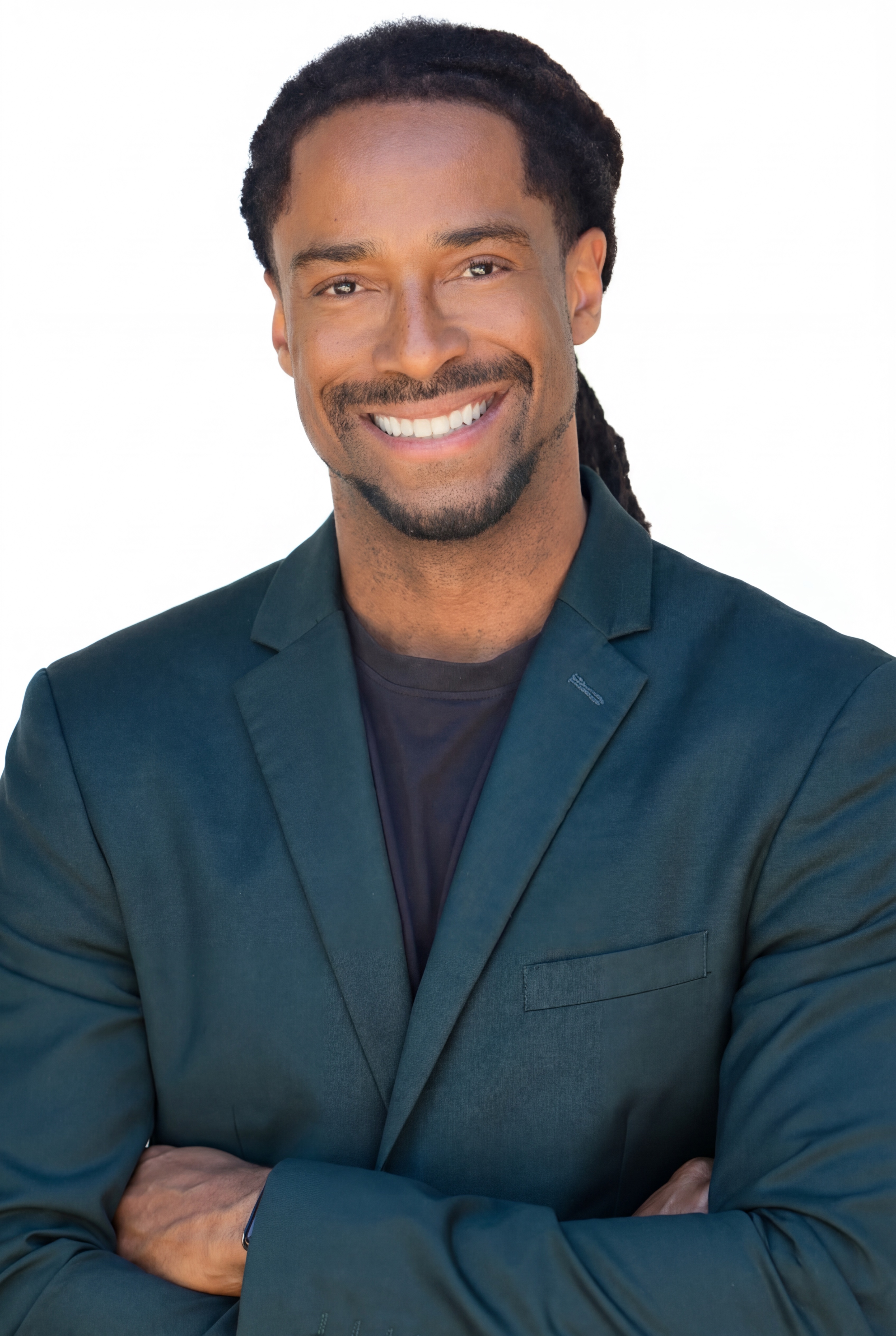
William “DJ Will Gill” Gilbert is a corporate event DJ, emcee, and engagement specialist. Named a Virtual DJ-Emcee by The Wall Street Journal, he develops virtual event experiences that support stronger employee morale. He is also recognized as a Forbes Next 1000 honoree. He pioneered the 3-in-1 booking model that combines professional emcee, open-format DJ, and interactive team-building host in a single engagement for Fortune 500 corporate clients including AT&T Business, CDW, Virgin Galactic, NeoGenomics, PepsiCo, PayPal, Ulta Beauty, Salesforce, Lenovo, and the United Nations, with 2,520+ five-star Google reviews from corporate clients across the United States. He has delivered 500+ virtual and hybrid corporate events since 2020, including PayPal’s 29-hour “All Together Gathering” that established the reference case for global corporate virtual programming at Fortune 500 scale, and continues to serve as the go-to virtual emcee for FY kickoffs, employee appreciation events, virtual parties, and global town halls. He is also the founder of THEAIDJ,, an AI-powered playlist generation tool built for DJs and corporate event planners programming music across in-person, hybrid, and virtual events.
Book Will’s virtual, hybrid, or in-person corporate event package (single-operator or two-emcee configuration) at djwillgill.com/contact.