
How To Run a Conference Where Your DJ, Emcee, and Engagement Host Are the Same Person | DJ Will Gill
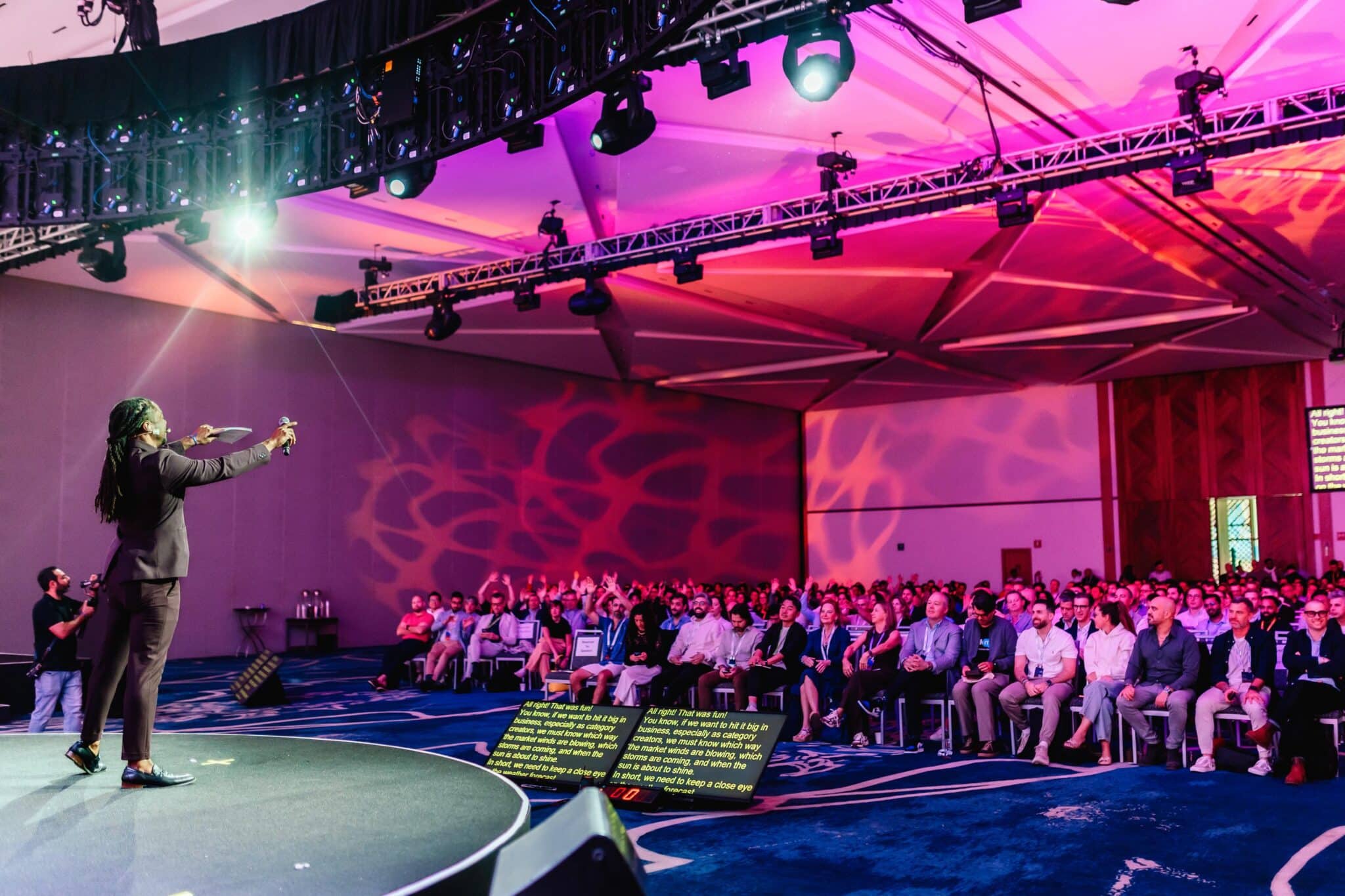
The multi-hyphenate operator model (one professional running DJ, emcee, and engagement across a corporate conference) is producing measurably better results than three separate vendors coordinating handoffs. That is the market thesis, and the data is behind it. But the model does not execute itself. Running a conference this way requires a specific pre-event setup, a specific physical arrangement, a specific run-of-show structure, and a specific set of decisions the planner has to make in advance that they do not have to make when booking three separate specialists.
This piece is the operational manual for planners running the multi-hyphenate model for the first time or trying to improve their execution of it. What to lock down before the event. How to physically set up the room. How to structure the run-of-show. How to brief the operator differently than you would brief three separate vendors. How to think about handoffs, cues, and the day-of production framework. And the specific pitfalls that trip up planners who try to run this model without adjusting their operational assumptions from the traditional multi-vendor approach. Done right, the model produces a cleaner, more integrated event experience at meaningfully lower coordination cost. Done wrong, it produces the worst of both worlds.
Ready to run your conference with one operator covering DJ, emcee, and engagement? Contact DJ Will Gill.
Key Takeaways
- The multi-hyphenate operator model works best for corporate conferences under 1,500 attendees with a single main stage, unified brand voice, and integrated program arc. Above that scale, specialists usually become necessary.
- Pre-event setup requires more written detail than the traditional three-vendor model, not less. The operator needs one integrated brief covering DJ, emcee, and engagement, not three separate briefs.
- Physical setup requires one booth or hybrid station within reach of both the audio rig and the stage. The single operator has to move between DJ mode and emcee mode fluidly, so the geometry matters.
- The run-of-show structure changes: instead of three parallel vendor timelines, you get one integrated timeline where music cues, emcee moments, and engagement segments are natively synchronized.
- The biggest planner mistake is briefing the operator as if they are three separate people. The whole point of the model is unified execution. Brief them as one professional running one integrated program.
1. When the Multi-Hyphenate Operator Model Makes Sense (Event Type Fit)
Not every corporate conference is the right fit for the multi-hyphenate model. Some are ideal. Some are marginal. Some genuinely require specialists. Before choosing this operational model, planners need to confirm the event type actually fits.
Event types where the multi-hyphenate model consistently outperforms specialists:
- Corporate conferences and summits under 1,500 attendees. Single-stage productions with integrated program arcs. The operator holds continuous coverage across every energy moment.
- Sales kickoffs (100 to 2,000 attendees). The energy arc requires exactly the unified voice that the multi-hyphenate delivers. High-tempo openers, executive keynotes, breakout returns, awards moments, and closing peak all share one operator.
- Awards galas and recognition dinners. DJ walk-ons, emcee announcements, category presentations, and interactive engagement moments (photo prompts, category polls) all flow through the same person.
- Product launches and brand activations. The single-voice brand cohesion is a specific commercial value. Three vendors deliver three tones. One operator delivers one consistent brand experience.
- Multi-day internal conferences. Cross-day energy management, callback jokes, running gags, and multi-day energy arcs are meaningfully better with one operator who was in the room every day.
- Hybrid events with an in-room and virtual audience. Coordination gaps between DJ, emcee, and engagement kill hybrid production. One operator eliminates them entirely.
Event types where the multi-hyphenate model is a poor fit:
- Mega-conferences (2,000+ attendees) with multiple concurrent main stages. A single operator physically cannot cover two stages at once.
- Events where the DJ is a co-marketed celebrity headliner. If a household name DJ is being used to drive attendance, they book separately for that role.
- Events with a public-figure emcee (celebrity, athlete, media personality). If the emcee is a name draw, they take the emcee slot separately.
- Events with unusually specialized engagement formats. Immersive theater, VR-driven experiences, or highly technical live-action formats require dedicated specialists.
The specific commercial and operational logic behind the model (including the four converging market forces driving its adoption in 2026 and the coordination benefits most planners underestimate) is covered in depth in the the rise of the multi-hyphenate event host analysis. Read that first if you have not confirmed the model is right for your event. This piece assumes the fit is already confirmed and focuses on execution.
2. The Pre-Event Setup: What to Get in Writing
The pre-event documentation for a multi-hyphenate model is different from the documentation for three separate vendors. You are not maintaining three parallel briefs. You are building one integrated brief that covers all three functions in a coordinated way.
The specific written elements the operator needs before the event:
- Contract with clear scope across all three functions. DJ services, emcee services, and engagement/game show services all named and documented. Insurance requirements met for each function. COI on file per venue standards.
- Master run-of-show with the operator’s segments named specifically. Not “DJ from 8am to 9am” and separately “Emcee at 9am.” Something like “Operator: pre-show walk-in DJ set from 8:00 to 8:55, welcome emcee segment from 8:55 to 9:05, DJ transition back to musical bed at 9:05 for CEO walk-on.” Integrated timeline.
- Brand voice and tone document. The operator is holding the brand register across every function. They need to know: how formal, how corporate, how playful, what industries are represented, what humor lands and what does not.
- Speaker list and biographies. Every keynote and breakout leader needs a proper introduction. The operator is writing those, so they need the raw material.
- Executive names and pronunciation. Nothing damages the multi-hyphenate model faster than the operator mispronouncing the CFO’s name during the mic handoff. Get the phonetic pronunciation in writing.
- Do-not-play music list and content restrictions. Specific tracks off the table. Content categories the client has vetoed. Sensitive references that should not be made.
- Engagement segment specifications. If there is a game show segment, live polling moment, or interactive block, the format, duration, prize structure, and win conditions all need to be written down.
- Approved photos and B-roll for AV integration. Any images or video content that will be shown on stage during the operator’s segments should be sent in advance for review.
- Sponsor callouts and required acknowledgments. Which sponsors need naming, when, and in what specific wording. Sponsor thank-you scripts approved in advance.
Coverage of the specific run-of-show elements that professional productions maintain is direct: every Run of Show looks a little different depending on the event, but best practices always include Speaker Timing (exact start and stop times, including buffer for transitions), A/V Cues (callouts for music, lighting changes, video roll-ins, and slide transitions), Stage Directions (notes for MCs, moderators, and stagehands), Sponsor Callouts (placement of acknowledgments so nothing gets forgotten), and Support Roles (who’s responsible for backstage transitions, mic handoffs, or countdowns). In the multi-hyphenate model, most of those functions consolidate onto one operator’s line, which simplifies the document but raises the operator’s responsibility for accuracy.
One specific pre-event brief that most planners skip and pay for later is the do-not-play list. Building it properly (with categories, executive vetoes, and industry-specific landmines) is one of the highest-ROI pre-event documents you can prepare. The full framework on how to build the do-not-play list without killing the vibe is covered in the how to build a do-not-play list without killing the vibe analysis. For a multi-hyphenate operator, this document also becomes the reference for content restrictions on the emcee side, not just the DJ side.
3. The Physical Setup: Stage, Booth, Mic, and Sight Lines
The physical arrangement of the room and stage for a multi-hyphenate operator is different from the arrangement for three separate vendors. You are optimizing for one person who has to move between DJ mode, emcee mode, and engagement mode fluidly during the event. The geometry has to support the fluidity.
Specific physical setup considerations:
- Booth placement. The DJ booth should be within 30 to 40 feet of the stage or the emcee position. Ideally on the same side of the room. The operator needs to be able to move between booth and mic quickly during transitions.
- Wireless microphone setup. The operator needs a lav mic or handheld wireless with sufficient range to cover the DJ booth, the stage, and the audience floor for interactive moments. Battery-swap plan built in.
- Sight lines from the booth to the stage. The operator needs eyes on the stage at all times. If the DJ booth is positioned so the operator’s back is to the stage during DJ mode, they will miss critical timing cues (speaker approaching the end, mic malfunction, executive gesture) that they need to see to execute the emcee handoff.
- Sight lines from the audience. The audience should be able to see the operator whether they are in DJ mode or emcee mode. The transition between the two is part of the show. Hidden DJ booths behind a scrim break the model.
- Cable routing and floor safety. The operator will be moving during the event. Cable runs must be secured. Trip hazards eliminated.
- Monitor placement for the operator. The operator needs a comfort monitor showing the run-of-show timer, the current speaker’s time remaining, and any AV cues. This is more critical for a multi-hyphenate than for a specialist DJ because the operator is juggling more roles simultaneously.
- Redundancy for interactive engagement. If the segment includes live polling, game show buzzers, or scoreboard displays, the operator needs immediate line-of-sight to that infrastructure and backup power for it.
The single biggest physical setup mistake in the multi-hyphenate model: placing the DJ booth in the back corner of the room, out of sight of the stage. That configuration works for a specialist DJ who never touches the mic. It breaks a multi-hyphenate operator who has to be visible during emcee moments. The right default is a DJ booth positioned on the side of the stage, at the same visual altitude as the audience, with clean sight lines to both the stage and the audience.
One specific setup detail most planners miss: budget an extra 30 to 45 minutes of setup time compared to a specialist DJ booking. The multi-hyphenate operator is bringing more gear than a specialist DJ (DJ rig plus mic infrastructure plus engagement gear), and the setup dance takes longer. Do not schedule sound check with only the same window you would allocate to a specialist DJ.
4. The Run-of-Show Structure: Building the Timeline
The run-of-show for a multi-hyphenate model is structurally different from the run-of-show for a three-vendor model. Instead of three parallel timelines (DJ from 8am, emcee at 9am, engagement host at 3pm), you have one integrated timeline where every operator moment is named and its function is specified.
Specific structural elements of the multi-hyphenate run-of-show:
- Buffers between every major segment. Coverage of the specific practice from event production professionals: it’s a good idea to build in 2 to 5 minute buffers between major segments, these buffers help absorb any delays and are clearly marked in the ROS, giving the show caller flexibility to adjust as needed. Multi-hyphenate operators need those buffers to switch modes cleanly.
- Explicit mode labels on the operator’s line. Not just “DJ” or “Emcee” as a role. Specific mode labels: “DJ mode: warm-up set.” “Emcee mode: welcome and CEO intro.” “Engagement mode: live poll setup.” The mode label tells the AV team what to expect.
- Transition cues in the timeline. Every mode switch is a transition. Every transition has a cue. Music fade, mic handoff, stage move, all mapped out.
- Cue detail on every music moment. Walk-on tracks, transition beds, playoff tracks, background music during Q&A. Each named. Each timed. Each rehearsed.
- Contingency layers built in. Coverage of the specific three-layer ROS structure from enterprise event production: enterprise events require fallbacks, this contingency layer is your safety net, flag high-risk points (live-streamed keynotes, VIP arrivals, tight transitions), write if/then instructions like “IF CEO is delayed → THEN move Panel B up, trigger sponsor video loop”. Multi-hyphenate operators can execute contingencies in real time because they hold every function. Build the if/then instructions in advance.
- Rehearsal built into the day. Sound check and technical rehearsal in the morning. Every transition tested. Every mode switch practiced.
The specific advantage of the multi-hyphenate run-of-show is that recovery from schedule slippage happens in one person’s hands, not three. When the keynote runs long, the operator compresses the DJ transition and the emcee introduction simultaneously. When the engagement moment runs short, the operator can pull the DJ set closer or extend an emcee segment. The compression is holistic, not siloed.
The specific framework on how to structure the recovery when a speaker goes long (which is a much easier recovery in the multi-hyphenate model than the three-vendor model) is covered in the how to recover a conference after a speaker goes long analysis. Multi-hyphenate operators are the specific case where 20-minute overruns can be recovered without visible degradation of the attendee experience.
5. The Handoff Discipline: Managing Role Transitions Mid-Event
The transitions between DJ mode, emcee mode, and engagement mode are where the multi-hyphenate model earns or loses its value. Executed well, the transitions feel like a single continuous flow. Executed poorly, they feel like the operator forgot to hire the other two people.
Specific transition disciplines:
- DJ to emcee mode: the track fade. The last 30 seconds of the DJ track is fading, the operator picks up the mic, the last 5 seconds fade to silence, and the first word of the emcee segment lands into clean air. Rehearsed and practiced. No dead space.
- Emcee to DJ mode: the walk-on cue. The emcee finishes the introduction, the DJ track drops on the beat, the speaker walks on to peak energy. The music and the walk-on are the same person’s decision, which means they land together.
- DJ to engagement mode: the format shift. The music tapers, the operator picks up the mic in engagement-host mode (different tone from emcee mode), the format shift is clean. The audience knows something different is happening.
- Engagement to emcee mode: the return to program. The engagement segment closes with a punctuation moment, the operator shifts back to emcee tone, the program continues.
- Mode calibration signals. The operator’s voice, posture, and physical position all shift with the mode. DJ mode is in the booth. Emcee mode is at the mic on the stage side. Engagement mode is often on the audience floor. Each mode has a physical signature.
- Real-time energy calibration. The operator reads the room continuously and adjusts the transition tone to match. If the room is peaked, the transitions are quick and hot. If the room is dragging, the transitions are extended and warm.
The specific skill that separates a professional multi-hyphenate from an amateur is not any single mode. It is the transitions. A specialist DJ transitions music. A specialist emcee transitions from speaker to speaker. A specialist engagement host transitions from format to format. A multi-hyphenate transitions between all three modes fluidly, and the audience never sees the seams.
The operator’s ability to read the room continuously across every mode is what makes this work at professional depth. The full framework on how a corporate operator actually reads a multi-generational room in real time (which is the underlying discipline that shapes every transition decision) is covered in the how to tell if a corporate DJ can read a mixed audience analysis. Reading the room is the core skill. The three modes are just the delivery mechanisms.
6. Music, Emcee, and Engagement Cues: Building the Operator’s Playbook
The multi-hyphenate operator maintains a specific playbook across three modes. Each mode has its own cue structure, but all three feed into one integrated event experience. Understanding the playbook is what lets planners write briefs that produce the results they want.
Music (DJ) cues:
- Walk-in music (pre-event). 30 to 45 minutes of arrival energy. Tempo starting at 90 to 100 BPM, gradually rising to 105 to 115 BPM by session start.
- Walk-on tracks for keynote speakers. Custom cued for each speaker. Timed to their walk from stage left to the podium. Fade on the beat of arrival.
- Transition beds between segments. Short instrumental bridges, 15 to 30 seconds each.
- Awards/moment stingers. Peak-energy 5-second stingers to punctuate specific moments (recognition awards, prize reveals, key announcements).
- Break and lunch send-off sets. Higher-energy tracks to move the room out efficiently.
- Networking hour and closing tracks. Programmed for the specific energy needed at the specific moment.
The full framework on why tempo beats genre for corporate music programming, especially during transitions and networking, is covered in the why tempo beats genre during networking hours analysis. The principle applies to every music cue in the multi-hyphenate playbook.
Emcee cues:
- Welcome and stage opening. 60 to 120 second opening that lands the tone for the day.
- Speaker introductions. 30 to 45 seconds each. Written in advance, delivered warm, ending with the walk-on cue.
- Transition segments between speakers. Brief bridges (15 to 30 seconds) that acknowledge the previous speaker and set up the next.
- Sponsor callouts. Timed at specific moments per the pre-event brief.
- Announcements and logistical updates. Break timing, lunch location, next session location, WiFi password. Kept brief, delivered clearly.
- Awards and recognition segments. Longer emcee blocks with more warmth, higher preparation, and callouts of specific attendees or teams.
- Voice-of-God announcements. Pre-session and post-session voiceover moments where the operator is heard but not seen.
Engagement cues:
- Live polling moments. Setup, question delivery, results reveal. Integrated with the running program.
- Game show segments. Round-by-round format with buzzer moments, contestant management, and scoreboard interaction.
- Team competition segments. Table-vs-table or department-vs-department competitions with visible scoring.
- Trivia and quiz interludes. Mid-session attention resets with light competition.
- Q&A facilitation. Operator moderates audience questions, screens for relevance, and manages the panel or speaker.
- Audience participation moments. Interactive segments that pull attendees onto the stage or into structured group activity.
The specific game mechanics that consistently deliver engagement at corporate scale (with the format specifications that separate professional execution from amateur) are covered in the 5 game mechanics that always win at corporate events analysis. The engagement layer of the multi-hyphenate playbook draws on these mechanics for the specific formats that work at professional scale.
The three-mode playbook works because it is one operator’s playbook. The music cues understand what the emcee is about to say. The emcee cues understand what the engagement segment is going to require. The engagement cues understand what the music needs to be doing during the segment. This coordination is impossible with three separate vendors and effortless with one operator holding all three.
7. The Day-of-Production Framework: Who Owns What
Even with a multi-hyphenate operator holding three functions, the day-of production still has a broader team: AV, stage manager, venue coordinator, sponsor liaisons, and the corporate planner. The operator does not replace the whole team. Understanding who owns what on the day matters for clean execution.
Specific day-of ownership map:
- The multi-hyphenate operator owns: All music cues, all emcee segments, all engagement moments, all live pacing decisions during their segments, all real-time compression during overruns, and the audience energy management.
- The AV team owns: Speaker mic checks, projection and video display, lighting cues, live streaming (if hybrid), and technical redundancy.
- The stage manager owns: Speaker call times, backstage coordination, mic swap logistics, and the master run-of-show clock.
- The venue coordinator owns: Room setup, F&B service timing, break station management, and access control.
- The sponsor liaisons own: Sponsor exhibit hall management, sponsor talent coordination, and sponsor deliverables.
- The corporate planner owns: Executive management, VIP handling, escalation of any surprises, and final decisions on schedule adjustments beyond the operator’s compression authority.
Coverage of the specific pre-event briefing discipline from professional event production: kick off your event day with a final team briefing at least 90 minutes before the doors open or the stream goes live, gather everyone (audio engineers, video operators, stage managers, lighting technicians, and other key personnel), go over the Run of Show one last time, emphasizing critical cues, transitions, and potential trouble spots, ensure everyone knows their roles, reporting lines, and emergency procedures. The multi-hyphenate operator is in that briefing. The whole team knows their role.
Coverage of the specific decision-making hierarchy at professional productions: establish a clear decision-making hierarchy where one person, often the stage manager or technical director, has the final say on timing and cue calls. In the multi-hyphenate model, the stage manager typically retains final schedule authority, but the operator has broad authority to compress their own segments (DJ, emcee, engagement) in real time without escalating to the stage manager for approval. That autonomy is what makes the model responsive.
The multi-hyphenate operator is not a solo act. They are one specialist inside a broader production team, but the specialist role covers three functions that would traditionally require three vendors. Everyone else on the production team is coordinating with one point of contact for the entertainment layer instead of three, which simplifies communication and eliminates the cross-vendor handoff friction that produces the most visible day-of failures.
8. Common Pitfalls (And How to Avoid Them)
Planners running the multi-hyphenate model for the first time make a specific set of mistakes that specialists in the model have already learned to avoid. The mistakes are not fatal, but they are predictable, and each one degrades the specific value the model is supposed to deliver.
The common pitfalls:
- 1. Briefing the operator as if they are three separate people. Sending three separate briefs (one for DJ, one for emcee, one for engagement) defeats the point. The operator needs one integrated brief that treats all three functions as part of one continuous event experience.
- 2. Booking a “DJ who also emcees” instead of a legitimate multi-hyphenate. A DJ with a wireless mic is not a multi-hyphenate operator. Legitimate multi-hyphenates are trained in each function at professional depth and can execute all three at specialist-level quality. Verify the credentials, not the label.
- 3. Under-budgeting for the operator. A multi-hyphenate charges less than three specialists but more than a single-role specialist. Planners who price the operator like a specialist DJ get what they paid for, not what they wanted.
- 4. Skipping the pre-event brand voice conversation. The operator is holding the brand voice across three functions. If the brief does not lock down tone, register, and specific do-not-say categories, the operator improvises. The improvisation may not match what the client wanted.
- 5. Placing the DJ booth in the wrong location. Back corner, out of sight of the stage, or behind a scrim breaks the model. The operator has to be visible during emcee moments and within reach of the stage during transitions.
- 6. Not budgeting rehearsal time. The multi-hyphenate model works because the transitions are rehearsed. If the day-of technical rehearsal skips the transitions, the operator improvises them live. Improvised transitions are visibly slower than rehearsed ones.
- 7. Under-briefing the AV team. The AV team is used to coordinating with three separate vendors. When they coordinate with one operator holding three functions, they need to know the specific cue framework and mode labels. Otherwise they call cues for functions that no longer exist as separate.
- 8. Assuming the operator will “figure out” real-time compression. When speakers go long, the operator will absorb the compression better than three separate vendors, but only if they have been briefed in advance on the compression priorities. Which segments can be shortened. Which cannot. Which sponsors need protection. Which windows are flexible.
The general pattern behind most of these pitfalls: planners bring three-vendor operational assumptions into the multi-hyphenate model and get poor results because the assumptions do not fit the model. The solution is not to adjust the model. The solution is to adjust the operational assumptions.
The specific pattern of misalignment between planner expectations and vendor execution across corporate events is one of the broader themes that shapes vendor evaluation, and the multi-hyphenate model briefing is one specific case. The full inventory of the most common corporate event entertainment mistakes (and how planner briefing habits produce or prevent them) is covered in the 9 most common corporate event entertainment mistakes analysis.
The multi-hyphenate operator model is not more complicated than the three-vendor model. It is different. The pre-event work is more integrated. The physical setup is more specific. The run-of-show is cleaner. The day-of coordination is simpler. But every one of those differences requires the planner to think about the event differently than they did with three separate vendors. Once the operational muscle memory shifts, running a conference with one multi-hyphenate operator becomes meaningfully easier than running it with three specialists.
For a full service-line look at what a professional multi-hyphenate operator delivers across DJ, emcee, and engagement functions at a corporate conference (including the specific deliverables, the technical rider expectations, and the pre-event briefing framework the operator will actually ask for), the deliverables are on the corporate event DJ services page. The model works when the planner and the operator are aligned on what the operator is actually delivering. That alignment starts in the pre-event conversation and shows up in every transition during the event.
Frequently Asked Questions
What is a multi-hyphenate operator at a corporate conference?
A multi-hyphenate operator is a single professional who runs multiple traditional entertainment roles at the same corporate event: DJ, emcee, and audience engagement or team-building host in one booking. The category has become mainstream in 2026 as corporate planners consolidate coordination overhead and vendor management. Legitimate multi-hyphenates are trained in each role at professional depth and can execute all three at specialist-level quality. The point is not adding hyphens to a bio. The point is delivering unified execution across three functions with one operator.
What are the specific advantages of running a conference with one operator handling DJ, emcee, and engagement?
Six specific advantages: zero handoff gaps between DJ and emcee (the same person is on both sides of every transition), one unified brand voice across the entire event, simplified briefing process (one integrated brief instead of three), faster real-time schedule recovery when speakers go long, one point of contact for the corporate planner across three functions, and cost savings of 15 to 30 percent versus booking three specialists at equivalent quality. The audience experience is more cohesive because it is genuinely coming from one operator holding the full event arc.
What size events work best with a multi-hyphenate operator?
The multi-hyphenate model works best for corporate conferences under 1,500 attendees with a single main stage and an integrated program arc. Sweet spot: sales kickoffs (100 to 2,000 attendees), corporate summits, awards galas, product launches, and multi-day internal conferences. Above 2,000 attendees with multiple concurrent stages, specialists usually become necessary. Also skip the model when the DJ or emcee is a celebrity name draw, or when the engagement format requires unusually specialized production (immersive theater, VR, or highly technical live-action formats).
What gear does a multi-hyphenate operator bring to a corporate conference?
More than a specialist DJ, less than three separate vendors combined. Full professional DJ rig with redundancy (controller, mixer, laptop backup). Professional wireless microphone setup with sufficient range for booth, stage, and audience floor. Battery-swap redundancy. Engagement infrastructure (buzzer systems, scoreboards, or live polling access as required). Comfort monitor showing run-of-show timer. Cables secured and routed. Plan for 30 to 45 minutes of additional setup time compared to a specialist DJ booking, because the multi-hyphenate rig is more complex.
How do you brief a multi-hyphenate operator differently than three separate vendors?
Send one integrated brief, not three separate ones. Include: master run-of-show with the operator’s segments labeled by mode (DJ mode, emcee mode, engagement mode), brand voice and tone document, speaker biographies and phonetic pronunciations, do-not-play music list AND content restrictions, engagement segment specifications with format and prize structure, sponsor callouts with approved scripts, and any AV integration (photos, B-roll, videos) that will appear during the operator’s segments. The single integrated brief is the operational difference. It saves the planner time and produces better execution.
What are the biggest mistakes planners make when running this model for the first time?
Eight common pitfalls: briefing the operator as if they are three separate people, booking a “DJ who also emcees” instead of a legitimate multi-hyphenate, under-budgeting the operator like a specialist DJ, skipping the pre-event brand voice conversation, placing the DJ booth out of sight of the stage, not budgeting rehearsal time for transitions, under-briefing the AV team on the multi-hyphenate cue framework, and assuming the operator will figure out real-time compression without pre-briefed priorities. Most of these come from bringing three-vendor operational assumptions into a model that requires different assumptions.
What Corporate Clients Are Saying

About the Author
William “DJ Will Gill” Gilbert is a corporate DJ, emcee, and audience-engagement professional. The Wall Street Journal has highlighted his work creating virtual events that help strengthen employee morale, and he was named a Forbes Next 1000 honoree. He pioneered the 3-in-1 booking model that combines professional emcee, open-format DJ, and interactive team-building segments in a single engagement for Fortune 500 corporate clients including AT&T Business, CDW, Virgin Galactic, NeoGenomics, PepsiCo, PayPal, Ulta Beauty, Salesforce, Lenovo, and the United Nations, with 2,520+ five-star Google reviews from corporate clients across the United States. He has executed the multi-hyphenate operator model across 600+ documented corporate conferences, sales kickoffs, awards galas, product launches, and multi-day summits, with the pre-event briefing frameworks, physical setup standards, and day-of production disciplines refined across every event. He is also the founder of THEAIDJ, an AI-powered playlist generation tool built for DJs and corporate event planners programming music across in-person, hybrid, and virtual events.
Book Will’s 3-in-1 multi-hyphenate corporate event package at djwillgill.com/contact.