
Who Hires Bands for Corporate Events? 2026 Buyer Persona Taxonomy

The buyers who hire corporate bands are not a single audience. The HR director booking a holiday party, the event producer building a Fortune 500 gala, the marketing lead activating a product launch, and the executive admin staffing an end-of-year client appreciation dinner are operating from different priorities, different budget structures, and different decision criteria and bands that succeed in the corporate market understand that they’re selling to four meaningfully different buyer profiles, not to a generic “corporate” client.
This article maps the buyer persona taxonomy: who is actually making the call when a corporate band gets hired, what each persona is optimizing for, how they evaluate options, and what kinds of events each persona typically books. For broader cluster context, the companion articles cover the definition and category boundaries of corporate bands, the formation playbook for starting one, and the booking and gig-acquisition process.
Key Takeaways
Four buyer personas account for most corporate band hiring: HR and people teams (culture and employee-experience events), event producers and planners (production-driven bookings including conferences and galas), marketing and brand teams (brand activations and experiential marketing), and executives and procurement (higher-budget strategic bookings). Each persona has different priorities, budget authority, and evaluation criteria, and bands that recognize which persona they’re pitching to consistently outperform bands that present the same way regardless of audience.
HR and people-team buyers are optimizing for employee experience and culture impact. According to Gallup’s State of the Global Workplace research, the majority of the global workforce reports being not engaged or actively disengaged, which is the underlying business problem HR investment in events and entertainment is meant to address. HR buyers evaluate bands less on production polish and more on whether the booking will actually move the employee-experience needle they’re asking “will our people feel valued by this?” rather than “is the band technically excellent?”
Event producers, planners, and DMCs are the largest segment by booking volume and the most demanding by evaluation rigor. These professional buyers are repeat customers across many events per year, manage relationships with multiple bands simultaneously, and evaluate on production fit, professional reliability, and risk reduction more than on any single performance criterion. Bands that build long-term relationships with this persona clean contracts, easy production integration, predictable on-site behavior generate the bulk of their recurring revenue from this segment.
Marketing and brand-team buyers evaluate bands as a brand asset. The question they’re asking is whether this specific band fits the brand identity, target audience, and experiential goals of the activation a trendy indie band might be exactly right for a startup launch and exactly wrong for a luxury brand’s gala. Marketing buyers tend to pay higher fees than HR buyers because the band is part of a larger brand-experience investment, but they’re also the most likely to walk away if the fit isn’t right. Brand-fit conversations dominate the booking process with this persona.
Music licensing for public performance of cover material at corporate events is required and typically held by the venue or event organizer rather than the band. Performing-rights organizations including ASCAP and BMI issue the public performance licenses that authorize cover repertoire at corporate functions. All four buyer personas inherit this licensing requirement through their venues or production partners, and bands that can speak fluently to licensing during booking conversations consistently move farther through the procurement process than bands that leave it implicit.
Watch DJ Will Gill perform live. Contact him now to discuss your corporate entertainment booking.
“Bands that recognize which persona they’re pitching to consistently outperform bands that present the same way regardless of audience.”
The Four Buyer Personas Who Hire Corporate Bands
The four personas don’t overlap perfectly one company might have the HR director and the event producer making different bookings simultaneously, and a large enterprise might have separate teams within marketing, executive admin, and procurement all engaging bands for distinct programs. But each persona has a recognizable decision pattern, a recognizable evaluation criteria set, and a recognizable event-type signature, and bands that learn to read the persona signals early in a booking conversation present more effectively to each one.
The persona differences also explain why generic “corporate band” marketing materials underperform. A pitch optimized for an HR buyer (employee experience, culture, morale impact) lands flat on a marketing director who’s evaluating brand fit. A pitch optimized for an event producer (production reliability, technical rider clarity, working-with-AV experience) lands flat on an executive admin who’s optimizing for executive impression. Personalizing the pitch to the persona without changing the underlying product is the highest-leverage marketing move corporate bands can make.
HR and People Teams: Internal Culture and Employee Experience
HR and people-team buyers book corporate bands to support employee-facing programming: holiday parties, summer picnics, anniversary celebrations, recognition events, internal awards programs, and team-building offsites. The underlying business problem they’re solving is engagement and culture events are one of the levers HR teams have to influence how employees feel about the organization, and live entertainment is one of the levers within those events.
The evaluation criteria HR buyers use are different from production-team buyers. Technical excellence matters but isn’t the deciding factor. What HR buyers tend to weight more heavily: will this band feel right for our culture (a high-energy cover band fits a young startup’s holiday party but might overshoot a more reserved professional services firm)? Will employees see themselves in the audience experience (does the band have repertoire that resonates across the company’s demographic mix)? Will the booking generate positive after-conversation rather than complaints?
Budget authority for HR buyers is typically mid-range they can authorize trio-to-quartet bookings without escalation but usually need approval for 7-piece-and-up commitments. The relationship cadence is often once-per-year for major events with occasional smaller engagements (department offsites, milestone celebrations), so HR buyers value bands that remember the company, customize for the audience, and reduce the planning load year over year.
Event Producers, Planners, and DMCs: Production-Driven Bookings
Professional event producers, in-house corporate event planners, and destination management companies (DMCs) are the largest segment by booking volume. These buyers are repeat customers many of them book ten or more music acts per year across the events they manage, often for clients they themselves are serving and they evaluate bands with the rigor of professional procurement.
What event producers and planners evaluate: production fit (can this band integrate with our AV team, lighting designer, show caller, and stage manager without creating friction), professional reliability (will they show up on time, hit the runtime, behave professionally, deliver what was contracted), risk reduction (is there anything in this band’s history that suggests they could come back to embarrass me in front of my client), and economic fit (is the fee proportionate to what the client is paying for the broader event).
The economic relationship with this persona is leverage in both directions. The buyer brings booking volume a strong relationship with a single event producer or DMC can generate ten or more bookings per year and the band brings reliability that lowers the buyer’s professional risk. Bands that build long-term relationships with event producers and planners generate the bulk of their recurring revenue from this segment. Bands that don’t tend to chase one-off bookings indefinitely.
Many of these buyers also book complementary entertainment DJs, emcees, specialty performers, audio-visual technicians meaning the band that the producer trusts becomes a referral source for adjacent service categories. The producer relationship is therefore worth investing in well beyond the immediate booking value.
Corporate Band Buyer Personas: Typical Events, Budget Authority, Primary Evaluation Criteria
| Persona | Typical Events | Budget Authority | Primary Evaluation | What They’re Optimizing For |
| HR & People Teams | Holiday parties, summer picnics, recognition events, team offsites, anniversaries | Mid-range; trio-to-5-piece without escalation | Culture fit, audience demographic resonance | Employee experience and engagement |
| Event Producers, Planners, DMCs | Conferences, galas, awards programs, sales kickoffs, client events | Variable; budget passes through from client | Production fit, reliability, professional risk reduction | Repeat-bookable trust and clean execution |
| Marketing & Brand Teams | Brand activations, launches, experiential marketing, customer tours | Higher (band is line item in larger experiential budget) | Brand fit, genre alignment, audience-resonance | Brand expression and audience impression |
| Executives & Procurement | Client appreciation, board dinners, IPO/milestone galas, signature events | Highest; 7-piece-and-larger as standard | Reputational fit, exclusivity signal, risk elimination | Executive judgment reflected, C-suite credibility |
Budget authority and evaluation criteria reflect typical 2026 corporate event entertainment market patterns; specific buyer behavior varies by company, region, and event scope.
Marketing and Brand Teams: Brand Activations and Experiential Marketing
Marketing and brand-team buyers book bands for brand activations, grand openings, product launches, customer events, experiential marketing campaigns, and signature programs where the band is part of a curated brand experience. The buyer’s job is to express the brand through every element of the event, and the band is one of those elements a high-stakes one because music is emotionally formative for audiences and gets attributed back to the brand directly.
The evaluation criteria marketing buyers use are the most brand-specific of the four personas. The question is fit does this band’s genre, style, visual presentation, and audience-resonance match what we’re trying to communicate about the brand. A consumer tech startup launching a youth-targeted product evaluates bands very differently from a luxury financial services firm hosting a high-net-worth client reception, and both differ from a B2B SaaS company doing a customer-appreciation tour. The band has to fit the specific brand context the marketing team is building.
Budget authority for marketing buyers tends to run higher than HR or executive-admin bookings the band is usually a line item within a much larger experiential marketing budget, and the marketing team is being evaluated on the impression the event creates rather than on the music cost in isolation. Brands competing at this tier often book 7-piece and larger configurations, full-production sound and lighting, and customized programming (charts for branded songs, walk-on themes for executives, themed costumes for activations).
Marketing buyers are also the most likely to require non-disclosure agreements, content rights for performance footage, and post-event deliverables (B-roll, social media clips, brand-approved imagery). Bands that handle these professionally without treating them as exotic requests present well to this persona; bands that resist or fumble these requirements often lose the booking to a more sophisticated competitor.
Executives and Procurement: Higher-Budget Strategic Bookings
Executives and procurement teams book bands for the highest-stakes corporate engagements: end-of-year client appreciation events, board dinners, executive recognition programs, IPO and milestone celebrations, family-office and partner programming, and signature corporate galas. The buyer’s priorities are different from the other three personas the band is being evaluated as a reflection of the executive’s judgment and the company’s brand at the C-suite tier.
The evaluation criteria executives and their procurement partners weight: reputational fit (is this a band the executive can confidently introduce to their board, their largest clients, their senior partners), exclusivity signal (does the booking communicate that the company spared no detail for this audience), risk elimination (zero tolerance for production failures, no-shows, or any embarrassment that could come back to the executive personally), and discretion (sometimes confidentiality, especially for closed-door client events or family programming).
Budget authority at this tier is the highest of the four personas 10-piece and larger configurations, premium fee tiers, and full-production deliverables are standard. Procurement teams supporting executives are also the most rigorous on contract terms, insurance requirements, force-majeure provisions, and reference verification. Bands that present cleanly through this procurement process clean contracts, current insurance, callable references, professional financial controls win these bookings; bands that don’t get filtered out before the executive ever sees the option.
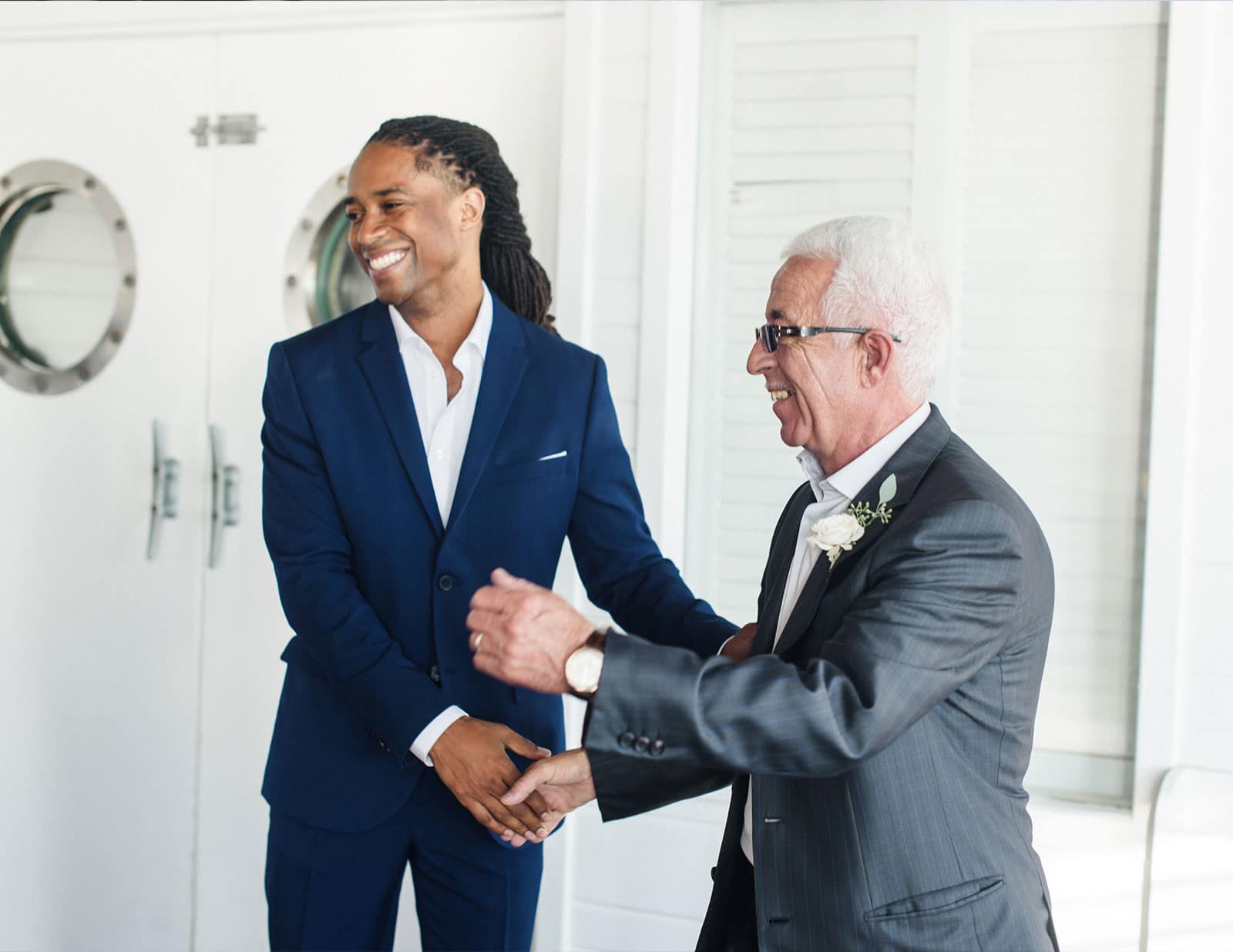
DJ Will Gill
Will Gill is a professional corporate DJ, emcee, and audience-engagement host whose 3-in-1 service is booked across all four of the corporate band buyer personas HR teams for culture-driven events, event producers and planners for production-heavy programming, marketing and brand teams for activations, and executives and procurement for higher-budget strategic bookings typically for clients who want repertoire flexibility (any era, any genre, no fixed setlist), simpler production logistics (one vendor, one contract, less stage space), and integrated emcee-led event pacing. A Forbes Next 1000 honoree, the Wall Street Journal’s #1-ranked corporate DJ and emcee, with 2,520+ five-star Google reviews from 600+ annual corporate engagements and a roster including AT&T Business Diamond Club, Google, Amazon, Microsoft, Salesforce, the United Nations, and the Boys & Girls Clubs of America. See his on-stage credits on IMDb. Reach out to discuss your 2026 corporate event entertainment programming.
Corporate Events Hosted Annually
Five-Star Google Reviews
WSJ-Ranked Corporate DJ and Emcee