
The Sound Check Mistake That Ruins More Events Than You Think | DJ Will Gill
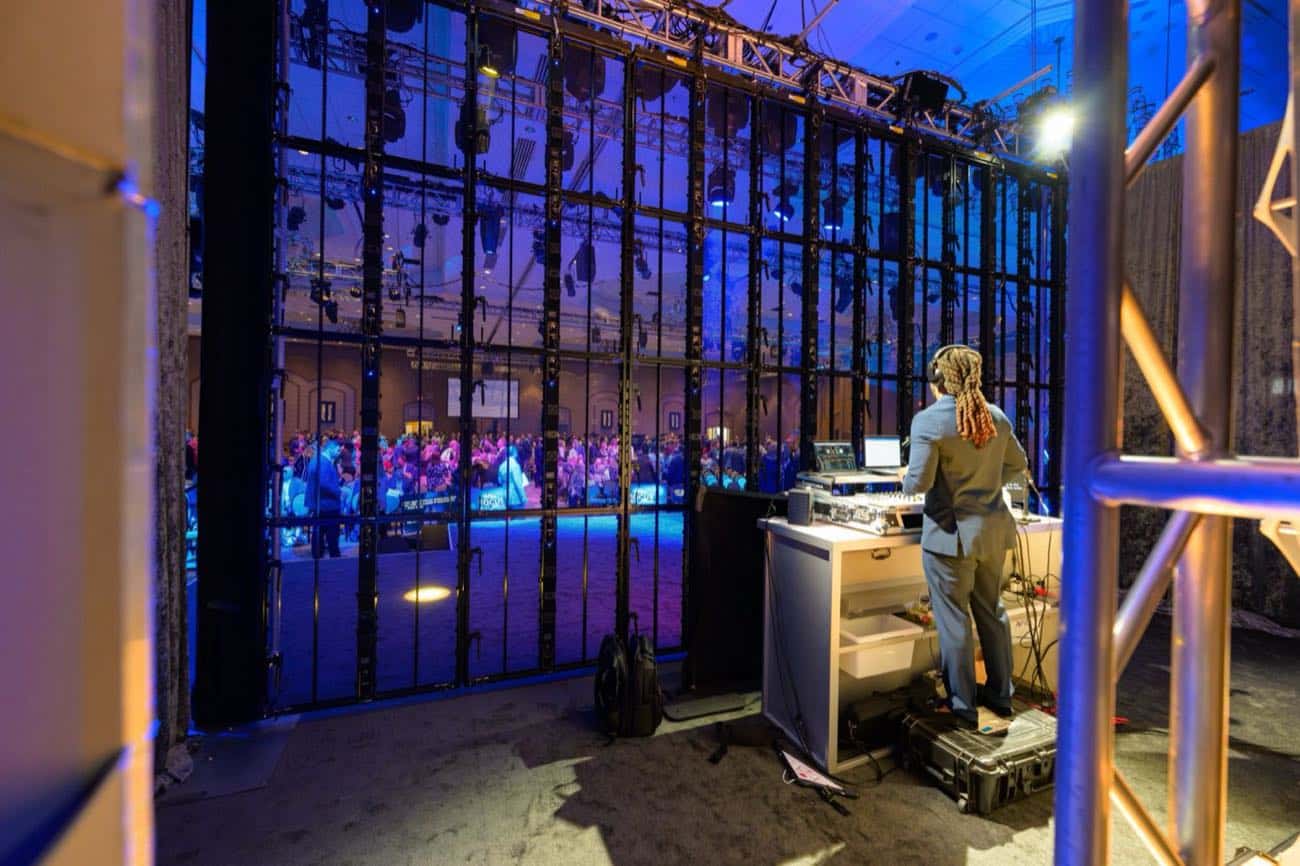
There is one sound check mistake that ruins more corporate events than any other. It is not choosing the wrong microphone. It is not underpowering the room. It is not skipping the sound check entirely (although that certainly happens). The mistake that produces the most avoidable failures is more subtle and more common: sound checks that do not replicate the performance conditions the actual event will run in. Empty room, wrong volume, wrong talent, wrong listening position, wrong time of day. Every one of these is a single deviation from the actual conditions under which the event will happen, and every one of them produces predictable failure modes that only surface once the audience is in their seats and the CEO is at the microphone.
This piece is a working framework on the specific mistake, its multiple manifestations, and the discipline that prevents it. The empty-room problem and why an audience of “water-based acoustic absorbers” changes room acoustics in ways that mean a check without them is not a real check. The volume trap where sound checks run at 60 percent of performance level and produce settings that fail at 100 percent. The speaker substitution problem where AV techs do the check instead of the actual keynote speaker. The FOH trap where engineers listen from the console position rather than the seats the audience will actually occupy. The timing failure where sound checks happen at 7 AM in a cold room with no HVAC ramping and no re-test as conditions change. And, most importantly, what a real performance-conditions sound check actually looks like, plus what corporate planners should be explicitly requiring in vendor scope to prevent the specific mistake this piece is naming.
Booking a corporate event vendor whose scope includes real performance-conditions sound check discipline? Contact DJ Will Gill.
Key Takeaways
- The single biggest sound check mistake at corporate events is running sound checks that do not replicate the performance conditions the event will actually run in. Empty room, wrong volume, wrong talent, wrong listening position, wrong time of day. Every deviation from performance conditions produces predictable failure modes that only surface once the event is live.
- The empty-room problem is real acoustic physics. Documented live-sound-industry framing from a leading professional publication describes audiences as “water-based acoustic absorbers” that cover the largest reflective surface in the room (the floor) and significantly change how mids and highs behave. A room that sounds one way empty sounds materially different once the audience is in it.
- Documented corporate AV industry reporting describes the specific pattern: tech teams often test at 7 AM in an empty room, by 9 AM hundreds of warm bodies have soaked up high frequencies while amplifying bass, completely shifting the mix. Without another check, the AV team is flying blind into feedback loops or muffled remarks just as executives take the stage.
- The speaker substitution problem: sound checks that use AV techs at the podium instead of the actual keynote speaker or executive fail to calibrate for the specific talent’s voice, height, movement, and mic-handling technique. The keynote speaker who has never been checked at their actual delivery volume is a specific failure mode. Coverage from a corporate AV industry publication frames it directly: a quick “mic check, one two” is not a sound check.
- The FOH trap is that sound engineers frequently listen from the console position rather than from the seats the audience will actually occupy. Documented professional AV framework guidance: position the FOH mix position within the main audience area, not off to the side, and walk the room during sound check to check levels and clarity in different zones. Testing from one position produces mixes that work only at that position.
1. The Mistake in One Sentence
Every experienced corporate event professional has watched the same failure mode happen more times than they want to admit. The sound check ran perfectly at 8 AM. The AV team walked through the run-of-show. Microphones tested clean. Music playback was crisp. The room sounded great. Then the doors opened, the audience filed in, and the CEO walked to the podium at 9:15 AM. And within the first 30 seconds of the keynote, something is wrong. The mic is either too quiet or feeding back. Music that sounded balanced is either burying speech or lost under it. The mix that was perfect two hours ago is broken now, and nobody knows exactly why.
The reason is almost always the same. The sound check did not replicate the conditions the event was going to run under. Some combination of empty room, wrong volume, wrong talent, wrong listening position, and wrong time of day produced a set of AV settings that were correct for the check but wrong for the event. When conditions shifted (as they always do), the settings did not shift with them, and the failure is what the audience hears.
This is the mistake in one sentence: sound checks that do not replicate performance conditions produce settings that only sound correct during the check and predictably fail when performance conditions arrive.
This is not a single technical error. It is a category of errors that all share the same underlying pattern. Empty room instead of full room. Half volume instead of performance volume. AV tech at the podium instead of the actual CEO. Engineer at the console instead of in the seats. 7 AM cold room instead of 9 AM warmed room with HVAC running full. Every one of these is a deviation. Every deviation is a hidden calibration error that surfaces when conditions equalize.
Coverage of the specific industry framing from a corporate AV production industry publication that captures the pattern directly: a sound check is not a formality but rather a crucial phase in technical production, skipping it or limiting it to a few minutes before doors open is one of the riskiest and, unfortunately, most common mistakes in corporate events, without a full test, sound issues appear at the worst time, these could translate to feedback, background noise, microphones that don’t work, or interference that ruins a key speech, and all in front of a live audience, sound checks validate every element of the system from microphones, mixers and outputs to wireless systems, monitors, signal routing and AV synchronisation, sound check is the time to fine-tune levels, detect issues and simulate real conditions. The phrase “simulate real conditions” is doing important work in that framing. A sound check that does not simulate real conditions is not a sound check. It is a pre-check of the equipment, which is useful but not sufficient.
The specific communication and coordination failures that emerge whenever multiple professionals (AV vendor, DJ, emcee, planner, executive) contribute to a corporate event (which are directly connected to the sound check mistake this piece describes, because the sound check discipline requires cross-vendor coordination that most teams do not build) are covered in the communication breakdown between DJs, emcees, and hosts analysis. Sound check discipline sits inside the larger coordination discipline. The vendors who own the check are usually not the vendors who suffer when the check fails, and that structural mismatch is part of why the mistake persists.
2. The Empty Room Problem: Water-Based Acoustic Absorbers
The first and most-underappreciated manifestation of the mistake is the empty-room problem. An empty ballroom is acoustically a fundamentally different space than the same ballroom filled with 300 executives. This is not a subjective preference. It is real physics. Sound checks run in empty rooms produce settings that are miscalibrated by the time the audience arrives.
Coverage of the specific acoustic-physics framing from a leading professional live sound engineering industry publication: the sound of a room when it is empty is very different from when it has an audience (or as someone once described them to me, the “water-based acoustic absorbers”) in, remember what will happen when the audience come in: it will rarely sound worse, usually the room will sound tighter and more controlled, the audience will cover one of the largest reflective surfaces, the floor, which will improve mids and highs no end, it helps to not over-EQ a system, I think we have all been there, taking out 2.5kHz to later have to put it back because what you could hear in the afternoon has now gone due to the crowd covering the reflective surface that caused you to believe it was in excess, large concrete floors have created many a victim. The “water-based acoustic absorbers” framing is professional live sound engineering language. Audiences absorb specific frequency ranges. Empty rooms do not.
Specific acoustic changes when the room fills:
- Mid-frequency reflections drop substantially. The floor was the biggest reflective surface in the empty room. Bodies cover the floor. What sounded harsh in the check becomes controlled once the audience is in place.
- High frequencies get absorbed. Clothes, hair, and skin absorb high frequencies. What was crisp becomes softer. Speech intelligibility can drop if the check compensated for empty-room brightness.
- Bass amplification changes. Body mass in the room affects low-frequency behavior. The bass mix that worked in the empty room may boom or thin out in the full room.
- Reverb time reduces. Rooms that felt “live” empty become significantly deader with an audience. What sounded natural in the check can sound flat with a crowd.
- Feedback thresholds shift. The empty-room check may have found feedback thresholds that no longer apply with the audience present. Wireless microphones can behave differently as body mass changes the RF environment.
Additional coverage from a corporate AV production industry publication that names the specific pattern in corporate events: tech teams often test at 7 a.m. in an empty room, by 9 a.m., hundreds of warm bodies have soaked up high frequencies while amplifying bass, completely shifting the mix, without another check, you’re flying blind into feedback loops or muffled remarks just as executives take the stage. That 7 AM to 9 AM shift is not a corner case. It is the standard corporate event morning. The sound check ran at 7 AM. Doors open at 9 AM. Two hours of acoustic-behavior change happen in between, and most sound teams do not retest.
The specific real-time recovery techniques that professional emcees deploy when a room’s energy collapses during live execution (which includes the specific failure mode of an audience that has drifted because the sound is not landing correctly, which is a downstream consequence of the empty-room sound check mistake this section describes) are covered in the how to handle a dead room at a corporate event analysis. When sound is fighting the room, no emcee recovery technique fully compensates. Prevention through proper sound check discipline is more effective than any live-recovery technique the emcee can deploy.
3. The Volume Trap: Sound-Checking Below Performance Level
The second manifestation of the mistake is the volume trap. Sound checks that run below performance volume produce settings that behave differently at performance volume. The check that sounded balanced at 60 percent of performance level can fall apart entirely when pushed to 100 percent, and the AV team learns this the hard way during the first song of the after-party or the CEO’s welcome remarks.
Coverage of the specific volume-trap framing from the live-sound-engineering industry publication cited above: it is a common mistake in soundchecking to start to treat it like a concert, it isn’t, it is a chance to check everything in preparation for a concert, it is often tempting to try to put on a performance, particularly if people such as management or girlfriends are watching, I still fall into this trap and find the volume creeping up as I massage my ego with the power at my control, this is counterproductive and often quite destructive, if you run soundchecks at a loud volume in an empty room, not only will you give yourself a false impression of what it will sound like, but it will swamp the sound on stage, without the audience in to absorb the sound in the room, it will come surging back onto the stage, making it incredibly difficult for the performers to hear what they are doing. That framing captures the specific volume-versus-conditions interaction. Empty rooms cannot handle performance volume the way full rooms can. But sound checks that stay below performance volume also fail to test the settings that will actually be used.
Specific volume-related failure modes:
- Feedback thresholds only manifest at performance volume. A microphone that is fine at 60 percent volume may feedback at 90 percent. Sound checks that never push to performance volume miss the threshold entirely.
- EQ settings behave nonlinearly with volume. The mid-frequency boost that sounds correct at check volume may become harsh at performance volume. Sound checks that don’t hit the target level cannot test whether the EQ is right.
- Compressor and limiter thresholds only engage at performance levels. Dynamic processing that shapes the sound only activates when levels hit certain thresholds. Below those, the check is not testing the actual processing chain.
- Speaker distortion and stress only appear at high SPL. Amplifier clipping, driver stress, and cone breakup are all volume-dependent phenomena that hide at check volume.
- Room resonances excite differently at different volumes. Standing waves and room modes that were subtle at check volume can dominate at performance volume, changing the perceived mix.
The professional discipline is a two-stage check. First stage: check at reasonable volume in the empty room to verify signal chain, cable integrity, and basic functionality. Second stage: push to performance volume briefly during the check to confirm the system holds together at the levels it will actually run at. Skipping the second stage produces the volume-trap failure mode.
The specific hybrid and virtual event gear stack that professional vendors bring (which includes the amplifier and speaker chain the volume-trap sound check discipline is testing) is covered in the hybrid event DJ setup gear that planners forget analysis. Gear that has not been sound-checked at performance conditions is gear that has not been genuinely verified for the event. The scope of the check has to match the scope of the gear.
4. The Speaker Substitution Problem: Testing Without the Talent
The third manifestation is the speaker substitution problem. Sound checks that use AV techs at the podium instead of the actual keynote speaker, executive, or emcee produce mic settings that are calibrated for the wrong voice. The keynote speaker who was never checked at their actual delivery volume is a specific and preventable failure mode.
Specific reasons the speaker substitution creates failures:
- Voice pitch and volume vary substantially between people. The gain staging that works for a 6-foot-2 baritone AV tech may feedback for a 5-foot-4 executive with a higher voice, or bury a soft-spoken speaker below the room noise floor.
- Physical distance from the mic varies. Height, posture, and podium position all affect the mic distance. A check at one height calibrates for one distance. The actual speaker at a different height means the mic is either too close (peaking) or too far (buried).
- Mic handling technique varies wildly. Speakers who cup the microphone, hold it too far, or tap it produce dramatically different acoustic behavior than the AV tech’s neutral check technique.
- Roaming versus stationary delivery. A lavalier check with the tech standing still tells you nothing about how the mic behaves when the keynote speaker walks 30 feet across the stage. Roaming speakers need to be tested roaming.
- Panel handoffs are dynamic. Panel discussions with 3 to 5 speakers passing microphones require the specific handoff dynamics to be checked with actual people. Passing a hot mic behavior is not simulated by an AV tech doing a solo check.
Coverage of the specific industry framing from a corporate AV production publication that captures the exact failure mode: a quick “mic check, one two” is not a soundcheck, a real soundcheck tests the room, the volume levels, and what it sounds like from the back, test speech audio from multiple points in the room, check for feedback when presenters move closer to speakers, if there’s a panel session, test multiple microphones at once. That framing is the professional standard. The “mic check, one two” without the actual speaker is a compliance activity, not a genuine acoustic verification.
The practical challenge is that senior executives frequently do not have time for sound check. The CEO has a schedule. The keynote speaker has other commitments. This is a real constraint. The professional workaround is coordinated pre-event planning that gets the actual talent to the mic for at least 90 seconds during the AV window, even if the timing is compressed. Vendors who do not push for this in their scope are accepting the substitution problem as a given.
The specific structural distinction between the emcee role and the keynote speaker role (which matters here because sound check discipline for both requires the actual talent, and the emcee should not double as the keynote speaker’s sound check surrogate) is covered in the why your keynote speaker should not double as your emcee analysis. The emcee and the keynote speaker each need their own check. Cross-substitution is a specific coordination failure that produces AV problems that could have been prevented.
5. The FOH Trap: Listening From the Console, Not the Seats
The fourth manifestation is the FOH (front-of-house) trap. Sound engineers frequently mix from a fixed position at the console, which is often off to the side of the room or in a specific listening zone that does not match where the actual audience is sitting. A mix that is correct at the console position may be wrong at every audience seat.
Coverage of the specific FOH-trap framing from a corporate AV production industry publication: inadequate monitoring (engineer can’t hear what audience hears), cause: FOH listening different from audience due to position or delay, position FOH mix position within the main audience area, not off to the side, use time-aligned delays and match system delay for zones; tune system with measurement mic, walk the room during soundcheck to check levels and clarity in different zones. That framing is the professional standard. FOH within the audience area, not off to the side. Walk the room during the check. Test from multiple positions. Any of these disciplines missed produces the FOH trap.
Specific FOH-trap failure modes:
- Off-axis console position produces off-axis mixes. Sound checks tuned at a console position that is significantly off the audience axis produce mixes that sound right at the console and wrong at the seats.
- Delay-line misalignment across audience zones. Large rooms with delay speakers behind the main system require time-aligned delays. Checks that don’t verify alignment produce audience zones where the sound is smeared or out of sync.
- Back-of-room level drop. Sound checks that do not walk to the back rows produce mixes that sound acceptable in the front and unintelligible at the back. This is one of the most common corporate ballroom problems.
- Balcony or split-level audience zones. Split-level rooms need their own zone-level verification. Sound checks that only test the main floor miss balcony problems entirely.
- Coverage gaps. Sound checks that don’t walk the entire room produce mixes with dead zones the AV team does not know about until the audience discovers them.
The professional discipline is the room walk. During the sound check, the engineer physically walks through the audience area, listening from multiple positions, adjusting delay lines and speaker zones as needed. This is real work. It takes time. Corporate AV vendors who scope sound checks without room-walk time have priced to a level below the professional standard, whether they say so or not.
The specific room-reading craft that professional working operators develop across hundreds of corporate events (which is directly relevant to the FOH trap because reading the room in real time requires knowing what the audience is actually hearing, which requires the room-walk discipline this section describes) is covered in the how to tell if a corporate DJ can read a mixed audience analysis. Reading the room requires knowing the room. Knowing the room requires walking it during the check.
6. The Timing Failure: Checking Too Early, Not Re-Testing
The fifth manifestation is the timing failure. Sound checks that happen too early relative to doors, and never get re-verified as conditions change, produce settings that were correct at check time and wrong at event time. The gap between check and event is where the environment shifts in ways the AV team does not account for.
Specific timing-related changes between sound check and event time:
- HVAC ramp-up as the room fills. Empty ballrooms have minimal HVAC. As the room fills, HVAC ramps up. Airflow noise adds to the room’s ambient floor. Sound checks that ran with silent HVAC do not test the mix that will run against ramped HVAC.
- Temperature changes affect acoustics. Cold morning rooms sound different than warmed evening rooms. Humidity changes affect propagation. Both change the sound check’s applicability by evening.
- Sub-vendor arrival changes the electrical environment. Lighting rigs powered up, catering equipment running, streaming rigs deployed. Each adds electrical noise potential and can introduce ground loops or interference that were not present at the 7 AM check.
- Cable placement drifts. Cables run at check time may be moved by AV setup, catering, security, or planning teams. Drift can introduce loose connections or interference that were not present at the check.
- Wireless RF environment changes. Attendee phones and personal devices flood the room with 2.4 GHz and 5 GHz interference. Wireless mics that worked at the 7 AM check may drop out or degrade at 9 AM with 300 devices in the room.
The professional discipline is the pre-door verification check. Fifteen to 30 minutes before doors open, the AV team runs a truncated verification of the settings that were locked at the earlier check. Any drift is caught and corrected before the audience arrives. Vendors who do not build this into their timeline are accepting the timing failure as a given.
A specific case for the compounded mistake: many corporate events run sound checks the morning of a same-day event. Set up at 6 AM, check at 7 AM, doors at 9 AM. The check happens in a cold, empty, HVAC-off room with none of the actual talent present. Every single one of the manifestations in this piece is present simultaneously. The result is predictable. The first 15 minutes of the event are spent live-adjusting the mix while the audience notices.
The specific four-stage rehearsal architecture that professional virtual and hybrid events use (which includes the event-day pre-show verification check timeline this section describes and applies to in-person events as well) is covered in the the virtual corporate event rehearsal checklist analysis. The pre-show verification discipline documented there for virtual events applies with the same force to in-person AV. The 30-minute pre-doors verification window is the professional standard across formats.
7. What a Performance-Conditions Sound Check Actually Looks Like
The prevention side. If the mistake this piece names is the sound check that does not replicate performance conditions, the fix is the sound check that does. Specifically, the working professional discipline that avoids each of the five manifestations above.
Specific components of a performance-conditions sound check:
- Scheduled with adequate time for depth, not compressed to fit a load-in gap. A serious corporate sound check needs 90 minutes minimum, more for larger productions or panel-heavy programs. Vendors quoting 30-minute sound checks are quoting to a sub-professional standard.
- Empty-room baseline plus warmed-room adjustment. The first pass runs in the empty room to verify the signal chain and basic functionality. The second pass, closer to the doors, adjusts for the acoustic behavior the room will actually have with an audience present.
- Performance-volume verification during the empty-room check. Brief passes at 90 to 100 percent of the target performance level to confirm the system holds together at the levels it will run at. Not sustained. Brief but real.
- Actual talent at the mic for at least 90 seconds each. Keynote speakers, executive presenters, panelists, and emcees all get real mic time during the check. Not “test test.” Actual delivery register, actual voice, actual mic-handling.
- Multi-position room walk during the check. The engineer walks the entire audience area during the check, listening from multiple positions, adjusting delay lines and zone levels as needed.
- Feedback threshold testing. Deliberate exploration of feedback thresholds with each mic. Threshold documented. EQ adjustments are made based on what the room actually resonates at, not what should be resonant based on theory.
- Panel handoff simulation. If the program includes panels, the actual mic handoff dynamics get simulated during the check. Multiple mics live simultaneously. Handoff transitions tested.
- Music playback verification at actual program levels. If a DJ is providing music for after-party or transitions, the actual music tracks get played at the levels they will actually run at. Speech and music were both tested against each other for masking.
- Pre-doors verification check. Fifteen to 30 minutes before doors open, a truncated verification pass catches any drift since the main check.
- Ongoing monitoring during the event. The FOH engineer’s job does not end when the sound check does. Live monitoring and real-time adjustment as the room’s state changes.
Coverage of the specific comprehensive sound check discipline from a live sound engineering industry publication that describes the professional standard: when EQing the PA system, avoid using extreme settings: the sound in the room is likely to change, and you may find that settings that worked before the gig aren’t suitable when the room is full, some good-quality headphones and a music source are essential, the headphones are my point of reference, and they can be used to check channels and help build a mix. The “avoid extreme settings” principle is specifically because the professional knows the settings will need to be re-adjusted once the room fills. Building in adjustment headroom is professional discipline.
The specific structural operational manual for the professional consolidated operator model (which is directly connected to the sound check discipline this section describes because consolidated operators own the coordination that fragmented vendor structures typically leave to fall between vendors) is covered in the how to run a conference where your DJ, emcee, and engagement host are the same person analysis. Consolidated operators can enforce sound check discipline because they own the outcome. Fragmented vendor structures produce diffused accountability and the sound check mistake this piece describes.
8. What Planners Should Require in Vendor Scope
The closing section, framed for corporate planners specifically. If you have read this far, you understand the mistake. You now need to know how to prevent it in your specific vendor procurement process. The prevention lives in the scope of work you require from vendors before booking.
Specific requirements to include in AV vendor scope of work:
- Sound check time of at least 90 minutes, documented in the AV timeline. Not “we’ll do a sound check.” Specifically, 90 minutes minimum with the timing documented. Vendors who resist this are pricing to a sub-professional standard.
- Explicit requirement that actual talent participates in sound check. Keynote speakers, executives, panelists, emcees. Include the specific expectation that they will be present for at least 90 seconds each during the check.
- Pre-doors verification check documented in the AV timeline. Fifteen to 30 minutes before doors, a truncated verification pass. Not optional. Required.
- Multi-position room walk during sound check. The engineer walks the audience area during the check. Not “if time permits.” Required.
- Live FOH monitoring during the event. The engineer stays at the console during the program, not just during set-up. Real-time monitoring and adjustment.
- Backup equipment on-site. Spare wireless mics, backup batteries, backup cables. Named in the scope, not “typically included.”
- Named point-of-contact for AV coordination throughout the day. Not the load-in tech leaving after set-up. A specific engineer who owns the AV outcome for the entire program.
- Coordination protocol with other vendors (DJ, emcee, video, streaming) for the sound check. Named in the scope. Not left as implicit responsibility.
Coverage of the specific vendor-selection framing from a corporate AV production industry publication: full line check and soundcheck with real presenters and production audio, confirm power and networking; plug critical gear into UPS, provide tech briefing and mic training for presenters, have a contingency plan and spare equipment (mics, batteries, cables), assign responsibilities and ensure communication (headsets/intercoms), large audience or complex staging, critical corporate broadcasts, multi-room events, live recording/streaming: hire experienced AV companies with certified engineers. The industry standard is explicit: line check plus sound check plus real presenters plus production audio. Anything less is a discount to the professional standard.
A specific note on vendor procurement: the sound check mistake this piece describes is most common when the AV vendor is a separate contract from the DJ, emcee, and engagement vendor. Fragmented vendor structures produce diffused accountability. The AV team is not responsible for the emcee’s mic sounding right. The emcee is not responsible for the DJ’s music level. The DJ is not responsible for the keynote speaker’s audibility. Everyone is responsible for their own piece, and the sound check discipline that ties the pieces together falls between the vendors.
For a service-line look at what a consolidated DJ-emcee-engagement vendor delivers, including the specific sound check coordination discipline that fragmented vendor structures typically fail to enforce, the current deliverables are on the corporate event DJ services page. The sound check mistake is preventable. Preventing it requires either scope discipline with the AV vendor or a consolidated operator who owns the whole audio outcome. Either works. Doing neither is what produces the failures.
Frequently Asked Questions
What is the biggest single sound check mistake at corporate events?
Sound checks that do not replicate the performance conditions the event will actually run in: empty room, wrong volume, wrong talent, wrong listening position, wrong time of day. Every deviation from performance conditions produces predictable failure modes that only surface once the audience is in their seats and the CEO is at the microphone. The mistake is not a single technical error; it is a category of errors that share the same underlying pattern of testing conditions that will not match live conditions.
How much does a room’s acoustic behavior actually change when the audience arrives?
Significantly. Documented live-sound-industry framing describes audiences as “water-based acoustic absorbers” that cover the largest reflective surface in the room (the floor) and change how mids, highs, and bass behave. Corporate AV reporting names the specific pattern: tech teams test at 7 AM in an empty room, and by 9 AM, hundreds of warm bodies have soaked up high frequencies while amplifying bass, completely shifting the mix. Mid-frequency reflections drop substantially. High frequencies get absorbed by clothes, hair, and skin. Bass amplification changes. Reverb time reduces. Feedback thresholds shift. Wireless RF environment changes as personal devices flood the room.
Should the actual keynote speaker be present at sound check?
Yes, for at least 90 seconds at the real delivery register. Voice pitch and volume vary substantially between people. Physical distance from the mic varies with height and posture. Mic handling technique varies wildly (cupping, distance, tapping). Roaming versus stationary delivery affects lavalier behavior differently. Panel handoffs require the actual dynamics to be tested with actual people. Sound checks that use AV techs at the podium produce mic settings calibrated for the wrong voice. Documented industry framing: a quick “mic check, one two” is not a sound check. The workaround for busy executives is coordinated pre-event planning that carves out the 90 seconds during the AV window.
Where should the sound engineer stand during sound check?
In the audience area, not off to the side. And moving. Documented professional AV framework guidance is explicit: position the FOH mix position within the main audience area, not off to the side. Walk the room during sound check to check levels and clarity in different zones. Multi-position room walks catch level drops at the back of the room, delay-line misalignment in large rooms, balcony coverage gaps, and dead zones that only surface when the engineer physically walks through the audience area. Testing from one position produces mixes that work only at that position.
How much time should a professional sound check take?
At least 90 minutes for a serious corporate event, more for larger productions or panel-heavy programs. That is dedicated sound check time, not shared with load-in or other AV setup. Plus a pre-doors verification check of 15 to 30 minutes closer to the doors opening to catch any drift between the main check and event time. Plus live FOH monitoring during the program itself. Vendors quoting 30-minute sound checks are pricing to a sub-professional standard, whether they say so or not. If your AV vendor’s scope has a compressed sound check window, you are booking the specific failure mode this piece describes.
What should planners require from their AV vendor about sound check?
Explicit scope requirements: 90 minutes minimum sound check documented in AV timeline, actual talent participation for at least 90 seconds each, pre-doors verification check 15-30 minutes before doors, multi-position room walk during sound check, live FOH monitoring during the event, backup equipment on-site (spare wireless mics, batteries, cables), named point-of-contact who owns the AV outcome for the entire program (not just load-in tech leaving after setup), coordination protocol with other vendors (DJ, emcee, video, streaming) named in scope. Vendors who resist any of these are pricing to a sub-professional standard. Fragmented vendor structures produce diffused accountability and are where the sound check mistake most commonly lives.
What Corporate Clients Are Saying

About the Author
William “DJ Will Gill” Gilbert is a corporate event DJ, emcee, and audience-engagement specialist. Recognized by The Wall Street Journal as a Virtual DJ-Emcee, he creates interactive virtual events that help organizations build stronger team morale. He is also a Forbes Next 1000 honoree. He pioneered the 3-in-1 booking model that combines professional emcee, open-format DJ, and interactive team-building host in a single engagement for Fortune 500 corporate clients including AT&T Business, CDW, Virgin Galactic, NeoGenomics, PepsiCo, PayPal, Ulta Beauty, Salesforce, Lenovo, and the United Nations, with 2,520+ five-star Google reviews from corporate clients across the United States. He has run sound checks across 600+ corporate events at every venue tier from intimate boardroom meetings to 10,000-attendee leadership conferences, and treats sound check discipline as one of the specific professional practices that separates working vendors from good-enough vendors. He is also the founder of THEAIDJ, an AI-powered playlist-generation tool built for DJs and corporate event planners programming music for in-person, hybrid, and virtual events.
Book Will’s integrated DJ-emcee-engagement corporate event package (with real performance-conditions sound check discipline built in) at djwillgill.com/contact.