
Essential DJ Playlist Tools for 2026
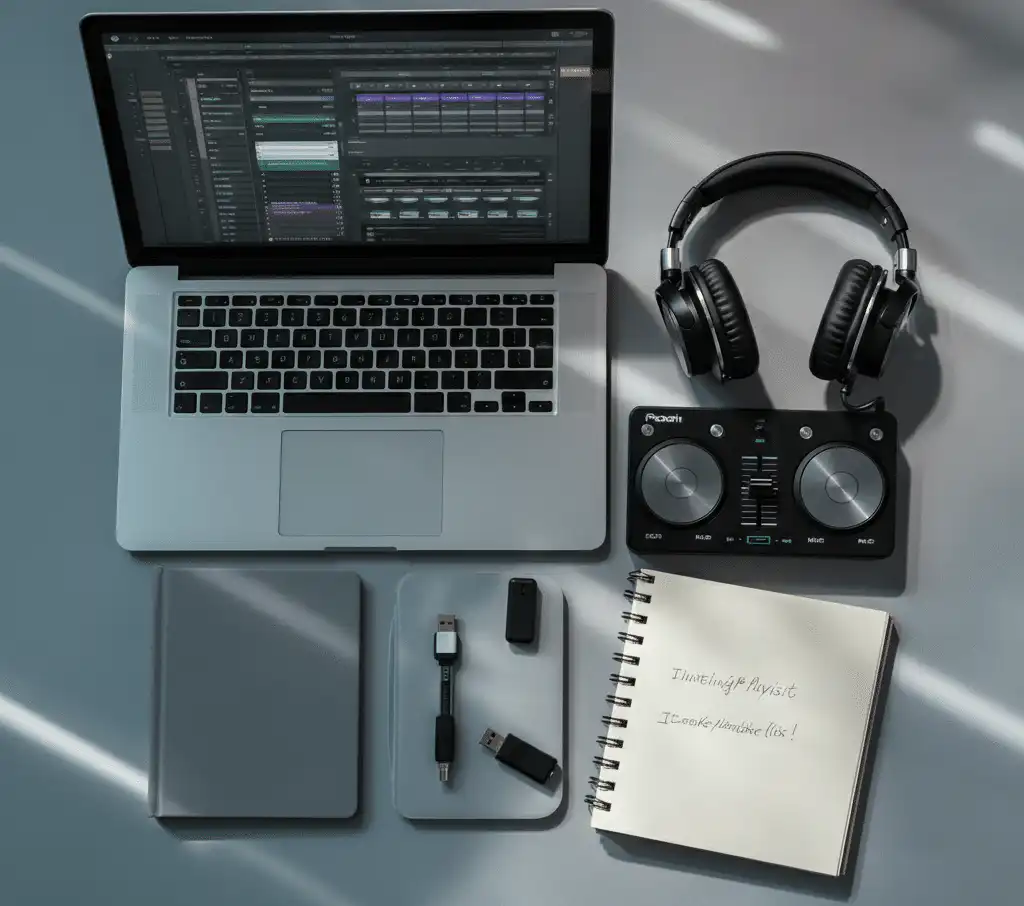
The tools a working DJ needs to build playlists in 2026 are very different from the tools a bedroom hobbyist needs. The fundamentals overlap software, a music library, a controller, and headphones, but the corporate-event tier introduces specific requirements around library reliability, hardware redundancy, streaming integration awareness, and library organization discipline that mobile-DJ generalists frequently skip. This guide rebuilds the essential tools framework with documented 2026 industry data, the major platform developments from late 2025, and the buyer-evaluation lens that corporate event planners should apply when assessing whether a DJ candidate has the right tool stack for the job.
For the broader DJ-craft context, see building your DJ brand through song selection style and the companion methodology pieces on 5 secrets to DJ song selection and 5 essential DJ playlists by genre for any event. For corporate event booking, DJ Will Gill deploys these tools across Fortune 500 corporate events with 2,520+ five-star reviews documenting consistency of execution.
Key Takeaways
→ The DJ software market is concentrated and stable. Industry analysis documents the top five DJ software players controlling approximately 60% of revenue, with the top four (Serato, Pioneer DJ/AlphaTheta Rekordbox, VirtualDJ, and Native Instruments Traktor) collectively holding more than 50% market share. The platform choice locks the DJ into an ecosystem for years, which makes the corporate-event tier’s investment in tool selection a non-trivial decision.
→ Streaming integration changed the playbook in 2025. In September 2025, Serato added official Spotify integration (premium account required), making it the first major DJ platform to support the world’s most popular streaming service for live performance. This shifts how new and emerging DJs build their libraries, though corporate-event-tier professionals still rely on locally stored, license-cleared files for reliability reasons explained below.
→ Hardware redundancy isn’t optional at the corporate tier. A single-controller setup that fails mid-event is an embarrassment at a wedding and a contract-violating disaster at a Fortune 500 sales kickoff. Corporate-event-tier DJs run primary plus backup controllers, redundant hard drives, dual headphones, and battery-backed power for every critical signal path.
→ Library organization is the hidden differentiator. The DJ with a well-tagged multi-axis library can pivot genres, demographics, or energy levels in seconds. The DJ with a flat dump of files into one folder cannot, and the difference shows up in dance-floor outcomes that the planner sees directly. 2026 software comparison research notes that the platform choice affects how the DJ organizes their library, which features they access during a set, and what hardware they can use.
→ Tool investment scales with engagement stakes. Gallup’s 2024 research documents that just 21% of employees worldwide are engaged at work. The corporate event exists explicitly to disrupt that baseline, and a DJ with $300 in consumer-grade gear cannot reliably deliver the audio fidelity, library depth, and operational redundancy that the engagement disruption requires.
Watch DJ Will Gill applying corporate-event-tier tools live. For event-specific tool stack and library consultation, contact DJ Will Gill directly.
Stop replaying the same songs.
Introducing TheAIDJ.com
AIDJ turns a plain-English request into a ready-to-play set, previews it instantly, and exports straight to Spotify. Discover music that actually fits the moment.
Why Corporate-Event-DJ Tools Differ From Bedroom-DJ Tools
Most published “essential DJ tools” guides cover the bedroom-DJ-to-mobile-DJ starter tier sub-$500 controllers, free or cheap software, consumer-grade headphones, and downloaded MP3s. That tier is appropriate for learning, practicing, and the first few hundred low-stakes gigs. It’s not the tier corporate event planners should be evaluating when booking professional DJ services.
Three differences define the corporate-event tier.
Reliability over price. A bedroom DJ replacing a $200 controller is a minor annoyance. A corporate event DJ losing their primary signal path mid-program at a 500-person sales kickoff is a contract issue. The tier above the mobile-DJ generalist runs redundancy backup controllers, mirrored drives, dual headphones, battery-backed power, a secondary mixer, and pays the price difference for it.
Library depth over library novelty. Bedroom DJs chase the newest releases. Corporate-event-tier DJs maintain decades of catalog depth, 1970s through 2020s, across all major genres, with clean-version alternates, edited versions optimized for corporate run-of-show timing, and recipient-walkup-track libraries indexed by name. The library is measured in tens of thousands of tracks, not hundreds.
Integration tools over solo-DJ tools. Mobile DJs work alone. Corporate event DJs integrate with show callers, AV teams, lighting designers, and contracted run-of-show timelines. The tool stack includes XLR/TRS routing flexibility, timecode capability, MIDI synchronization with lighting controllers, wireless microphone integration, and the operational discipline to cue music against a stage manager’s headset countdown. None of that lives in the bedroom-DJ starter kit.
The DJ Software Layer (2026 Market Reality)
The market is concentrated. 2026 DJ software market research documents an oligopolistic structure where the top five players control approximately 60% of revenue. The realistic options for a working professional are Serato DJ Pro, Pioneer DJ/AlphaTheta Rekordbox, Native Instruments Traktor Pro, and Atomix VirtualDJ. The choice locks the DJ into a hardware ecosystem and a library workflow for years, which makes the initial decision worth careful attention.
Serato DJ Pro: The North American Default
Market position. Serato DJ Pro is the most widely adopted DJ software in North America, particularly dominant in hip-hop, scratch, and open-format scenes and the safest bet for DJs targeting clubs and mobile gigs, with the highest probability of being already installed on backline systems and venue DJ booths. For US-based corporate event DJs working across multiple cities and venues, Serato installation reliability is a meaningful operational advantage.
The 2025 streaming update. In September 2025, Serato added official Spotify integration, becoming the first major DJ platform to support the world’s most popular streaming service for live performance, requiring a Spotify Premium account, with the caveat that streaming tracks cannot be used in conjunction with Serato’s stems feature. For corporate-event-tier work, streaming integration is useful as a backup library option but not a primary playback method. Venue Wi-Fi reliability and license-rights ambiguity at branded corporate events both push the primary library onto local storage.
Hardware ecosystem. Serato doesn’t manufacture controllers; it partners with Pioneer DJ, Rane, Roland, Reloop, Denon, Numark, and others. The result is the largest hardware selection of any major DJ platform, which makes upgrade paths and gear-failure replacement easier than ecosystem-locked alternatives.
Rekordbox: The Club-Standard Backline Choice
Why Rekordbox dominates club installations. Rekordbox is developed by Pioneer DJ (now AlphaTheta), the same company that makes the CDJ-3000 players and DJM-V10/DJM-A9 mixers installed in approximately 90% of professional club booths worldwide. 2026 software comparison research notes that using Rekordbox means a USB stick prepared on the home machine will work flawlessly on almost any professional club setup a strategic advantage for DJs targeting venue-based gigs.
The corporate event consideration. Many high-end corporate event venues (Las Vegas Strip ballrooms, Manhattan hotel ballrooms, major convention center stages) use Pioneer DJ backline equipment as standard. Corporate-event DJs whose primary tool is Rekordbox can walk into these venues, hand a USB stick to the AV provider, and run their prepared set on house equipment. The reduced setup load matters when the DJ is also responsible for emcee integration, branded transitions, and show-caller coordination.
The 2026 ecosystem signal. Industry analysis in 2026 noted that Rekordbox’s year was about integration work rather than new features with the platform chasing rather than leading on innovation, even as its club-backline dominance remains intact. For corporate event work where reliability matters more than feature velocity, that conservative approach is often a positive signal rather than a weakness.
Traktor Pro: The Electronic Music Specialist
Where Traktor wins. Native Instruments Traktor Pro retains strong adoption among electronic music DJs, house, techno, and EDM specialists due to its remix decks, stem decks, and strong effects routing. For corporate-event DJs whose work includes brand-activation EDM moments, late-evening after-party programming, or sustained dance-floor windows that benefit from creative track manipulation, Traktor offers tools that the other platforms don’t match.
The 2025 cross-hardware development. In November 2025, Native Instruments launched Traktor Play a £49 entry-level version with simplified stems and Beatport streaming, bundled free with Pioneer DJ/AlphaTheta DDJ-FLX4 and DDJ-FLX2 controllers, marking the first time Traktor officially supported competitor hardware. The cross-ecosystem support is a sign of the broader market consolidation; the platforms are starting to interoperate, where strict ecosystem separation used to dominate.
The Music Library Layer (Where Catalog Depth Lives)
The library is the longest-investment asset in the DJ tool stack. Software changes every five to ten years. Controllers get replaced every three to five. Headphones might last a decade. The music library, properly tagged, properly organized, properly maintained, accumulates value continuously across an entire career. For corporate-event-tier DJs, the library is typically the single most valuable component of the operation.
DJ Music Pools: The Subscription Backbone
The professional standard. DJ pools are subscription services that provide DJ-ready promotional tracks from record labels, intro and outro versions, clean and explicit versions, instrumental and acapella stems, BPM-tagged and key-tagged from arrival. For working DJs, pools replace the per-track purchasing model with a flat monthly subscription that funds unlimited new-release downloads.
The major pool services. BPM Supreme, DJcity, Crate Connect, ZIPDJ, and DigiPak are the dominant subscription platforms. Each covers slightly different genre territory and editing styles, which is why working DJs typically subscribe to two or three rather than just one. Annual subscription cost across the major pools combined runs $1,200-$2,400, a meaningful expense at the bedroom-DJ tier and a rounding-error expense at the corporate-event tier.
Online Music Stores: For Specific Tracks, the Pools Miss
Where the pools fall short. DJ pools focus on current and near-current releases. They don’t deeply catalog 1970s and 1980s archives, regional or independent label material, or obscure remixes. For those working DJs purchase individual tracks from Beatport (electronic specialty), Bandcamp (independent artists), iTunes/Apple Music (mainstream catalog), or Traxsource (house/disco specialty).
Audio quality discipline. Corporate-event audio systems will expose low-bitrate file quality, and the bedroom-headphone test misses. The professional standard is 320kbps MP3 minimum, with WAV or FLAC preferred for tracks that matter most. The 192kbps and below files that work on phone speakers fall apart through a 12,000-watt corporate ballroom rig, a difference the planner won’t articulate but will hear.
Streaming Integration: New in 2025-2026, Use Cautiously
The 2025 streaming-platform shift. The September 2025 Serato-Spotify integration and the November 2025 Traktor Play-Beatport streaming bundle together signal a major industry shift: streaming services are becoming first-class library sources, not just consumer-listening platforms.
Why corporate-event-tier work still favors local files. Streaming integration depends on venue Wi-Fi reliability, which corporate event DJs cannot count on. A 500-person ballroom on the 23rd floor of a downtown hotel with intermittent connectivity is not the place to discover that the dance-floor anthem won’t load. License rights also matter. Branded corporate events that get recorded or livestreamed have complex licensing requirements that streaming-service playback may not satisfy. The corporate-event primary library stays local; streaming is a backup discovery tool, not the operational core.
The Hardware Layer (Where Reliability Lives)
DJ Controllers: Tier-By-Tier Selection
Controllers dominate hardware purchases. 2026 DJ hardware market analysis documents that controllers represent 35.2% of the market’s product distribution, with mixers close behind at 35%. The remaining share is split across CDJs, turntables, and accessories.
Entry tier ($200-$500). Pioneer DDJ-FLX4, Numark Mixtrack Platinum FX, Hercules DJControl Inpulse 500. These deliver beginner-friendly layouts, bundled software licenses, and enough functionality to learn the craft. They are not corporate-event-tier appropriate for primary use, but are reasonable as backup or practice equipment.
Working-pro tier ($800-$1,800). Pioneer DDJ-1000SRT (Serato) or DDJ-FLX10 (Rekordbox), Rane One, Denon DJ Prime 4+. These deliver club-tier feel and functionality, four-channel routing, and the operational reliability needed for paid gigs. Corporate-event DJs typically operate at this tier or above.
Club-spec tier ($2,500+). Pioneer CDJ-3000 pair plus DJM-A9 mixer, or equivalent backline-grade equipment. This is the tier installed in major venue DJ booths, also the tier corporate-event-specialist DJs use when their work demands rigorous redundancy, full hot-cue and loop functionality, and direct interface with house AV systems.
Quality Headphones: Non-Negotiable
What matters. Closed-back, over-ear design for sound isolation from main speakers. Driver impedance and sensitivity that match the controller’s headphone output. Comfortable enough for multi-hour wear. Durable enough to survive frequent gig transport.
Industry-standard options. Sennheiser HD 25 (long-time professional standard, durable, replaceable parts), Pioneer HDJ-X5 and HDJ-X10 (designed specifically for DJ workflow), Audio-Technica ATH-M50x (audio production heritage, DJ-suitable). Corporate-event-tier DJs typically own at least two pairs one primary, one backup, sometimes a third in the gig bag as redundancy for redundancy.
Corporate-Event-Specific Hardware (What Mobile-DJ Guides Miss)
Wireless microphones for emcee integration. Corporate-event DJs frequently double as emcees during program windows. The mic stack typically includes Shure SLX-D or QLX-D wireless systems with handheld and lavalier options, reliable digital RF, AES-256 encryption (for corporate confidentiality requirements), and frequency coordination capability for venues with existing wireless traffic.
Power redundancy. Battery-backed UPS (uninterruptible power supply) under the DJ rig. APC, CyberPower, or Tripp Lite mid-tier units provide 5-15 minutes of runtime, enough to bridge a momentary power interruption and prevent the embarrassment of dead silence in the middle of a CEO walkup.
Backup laptop and drive. A second laptop with a mirrored library and software ready to swap in under 60 seconds. External SSD drives carrying duplicate copies of the music library, corporate-event-tier DJs run RAID-style redundancy on the library because the music IS the deliverable.
Library Organization for Corporate Events
Multi-axis tagging is the foundation. Bedroom DJs organize files by artist or album. Corporate-event-tier DJs organize by genre, era, BPM range, key, energy level, vocal density, clean-version availability, and audience-appropriateness rating. The multi-axis tagging means the DJ can filter the library in seconds during a set (“80s pop, 105-115 BPM, clean version, high-recognition”) rather than scrolling through thousands of tracks looking for the right one.
Event-specific crate preparation. Before each corporate event, the DJ builds an event-specific crate with the contract-relevant material, pre-event arrival tracks, dinner-program background, awards walkup music indexed by recipient name, dance-floor anthems calibrated to the documented audience demographics, branded transition stings. The event crate is a curated subset of the master library, not a hopeful drag-and-drop.
Do-not-play list integration. Corporate clients frequently provide explicit do-not-play lists of artists, songs, themes, or content that conflicts with brand values, recent news events, or executive preferences. Corporate-event-tier DJs build do-not-play filters into their library systems so the prohibited tracks don’t surface during real-time browsing, eliminating the risk of an accidental play under pressure.
Five Buyer Evaluation Questions for Corporate Event Planners
Apply these to any DJ candidate evaluation. The answers separate corporate-tier operators from mobile-DJ generalists who’d be over their depth at a Fortune 500 event.
Question 1: “What software, controller, and headphone setup do you use as primary, and what’s your backup?” The mobile-DJ generalist names one piece of each. The corporate-event-tier specialist names primary plus redundancy across every critical path, and the conversation reveals which tier the candidate operates in.
Question 2: “How large is your music library, and how is it organized?” Look for specific numbers (10,000+ tracks at the corporate tier, often 30,000+ for working specialists), multi-axis tagging, clean-version curation, and do-not-play integration capability. Vague answers about “thousands of songs” without organizational structure reveal a gap.
Question 3: “How do you handle power, network, and equipment failure scenarios?” Specific answers describing UPS power, backup laptop, mirrored drives, swap procedures, and recovery timing reveal an operator who has actually faced these failures before. Generic answers (“I’ve never had a problem”) reveal limited event volume. Corporate DJs who’ve worked hundreds of events have experienced equipment failures and built systems around handling them.
Question 4: “What’s your library audio quality standard?” The expected answer is 320kbps MP3 minimum with WAV/FLAC for key tracks. Operators who answer “I just download what I find” or “whatever Spotify gives me” are not corporate-event-tier ready.
Question 5: “How do you integrate with show callers, AV teams, and program timelines?” Specific workflows for cued music, transition stings, walkup tracks, show-caller communication, and silence handoffs reveal corporate event experience. Vague answers reveal a wedding/mobile DJ being booked into the wrong tier.
Why Specialist Corporate Event DJs Invest in Different Tool Stacks
The stakes change the math. A DJ pricing themselves at $500-$1,500 per wedding can’t justify $30,000 in corporate-tier equipment, redundancy, and library investment. The price points don’t support it. A DJ pricing themselves at the corporate event tier ($5,000+ per event) can justify and benefit from that investment because each gig depends on the equipment performing flawlessly.
The volume matters. A DJ working 25 weddings per year sees 25 events’ worth of equipment wear and failure risk. A DJ working 50+ Fortune 500 events per year sees 50+ events of higher-stakes equipment dependency, and the failure incidents accumulate enough operational experience that the tool stack evolves to address them.
DJ Will Gill’s tool-stack positioning. Will Gill operates as the Wall Street Journal #1 Corporate DJ and Emcee with documented multi-platform tool deployment across Fortune 500 corporate event clients AT&T Business, CDW, Virgin Galactic, NeoGenomics, Foot Locker, Home Depot, Hilton, and BGCA. Forbes Next 1000 honoree with broadcast credits including Super Bowl LIV (2020), The Voice (2011), and MTV’s The Real World: Hollywood (2008). He is also a World Cup performer and a Formula 1 Las Vegas Grand Prix performer. 2,520+ five-star Google reviews accumulated over 600+ documented corporate events, each a separate test of the underlying tool’s reliability.
For the related methodology pieces, see 5 secrets to DJ song selection that packs dance floors, 5 essential DJ playlists by genre for any event, and building your DJ brand through song selection style. For event-specific tool stack consultation, contact DJ Will Gill directly.

About the Author
William “DJ Will Gill” Gilbert is the Wall Street Journal’s #1 Corporate DJ and Emcee with documented corporate-tier tool stack deployment across Fortune 500 clients including AT&T Business, CDW, Virgin Galactic, NeoGenomics, Foot Locker, Home Depot, Hilton, and BGCA. Also a Forbes Next 1000 honoree with broadcast credits including Super Bowl LIV (2020), The Voice (2011), and MTV’s The Real World: Hollywood (2008). 2,520+ five-star Google reviews accumulated over 600+ documented corporate events.
2,520+ Google Reviews · IMDB · Mixcloud · Instagram · Contact
Frequently Asked Questions
What tools does a working DJ need to build playlists in 2026?
Four layers: DJ software, a music library built on subscription pools and stores, reliable hardware with redundancy, and a disciplined library organization system. The corporate-event tier adds reliability and backup requirements that hobbyist setups skip.
Which DJ software dominates the market?
Industry analysis in the guide puts the top five DJ software players at roughly 60% of revenue, with Serato, Rekordbox, VirtualDJ and Traktor holding more than half the market between them. Serato is the North American default and Rekordbox the club-standard backline choice.
Can DJs use Spotify inside DJ software now?
Yes, with limits. In September 2025 Serato added official Spotify integration for premium accounts. The guide advises using streaming cautiously, because corporate-event professionals still rely on locally stored, license-cleared files for reliability.
Why does the platform choice matter so much?
Because it locks the DJ into an ecosystem for years. Libraries, cue points and hardware compatibility all follow the software, so switching later is expensive in time and money.
What hardware do corporate-event DJs carry that mobile DJs often skip?
Redundant gear. The guide's corporate-event-specific hardware section covers backup playback paths and quality headphones as non-negotiable items, because a failure in front of a Fortune 500 audience has no recovery window.