
Key Benefits of Performing at Corporate Gigs for Bands

Working bands tend to underweight corporate gigs in their booking strategy because the visible signals formal dress codes, conference venues, restrained audiences read as less exciting than club shows, festivals, or weddings. The economic and career signals tell a different story. Corporate engagements consistently pay higher per-show fees than comparable bar and club work, distribute across the calendar year rather than concentrating in festival or wedding season, generate referrals into networks of higher-budget repeat buyers, and compound a band’s professional reputation in ways that translate back into every other gig category the band pursues.
This article maps the band-side economic and career case for pursuing the corporate market: fee structure and scheduling stability, career compounding through reputation building, network access to decision-makers and influential audiences, and strategic repertoire adaptation that expands the band’s reach across event types. For broader cluster context, the companion articles cover the definition of a corporate band, the formation playbook, the four buyer personas hiring corporate bands, and the booking channels that connect bands to those buyers.
Key Takeaways
Corporate gigs sit at the higher end of the live-music compensation distribution and offer the most predictable scheduling profile of any major gig category. The U.S. Bureau of Labor Statistics occupational profile for musicians and singers confirms that performing-musician income is highly variable across the broader market, and the corporate event tier specifically sits toward the upper end of that range. The result is that a band shifting even part of its booking calendar from bar and club work to corporate work typically sees materially higher revenue per show without an offsetting increase in workload.
Corporate event demand distributes across the calendar year in a way that bar circuits, festival seasons, and wedding seasons do not. Companies host quarterly meetings, annual recognition events, end-of-year galas, product launches, and quarterly client programs throughout the calendar, which produces booking opportunity even in the months that historically sit empty on a wedding or club-focused calendar. The result is scheduling stability a band that books well in the corporate market can plan studio time, invest in gear, and forecast cash flow with a precision that purely consumer-facing gigs rarely allow.
Reputation built in the corporate market compounds back into every other gig category. A band that has documented work at named Fortune 1000 corporate clients, callable references from major event producers, and clean reviews on independent platforms like The Bash and GigSalad commands higher fees not just for corporate work but for weddings, private parties, and any other booking the band pursues. The reputation effect is structural it’s not just about specific referrals but about the screening signal a corporate track record sends to every future buyer.
Corporate audiences include executives, marketing leads, agency principals, and event producers who themselves book entertainment for adjacent events. A single strong corporate performance can produce ripple bookings the agency principal who saw you at a client gala books you for their next campaign, the executive who heard you at the holiday party books you for their daughter’s wedding, the marketing lead who watched the launch books you for next year’s product event. Network access at the corporate tier compounds in ways that bar audiences and festival crowds typically do not.
Public performance of cover material at corporate events requires licensing, which is typically held by the venue or event organizer rather than the band. Performing-rights organizations including ASCAP and BMI issue the public performance licenses that authorize cover repertoire at corporate functions. Bands that can speak fluently about licensing during booking conversations consistently move farther through corporate procurement than bands that treat licensing as someone else’s problem.
Watch DJ Will Gill perform live. Contact him now to discuss your corporate entertainment booking.
“A band shifting even part of its booking calendar from bar and club work to corporate work typically sees materially higher revenue per show without an offsetting increase in workload.”
The Economic Case: Why Corporate Gigs Are Different
Bands that build sustainable working careers tend to share a structural insight: the gig market is segmented, and the segments don’t all compensate the same work at the same rate. A two-hour cover set at a bar pays a fraction of what a two-hour cover set at a Fortune 500 holiday party pays, even when the band is the same band playing the same songs. The difference isn’t musical quality it’s market segmentation, and bands that understand the segmentation route their effort toward the segments that pay best.
Corporate gigs sit at the upper end of the per-show compensation distribution for several structural reasons. Corporate budgets are larger than personal entertainment budgets. Corporate buyers are spending on behalf of organizations rather than themselves, which raises the willingness-to-pay ceiling. The booking process screens for professionalism, which thins the competitive field and raises the floor for qualified bands. And corporate events typically include production support (sound, lighting, venue catering) that bands at the equivalent bar or club tier would have to provide themselves, which improves the band’s net economics on the show.
Financial Profile: Fee Structure, Stability, and Adjacent Income
The financial case for corporate gigs runs across three dimensions: per-show fee, scheduling distribution, and adjacent income from production support and perks.
Per-show fees. Corporate band fees for 5-piece-and-up configurations at established corporate venues typically run several times the equivalent bar or club fee for the same band, and 7-piece-and-larger showband fees at premier corporate events can run an order of magnitude higher than the band’s local club booking rate. The exact range varies by region, market position, and the buyer’s procurement context, but the structural pattern corporate budgets pay better than consumer entertainment budgets for equivalent work holds across virtually every major U.S. market.
Scheduling distribution. Corporate event demand distributes across the calendar in ways that other gig categories don’t. Wedding-season concentration (April through October), festival season (summer), and club circuits (Thursday-through-Saturday) all leave structural gaps. Corporate events fill those gaps Q1 sales kickoffs in January and February, mid-year leadership offsites in spring and fall, Q3 client events, Q4 holiday and recognition programs. The result is that a band with strong corporate channel presence can fill calendar weeks that pure wedding bands and bar bands struggle to book.
Adjacent income. Corporate engagements often include income elements that consumer events rarely cover. Travel and lodging for out-of-town events. Production buyout (the venue or producer handles sound and lighting, removing the band’s own equipment burden). Catering and on-site amenities. Sometimes per-diem or contracted-extras payments. These elements aren’t always present, but when they are, they materially improve the band’s economics relative to the headline fee.
Career Compounding: Professional Growth and Reputation Building
The biggest career argument for corporate gigs is that reputation built at the corporate tier compounds back into every other gig the band pursues. A band that can show a Fortune 1000 client logo on its EPK presents differently to wedding couples than a band that can only show local-venue references. A band with callable references from professional event producers presents differently to private-event clients than a band with only word-of-mouth from past audience members.
Documented track record. Named corporate clients, photos and video from real corporate engagements, testimonials from professional buyers, and reviews on third-party platforms together form a portfolio that operates as durable marketing collateral. Unlike a bar gig that disappears the day after, a corporate booking generates artifacts (footage, testimonials, listed clients) that continue to generate inquiries for years.
Skill development under professional conditions. Corporate environments demand technical reliability, repertoire breadth, professional behavior, and real-time audience adaptation in ways that bar and club environments often don’t. Bands that book consistently at the corporate tier tend to develop in all of these dimensions faster than bands working primarily in less-demanding contexts, and the skills are portable to every other gig type.
Premium positioning. A band with documented corporate experience commands higher fees not just for corporate work but for every other booking it pursues. The premium positioning is structural wedding couples evaluating live music for a $50,000 wedding expect to see corporate clients on the band’s roster, and private-event clients at the upper budget tier use corporate experience as a screening signal for professionalism.
Network Access: Exposure to Influential Audiences and Decision-Makers
Corporate audiences are not the same audiences a band plays for at bars, clubs, festivals, or weddings. The room at a corporate event includes executives, marketing leads, agency principals, event producers, and high-budget consumers people who themselves either book entertainment professionally or have the personal budget to book entertainment for private events. The downstream booking potential per audience member at the corporate tier is materially higher than the equivalent at consumer venues.
Ripple bookings. A single strong corporate performance often produces ripple effects beyond the immediate booking. The marketing director who watched the band at a client gala books them for the next product launch. The agency principal who attended the holiday party engages them for a client activation. The executive who heard them at the recognition event books them for a private milestone. None of these bookings would have happened without the original corporate exposure, and they compound from a single well-executed show.
Producer relationships. The most consequential ripple effects come from event producers, planners, and DMCs who attend or run the original event. These are the buyers covered in the cluster’s booking channel article they book ten or more music acts per year on average, and a strong relationship with even one of them can multiply the band’s annual booking volume meaningfully. Producer relationships built through performance are far more durable than those built through cold outreach.
Brand and agency adjacencies. Marketing teams that hire bands for brand activations are often working with broader agency partners and creative networks. A band that performs well at a brand activation often gets referred into the agency’s roster, which opens access to additional clients the band wouldn’t have reached on its own. The agency adjacency is one of the most underestimated networking benefits of corporate work.
Strategic Repertoire Adaptation: Expanding Reach Through Stylistic Range
The final strategic benefit of pursuing corporate gigs is that the work itself forces repertoire development in ways that pay off across every other gig the band books. Bar audiences and dedicated genre audiences let bands stay in narrow stylistic lanes; corporate audiences demand range, and bands that develop that range to serve corporate clients become better-positioned for the entire market.
Era breadth. A typical corporate audience includes attendees in their 20s through their 60s. Bands that build credible repertoire across multiple eras 60s and 70s classics, 80s and 90s pop and rock, 2000s and 2010s contemporary hits, current radio develop a versatility that wedding clients, milestone-event buyers, and private-party hosts also value highly. The repertoire breadth becomes a competitive moat.
Energy modulation. Corporate events require bands to read the room in real time and adjust the energy level background cocktail-hour mode, mid-energy reception, full-dance energy for the late evening. Bands that develop this modulation skill perform better at every other audience-driven event as well, because the same dynamics show up at weddings, private parties, and milestone celebrations.
Genre fluency. Corporate brand activations sometimes require specific genre fit jazz for a luxury brand, soul revue for a Motown-themed gala, themed era programming for a decade-specific event. Bands that develop genre fluency to serve these requests become eligible for booking categories they wouldn’t otherwise reach, and the fluency translates to higher-budget bookings across the broader market.
Corporate Gigs vs Alternative Gig Categories: Comparing the Economic and Career Profile
| Gig Category | Per-Show Fee Tier | Scheduling Stability | Network Access | Career Compounding |
| Corporate Events | High to premier | Year-round distribution | Executives, producers, agencies, high-budget consumers | High reputation transfers to every other category |
| Weddings | Medium to high | Seasonal (Apr-Oct concentration) | Other engaged couples, wedding planners | Medium referrals within wedding category |
| Bar & Club Circuits | Lower (often by tip share or door split) | Weekend-concentrated | General audience, occasional venue bookers | Low visibility but limited transferability |
| Festivals | Variable (often performance-only) | Seasonal (summer concentration) | Fan audiences, festival bookers | Medium fan-building, less corporate transfer |
| Private Parties | Variable (budget-driven) | Year-round but unpredictable | Host’s personal network | Medium referrals within host’s circle |
Fee tiers and scheduling patterns reflect typical 2026 market patterns; specific outcomes vary by region, band positioning, and individual booking circumstances.
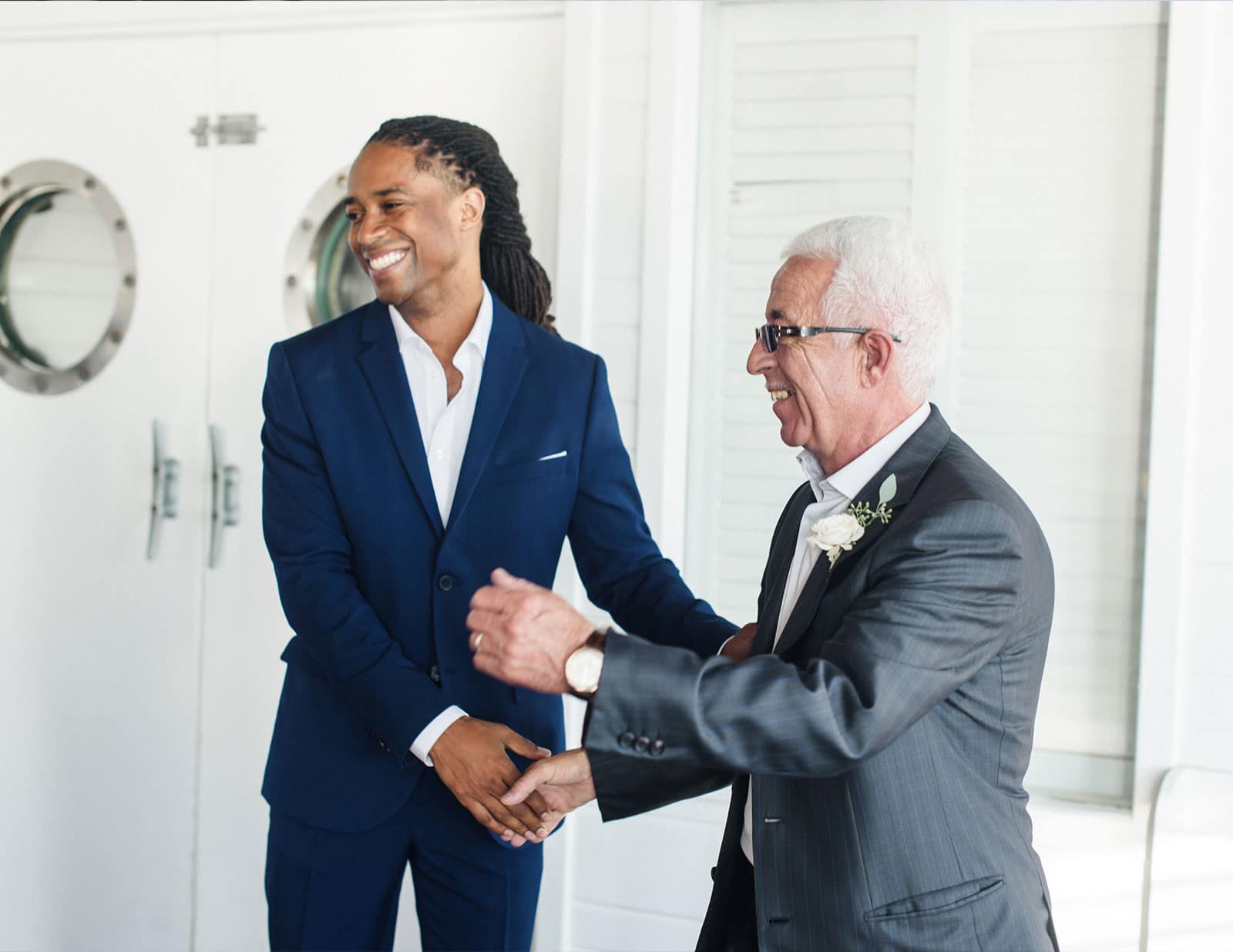
DJ Will Gill
Will Gill is a professional corporate DJ, emcee, and audience-engagement host who has built a 600+ corporate engagement annual practice through the same channel economics this article describes direct buyer relationships, event producer and DMC partnerships, online marketplace presence, and a documented portfolio of named corporate clients. His 3-in-1 service is one of the most-considered alternatives to corporate band programming for clients who want repertoire flexibility (any era, any genre, no fixed setlist), simpler production logistics (one vendor, one contract, less stage space), and an emcee-led approach to event pacing. A Forbes Next 1000 honoree, the Wall Street Journal’s #1-ranked corporate DJ and emcee, with 2,520+ five-star Google reviews from a roster including AT&T Business Diamond Club, Google, Amazon, Microsoft, Salesforce, the United Nations, and the Boys & Girls Clubs of America. See his on-stage credits on IMDb. Reach out to discuss your 2026 corporate event entertainment programming.
Corporate Events Hosted Annually
Five-Star Google Reviews
WSJ-Ranked Corporate DJ and Emcee