
How to Start a Corporate Band in 2026
Starting a corporate band is one of the most operationally specific paths in the live-music business distinct from starting a wedding band, a touring original act, or a club residency. The corporate market has its own pricing structure, its own booking channels, its own audience expectations, and its own production conventions. Bands that succeed in the corporate space are bands that were designed for it from day one rather than retrofitted from another format, and the formation decisions made in the first 90 days end up determining whether the band can book at the $5K, $15K, or $25K+ tier in the years that follow.
This article walks through the formation playbook what counts as a corporate band, the five foundational decisions every founder has to make before recruiting players, how to assemble a lineup that actually books, what the performance product needs to include, and what it takes to land the first corporate gig. For broader cluster context, the companion articles cover the definition and market positioning of corporate bands and the booking and gig-acquisition side.
Key Takeaways
A corporate band is a different business than a wedding band or a touring original act. Corporate buyers event producers, corporate planners, DMCs are evaluating bands on different criteria than wedding clients (read-the-room versatility, agenda-flexibility, professional reliability) and paying on different fee structures. Forming the band with the corporate buyer’s evaluation criteria in mind from day one is the single highest-leverage formation decision. According to U.S. Bureau of Labor Statistics occupational data on musicians and singers, performing-musician income varies dramatically by venue category, with corporate engagements consistently among the higher-paying segments of the live performance market.
Five foundational decisions get made before the first rehearsal: lineup size (solo/duo, trio, quartet, 5-piece, or larger), genre positioning and target subsegment (jazz/lounge for receptions, high-energy cover for galas, themed/era-specific for entertainment programming), business structure (LLC, partnership, sole proprietor with subcontracted players), brand identity (band name, visual presentation, online presence), and revenue model (per-event flat fee, hourly, or hybrid with optional add-ons). Each decision constrains the others a quartet positioned for jazz receptions has a very different fee structure and booking channel than a 7-piece high-energy cover band positioned for gala entertainment.
Lineup assembly is fundamentally a casting problem, not a recruitment problem. The musicians who succeed in corporate band lineups have specific qualities read-the-room versatility, reliability across long event timelines, professional backstage behavior that aren’t the same as the qualities that make great touring or session players. The corporate-band founder’s job in casting is to evaluate players against the corporate-specific criteria rather than against general musicianship, which means audition processes should include scenario-based questions (“how do you handle a request you don’t know?”) and reference calls focused on professional reliability rather than just musical talent.
The corporate band’s performance product is more than the set list. It includes repertoire breadth and depth (200+ songs minimum for working corporate bands, organized by tempo/era/energy for live programming flexibility), sound and visual presentation (a band that looks and sounds corporate-appropriate is the baseline, not the differentiator), and conventions specific to the corporate context set length structure (typically 45-60 minute sets with breaks for agenda blocks), volume management (corporate events require dramatically lower volume than club gigs to allow conversation), and the ability to integrate with emcees, AV teams, and other event vendors. Bands that treat the product as just “show up and play” don’t book at the higher tiers.
Music licensing for corporate cover performance is non-optional. Public performance of copyrighted music at corporate events requires licensing through performing-rights organizations such as ASCAP, BMI, and SESAC typically held by the venue or the event organizer rather than by the band, but the band needs to understand the licensing structure when negotiating contracts. Bands that walk into corporate engagements without licensing literacy expose their clients to compliance risk and consistently lose repeat bookings to bands that handle this professionally.
Watch DJ Will Gill perform live. Contact him now to book your corporate event entertainment.
“Bands that succeed in the corporate space are bands that were designed for it from day one rather than retrofitted from another format.”
What Counts as a “Corporate Band” in 2026
A corporate band is a professional ensemble that books specifically into the corporate event market conferences, sales kickoffs, awards galas, holiday parties, executive recognition events, product launches, and brand activations as distinct from bands that book primarily into weddings, club gigs, or original-act touring. The distinction matters because the corporate buyer evaluates bands on a different criteria set, books through different channels, pays through different contract structures, and expects different production conventions than the buyers in those other markets.
Three features consistently distinguish corporate bands from their adjacent categories. First, the audience is captive but not specifically there for the music attendees came for the conference or the awards or the recognition program, and the band is one element of the broader event. This means the band has to support the agenda rather than be the agenda. Second, the buyer is typically not the audience a corporate planner or DMC or executive producer is booking on behalf of the eventual attendees, so the band has to satisfy two evaluation processes (the buyer’s professional criteria and the audience’s experiential criteria). Third, the production environment is dramatically more controlled than club or wedding work AV teams, lighting designers, show callers, and stage managers are part of the operational reality, and the band has to integrate professionally with all of them.
Founders who understand this distinction from day one make formation decisions that compound across the band’s first three years. Founders who don’t tend to launch as a generic working band and discover the corporate-specific requirements one painful gig at a time.
The Five Foundational Decisions Before You Form the Band
Each of these decisions constrains the others. Making them together as a coherent set is the difference between a band that books consistently and a band that’s perpetually pivoting.
1. Lineup size. Solo or duo lineups book into lower-budget receptions and intimate corporate dinners; trios and quartets cover the broad middle of the market (cocktail hours, networking events, smaller corporate parties); 5-piece bands are the workhorse format for gala entertainment, holiday parties, and dance-heavy programming; 7-piece and larger lineups are reserved for higher-budget galas and headline-feel programming. Each tier has its own fee range and its own logistical profile.
2. Genre positioning and target subsegment. “Corporate band” isn’t a single market. Jazz/lounge bands book into receptions and cocktail programming. High-energy cover bands book into gala entertainment and dance programming. Themed or era-specific bands (Motown revues, 80s tribute, party-band specialists) carve niche positions inside the broader corporate market. Choosing the subsegment shapes everything downstream repertoire, branding, fee structure, target buyer.
3. Business structure. The choices include LLC (most common for serious corporate bands; protects against liability and clarifies tax treatment), partnership (workable for small founder groups but legally complex when members rotate), and sole proprietor with subcontracted players (workable for founder-led bands where the legal entity is one principal and the other musicians are subcontracted per-gig). The choice has tax, liability, and operational implications that compound over time.
4. Brand identity. Band name, visual presentation, online presence, and the overall sense of what the band represents to a corporate buyer. The name should be memorable, professional, and ideally hint at the genre or experience. The visual presentation should match the fee tier bands competing at the $10K+ tier need professional photography, video, and EPK production that match the price point.
5. Revenue model. Most corporate bands charge per-event flat fees rather than hourly rates, with the flat fee scaled to lineup size, event length, travel requirements, and production demands. Common add-ons include extended runtime, additional musicians, themed costuming, and pre-event customization (charts for company-specific songs, walk-up music for award winners, etc.). The revenue model has to be designed before the first booking so that pricing conversations are operational rather than improvised.
Assembling the Lineup: From Solo Player to Full Production
Lineup assembly is a casting problem. The corporate-band musicians who succeed have a specific profile technically competent, professionally reliable, versatile across genres, comfortable reading the room, and steady under variable conditions. These qualities don’t perfectly correlate with general musicianship. Plenty of great session players make poor corporate-band players because they’re trained for the recording studio rather than the live-event environment, and plenty of great touring musicians make poor corporate-band players because they’re trained for the audience-as-everything environment rather than the audience-as-one-element environment.
The audition process should be designed to evaluate corporate-specific qualities, not just musicianship. Include scenario-based questions: how do you handle a request for a song you don’t know? what do you do when the planner cuts your set length on-site? how do you behave at the green-room buffet? Include a working-band evaluation: have the candidate sit in for a rehearsal and observe how they integrate with the group, not just whether they can play. And include reference calls focused on professional reliability talk to two or three previous bandleaders about the candidate’s showed-up-on-time behavior, not just their playing.
The most common casting mistake is hiring on technical skill alone and discovering the professional-reliability gaps after three gigs. The most common casting win is hiring for the combination of solid (not necessarily exceptional) musicianship plus excellent professional reliability the latter is rarer and more valuable for corporate work.
Building the Performance Product
The corporate-band performance product extends well beyond the set list, though the set list is the foundation. Working corporate bands typically maintain a repertoire of 200+ songs organized by tempo, era, energy, and genre to support live programming flexibility the ability to read the room mid-event and adjust the set in real time to what the audience needs in that moment. A band with 80 songs all in the same energy band can’t do this; a band with 200+ songs organized for retrieval can.
Sound and visual presentation form the second layer. Sound quality at the corporate level requires investment in monitors, in-ear systems, and a willingness to keep stage volume dramatically lower than club-band volume so that corporate attendees can still hold conversations during music. Visual presentation requires consistent stage wardrobe, professional staging, and a level of polish that matches the fee tier. Bands competing at $5K-$10K can get away with band T-shirts and basic staging; bands competing at $15K+ need wardrobe and staging that visibly justifies the price.
Corporate-specific conventions form the third layer. Sets typically run 45-60 minutes with breaks structured around agenda blocks (the band plays during cocktails, takes a break for the awards ceremony, plays during dancing, etc.). Volume management has to accommodate the simultaneous-conversation requirement. Integration with show callers, AV teams, and emcees is part of the deliverable the band that makes everyone else’s job easier gets re-booked; the band that creates production friction doesn’t.
From Formation to First Gig: The 90-Day Operational Sprint
Once the band is assembled and the performance product is in place, the operational sprint to the first corporate booking typically runs 90 days. The sprint covers five workstreams in parallel.
EPK production. An electronic press kit including band biography, high-resolution photos, professional performance video (live, not lip-synced), repertoire list, technical rider, and pricing structure. Corporate buyers screen on EPKs before any booking conversation, so the EPK has to do real work.
Sales channel setup. Listings on the major entertainment marketplaces (The Bash, GigSalad, Bandsintown for Brands), outreach to local DMCs and event production companies, and a direct-website presence with booking inquiry workflow. Different channels reach different buyer segments; corporate bands typically need multi-channel presence rather than relying on a single platform.
Pricing model finalization. A documented fee structure for each common configuration (3-piece for cocktails, 5-piece for galas, 7-piece for headline programming), with clear add-on pricing and contract terms. Improvised pricing in early conversations consistently costs bands money in the form of underpriced first bookings that anchor future negotiations.
Contract and rider preparation. A standard performance contract covering payment terms, cancellation policy, technical requirements (stage size, power, sound system specs), and force-majeure clauses. A documented technical rider that AV teams can pre-prepare against.
First-booking pipeline. Active outreach to 50-100 potential buyers in the first 60 days, with the realistic expectation that the first 1-3 bookings come at sub-market rates because the band has no corporate track record yet. The first three bookings exist primarily to produce footage, references, and repeatable evidence that the band performs at the corporate level the financial return on the bookings themselves is secondary to the marketing assets they generate.
Corporate Band Lineup Tiers: Configuration, Genre Fit, Fee Range, Ideal Event Type
| Lineup Tier | Typical Configuration | Genre Fit | Typical Fee Range | Ideal Event Type |
| Solo / Duo | Vocalist + acoustic guitar, or piano + voice | Jazz, lounge, acoustic pop, low-volume ambient | $800-$3K | Intimate dinners, executive receptions, cocktail backgrounds |
| Trio / Quartet | Vocals + 2-3 instruments (guitar, bass, drums, keys, sax) | Jazz, soul, pop, light dance | $2.5K-$6K | Cocktail hours, networking events, smaller parties |
| 5-Piece | Full rhythm + lead vocals, often with horn or keys | High-energy cover, dance, party, themed | $5K-$12K | Galas, holiday parties, awards entertainment, dance programming |
| 7-Piece | 5-piece + horn section or backing vocalists | Motown, funk, R&B, full-production party | $10K-$20K | High-budget galas, brand activations, headline programming |
| 10+ Piece | Full band + extended horns/strings + multiple vocalists | Showband, big band, full-production revue | $20K-$50K+ | Premier galas, Fortune 500 anniversaries, signature events |
Fee ranges reflect typical 2026 corporate event entertainment market based on Bureau of Labor Statistics occupational data and corporate entertainment marketplace listings; specific bookings vary by reputation, region, and event scope.
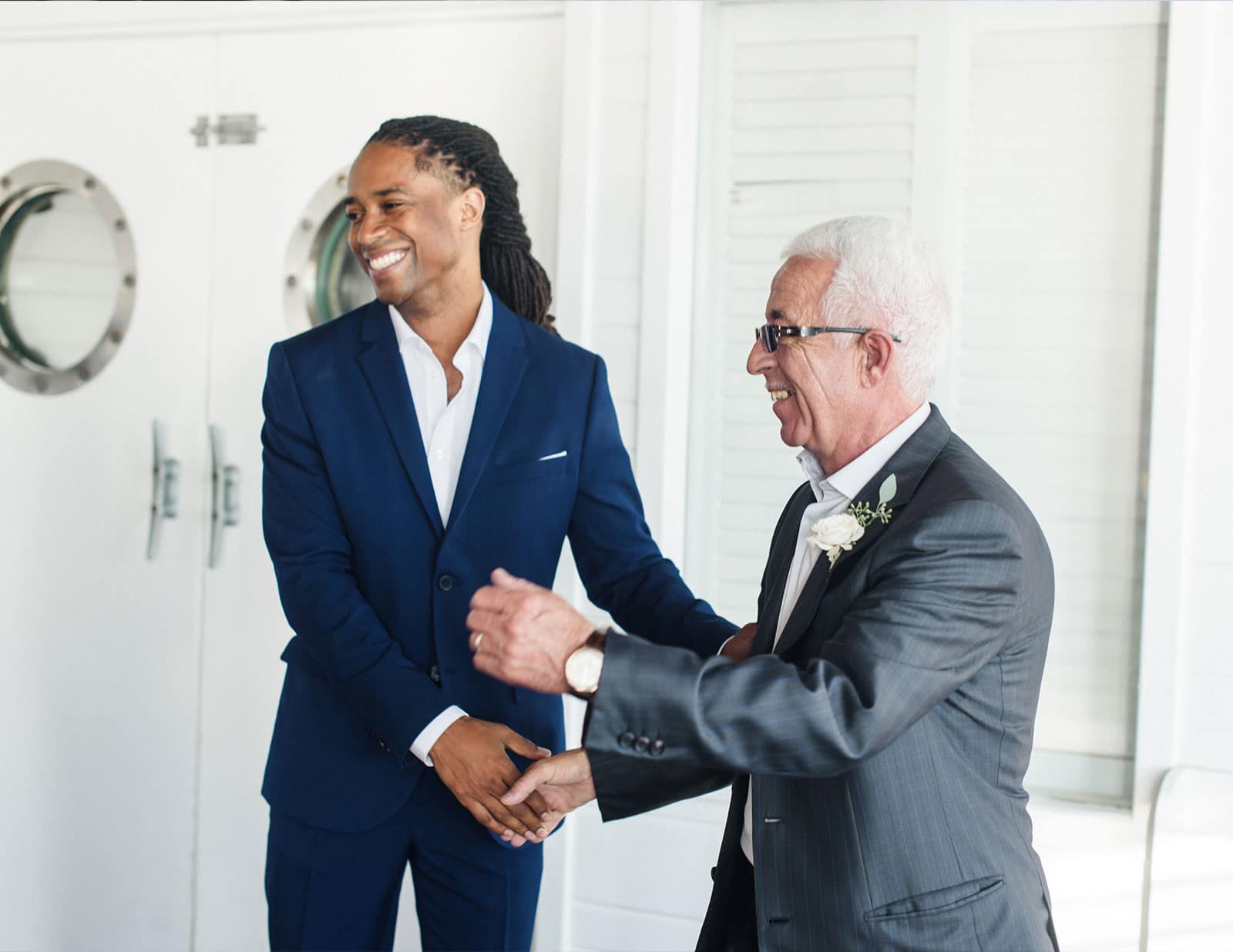
DJ Will Gill
Will Gill is a professional corporate DJ, emcee, and audience-engagement host whose 3-in-1 service is one of the most-considered alternatives to corporate band programming particularly for clients who want flexibility on repertoire (any era, any genre, no fixed setlist), simpler production logistics (one vendor, one contract, less stage space), and an emcee-led approach to event pacing rather than a band-led one. A Forbes Next 1000 honoree, the Wall Street Journal’s #1-ranked corporate DJ and emcee, with 2,520+ five-star Google reviews from 600+ annual corporate engagements and a roster including AT&T Business Diamond Club, Google, Amazon, Microsoft, Salesforce, the United Nations, and the Boys & Girls Clubs of America. See his on-stage credits on IMDb. Reach out to discuss your 2026 corporate event entertainment programming.
Corporate Events Hosted Annually
Five-Star Google Reviews
WSJ-Ranked Corporate DJ and Emcee