Writing Music Playlists That Fit Every Genre and Mood in 2026

By | Published On: June 3, 2026 | 20.4 min read |

Writing Music Playlists That Fit Every Genre and Mood — the 2026 guide for authors and storytellers using music as a creative writing tool

For working authors and storytellers, music isn’t decoration during writing sessions; it’s a tool. The right soundtrack can move a writer into a flow state within minutes, sustain that state for hours, and help shape the emotional texture of what ends up on the page. Recent research on music and cognitive performance confirms that instrumental music, particularly film scores, lo-fi beats, and soft jazz, supports deep focus during creative writing without distracting from the work itself. Vocal music, by contrast, can compete with the writer’s own internal language processing, particularly when reading or revising prose.

This guide is for novelists, short-story writers, NaNoWriMo participants, freelance writers, journalists working on long-form pieces, and anyone who uses music to move into and stay in creative writing flow. It covers the cognitive research underpinning why music works for writers, genre-by-genre soundtrack recommendations with specific named composers and film scores, emotional-tone matching for different scene types, and the practical mechanics of building music playlists that work for the kind of writing you actually do. For event work where music supports a different kind of live experience, DJ Will Gill applies similar mood-matching principles in his work for AT&T Business, CDW, Team USA, Virgin Galactic, and other major brand engagements. Follow him on Instagram for behind-the-scenes footage from these events.

Key Takeaways

Instrumental music outperforms lyrical music for most writing sessions. Research has shown that vocal music can reduce reading comprehension, which matters for writers since drafting and revising prose draws on the same language-processing systems. The exception is when lyrics are in a language the writer doesn’t understand, when they’re so faint as to function as texture, or when the writer is in a heavily generative phase where lyrics provide creative input rather than competing with prose output.

Film scores, video game soundtracks, lo-fi beats, ambient electronica, and classical music are the five genres most consistently cited by working authors as supporting deep writing focus. Each of these genres delivers consistent texture without lyrical interference, and several were specifically composed to support concentrated attention over long durations (game soundtracks in particular are designed for hours of sustained focus during gameplay).

Genre-matched playlists work because they prime the writer’s emotional and visual imagination for the kind of scene being written. Working writers describe using music to set the emotional tone of a scene, helping them dive deeper into the narrative and overcome blocks. Howard Shore’s Lord of the Rings score primes fantasy writing; Hans Zimmer’s Interstellar primes science fiction; Trent Reznor and Atticus Ross’s Gone Girl primes psychological thriller. The specific composer matters more than the broad genre label.

Binaural beats and brainwave-engineered audio represent a separate category from traditional music. Beta-wave binaural beats in the 14-30 Hz range may support energy and focus, while theta waves in the 4-8 Hz range may induce calmness and creativity. Brain.fm offers patented technology specifically built around this research. The evidence base for binaural beats is still developing, but many working writers report consistent results.

Building a writing playlist takes intentionality, not just curation. Strong writing playlists are organized by genre and emotional tone (not just by what the writer happens to enjoy), are heavily instrumental, run long enough to support multi-hour sessions without ending mid-flow, and get refined over time as the writer notices which tracks consistently support flow and which break it.

Watch the video above to see DJ Will Gill light up the stage. For corporate event booking inquiries, contact DJ Will Gill.

“When writing essays or creative pieces, instrumental music can set the right rhythm for deep focus. Try film scores, lo-fi beats, or soft jazz to stay in flow without getting distracted.” — National University, on music and focus research (2026).

Why Music Matters for Writing: The Research

Music’s effect on writing performance isn’t mystical; it traces to specific cognitive mechanisms. Writers report three consistent functional benefits from background music: faster entry into flow state, sustained focus over multi-hour sessions, and emotional priming for the kind of scene being written.

Flow state and creative writing: the concept of flow the deep absorption state where time distorts and output flows effortlessly, was identified by psychologist Mihaly Csikszentmihalyi as a key driver of creative performance. Writers commonly report that the right music helps them reach this state faster and stay in it longer. Many writers find that background music drowns out distractions, allowing them to dive deeper into their work particularly during moments of writer’s block when external sound provides momentum.

The instrumental vs. lyrical question: this is the single most important decision in choosing writing music. Research has shown that vocal music can reduce listeners’ reading comprehension. The mechanism is straightforward: drafting and revising prose draws on the same language-processing systems used to understand sung lyrics. The two compete for the same cognitive resources. Instrumental music sidesteps this entirely, which is why working writers overwhelmingly choose instrumental playlists for deep writing.

The exceptions to the instrumental rule: some writers thrive with lyrical music when the lyrics are in a language they don’t understand (the brain processes it more like instrumental texture), when the music is at very low volume (so lyrics function as ambient suggestion rather than dominant content), or when the writer is in a generative brainstorming phase rather than a precise-revision phase. A study from Taiwan found that music a listener strongly likes or strongly dislikes is more distracting than music they’re neutral toward, which explains why many writers gravitate toward “background-y” music they enjoy but aren’t passionate about.

Emotional priming for scene work: music sets the emotional register before the writer has to generate it on the page. Writing a battle scene to Howard Shore’s Lord of the Rings score puts the writer into the emotional space the prose needs to occupy. Writing a quiet domestic scene to a Ludovico Einaudi piano piece does the same in the opposite direction. The music doesn’t replace the writer’s own emotional work; it lowers the activation energy required to access the emotional register the scene needs.

Matching Music to Writing Genres

The recommendations below name specific composers and scores rather than vague genre labels. The reason is that “fantasy music” is far less useful than “Howard Shore’s Lord of the Rings score.” The composer’s specific aesthetic priming will move the writer into a more specific imaginative register.

1. Fantasy

Fantasy writing typically involves world-building, mythic stakes, magical systems, and characters operating in heightened emotional registers. The music needs to support that imaginative scale without resorting to anything that breaks the spell of an alternate world.

Best specific recommendations for fantasy writers:

Howard Shore — Lord of the Rings trilogy scores. Probably the most-cited fantasy writing soundtrack in working author circles. Shore composed distinct themes for different regions and peoples of Middle-earth, which gives writers granular emotional control. The Shire theme works for cozy, intimate scenes; the Rohan theme for action; the Lothlórien material for elven mystery.

John Williams — Harry Potter scores (especially the first three films). Williams’s “Hedwig’s Theme” and the broader Harry Potter musical vocabulary established the modern sound of children’s and YA fantasy. Williams’s compositions support whimsy and wonder without sliding into saccharine territory.

Jeremy Soule — The Elder Scrolls V: Skyrim soundtrack. Video game soundtracks are particularly well-suited to writing because they were composed to support hours of sustained, focused activity. Soule’s Skyrim score is the most-cited example. The compositions are evocative without being intrusive.

Marcin Przybyłowicz and Mikolai Stroinski — The Witcher 3: Wild Hunt soundtrack. Eastern European folk influences give this score a distinctive character that works particularly well for darker, more morally complex fantasy.

Joe Hisaishi — Studio Ghibli film scores (Spirited Away, Princess Mononoke, Howl’s Moving Castle). Hisaishi’s compositional vocabulary blends Western classical with Japanese musical sensibilities, supporting fantasy that has a quieter, more lyrical feel.

Celtic and medieval-style music for grounded sword-and-sorcery or historically inflected fantasy. Loreena McKennitt’s instrumental work, Hildegard von Bingen’s chants (sacred medieval), or compilations like “Music for the Mabinogion” all work for this register.

2. Romance

Romance writing, whether contemporary, historical, fantasy romance, or romantic comedy, centers on emotional interiority, intimate scenes, and the architecture of feeling. The music needs to support that emotional access without becoming distracting or melodramatic.

Best specific recommendations for romance writers:

Yiruma — solo piano compositions. The Korean composer’s piano work, particularly “River Flows in You” and “Kiss the Rain,” is consistently cited by romance writers as ideal background music. Sparse, melodic, emotionally clear without being heavy-handed.

Ludovico Einaudi — minimalist piano and chamber works. The Italian composer’s “Nuvole Bianche,” “I Giorni,” and his broader catalog provide emotionally rich texture without lyrical content. Einaudi has become a default writing soundtrack for many contemporary novelists.

Max Richter — classical and modern compositions. Particularly Richter’s recomposed Vivaldi “Four Seasons” and his “Sleep” album for deeper-focus extended writing.

Period-specific classical for historical romance. Regency romance writers gravitate toward Mozart, Haydn, and early Beethoven. Victorian historical writers often use Chopin’s nocturnes and waltzes. Renaissance-set romance benefits from John Dowland’s lute songs and similar Renaissance court music.

Soulful jazz instrumentals for contemporary romance with adult sensibilities. Vince Guaraldi’s piano work (best known from the Charlie Brown specials but with a much broader catalog), Bill Evans’s trio recordings, and Jan Johansson’s “Jazz på Svenska” all provide warm emotional grounding without distraction.

3. Thriller or Mystery

Thriller and mystery writing requires music that supports tension without exhausting the writer through full hours of unrelenting intensity. The trick is finding scores that maintain an edge while providing enough sonic space for the writer to actually think.

Best specific recommendations for thriller and mystery writers:

Trent Reznor and Atticus Ross — Gone Girl, The Social Network, and The Girl with the Dragon Tattoo soundtracks. Reznor and Ross have essentially defined the sound of modern psychological thriller scoring. Their work for David Fincher’s films provides extended atmospheric tension that supports sustained writing without spiking into peak intensity that would be exhausting over hours.

Hans Zimmer — Inception, The Dark Knight scores. Zimmer’s BRAAAM-driven thriller vocabulary works for high-stakes action sequences. The “Time” track from Inception is particularly popular as a writing aid for emotionally charged climactic scenes.

Cliff Martinez — Drive, Solaris (2002) scores. Martinez’s synthesizer-driven compositions for Nicolas Winding Refn’s Drive and other films provide cold, hypnotic atmospheric tension that suits noir-adjacent writing particularly well.

Mica Levi — Under the Skin score. One of the most unsettling film scores of the past decade, Levi’s work suits writers working on horror-adjacent or psychologically uncomfortable material.

John Murphy — 28 Days Later score, particularly “In the House In a Heartbeat.” Murphy’s slow-build crescendo work is essentially template music for tension scenes in writing.

Dark electronic and atmospheric IDM — artists like Tim Hecker, William Basinski (especially “Disintegration Loops”), Burial, and Aphex Twin’s ambient works (“Selected Ambient Works Volume II”). For writers working on a slower-burning mystery rather than an action thriller, ambient electronic provides perfect atmospheric grounding without the energy peaks that would exhaust them over a long session.

4. Science Fiction

Science fiction writers face an interesting challenge: their music needs to support imagining futures and worlds the writer hasn’t seen. The best sci-fi soundtracks open up imaginative space rather than narrowing it to a specific aesthetic.

Best specific recommendations for science fiction writers:

Hans Zimmer — Interstellar, Dune (2021), Dune: Part Two scores. Zimmer’s late-career sci-fi scoring has essentially defined the contemporary sound of cosmic-scale science fiction. The organ work in Interstellar and the throat-singing and woodwind work in Dune provide totally different but equally effective imaginative scaffolding.

Vangelis — Blade Runner soundtrack. The 1982 original Blade Runner score is the foundational document of cyberpunk aesthetic writing music. Synthesizer-driven, neon-and-rain atmospheric, melancholic. Vangelis’s work continues to influence every sci-fi composer that came after.

Benjamin Wallfisch and Hans Zimmer — Blade Runner 2049 soundtrack. The 2017 sequel score builds on Vangelis’s original while pushing into more brutal, industrial territory. Works particularly well for darker future-noir writing.

Bear McCreary — Battlestar Galactica scores (the 2004 reboot series). McCreary’s work blends orchestral sci-fi with folk and world music elements, giving the series a distinctive sound that supports writers working on space-opera material with human grit.

Jonny Greenwood — There Will Be Blood, Phantom Thread scores. Greenwood’s compositions push toward dissonance and texture in ways that work for harder, weirder science fiction (think Jeff VanderMeer or China Miéville territory).

Synthwave and retrowave artists like Carpenter Brut, Mitch Murder, and FM-84 for sci-fi writing with a deliberately 1980s aesthetic, particularly useful for Stranger Things-adjacent or VHS-era nostalgia work.

Ambient electronic — Brian Eno, Stars of the Lid, Aphex Twin’s “Selected Ambient Works.” For sci-fi writers working on more contemplative material, the slow exploration of an alien world, the inner experience of an AI consciousness, ambient electronic provides the right unhurried texture.

5. Historical Fiction

Historical fiction is the genre where music-matching pays off most directly. Listening to music actually from the era you’re writing about will prime your imagination far better than generic “classical” music will. The choices below break down by period.

Medieval period (roughly 500-1400): Gregorian chant, Hildegard von Bingen’s compositions, Estampie’s recordings of medieval secular music, and ensembles like Sequentia and Anonymous 4. The texture is sparse and modal, distinctly not modern.

Renaissance period (roughly 1400-1600): John Dowland’s lute songs, William Byrd’s choral works, Thomas Tallis, Josquin des Prez. The Hilliard Ensemble’s recordings are a particularly clean entry point. For Tudor-era settings, period-correct music is well-documented and readily available.

Baroque period (roughly 1600-1750): J.S. Bach (the Brandenburg Concertos and Goldberg Variations are widely-cited works of music), Vivaldi’s Four Seasons, Handel’s Water Music, Telemann’s chamber music. The Baroque vocabulary works well for stately, contemplative pacing.

Classical period (roughly 1750-1820): Mozart’s piano concertos, Haydn’s symphonies, early Beethoven. Regency-era fiction (Jane Austen territory) is especially well-served by the Classical period repertoire; it’s literally what Austen’s characters would have heard.

Romantic period (roughly 1820-1900): Chopin’s nocturnes and ballades, Schubert’s lieder (without vocals), Brahms’s chamber music, Tchaikovsky’s orchestral works. Works for Victorian-era fiction and most 19th-century historical settings.

Early 20th century: for World War I and interwar settings, the recordings of jazz pioneers (Louis Armstrong’s Hot Five and Hot Seven sessions, Bix Beiderbecke), Stravinsky’s early ballet scores, and Maurice Ravel and Debussy’s piano works all evoke the period directly.

For non-Western historical settings: seek out traditional music recordings specific to the culture and period being written about. Ravi Shankar for India, Pansori for traditional Korea, Andean panpipe music for Inca-era settings, traditional drumming and oud music for Middle Eastern settings, and so on. The music’s distinctive aesthetic will pull the writer into the imaginative space.

Adjusting Playlists to Reflect Emotional Tones

Genre is one axis of writing-music matching. Emotional tone is the other. Within any given genre, individual scenes have specific emotional registers: joy, grief, dread, tenderness, anger, awe, and matching music to that specific register can help the writer access the right feeling more reliably than relying on the broader genre playlist.

1. Writing for Joy

Joyful scenes — celebrations, reunions, breakthrough moments, comic relief need music in a higher tempo range and a major-key tonal vocabulary. Tempos in the 110-130 BPM range with bright, clear instrumental textures consistently support this register.

Recommended: Aaron Copland’s “Appalachian Spring” (American optimism); Bach’s Brandenburg Concertos (Baroque cheerfulness); Joe Hisaishi’s lighter Studio Ghibli pieces; Vince Guaraldi’s lighter jazz work; Vivaldi’s “Spring” from the Four Seasons.

2. Writing for Sadness

Grief, melancholy, loss, and quiet devastation are some of the hardest emotional registers to write well. The right music can hold the emotional space the writer needs to access without sliding into manipulative sentimentality.

Recommended: Samuel Barber’s “Adagio for Strings” (the canonical grief soundtrack); Arvo Pärt’s “Spiegel im Spiegel” and “Für Alina” (minimalist meditation on loss); Max Richter’s “On the Nature of Daylight”; Ludovico Einaudi’s “Una Mattina”; Erik Satie’s Gymnopédies. For scenes involving anger-edged grief: Henryk Górecki’s Symphony No. 3 (the “Symphony of Sorrowful Songs”).

3. Writing for Tension

Tension scenes — confrontations, chase sequences, the moment before disaster, dread building toward revelation need music that supports sustained anxiety without releasing it. Released tension breaks the scene. The music has to hold the line.

Recommended: Bernard Herrmann’s Psycho score (the canonical reference for tension scoring); John Murphy’s “In the House In a Heartbeat” from 28 Days Later (peak tension release); Hans Zimmer’s “Mountains” from Interstellar (a six-minute slow build into crescendo); any of the slower Trent Reznor / Atticus Ross pieces from The Social Network; the original Halloween theme by John Carpenter.

4. Writing for Calm Reflection

Quiet introspective scenes — a character processing a loss, an internal monologue, a slow revelation, a moment of decision need music that creates space rather than fills it. Less is more for this register.

Recommended: Brian Eno’s “Ambient 1: Music for Airports”; Stars of the Lid’s longer ambient compositions; Harold Budd’s “The Pavilion of Dreams”; the Sleep album by Max Richter (eight hours of music designed for unconscious listening); Tim Hecker’s “Ravedeath, 1972”; nature recordings (rain, ocean waves, forest ambience) for writers who find any musical content too distracting for deep reflection scenes.

How to Build Your Perfect Writing Playlist

Building a serious writing playlist takes time, but it’s worth doing carefully. A writer who has invested an hour in building a curated playlist will earn that hour back many times over in faster flow-state entry and more sustained focus during writing sessions.

1. Define Your Writing Style and Project

Start with the specific writing project, not your general taste. A romance novelist working on a contemporary book will need a different playlist than the same novelist working on a historical Regency project. Define the genre, the dominant emotional register, the time period if relevant, and any specific scene types the playlist needs to support.

2. Collect Music That Primes the Imagination

Start with the named composers and scores in the genre-matching section above. Then explore beyond those into the same composers’ broader catalogs. If Hans Zimmer’s Interstellar score works for your sci-fi writing, his Inception and Dunkirk scores will probably also work. If Yiruma’s piano work supports your romance writing, explore other contemporary minimalist piano composers (Joep Beving, Nils Frahm, Olafur Arnalds).

Spotify, Apple Music, and Tidal all maintain extensive editorial playlists specifically for writing. Search “writing playlist,” “deep focus,” “concentration,” “study music,” and “instrumental focus” to find well-curated starting points.

3. Be Deliberate About the Instrumental-vs-Lyrical Split

For most writers, the answer is: keep the playlist almost entirely instrumental. The research on vocal music interfering with reading comprehension is well-established enough that the default should be instrumental unless you have specifically tested that lyrical music works for your writing.

Exceptions worth testing: music in a language you don’t speak fluently (J-Pop for English-language writers, Sigur Rós’s Hopelandic for any English-language writer, Latin-language sacred choral music); music with very faint vocals that function as texture (post-rock bands like Sigur Rós, Mogwai, Explosions in the Sky); and very specific tracks where the lyrics happen to thematically resonate with what you’re writing (some authors deliberately use a single song as a “trigger” track for a specific recurring scene type).

4. Organize by Scene Type or Emotional Register

Don’t build one monolithic playlist. Build several focused playlists organized by emotional register or scene type. A working author writing a fantasy novel might maintain separate playlists for: battle scenes, quiet character moments, magical-system exposition, romantic subplots, and grief/loss scenes. Each is a different sub-playlist; the writer switches between them based on the scene being drafted.

This sub-playlist approach is also how working DJs construct their music libraries, with separate folders for separate moods rather than one giant catch-all. The same construction craft principles that apply to event playlists, energy curves, transitions, and tempo matching apply to writing playlists too.

5. Refine Continuously Based on Actual Performance

After each writing session, briefly note which tracks supported the work and which broke focus. Tracks that consistently break the flow should come off the playlist. Tracks that consistently support good writing days should be flagged for repeated use.

Many working writers maintain a “writing log” alongside their drafts that includes notes on what music was playing during productive sessions versus unproductive ones. Over time, this reveals patterns that may surprise the music you think works might not, and music you initially dismiss might turn out to be the most reliable productivity anchor in your library.

Final Tips for Using Music While Writing

Experiment with volume but lean quietly. Most working writers find that music at low to moderate volume works best loud enough to provide texture, quiet enough that it stays in the background. The exception is during particularly intense scene work, where higher volume can help drive the writer into the emotional space the scene requires.

Consider focus-engineered audio platforms. Brain.fm offers patented technology specifically built to support focus and flow states, with claims grounded in peer-reviewed research. The science of brainwave entrainment (beta waves for focus, alpha waves for creativity, theta waves for relaxation) is still developing, but many writers report consistent results from focus-engineered audio that they don’t get from traditional music.

Don’t dismiss binaural beats too quickly. Author Tucker Max, a four-time New York Times bestseller and co-founder of Scribe Media, has spoken publicly about using binaural beats and extended wave recordings during his writing sessions. Headphone listening is required; binaural beats only work when the two slightly different frequencies are delivered separately to each ear.

Know when silence helps. Some sessions need silence. Particularly intricate revision work, fact-checking, structural editing, or any writing task that involves close attention to logical relationships may be better served by an empty room than by even the best background music. The discipline is recognizing when music is supporting the work and when it has become another form of procrastination.

Be honest about individual variation. Individual responsiveness to music is highly personal for every writer who thrives with background music, there’s another who finds it overstimulating. The recommendations above are starting points to test, not prescriptions. Stephen King famously writes to rock music; many other equally successful novelists require silence. Both can be right.

Use the same playlist consistently for the same project. Many writers report that returning to the same playlist during a long project (a novel, a season of a TV show, a book-length nonfiction project) creates a conditioned association, and the playlist itself becomes a cue that triggers the right cognitive state. Switching to a new playlist mid-project can disrupt that conditioning.

Music as a Writing Tool: The Bottom Line

For writers who use music while working, the right soundtrack isn’t an aesthetic accessory; it’s a productivity tool that can be the difference between a writing day that produces 2,000 words and one that produces 500. The investment in building a thoughtful, genre-matched, emotionally-tuned playlist library pays back many times over across a writing career.

The principles are distilled simply. Default to instrumental over vocal. Choose specific composers and scores that match both the genre and the emotional register of what you’re writing. Build separate sub-playlists for different scene types rather than one monolithic playlist. Refine over time based on what consistently supports your best writing sessions. The same personalization principles that apply to building any music playlist apply with extra force to writing playlists, since the stakes your daily creative output are higher.

The composers and scores named in this guide are starting points. The actual playlist that works for your writing will only emerge through experimentation. Start with the recommendations, test them against your real writing performance, keep what works, discard what doesn’t, and build out from there. Within a few months of intentional curation, you’ll have a writing playlist library that you can return to project after project and a much better understanding of how music interacts with your own creative process.

DJ Will Gill — Corporate Event DJ, Emcee, and Working Music Curator

About the Author

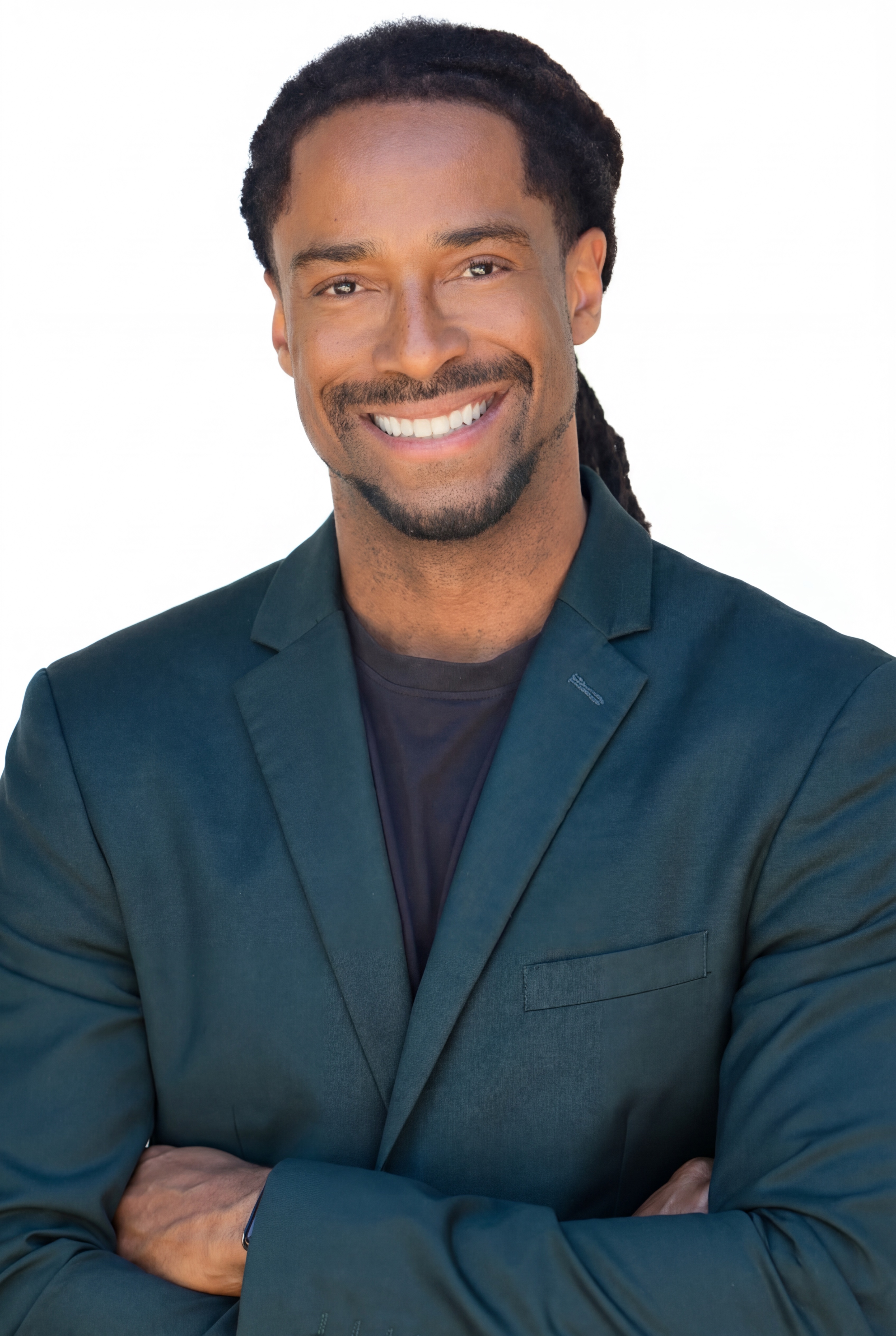
William “DJ Will Gill” Gilbert is a corporate event DJ, emcee, and working music curator whose 600+ corporate events include work for AT&T Business, CDW, Team USA, Virgin Galactic, NeoGenomics, Foot Locker, Home Depot, BGCA, and other Fortune 500 organizations. The principles in this guide instrumental priority for cognitive work, emotional priming via genre-matched playlists, scene-by-scene mood matching overlap directly with how Will constructs the playlists for the events he works, where music has to support specific emotional registers in real time. Will is recognized as the Wall Street Journal’s #1 Corporate DJ, a Forbes Next 1000 honoree, and has 2,520+ five-star reviews. Broadcast credits include Super Bowl LIV and The Voice 2011.

2,520+ Google Reviews · IMDB · Contact