
Why Song Selection Criteria Matters for DJs and Events (2026 Guide)

Song selection is the most underrated skill in DJing. The gear, the mixing, the stage presence, the lighting, all sit downstream of one question that gets answered hundreds of times across a single event: what plays next? Get the answer wrong consistently and the dance floor clears, the energy collapses, and the planner quietly notes never to book that DJ again. Get it right, and the room moves with you for hours, even when most guests could not name a single track played.
The skill is part science, part craft. The science comes from real research on how tempo, key, and familiarity move human emotion and behavior. A 2025 EEG study in Scientific Reports mapped how slow, medium, and fast tempos produce measurably different brain activity in listeners, and decades of work on dance music converge on 120 BPM as the human spontaneous motor tempo. The craft is everything that turns those data points into a real-time read on the room in front of you. This is how a working corporate DJ thinks about it.
DJ Will Gill performing at corporate events. Contact him here to discuss your next event.
Key Takeaways
An event is a three-act arc: welcome, peak, wind-down. Each act has its own tempo target, its own energy profile, and its own kind of song selection mistake.
The science backs up the craft. 120 BPM is the human spontaneous motor tempo and the anchor of dance music, while slower tempos around 60-90 BPM measurably promote relaxation and faster tempos around 150-160 BPM drive arousal and movement.
Music-evoked nostalgia is one of the strongest social tools a DJ has. Research consistently shows nostalgic music enhances social bonding, reinforces shared identity, and triggers autobiographical memory in ways that connect a room across age groups.
The “do not play” list is half the job. The fastest way to lose an audience is one wrong song, especially in a corporate room with HR exposure and a multi-generational guest list.
Block programming (3-4 thematically connected songs in a row before transitioning) is how working DJs build energy without jolting the room. Random jumps between genres read as amateur, even when the individual songs are good.
1. The Three-Act Arc of a Great Event
Every event with music has the same underlying structure, whether it is a wedding reception, a sales kickoff afterparty, a private milestone birthday, or a corporate awards gala. Guests arrive. Energy builds toward a peak. Energy resolves toward an ending. The DJ’s job is to score that arc so it feels inevitable instead of accidental.
A song that lands perfectly in act three would clear the floor in act one. The same track that built peak energy at 10 p.m. would feel aggressive at 7 p.m. when guests are still finding the bar. Song selection without arc-awareness is just a playlist on shuffle.
A working DJ separates the night into segments, assigns a tempo and energy range to each segment, and then chooses songs from within that range. Everything else follows from there.
2. The Welcome: Lower BPMs, Conversation Tempo
The opening hour is the easiest hour to over-DJ. Guests are arriving, getting drinks, finding their tables, talking. They do not want to shout over a club banger. They want music that signals “the night has started” without demanding they engage with it.
The science supports a softer opening. The normal human heartbeat sits between 60 and 100 BPM, and tempo around 90 BPM tends to induce relaxation. That is the cocktail-hour range. Mid-tempo soul, classic groove, smooth funk, neo-soul, light Latin, jazz-adjacent house. Recognizable, melodic, vocal-driven, never demanding.
The signal you want to send in the welcome window is “we are glad you are here, settle in.” Loud, aggressive, or genre-specific tracks here read as ignoring the room. A skilled DJ will resist the urge to push energy until guests are seated, fed, and ready to be moved.
3. The Peak: 120 BPM Is Not an Accident
The reason dance music gravitates toward the 118 to 128 BPM range is biological, not stylistic. Research on tempo memory and motor synchronization places spontaneous motor tempo at roughly 120 BPM, with preferred listening tempo for unknown music landing between 109 and 130 BPM. People naturally tap, walk, and move at this rate. Music that sits in that band feels easier to dance to because it matches what the body already wants to do.
Push too far below that band and the floor drags. Push too far above and only the experienced dancers stay. The peak window for most corporate events lives in the 115 to 128 BPM zone, with brief spikes higher when the room is at maximum energy and a planned “moment” needs to land. Frontiers research on movement and music places fast-tempo activation in the 150-160 BPM range, useful sparingly, not as a steady state.
The peak is also where genre breadth pays. A corporate room with Boomers, Gen X, Millennials, and Gen Z all in front of the same booth needs a mix that pulls songs from every decade those guests grew up dancing to. The BPM stays consistent. The era rotates.
4. The Wind-Down: Nostalgia as a Closing Tool
The last 20 to 30 minutes of a great event do not crash. They glide. The trick is that wind-down music is not just “slower” music. It is emotionally specific music, almost always nostalgic, that lets guests file out feeling warm rather than abruptly cut off.
Nostalgia is one of the most studied tools in music psychology. A 2022 narrative review by Sedikides, Leunissen, and Wildschut concluded that music-evoked nostalgia consistently enhances social connectedness, perceived meaning, and self-esteem. A 2025 Scientific Reports study found nostalgic songs deeply tied to personal experience produce stronger autobiographical memory and well-being effects than songs without that emotional anchor.
Translated into DJ terms: the right closing songs make the room feel like the night meant something. Don’t Stop Believin’ isn’t a wedding cliché by accident. Sweet Caroline isn’t a corporate party staple by accident. Both songs trigger collective autobiographical memory across a wide age range, which is exactly what you want when you are sending people back to their hotel rooms or their cars.
The wind-down is also when the planner remembers the DJ. End sharp or end uncomfortable and the rest of the night fades. End right and the booking gets cited internally for months.
5. Knowing the Audience: Era, Demographics, Energy Profile
Reading a crowd in real time is the headline skill, but the prep work happens before the event. The DJ needs three pieces of information about every audience before any song hits the speakers.
Era. What years are the guests most likely to remember as their dancing years? A 50th anniversary crowd has its emotional center in Motown, classic R&B, and 70s rock. A Gen X conference crowd lives in 90s alternative, 90s hip-hop, and early 2000s pop. The corporate room with all of the above sitting in it needs the DJ to rotate eras strategically, not pick one decade and stay there.
Demographics. Today’s corporate audience is the most age-diverse working room in history. Five generations are now working side by side, which means a single sales kickoff dance floor can hold a 22-year-old rep and a 58-year-old SVP at the same time. The DJ’s job is to find the songs that move both of them, not to pick the side they prefer playing for.
Energy profile. Some rooms are dancers. Some rooms are not. A pharma sales kickoff and an enterprise software user conference can have identical demographics and wildly different willingness to be on a dance floor. A pre-event call with the planner reveals this in five minutes. Skipping that call and finding out at 9:30 p.m. is amateur.
6. Event-Type-Specific Selection
The same song that works for one event format can be wrong for another. Quick reference on what shifts.
Corporate events. Clean edits, HR-safe lyrics, multi-generational genre balance, instrumental tracks during networking, branded audio cues where useful, energy ramps tied to the run of show. The DJ is supporting business outcomes, not putting on a personal show.
Weddings. Highly personalized. Must-play lists from the couple. Family-specific moments (the parent dances, the heritage segment, the cultural traditions). Wedding DJs live on the emotional arc more than any other format, because the day itself has a built-in narrative.
Private parties. Looser, more host-driven. The host’s musical taste is the brief. The DJ’s job is to satisfy that taste while still keeping a room of mixed guests engaged.
Galas and awards ceremonies. The music is almost entirely service music. Walk-in beds, walk-up cues per honoree, scene transitions, applause swells. The DJ is closer to a film composer than a club DJ.
7. The “Do Not Play” List Is Half the Job
Every great DJ has a strong yes list. The professionals also have a sharper no list. Especially in corporate settings, the wrong song will do more damage than 10 right songs can repair.
The “do not play” list usually includes any track with explicit lyrics, any artist with a recent controversy that puts the host company in an awkward position, any song with sexualized hooks even in clean edit form, and any song tied to a specific cultural or political moment that could read as tone-deaf in the room.
This matters more than it used to. The EEOC’s 2024 Enforcement Guidance on Harassment in the Workplace extended hostile-environment standards to work-related social events, which means anything coming out of a corporate event sound system is inside the company’s HR perimeter. A radio edit is not always enough. The vetting standard for corporate work is higher than the vetting standard for a club, and the songs that pass that bar are a smaller subset than most non-corporate DJs realize.
A working corporate DJ keeps a running personal “do not play” list across hundreds of events. That list is part of the value of hiring someone with corporate experience instead of a generalist.
8. The Block-Programming Technique
Random jumps between genres feel jarring to listeners, even when each individual song is strong. The fix is block programming. Group 3 to 4 songs that share a tempo range, an era, or a sonic palette, play them as a small set, then transition into the next block.
An example for a corporate dance set: a 3-song late-80s/early-90s funk block at 110 BPM (Earth Wind & Fire, Kool & the Gang, Stevie Wonder), then a 4-song 2000s pop block at 115-120 BPM (Justin Timberlake, Beyoncé, Outkast, Usher), then a 3-song current pop block at 120-125 BPM (Bruno Mars, Dua Lipa, Doja Cat), then a 90s hip-hop pivot at 95 BPM (Notorious B.I.G., A Tribe Called Quest, Salt-N-Pepa).
Inside each block the room can settle into a vibe. Between blocks the transition is intentional. The audience does not have to mentally restart every three minutes. They get to ride the energy.
Most amateur DJs fail this. They play one big hit, lose confidence, jump to a completely different big hit, lose confidence again. The dance floor feels twitchy. Block programming is the single most effective fix.
9. The Five Filters Every Track Should Pass
Before any track gets played in a corporate or wedding setting, a working DJ has already run it through five quick filters in their head. Anything that fails one of these stays in the bag.
One. Does the BPM fit the current segment? Cocktail hour, dinner, peak, wind-down all have different windows. A 128 BPM track in a 90 BPM cocktail hour is wrong even if it is a great song.
Two. Are the lyrics HR-safe? Explicit content, sexualized hooks, slurs of any kind, content that could read as harassment-adjacent: all out. Clean radio edits handle most of this, but not all of it.
Three. Does the era serve the room? If 60% of the room has emotional anchors in the 1990s, pulling a 2024 deep cut is fine for one bookend song, not the next four.
Four. Does it move energy in the direction the arc needs? Up, hold, or release. A song that ramps energy when the arc needs to wind down is a bad choice even if everyone loves it.
Five. Is it on the do-not-play list? The host’s, the company’s, or the DJ’s. If yes, skip.
10. Song Selection as the Real Skill
Mixing two songs into each other smoothly is technique. Selecting the right two songs is judgment. The first can be taught in a weekend. The second takes years of reps and the willingness to be wrong in public until the instincts get calibrated.
The reason this matters to a planner, not just a DJ, is that the booking decision rarely turns on technical skill. It turns on whether the person behind the booth understands the room, the arc, and the audience well enough to make 200 selection decisions in a row without breaking the spell. That is invisible work, and it is the work that separates a memorable event from a forgettable one.
When evaluating DJs, the right question is not “what songs do you play.” The right question is “tell me how you would handle a 250-person sales kickoff in Atlanta at 9 p.m. with a 25-to-65 demographic and a CEO who hates Top 40.” The answer to that question reveals more about whether the booking will work than any demo mix ever could.
About the Author
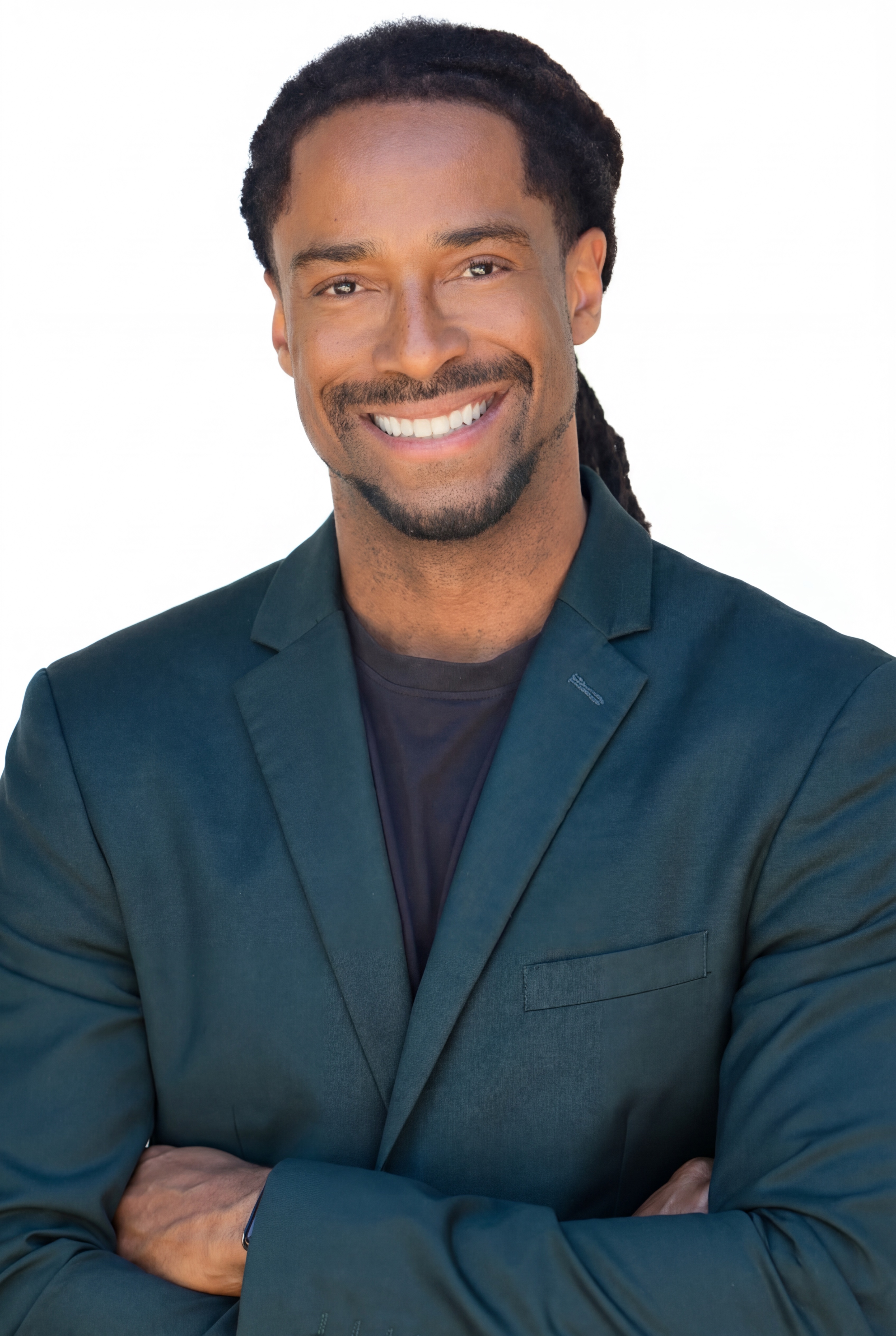
William “DJ Will Gill” Gilbert is a corporate DJ and host who uses music, live interaction, and audience participation to keep events engaging from beginning to end. He has performed at more than 600 corporate events and has been recognized by Forbes Next 1000 and The Wall Street Journal. His client work includes events for AT&T Business, CDW, Team USA, Virgin Galactic, Home Depot, Hilton, PepsiCo, PayPal, and the United Nations. He also has IMDb credits connected to Super Bowl LIV, The Voice, and Real World: Hollywood. Outside of live events, Will is the founder of TheAIDJ.com, a patent-pending AI playlist platform created for modern music curators.
2,520+ Google Reviews · IMDB · Mixcloud · Instagram ·