
Why Music Curation Is the Next Big Skill for DJs (2026)
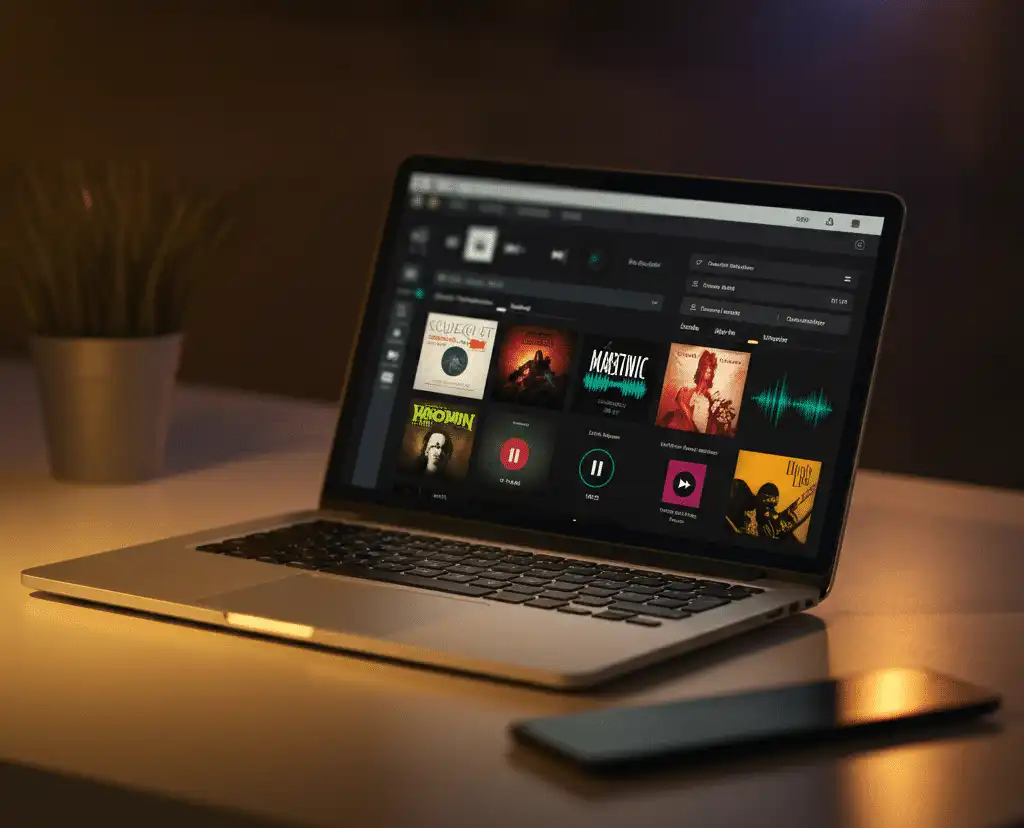
Music curation has emerged as the defining professional skill for working DJs in 2026. Technical skills, beatmatching, scratching, and software fluency remain table stakes, but they no longer differentiate one DJ from another the way they did 15 years ago. In a streaming-era market where Spotify’s algorithms generate effectively unlimited playlists at zero cost, the working DJ’s value sits in the curatorial judgment that algorithms cannot replicate: which tracks belong together, which moments need which energy, what a specific audience needs that no algorithm has data on, and what a track’s third-best version sounds like rather than its first-pass radio cut. The DJs who develop this skill build career trajectories that survive the streaming era; the ones who don’t compete on price against home setups.
This guide breaks down what curation skill actually means as a discipline, which working curators are worth studying, how to develop the skill systematically, and how the discipline translates specifically to corporate event work. DJ Will Gill was given a title by the Wall Street Journal as the #1 Corporate DJ and Emcee for boosting company morale, with documented curation work for AT&T Business, CDW, Team USA, Virgin Galactic, Home Depot, Hilton, BGCA, PepsiCo, PayPal, and the United Nations. 2,520+ five-star Google reviews document the operational standards.
Key Takeaways
→ Curation has become the differentiating skill because technical DJ proficiency has commoditized. Software like Serato, Rekordbox, and Virtual DJ has made beatmatching, key matching, and basic mixing accessible to anyone. The remaining differentiator is what tracks the DJ selects and how they’re sequenced. The market reward now goes to curators, not technicians.
→ Streaming-era data confirms the demand for human curation persists despite algorithm dominance. IFPI’s 2024 industry data documented streaming as the largest revenue source for recorded music globally, but the same data shows live music and event-specific music programming remain economically distinct from on-demand streaming consumption, confirming that audiences value curated live experiences differently from algorithmic personal listening.
→ Curators worth studying have built sustained careers on selection judgment, not technical novelty. Gilles Peterson’s Brownswood Recordings and Worldwide FM platform have anchored a 30+ year career built on curatorial judgment across jazz, soul, electronic, and Latin music. The Blessed Madonna (Marea Stamper) has built her platform on cross-genre selections spanning disco, house, techno, and indie. The pattern is consistent: sustained DJ careers in 2026 are built on curation, not technique.
→ 2025 research validates nostalgia as a high-leverage curatorial tool that algorithms underweight. A May 2025 PLOS One study by Sidhu, Urian, Zheng, and Grahn found nostalgic music significantly outperformed merely familiar music for dance engagement. Algorithms optimize for familiarity (what the listener has heard before); skilled curators deploy nostalgia (what carries emotional weight from the listener’s formative years) a distinction the algorithm structurally cannot match.
→ Corporate event DJing is where curation skill produces the highest economic return. Corporate clients pay for the judgment that calibrates music to specific brand contexts, mixed-demographic audiences, and program-flow requirements, none of which an algorithm has signal on. 2024 corporate event entertainment data documented atmosphere as the primary satisfaction factor for 82% of attendees, and atmosphere is what skilled curation directly produces.
Watch the curation-plus-execution discipline at Fortune 500 corporate events. For corporate event consultation, contact DJ Will Gill directly.
Why Curation Has Become the Differentiator
The Commoditization of Technical Skill
The software-democratization shift. DJ software innovation across the past 15 years has made the technical baseline accessible. Serato, Rekordbox, Virtual DJ, and similar professional software now handle beatmatching, key matching, sync, and basic mixing automatically or near-automatically. A motivated beginner can produce technically competent mixes within months of work that previously required years of physical-deck practice. The technical baseline has commoditized; everyone above amateur level meets it. The market differentiator has moved upstream to selection judgment.
The Algorithm-Saturation Context
The streaming-era reality. Spotify, Apple Music, Tidal, and Amazon Music generate effectively unlimited algorithmic playlists at near-zero marginal cost. Any consumer can press play on a Discover Weekly mix or a “Beast Mode” workout playlist and get something competent. The question for working DJs becomes: what do you offer that the algorithm doesn’t? The answer is curatorial judgment selections that the algorithm structurally cannot make because the algorithm has no context about this specific room, this specific moment, this specific brand, this specific audience.
The Storyteller Role
Beyond track-stringing. The skilled curator constructs a narrative arc across a set opening, building, peaking, releasing, and rebuilding. The track sequence carries the audience emotionally through the event, with selections calibrated to amplify what the program is trying to communicate. This is the storytelling discipline that distinguishes curators from technicians. The technician can execute clean transitions; the curator decides which transitions matter.
What Curation Skill Actually Means as Discipline
Library Depth and Breadth
The catalog work. The curator’s first asset is the music library accumulated over years of active listening, dug from labels, blogs, radio shows, peer recommendations, DJ pools, and direct artist outreach. The library isn’t measured by track count alone; what matters is the depth across genres, eras, and contexts the curator can actually deploy. A 50,000-track library where the curator knows only 5,000 well is functionally a 5,000-track library. The discipline is intimate familiarity with the catalog, not just possession of it.
Contextual Judgment
The room-reading layer. Contextual judgment is reading the specific moment what this audience needs right now, given everything happening in the room, what just happened, what’s about to happen, and what the program goal is. This is a judgment the algorithm cannot make because the algorithm has no real-time data on room energy, body language, conversation density, demographic mix, or program cues. The curator integrates all of these continuously throughout a set.
Cross-Genre Cultural Fluency
The connection-making craft. Skilled curation makes connections across genres, eras, and cultural contexts that audiences experience as revelatory. A funk break threaded into a hip-hop set; a disco vocal under a house production; a soul throwback that bridges 70s and 2010s aesthetics. These connections require fluency across multiple musical traditions and the judgment to know which connections will land. This is the cultural knowledge layer that separates the working curator from the algorithmic generator.
The Streaming-Era Context for Curators
The Filter-Bubble Problem
The algorithmic limit. Streaming algorithms recommend tracks similar to what the listener has already engaged with. This is excellent for personal-listening discovery, but produces filter-bubble narrowing; listeners increasingly hear variations on what they already like, rather than encountering true cross-genre discovery. The human curator’s job is to break the bubble to introduce tracks the listener wouldn’t have found through algorithmic recommendation, calibrated to widen rather than narrow musical experience.
Event Music vs. Personal Listening
The use-case difference. Streaming algorithms are calibrated for individual personal listening, a single listener engaging with a single device for hours. Event music operates in a fundamentally different context, shared listening across an audience, calibrated to the moment, designed to produce collective response. The skills that produce great personal-listening recommendations are not the same skills that produce great event music. Working DJs operate in the event-music context, where algorithm-style recommendations don’t transfer.
The Curator Trust Economy
The reputation asset. Working curators build audiences that trust their selection judgment. Listeners follow the curator’s recommendations because the curator has earned the trust through consistent quality over time. This is structurally different from algorithmic recommendation, which generates per-listener personalized output without any sustained trust relationship. The curator-as-trusted-source is the economic model that survives the streaming era for working DJs.
Working Curators Worth Studying
Gilles Peterson
The Worldwide model. Gilles Peterson has built one of the longest sustained DJ careers in the industry on curatorial judgment across jazz, soul, electronic, Latin, and adjacent genres. His Brownswood Recordings label, his Worldwide FM platform, and his radio work establish him as a tastemaker rather than a technician. His career model is instructive for working DJs: deep specialization in a curatorial point of view, sustained platform-building around that point of view, and direct artist relationships that produce ongoing access to material. The trajectory is platform-builder rather than performer-only.
The Blessed Madonna
The cross-genre energy model. The Blessed Madonna (Marea Stamper) has built her platform on bold cross-genre selections spanning disco, house, techno, and indie. Her sets are recognized for surprising track choices that nonetheless land the kind of selection courage that distinguishes curators from algorithm-style operators. Her trajectory demonstrates that a curatorial point of view can be commercial without compromising the curatorial integrity that produced the point of view in the first place.
Other Curator Models
The broader landscape. Beyond these two examples, the working-DJ landscape includes many other curators worth studying, radio DJs who built careers on selection (NTS Radio, BBC Radio 6 Music regulars), label-builders who package curation into release strategies (Stones Throw, Strut, Music From Memory), and the editorial teams at Spotify, Apple Music, and Tidal who shape playlist culture at platform scale. The discipline is observational, watch what curators select, listen for what makes the selections work, and absorb the judgment over time.
Building Your Own Curation Practice
The Weekly Discovery Rhythm
The compounding habit. Curation skill compounds through sustained discovery practice, listening to new releases weekly, scanning multiple sources (DJ pools, Bandcamp, radio shows, label releases, peer recommendations), and pulling tracks into a candidate library continuously. The DJs who develop curation skills fastest are the ones who treat discovery as a discipline rather than inspiration-driven. Monday morning Discover Weekly, Friday Release Radar, biweekly genre-flagship editorial review, and ongoing peer trade, the practice builds over the years.
Library Organization Discipline
Beyond genre tags. The professional library organizes tracks by deployment context rather than just genre, moods, energy levels, instruments, decade, or program moments. A track is filed under “warm-up cocktail,” “dance-floor build,” “peak moment,” “recovery transition,” or similar functional categories. The organization makes the library searchable by what the curator needs rather than just by what the artist made. This is the operational backbone of professional curation.
Narrative Practice Through Mini-Sets
The practical exercise. The discipline that builds narrative judgment is creating mini-sets of three to five tracks designed to tell a coherent story emotionally or energetically. Mini-sets force the curator to make the storytelling choice rather than just track-stringing. Over time, mini-sets become the building blocks of full sets, and the narrative judgment becomes intuitive. This is one of the highest-leverage practice approaches for working DJs trying to develop curation as a skill.
The Corporate DJ Curation Specialty
Brand-Tone Calibration
The corporate-specific overlay. Corporate DJ curation adds a brand-tone layer that consumer-facing DJ work doesn’t require. The curator calibrates selections to the corporate client’s brand voice, formal versus playful, traditional versus modern, conservative versus boundary-pushing. A pharmaceutical company event runs a different musical tone than a startup all-hands, than a fashion launch, than a financial services awards gala. The skilled corporate curator absorbs the brand context as a constraint on selection rather than a barrier to creativity.
Mixed-Demographic Execution
The audience-composition challenge. Corporate audiences span generations within single events, executives in their 50s and 60s, mid-career in their 30s and 40s, junior staff in their 20s. The curator’s job is to find selections that land across these generations rather than serving any one cohort exclusively. The 2025 nostalgia research validates the value of cohort-anchor tracks across the audience spread material the older cohort remembers from their formative years, plus material the younger cohort recognizes as cultural mainstream.
Program-Flow Fit
The schedule-integration discipline. Corporate events run on tight schedules with specific cues for executive walk-ons, awards segments, breaks, dinner, and dance segments. The curator maps music selections to program flow rather than treating the music as a standalone set. 2026 corporate event KPI analysis frames attendee satisfaction as the single most important success indicator, and program-flow-fit curation is among the most direct contributors to that satisfaction.
Tools and Workflow for Modern Curation
Professional DJ Pools
The licensed-catalog layer. BPM Supreme, DJcity, ZIPDJ, and other professional DJ pools provide licensed DJ-edited catalog radio edits, clean versions, intro-extended remixes specifically for commercial DJ performance. These subscriptions are operational infrastructure for working corporate DJs, distinct from consumer streaming subscriptions, which don’t grant public performance rights. The skilled curator runs Spotify-tier discovery and DJ-pool-tier licensing in parallel.
Streaming Platforms for Discovery
The research layer. Spotify, Apple Music, Tidal, and Bandcamp serve as research tools for the curator surfacing new releases, editorial team-curated playlists, regional chart data, and algorithmic recommendations that feed candidate libraries. The September 2025 Serato-Spotify integration tightened this workflow for Serato users. The skilled curator uses streaming as the discovery infrastructure that feeds licensed performance through DJ pools.
Radio Shows and Label Releases
The deep-cut sources. Curator-led radio shows (NTS Radio, BBC Radio 6 Music, Worldwide FM, Rinse FM) and specialist labels (Stones Throw, Strut, Music From Memory, Brownswood, dozens of others) provide the depth that streaming algorithms underweight. The serious curator builds a discovery rhythm that includes these sources, which are where the cross-genre and historical depth come from.
Measuring Your Curation Growth
The feedback discipline. Curation skill develops through deliberate feedback recording sets, listening back critically, observing which selections landed and which fell flat, and tracking client and audience feedback over time. The DJs who develop fastest are the ones who treat their own work as data to analyze rather than performances to celebrate. Recording every set, reviewing within 48 hours, and noting which selections produced the response is one of the highest-leverage practices for building curation judgment systematically.
Peer Curator Trade Relationships
The community-learning layer. Peer curators are among the best sources of discovery DJs trade tracks, mixes, and recommendations continuously. The skilled curator builds relationships with peers whose taste they respect, exchanges material with them regularly, and absorbs the discovery flow as part of ongoing practice. Isolation is the curator’s enemy; community is the catalyst.

About the Author
William “DJ Will Gill” Gilbert is the Wall Street Journal’s #1 Corporate DJ and Emcee, delivering integrated music curation as the bundled DJ-plus-emcee-plus-audience-engagement service at Fortune 500 scale. Documented client work for AT&T Business, CDW, Team USA, Virgin Galactic, NeoGenomics, Foot Locker, Home Depot, Hilton, BGCA, PepsiCo, PayPal, and the United Nations. Also a Forbes Next 1000 honoree with broadcast credits including Super Bowl LIV (2020), The Voice (2011), and MTV’s The Real World: Hollywood (2008). 2,520+ five-star Google reviews accumulated over 600+ documented corporate events.
2,520+ Google Reviews · IMDB · Mixcloud · Instagram · Contact