
Why an All Types of Songs Playlist Belongs in Your Library (2026 Genre Diversity Guide)
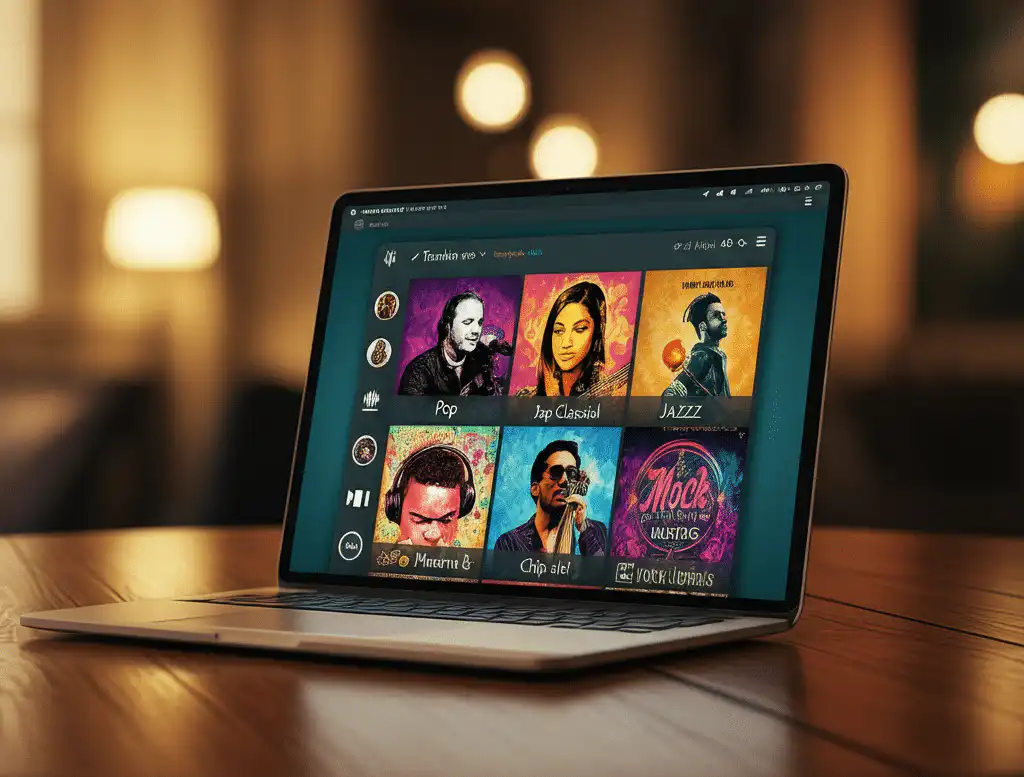
An “all types of songs” library isn’t about chaos. It’s about deliberate genre breadth, maintaining exposure to multiple musical traditions, eras, and styles rather than narrowing into a single comfortable lane. The cognitive science research on musical exposure documents real benefits beyond entertainment: genre-diverse listening engages broader neural networks, builds cross-cultural literacy, supports emotional regulation across a wider range of states, and produces social-connection advantages that single-genre listeners miss. The practice is also an infrastructure for anyone who hosts events, plans gatherings, or wants to be the person who can find common musical ground with anyone in the room.
This guide examines why genre-diverse music libraries matter in terms of the cognitive, cultural, and social benefits, the practical building strategies, and the professional application for corporate event work where audience composition demands maximum musical fluency.
Key Takeaways
→ Music engages multiple brain regions simultaneously, which is why genre diversity produces broader cognitive engagement than narrow genre commitment. Peer-reviewed research published in PLOS One in 2025 documented that music activates auditory cortex, limbic system, reward circuitry, and motor planning simultaneously. Different genres engage these networks in different proportions, so genre-diverse listening produces broader neural engagement than monogenre listening.
→ Music preferences correlate with personality traits in research-replicated ways. Rentfrow and Gosling’s foundational 2003 Journal of Personality and Social Psychology research identified four-dimensional structure of music preferences, with subsequent research showing that openness to musical diversity correlates with broader personality openness and cognitive flexibility. The relationship isn’t simply that flexible people listen broadly; sustained exposure to diverse music also appears to support broader cognitive engagement.
→ The modern music landscape actively rewards genre fluency. TikTok’s Year in Music 2025 documented 8 of the top 10 Billboard No.1 songs in 2025 had a viral TikTok moment before reaching the chart, with the viral content crossing genre lines constantly. Listeners locked into single genres miss substantial portions of the contemporary cultural conversation that flows across genre boundaries.
→ Streaming infrastructure has dissolved most of the historical barriers to genre diversity. IFPI’s 2024 Global Music Report documents streaming as roughly two-thirds of the $28+ billion global recorded music industry, with consumers having instant access to virtually all recorded music from any tradition. The infrastructure exists; the only remaining barrier is listener habit.
→ Genre breadth is professional-grade infrastructure for hosting and event work. 2024 corporate event research documented 82% of attendees citing atmosphere as the primary satisfaction factor. The atmosphere at multi-generational, multi-cultural events depends on the host’s or DJ’s ability to find musical common ground across audience segments, which requires genre fluency that single-lane listeners cannot deliver.
See genre-fluent DJ work operationalized across composite-audience corporate event contexts. To book corporate DJ services, contact DJ Will Gill directly.
Stop replaying the same songs.
Introducing TheAIDJ.com
AIDJ turns a plain-English request into a ready-to-play set, previews it instantly, and exports straight to Spotify. Discover music that actually fits the moment.
What an “All Types” Library Actually Means
The Genre-Diversification Concept
Deliberate breadth, not chaos. A genre-diverse music library isn’t one randomly assembled playlist with every style thrown together; it’s a library that contains substantial collections across multiple genre territories, with the listener maintaining active familiarity with each one rather than letting any territory atrophy. The deliberate-breadth framing matters because casual genre-diverse listening produces shallow exposure that fades quickly, while sustained engagement across genres builds the cognitive and cultural benefits the practice rewards. The library is the infrastructure; the engagement is the practice.
Breadth vs Depth Tradeoffs
The genuine tension. Genre breadth and within-genre depth are partly competing; every hour spent exploring K-pop is an hour not spent going deeper into jazz fusion, and vice versa. Strong genre-diverse listeners resolve the tension by maintaining 5-8 active genre territories at modest depth (knowing the major artists, key eras, signature tracks) rather than trying to achieve expert-level depth across 20+ genres or single-genre depth at the expense of everything else. The 5-8 territory model gives broad fluency without diluting any one territory into superficial recognition.
The Exposure Spectrum
From taste to fluency. Genre exposure exists on a spectrum: passive recognition (you know the genre exists and could name a few major artists), familiarity (you recognize anchor tracks and can identify the genre when you hear it), conversance (you can discuss the genre’s history, major moments, and current state), and fluency (you can deploy the genre’s vocabulary in your own thinking and conversation). Strong genre-diverse listeners aim for conversance across their active territories rather than full fluency in any one, with passive recognition extending to adjacent territories they don’t actively study but want to be able to identify.
What It Isn’t
Avoiding the misreads. Genre diversity is not random shuffling without curation that produces noise rather than meaningful exposure. It’s not algorithmic recommendations passively accepted; those tend to optimize for engagement metrics that narrow into familiar territory over time. It’s not collecting tracks from every genre without listening to them; passive accumulation doesn’t build the practice. And it’s not abandoning preferred genres for the sake of variety, strong genre-diverse listeners keep their core preferences while expanding outward. The discipline is additive, not substitutive.
Cognitive Benefits of Musical Diversity
Music Engages Multiple Brain Regions
The neuroscience baseline. Music processing involves the auditory cortex (sound interpretation), the limbic system (emotional response), the reward circuitry (pleasure and motivation), the motor planning regions (rhythmic entrainment and movement preparation), and verbal-processing areas when lyrics are present. The 2025 PLOS One research synthesized findings on the multi-region engagement. Different genres activate these networks in different proportions. Rhythm-dominant music engages motor planning more heavily, vocal-heavy music engages verbal processing more heavily, and harmonically complex music engages additional cortical regions. Genre-diverse listening exercises a broader range of these systems than single-genre listening does.
Genre Breadth and Cognitive Flexibility
The flexibility correlation. Research consistently finds that openness to musical diversity correlates with broader cognitive openness as a personality trait. The direction of causation is debated. Flexible thinkers may simply be drawn to musical variety as one expression of their underlying flexibility, or sustained exposure to diverse music may help train cognitive flexibility, or (most likely) both effects operate in parallel. Either way, the correlation is consistent enough that genre-diverse listening is associated with broader cognitive engagement patterns, whether the listener is using it as a cause or a symptom of the wider flexibility.
The Rentfrow Research on Preferences
The foundational personality work. Peter Rentfrow and Samuel Gosling’s 2003 Journal of Personality and Social Psychology research identified a four-dimensional structure to music preferences Reflective & Complex (jazz, classical, blues, folk), Intense & Rebellious (rock, alternative, metal), Upbeat & Conventional (pop, country, soundtrack), and Energetic & Rhythmic (rap, soul, electronica) with each dimension correlating with personality traits in measurable ways. Subsequent research has extended and refined the model. The practical takeaway for genre-diverse listeners: actively engaging with all four dimensions rather than locking into one or two produces broader self-understanding alongside the cognitive engagement benefits.
Music as an Emotional Regulation Tool
The regulation range. Music is a primary emotional-regulation tool for most listeners, used to elevate mood when low, to calm down when over-stimulated, to focus when distracted, to energize when fatigued. The range of regulation states the listener can access depends partly on the genre range available. A listener whose library is entirely high-energy electronic music has limited tools for calming down; a listener whose library is entirely ambient meditation music has limited tools for energizing. Strong genre-diverse libraries provide a broader range of regulation across the full spectrum of states the listener might need to access.
Cultural Benefits of Music as a Global Language
Cross-Cultural Musical Literacy
Music as a cultural document. Every musical tradition carries cultural information about the history, values, struggles, celebrations, and aesthetic preferences of the community that produced it. Listening to Brazilian samba teaches something about Brazilian culture that no other medium quite captures; engaging with West African Afrobeats does the same for that region; following the K-pop scene transmits Korean cultural information through its production aesthetics and lyrical themes. Cross-cultural musical literacy doesn’t replace direct cultural experience, but it builds a foundation for deeper engagement when the opportunity arises.
How Genres Carry Cultural Information
The transmission layer. Musical genres transmit cultural information through multiple channels simultaneously: rhythmic patterns reflect traditional dance and ceremony practices, instrumentation carries the history of available technology and trade networks, lyrical content addresses topics that mattered to the originating community, vocal styles transmit emotional norms and expressive conventions, and production aesthetics indicate the era and economic context the music was made in. A listener who attends to these layers across multiple genres builds substantial cross-cultural fluency without leaving home.
Examples: Samba, K-Pop, Afrobeats
Three working cases. Brazilian samba carries the syncretic religious history of Afro-Brazilian communities, the rhythmic complexity of West African polyrhythms transplanted across the Atlantic, and the social commentary that emerged through Carnival traditions. K-pop carries Korean cultural priorities around training discipline, group harmony, and aesthetic precision, plus the genre’s particular relationship with Korean modernization and global cultural ambition. Afrobeats transmits the contemporary West African urban experience, the regional dance tradition, and the cultural-export ambition of artists like Burna Boy, Wizkid, and Davido. Each genre rewards the listener who engages beyond surface recognition.
The Empathy-via-Music Research
The cross-group effect. Some research suggests that exposure to music from outside one’s own cultural background produces measurable shifts in attitudes toward the originating culture modest effects, but consistently in the direction of increased empathy and reduced out-group bias. The mechanism appears to involve music’s capacity to transmit emotional content across language and cultural barriers, providing access to shared human feeling even when explicit understanding is limited. Genre-diverse listening operationalizes this effect at scale across many cultural traditions simultaneously.
Common-Ground Building
The universal connector. Music is one of the most reliable conversational common-ground builders available. Virtually everyone has musical preferences they care about, virtually everyone has formative musical memories tied to specific tracks, and virtually everyone enjoys discovering that someone else shares their taste in something unexpected. The listener with broad genre fluency can find this common ground with almost anyone, while the single-lane listener is limited to people who share their specific lane. The asymmetry compounds across years of social interaction into meaningful relationship-building advantages.
Cross-Generational Connection
The bridge across decades. Genre fluency that spans multiple decades enables connection across generational lines that age-narrow musical tastes cannot reach. The grandchild who knows Motown can connect with grandparents around shared territory; the parent who follows contemporary pop can connect with teenagers without faking interest; the colleague who appreciates classic rock can connect with older coworkers around their formative music. Each cross-generational connection is a small social capital deposit that compounds over relationships, careers, and family contexts where shared musical reference produces warmer interaction than the narrowly-aged-in-genre alternative.
Hosting Versatility
The dinner-party advantage. Hosts who maintain genre-diverse libraries handle composite-audience hosting (the dinner party with mixed demographic guests, the work-and-friends gathering, the multi-generational family event) more reliably than hosts limited to one lane. The genre breadth means the host has appropriate material for whoever shows up, and the host’s familiarity across genres makes deployment confident rather than tentative. Single-lane hosts either commit to their lane and alienate non-matching guests or default to algorithmic playlists that feel impersonal, both producing weaker hosting outcomes than genre-fluent hosting delivers.
The Corporate Event Reality
The professional-tier requirement. Corporate events almost always have a composite audience composition, multiple generations, multiple cultural backgrounds, multiple departmental or functional groups, and often multiple national origins. Genre fluency is professional infrastructure at this tier, not optional polish. Working corporate DJs maintain genre libraries spanning every major contemporary and classic genre because any given event might need any of them, and the inability to deliver appropriate material across the audience is a professional failure mode the corporate-event tier doesn’t tolerate. The discipline scales from personal genre-diverse listening into professional-grade event execution.
How to Build Genre Diversity Into Your Library
The One-New-Genre-Per-Week Practice
The structured expansion approach. A reliable diversification practice involves explicit weekly exposure to one new genre or sub-genre, with 30-60 minutes of focused listening to anchor artists and signature tracks. The structure matters because casual exposure without commitment tends to fade quickly. The listener hears something interesting, doesn’t follow up, and the new territory never enters the active library. Structured weekly exposure across 12 months builds 52 new territories at a minimum, with the strongest 10-15 sticking as ongoing engagement areas. The compounding across years produces substantial genre fluency from modest weekly investment.
Streaming Service Discovery Features
The infrastructure now available. Modern streaming services have invested substantially in discovery features, such as Spotify’s “Discover Weekly,” Apple Music’s “New Music Mix,” YouTube Music’s “Discover” feed, Tidal’s editorial playlists, and Bandcamp’s curatorial discovery tools. These features can serve genre-diversification practice if used deliberately, rather than passively; the listener actively explores recommendations outside their comfort zone rather than only engaging with familiar territory. The infrastructure removes most of the historical friction in cross-genre exploration; the only remaining work is the listener’s intentional engagement.
Friend and Community Recommendations
The human-curated layer. Algorithmic discovery produces decent results but tends to optimize for predictability, which means the listener gets variations on their existing taste more often than genuinely new territory. Friend recommendations and community-curated lists (subreddits, music forums, Discord servers focused on specific genres) provide qualitatively different exposure; the human curators have actual taste they’re transmitting rather than engagement metrics they’re optimizing. Strong genre-diverse libraries integrate both algorithmic and human-curated sources rather than relying on either one exclusively.
Letting the Algorithm Work Without Owning You
The maintenance discipline. Streaming-service algorithms slowly narrow recommendations based on engagement signals, which means a listener who passively accepts every recommendation drifts into narrower taste over time, even if they started with breadth. Counter-disciplines include deliberately playing material outside the algorithm’s recommendations (to keep the signal noisy), regularly clearing or resetting recommendation histories, using multiple streaming services with separate signal histories, and following human-curated playlists outside the algorithm’s preference inference. The discipline keeps the algorithm useful without letting it determine the listener’s musical horizons.
The Modern Music Landscape Favors Breadth
The new discovery infrastructure. TikTok’s Year in Music 2025 documented that 8 of the top 10 Billboard No.1 songs in 2025 had viral TikTok moments before reaching the chart. The platform’s For You Page algorithm exposes users to musical content far outside their existing preferences as a feature rather than a bug, with viral moments routinely crossing genre boundaries (country tracks going viral with hip-hop audiences, K-pop reaching audiences who don’t normally engage with the genre, regional Mexican music breaking into mainstream English-language markets). The platform has become a substantial driver of genre diversification at a population scale.
Streaming Infrastructure Removes Barriers
The historical context shift. Twenty years ago, exploring a new genre required buying albums on faith, finding compilation CDs, or relying on radio formats that played only narrow slices of any genre. Today, virtually every major streaming service offers instant access to comprehensive catalogs across virtually every genre tradition, often with editorial curation and historical context. IFPI’s 2024 industry data documents streaming dominance of the global music economy. The infrastructure barriers to genre diversification have substantially collapsed; the remaining barrier is listener habit.
The End of Genre Tribalism
The cultural shift in progress. Older generations frequently treated genre commitment as identity, being “a rock fan” or “a hip-hop fan,” carrying social signaling that distinguished one’s musical community from rivals. Modern listeners, especially younger ones, increasingly treat genre as one variable among many rather than as an identity-defining commitment. The shift is partly driven by streaming’s removal of access barriers and partly by TikTok-era cross-genre virality. Genre tribalism still exists but is weaker than in prior eras, which makes genre-diverse listening more socially supported than it used to be.
What Audiences Expect in 2026
The expectation calibration. Audiences in 2026 expect musical breadth as a baseline rather than as exceptional polish at parties, at corporate events, in shared listening contexts, and in personal-recommendation conversations. The host who can only deliver one genre, the DJ who can only work one lane, the friend who only listens to one type of music, these are all somewhat dated profiles compared to the genre-fluent norms current audiences expect. The standard has shifted, and continuing to operate from the older single-lane assumption produces increasingly noticeable mismatches with audience expectations.
Professional Application
Why Corporate DJs Need Maximum Genre Fluency
The composite-audience reality. Corporate events almost universally feature composite audiences, multiple generations, multiple cultural backgrounds, multiple functional groups within the company, and often multiple national offices. Single-genre DJ work fails reliably in this context because no single genre will engage the full audience composition. Corporate DJs operate from genre libraries spanning every major contemporary and classic territory because any given event might require any combination of them, and the inability to find common musical ground across the audience produces visible event failures that the corporate-event tier doesn’t tolerate.
The Mixed-Audience Advantage
What broad libraries enable. A genre-fluent corporate DJ can deploy a 4-hour set that engages every audience segment, opening with sophisticated jazz-influenced material for the executive cocktail hour, transitioning through Motown classics that bridge generational lines, hitting peak energy with contemporary pop and hip-hop crossovers, working in Latin and Afrobeats material for international guests, and closing with sing-along anthems spanning decades. Single-lane DJs cannot construct this arc; genre-fluent DJs make it look effortless. The technical work isn’t visible to the audience, but the resulting engagement is.

About the Author
William “DJ Will Gill” Gilbert is an American DJ & Emcee who has documented client work for AT&T Business, CDW, Virgin Galactic, NeoGenomics, Foot Locker, Home Depot, Hilton, BGCA, PepsiCo, PayPal, and the United Nations. Also a Forbes Next 1000 honoree with broadcast credits including Super Bowl LIV (2020), The Voice (2011), and MTV’s The Real World: Hollywood (2008). He is also a World Cup performer and a Formula 1 Las Vegas Grand Prix performer. 2,520+ five-star Google reviews accumulated over 600+ documented corporate events.
2,520+ Google Reviews · IMDB · Mixcloud · Instagram · Contact
Frequently Asked Questions
What is an all types of songs library?
Deliberate genre breadth across traditions, eras and styles rather than narrowing into one comfortable lane.
Are there cognitive benefits?
PLOS One research in 2025 found music activates auditory cortex, limbic system, reward circuitry and motor planning at once, and genre diversity engages those networks more broadly.
Do music preferences reflect personality?
Rentfrow and Gosling's 2003 research identified a four-dimensional structure of preferences, with openness to musical diversity linked to cognitive flexibility.
What are the cultural benefits?
Cross-cultural musical literacy, since genres carry cultural information.
Why does it matter for event work?
Corporate audiences demand maximum musical fluency to find common ground with everyone in the room.