
What Is Warm Up DJ Music? | DJ Will Gill
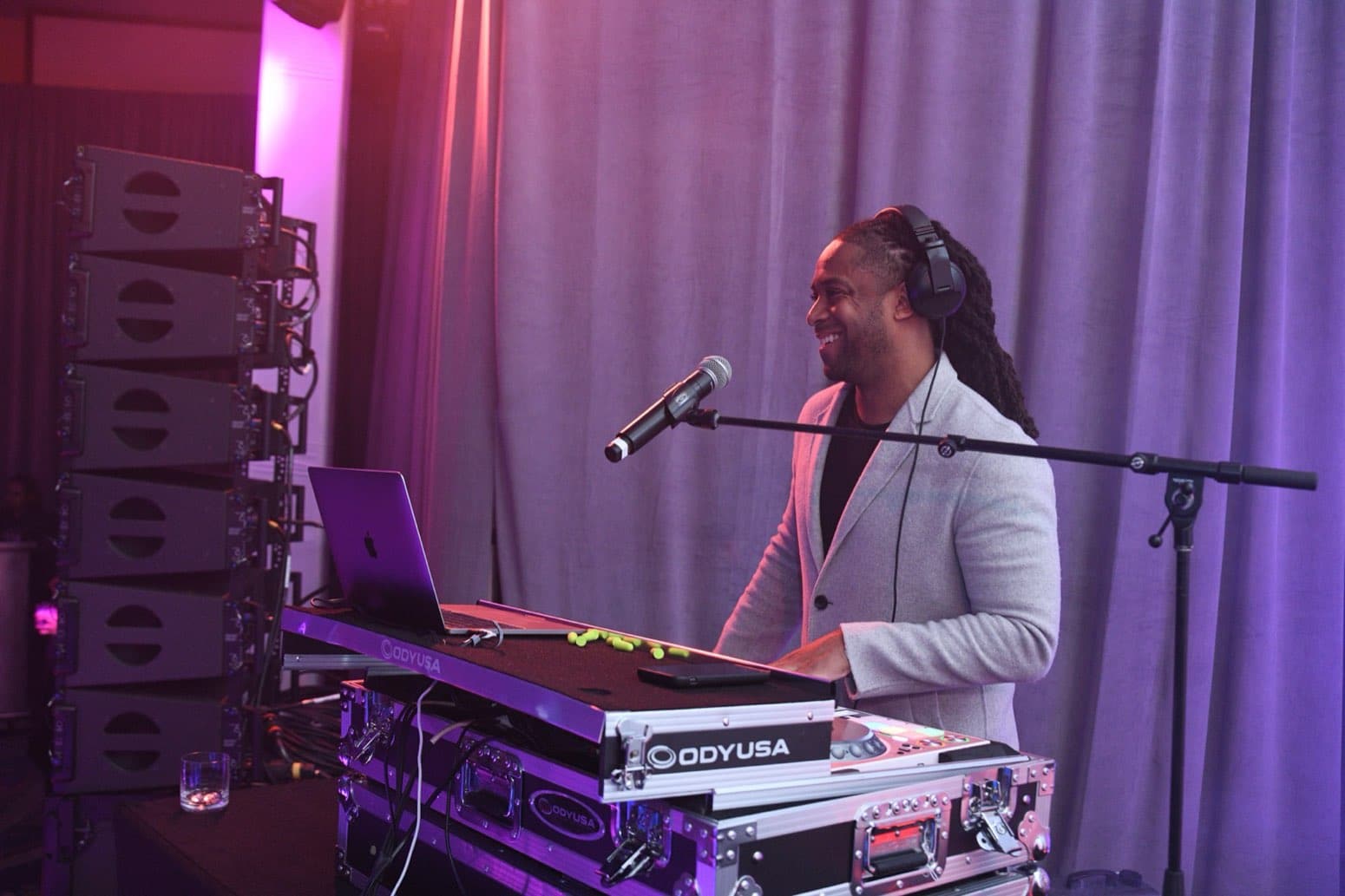
What is warm-up DJ music? It is one of the most underappreciated and misunderstood elements of professional DJing and it is also one of the most consequential. The warm-up set is the first impression an audience receives of the event’s entertainment, and it dictates whether the crowd arrives energetically primed for peak-time performance or whether the main act has to spend the first 20 minutes of their set trying to recover a room that was never properly prepared. Done right, a warm-up set is invisible the crowd barely registers it consciously, but they feel its effect in how naturally they move from arrival and mingling into full engagement. Done wrong, a warm-up set creates friction that takes significant time and skilled recovery to overcome.
This guide covers what warm-up DJ music actually is at a professional level, why it matters across event formats, how it differs fundamentally from peak-time performance, and exactly how to execute a warm-up set that sets the headliner or the main program up for maximum impact.
Nail the warm-up with a set that eases in.
Introducing TheAIDJ.com
Warm-up music sets the whole night’s tone. Tell AIDJ you want a low-key opener that builds, preview the flow, and export the playlist. The easy way to start a room right.
Key Takeaways
Warm-up DJ music is not simply quieter or slower music played before the main act it is a deliberate, skill-intensive performance designed to gradually build crowd energy, establish the event’s sonic identity, and prepare the audience for peak-time engagement. The distinction between a well-executed warm-up and background music filler is the intentionality behind the set.
Tempo calibration is the most important technical tool in a warm-up set. Research published in the Psychology of Music journal confirms that music tempo has a direct, measurable effect on listener arousal and energy making BPM progression the warm-up DJ’s primary lever for crowd energy management.
The warm-up DJ’s most critical job is to serve the next act or program element not to showcase their own performance capabilities. A warm-up DJ who peaks the crowd too early or plays the headliner’s signature tracks makes the next act’s job significantly harder. Self-restraint and program awareness are defining characteristics of professional warm-up performance.
According to the Event Marketer Industry Census 2024, 84% of corporate event planners cite entertainment that feels tailored to their specific audience as a top factor in vendor rehiring decisions and the warm-up set is where that tailoring is most visible to experienced event professionals.
At corporate events specifically, the warm-up set is often the cocktail hour or pre-program music the moment where guests arrive, form first impressions of the event experience, and begin the social calibration that determines how engaged they will be for the rest of the evening. Getting this right is not a minor detail; it is foundational to the event’s overall success.
“The warm-up set is the most selfless job in DJing. Your entire goal is to make the room better for whatever comes next whether that’s a headliner, a keynote, or the peak-time entertainment segment. The DJs who truly understand that are the ones event planners call back every year.”
What Is Warm-Up DJ Music, Exactly?
Warm-up DJ music is the curated musical performance that precedes the main entertainment or peak-time portion of an event. Its defining purpose is to progressively elevate the audience’s energy level, social engagement, and emotional readiness from the baseline state of arrival to the heightened state of full participation without prematurely reaching the peak that the main act or primary entertainment segment is intended to deliver.
The term “warm-up” is literal: the goal is to raise the temperature of the room incrementally, the way you would warm up a physical space steadily and purposefully, not all at once. The warm-up DJ or warm-up set is not a lesser version of peak-time entertainment; it is a structurally different performance with its own skill set, its own success metrics, and its own contribution to the event’s overall experience architecture.
At corporate events, the warm-up context most commonly maps to the cocktail hour or pre-program reception the period where guests arrive, network, and form their first impressions of the event. In club and festival contexts, the warm-up DJ is the artist who precedes the headliner, responsible for filling the room and building crowd energy without depleting the anticipation the headliner needs to make an entrance. In both contexts, the same fundamental principle applies: the warm-up serves the overall program, not the individual DJ’s performance ego.
Why Warm-Up Music Matters More Than Most DJs Realize
The warm-up set’s contribution to event success is disproportionate to the attention it receives. Because its effects are felt rather than consciously registered, event attendees rarely credit the warm-up DJ specifically but they absolutely register when it goes wrong. A poorly executed warm-up creates a dissonant first impression that colors how guests experience everything that follows. A well-executed warm-up creates conditions where the audience is naturally open, socially engaged, and emotionally primed for the peak-time experience.
Research from the Psychology of Music journal on music and social behavior confirms that environmental music significantly influences listener arousal, social openness, and willingness to engage with strangers in shared social spaces. This is the scientific foundation for what experienced DJs have long observed in practice: get the warm-up music right, and the crowd socializes more freely, stays longer, and arrives at the peak-time portion of the event in a more receptive state. Get it wrong, and the crowd is harder to move, more resistant to engagement, and less likely to sustain energy through the full event.
For corporate event planners, this translates directly to measurable outcomes. A conference attendee who experiences a well-calibrated cocktail hour arrives at the dinner or general session more engaged and energized than one who spent cocktail hour in a room where the music was either oppressively loud and high-energy or so bland and quiet that it failed to create any social momentum. According to Bizzabo’s Event Experience Report, attendee engagement quality at the beginning of an event is one of the strongest predictors of overall event satisfaction ratings making the warm-up set a strategic asset, not just an atmospheric detail.
How Warm-Up Music Differs from Peak-Time DJ Performance
Warm-Up vs. Peak-Time: Key Differences
| Factor | Warm-Up Set | Peak-Time Set |
| Primary Goal | Prepare the crowd and serve what comes next | Deliver maximum crowd energy and engagement in the moment |
| BPM Range | Starts lower (typically 100-118 BPM), builds gradually toward the upper end of moderate energy by set close | Operates at full energy range (typically 124-140+ BPM depending on genre), with intentional peaks and valleys within that window |
| Track Selection | Lesser-known tracks, deeper cuts, and album tracks that establish sonic identity without exhausting recognizable hits | Universally recognizable crowd favorites, peak-moment anthems, and the artist or DJ’s signature tracks |
| Energy Arc | Consistently rising the set should end at a higher energy level than it started, handing a primed crowd to the next act | Dynamic peaks, valleys, builds, and climaxes that create a complete emotional journey within the set itself |
| Self-Expression | Secondary the set’s purpose is to serve the program, not showcase individual artistry, though a skilled warm-up DJ does both | Primary peak-time is where the DJ’s artistic voice, crowd interaction skills, and signature style are fully deployed |
| Success Metric | The next act walks into a room that is engaged, energized, and ready crowd handoff quality | Peak crowd energy, dance floor density, and audience response at the set’s highest moments |
How to Execute a Professional Warm-Up DJ Set
Start Below the Room’s Current Energy Level
The most common warm-up mistake is starting at the energy level where you want the crowd to be, rather than the level where they currently are. When guests first arrive, they are in transition mode physically moving into the space, orienting to the environment, finding their people, getting their first drinks. They are not ready to engage with high-energy music. Starting at their arrival energy level and slightly below creates a welcoming rather than demanding atmosphere, and gives you the full set to build toward the level you want to hand off.
Build BPM Progressively Across the Set
Tempo is the most direct lever for crowd energy in a warm-up context. A warm-up set that begins around 100-108 BPM and rises to 118-124 BPM by its final third accomplishes the warm-up’s core objective the crowd’s physical energy level and social engagement naturally follow the music’s pace. Research in the Psychology of Music confirms a direct relationship between music tempo and listener arousal, validating the tempo-progression approach as the most reliably effective warm-up tool available to DJs. The progression should be gradual enough to be imperceptible in any single transition, but clear when comparing the set’s beginning to its end.
Choosing the Right Tracks: Depth Over Familiarity
The warm-up set is not the place for the event’s biggest, most recognizable crowd anthems. Those songs belong to the peak-time set or the headliner’s performance. Playing your best or most universally loved tracks in the warm-up creates two problems: it depletes the novelty value of those songs for later in the event, and it creates a false energy peak that the actual peak-time act has to climb back from rather than build toward.
Instead, warm-up track selection should favor deeper cuts, lesser-known tracks within familiar genres, and music that establishes the sonic character of the event without explicitly demanding attention or crowd response. The audience should feel the music without feeling required to perform for it. Grooving at the bar, nodding along in conversation, noticing something interesting happening sonically these are the warm-up crowd responses you are targeting, not peak-time active dancing or singalongs.
Never Play the Headliner’s Tracks
This is the most fundamental professional protocol of warm-up DJing and it is violated more often than it should be, usually by less experienced DJs who are not thinking about the event’s program as a whole. Playing any track closely associated with the headliner or main act before they perform creates direct competition with the headliner’s own set and undermines the anticipation their performance is designed to deliver. Before any warm-up engagement, take time to research the headliner’s known catalog, recent sets, and signature tracks and treat all of them as off-limits for your set.
Read the Room from the First Moment
Crowd reading in a warm-up context starts the moment the first guest arrives. How are people moving? What is the social energy in the room are people engaged and animated, or reserved and quiet? Is the room filling faster or slower than expected? Each of these signals provides information that should influence your BPM progression, genre choices, and overall pacing. A room that fills quickly and immediately shows high social energy may warrant a faster early build. A slow-filling room where guests seem subdued may call for a more patient, extended build before pushing the energy higher.
Warm-Up DJ Music at Corporate Events: What Changes
Corporate event warm-up sets operate under specific constraints that distinguish them from club or festival warm-up contexts. The audience is mixed in age, background, and musical preference in ways that a nightclub audience typically is not which means the warm-up DJ cannot assume shared genre familiarity or homogeneous taste. The open-format approach selecting across genres and eras rather than staying within a single scene’s music is the standard professional approach for corporate warm-up contexts.
Additionally, corporate warm-up sets often function in parallel with active program elements: guests arriving are simultaneously checking in, greeting colleagues, reviewing event materials, and navigating the venue. The warm-up music must be calibrated to support these activities rather than compete with them. Volume levels in corporate cocktail hours are typically lower than club warm-up contexts, and track selection should favor music with enough character to establish atmosphere without demanding foreground attention.
According to the MPI 2024 Meetings Outlook, attendee experience quality at corporate events is increasingly measured across the entire event timeline including pre-program elements like cocktail hours rather than only during the formal programming. This makes the corporate warm-up DJ’s contribution a measurable factor in overall event success metrics, not just an ambient detail.
Practical Tips for Warm-Up DJ Sets That Actually Work
Communicate With the Headliner or Show Caller in Advance
Before any warm-up engagement where a headliner or main act follows your set, make contact in advance to understand their planned set direction, their key tracks, and any specific sonic territory they intend to cover. This communication protects both your set and theirs you can build confidently toward a handoff that makes sense for them, and avoid any overlap that would undermine their opening impact. Professional headliners expect and appreciate this outreach from warm-up acts because it demonstrates program awareness and shows you are thinking about the event as a whole rather than just your individual slot.
Genres That Excel in Warm-Up Contexts
Certain musical genres and subgenres are consistently effective warm-up vehicles because of their inherent energy profile engaging enough to create atmosphere, but not demanding enough to require active participation. Soulful and deep house music provides steady rhythmic engagement with emotional depth that rewards passive listening while also welcoming active response when the crowd is ready. Downtempo funk and soul creates a sophisticated, welcoming sonic character that works across diverse demographics. Instrumental and alternative hip hop offers contemporary energy without requiring the lyrical engagement that can be demanding in early-event contexts. Smooth R&B and neo-soul builds warmth and social comfort that makes the room feel intimate and inviting from the first song.
Manage Volume as a Warm-Up Tool
Volume level is an extension of your energy management toolkit in a warm-up context. Starting at a conversational volume that allows guests to hear the music clearly without competing with conversation creates the right balance for early arrival dynamics. Volume should increase gradually alongside BPM as the warm-up progresses by the time the crowd is primed and you are approaching the handoff to peak-time, the volume should feel natural at a higher level because the room’s ambient energy has risen to meet it. Sudden volume jumps in either direction disrupt the warm-up’s gradual energy build and can create the wrong kind of crowd attention at the wrong moment.

DJ Will Gill
Will Gill is a Forbes Next 1000 honoree and WSJ-ranked #1 Corporate DJ and Emcee with 2,520+ five-star Google reviews. He has performed 600+ corporate events, mastering the art of warm-up, cocktail hour, and open-format DJ performance across every major event format.
Check availability and book your event today.
Corporate Events as DJ and Emcee
Five-Star Google Reviews
WSJ-Ranked Corporate DJ and Emcee