
What Is the Most Important Job of a DJ?
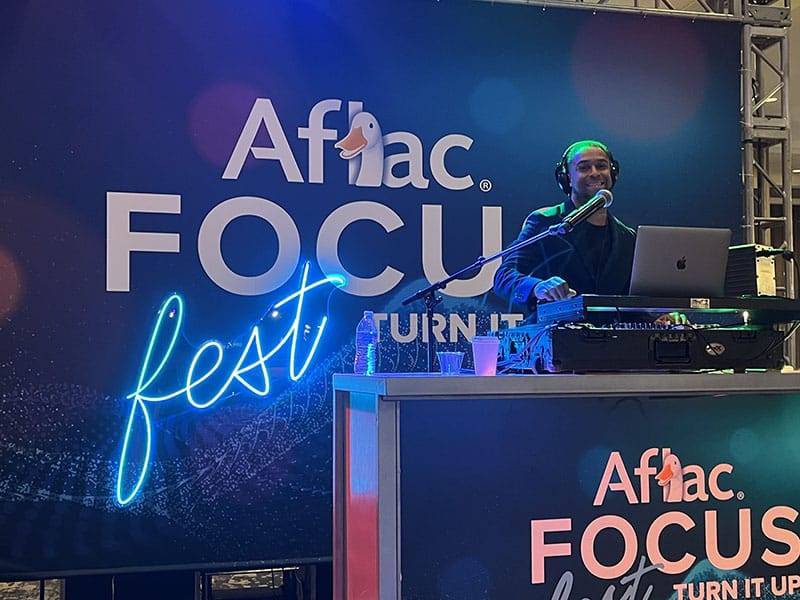
People who have never hired a DJ before often assume the job is straightforward: show up, press play, and keep the music going. People who have planned a major corporate event know it is considerably more complicated than that. And people who have watched a great DJ work a room of 500 people know that something more skilled and intentional is happening they just often struggle to articulate exactly what it is.
After 600+ Fortune 500 events, I can tell you precisely what separates a DJ who simply fills the air with sound from one who actively shapes the experience of an entire room. It comes down to a set of interconnected responsibilities, each of which matters, but one of which sits at the top of every hierarchy worth understanding.
Here is a clear answer to what is actually the most important job of a DJ and why the answer might surprise you.
“A DJ’s technical skills get them in the room. Their ability to read and serve that room is what determines whether the event is remembered.”
Reading the room starts with the right song list.
Introducing TheAIDJ.com
A DJ’s real job is keeping energy alive. AIDJ helps you prep for it: describe the moment you want, preview the blend, and export a playlist that flows. Stop replaying the same songs and walk in ready.
The Most Important Job of a DJ: Managing the Room’s Energy Arc
The most important job of a DJ is not playing great songs. It is not technical mixing. It is not even knowing the audience’s preferences in advance, though that matters significantly. The most important job of a DJ is reading the room in real time and using music to guide the collective energy of the audience through the arc the event requires.
Every event has a shape. A corporate conference might move from networking energy to focused general session to celebratory dinner reception. A company anniversary party might begin with ambient arrival music, build through dinner, and peak with a full dance floor at hour three. An awards ceremony needs understated background during meal service, a swell for each award presentation, and a clean release into the post-show celebration.
The DJ who executes each of those transitions correctly is doing something that no playlist algorithm can replicate: they are responding to what is actually happening in the room, not what was planned in advance. The room fills faster than expected. A speaker runs long and the energy needs to be reset quickly. The dance floor peaks too early and needs to be carefully wound back down before being rebuilt. A group of executives at table three is clearly not connecting with the current musical direction and needs to be met where they are.
All of this requires reading real-time signals, making real-time decisions, and executing those decisions fluidly and invisibly. When a great DJ does this well, nobody in the audience can articulate exactly what happened. They just know the evening felt right from start to finish. That feeling is the product of deliberate, responsive energy management and it is the skill that separates a professional from someone who simply knows how to operate the equipment.
What “Reading the Room” Actually Means in Practice
Reading the room is a phrase that gets used frequently and defined rarely. In a professional context, it means synthesizing multiple streams of information simultaneously and translating those inputs into music decisions that serve the current state of the event.
The inputs a professional DJ is monitoring at any given moment include the density of the dance floor or the activity level of the room, the body language and energy of the people closest to them, the age and demographic spread of the audience and how it is shifting as the night progresses, the decibel level of the conversation in the room relative to the music, which song selections are generating movement or positive reactions versus which ones are being absorbed neutrally, and where the event is in its overall timeline relative to where the energy level needs to be.
These are not sequential observations. A professional DJ is processing all of them simultaneously while also making decisions about the next two or three tracks, monitoring their mix in headphones, and potentially communicating with the event planner or show caller about timeline changes. The cognitive load of professional DJing at a large event is genuinely significant which is why the skill looks effortless when done well and obviously labored when done poorly.
In the corporate event context specifically, reading the room carries additional dimensions. Corporate audiences are often mixed-demographic groups that span multiple generations, industries, and musical reference points. What works for the 28-year-old salespeople from the New York office may not work for the 55-year-old regional directors from the Midwest. A professional DJ is constantly finding the musical intersection that serves the full room while still creating moments that land individually for different segments of the audience.
Why Music Selection Is the Primary Execution Tool
Once the energy arc has been read and the next move identified, the execution tool is music selection. This is where deep library knowledge, genre fluency, and song-by-song judgment become essential.
Great music selection for a live event is fundamentally different from building a playlist for personal listening. Personal playlists are built around the listener’s preferences. Event music selection is built around what the current moment requires from the audience which may or may not align with anyone’s personal preferences, including the DJ’s.
The practical dimensions of music selection for corporate events are specific. Every track should have a clean, radio-edited version that the DJ has verified personally. The tempo and key of each transition should be considered, even for DJs who do not mix with heavy technical precision, because jarring transitions break the audience’s unconscious engagement with the sonic environment. The lyrical content of every track matters in a corporate setting there is no “that song is so popular it’s fine” exemption when a VP of HR is standing ten feet from the speakers.
The catalog depth required to execute great music selection at corporate events is genuinely extensive. A single corporate event audience may span people whose formative musical experiences were the 1970s, 1980s, 1990s, 2000s, and 2010s simultaneously. The DJ who can navigate across those decades fluidly, finding the connective tissue between Stevie Wonder, Whitney Houston, Outkast, Bruno Mars, and whatever landed on the charts last month, is serving a room in a way that a DJ with a narrow catalog simply cannot.
The Art of Mixing: Technical Foundation, Not the Ceiling
Technical mixing skill beat matching, harmonic mixing, the use of effects and transitions is the foundation of professional DJing, but it is not the ceiling. It is the baseline requirement that prevents bad experiences, not the differentiator that creates great ones.
A DJ who cannot execute clean transitions will create jarring moments that pull guests out of their experience and draw attention to the music in the wrong way. Beat matching ensures that transitions flow smoothly enough to be invisible. Harmonic mixing ensures that the key relationships between consecutive tracks feel natural rather than discordant. These are table stakes for professional performance.
Where mixing becomes an art form rather than a technical exercise is when a DJ uses transitions not just to move between songs but to direct energy. A slow, gradual blend that eases the tempo down creates a very different room response than a sharp cut on the one that announces a new direction with authority. A filter sweep that builds anticipation before releasing into a chorus creates a specific kind of emotional response that a straightforward transition cannot. The DJ who understands these effects and deploys them intentionally is using their technical skills in service of the energy management objective which is where the craft actually lives.
At corporate events specifically, mixing sophistication should always serve the experience rather than showcase the DJ’s skills. The audience at a corporate awards dinner is not there to appreciate a technically impressive mix. They are there to have a good time at their company’s event. Any technical flourish that draws attention away from that experience and toward the DJ’s performance is, by definition, the wrong choice.
The Core Responsibilities of a Professional DJ
What a Professional DJ Is Actually Responsible For
| Energy Arc Management | Reading the room continuously and guiding the collective energy of the audience through the shape the event requires, from arrival to final song. |
| Music Selection | Choosing the right track for each moment from a deep, well-maintained library of legally acquired, clean-edited music across genres and decades. |
| Technical Execution | Executing clean, invisible transitions that serve the energy of the room without drawing attention to the mechanics of the performance. |
| Timeline Alignment | Supporting the event’s run of show by providing musical cues for key moments, adapting when the timeline shifts, and keeping the room’s energy aligned with what the program needs next. |
| Professionalism and Reliability | Arriving prepared, communicating clearly with the event team before and during the event, and executing without creating any problems that the client has to manage. |
The Secondary Role: Tastemaker and Cultural Bridge
Beyond the core performance responsibilities, a great DJ also functions as a cultural bridge between the music that exists and the audience experiencing it for the first time in a specific context. This is the tastemaker function of the role, and it is more significant than it might initially appear.
A DJ who only plays what an audience already knows is serving a function that a Spotify playlist could replicate. A DJ who introduces a room to a song they have never heard, in a context where they are already engaged and receptive, and watches that room respond with immediate recognition of something they did not know they would love that is a fundamentally different and more valuable experience.
This happens most powerfully with the combination of era and genre. A room of corporate professionals who grew up with classic rock responds to hearing a well-chosen hip-hop or R&B track that samples or references something they already love. A room of younger professionals responds to a deep cut from twenty years ago that connects to something they have only known as a sample or reference. The DJ who creates these moments of discovery is doing something that no algorithm can replicate, because it requires understanding the specific people in the room well enough to predict what will land before they hear it.
According to a 2023 report from the Event Marketing Institute, music is among the top three elements that attendees cite when describing what made a corporate event memorable. The DJ is the person responsible for that element, which means the stakes of the tastemaker function are genuinely high in the corporate context.
What This Means When Hiring a DJ for Your Event
Understanding what the most important job of a DJ actually is changes how you should evaluate potential hires for your event. Most people evaluate DJs on the wrong criteria focusing on how impressive their technical performance looks in a video, or whether they can name-drop recognizable clients, or whether their rate is competitive. These are not meaningless, but they are not the primary question.
The primary question is: can this DJ read and serve my specific room? And the follow-up questions that flow from that are more revealing than most standard discovery conversations.
How does the DJ approach a pre-event consultation? A DJ who asks detailed questions about the audience demographics, the event’s emotional goal, the key moments on the run of show, and the specific musical associations the company’s culture has built over time is telling you something important about their process. A DJ who asks what songs you want them to play is telling you something different.
How does the DJ describe their approach to a room that is not responding to their current direction? The answer reveals whether they have a systematic approach to energy management or whether they are improvising without a framework. A professional should be able to describe clearly how they diagnose the problem, what their options are, and how they decide which adjustment to make.
What does their review history say about their performance in corporate contexts specifically? Reviews from event planners who are professional evaluators of vendor performance are more informative than reviews from guests at a party. Look for language about professionalism, timeline management, the DJ’s ability to read the room, and the client’s confidence level in recommending them again.
“The best DJs are invisible in the best possible way. You feel the difference they made, but you never stopped to think about how they were making it.”
Why the Most Important DJ Job Matters Most at Corporate Events
Every performance context has its version of the DJ’s core responsibility, but the corporate event context makes the stakes of energy arc management more consequential than in almost any other setting. A DJ at a nightclub is working for an audience that has self-selected into an entertainment context and has a relatively high tolerance for missteps. A DJ at a corporate event is working for an audience that came to accomplish something professionally, for whom the entertainment is one component of a larger experience that reflects on the company that organized it.
The margin for error is smaller. The demographic range is wider. The emotional complexity of the room colleagues from different departments, different seniority levels, different relationships to the company and to each other is higher. And the expectations for professional behavior from every vendor, including the DJ, are more demanding.
All of this means that the energy arc management skill reading the room, responding to what is actually happening, making real-time decisions that serve the moment is tested more rigorously at a corporate event than anywhere else. A DJ who can execute that responsibility reliably, across a wide range of corporate event formats and audience compositions, is providing genuine professional value that is difficult to find and worth paying for.
That is the most important job of a DJ: to make the room feel right, invisibly, from beginning to end. Everything else the technical skill, the library depth, the mixing precision, the tastemaker instinct is in service of that single objective. When all of it is working together, you get an event that people talk about long after the music stops. And that, ultimately, is what great DJ performance makes possible.
DJ Will Gill
Will Gill is a Forbes Next 1000 honoree and WSJ-ranked #1 Corporate DJ and Emcee with 2,520+ five-star Google reviews. He has performed at 600+ Fortune 500 events across live, virtual, and hybrid formats, from Super Bowl parties, the Formula 1 Las Vegas Grand Prix, and FIFA World Cup 2026 to national conferences for the United Nations and Boys & Girls Clubs of America. His 3-in-1 service (DJ + Emcee + Audience Engagement) makes him one of the most requested corporate entertainers in the country.
Learn more about his DJ services.
Fortune 500 Events
Five-Star Google Reviews
WSJ-Ranked Corporate DJ
Frequently Asked Questions
What is the most important job of a DJ?
Reading the room in real time and using music to guide the collective energy of the audience through the arc the event requires. Not great songs, not technical mixing.
What does reading the room actually mean?
Watching how people respond and adjusting selection, tempo and energy as the event moves, for example from networking energy to a focused general session to a celebratory reception.
Is mixing skill the most important thing?
No. The page calls mixing the technical foundation, not the ceiling. Technical skills get a DJ in the room; serving that room determines whether the event is remembered.
What is the DJ's secondary role?
Tastemaker and cultural bridge, introducing the audience to music across generations and genres while keeping the room together.
Why does this matter most at corporate events?
Because a corporate event has a shape with several distinct segments, and a DJ who manages that arc protects the outcomes the company is paying for.