
Trade Show Booth Entertainment That Draws a Crowd | DJ Will Gill
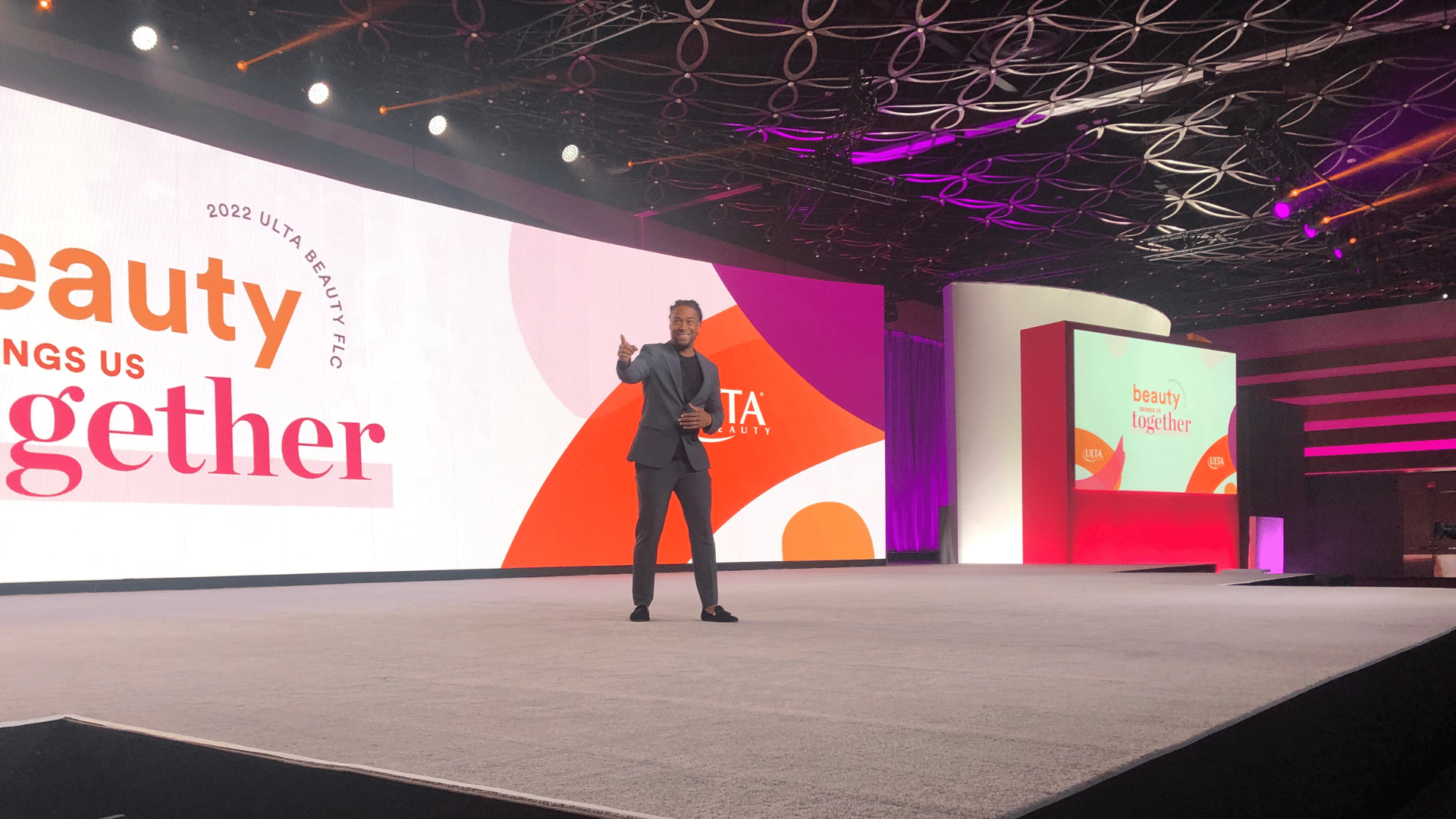
Trade show booth entertainment is a staffed activation (a DJ, a booth emcee, an interactive host, or a specialty performer) whose job is to stop aisle traffic, gather a crowd, and hand that crowd to your sales team as scanned, qualified leads. It works when the gather, hold, release and handoff run on a timed cycle rather than on improvisation.
Trade show booth entertainment exists for a single, measurable purpose: drawing qualified foot traffic to the booth and converting that traffic into the leads, conversations, and demos that justify the entire trade show line item. Unlike a corporate gala or client appreciation event where entertainment supports atmosphere, booth entertainment is an activation tool with a job description. The DJ has to draw heads from across the aisle. The emcee has to gather a crowd around the demo. The team-building host has to give attendees a reason to slow down at the booth instead of walking past it. The interactive station has to produce the badge scan that becomes the post-show follow-up. Every minute of the show floor is competitive, every neighboring booth is fighting for the same attendees, and the entertainment is the difference between a booth that hits its lead targets and a booth that books its budget against an empty traffic week.
This guide walks through trade show booth entertainment as an activation category why the entertainment investment produces measurable lead-generation lift, the entertainment formats that work in the booth environment, how to design booth entertainment for traffic flow and competitive positioning against neighboring exhibitors, music and atmosphere programming calibrated for the expo floor, the booth emcee role across crowd gathering and lead qualification, common pitfalls that compromise otherwise well-resourced booths, format variations across mega-shows and small specialty shows, and the professional application criteria that distinguish booth-ready entertainment talent from adjacent-category alternatives.
Key Takeaways
→ Interactive booth entertainment produces measurable dwell-time and lead-capture lift. 2026 trade show industry analysis documented that interactive displays, demos, and gamified booth elements can increase booth dwell time by 30-40% and lead capture by up to 35%. The lift is the difference between a booth that meets its lead targets and one that gets walked past.
→ Trade shows are the highest-ROI marketing channel when activated correctly. 2026 event marketing research citing CEIR data documented that trade shows deliver an average of $20.98 for every $1 spent, with 52% of business leaders saying events provide the greatest ROI of any marketing channel. The booth entertainment investment is leverage on the broader trade show investment, not an additional cost category.
→ Booth design is now the top floor-floor differentiator. 2026 industry benchmarking documented that 58% of exhibitors report booth design as their top differentiator for attention on the show floor, up from 41% in 2021. Entertainment is the activation layer that converts the booth design investment into actual stopping power.
→ Trade show leads close faster than cold leads. 2026 trade show research citing CEIR data documented that it takes an average of 3.5 sales calls to close a qualified trade show lead, compared to 4.5 calls for a cold lead reflecting the trust, credibility, and product familiarity established through face-to-face booth conversation. The booth entertainment is what increases the number of face-to-face conversations that become qualified leads.
→ Trade show attendees are buyers, not browsers. 2026 trade show industry analysis documented that 81% of trade show attendees come with the authority to buy. The booth entertainment is reaching a uniquely qualified audience the activation that produces a 60-second conversation at the booth potentially produces a six-figure contract three months later.
See DJ Will Gill performing booth activation and trade show entertainment at corporate scale. To request a booth entertainment proposal, contact DJ Will Gill directly.
Why Trade Show Booth Entertainment Matters
The Dwell-Time Data
The activation-research layer. 2026 trade show analysis documented that interactive displays, demos, and gamified booth elements increase booth dwell time by 30-40% and lead capture by up to 35%. The dwell-time number is the most important metric in booth entertainment every additional minute an attendee spends at the booth increases the probability of a substantive product conversation, a demo signup, or a calendar meeting booking. Entertainment that produces dwell time produces leads; entertainment that doesn’t is decoration.
The Competitive Floor Reality
The peer-comparison layer. A trade show booth doesn’t operate in isolation it operates in direct competition with the booths on either side, across the aisle, and around the show floor. 2026 industry benchmarking documented that 58% of exhibitors now identify booth design as their top differentiator for attention on the show floor, up from 41% in 2021. The competition is escalating: booth investments are rising, design quality is improving across the industry, and the bar for “noticeable” is higher every year. Entertainment is what turns a high-investment booth into an active draw the static design gets attention from passing attendees; the entertainment converts that attention into a stop.
The Lead-Economics Layer
The ROI-justification layer. 2026 event marketing research citing CEIR data documented that trade shows deliver an average of $20.98 for every $1 spent, with lead generation cited as the #1 reason exhibitors attend trade shows (72%). The economics work because trade show leads close faster and cheaper than cold leads averaging 3.5 sales calls to close versus 4.5 for cold leads, reflecting the trust and product familiarity established through face-to-face booth conversation. Entertainment investment scales the top of the funnel: more booth traffic produces more booth conversations, which produces more qualified leads, which produces more closed deals at improved cost-per-acquisition economics.
Buyers, Not Browsers
The audience-quality layer. 2026 industry analysis documented that 81% of trade show attendees come with the authority to buy. The audience-quality data fundamentally changes the entertainment math. At a consumer event, entertainment has to convert casual interest into engagement; at a trade show, the audience is already qualified they’re decision-makers in the company’s exact buyer profile, attending because their job requires evaluating vendors in the space. Booth entertainment is reaching the most expensive-to-acquire prospects in the entire marketing funnel, gathered in one venue, available for 60-90 seconds of attention each. The activation that captures those 60-90 seconds is one of the highest-leverage marketing investments available.
Booth Entertainment Formats
DJ Atmospheric Activation
The base-layer activation. A booth DJ produces continuous atmospheric energy that distinguishes the booth from the surrounding floor without requiring active attendee participation. The DJ work runs at calibrated volume (loud enough to be heard at the booth, not so loud that it competes with neighboring booths or interferes with booth conversations), uses music programming aligned with the brand and audience, and modulates throughout the day based on floor traffic patterns. The DJ is the cheapest dwell-time tool available attendees who slow down to listen are attendees who stop, and attendees who stop are attendees the booth staff can engage. Strong DJ work is invisible until it’s needed; weak DJ work is intrusive even when no one is asking for the music to be louder.
Interactive Team-Building Host and Interactive Station
The traffic-magnet layer. A live game show element a trivia game, a brand-themed quiz, a spin-the-wheel prize moment, a leaderboard challenge is the highest-stopping-power activation available for trade show booths. The format produces three simultaneous wins: it draws crowds (because game show energy attracts onlookers), it captures leads (because participation typically requires badge scan or contact info), and it provides natural conversation starters (because the game gives sales staff a non-pitch opening with the attendee). Strong team-building host work calibrates the format to the audience corporate buyers don’t want carnival energy, but they do enjoy a polished, branded engagement that gives them a reason to slow down and a story to tell their colleagues afterward.
Live Demo Emcee
The product-presentation layer. Many booths run scheduled product demonstrations at specific times throughout the day 15-20 minute walkthroughs of the product, customer use case, or technical capability. A live demo emcee anchors these sessions: drawing the crowd as the demo time approaches, framing the demo content for the audience, supporting the product expert who delivers the technical content, and handling the question-and-answer transition into the booth conversation that follows. The emcee turns a scheduled demo from a presentation that attendees might wander past into a moment the room treats as a featured event. Strong demo emcees know how to gather a crowd from cold (announcing the upcoming demo so attendees can plan to attend), build energy as the demo begins, and hand off cleanly to the product team without disrupting their flow.
Specialty Performer Activations
The differentiated-draw layer. Magicians, mentalists, caricature artists, and similar specialty performers can produce strong booth traffic in the right context. The format works when the performer is genuinely good (a mediocre magician produces the opposite of the intended effect), when the act integrates with the brand message (a mentalist whose work nods to the company’s data-prediction product, a magician whose tricks reference the company’s transformation positioning), and when the talent has corporate trade show experience specifically. Strong specialty performers know how to gather and hold a small crowd in a noisy expo environment, transition smoothly into booth staff handoff, and avoid the cabaret energy that would feel misplaced at a B2B trade show.
Booth Host Emcee
The qualification layer. A booth host emcee functions as the booth’s permanent on-mic presence welcoming attendees as they approach, framing what the booth offers in a single sentence, qualifying interest through conversational engagement, and routing qualified attendees to the appropriate sales team member. The role combines emcee craft with light sales work, and it requires talent who can hold both registers simultaneously. Strong booth host emcees free up the sales team to focus on substantive conversations with qualified attendees rather than spending their time triaging incoming traffic, which materially improves the lead quality per booth-hour ratio.
The shareable-content layer. Branded photo activations green-screen experiences, custom backdrops, signature-frame photo opportunities, social-media-ready video booths produce dwell time and post-event reach simultaneously. Attendees who participate in the photo activation share the content to their professional networks, extending the booth’s visibility beyond the show floor. The format works particularly well when the photo activation has genuine craft (professional lighting, on-brand styling, instant high-quality output) rather than feeling like a casual selfie station. Strong photo activations are typically integrated with the booth’s lead capture infrastructure the attendee gets their photo emailed to them, the company gets their email address, and the asset itself reinforces brand recall after the show.
Designing for Booth Traffic
The Peak-Floor-Hour Math
The traffic-pattern layer. Trade show floors don’t operate at uniform traffic levels across the day. Mornings typically see lower traffic (attendees in keynote sessions or settling into the day), midday spikes around lunch and post-keynote periods produce the highest density, and afternoons taper as attendees fatigue and head to networking events. Strong booth entertainment design front-loads the most active programming during peak windows the team-building host runs full-energy during the post-lunch surge, the demo emcee schedules featured presentations during peak attendance, the DJ modulates energy upward as the floor density rises. The design treats the day as a sequence of distinct activation windows rather than as a uniform block of booth time.
Competitive Positioning Against Neighbors
The booth-floor-context layer. The entertainment design has to account for what the surrounding booths are doing. A booth next to a quiet, demo-station competitor benefits from energetic music and active emcee work that the contrast amplifies. A booth between two heavily activated competitors needs entertainment differentiation through genre, format, or moment timing rather than through volume escalation. Strong design includes pre-show walkthroughs of the booth’s neighborhood, identification of likely competing activations, and intentional differentiation strategy. The goal isn’t to outshout the neighbors but to occupy a distinguishable activation space that attendees can register as separate from the surrounding noise.
The Brand-Immersion Design
The integrated-experience layer. Entertainment that feels disconnected from the brand produces traffic but doesn’t produce qualified engagement attendees stop for the game show, win the prize, and walk away without remembering the company. Entertainment integrated with the brand produces both: the activation gives attendees a reason to stop, and the integration ensures they leave with the company’s positioning intact. Strong integration shows up in details: the game show questions reference the company’s product category, the DJ’s music selections nod to the brand’s identity, the emcee’s framing language draws from the company’s actual messaging. The integration is what converts dwell time from passive traffic into active recall.
The Hook-and-Engagement Sequence
The funnel-design layer. Strong booth entertainment is designed as a sequence rather than a single moment. The “hook” is what stops the attendee from across the aisle an audible cue, a visible activation moment, a clear sense that something is happening at this booth. The “engagement” is what holds them once they’ve stopped a brief, valuable interaction that justifies their time. The handoff is what moves them from entertainment to substantive conversation the natural transition into a demo, a sales conversation, or a calendar booking. The sequence design matters because attendees who stop without an engagement layer leave quickly, and engaged attendees without a handoff layer walk away with a positive impression but no business outcome.
The Handoff to Sales Team
The conversion-architecture layer. The entertainment-to-sales handoff is one of the most under-designed elements of booth strategy. Entertainment talent who don’t understand the handoff produce engagement that doesn’t convert; sales teams who don’t coordinate with entertainment produce missed opportunities every time the activation produces qualified traffic. Strong handoff design includes pre-show coordination between the entertainment lead and the sales team, agreed signals for routing qualified attendees, badge-scan integration that captures the lead even when the sales team is occupied elsewhere, and clear post-engagement next steps that the attendee understands when they leave the booth. The handoff turns booth entertainment into a working revenue activity rather than an isolated marketing tactic.
Never stress about expo floor music again.
Introducing TheAIDJ.com
AIDJ turns a plain English request such as upbeat instrumental for a tech booth, no vocals into a ready to play set, previews it instantly, and exports straight to Spotify. Build the booth playlist before you ever get to the hall.
Music and Atmosphere for the Expo Floor
The Expo Hall Acoustic Reality
The room-condition layer. Expo halls have brutal acoustics: high ceilings, hard floors, no sound absorption, dozens of booths producing audio simultaneously. Music that sounds great in a ballroom can be unintelligible in a convention center, and music that works on a recording can be lost in the ambient noise of the show floor. Strong booth DJ work calibrates to the acoustic reality using audio equipment with enough headroom to cut through the noise, selecting tracks whose key elements survive the room’s frequency response, and avoiding genres whose subtleties get lost in the wash. The acoustic discipline is one of the differences between booth DJs who work the corporate trade show circuit regularly and adjacent-category DJs who handle one trade show as an outlier.
Volume Calibration
The neighbor-relations layer. Booth music volume is governed by both show rules (most major shows publish decibel limits) and informal floor etiquette (booths that consistently exceed neighboring booths’ volume get complaints from neighbors and from show management). Strong volume calibration finds the level that’s distinctly audible at the booth without provoking complaints or losing the booth’s own conversations to the volume of the DJ work. The right level is typically lower than booth managers initially want the impulse to “be heard above the neighbors” almost always backfires. Strong booth DJs know how to produce activation through energy and selection rather than through volume escalation.
Genre Selection for Buyer Audiences
The audience-alignment layer. Trade show attendees are typically corporate buyers in business attire, attending in a professional capacity, evaluating vendors against business criteria. The music programming has to match that context sophisticated enough to feel professional, energetic enough to draw attention, varied enough to sustain interest across multiple booth visits. Strong genre selection avoids the extremes heavy club music feels misplaced at a B2B booth, ambient instrumental loses the energy advantage, top-40 radio playlists feel generic. The right territory is curated contemporary with selective era references that reflect the brand identity. The same DJ who plays a Saturday night party doesn’t necessarily program a Monday morning trade show booth correctly.
Energy Modulation Throughout the Day
The temporal-design layer. The music programming should change across the trade show day to match the audience’s energy state. Morning hours benefit from medium-energy selections that energize attendees who are still settling in. Midday and post-lunch windows can lean into higher energy to match the floor’s peak density. Late afternoon often calls for slightly lower energy as attendees fatigue and shift toward closing conversations rather than initial discovery. Strong booth DJs read the floor in real time and adjust a static playlist that runs the same selection sequence across an entire show day misses the temporal patterns that the live programming is positioned to address.
The Atmosphere Data Point
The satisfaction-driver layer. 2024 corporate event research documented that 82% of attendees cite atmosphere as the most important factor in their overall event satisfaction. For trade show booths, the atmosphere effect operates on a compressed timeline attendees evaluate the booth’s atmosphere in seconds rather than across hours. The booth that feels alive draws attention, the booth that feels active draws stops, the booth that feels sophisticated draws qualified engagement. The atmosphere math is the same as at larger events; only the time-window is shorter.
The Booth Emcee Role
Crowd-Gathering Work
The traffic-generation layer. The booth emcee’s most visible function is converting passing foot traffic into stationary crowds at scheduled moments typically before a demo, a giveaway drawing, or a game show segment. The work involves projecting voice across the aisle without becoming a nuisance to neighboring booths, signaling clearly that something is about to happen, and giving passing attendees a specific reason to stop now rather than later. Strong crowd-gathering emcee work feels confident rather than desperate the energy says “you’ll want to be here for this” rather than “please come, anyone, please.” The tonal difference is enormous; it’s the difference between a draw and a deterrent.
Demo and Presentation Facilitation
The framing layer. When the booth runs scheduled demos or product presentations, the emcee handles the framing work that lets the technical presenter focus on content. The emcee gathers the crowd, introduces the presenter, sets the context for what attendees are about to see, and handles any audience-management work during the presentation (managing questions, modulating energy if the room is dragging, signaling to the presenter about pacing). Strong demo facilitation makes the technical presenter look better they arrive into a warm, gathered audience and leave to applause, with the framing work invisible but doing real lift on the entire experience.
The Interactive Team-Building Host Approach
The interactive-engagement layer. When the booth includes a game show element, the emcee’s role shifts into team-building host mode running the format with appropriate energy, managing the participant experience, keeping the crowd engaged between rounds, and producing the on-brand moments that justify the format choice. team-building host work specifically requires polished microphone skills, on-the-fly improvisational comfort, and the discipline to keep the energy high without tipping into the cabaret-host energy that would feel misplaced. DJ Will Gill performs team-building host work as part of the three-in-one corporate emcee and audience engagement service model, with documented Fortune 500 trade show booth activations.
Lead Qualification Through Engagement
The conversational-discovery layer. A skilled booth emcee qualifies leads through the conversation around the entertainment rather than through formal questioning. A few well-placed questions during the game show, a brief discovery exchange during the photo activation, a contextual remark during the demo each produces information that helps the sales team identify which attendees are worth deeper engagement. The qualification work is light, conversational, and respectful the emcee isn’t running through a discovery checklist, just gathering information that improves the routing decision. Strong booth emcees often produce better-qualified leads than the booth staff does because their lower-pressure interactions invite more honest disclosure from attendees.
Sales Team Handoff Coordination
The conversion-handoff layer. The emcee coordinates with the sales team to ensure that engaged attendees get routed cleanly into substantive conversations. The coordination involves pre-show alignment on routing protocols, real-time signals during the show (which sales rep is available, which attendees are high-priority for senior leadership engagement), and post-engagement next-step communication that the attendee carries away. Strong coordination produces a booth experience where attendees feel the activation, the conversation, and the next steps as a continuous flow rather than as separate, disconnected interactions.
Common Pitfalls
Under-Powered Booth Presence
The investment-mismatch layer. The most common booth entertainment mistake is spending substantial budget on the booth design, the staff travel, the show fees, and the lead-capture technology and then under-resourcing the activation layer that makes everything else work. A six-figure booth investment with no entertainment activation typically produces materially less traffic than a smaller booth with strong activation. The fix is recognizing that entertainment is leverage on the broader investment rather than an additional cost category, and budgeting accordingly during the initial trade show planning rather than treating it as a last-minute add-on.
Wrong Genre or Format
The category-mismatch layer. Entertainment talent from adjacent categories often fails at trade show booths because the format requires different defaults than their primary work. Wedding emcees lean into participatory energy that’s misplaced at corporate trade shows. Club DJs operate at volumes that violate show floor rules. Festival performers pace for crowds that don’t materialize at booth scale. Strong booth entertainment selection prioritizes documented corporate trade show experience specifically talent who has worked the corporate booth circuit, understands the format’s production discipline, and brings the multi-skill stack (DJ work, emcee craft, team-building host capability, audience engagement) that the booth integrates.
Entertainment Disconnected from Product
The integration-failure layer. Entertainment that produces strong booth traffic but doesn’t connect to the product produces lead volume without lead quality. The booth gets traffic from attendees there for the entertainment, the badge scans capture contact information, the sales team follows up and the follow-up calls reveal that the attendee has no actual interest in the product category, they just stopped for the game show. Strong design integrates the entertainment thematically and tonally with the product the activation gives attendees a reason to stop, and the integration ensures the attendees who stop are the ones who care about what the booth actually sells.
Volume Wars with Neighbors
The escalation-trap layer. When neighboring booths run loud activations, the temptation is to match or exceed their volume. The escalation typically produces complaints from both booths to show management, decibel violations, neighbor relationship damage that compromises future shows, and a booth environment where the company’s own staff can’t hold conversations with attendees. The fix is differentiating through energy, format, and timing rather than through volume a booth that draws attention through a polished game show segment will outperform a booth that draws attention through escalating audio in nearly every case.
No Lead-Capture Integration
The conversion-leak layer. Entertainment that produces traffic without integrated lead capture loses most of the lift it generates. The attendee plays the game, enjoys the moment, walks away and the company has no record of the engagement, no contact information for follow-up, no way to attribute downstream revenue back to the booth investment. Strong design integrates lead capture into every entertainment moment game show participation requires a badge scan, photo activation captures the attendee’s email for delivery, demo attendance feeds into a calendar booking opportunity. The integration converts entertainment from a brand-awareness activity into a measurable revenue tactic.
Bad Post-Show Follow-Up
The downstream-execution layer. 2026 trade show research documented that follow-up emails sent within 24 hours achieve average 48% open rates, while emails sent one week after the show achieve 21% less than half the engagement. Strong booth entertainment that produces qualified leads gets undermined when those leads sit in a queue for days before anyone follows up. The fix is operational: 24-hour follow-up has to be built into the trade show plan as non-negotiable, with the booth team understanding that the entertainment investment is wasted if the post-show execution doesn’t honor the speed window.
Trade Show Format Variations
Mega-Show Flagship Booths
The high-investment layer. Major industry mega-shows (CES, RSA Conference, HIMSS, Dreamforce, NRF Big Show, and similar tier-one venues) typically host flagship booths with substantial activation budgets, multi-element entertainment programming, and high-profile demo schedules. The mega-show booth design supports multiple simultaneous activations a main stage with scheduled demos, a DJ-driven atmosphere across the booth perimeter, a game show or interactive zone in one corner, photo or social activations in another. Strong mega-show entertainment design treats the booth as a small venue rather than as a display space, with multiple coordinated activations running on synchronized schedules.
Mid-Size Industry Conferences
The standard-format layer. Mid-size industry conferences (typically 1,000-5,000 attendees) host booths that benefit from focused activation rather than multi-element programming. The booth might run a single emcee-led activation throughout the day, supported by DJ atmosphere, with scheduled demo moments at peak floor hours. The smaller scale means each entertainment moment matters more there are fewer total touchpoints, so each one has to land cleanly. Strong design for mid-size shows emphasizes quality over quantity, with the talent investment concentrated on the activations most likely to produce qualified leads rather than spread across multiple parallel elements.
Small Specialty Shows
The niche-audience layer. Specialty industry shows (vertical-specific events with 500 or fewer attendees) operate in tighter audience economics every conversation matters more because there are fewer potential leads. The entertainment design scales accordingly: lighter atmospheric DJ work, more emphasis on conversation-supporting volume, more deliberate scheduling around the specific moments when attendees move through the show floor. Strong specialty show design treats the entertainment as a lead-quality amplifier rather than a traffic-volume tool fewer engagements but higher conversion rates per engagement, supported by entertainment that signals investment in the specific vertical.
Hybrid and Streamed Booth Presence
The dual-audience layer. Many trade shows now include hybrid or streamed components, with remote attendees viewing booth demos and activations through the show’s digital platform. 2026 trade show research documented that in-person booth interactions generate 4-5x more qualified leads than virtual ones, but the hybrid component still extends the booth’s reach to attendees who can’t travel. Strong hybrid booth design includes camera-aware demo emcee work, audio production calibrated for stream as well as room, and activation moments that work for remote participation alongside the in-person experience.
Multi-Day vs Single-Day Shows
The endurance layer. Multi-day shows require entertainment programming that sustains across multiple days booth talent has to maintain energy through Day 3 the same way they did during Day 1, the music programming has to feel fresh on the third day to attendees making their second visit, the game show format has to vary across days to avoid feeling repetitive to staff returning to the booth. Strong multi-day design includes deliberate variation across days, talent who can sustain professional output across the schedule, and rotation strategies that prevent the booth from feeling tired by the show’s closing hours.
Professional Application
Three-in-One Service Fit
The integrated-activation layer. Trade show booth entertainment is one of the strongest possible fits for three-in-one service models DJ work, emcee work, and audience engagement programming integrated through a single talent. The integration matters specifically at trade show booths because the day-long format involves continuous transitions between atmospheric DJ work, scheduled emcee-led activations, team-building host segments, and demo facilitation all requiring the same talent to operate across multiple registers throughout the day. Splitting these functions across separate vendors introduces coordination friction, scheduling complexity, and budget waste that integrated service eliminates. DJ Will Gill operates a three-in-one corporate DJ, emcee, and audience engagement service model documented across Fortune 500 corporate event clients including AT&T Business, CDW, Virgin Galactic, NeoGenomics, Foot Locker, Home Depot, Hilton, BGCA, PepsiCo, PayPal, and the United Nations.
Trade Show Format Experience
The category-fit layer. Booth entertainment talent should have documented experience with trade show booths specifically not just corporate events broadly, not just wedding or club work that translates variably. The experience matters because the booth format includes specific production constraints (volume limits, show floor rules, neighbor relations, lead capture integration) that talent without trade show experience often violates unknowingly. Strong selection vets specifically for trade show booth references and prior client outcomes at comparable show formats.
Credentialed Track Record
The professional-recognition layer. The Wall Street Journal’s #1 Corporate DJ and Emcee designation and Forbes Next 1000 honoree recognition together document the corporate-format experience that distinguishes trade-show-ready booth entertainment from adjacent-category alternatives. 2,520+ five-star Google reviews accumulated over 600+ documented corporate events provide the verifiable client outcomes that vetting processes look for when selecting entertainment for trade show booth activations.
Booking Lead Time
The calendar-coordination layer. Major trade shows typically book booth entertainment talent four to nine months in advance, with peak conference season (Q1 and Q4) booking earliest. Multi-show programs (a company exhibiting at five or more shows per year) benefit from booking the same talent across the calendar to produce consistency across activations, streamline pre-show coordination, and produce the operational efficiency that comes from working with the same partner across multiple engagements. Strong planning treats booth entertainment as a strategic resource integrated with the broader trade show program rather than as an event-by-event line item.

About the Author
William “DJ Will Gill” Gilbert is an American professional DJ and Emcee performing trade show booth entertainment and activation at Fortune 500 scale through a three-in-one DJ, emcee, and audience engagement service model. Documented client work for AT&T Business, CDW, Virgin Galactic, NeoGenomics, Foot Locker, Home Depot, Hilton, BGCA, PepsiCo, PayPal, and the United Nations. Also a Forbes Next 1000 honoree with broadcast credits including Super Bowl LIV (2020), The Voice (2011), and MTV’s The Real World: Hollywood (2008). He is also a World Cup performer and a Formula 1 Las Vegas Grand Prix performer. 2,520+ five-star Google reviews across 600+ documented corporate events.
2,520+ Google Reviews · IMDB · Mixcloud · Instagram · Contact
Frequently Asked Questions
What is trade show booth entertainment for?
One measurable purpose: drawing qualified foot traffic to the booth and converting it into leads, conversations and demos that justify the trade show budget.
Does booth entertainment actually increase leads?
The guide cites 2026 trade show analysis showing that interactive displays, demos and gamified booth elements increase dwell time and lead capture.
Which booth entertainment formats work?
DJ atmospheric activation, an interactive team-building host and station, a live demo emcee, specialty performer activations, a booth host emcee, and photo booth or social activations.
What does a booth emcee do?
Gathers a crowd around the demo and qualifies leads, giving attendees a reason to slow down instead of walking past.
How is booth entertainment different from gala entertainment?
At a gala the entertainment supports atmosphere; on the show floor it is an activation tool with a job description, competing with every neighboring booth for the same attendees.
How do you attract people to your trade show booth?
Give aisle traffic a reason to stop within the first few steps. A live host or DJ creates motion and sound that a static display cannot, and a scheduled demo gives attendees a start time to come back for. Exhibit appeal research reports that more than half (52%) of the attendees are attracted to exhibits that offer giveaways or freebies, so pair the performance with something the attendee leaves holding.
What is the difference between a booth hostess and a booth emcee?
A booth hostess greets and directs traffic. A booth emcee runs the floor: gathering a crowd on a microphone, hosting the demo, holding attention through the pitch, and steering qualified attendees to a sales rep. If the goal is lead volume rather than badge greeting, the emcee role is the one that produces it.
How long should a booth performance last?
Five to eight minutes of performance, then a release, then a reset. Short cycles let the booth run the crowd several times per floor hour instead of holding one audience that blocks the aisle. Post the cycle times on booth signage so attendees can plan a return.
Does booth entertainment work in a 10×10 booth?
Yes, with format changes. A 10×10 cannot hold a crowd, so the entertainment works the aisle edge instead of the booth interior: close range hosting, a single interactive station, and a handoff that moves the qualified attendee into the booth while the next group gathers outside it.
What does trade show booth entertainment cost?
Booth entertainment is quoted by show day rather than by performance, because the role runs across the full floor hours. The variables are the number of show days, whether the booth needs DJ coverage, emcee hosting or both, travel to the host city, and whether there is a rehearsal the evening before. Request a quote against your specific show dates.
How far in advance should you book trade show entertainment?
Book as soon as the booth space is confirmed, which for major shows is six to twelve months out. Trade show dates cluster, so the same week is contested across multiple exhibitors and cities. Late bookings are possible but they limit the format to whoever is still available rather than whoever fits the booth.
Who should staff the booth while the entertainment runs?
The sales team, not the executives. Industry survey data reports that 59% of trade show marketers say sales staff are the most effective booth representatives, compared to just 29% for senior management. The entertainer gathers and qualifies; the closer takes the conversation.
Should booth entertainment mention the product?
Yes, or the crowd is wasted. According to 92% of trade show attendees, their main reason for attending is to see new products being showcased, so entertainment that never names what the exhibitor sells gathers an audience for the performer instead of for the exhibit. Build the product moment into the middle of the performance, not after it.
Does booth entertainment work at large convention centers such as the Las Vegas Convention Center or Mandalay Bay?
Yes, and large halls are where it matters most. In a hall with hundreds of competing exhibitors, sound and movement are the only signals that carry across an aisle. Volume has to be calibrated against neighbors and against any house sound rules the venue enforces, which is a conversation to have with show management before the first floor hour.
Can one performer cover a multi day trade show?
Yes. A single host across all show days keeps the cycle, the script and the lead handoff consistent, and returning attendees recognize the booth on day two. Multi day coverage also costs less per day than rotating performers, and it removes the rebriefing a new host needs each morning.