
The Role of Music Curation in Branding and Marketing in 2026
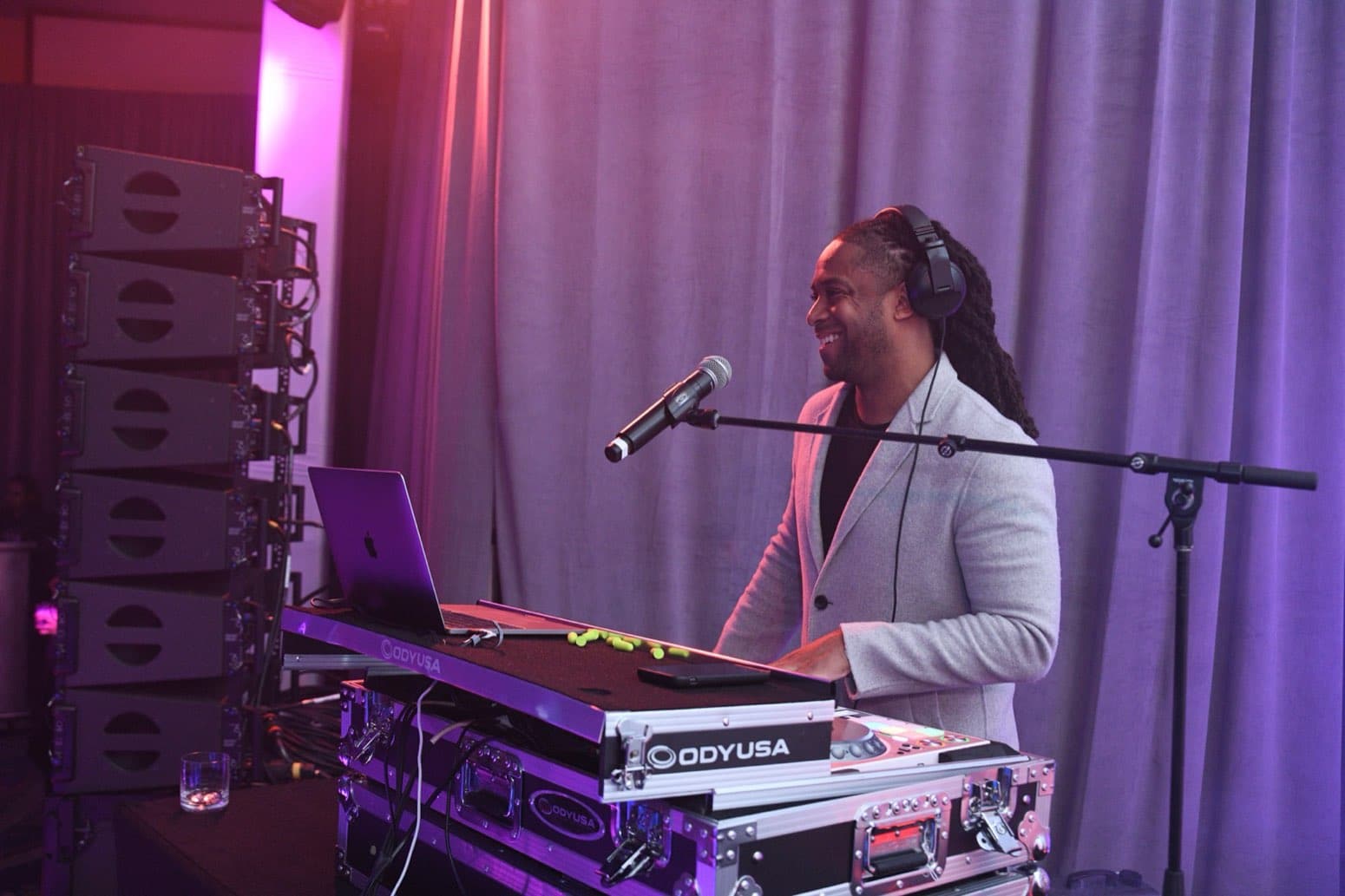
Music curation in a branding context is a specific discipline, not a vibe. It involves three distinct categories of decisions that often get blurred together: the sonic identity that a brand owns (sonic logo, signature melody, brand-derived motifs), the music curated for physical environments where the brand interacts with customers (retail floor, restaurant, hotel, lobby, gym, salon), and the music selected for marketing content (advertising, social, brand films, event experiences). The strongest brand music strategies treat these as three separate problems with three separate sets of tools, evidence, and constraints.
This guide breaks down what’s actually known about music’s effect on brand perception and behavior, the documented sonic branding work that has set the standard since 2019, the licensing realities for brand music in physical spaces, and the practical framework for marketers and brand owners building this work into their strategy. It draws on the consumer behavior research that’s been replicated for decades, the recent sonic branding case studies that have measured outcomes, and the working practice of a corporate-event music professional who builds branded sonic experiences live.
On-brand sound, built in minutes.
Introducing TheAIDJ.com
Music shapes how a brand feels. Describe your brand’s vibe to AIDJ, preview the blend, and export a playlist that matches. A fast way to put the right sound behind your brand.
Key Takeaways
→ Music’s effect on consumer behavior in commercial environments is measurable, not theoretical. Milliman’s foundational 1982 supermarket study found that slow-tempo music produced 38.2% higher sales by altering dwell time; his 1986 restaurant study found slow-tempo music increased table drink spending by roughly 40%. The mechanism is dwell time and pace, not preference.
→ Sonic branding moved from “jingle” to comprehensive architecture in 2019. Mastercard’s CMO Raja Rajamannar framed it directly: “Sonic branding is not just about having nice background music or a jingle. It is the creation of comprehensive audio brand architecture”. The Mastercard sonic identity, launched February 2019, has held the top spot on the industry benchmark ranking for years.
→ Recognition without name attribution is a documented sonic branding trap. Veritonic’s Audio Logo Index found that despite long-running investment, only 13% of Americans could correctly associate Intel’s sonic logo with the brand. The lesson: a great melody that doesn’t say the brand name often fails to attribute. Audio logos that mention the brand scored an average of 69 on Veritonic’s scale.
→ Brand music in physical spaces requires commercial licensing; personal streaming subscriptions are a Terms of Service violation. Brands need licensed business music services or direct PRO licenses for in-store, restaurant, hotel, or other commercial-space music.
→ The strongest brand music strategy treats sonic identity, in-environment curation, and marketing-content music as three separate disciplines with three separate teams or vendors. The brands that consistently rank at the top of sonic branding indexes, such as Mastercard, Shell, Audi, Apple, Philips, PlayStation, Nintendo, Mercedes, invest separately and consistently in each.
DJ Will Gill builds branded sonic experiences live at corporate events. Contact us to discuss brand-aligned event music.
1. What Music Curation Actually Means for Brands
Brand music strategy lives at three different altitudes, and most weak strategies fail because they collapse the three together. Separating them is the first practical step.
Layer one, sonic identity: the music a brand owns and uses across all touchpoints. This is the sonic logo (Mastercard’s payment sound, Netflix’s Ta-dum, Intel’s five-note chime, the Apple Mac startup sound, McDonald’s “I’m lovin’ it” whistle), the signature melody it can derive from, and the system of audio assets for different campaign needs. Sonic identity is a long-term brand asset, treated like a visual logo.
Layer two, environmental music curation: the music playing in physical or digital spaces where the brand interacts with customers. This is the in-store playlist at a retailer, the music at a restaurant or hotel lobby, the on-hold audio for a phone system, the music at a brand activation or event. The work is selection and programming of usually licensed catalog music chosen to match brand identity, audience demographics, and time-of-day energy.
Layer three, content music: the music used in advertising, social media content, brand films, sponsorship integrations, and event programming. This includes original commissioned work, licensed sync placements, and editorial music selections curated for specific campaigns. The work is sourcing, licensing, and matching tracks to a message.
A brand can be doing layer two well (great in-store playlists) while doing layer one badly (no sonic identity at all), or doing layer three well (great ad music) while doing layer two badly (mismatched, generic, or unlicensed in-store music). Each layer is a separate competency.
2. The Behavioral Research Behind Brand Music
The claim that music affects consumer behavior in commercial environments isn’t a marketing-industry talking point. It’s been replicated across decades of academic research, and the magnitude of the effects is large enough to take seriously as a brand strategy variable.
The foundational supermarket study: Ronald E. Milliman’s 1982 study, published in the Journal of Marketing, measured supermarket sales under different background music tempos. Slow-tempo music produced 38.2% higher sales than fast-tempo music, by slowing shopper pace and increasing time spent in the store. The mechanism is dwell time. Customers shop less efficiently in a way that’s good for the retailer when ambient tempo is slow.
The restaurant replication: Milliman’s 1986 follow-up study in restaurant environments found that slow-tempo music increased the average customer’s time at the table by roughly 11 minutes and increased drink spending per table by approximately 40%. Restaurant operators have since used tempo programming as a deliberate revenue lever.
The wine-purchase study: North and Hargreaves’s research found that the music played in a wine display area systematically affected what customers bought. French music led to French wine purchases dominating, German music led to German wine purchases dominating, without customers reporting awareness that the music had influenced them. The effect operates below conscious attention.
What this means for brand music strategy: the effects are real, measurable, and often invisible to the customer making the decision. A brand running an environment without thinking about music programming isn’t running it without music programming; it’s running it with whatever default ambient sound the space generates, and that default is also affecting behavior. The strategic question isn’t whether music affects customer behavior in your environment; it’s whether you’re controlling the variable or letting it run uncontrolled.
3. The Sonic Branding Tier (Where Brands Own Music as an Asset)
The most strategically ambitious music work brands have done in the 2020s is sonic identity construction, the building of melodies, signature sounds, and audio architecture that the brand owns and can use across global touchpoints. The 2019 launch of Mastercard’s sonic identity is the case study that reset the industry’s expectations.
The Mastercard case (2019-present): Mastercard spent nearly two years on what it called “sonic brand architecture” before its 2019 launch, creating a unique melody designed to represent the brand in sound form. The implementation includes a sonic logo, a payment-confirmation sound, music cues, and a derivative system that allows local variation while preserving recognition. Mastercard’s sonic brand has 10 layers in its full architecture, with four currently in public use and the remaining six undisclosed.
The industry ranking: Sonic branding agency amp produces an annual “Best Audio Brands” report ranking 250 companies. Mastercard has held the top spot for years. The 2022 top 10: Mastercard, Shell, Audi, Apple, Philips, PlayStation, Nintendo, Mercedes, State Farm, HDFC Bank. Of the top 25, 19 brands had a sonic logo and had used it in the past year. The ranking factors include the existence of a sonic logo, its measured consumer recognition, and the consistency of its use across campaigns.
The recognition trap: a sonic logo that consumers can hum but can’t attribute to a brand has limited value. Veritonic’s Audio Logo Index research found that “despite much investment towards Intel’s long-standing sonic brand, only 13% of Americans can correctly associate the audio logo to Intel.” Audio logos that include the brand name spoken or sung scored an average of 69 on Veritonic’s scale; brand-name-less audio logos scored substantially lower. The same study found that Mastercard, Honda, TD Ameritrade, Sprint, Audi, Nissan, and HSBC all faced significant attribution gaps.
Other reference cases worth knowing: Netflix’s “Ta-dum” sound, designed to signal premium content as the platform loads, has become one of the most-recognized sonic cues globally. Intel’s five-note “bong,” launched in 2003, still ranks among the most-recognized audio identities in the world. Apple’s Mac startup chime and the click of AirPods snapping into a case are functional sounds designed to carry brand identity into product use. McDonald’s “I’m lovin’ it” whistle is the late-jingle-era example that still works because it consistently includes the verbal brand association.
What this means for working brands: sonic identity is a large investment, typically requiring 1-2 years of architecture work with a specialist agency. It’s appropriate for brands at scale with broad audio touchpoints (payment confirmations, app sounds, on-hold audio, advertising, brand films, retail environments). It’s not appropriate for most small businesses, where layers two and three work environmental curation and content marketing will return more on investment.
4. Brand Music in Physical Spaces (and the Licensing Reality)
The most operationally common brand music work is environmental, the music playing in stores, restaurants, hotels, gyms, salons, hospitality venues, car dealerships, real estate offices, and any other space where customers experience the brand in person. This is where the behavioral research from Section 2 most directly applies, and where the licensing reality is most often handled incorrectly.
The brand alignment work: the music programming in a brand’s physical space should derive from the brand’s defined identity, the audience demographics expected in the space, and the time-of-day energy curve the brand wants to manage. A high-end fashion retailer programs differently from a quick-service coffee chain, which programs differently from a steakhouse, which programs differently from a gym. The most rigorous brand programs document the music brief at the same level of specificity as the visual brand brief, preferred genres, tempo ranges, lyrical content restrictions, era constraints, and day-part programming.
The execution options: the major routes brands use to execute environmental music programming are licensed business music services (Soundtrack Your Brand, SoundMachine, Custom Channels, SiriusXM Music for Business, Jukeboxy, Cloud Cover Music, Mood Media, Rockbot), direct PRO licensing combined with custom programming, and royalty-free or production-music catalogs for specific use cases. Each route has different costs, control, and licensing implications.
The licensing reality: personal streaming subscriptions, Spotify Premium, Apple Music personal accounts, and YouTube Music personal accounts are not legal for use in commercial environments. This is one of the most common compliance mistakes small businesses make in their brand music strategy. The full breakdown of the music-in-business licensing landscape, with the four-PRO problem and a comparison of the licensed business music services, is worth reviewing for any brand handling its own in-space music selection.
The brand-consistency test: the music a customer hears in a brand environment should match the music in the brand’s advertising, the music at the brand’s events, and (if applicable) the sonic logo and identity work. Most brands fail this test on inconsistency. The retail floor sounds like one brand, the social media content sounds like another brand, the event experience sounds like a third brand, and the customer doesn’t get a coherent sonic identity from the cumulative exposure. The fix is treating environmental, content, and sonic-identity music as three layers of one strategy rather than three separate operational problems.
5. Brand Music in Marketing Content (Ads, Social, Brand Films)
The third layer of music for marketing content is the most visible to consumers and the most variable across brands. The strongest brand work in this layer combines a defined sonic identity (giving consistency across campaigns) with original commissioned music or licensed sync placements (giving creative variation within campaigns).
Apple’s approach: Apple’s marketing has consistently used independent and emerging artist tracks across product launches and TV advertising for decades. Several artists, including Feist (whose “1234” appeared in iPod nano advertising), the Naked and Famous, and José González had significant career inflection points after Apple sync placements. From the Mac startup chime to the click of AirPods snapping into place, Apple has built a product ecosystem where sound design plays as important a role as aesthetics each sound reinforces premium quality and user experience.
Coca-Cola’s approach: Coca-Cola has historically combined commissioned anthems with sync placements. Avicii’s “Taste the Feeling” (2016) was the brand’s commissioned global summer anthem for the corresponding campaign. Coca-Cola’s “Real Magic” platform refresh in 2021 reset the brand’s sonic palette around a new identity. The brand’s holiday campaigns continue to use a familiar musical vocabulary that consumers associate with the season as much as the brand.
Nike’s approach: Nike’s advertising consistently pairs high-energy music with athlete imagery and the “Just Do It” verbal cue, a consistent sonic-emotional vocabulary across decades of campaigns. The pattern is recognizable enough that consumers identify a Nike ad partly by the music vocabulary even before the swoosh appears.
The social media layer: Instagram, TikTok, and YouTube Shorts use audio differently from traditional advertising. Brands working in these formats often have to choose between using platform-trending audio (good for reach, weak for brand consistency) and using owned or licensed branded audio (good for brand consistency, weaker for algorithm-driven reach). The strongest brand strategies maintain a small library of branded audio that can be deployed across short-form content alongside selective use of trending audio for specific reach-focused moments.
The licensing reality for content music: any music used in produced brand content needs sync licensing for the master recording and the underlying composition, plus distribution licensing appropriate to the platforms the content runs on. The cost ranges from a few hundred dollars for stock-library tracks to six- and seven-figure sync fees for major artist tracks in national campaigns. The licensing failures in this layer are less about ignorance than about cost brands sometimes use tracks at scale beyond what they’ve licensed, then face rights-holder claims afterward.
6. A Practical Framework for Brand Music Strategy
For a brand owner or marketer building or refining a music strategy, the practical sequence is:
Step one, write the brand music brief. Before selecting any specific tracks or vendors, document the brand identity in musical language: preferred genres, tempo ranges, era constraints, lyrical content restrictions, instrumentation preferences, energy curve expectations across the day or campaign arc. This brief should be as specific as the visual brand brief. Without it, every music decision is reinvented from scratch, and the brand sounds inconsistent.
Step two, decide whether sonic identity (layer one) is worth the investment. Sonic identity work is appropriate for brands with broad audio touchpoints, scale of consumer impressions in the millions or above, and budget for a 1-2 year agency engagement. For brands below that threshold, skip layer one and focus investment on layers two and three.
Step three, execute layer two (environmental music) with licensed infrastructure. Choose one of the licensed business music services that fits the brand’s space type and budget, or arrange direct PRO licensing for full creative control. Apply the brand music brief from step one to programming choices. Run consistent music across all locations.
Step four, execute layer three (content music) with a consistent strategy. For advertising and marketing content, develop relationships with music supervisors or sync agencies that understand the brand brief. For social media, build a small library of branded audio that can be reused across short-form content. Document which platforms and contexts call for trending audio versus branded audio.
Step five, measure and iterate. Most music decisions in brand environments are made once and forgotten. The strongest brand music programs build measurement in: dwell time in physical spaces, engagement metrics on social content with different audio choices, brand-attribution survey work for sonic identity, and A/B testing of music choices in ads. Even informal measurement (asking customers what they thought of the music, comparing the performance of content with different audio) is better than no measurement at all.
Step six, review against the consistency test. Periodically (annually is a reasonable cadence), audit the actual music across all three layers and check whether it forms a coherent brand identity. If a customer experienced your retail floor, your social content, and your brand event in the same week, would they recognize all three as the same brand from the music alone? If not, that’s the work to do next.
7. The Live Event and Brand Activation Layer
Live brand events, product launches, user conferences, sales kickoffs, awards ceremonies, customer summits, brand activations, and sponsorship moments are where all three layers of brand music strategy converge into a single live moment. The sonic identity needs to play through the room, the environmental programming needs to manage energy across the day, and the content-music decisions (walk-on songs for executives, awards programming, sponsor moments) need to land brand-appropriately in real time.
What this work actually requires: a working music professional who can read a brand brief, build an event-specific program, coordinate with the show caller and emcee in real time, and adjust on the fly based on how the room is responding. The qualities that distinguish exceptional corporate event DJs from competent ones, situational awareness, catalog depth, event flow management, brand-appropriate emcee skills, technical reliability, backup planning, are the qualities that determine whether your brand’s live event sounds like your brand or like a generic room.
The most common failure modes: a brand books a DJ whose generic catalog overrides the brand brief; the walk-on songs don’t match the executive’s intended tone; the awards programming runs at the wrong energy for the room’s actual response; the sonic identity (if the brand has one) never plays during the event; the music transitions don’t coordinate cleanly with show callers; the event sounds like every other industry event in the same convention center the same week. All of these are preventable with the right vendor selection and brief alignment.
The brand-aligned approach: Will Gill’s work across 600+ corporate events for clients, including AT&T Business, CDW, Virgin Galactic, NeoGenomics, Foot Locker, Home Depot, BGCA, and Fortune 500 organizations, is built around exactly this brief-to-live-execution work. The starting point is the brand brief what the brand sounds like, who the audience is, what the run-of-show requires, and what the executives’ walk-on moments need to feel like. The execution is real-time programming that lands those decisions in front of a live audience without anyone noticing the technical work behind it.

About the Author
William “DJ Will Gill” Gilbert is a corporate event DJ, emcee, and brand-aligned music curator whose 600+ corporate events include work for AT&T Business, CDW, Virgin Galactic, NeoGenomics, Foot Locker, Home Depot, BGCA, and Fortune 500 brand activations, product launches, awards programs, and executive summits. He is recognized as the Wall Street Journal’s #1 Corporate DJ, a Forbes Next 1000 honoree, and has 2,520+ five-star reviews from corporate planners. Broadcast credits include Super Bowl LIV and The Voice 2011. He is also a World Cup performer and a Formula 1 Las Vegas Grand Prix performer.
Frequently Asked Questions
What does music curation mean for a brand?
Three separate decisions: the sonic identity a brand owns, the music curated for physical spaces, and the music selected for marketing content.
Does background music change customer behavior?
Yes. Milliman's 1982 supermarket study found slow-tempo music produced 38.2% higher sales through longer dwell time, and his 1986 restaurant study found slow tempo raised table drink spending by roughly 40%.
What is sonic branding?
A brand-owned sonic logo, signature melody and derived motifs, which the guide traces through documented case studies since 2019.
What are the licensing rules for music in a store or lobby?
Brand music in physical spaces needs public performance licensing; the guide covers the licensing reality in its own section.
Where do live events fit?
In the brand activation layer, where a corporate-event music professional builds branded sonic experiences live.