
The Impact of AI on Music Curator Jobs in 2026
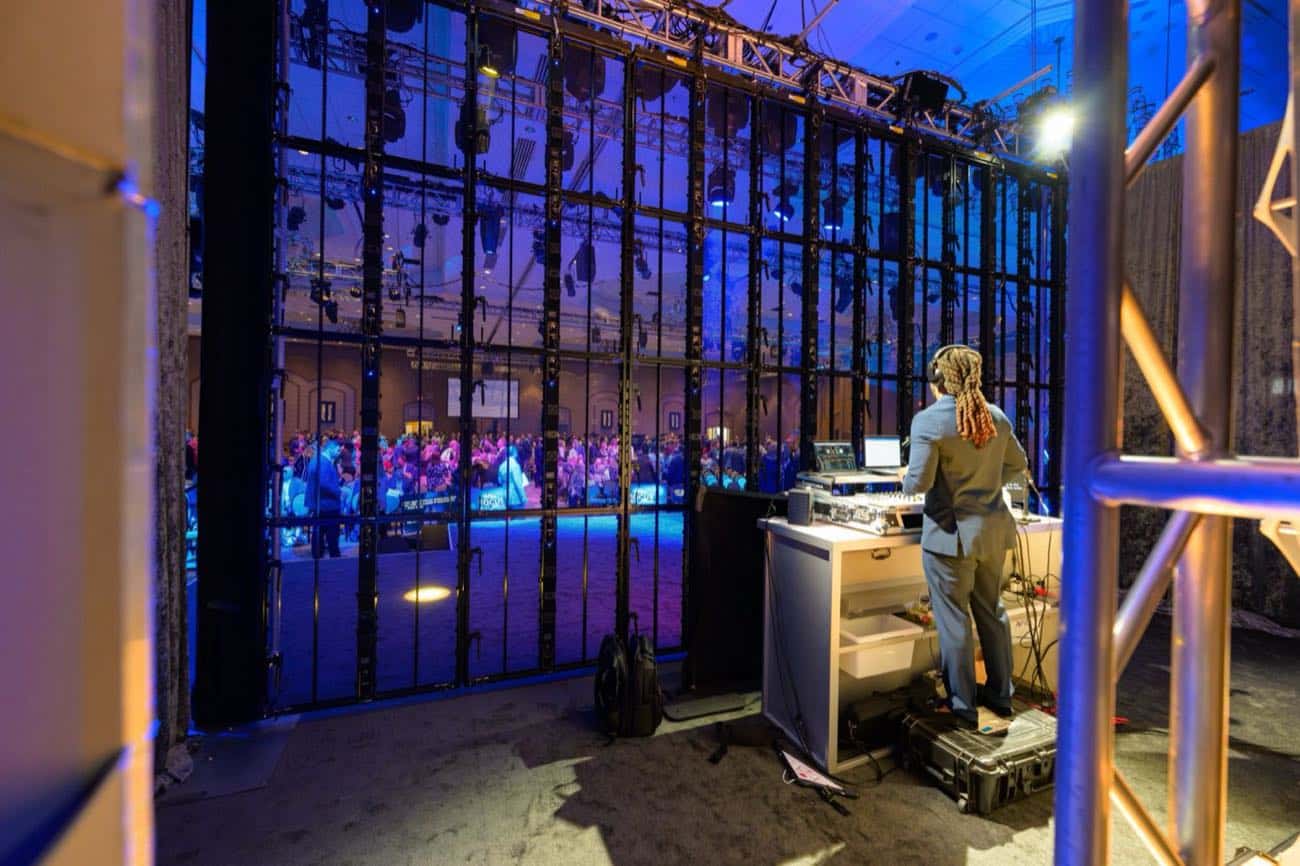
In 2026, the question is no longer whether AI will change music curator jobs. It already has. The streaming platforms that used to employ human playlist editors have laid off significant parts of those teams. The AI tools that replaced them are now serving billions of hours of personalized music every month. A separate wave of AI tools doesn’t just curate music, it generates it, and the world’s largest record labels are in active litigation over whether that’s even legal. Meanwhile, working music professionals at corporate events, restaurants, brand activations, and live venues are still being paid to do curation work that AI hasn’t replaced.
This is a snapshot of what’s actually happened to music curator jobs over the last three years, what’s still happening, and where the categories of curation work that are durable in this landscape sit. It draws on labor reporting, SEC filings from the major streaming platforms, the ongoing RIAA lawsuits against AI music generators, and Liz Pelly’s 2025 book Mood Machine, the most thoroughly documented account of how the curation economy actually works now.
See what AI curation can really do.
Introducing TheAIDJ.com
Curious how AI changes curation? Try it. Tell AIDJ a theme, watch it build a flowing playlist, preview it, and export to Spotify. The clearest way to understand the shift is to use it.
Key Takeaways
→ The displacement of human curators at major platforms is already documented, not hypothetical. Radio Ink, April 2024: “After Cutting Playlist Makers In Layoffs, Spotify Rolls Out AI Curator” captured the sequence directly.
→ AI music curation products are now mainstream. Per Spotify’s own quarterly reports, AI DJ has been rolled out across 50+ markets and 18 Spanish-speaking markets in 2024 alone, AI Playlist beta launched in major English-speaking markets, and Daylist hyper-personalized playlists update multiple times per day.
→ Beyond curation, AI music generation is now a litigated industry. The RIAA filed coordinated copyright infringement cases against Suno and Udio in June 2024 on behalf of Universal, Sony, and Warner, seeking up to $150,000 per work infringed potentially billions in damages.
→ The streaming platform “ghost artist” economy is now widely reported. Liz Pelly’s Mood Machine documented Spotify’s Perfect Fit Content (PFC) program, in which platform-commissioned anonymous tracks at lower royalty rates dominate ambient, focus, and sleep playlists squeezing out independent musicians who would historically have benefited from curator promotion.
→ The categories of music curation work that remain durable in 2026 are the ones AI can’t easily replicate: live event programming with situational awareness, brand-specific curation for commercial environments, music supervision for film and television, in-person DJ work at corporate and private events. These are categories where a human professional reads a specific room of specific people and adjusts in real time work that the existing AI curation products are not built to do.
DJ Will Gill works live music curation daily, the categorical work AI music curation tools are not yet built to replace. Contact us for live event work.
1. What “Music Curation” Actually Means in 2026
“Music curator” describes several different jobs that have evolved separately. Lumping them together is the most common source of confusion when people ask whether AI is taking these jobs. Three categories are worth separating before going further.
Platform editorial curators: the people who used to sit inside Spotify, Apple Music, Amazon Music, YouTube Music, Pandora, and similar services and hand-built genre playlists, mood playlists, and editorial features. This is the role most affected by AI displacement to date.
Music supervisors and music directors: the people who choose music for film, television, advertising, brand activations, retail environments, restaurants, hotels, gyms, and broadcast. This work has been less affected because each placement requires negotiating licensing, matching brand identity, and often providing creative judgment. AI tools don’t substitute for cleanliness.
Working DJs and live curators: the people who choose and sequence music in real time at events corporate functions, weddings, parties, conferences, clubs, festivals, broadcast moments. This work is fundamentally different from playlist curation because it’s reactive to a specific live audience. AI music curation products, as they exist in 2026, are not designed to do this work.
The headlines about “AI replacing music curators” are mostly about the first category. The second and third categories are subject to different pressures, and looking at them as one job misses what’s actually happening in each.
2. What Already Happened to Platform Editorial Jobs
The most documented shift has been at Spotify. In late 2023 and early 2024, Spotify executed multiple rounds of layoffs affecting thousands of staff, with significant impact on editorial and curation teams. In April 2024, the company rolled out an AI tool designed to do what the laid-off playlist editors had been doing. Radio Ink covered the sequence directly: “As the debate over the future of music curation process continues, Spotify has introduced an AI tool designed to craft playlists” after cutting playlist makers in layoffs.
The replacement products have rolled out aggressively since. Per Spotify’s quarterly SEC filings: AI DJ expanded to Spanish-speaking music fans in 18 markets, AI Playlist beta expanded to the United States, Canada, Ireland and New Zealand; and AI DJ rolled out to 50 additional markets, with Daylist introduced as a hyper-personalized playlist updating multiple times per day.
The 2025-2026 product evolution has continued. Per OnesToWatch’s April 2026 analysis: “In 2025, Spotify introduced DJ requests via voice or text to match moods, an Upcoming Releases hub tailored to each user’s listening history, and sharper Taste Profiles”. The trajectory is clear: every product category that used to require human editorial input is now being rebuilt as an algorithmic feature.
What’s true at Spotify is broadly true across the major platforms. Apple Music, YouTube Music, Amazon Music, and Deezer have all expanded algorithmic personalization features while reducing the editorial-curator footprint that existed in the mid-2010s. The economic logic is straightforward: paying a team of dozens of curators to build genre playlists costs a multiple of running a recommendation system across hundreds of millions of users, and the recommendation system’s output is judged by engagement metrics that the platforms control.
3. What AI Music Curation Actually Does Well in 2026
Setting aside the labor question, it’s worth being honest about what AI music curation does well, because that defines what categorical work it’s eaten and what it hasn’t.
Scale personalization: AI is genuinely good at recommending music at the scale of hundreds of millions of users, where each user gets a different feed based on their listening history. “Spotify’s recommendation system uses neural networks that combine collaborative filtering, audio analysis, and behavioral data to predict what each listener will enjoy”. This is the lane where AI curation clearly wins on the math.
Prompt-driven playlist building: Spotify AI Playlist and similar tools let users type a description (“songs to focus while writing in autumn”) and get a curated playlist back. The output is generally serviceable for casual use, even if it skews toward platform-favored content.
Voice-assistant style listening: Spotify AI DJ generates a continuous DJ-style stream with voice commentary between tracks. It’s been one of the platform’s most-promoted features through 2024-2025.
What AI curation doesn’t do well: the limits are also documented. “Spotify’s algorithm creates filter bubbles with predictable recommendations that can narrow listening habits. The system’s mainstream bias also favors data-rich content, which makes it difficult for new artists to gain visibility. While personalization improves user retention and convenience, it can still lead to repetitive listening and missed chances to discover breakthrough talent that human curators would highlight”.
This is the structural pattern: AI recommendation systems are extremely good at giving each user more of what they already like, and structurally bad at the kind of surprising, taste-broadening, breakthrough-artist-amplifying work that the best human curators have historically done.
4. The Ghost Artist Problem (Where Curation Becomes Cost-Cutting)
A related shift, less visible than the layoffs but arguably more consequential for working musicians, has been documented in Liz Pelly’s 2025 book Mood Machine. The book reports on what’s known internally at Spotify as Perfect Fit Content (PFC) a program through which the platform commissions tracks from session musicians and production music companies at lower royalty rates, then promotes those tracks heavily on its own ambient, focus, and sleep playlists.
The economic logic is straightforward: ambient and lean-back listening categories don’t require the listener to recognize the artist. If the platform can fill those categories with cheaper content that pays lower royalties, it can capture more margin on listening hours that would otherwise pay more to the original artists. The Guardian called Mood Machine “a savage indictment of Spotify”; The Times’ framing was “How Spotify is ruining your music taste.”
The PFC question is connected to but distinct from the AI music generation question. PFC content has historically been made by real session musicians under fake artist names; the AI generation question is whether platforms will increasingly fill these categories with cheaper machine-generated content. Both pressures push in the same direction for working musicians: less curation work, more competition from low-cost content, and fewer pathways to playlist placement that historically launched careers.
5. AI Music Generation (Suno, Udio, and the RIAA Lawsuits)
Beyond AI curation, AI music generation has become the second front of disruption, and the legal question is now firmly active. In June 2024, the Recording Industry Association of America filed coordinated copyright infringement lawsuits against the two leading AI music generation companies, Suno and Udio, on behalf of Universal Music Group, Sony Music Entertainment, and Warner Music Group.
Per the RIAA’s June 24, 2024 announcement: the cases allege “mass infringement of copyrighted sound recordings copied and exploited without permission by two multi-million-dollar music generation services, Suno and Udio”. Time reported damages sought “as much as $150,000 per work infringed. That could amount to potentially billions of dollars”.
The case-specific allegations are striking. Per the RIAA filings, both models could generate outputs substantially similar to copyrighted recordings “Authentic producer tags appear on some of the music coming out of Suno and Udio, and that people who use the services have generated sounds very similar to numerous artist-made songs, including The Temptations’ My Girl, Green Day’s American Idiot and Mariah Carey’s All I Want for Christmas. They have also produced vocals that are indistinguishable from famous recording artists, including Lin-Manuel Miranda, Bruce Springsteen and Michael Jackson”.
The case landscape continues to evolve. Per a 2026 tracker, Warner Music Group settled and dismissed its claims in November 2025 (terms not publicly disclosed beyond a “multi-million dollar settlement plus licensing partnership and Suno’s acquisition of Songkick from Warner”), while other plaintiffs continue litigating. Suno is fighting on fair use grounds in the District of Massachusetts, with a summary judgment motion filed in March 2026 arguing training is transformative use under 17 U.S.C. Section 107. The cases are likely to set durable precedent across the AI-and-creative-content industry.
The broader artist-side response has also been documented. “In April 2024, over 200 prominent artists signed an open letter specifically targeting AI music generators. The signatories include Billie Eilish, Nicki Minaj, Stevie Wonder, Katy Perry, and the estates of Bob Marley and Frank Sinatra”. The U.S. Senate introduced the NO FAKES Act around the same period to address voice and likeness deepfakes.
6. Where Human Curation Still Wins (and Likely Will Keep Winning)
The labor disruption has been concentrated. The categories of music curation work that AI hasn’t taken and isn’t structurally built to take in the current product generation share specific characteristics worth naming.
Live event curation with real-time audience response. A working DJ at a corporate event, wedding, conference, festival, or party is reading a specific room of specific people and adjusting music selection in real time based on body language, conversation density, and energy. The DJ knows when the CEO is about to walk on, when the catering crew needs an energy lift to push through the last hour, when the room is ready for the night’s peak, and when it needs to come back down. AI curation tools are not built for this work and aren’t going to be, because the data signals they rely on (skip rates, completion percentages, listening patterns) don’t exist at a live event.
Brand-specific curation for commercial environments. A retailer, hotel, restaurant, salon, gym, or any other commercial space has specific brand identity, customer demographic, and time-of-day energy requirements that don’t reduce to a generic recommendation. The licensed business music services (Soundtrack Your Brand, SoundMachine, Custom Channels, SiriusXM Music for Business, Jukeboxy, Cloud Cover Music, Mood Media, Rockbot) generally combine algorithmic infrastructure with human curators who build the brand-specific channels.
Music supervision for film, television, and advertising. Sync placement work requires creative judgment, licensing negotiation, and brand coordination that AI tools don’t substitute for. The category has remained stable as the streaming-era platform editorial work has contracted.
Editorial curation outside the major platforms. Independent radio stations, music journalism, podcast hosts, and emerging-artist platforms continue to do curation work that the algorithmic systems aren’t designed for. “Breaking free from Spotify’s algorithmic limitations starts with seeking human-curated sources… and follow human curators instead of relying only on automated suggestions”. This is a growing reaction against algorithmic homogenization.
The unifying pattern across these durable categories: AI curation is built for scale, serving many users with similar needs at low cost. Human curation is durable in categories where context, accountability to a specific audience, creative judgment, and real-time responsiveness define the value, and where the customer is willing to pay for that quality.
7. What This Means for Working Curators in 2026
If you are working in music curation now or considering entering the field, the practical implication of the above is concrete rather than abstract. The “human or AI” framing isn’t useful. The useful framing is which categories of curation work are durable and which aren’t.
What’s contracting (less work here over time): platform editorial roles at major streaming services, generic mood and ambient playlist creation, mass-market personalization work. The economic gravity in these categories is toward algorithmic delivery, and that direction is not going to reverse in the current platform economics.
What’s stable or growing: live event DJ and music director work where a specific room is being read in real time; brand-specific curation for commercial venues; sync supervision for film, TV, and advertising; independent editorial work at outlets that compete with platform algorithms on taste and discovery rather than scale; emerging-artist promotion work that operates outside the algorithmic recommendation systems.
Practical advice for curators repositioning: the categories above are the ones to develop credentials in. Build a portfolio of live work, brand-specific work, or sync work. Develop relationships with venues, brands, music supervisors, or specific artists rather than relying on platform editorial relationships. Charge for the categories where you’re paid for judgment and context, not for time spent. Use AI tools where they actually save time (sorting, organizing, surfacing candidates) without depending on them for the work clients are paying for.
The corporate live event lane specifically: this is where DJ Will Gill has built a career across 600+ corporate events for clients, including AT&T Business, CDW, Team USA, Virgin Galactic, NeoGenomics, Foot Locker, Home Depot, BGCA, and Fortune 500 organizations across sales kickoffs, user conferences, awards ceremonies, and executive summits. The corporate event DJ category is one of the clearest examples of a curation lane where context, real-time responsiveness, and accountability to a specific audience define the value, and where the working professionals doing the job in 2026 are still doing categorical work. AI curation products are not built to replace.

About the Author
William “DJ Will Gill” Gilbert is a working music professional who does live curation daily across 600+ corporate events for clients including AT&T Business, CDW, Team USA, Virgin Galactic, NeoGenomics, Foot Locker, Home Depot, BGCA, and Fortune 500 organizations. His work sits in the category of music curation that AI tools are not built to replace real-time, room-specific, accountable curation at corporate scale. Will is recognized as the Wall Street Journal’s #1 Corporate DJ, a Forbes Next 1000 honoree, and has 2,520+ five-star reviews. Broadcast credits include Super Bowl LIV and The Voice 2011.