
The DJ’s Guide to Flawless Song Selection (2026 Discipline Breakdown)
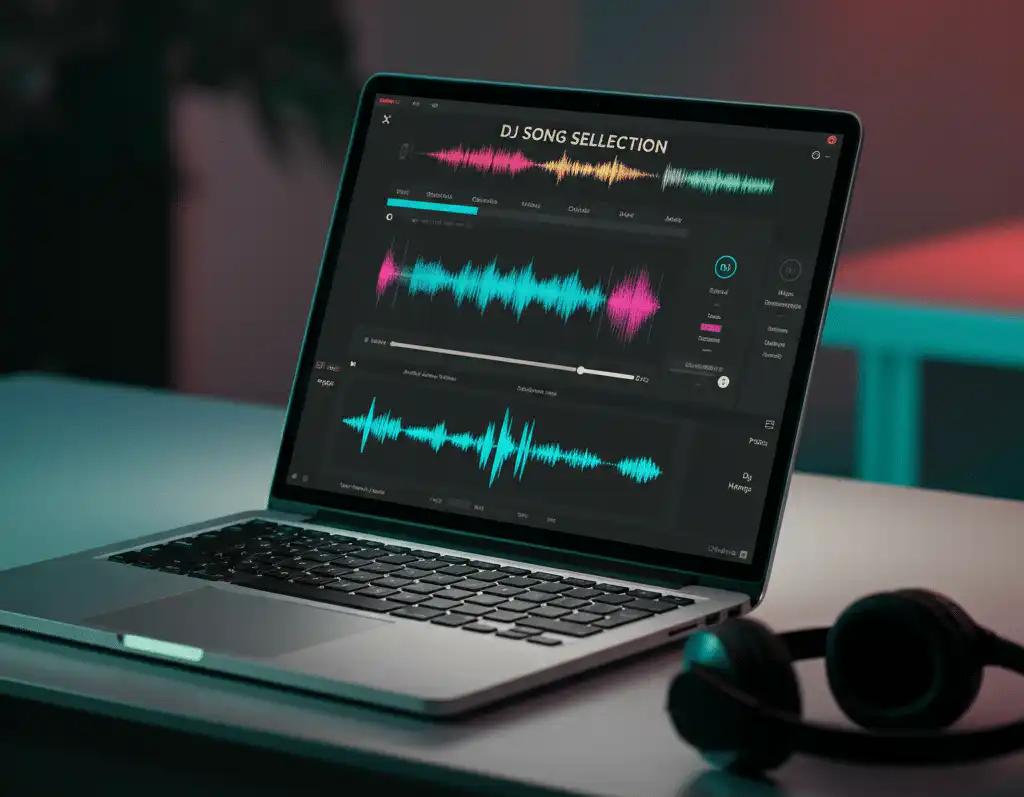
Song selection is the work most DJs underestimate. The technical side, beatmatching, EQ, and transitions can be learned in months; the selection discipline that separates a working professional from an enthusiastic hobbyist takes years to develop and never stops being refined. Flawless selection isn’t a single skill; it’s the integration of pre-event audience research, library depth, live crowd reading, and set-arc construction operating in real time. Each layer compounds: weak pre-event work makes live reading harder; a shallow library limits the curator’s room to adapt; poor arc construction wastes even excellent track-by-track selection. The DJs who consistently deliver memorable nights are the ones who treat selection as a discipline rather than an instinct.
This guide breaks the selection discipline into its component layers with verified industry data and the operational details that separate professional outcomes from amateur ones. For the dance-floor specific selection tactics that pair with this guide, see our breakdown of 5 song selection secrets that pack dance floors.
Key Takeaways
→ Flawless song selection is an integrated four-layer discipline: pre-event audience research, library depth, live crowd reading, and set-arc construction. 2024 corporate event research documented 82% of attendees citing atmosphere as the primary satisfaction factor, and atmosphere is produced specifically by integrated selection rather than any single skill.
→ Music has measurable neurological effects that justify treating selection as a serious discipline. Peer-reviewed research published in PLOS One in 2025 documented that music engages multiple brain regions simultaneously, the auditory cortex, limbic system, reward circuitry, and motor planning, and that selection effects on listener state are real and reproducible, not generic background noise.
→ The 2026 reality has restructured what “current music” means. TikTok’s Year in Music 2025 documented that 8 of the top 10 Billboard No.1 songs in 2025 had a viral TikTok moment before reaching the chart, and the February 2025 TikTok/Luminate Music Impact Report showed 84% of Billboard Global 200 entrants in 2024 went viral on TikTok first. DJs whose audience research doesn’t include TikTok music monitoring are missing the dominant front-end of current music discovery.
→ Streaming is the dominant music consumption format, which makes catalog breadth a higher-leverage asset than ever. The IFPI Global Music Report 2024 documented streaming as the largest revenue source in recorded music, generating roughly two-thirds of the industry’s $28+ billion annual recorded music revenue. The catalog a DJ can credibly draw from now spans decades of music with low marginal cost to add to a library.
→ The do-not-play list matters as much as the must-play list. Client briefings that capture both prevent the small selection failures that disproportionately damage event outcomes. Corporate event production research published in 2026 emphasized that brand-aligned soundtrack curation produces lasting positive associations, and brand alignment specifically requires understanding what NOT to play as much as what TO play.
Watch professional song selection in live performance contexts. For corporate event consultation, contact DJ Will Gill directly.
The Selection Discipline Foundation
Selection Versus Playlist Execution
The distinction that matters. Playlist execution is what someone does at home, building a Spotify playlist, listening to it, and possibly sharing it. Song selection in a live context is fundamentally different work: real-time decisions made under audience scrutiny, with the success criterion being room energy and attendee engagement rather than personal preference. The same person can be excellent at playlist execution and weak at live selection; they’re different skills with overlapping inputs. Understanding this distinction is the first step in treating life selection as a discipline that requires deliberate development.
Why Event Context Determines Everything
The context-first principle. The same DJ playing the same library produces different selection outcomes at a wedding, a corporate awards dinner, a private birthday party, and a club night. Event context determines what “good selection” means what audience the music serves, what energy arc the event needs, what brand sensitivity applies, and what cultural references work or don’t work for the room. A DJ who selects without first understanding the event context is operating without the most important input variable. Context-aware selection is the baseline for professional work; context-blind selection is amateur-tier regardless of technical execution quality.
The Two Failure Modes
What goes wrong? Selection failures break into two operational categories. The first is misreading the room, playing music that doesn’t fit the audience’s current state (too high-energy for a dinner segment, too mellow for a peak-time slot, wrong genre for the attendee demographic). The second is selection rigidity, sticking to a pre-built setlist when the room is signaling that the plan needs adjustment. Both failures are visible to the audience even when the technical execution is clean. Professional selection avoids both failure modes by integrating pre-event preparation with live adaptation, treating the pre-event plan as a starting framework rather than a script to execute mechanically.
Pre-Event Discovery and Audience Research
Wedding Context Discovery
The multi-generational specialty. Wedding selection operates against the most complex audience composition in DJ work, typically spanning four or five generations of family and friends, each with distinct musical taste profiles, cultural references, and energy expectations. The selection discipline shifts as the event progresses: cocktail-hour standards calibrated to acceptability across all generations; dinner ambience that supports conversation; opening dance-floor moments that bring older guests in before peak-time selection narrows toward younger generations’ preferences. The skilled wedding DJ treats the timeline as a series of distinct selection contexts within a single event rather than a single context with energy variation.
Corporate Event Context Discovery
The professional-tier selection. Corporate event selection has narrower bounds than other contexts. The audience is professional rather than personal; the brand is the company rather than an individual; the cultural references work differently in business settings than in personal celebrations. Music selection at corporate events typically favors widely recognized tracks over deeper cuts (because attendee familiarity is more important than musical depth), favors politically and culturally neutral material (because the audience composition is broader than a personal-network event), and accounts for the corporate brand’s positioning (luxury hospitality versus tech startup versus financial services produce different selection windows). Corporate selection is harder than it looks because the bounds are tighter and the failure modes are more visible to clients.
Private Party Context Discovery
The host-centered selection. Birthdays, anniversaries, milestone celebrations, and other private parties center on the host’s personal music taste and the social network attending in support of the host. The selection discipline for these events involves direct client briefing on the host’s preferences, friends-and-family musical references, and the social tone the host is aiming for (intimate gathering versus full party versus formal celebration). Private party selection often involves nostalgia-heavy programming music from specific eras of the host’s life alongside contemporary tracks that the attendee network is currently engaging with. The discovery process for private events depends substantially on the briefing conversation.
Club Night Context Discovery
The venue-brand-aligned selection. Club nights operate against a fundamentally different selection bound by the venue’s musical brand, which is the primary constraint. A house music club expects house music programming; a hip-hop venue expects hip-hop; a Top 40 venue expects mainstream pop. The DJ’s personal style operates within the venue’s established musical identity rather than overriding it. Venue research before a club booking is straightforward: what other DJs play at this venue, what attendee feedback exists on social media, and what specific genre and energy expectations the venue’s regular crowd brings. Mismatched venue selection produces the fastest negative audience response of any context. The regulars know what the venue should sound like, and they respond audibly when it doesn’t.
Client Briefing: The Conversation That Prevents Problems
The Must-Play List
The non-negotiable inclusions. The must-play list captures the songs the client expects to hear, whether for sentimental reasons (a first dance, a parent’s favorite, a corporate anthem), event-specific reasons (a graduation theme, an awards entrance), or audience-specific reasons (a regional favorite, a generational anchor). Capturing this list before the event prevents the highest-stakes selection failure: missing a song the client specifically requested. The list typically contains 10-20 tracks for a wedding, 5-10 for a corporate event, and 5-15 for a private party. Beyond this count, the list becomes a setlist rather than a must-play list, which creates rigidity problems.
The Do-Not-Play List: The More Important List
The negative space. The do-not-play list captures the songs, artists, and sometimes whole genres the client explicitly does not want played. This list matters more than the must-play list because the failure mode is more visible and harder to recover from. Playing a track, the client specifically excluded an ex’s favorite song at a wedding, a politically charged artist at a corporate event, a track tied to a negative memory at a private celebration, produces an immediate negative client response that’s hard to walk back. Professional DJs capture the do-not-play list explicitly during briefing, write it down, and double-check it before any borderline selection during live performance. The discipline of asking is essential; clients often don’t volunteer this list unless prompted.
Genre and Artist Preferences
The broader selection envelope. Beyond specific tracks, the client briefing should capture the broader selection envelope, which genres are in (and which are emphasized), which artists feature heavily, which musical eras matter, and which cultural references work. This information shapes the full selection pool from which live selection draws, not just the specific tracks pre-loaded into the timeline. The professional briefing conversation produces a genre-and-era matrix that the DJ can return to during live performance whenever the room needs adjustment; knowing what’s in bounds is as important as knowing what must be played.
Sensitivity Flags and Brand Fit
The contextual constraints. Some selection bounds aren’t about taste, they’re about sensitivity. A corporate event for a financial services firm has different appropriate content bounds than a tech startup’s holiday party. A wedding with a religious family in attendance has different language tolerance than one without. A private party for a recently-bereaved host has different emotional bounds than a milestone celebration. The professional briefing captures these sensitivity flags explicitly, clean-version-only requirements, no-political-content requests, language tolerance levels, and religious or cultural sensitivities specific to the attendee group. Brand-fit calibration follows directly from these flags.
Library Construction: Building the Selection Pool
Catalog Depth Requirements
The minimum effective library. A working DJ’s library typically holds several thousand tracks at a minimum, with established professionals carrying 20,000-50,000 or more. The catalog depth isn’t about playing every track; it’s about having the right track available for any selection moment that emerges during a live performance. A DJ whose library doesn’t include the song a client requests at the last minute is operationally exposed; a DJ whose library can supply the track, but in a remix the room won’t recognize, is also exposed. Depth means both breadth of catalog and depth within specific tracks (multiple versions, edits, mashups, alternate keys where applicable).
Era Coverage Discipline
The multi-generational coverage. Multi-generational events (weddings especially, but also milestone corporate events and family gatherings) require library coverage across multiple musical eras. A working library typically holds material from at least the 1970s forward, with strong concentrations in the 1980s, 1990s, and 2000s, where the highest-density mainstream party catalog sits. The 2010s and current-decade material covers the under-30 attendee profile; the 1960s and earlier material covers older attendees and occasional nostalgia moments. Era coverage discipline isn’t about having one or two tracks from each decade; it’s about having enough catalog at each era to construct a 20-30 minute set if the room calls for it.
Genre Coverage Discipline
The genre matrix. Beyond era coverage, the library needs genre coverage proportional to the DJ’s working contexts. A general-market mobile DJ needs strong pop, hip-hop, R&B, rock, dance/electronic, and country libraries; specialist DJs may concentrate on one or two genres. Regional genre coverage matters. Latin music has serious depth in Texas, California, Florida, and the Northeast; Afrobeats has growing relevance in major metros; reggae and dancehall matter in specific regional contexts. The library should mirror the geographic and demographic distribution of the DJ’s actual bookings rather than personal taste preferences.
Audio Quality Standards
The production-grade baseline. Professional DJ work requires production-grade audio files properly mastered, full-frequency, low-compression-artifact tracks that hold up through professional sound systems. Low-bitrate MP3s from consumer download sources sound audibly worse than properly mastered tracks when played through good speakers; the quality difference is more visible at corporate-event sound systems than at home or in cars. Working DJs source from licensed DJ pools (BPM Supreme, DJcity, ZIPDJ), professional download services, or original lossless rips rather than consumer streaming. The audio quality investment is one of the highest-ROI quality differentiators in DJ work. Audiences don’t necessarily know they’re hearing better-quality files, but they respond to the resulting audio difference.
Organization Standards Genre, Energy, BPM, Event Type
The retrieval infrastructure. A library is useful in proportion to how quickly the DJ can find the right track. Professional library organization typically operates on at least four orthogonal axes: genre (the catalog dimension), energy level (low/mid/high or 1-10 scale), BPM (for tempo-matched mixing), and event type (wedding cocktail, corporate dinner, club peak, etc.). Crates, smart playlists, and tagged categories enable real-time retrieval during live performance; searching for a “wedding dinner, 95 BPM, R&B, classic” track should take seconds, not minutes. The organization’s investment is one-time and durable; the ongoing benefit compounds across every performance.
Live Selection Real-Time Decisions
Watching the Room, Not the Decks
The visual-input discipline. The fundamental discipline of live selection is watching the room continuously. The DJ’s eyes spend more time on the audience than on the equipment. The equipment is supporting infrastructure for selection, not the focus of attention. Working DJs develop a habit of looking up between transitions, scanning the room during track playback, and returning to equipment only for the brief windows when active mixing requires it. The visual input from the room, dance floor density, attendee positioning, body language, and conversation volume are the primary data sources for live selection decisions.
Body Language Taxonomy
The signal hierarchy. Specific body language patterns provide reliable signals about the room’s state. Active engagement signals: people singing along, throwing their hands up at song hooks, mouthing lyrics, and taking phones out to record. Building-energy signals: head nodding, foot tapping, shoulders moving, drift toward the dance floor. Maintenance signals: steady dance floor energy without escalation, attendees staying on the floor but not showing peak excitement. Disengagement signals: drift away from the dance floor, attention shift to phones, conversation volume rising above the music, attendees leaving the room entirely. Each signal type calls for different selection responses; reading them accurately is the foundation of effective live adaptation.
Energy Reading
The room temperature. Beyond specific body language signals, the room has an overall energy temperature that shifts continuously through an event. Early-event energy is typically lower, and engagement is mediated by conversation; mid-event energy builds toward dance floor saturation; peak-event energy sustains at high intensity for a defined window; late-event energy declines as attendees tire and begin departures. Selection decisions calibrate to the current room temperature rather than to a pre-scheduled plan. When the room is hotter than expected, the DJ accelerates the peak phase; when it’s cooler, the DJ extends the build phase. The temperature read is intuitive but trainable; experienced DJs build accurate intuition through years of pattern recognition.
The Test-and-Adjust Pattern
The early-set probing discipline. Early in any set, the DJ doesn’t yet know exactly what this specific room responds to. The test-and-adjust pattern addresses this directly: deliberately sample different genres and era selections early, observe the room response, then narrow toward what’s working. Within the first 15-30 minutes of a set, a working DJ typically plays a pop hit, an older classic, a contemporary track, and possibly a genre stretch, measuring engagement on each before committing to a denser version of what produces response. This probing phase is part of the selection discipline rather than a sign of indecision; it’s how the DJ learns the specific room’s preferences in real time.
The Set Arc Building the Musical Journey
Warm-Up Phase
The conversation-tier selection. The warm-up phase typically runs from event start through the early portion of the program cocktail hour, arrival period, opening ceremony, and dinner service. Selection during this phase favors low-to-mid energy material that supports conversation rather than competing with it. Volume is moderate, tempo is steady, genre tends toward neutral mainstream or instrumental coverage. The warm-up isn’t about getting the room dancing; it’s about establishing the right baseline sound atmosphere for the event’s opening segments and signaling the DJ’s tonal direction for the rest of the night.
Building Phase
The transition layer. The building phase bridges from warm-up to peak time, typically corresponding to the dance floor opening, the program transition from formal to social, or the post-dinner shift. Selection during this phase introduces progressively more recognizable mainstream tracks, gradually raises tempo, and signals to attendees that the dance floor is available. The build is gradual rather than abrupt; sudden energy jumps from warm-up to peak intensity often produce dance floor avoidance from attendees who would have engaged with a smoother build. The phase ends when the dance floor reaches its first sustained density and the room signals readiness for peak-time selection.
Peak Phase
The high-density selection. Peak phase selection deploys the strongest material in the library the songs with the highest recognition factor, the strongest dance-floor pull, the most reliable audience response. The phase typically runs 30-90 minutes, depending on event duration; longer peak phases require a deeper peak-tier catalog. Tempo holds in the 100-130 BPM range for most genres (Latin and hip-hop have specific BPM patterns), volume sustains at the venue’s optimal level for dance-floor energy, and song selection prioritizes mass-recognition tracks over deep-cut taste demonstrations. The peak phase is where the DJ’s library investment pays off most visibly.
Cool-Down Phase
The transition out. The cool-down phase manages the energy decline from peak to event close. Selection tempo gradually decreases, attention shifts from peak hits to crowd-favorite mid-tempo material, and the final tracks signal the event’s approaching conclusion. A clean cool-down lets attendees decompress before leaving; an abrupt cool-down (or no cool-down at all) leaves the room jarred at the moment of departure. The phase typically runs 15-30 minutes, depending on event length, and ends with a closing track that meets the event’s narrative arc.
The Closing Track
The narrative resolution. The final track of a set is the closing image of the event in attendees’ memories. The selection criteria for closing tracks are different from peak-time selection; the closer doesn’t need to be a dance-floor anthem; it needs to feel like a fitting end. For weddings, a slow last dance or a sentimental favorite often works. For corporate events, a polished mid-tempo close or a brand-aligned anthem typically lands well. For private parties, the host’s favorite or a track tied to the event’s specific theme can produce the strongest emotional close. The closing track is small in duration and high in narrative impact.
Handling Requests Without Killing the Vibe
The Friendly Default
The professional reception. Approachability matters during request handling, even when the request can’t be honored; the interaction shapes the requester’s experience of the event and the DJ. The professional default is genuine friendliness, attention to the request, and clear communication about whether and when the track can be played. Brushing off requests dismissively damages the room’s perception of the DJ, even when the requested track wouldn’t have worked. The selection discipline includes the social discipline of professional request handling; the two are intertwined in any client-facing context.
The Right-Moment Integration
The integration discipline. Most requests don’t need to be played immediately; they need to be played at a moment when the requested track fits the room’s current state. A pop request during a hip-hop set can be played when the natural genre transition arrives; a slow-song request during peak-time energy can be played during the cool-down phase; a deep cut request from a knowledgeable attendee can be integrated at a moment when the room is willing to follow into less mainstream material. The integration discipline lets the DJ honor requests without disrupting the broader set arc, producing positive outcomes for both the requester and the room.
The Judgment-Based Decline
The professional no. Some requests can’t be honored because the track is on the do-not-play list, doesn’t fit the venue’s brand, would derail the set arc, or simply isn’t in the library. The professional decline acknowledges the request, explains briefly why it can’t be played, and pivots to an alternative when possible (“I can’t play that one tonight, but I have something similar coming up”). The decline preserves both the DJ’s set integrity and the requester’s dignity. The skill is in the explanation rather than the refusal; most requesters accept a professionally framed no when the framing is clear and respectful.
Corporate Event Selection: The Professional Tier
How Corporate Selection Differs
The narrower bounds. Corporate event selection operates within tighter bounds than other contexts. The audience is professional rather than personal colleagues, clients, business partners which limits the cultural references that work. The brand is the corporate sponsor; every selection should be readable as on-brand for the company hosting the event. The stakes are higher the audience includes decision-makers whose impression of the event shapes future business relationships. Selection at the corporate tier favors broadly recognizable material over taste demonstrations, favors politically and culturally neutral programming, and accounts for the corporate brand positioning in every selection moment.
The Brand-Fit Calibration Discipline
The brand-aware filter. Every track at a corporate event is filtered for brand fit. Does this song read as on-brand for the company hosting the event? A luxury hospitality brand event needs different music than a tech startup launch; a financial services client conference needs different music than a consumer marketing celebration; a healthcare industry awards dinner needs different music than a creative agency holiday party. Brand fit isn’t always obvious without the context of the specific client; experienced corporate DJs develop the discipline of researching client positioning before the event and filtering selection through that positioning during live performance.
Multi-Segment Audience Reading
The composite audience. Corporate event audiences are typically composite multiple departments, multiple seniority levels, and multiple regional offices represented at the same event. Reading the room at a corporate event means reading several rooms simultaneously: are the senior executives engaged or checking out, are the younger employees on the dance floor, are the international attendees responding to the selection or feeling excluded by it? Multi-segment reading is harder than reading a more homogeneous personal-event audience because the signals are mixed, a track that lights up the marketing team may bore the finance team, and the DJ has to decide which segment to optimize for at each moment. DJ Will Gill’s recognition as the Wall Street Journal’s #1 Corporate DJ and Emcee is built on multi-segment reading skill operationalized across 600+ documented corporate events.
The Corporate-Tier Selection Standard
Documented track record. Client work spans AT&T Business, CDW, Team USA, Virgin Galactic, NeoGenomics, Foot Locker, Home Depot, Hilton, BGCA, PepsiCo, PayPal, and the United Nations. 2,520+ five-star Google reviews accumulated over 600+ documented corporate events demonstrate the operational consistency that integrated selection discipline produces at the corporate-event tier.
About the Author
William “DJ Will Gill” Gilbert has been a DJ & Emcee for more than 18 years. He has documented client work for AT&T Business, CDW, Team USA, Virgin Galactic, NeoGenomics, Foot Locker, Home Depot, Hilton, BGCA, PepsiCo, PayPal, and the United Nations. Also a Forbes Next 1000 honoree with broadcast credits including Super Bowl LIV (2020), The Voice (2011), and MTV’s The Real World: Hollywood (2008). 2,520+ five-star Google reviews accumulated over 600+ documented corporate events.
2,520+ Google Reviews · IMDB · Mixcloud · Instagram · Contact