
Sales Kickoff Meeting Ideas That Drive Real 2026 Results
Most sales kickoff meeting idea lists fall into the same trap: they list everything a planner could possibly do at an SKO, with no signal about which ideas actually drive behavioral change after the event ends. Trivia games. Mystery prizes. Dress themes. Keynote speakers. Recognition awards. Outside speakers. Panel discussions. Playbooks. Breakouts. The list is technically accurate but practically useless because it leaves the planner with the same problem they started with too many options, not enough sense of which ones to prioritize. The result is the typical SKO that includes a little of everything and gets remembered for none of it, because nothing was given enough weight to actually stick.
This guide takes a different approach. The seven ideas covered below are the ones that 2026 industry data and the broader SKO research base consistently associate with measurable post-event behavior change pipeline acceleration, methodology adoption, retention improvements, and the operational shifts that justify the SKO investment to finance. Each idea is paired with the supporting data, the effort required to execute it well, and the conditions under which it actually delivers. For the broader SKO context, the companion articles on how to do a sales kickoff, why have a sales kickoff, and SKO topics cover the strategic framework that determines which of these tactical ideas are right for your specific program.
Key Takeaways
The single highest-ROI category of SKO meeting ideas is hands-on practice programming role-play, simulation, AI co-creation labs, deal practice rather than content delivery. Prospeo’s 2026 SKO planning analysis identifies the 30% practice rule as the strongest single design discipline for SKO effectiveness: at least 30% of total agenda time should be active practice (reps doing the work) rather than passive content delivery (reps watching a presenter). The practice rule maps directly to behavior change after the event, while content-heavy SKOs consistently produce the 80% content forgotten within weeks pattern that destroys the ROI argument for the program. Highspot’s March 2026 SKO planning guidance reinforces the point with specific recommendations for AI co-creation sessions and hands-on practice that turn abstract concepts into repeatable tasks reps can use immediately after the event.
Pre-event programming consistently outperforms in-event programming on retention and behavior change because it primes the audience and stretches the SKO touchpoints across a longer learning window. SalesHood’s March 2026 SKO guide documents the most effective pre-event idea: reps record elevator pitches as pre-work, which are then used in a peer-scored leaderboard format during the event to celebrate winning approaches. The format works because it converts what would otherwise be passive listening at SKO into active participation that started weeks earlier. Other pre-event ideas with measurable impact include manager pre-event 1:1 templates, deal-practice assignments tied to real pipeline opportunities, and AI tool exploration tasks that give reps hands-on familiarity before the formal training begins at SKO.
Recognition programming is where most SKOs underinvest in ROI terms. Prospeo’s 2026 ramp-acceleration math documents that a 30-day reduction in new-hire ramp time for a 20-person cohort produces roughly $385K in additional pipeline contribution, and recognition programming is one of the strongest levers for retention and high-performer signaling. Peer-nominated awards consistently outperform manager-nominated awards on attendee engagement because they elevate the field voice rather than just the leadership voice. Story-bank reveals segments where top performers share specific deal stories with named clients and dollar amounts produce higher recall than generic “best practices” panels because the specificity gives the audience concrete patterns to model.
Engagement programming between executive sessions is the most underweighted line item in SKO budgets relative to its retention impact. SalesHood’s March 2026 SKO guide warns explicitly against death-by-PowerPoint SKO experiences and identifies live audience polling, competitive storytelling contests, and team-based deal simulations as the most effective formats for converting passive listening into active participation. Professional emcee and game show programming functions as the connective tissue between executive keynote sessions converting what would otherwise be passive transition moments into active audience-engagement segments with sales trivia, celebrity mashup formats, and competitive team rounds that maintain the energy curve the opening keynote established. For full-day or multi-day SKOs, this connective programming consistently outperforms agenda density alone at maintaining engagement.
Post-event reinforcement is the single most predictive factor for whether the SKO produces measurable behavior change three months later. Prospeo’s 2026 SKO data documents that 80% or more of SKO content is forgotten within weeks of the event without active reinforcement which means the SKO’s ROI argument depends entirely on the reinforcement system that runs in the days, weeks, and months after the event. Naboo’s February 2026 SKO planning analysis documents the most effective reinforcement ideas: regional manager templates that translate the SKO content into market-specific execution plans, weekly micro-content from leadership (30-second videos, written check-ins), and quarterly recommitment moments where the team revisits the SKO commitments against actual results. The ideas without reinforcement produce inspiration; the ideas with reinforcement produce results.
Watch DJ Will Gill perform live. Contact him now to book your event.
“The typical SKO includes a little of everything and gets remembered for none of it, because nothing was given enough weight to actually stick. The ideas that drive results are the ones a planning team commits to deeply enough to make stick.”
The Ideas Inflation Problem: Why Most SKO Meeting Ideas Don’t Drive Results
The biggest problem with most SKO meeting idea articles isn’t that they recommend bad ideas most of the ideas on the typical list are perfectly reasonable. The problem is that they treat all ideas as equally valuable, when 2026 industry data shows clearly that some ideas correlate with measurable post-event outcomes and others correlate with nothing more than a temporary energy lift that fades by Q2. Prospeo’s 2026 SKO planning analysis documents the core asymmetry: hands-on practice formats and active participation segments consistently produce higher post-event behavior change than passive content delivery, regardless of how engaging the content is or how charismatic the speaker is. The ideas that drive results aren’t necessarily the flashiest; they’re the ones that require the audience to do something rather than watch something.
The second problem is volume. A 13-tip article suggesting themes, keynotes, recognition, guest speakers, team-building, goal alignment, practical tools, panels, playbooks, fun and rewards, personal development, visionary closing, and post-meeting follow-up is technically thorough but practically unactionable, because no planning team can execute 13 things well in a two-day window. The strongest 2026 SKOs commit to a smaller number of high-impact ideas and execute them deeply rather than spreading across every possible programming option. The discipline is harder than it sounds because every executive sponsor wants their preferred element added to the agenda, and the natural drift is toward inclusion of everything. The fix is to filter every proposed idea through a single question: does this directly drive a behavior the team needs to exhibit differently three months from now? Ideas that pass produce results. Ideas that fail produce filler.
Pre-Event Ideas That Move the Needle
The single most underused category of SKO meeting ideas is pre-event programming. Most planning teams treat the SKO as the event itself and treat pre-event communication as just logistics emails when in reality the pre-event window is one of the highest-leverage learning moments in the entire SKO experience, because the audience hasn’t yet been overwhelmed by content and is psychologically ready to engage. SalesHood’s March 2026 SKO guide documents the strongest pre-event idea: have reps record their elevator pitches as pre-work, then use those recordings during the event in a peer-scored leaderboard format that celebrates winning approaches. The format converts the SKO from a one-week event into a multi-week learning experience and creates a natural integration point between pre-work and main-stage programming.
Manager pre-event 1:1 templates are the second strongest pre-event idea. Two weeks before the SKO, every manager runs a structured 1:1 with each direct report covering three questions: what did you learn most from last year, what is the one thing you most want to learn at SKO, and what is the one customer-facing behavior you most want to change in the coming year. The 1:1s prime the audience to arrive at the SKO with specific learning intent rather than passive curiosity, and they give managers a structured baseline to compare against three months after the event. Naboo’s February 2026 SKO analysis notes that pre-event manager involvement is one of the most consistently underused levers for SKO effectiveness, and the planning teams that execute the pre-1:1s well consistently report stronger Day-1 audience engagement.
Deal-practice assignments tied to real pipeline opportunities are the third pre-event idea worth investing in. Each rep arrives at the SKO with two or three of their actual current deals identified for use in role-play and breakout exercises during the event, which means the practice segments are operating on real customer scenarios rather than hypothetical ones. The pattern produces measurably better post-event execution because the practice maps directly to the deals the rep is going to be working on the Monday after the SKO. The format also serves as a built-in qualification check for the rep’s pipeline surfacing the deals they’re stuck on, the objections they don’t know how to handle, and the discovery questions they’re not asking.
In-Event Ideas That Drive Behavior Change: Practice Over Presentation
The 30% practice rule is the most important in-event programming discipline for 2026. Prospeo’s 2026 SKO benchmark data documents that the strongest-performing SKOs allocate at least 30% of total agenda time to active practice role-play, simulation, AI co-creation, deal exercises, objection-handling sprints rather than passive content delivery. The rule is harder to execute than it sounds because the natural design instinct is to maximize content time and minimize practice time, and the executive sponsor often pushes for more presentation rather than less. The discipline pays off because practice-heavy SKOs consistently produce measurable behavior change three months later, while presentation-heavy SKOs consistently produce the 80% content-forgotten pattern that destroys the program’s ROI argument.
AI hands-on labs are the highest-leverage practice format for 2026 specifically because AI integration is the largest single new agenda category across nearly every SKO. Highspot’s March 2026 SKO planning analysis documents that AI co-creation sessions with tools like Microsoft Copilot, role-specific AI workflow breakouts, and hands-on practice with the company’s actual AI sales tools turn abstract AI concepts into repeatable tasks reps can use the Monday after SKO. The labs work best when they’re tied to specific reps’ actual deals (carrying forward the pre-event deal-practice assignments) rather than running on generic example data. The pattern produces both immediate behavior change (reps using the AI tools in their first post-SKO week) and longer-term capability (reps recognizing additional AI use cases as they encounter them through Q1 and Q2).
Customer panel programming is the strongest non-practice in-event idea. A 30-minute segment with two or three actual customers ideally from the company’s ICP answering specific questions about their buying experience, what they value, what they hate, and what they wish vendors did differently produces higher attendee engagement and recall than nearly any other format. The reason is structural: customer voice carries a credibility premium that internal speakers can’t match, and customer-stated objections feel different from rep-quoted objections even when the content is similar. The format also reinforces ICP work in a way that abstract ICP training cannot, because the audience is hearing the ICP describe themselves directly.
Recognition and Engagement Ideas That Stick Past Q1
Peer-nominated awards consistently outperform manager-nominated awards on engagement and recall. The reason is psychological: when a rep’s peers identify them for recognition, the signal carries stronger credibility within the rep community than when leadership identifies them, because peers see the day-to-day work that managers often miss. SalesHood’s March 2026 SKO guide notes that peer-driven recognition formats story contests, peer leaderboard voting, team-based recognition consistently produce higher attendee engagement than the traditional manager-curated awards-ceremony model. The pattern doesn’t replace executive-level recognition (which still has its place for the largest top-performer awards); it complements it with a category of recognition that lands differently in the room.
Story-bank reveals are the second strongest recognition format. Rather than a generic “best practices” panel where top performers share abstract advice, the story-bank format has each featured rep walk through one specific deal named client, specific deal size, specific objection they overcame, specific competitive scenario they navigated, specific outcome. The specificity is what makes the format work: the audience can extract concrete patterns from a named deal that they cannot extract from “be customer-focused” advice. The format also doubles as ICP and competitive intelligence training, because the deal stories surface what’s working in specific market segments and against specific competitors. The pattern works best when the featured reps are coached in advance to focus their stories on transferable behaviors rather than personal narrative what they did that other reps could replicate, rather than what they did that depended on personal genius.
Connective engagement programming between executive sessions is the single most underweighted line item in SKO recognition design. Most planning teams concentrate recognition into the formal awards ceremony at the end of Day 1 or Day 2 when in reality the most effective recognition happens in micro-moments throughout the agenda. SalesHood’s 2026 SKO guide documents the most effective formats: live audience polling that surfaces team-level wins in real time, game show segments that tie sales content to recognition rounds, and emcee programming that calls out specific reps and teams during transitions between keynote sessions. The pattern works because it distributes recognition across the entire SKO arc rather than concentrating it in one ceremonial moment, which means reps experience the recognition energy throughout the event rather than only at the end.
Post-Event Ideas That Convert SKO Energy Into Pipeline
The post-event reinforcement window is where most SKO investment value is realized or lost. Prospeo’s 2026 SKO data documents that 80% or more of SKO content is forgotten within weeks without active reinforcement, which means the ideas that move the needle on pipeline three months later are the ideas that operate after the SKO has officially ended. The strongest post-event format is the manager translation 1:1 within seven days of the SKO, every manager runs a structured 1:1 with each direct report covering three questions: what was your single biggest takeaway from SKO, what is the one behavior you committed to changing, and how can I support you in making that change stick. The 1:1s convert the SKO commitments into individual accountability and give managers a baseline to reference at the 30-, 60-, and 90-day marks.
Weekly micro-content from leadership is the second strongest reinforcement format. Naboo’s February 2026 SKO analysis documents the format: a 30- to 60-second video from the CRO or VP of Sales delivered every Friday for the first 8-12 weeks after SKO, each one tying back to a specific theme or commitment from the kickoff. The format works because it maintains executive presence in the rep’s weekly attention loop without requiring formal meetings, and the cumulative effect of 8-12 micro-reinforcements is substantially higher retention than a single SKO event followed by silence. The discipline costs roughly an hour per week of CRO time and produces measurably better post-event behavior change at almost any team scale.
Quarterly recommitment moments are the third post-event format worth building into the planning calendar from the start. At the 90-day mark after the SKO, the team revisits the SKO commitments against actual results which behavior changes stuck, which didn’t, what learning is needed to course-correct. The pattern works best when it’s positioned as a quarterly checkpoint rather than as a one-time follow-up, because it normalizes the expectation that SKO content is referenced throughout the year rather than experienced as a one-week event. GTM Club’s 2026 SKO planning guide emphasizes that the SKO works best when integrated into a year-long communication and reinforcement system rather than treated as a standalone event and the quarterly recommitment moments are the structural artifact that makes that integration actually happen.
2026 SKO Meeting Ideas: Results Impact vs Production Effort
| Meeting Idea | When It Happens | Production Effort | Results Impact | Best-Fit Context |
| Pre-Work Pitch Recording + Leaderboard | Pre-event | Low to Medium | High | Any SKO with field rep audience |
| Manager Pre-Event 1:1 Templates | Pre-event | Low | High | Mid-to-large SKOs with manager layer |
| AI Hands-On Labs (Role-Specific) | In-event | Medium to High | Highest | Mandatory for 2026 SKOs |
| Customer Panel (Live ICP) | In-event | Medium | High | ICP-focused or competitive SKOs |
| Story-Bank Reveals (Named Deals) | In-event | Medium | High | Recognition-heavy SKOs |
| Emcee Game Show Programming | In-event | Medium | High (engagement) | Multi-day SKOs needing connective tissue |
| Manager Post-Event Translation 1:1 | Post-event | Low | Highest | Mandatory for any results-focused SKO |
| Weekly Micro-Content from Leadership | Post-event (8–12 wks) | Low | High | Any SKO with CRO/VP-Sales sponsor |
Data compiled from Prospeo 2026 SKO benchmarks (30% practice rule, 80%+ forgotten, $385K ramp math), SalesHood March 2026 SKO guide (peer leaderboard, audience polling, anti-PowerPoint formats), Highspot March 2026 (AI co-creation), Naboo February 2026 (manager templates, micro-content), and GTM Club 2026 (year-long reinforcement system).
DJ Will Gill
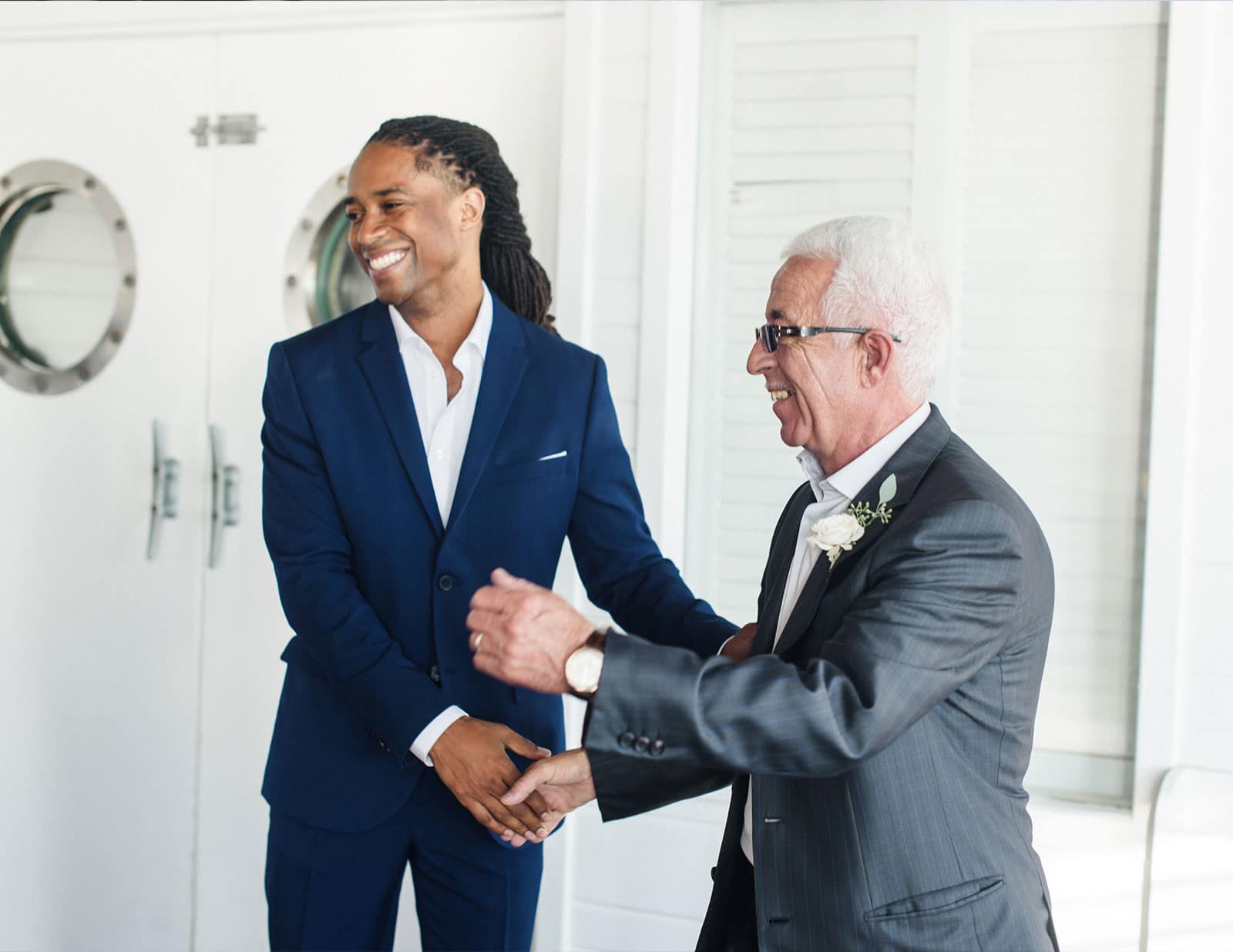
Will Gill is a corporate DJ, emcee, and audience engagement specialist a Forbes Next 1000 honoree, the Wall Street Journal’s #1-ranked corporate DJ and emcee, with 2,520+ five-star Google reviews across 600+ annual corporate engagements. He specializes in the connective engagement programming that turns SKO meeting ideas from inspiration-only formats into retention-driving experiences — emcee transition segments, sales trivia formats, celebrity mashup game shows, story-bank reveals, and the live audience-engagement segments that maintain energy across multi-hour agenda blocks. His 3-in-1 service combining DJ programming, emcee leadership, and audience engagement segments is built specifically for the SKO environments where executive content needs supporting infrastructure to actually stick. His client roster spans Google, Amazon, Microsoft, Salesforce, the United Nations, and the Boys & Girls Clubs of America. See his on-stage credits on IMDb. Reach out to discuss your 2026 SKO meeting programming.
Corporate Events Hosted Annually
Five-Star Google Reviews
WSJ-Ranked Corporate DJ and Emcee