
How To Run a Game Show Format at a Corporate Event (Without Cringe) | DJ Will Gill
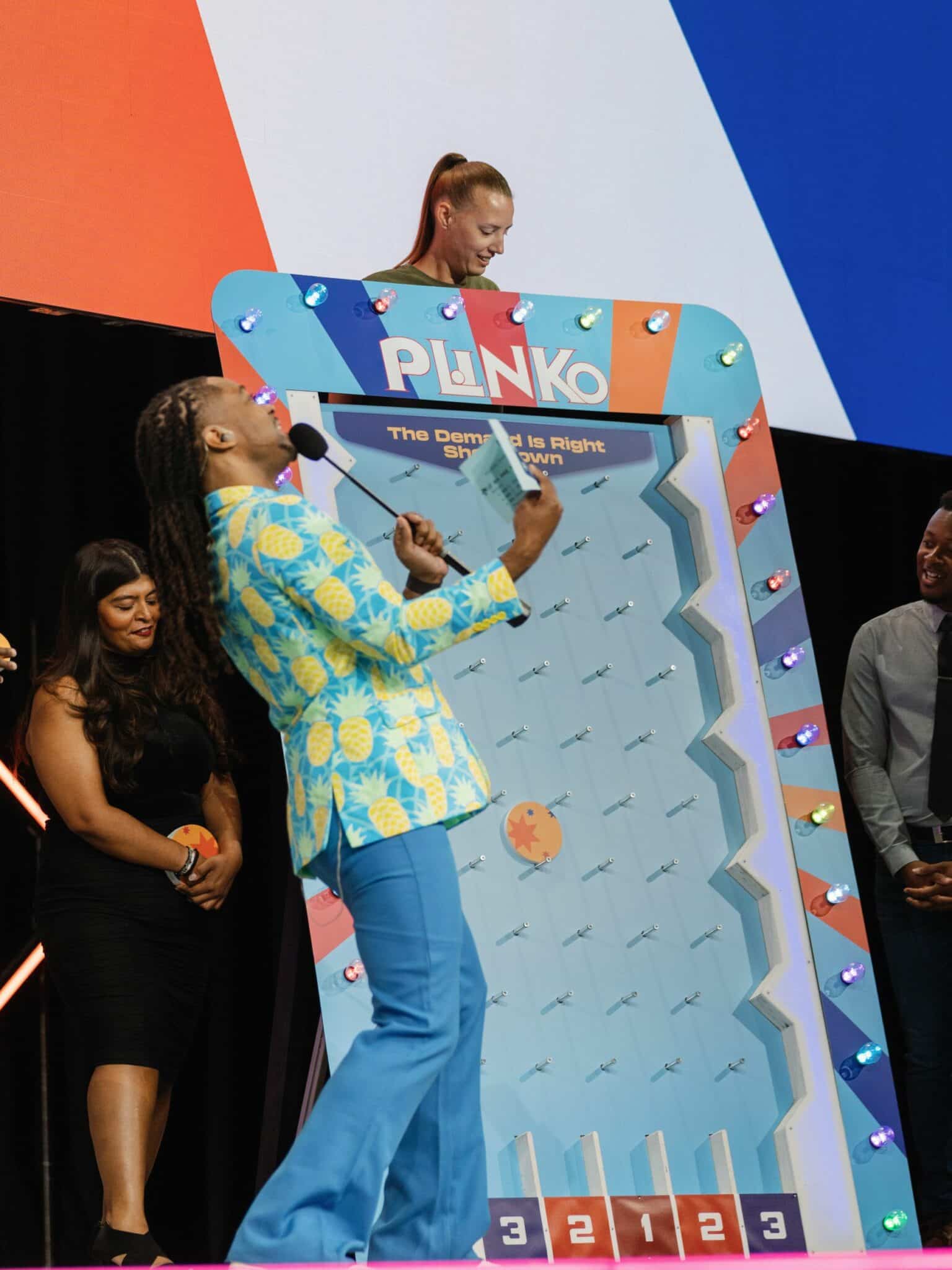
Almost every company has lived through the cringeworthy version of a corporate game show. A junior manager with a tucked-in polo reads questions off an iPad. The “teams” are whatever table you happened to sit at. The prize is a $10 gift card and the right to wear a foam crown. Half the room is on their phones by question three. That is not a game show. That is a meeting with sound effects, and it is exactly the kind of programming that quietly trains employees to dread the next all-hands.
Done right, a corporate game show is one of the highest-leverage blocks on the agenda. Industry data from event organizers suggests 87% of event organizers report higher engagement, participation jumps of 42%, and knowledge retention improvements of 34% from gamified formats. The trick is treating it like a TV show, not an icebreaker. This piece walks through how to choose the format, host it, write the questions, run the tech, set the stakes, and avoid the eight mistakes that send a corporate game show straight into the cringe zone.
Want a host who can DJ, emcee, and run the game show block all in one? Contact DJ Will Gill.
Key Takeaways
- Corporate game shows cringe out when they are run by a non-host. A real emcee is the single biggest variable in the room.
- Match the format to the room. Coworker Feud and Wheel of Fortune fit larger rooms. The Acronym Game and Spot the Difference fit smaller, sharper crowds.
- Write questions that lightly roast the company, not the employees. Insider context is what makes the room lean in.
- Run the tech like a TV show. Music cues, sound effects, scoreboards, and clean transitions are what separate “show” from “meeting.”
- Real stakes, not foam crowns. The prize should be specific, public, and worth fighting for.
1. Why Corporate Game Show Time Goes Cringe
The cringe is not the format. It is the execution. Game show mechanics are some of the most studied engagement devices in entertainment, and event data backs this up. Industry research from event platforms reports that gamified event experiences see roughly 48% more engagement than non-gamified ones, and learning research cited by event managers notes that participants can recall up to 90% of an interactive gamified task, compared to roughly 10% of what they read and 20% of what they hear.
So why does the average corporate game show still feel like a punishment? Five reasons show up over and over again. No real host. No real stakes. Generic questions that could apply to any company. Confusing rules. And a runtime that drags 20 minutes past the energy peak. Fix those five, and the cringe disappears.
2. Pick the Right Format for the Room
Not every game show fits every room. A 600-person sales kickoff in a ballroom needs a different format than a 40-person leadership offsite in a hotel boardroom. Here is how I match formats to rooms in my own corporate work:
- Coworker Feud (Family Feud style): best for 100 to 1,000+ rooms. Two teams on stage, the rest of the audience reacts. High energy, easy to follow from the back row.
- Wheel of Fortune style: best for large rooms with a brand or theme tie-in. Visually loud, easy to put on the big screens, and great for sponsor or product reveals.
- The Acronym Game (TAG): best for 30 to 200 person rooms where most people speak the same internal jargon. Insider acronyms make this format roast itself in a good way.
- Spot the Difference: best for visually driven brands and shorter blocks (10 to 15 minutes). High participation with low setup.
- Mock Election / Mock Awards: best for closing blocks at multi-day conferences. Lets the room recap the week and crown internal heroes.
The format is a function of room size, energy goal, and how much the audience already shares as a culture. Pick once, and pick on purpose.
3. Hire a Real Host, Not a Volunteer Manager
The single biggest variable in whether a corporate game show works is the person holding the microphone. A real host calibrates pace, reads the room, handles the moment when a contestant freezes, and turns awkward beats into the funniest part of the show. A volunteer reads the next question.
This matters because the upside is not theoretical. Research summarized for corporate event planners notes that gamification can drive engagement boosts in the 100 to 150% range compared to non-gamified formats, and immersive design has become a clear attendee expectation. Bishop McCann citing event data reports that roughly 64% of attendees say immersive experiences are an important part of their event experience. None of that lands if the host treats the block like a meeting agenda item.
4. Build Teams the Audience Actually Cares About
Random teams kill the stakes. The room only cares who wins if the room knows who is playing. The fix is to build teams the audience already has an opinion about:
- Department vs. department (Sales vs. Marketing, Engineering vs. Product). Built-in rivalries do the heavy lifting.
- Region vs. region (East Coast vs. West Coast, EMEA vs. APAC). Great for global all-hands and sales kickoffs.
- Leadership vs. interns. Highest-variance format. When it lands, it is the moment everyone clips for LinkedIn.
- Tenure brackets (1 year and under vs. 10+ years). Surfaces institutional knowledge and gives newer employees a real seat.
Workforce research also makes this case sharply. Articles summarizing collaboration data note that around 75% of workers see collaboration as vital to workplace success, while roughly 33% of projects fail because team members do not fully participate. A game show with the right team structure is one of the few moments at an all-hands where collaboration happens in public, on stage, with real consequences. That is exactly the moment you want the audience invested in.
5. Write Questions That Roast the Company (Lightly)
Generic trivia is cringe. Specific, insider-only questions are gold. The best corporate game show questions sound like they were written by someone who has actually sat through one of the company’s all-hands. That means:
- References to the company’s product, founding story, or specific milestones.
- Light roasts of universal pain points (Slack channel sprawl, the company offsite that did not happen, the CEO’s catchphrase).
- Department-specific inside jokes vetted by HR.
- A few questions that anyone can answer, so newer hires are not iced out.
The two rules: roast the company, not the employees, and never punch down. The funniest moments are the ones where leadership is in on the joke.
6. Run the Tech Like a TV Show, Not a Meeting
A game show is a show. Production matters. Minimum production stack for a corporate game show that does not cringe:
- Branded visuals on the big screen. Scoreboard, team logos, question graphics. Not a Google Slides deck.
- Music cues for every beat. Walk-on, correct answer, wrong answer, final round, winner reveal.
- Live sound effects. Buzzers, ding-ding, the Family Feud “X” sound. These are part of the format DNA.
- Handheld mics for contestants. Lavs for the host. Never make a contestant walk to a fixed lectern mic.
- A confidence monitor for the host. The host should never look down at notes mid-show.
Tech is what turns a quiz into a show. Skip the tech and you are running trivia at a conference table.
7. Stack Real Stakes, Not Branded Swag
A $10 gift card is not a stake. It is a participation trophy with a logo on it. The prize is what tells the room how seriously to take the next 30 minutes. Real stakes look like:
- An extra paid day off for every member of the winning team.
- A trophy that lives on the winning department’s floor until next year, with a public handoff ceremony.
- A dinner with the CEO or a leadership lunch the rest of the company has to apply for.
- A donation in the winning team’s name to a charity the team picks.
- A high-quality, name-engraved prize. Not bulk swag.
This matters because the upside of getting it right is not just a fun hour. Engagement research summarized in event platforms reports that participation rates can jump by around 42% with the right gamified design, and the kind of recognition you build into the prize structure is exactly what drives those numbers.
8. Common Game Show Mistakes to Avoid
If you only fix one thing on this list, fix the host. If you fix everything else and the host is a non-host, the rest will not save you. The other recurring mistakes:
- Running too long. A corporate game show block should be 20 to 40 minutes. Past 45, the room is done, even if the bracket is not.
- Letting the host be the contestant’s straight-line. The host should make the contestants look good, not the other way around.
- Punching down at junior employees. The CEO can be the joke. The new hire on stage cannot.
- Reading rules for five minutes. Demo the rules with one practice question. The audience figures it out faster than you think.
- No clear winner moment. The winning team needs a podium moment with music, lights, and a real handoff. Without it, the show just stops.
- Skipping rehearsal. A 15-minute walkthrough with the AV team and the contestants kills 90% of the on-stage awkwardness.
Run the block like a real TV format. Pick the right show, pick the right host, write specific questions, build teams the room cares about, stack real stakes, and end on the winner moment. That is the difference between a game show employees screenshot for LinkedIn and a game show employee surviving until the bar opens.
What Corporate Clients Are Saying
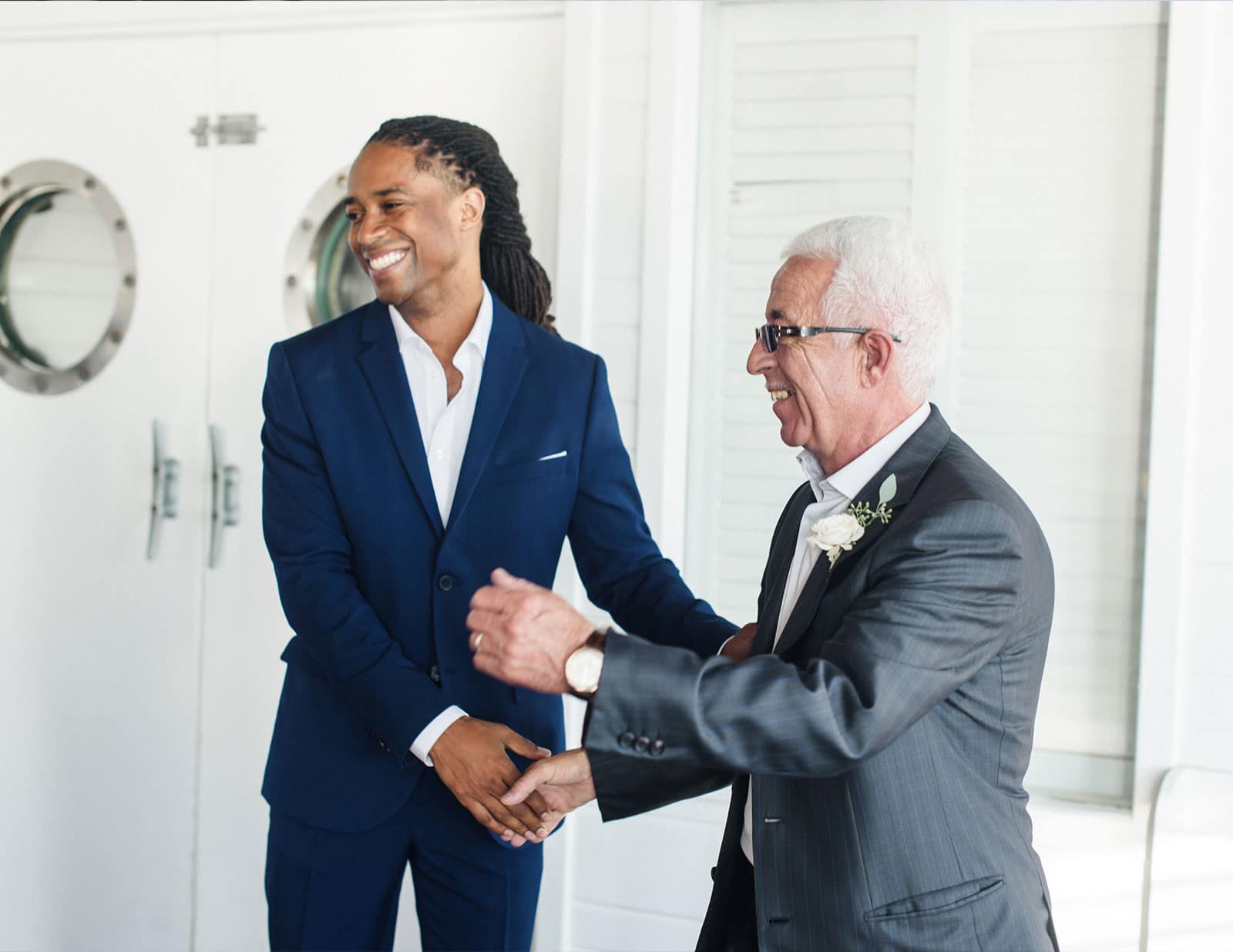
About the Author: DJ Will Gill
William “DJ Will Gill” Gilbert is a corporate event DJ, emcee, and audience-engagement specialist recognized by The Wall Street Journal for helping boost company morale and honored as a Forbes Next 1000 recipient. He has opened events, hosted programs, and energized audiences at Super Bowl LIV, the FIFA World Cup, and the Formula 1 Las Vegas Grand Prix. Will has built a reputation for creating high-energy experiences that keep guests engaged. He is also the founder of TheAIDJ.com, a patent-pending AI playlist platform for music curators.

About DJ Will Gill
Will Gill is the Wall Street Journal’s #1 Corporate DJ, a Forbes Next 1000 honoree, and an MBE certified vendor operating as Faders and Fitness, LLC. He is a 3x Super Bowl performer, a World Cup performer, a Formula 1 performer and an MLB All-Star Game performer.
He delivers a 3-in-1 corporate service as DJ, emcee and one-man team-building show, with 2,520+ five-star Google reviews. See the Fortune 500 client roster or check your dates.