
Must-Know Types of Playlists to Never Lose the Crowd (2026 Universal Playlist Categories)
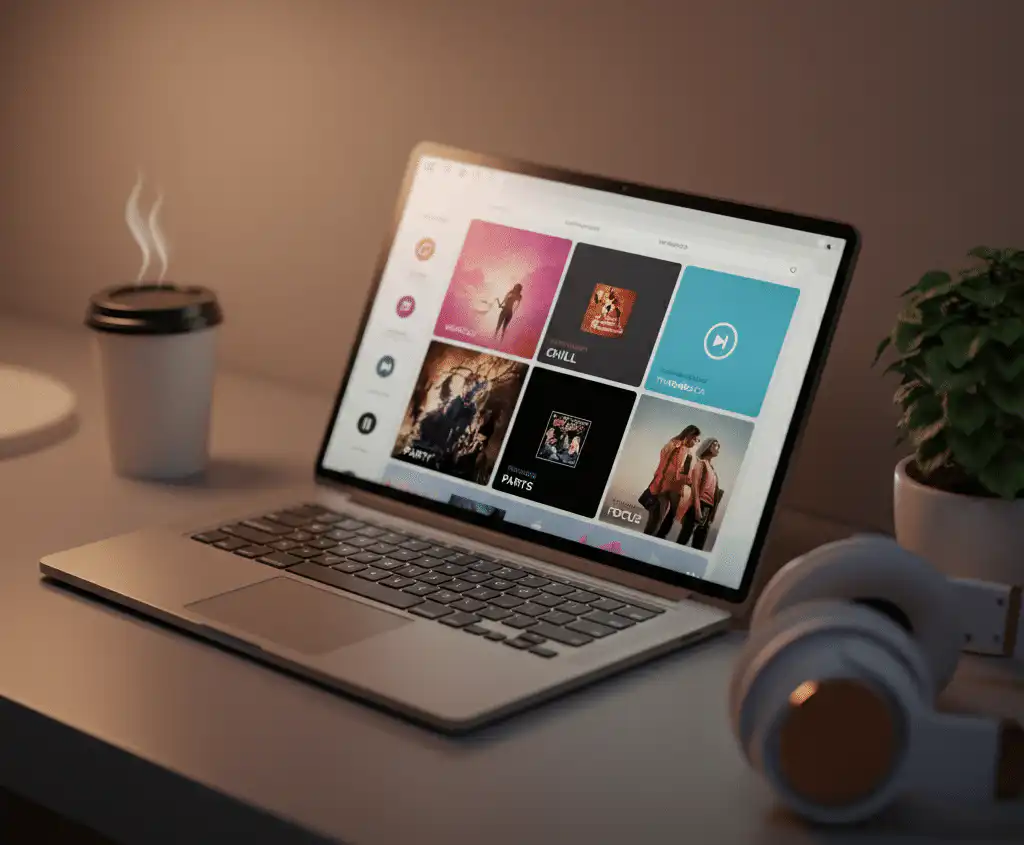
Losing the crowd usually doesn’t happen because of one bad song. It happens because the playlist was never built for the situation in the first place. The party playlist that someone uses for their workout, the workout playlist that gets pressed into service for a dinner party, the road-trip playlist deployed as background for studying, each of those mismatches produces the same result, which is a room (or a person) that disengages from the music because the music wasn’t built for the moment. The universal solution is having pre-built playlist categories ready for the contexts that show up in real life, so you’re never reaching for the wrong playlist when the moment arrives.
This guide breaks down the must-know playlist categories for hosts building event playlists, for event planners working with professional DJs, and for anyone who wants the right music ready for every situation. For the companion piece on common playlist construction mistakes, see our deep-dive guide.
Key Takeaways
→ Music affects audience behavior in research-documented ways. Ronald Milliman’s foundational 1982 Journal of Marketing study documented that background music tempo produces measurable behavioral shifts in commercial environments, with slow-tempo conditions associated with 38.2% sales lifts versus fast-tempo. The same mechanisms operate in personal contexts; the playlist’s character shapes the audience’s state, whether the audience is one person or a hundred.
→ Workout music has a substantial peer-reviewed research base supporting BPM matching and motivation effects. Costas Karageorghis’s BASES expert statement and decades of related sports-psychology research document that synchronous tempo matching can improve exercise endurance, reduce perceived exertion, and elevate mood during physical activity. The popular workout-playlist convention isn’t a placebo; it’s a calibrated infrastructure.
→ Music engages multiple brain regions simultaneously, which is why playlists shape mood, attention, and behavior in parallel. Peer-reviewed research published in PLOS One in 2025 documented that music activates auditory cortex, limbic system, reward circuitry, and motor planning simultaneously. Context-specific playlists exploit those parallel pathways deliberately rather than leaving the outcome to chance.
→ Atmosphere is the dominant driver of event satisfaction, and playlist work is one of the highest-leverage atmosphere variables. 2024 corporate event research documented 82% of attendees citing atmosphere as the primary satisfaction factor. The same logic applies at smaller scale: a dinner party’s atmosphere is largely the playlist, a workout session’s atmosphere is largely the playlist, and the deliberate work pays off.
→ Pre-built playlist categories solve the decision-fatigue problem that produces bad real-time choices. Trying to build a playlist while the party is starting, or while the workout is beginning, or while the road trip is loading up the car, produces worse results than deploying material assembled in advance. The category library is the infrastructure that makes good music decisions easy.
See professional playlist discipline operationalized in live corporate event contexts. To book corporate DJ services, contact DJ Will Gill directly.
Stop replaying the same songs.
Introducing TheAIDJ.com
AIDJ turns a plain-English request into a ready-to-play set, previews it instantly, and exports straight to Spotify. Discover music that actually fits the moment.
Why Playlist Categories Matter
The Decision-Fatigue Problem
Real-time selection fails. Trying to choose music in real time while guests arrive, while the workout starts, while the meeting transitions, produces worse outcomes than pre-built playlists deployed at the right moment. The decision-fatigue research documents what most people experience intuitively: when attention is split across multiple demands, the quality of the music decisions degrades. Hosts pick the same overplayed safe-choice tracks; workout app users default to the algorithm’s recommendation regardless of fit; meeting organizers grab whatever is at the top of the most-recent list. Pre-built category playlists eliminate the in-the-moment selection problem by making the right material instantly available.
The Mood-Music Research Basis
Music actively shapes states. The research based on music’s effect on mood and behavior is substantial and replicated. Milliman’s 1982 supermarket study established tempo manipulation produces measurable spending behavior shifts; subsequent research has extended the finding across restaurants, retail, healthcare waiting rooms, and exercise contexts. 2025 PLOS One research documents that music engages multiple brain regions simultaneously, which is the neurological mechanism by which playlists move audiences (whether one person or many) through different functional states. Context-specific playlists deliberately leverage this mechanism rather than ignoring it.
The Pre-Built Advantage
The infrastructure is compounding. Building category playlists once and refining them over time produces a music library that gets better every year. The party playlist someone builds at age 25 evolves through hundreds of small refinements by age 35 into an infrastructure that delivers reliable parties without further investment. The workout playlist refined across a year of actual workouts becomes calibrated to that specific person’s physiology and music taste in ways no algorithm reproduces. The investment pays off as a compounding asset, which is why working DJs and serious hosts maintain category libraries while casual users keep starting from scratch each time.
Reading the Room First
The audience-state read. Before deploying any category playlist, the host or DJ reads the room state: who’s there, what energy they’re bringing, and what the social dynamics are doing. The same party playlist deployed for two different friend groups produces different results because the underlying audiences are different. Reading the room well doesn’t require special training; it requires noticing engagement signals (who’s dancing, who’s talking, who’s checking their phone) and making real-time adjustments. The category playlist provides the raw material; the room-reading provides the deployment decisions.
The Party Starter Playlist
Purpose and Audience
The hosting infrastructure. The party starter playlist handles the social-gathering context, house parties, birthday celebrations, casual gatherings, and post-event afterparties. The functional goal is building and sustaining energy across the gathering’s arc, from quiet arrival to peak engagement to gradual close. Strong party playlists run 4-6 hours in length, so the host never runs short, and they’re structured to support the natural energy curve of a typical gathering rather than fighting it. The same playlist serves repeated use because the architecture works regardless of who’s in the room.
Tempo Arc: Build → Peak → Close
The energy structure. Party playlists have an internal tempo arc that mirrors the gathering’s progression. The opening 30-60 minutes live in 95-110 BPM territory with familiar, upbeat material that doesn’t demand commitment from guests still arriving and getting settled. The middle hours push into 110-128 BPM peak energy with anthem tracks placed for maximum impact. The closing window descends back to 95-110 BPM with sing-along material that produces emotionally warm send-off moments. The tempo arc is the difference between a party that flows naturally and a party that feels like a random shuffle.
Genre Selection Principles
The breadth requirement. Strong party playlists span multiple genres rather than committing to one. Pop, funk, disco, hip-hop, R&B, modern dance music, and classic crossover hits all serve different segments of typical party audiences. The breadth requirement is especially important when the guest list spans multiple demographic groups, which is most parties. Single-genre commitment alienates substantial guest segments who don’t connect with the chosen lane. The exception is themed parties where the genre lock is the point of the gathering, but the default for general party hosting is multi-genre coverage with familiar anchor tracks across categories.
Transition Smoothness
The flow layer. Even hosts who aren’t DJs can produce smoother playlists by paying attention to track-to-track transitions. The basic principles: group similar-tempo tracks together so the BPM doesn’t jump around randomly, avoid placing a ballad immediately after a high-energy dance track (or vice versa), and keep similar musical keys in adjacent positions when possible. Most modern streaming services have crossfade features that automatically smooth the transitions; turning that on improves perceived flow substantially. The host who handles transitions thoughtfully produces a party that feels like an event rather than a shuffle.
Common Mistakes
What to avoid. Party-playlist mistakes include peaking too early (using anthem tracks while guests are still arriving), going too obscure (the host’s favorite indie deep cuts that nobody else knows), running too short (the playlist ends and music dies mid-party), and going too long without refresh (the same playlist for years across many parties starts feeling stale). Each is recoverable, but pre-built category playlists with attention to these failure modes produce dramatically better hosting outcomes than improvised real-time selection.
The Workout Warrior Playlist
The Motivation and Performance Research
The peer-reviewed basis. Workout music has one of the strongest research bases of any music application. Costas Karageorghis’s BASES expert statement on music in sport and exercise synthesizes decades of research showing that synchronous tempo-matched music improves endurance, reduces perceived exertion (the workout feels easier at the same intensity), and elevates mood during physical activity. The mechanism appears to combine rhythmic-cuing effects (the brain entrains motor patterns to music tempo), arousal effects (high-energy music elevates physiological arousal toward performance-supporting states), and dissociation effects (music provides cognitive distraction from discomfort signals). All three combine to produce measurable performance and motivation benefits.
BPM Matching to Activity
The tempo calibration. Different workout types respond best to different BPM ranges. Steady-state cardio (jogging, cycling, rowing) typically pairs well with 120-140 BPM material because the tempo aligns with the natural movement cadence. High-intensity interval training (HIIT) often works better with 140-160 BPM during work intervals. Strength training tends to favor lower BPM but high-intensity material (90-110 BPM, heavy production, aggressive vocals). Yoga and recovery work calls for 60-90 BPM low-arousal material. Strong workout playlists segment by activity type so the BPM matches what’s actually being done.
Phase Structure: Warm-up → Main → Cool-down
The session arc. Workout sessions have an internal phase structure that the playlist should support: 5-10 minute warm-up at lower tempo (100-115 BPM mid-energy), 25-45 minute main work phase at activity-matched tempo and maximum motivational material, 5-10 minute cool-down at lower tempo and lower-arousal material for parasympathetic recovery. Most popular workout apps sequence music this way automatically, but pre-built category playlists with explicit phase markers give the user more control over the experience. The cool-down phase is consistently underprogrammed in casual workout playlists, which produces incomplete recovery and reduced session benefit.
Refresh Cadence
The novelty layer. Workout playlists degrade faster than other categories because the user listens to them more frequently, daily or near-daily, for committed exercisers. The same track loses its motivational lift after 50-100 plays, which most users hit within months. Strong workout playlist discipline involves weekly addition of 3-5 new tracks and bi-weekly removal of tracks that have aged out. The refresh cadence keeps the playlist’s motivational impact high across years of use rather than letting it slowly become background noise.
Common Mistakes
What to avoid. Workout-playlist mistakes include letting the BPM drift downward across the main work phase (energy decay reduces session intensity), packing the playlist with the same artist or producer (sonic monotony reduces motivational lift), failing to remove worn-out tracks (overplay kills the songs that used to work), and not segmenting by activity type (using the same playlist for cardio and strength produces suboptimal fit for both). Each is fixable with deliberate maintenance.
The Chill-Out and Focus Playlist
Background vs Foreground Music
The role distinction. The chill-out and focus playlist serves background-music roles where the music supports an activity (working, studying, reading, cooking, relaxing) rather than being the activity itself. This changes the playlist’s character: it can’t compete with the foreground task for attention, can’t introduce abrupt changes that pull focus, can’t include material so emotionally charged that it distracts from what the listener is actually doing. The background-music constraint is more restrictive than most users realize, which is why playlists labeled “focus” frequently fail to actually support focus when tested.
Instrumental vs Vocal Selection
The lyrics-and-focus tradeoff. Research consistently shows that vocal music interferes with verbal cognitive tasks more than instrumental music. The brain dedicates attention to processing the lyrics, whether the listener intends to or not. For deep-focus work involving reading, writing, or verbal thinking, instrumental material (lo-fi hip-hop, ambient electronic, classical, jazz instrumental, post-rock) produces less interference than vocal-heavy material. For non-verbal tasks (cleaning, exercising, repetitive physical work), vocal music interferes less. Strong focus playlists are organized with this distinction in mind rather than treating all “chill” music as equivalent.
Tempo and Consistency
The variation discipline. Unlike party playlists, where tempo variation is desirable, focus playlists benefit from sustained tempo consistency. Material in the 60-100 BPM range with consistent rhythmic density produces fewer attention-pulling moments than playlists that swing through wide tempo variations. The same logic applies to dynamic range playlists with consistent volume profiles that support focus better than playlists where quiet ambient passages alternate with loud sections that pull the listener’s attention. Strong focus playlists feel almost monotonous on first listen, which is exactly the property that makes them work.
Volume Calibration
The level-setting decision. Background and focus music works best at volume levels low enough that the listener doesn’t actively notice it but high enough to mask other ambient distractions (HVAC, traffic, other conversations). The right level varies by environment; a quiet home office tolerates lower playback than a busy coffee shop. The principle is that the music should fade into the perceptual background while still doing the masking work. Playlists deployed too loud become distracting; too quiet, and they fail to mask the ambient noise. The Goldilocks zone is wider than most users assume but requires deliberate calibration.
Common Mistakes
What to avoid. Focus-playlist mistakes include treating “chill” and “focus” as identical (chill is for relaxation, focus is for cognitive work, with different requirements), including vocal-heavy tracks in playlists meant to support verbal work, programming wide tempo or dynamic variations that pull attention, and playing the playlist at volumes that compete with thinking. Each mistake reduces the playlist’s functional value despite the surface-level content looking appropriate.
The Road Trip Anthem Playlist
The Journey Arc Model
The trip’s structure. Road trips have an internal phase structure that the playlist can support: the departure energy (excitement, anticipation, starting the journey), the middle cruising hours (sustained engagement, sing-along density, mood maintenance), and the arrival anticipation (energy building toward the destination). The playlist that handles all three phases well feels like a soundtrack to the journey rather than a random shuffle accompanying it. Strong road-trip playlists are explicitly structured as departure → cruise → arrival arc with material calibrated to each phase rather than treating the whole trip as one undifferentiated block.
Collaborative Building
The shared ownership advantage. Road trips frequently involve multiple people sharing the vehicle for hours, which makes collaborative playlist building substantially more effective than single-curator approaches. When each passenger contributes 10-20 tracks they personally love, the resulting playlist serves the whole car better than any individual could build alone, and the collaborative ownership produces stronger engagement because everyone hears their contributions land. Modern streaming services support collaborative playlist editing directly, which makes the building process easy across multiple devices.
Sing-Along Density Principles
The participation factor. Road-trip playlists benefit disproportionately from high sing-along density tracks where the passengers know the words and naturally join in. The participation effect produces engagement that purely passive listening doesn’t, which becomes especially valuable across long drives where attention can wander. Strong road-trip playlists heavily weight classic crossover hits (60s through 2010s pop anthems, classic rock sing-alongs, era-defining tracks), with maybe 60-70% of material falling in the high-recognition zone and 30-40% in newer or discovery material. The balance keeps the playlist participatory without becoming pure nostalgia.
Offline Access Discipline
The connectivity backup. Long road trips frequently pass through low-coverage areas where streaming services lose connectivity. The road-trip playlist should be downloaded for offline playback before departure, with sufficient material to cover the trip duration plus a margin. Spotify, Apple Music, YouTube Music, and Tidal all support offline downloads on their paid tiers; the discipline is making sure the download actually completes before leaving, rather than discovering mid-trip that it didn’t. The five-minute pre-trip download check is one of the higher-leverage road-trip preparations available.
Common Mistakes
What to avoid. Road-trip mistakes include single-curator construction (the whole car listening to one person’s preferences for hours), insufficient duration (running out of material with hours still to drive), failing to download for offline playback (losing music in connectivity gaps), and skipping the journey-arc structure (treating an 8-hour trip as one continuous block instead of the phase progression it actually is). Each is preventable with modest planning.
Additional Playlist Categories Worth Building
Dinner Party / Hosting Playlist
The conversation-support category. Dinner parties and small hosting contexts need playlists that support conversation rather than competing with it. The material lives in 80-110 BPM territory with low-vocal-density selections of jazz, neo-soul, bossa nova, acoustic indie, instrumental electronic, and vocal jazz at low volume. The functional goal is creating a warm atmosphere without dominating the room, which lets guests talk freely while the music does atmospheric work in the background. Strong dinner-party playlists run 3-4 hours and avoid the high-energy or vocal-heavy material that pulls focus away from the table.
Morning Routine Playlist
The day-launch category. Morning routine playlists serve the wake-up-to-out-the-door phase, typically 30-90 minutes depending on individual schedule. The arc moves from gentle wake-up material (low tempo, warm production) through medium-energy daily-routine soundtrack (shower, breakfast, getting ready) into energized departure material (out-the-door momentum). Strong morning playlists support consistent routines and improve mood across the entire workday by getting the day started in deliberate emotional territory rather than accidentally.
Wind-Down and Sleep Playlist
The evening-decompression category. Wind-down playlists serve the transition from active day to sleep-ready state, typically the 1-2 hour window before bedtime. The material lives in 50-80 BPM low-arousal territory with minimal vocal content and very gentle dynamic profiles. Genres like ambient, neoclassical, jazz ballads, lo-fi, and meditation music all work. The functional goal is supporting the parasympathetic-nervous-system shift toward sleep readiness, which is one of the better-researched applications of music for personal well-being. Sleep-specific playlists go even further with very minimal, often instrumental-only, sub-60 BPM material.
Productivity Flow Playlist
The deep-work category. Productivity flow playlists support extended focused work sessions where the listener wants sustained engagement rather than passive background. Material here typically sits in 100-130 BPM territory with consistent rhythmic energy and minimal abrupt changes, electronic music with steady beats, drum-and-bass at low volumes, classical with consistent tempo, and post-rock with extended instrumental passages. The functional goal is supporting flow-state work rather than simply masking ambient noise. Many users find that dedicated work playlists become a signature productivity infrastructure that they use for years.
Seasonal and Holiday Playlists
The calendar-context category. Seasonal playlists serve specific times of year (summer hosting, autumn cozy, winter holidays, spring renewal) when the audience expectation includes mood material that matches the season. Christmas/holiday playlists are the canonical example, but spring brunch, summer pool, autumn coffee, and winter dinner playlists all serve real recurring contexts. Strong hosts maintain seasonal playlists alongside their general-purpose categories so they have appropriate material ready when the calendar context arrives without scrambling.
How to Build Any Playlist Well
Audience and Context First
The pre-selection question. Before choosing any tracks, define the audience and context: who’s listening, what they’re doing, and what state they should end up in. The same playlist serves wildly different purposes depending on those answers, so the answers determine the construction. A playlist for solo-driving the highway differs from a playlist for hosting friends at a dinner party, even when the tempos overlap, because the audience and context produce different listening conditions. Working DJs do this implicitly for every event; personal playlist building benefits from the same explicit framing.
Tempo Coherence Within Blocks
The mini-block principle. Strong playlists are typically constructed as sequences of 3-5 track mini-blocks within similar tempo ranges, with deliberate transitions between blocks rather than random tempo jumping. The mini-block structure produces perceived flow that random sequencing doesn’t, while still allowing the playlist to move through different energy zones across its duration. Working DJs apply this principle constantly; casual playlist builders frequently skip it and produce more chaotic listening experiences as a result.
Track Flow and Transitions
The seam-smoothing layer. Even without DJ controllers, casual playlist builders can improve track-to-track flow by attending to the ends of outgoing tracks and beginnings of incoming tracks. Soft-ending tracks pair well with soft-starting tracks; abrupt-ending tracks pair better with abrupt-starting tracks; gradual-fade tracks bridge effectively into ambient or instrumental openings. Most streaming services have crossfade settings that can help smooth abrupt transitions automatically. The transition attention is one of the higher-leverage improvements available to casual playlist makers.
Tagging and Organization
The findability layer. Strong personal playlist libraries are organized with names that make the use case obvious: “Saturday Morning Coffee” not “Playlist #4”; “Dinner Party Background” not “Mellow.” The naming discipline makes it easy to find the right playlist when the moment arrives, especially when the library expands to 10-20+ categories across years of building. The discipline also helps with sharing when you want to send the playlist to a friend or use it on a different device; the naming carries the context across the move.
Refresh Cadence
The maintenance compounding. Personal playlist libraries compound across years when maintained with even modest discipline. Adding 2-5 new tracks per playlist per month across years produces a library that gets steadily richer rather than aging into staleness. Removing tracks that no longer work is equally important; overplay accumulates silently and reduces the playlist’s effectiveness. The maintenance investment is small per session and compounds across years into infrastructure that delivers consistently good listening experiences without further deliberate work.
Professional Application
From Personal Playlists to Event Playlists
The scale shift. The principles that govern personal playlist building scale to event playlist building, but with additional considerations the personal context doesn’t impose: broader audience composition (the event listeners may not share the host’s musical preferences), higher reliability requirements (a personal playlist that fails for one workout is recoverable; an event playlist that fails at a wedding reception isn’t), brand and cultural fit requirements (the host’s personal taste may not match the event’s positioning). Hosts who try to scale personal playlist habits directly to event work frequently hit failure modes that the professional DJ avoids through specialized practice.
When to Hire a Professional Curator
The threshold question. Personal playlist building handles routine personal contexts without difficulty. The threshold for hiring professional music curation shifts when the stakes rise: high-investment events (weddings, corporate launches, milestone celebrations), audiences whose composition the host can’t fully predict, and contexts where music failure has commercial or relationship consequences beyond the immediate moment. Working DJs and event-music professionals deliver an additional layer of reliability and context-fit that personal playlist building can’t easily replicate, even with strong personal libraries.

About the Author
William “DJ Will Gill” Gilbert is an American DJ who have a documented client work for AT&T Business, CDW, Virgin Galactic, NeoGenomics, Foot Locker, Home Depot, Hilton, BGCA, PepsiCo, PayPal, and the United Nations. Also a Forbes Next 1000 honoree with broadcast credits including Super Bowl LIV (2020), The Voice (2011), and MTV’s The Real World: Hollywood (2008). He is also a World Cup performer and a Formula 1 Las Vegas Grand Prix performer. 2,520+ five-star Google reviews accumulated over 600+ documented corporate events.
2,520+ Google Reviews · IMDB · Mixcloud · Instagram · Contact
Frequently Asked Questions
Why do playlists lose the crowd?
Because the playlist was never built for the situation. Using a workout list at a dinner party or a party list for studying produces a room that disengages.
Does music tempo really change behavior?
Yes. Ronald Milliman's 1982 Journal of Marketing study found background tempo produced measurable shifts, with slow-tempo conditions associated with a 38.2% sales lift versus fast tempo.
Is workout music science or placebo?
Science. Costas Karageorghis's research shows tempo matching can improve endurance, reduce perceived exertion and lift mood.
What is the structure of a party starter playlist?
A tempo arc that builds, peaks and closes, with genre choices and smooth transitions that keep the room together.
What is the first step before any playlist?
Reading the room. Pre-built categories only work when matched to the moment they were built for.