
What Are Keynote Speakers? Their Role and 2026 Fees | DJ Will Gill
A keynote speaker is the person who delivers the central, agenda-setting speech at a conference, corporate event, or large gathering, with the explicit job of framing the theme of the event and shaping the audience’s mindset for everything that follows. The word “keynote” comes from music the note that establishes the key of a piece and the function of a keynote speaker mirrors that musical role exactly: they set the tone the rest of the event resolves around. A great keynote speaker does not simply give a talk that happens to come first on the schedule. They deliver the single piece of programming that the audience remembers most clearly six months later, that the organizers cite when they pitch next year’s event, and that determines whether attendees walk out feeling like the day was worth their time.
Will Gill brings this role to life as a keynote speaker for corporate events.
The role has become more important, not less, in the era of hybrid events and shorter attention spans. Audiences have access to recorded talks from every major speaker on YouTube, TED, and corporate learning platforms, which means the bar for a live keynote has risen significantly if a speaker is only delivering content the audience could have streamed at home, the in-person time has been wasted. The keynote speakers worth booking in 2026 are the ones who deliver something that cannot be replicated through video: live energy, room-reading, customization to the specific audience, and the kind of emotional engagement that turns a passive room into an active one. This guide explains what keynote speakers actually do, why they matter to event outcomes, what they cost across the four tiers of the 2026 market, what separates the great ones from the average ones, and how to choose the right speaker for a specific event.
Key Takeaways
A keynote speaker is the speaker who delivers the central, agenda-setting talk at an event the one whose role is to frame the theme, energize the room, and leave the audience aligned around a single coherent idea. Keynote speakers are typically chosen for a combination of subject-matter expertise, stage presence, and the ability to customize their material to the specific audience. The most effective keynotes do not deliver generic content the audience could have streamed at home they deliver something that can only happen in the room, which is why event organizers consistently cite emotional engagement as the most important success metric for keynote programming.
Emotional engagement has become the dominant success metric for keynote programming. According to a 2024 industry report cited in Michael Hingson’s 2026 inspirational keynote speaker buying guide, 82 percent of event organizers now prioritize emotional engagement as the top metric for event success ahead of attendance numbers, content density, or social media reach. The shift matters operationally because it changes what organizers should look for in a keynote speaker: ability to read a room and produce live emotional response now outranks credentials, book sales, and topic authority as the primary selection criterion. Speakers who deliver dense information but cannot move a room consistently underperform speakers who deliver a single emotionally resonant idea well.
Keynote speaker fees in 2026 break into four distinct tiers that determine what a planner should expect to budget. According to Anat Baron’s January 2026 keynote fees guide, the tiers run from emerging speakers in the $5,000-$10,000 range, to established professional speakers in the $10,000-$25,000 range, to premium thought leaders in the $25,000-$50,000 range, to world-class and celebrity speakers from $50,000 to over $100,000. M.I.I. Professional Speaking’s May 2026 pricing guide notes that the most common range for mid-to-large corporate events is $10,000-$25,000, which gets a professional speaker willing to customize the talk to the audience. Virtual keynote fees typically run 30-50 percent below in-person rates because travel and logistics costs are eliminated.
The speaker fee is rarely the only cost a planner needs to budget. According to M.I.I. Professional Speaking’s 2026 guide, planners should budget an additional $2,000-$5,000 for travel expenses on top of the speaking fee for in-person events, with many planners now negotiating a flat-fee travel buyout in the $1,500-$3,000 range for domestic engagements to simplify budgeting. Custom content development that requires the speaker to research the audience or build a tailored presentation typically adds a 10-25 percent premium to the base fee, and exclusivity clauses that prevent the speaker from addressing competitor events add another 15-30 percent. Industry data summarized in Ian Khan’s 2026 budgeting guide indicates that organizations typically allocate 15-30 percent of their total event budget to the speaker line.
Booking timelines for the speakers worth having are longer than most planners assume. According to M.I.I. Professional Speaking’s 2026 guide, planners should budget 6-12 months ahead for top-tier speakers and 3-6 months for mid-tier speakers. Last-minute bookings under three months are possible but significantly limit the available pool, and high-demand speakers in fields like AI, leadership, resilience, and futurism often book out further than the standard window because demand exceeds supply. The practical implication for planners is that the speaker decision should be made early in the event-planning sequence rather than late once the date and audience are confirmed, speaker research is the next item on the timeline, not a step deferred until catering and venue are settled.
Watch DJ Will Gill perform live. Contact him now to book your event.
“The keynote is not the talk that happens to come first on the schedule. It is the single piece of programming the audience remembers six months later, that organizers cite when they pitch next year’s event, and that determines whether attendees walk out feeling like the day was worth their time.”
What a Keynote Speaker Actually Does (Beyond the Definition)
The textbook definition of a keynote speaker is the person who delivers the main address at a conference or event, but the operational job is significantly more specific than that. A working keynote speaker is responsible for three distinct things over the course of a single appearance. The first is theme-setting the speaker frames the central idea the rest of the event resolves around, so that every breakout session, panel discussion, and networking conversation that follows is operating inside a shared mental frame the audience took from the opening talk. The second is emotional calibration the speaker establishes the energy level the room will operate at for the remainder of the event, which is why poorly chosen keynotes can leave a conference feeling flat even when the subsequent content is strong. The third is signal generation the speaker provides the language, frameworks, and references that attendees use afterward when they describe the event to colleagues, social media followers, and prospective future attendees.
The technical work of a keynote speaker is also broader than the time spent on stage. A professional speaker working at the established or premium tiers typically invests ten to fifteen hours of research into the specific audience and organization before the engagement, including interviews with the event planner, review of the company’s strategic priorities, and customization of stories and examples so the talk lands as relevant rather than generic. The on-stage time of 45 to 60 minutes is the visible output, but the preparation that produces a customized, audience-specific keynote is the larger share of what a planner is actually paying for at the professional and premium tiers. Speakers who deliver the same canned talk to every audience without preparation are operating at the entry-level tier of the market regardless of how their bio reads, and the resulting talks consistently produce weaker outcomes than customized engagements at the same fee level.
The final piece of the operational job and the one that separates the speakers worth their fees from the ones who only look like they should be is in-the-room responsiveness. A great keynote speaker adjusts the talk in real time based on the room’s energy, the questions that come up in the morning sessions before they take the stage, and the specific moments of attention or distraction they observe during their own delivery. This is the capability that cannot be replicated through video and is the entire reason an organization pays for a live speaker rather than streaming a recorded talk. Planners who skip the conversation about how a speaker handles live audience dynamics are buying a video performance at live-event prices, which is rarely the value trade they intend to make.
Why Keynote Speakers Matter to Event Outcomes
The strongest argument for why keynote speakers matter operationally rather than just symbolically is the data on what event organizers actually use to measure event success. According to a 2024 industry report cited in Michael Hingson’s 2026 inspirational keynote speaker fees guide, 82 percent of organizers now prioritize emotional engagement as the top metric for event success outranking attendance numbers, content density, networking quality, and social media reach. The implication of that data is that the single largest lever an organizer has over event success is the programming choice that most directly produces emotional engagement, which is the keynote.
The second argument for keynote priority is downstream business impact. Corporate events are typically not cost centers they are investments tied to strategic initiatives like sales kickoffs, leadership alignment, customer retention, or change management. The keynote in those contexts is the moment that either lands the strategic message or fails to land it, which determines whether the rest of the event apparatus produces the intended downstream outcome. A sales kickoff with strong logistics but a keynote that fails to energize the sales team produces a worse pipeline outcome than the same kickoff with weaker logistics and a keynote that lands. The operational lesson is that keynote spending should be evaluated against the value of the strategic outcome the event is meant to produce, not against the speaker line in isolation.
The third argument is reputational compounding. Events with consistently strong keynote programming build a reputation among target attendees that drives future-year attendance, sponsorship interest, and the quality of the speakers willing to participate in subsequent years. The compounding effect of strong keynote selection over multiple years is one of the largest sources of long-term event-brand value available to organizers, and the inverse is also true events that consistently book weak keynotes degrade their own attendance base over time as the audience learns the programming is not worth their travel and time. The keynote decision is therefore not just an event-level decision but a brand-level decision that affects every event the same organization runs afterward.
The 2026 Keynote Speaker Fee Landscape
Keynote speaker fees in 2026 sort into four distinct tiers, and the differences between the tiers matter when a planner is matching speaker investment to event objectives. According to Anat Baron’s January 2026 fees guide, the four tiers are emerging speakers, established professional speakers, premium thought leaders, and world-class or celebrity speakers, with each tier defined by a combination of fee range, expected customization level, and the type of event the tier is structurally appropriate for. The table below summarizes the four-tier structure based on consolidated 2026 industry data.
The 2026 Keynote Speaker Fee Landscape (Four Tiers)
| Tier | Fee Range | Who Fits This Tier | Best for These Events |
| Emerging | $5,000-$10,000 | Local experts, niche practitioners, emerging storytellers building reputation | Chapter meetings, department offsites, internal team events, local conferences |
| Established Professional | $10,000-$25,000 | Speakers with proven track records, industry expertise, and customization capability | Mid-to-large corporate events, annual conferences, sales kickoffs |
| Premium | $25,000-$50,000 | Thought leaders with media profiles, international reach, or proprietary frameworks | Flagship annual events, industry-leading conferences, C-suite retreats |
| World-Class & Celebrity | $50,000-$100,000+ | Former heads of state, Fortune 500 CEOs, Olympic athletes, cultural icons | Major industry conferences, galas, events where the name drives attendance |
The tier most relevant to mid-to-large corporate events is the established professional tier at $10,000-$25,000. According to M.I.I. Professional Speaking’s May 2026 pricing guide, this is where most corporate engagements settle because it produces a professional, experienced speaker who will customize the talk for the audience without crossing into the premium tier where fees reflect media profile more than incremental on-stage value. Virtual keynotes typically run 30-50 percent below in-person rates, custom content adds 10-25 percent, exclusivity clauses preventing competitor appearances add another 15-30 percent, and domestic travel expenses or flat-fee buyouts typically add $1,500-$3,000 on top of the base speaking fee.
What’s Inside the Fee and What’s Not
The published keynote speaker fee is not the total invoice. According to Joel Comm’s 2026 keynote speaker fees guide, at the professional level the fee typically includes pre-event discovery calls, customized content development, the keynote itself, and supporting materials. Travel may or may not be included, and should always be clarified upfront in writing. Recording rights, additional workshops, extended Q&A sessions, breakout content, and post-event appearances are typically priced separately as add-ons rather than being bundled into the base fee.
The hidden costs that move planners’ invoices outside the budgeted range are reasonably consistent across sources. Ian Khan’s 2026 transparent pricing guide lists the most common surprises: in-person events may add 20-50 percent for flights, accommodation, and ground transport; tailored content or non-compete clauses can increase fees by 15-30 percent; high-end AV requirements, virtual platform fees, or extra rehearsal time often carry technical surcharges; and content licensing for recording or redistributing the keynote post-event is almost always a separate line item rather than an automatic inclusion. Speakers.com’s 2026 event speaker booking checklist specifically flags intellectual property rights particularly for virtual and hybrid events as a contracting area where vague terms produce expensive downstream disputes.
The practical work for planners is to clarify the scope of the fee during the contracting phase and to require written specificity on what is and is not included. The questions that should be answered before signing: Does the fee include domestic travel, hotel, and ground transport? What are the recording and licensing rights? How many pre-event preparation calls are included? What workshops, breakouts, or additional appearances are offered, and at what price? What is the cancellation policy and the timeline for force majeure? The contracting work front-loads the negotiation and prevents the surprise invoices that wreck event budgets after the fact.
The Variables That Move the Number
Within the tier framework, several variables predictably move the speaker’s quoted fee up or down. The first is event format. Ian Khan’s 2026 pricing guide reports virtual keynote fees are typically 30-50 percent lower than in-person rates due to reduced travel and time commitments. Hybrid events, where the speaker is on stage but also streamed to remote attendees, are typically priced at the full in-person rate plus a modest technology fee. The format choice is often the single largest budget lever a planner has, and reframing an in-person engagement as virtual or hybrid can produce savings of 30-50 percent on the speaker fee plus the elimination of $2,000-$10,000 in travel-related expenses for the in-person version.
The second is customization depth. Michael Hingson’s 2026 buying guide notes that the fee covers years of lived experience and hours of preparation, and that the most impactful presentations are those where the speaker becomes a partner in the event’s mission. Heavily customized content content specifically tailored to the audience, the industry, and the strategic outcomes the event is trying to produce costs more than a stock keynote pulled from the speaker’s existing material, and the premium typically runs 15-30 percent above the base fee. For events where the strategic outcome justifies the investment, the customization premium is usually worth paying; for events where a stock message will land well, paying for customization is overspending.
The third is timing. According to Ian Khan’s 2026 hiring guide, peak event seasons can drive prices up 10-20 percent due to limited availability, and booking off-peak or during slower seasons can yield discounts. Joel Comm’s 2026 fees guide adds that speakers with open dates in the next 30-60 days may be more flexible than those booking six months out, and that booking well in advance gives planners leverage to negotiate inclusions because the speaker has time to plan. The right timing depends on the specific speaker and event, but planners who treat timing as a negotiation variable rather than a fixed constraint often produce better outcomes than planners who treat it as a binary booked-or-not question.
The fourth is travel and logistics complexity. Domestic events typically cost less than international engagements due to travel complexity and time investment, and events in major metropolitan areas with convenient transportation cost less than remote locations requiring extensive travel. Multi-day commitments, dual-event bookings, and complex logistical riders all push the total cost above the headline fee. For events in remote locations or with complex logistics, the actual invoice can run 30-50 percent above the published speaker rate once all the ancillary costs are included.
Bureau Booking vs Direct Booking and the 15-30% Commission Question
One of the least-understood elements of keynote speaker pricing is the booking pathway. According to Ian Khan’s 2026 pricing guide, speaker agencies charge commissions of 15-30 percent, which may be passed to the planner indirectly through the speaker’s quoted rate or absorbed by the speaker as a cost of doing business through the bureau. The economics of bureau commissions are usually invisible to the planner the quoted rate is presented as a single number but understanding that there is a commission baked in helps planners evaluate whether the bureau’s services justify the markup.
Bureau booking buys vetting, contract management, logistical support, force majeure protection, and access to talent the planner might not be able to reach directly. Khan’s 2026 hiring guide describes bureaus as curated selections that may add fees but that often produce smoother engagements with less downstream risk. Direct booking allows for more personalized negotiation and a direct working relationship with the speaker, but transfers the vetting work, contract drafting, and risk management to the planner. Speakers.com’s 2026 booking checklist frames bureau expertise as a clinical safeguard for the organization’s investment and reputation particularly valuable in the 2026 landscape where travel logistics and hybrid requirements add layers of risk.
The right choice depends on the planner’s experience, the event’s risk tolerance, and the specific speaker’s accessibility. Planners booking high-profile speakers for high-stakes events typically benefit from bureau infrastructure even with the commission cost; planners booking emerging or local speakers for lower-stakes events often produce better outcomes through direct booking. The decision is contextual rather than universal, and neither pathway is inherently better they trade off different costs against different protections.
How to Get the Best Speaker for Your Budget
The practical work for planners on a defined budget is to optimize within the constraints rather than chase speakers the budget cannot support. The starting point is clarifying what the event actually needs from the keynote a celebrity name to drive registration, a content expert to anchor a topic-focused conference, a motivational figure to energize a sales team, a futurist to frame a strategic discussion because the right tier follows from the answer. An event that needs marketing pull from the speaker’s name should allocate more budget to a celebrity or futurist; an event that needs substantive content and audience transformation can often achieve better outcomes with a $20,000 professional-tier speaker than a $50,000 celebrity whose content is generic.
Joel Comm’s 2026 fees guide recommends three practical negotiation levers: bundling additional services (workshops, extended Q&A, post-event content) at a package rate that costs less than booking each separately; multi-event deals where booking the same speaker for two or three engagements unlocks meaningful savings; and transparency about budget most professional speakers would rather have an honest conversation about what is possible within a defined range than go through rounds of back-and-forth. The transparency lever is often underused: planners who say “our budget is $15,000 and your published rate is $20,000” often find a format adjustment (shorter keynote, virtual delivery, different date) that works for both sides. The conversation that does not happen produces the negotiation that does not work.
The final practical recommendation is to align speaker investment with event strategic importance. Ian Khan’s 2026 planner guide recommends allocating 15-25 percent of total event budget to keynote speakers, with the proportion scaling up for events where the keynote is the central strategic asset and scaling down for events where the keynote is supportive programming. The framework treats speaker selection as portfolio allocation rather than line-item cost, and the planners who get the best outcomes are typically the ones who think about the keynote as a strategic investment with measurable ROI rather than as a budget category to minimize.
The Qualities That Separate Great Keynote Speakers From Average Ones
The qualities that matter for keynote performance are not the ones most speaker bios emphasize. Bios lead with credentials bestselling books, executive titles, media appearances, awards because credentials are the easiest signal for a planner to verify in advance. The qualities that actually predict whether a speaker will land in the room are harder to evaluate from a bio but are the ones that consistently separate the speakers worth their fees from the ones who only look like they should be. The four qualities below are the ones that matter most operationally for audience outcomes.
The first quality is room-reading. Great keynote speakers walk on stage having already absorbed the room’s energy from the morning sessions, the lobby conversations during breaks, and the body language they observe during their own opening minutes, and they adjust their delivery in real time to where the audience actually is rather than where they assumed the audience would be. Speakers who deliver the same opening regardless of the room’s state are giving a video performance at live-event prices. Room-reading is impossible to verify from a bio and difficult to verify from a recorded talk the most reliable way to evaluate it is to talk directly to event planners who have worked with the speaker and ask specifically about moments when the speaker adjusted to unexpected room dynamics.
The second quality is single-idea discipline. The most effective keynotes do not deliver dense information they deliver one coherent idea, illustrated through three or four supporting stories, and they refuse to dilute the central idea with adjacent material that would be appropriate in a workshop format but weakens a keynote. Speakers who try to fit five frameworks and ten data points into a 45-minute talk consistently produce talks the audience cannot summarize in one sentence afterward, which means the talk did not land. The discipline to cut material is one of the rarest and most valuable qualities in working keynote speakers.
The third quality is emotional range. The 82 percent emotional engagement metric organizers prioritize requires the speaker to actually produce emotional movement in the room rather than just narrate emotional content. The difference is the difference between a speaker who describes adversity in a flat tone and a speaker whose voice, pacing, and physical presence cause the audience to feel a fraction of what the speaker felt during the original experience. Emotional range is heavily technique-driven rather than just personality-driven, and the strongest keynote speakers have invested significant practice in the technical craft of producing emotional response on demand.
The fourth quality is customization willingness. The speakers who deliver the same talk to every audience are operating at the entry-level tier regardless of their fees. The speakers worth professional and premium tier fees are the ones who invest the ten to fifteen hours of pre-event research into the specific audience, build customized examples that land as relevant rather than generic, and treat each engagement as a distinct piece of work rather than a repeat performance. Customization willingness is verifiable in advance planners should ask candidate speakers explicitly what their preparation process looks like, and speakers who cannot describe a substantive pre-event research process are the ones most likely to deliver a canned talk regardless of how their bio reads.
Famous Keynote Speakers Worth Knowing
The most recognized names in keynote speaking are not necessarily the right speakers for every event, but their work is worth studying because they have shaped what audiences expect from the format. Steve Jobs built the modern product-launch keynote into a media form his Apple keynotes from the early 2000s through 2011 set the template for the single-idea, visually-supported, theatrically-paced corporate keynote that is now imitated across the technology industry. Studying his keynote structure (one product reveal as the central event, supporting context delivered without slides crowded with bullet points, deliberate pacing to build anticipation) remains one of the most useful exercises available to working keynote speakers.
Brené Brown built her keynote career around vulnerability and courage research, and her 2010 TEDx Houston talk became one of the most-viewed talks in the platform’s history. Her work demonstrates the operational power of emotionally honest delivery her talks succeed because the audience experiences a real emotional shift, not because the content density is unusually high. Simon Sinek built his keynote practice around the Start With Why framework, which became one of the most-cited business communication concepts of the 2010s, and his keynotes remain a useful study in how a single proprietary framework can anchor an entire speaking career across multiple industries.
Malala Yousafzai, the youngest Nobel Peace Prize laureate in history, demonstrates the unique authority of speakers whose lived experience matches their topic her keynotes on girls’ education and global activism land with weight that no professional speaker without her biography could replicate. Her example is also a useful caution for planners: lived experience produces authority but does not automatically produce stage craft, and the most effective speakers with extraordinary biographies are the ones who have also invested in the technical craft of delivery. The combination of authentic story and trained delivery is the highest tier of keynote performance, and it remains rare.
How to Choose the Right Keynote Speaker for Your Event
The most common mistake planners make in keynote selection is starting with a fee budget and working backward to a speaker who fits the budget. According to M.I.I. Professional Speaking’s 2026 guide, the better sequence is to start with the strategic outcome the keynote is supposed to produce, work out what kind of speaker would actually produce that outcome, and only then evaluate whether the budget supports the right speaker or whether the budget needs to be adjusted to match the goal. The implication is that the speaker decision is a strategic decision, not a procurement decision, and treating it as procurement consistently produces weaker outcomes than treating it as strategy.
The second selection principle is audience fit over speaker fame. A premium-tier speaker whose work does not match the audience’s industry, role level, or cultural context will land less well than a professional-tier speaker whose work is calibrated to exactly that audience. The audience-fit question can be answered concretely: ask candidate speakers for examples of past engagements with similar audiences, ask the planners of those past events what landed and what did not, and weight that feedback heavily over the speaker’s media profile or credential list. The strongest predictor of how a speaker will land at a specific event is how they have landed at structurally similar events in the past.
The third principle is booking timeline discipline. According to M.I.I. Professional Speaking’s 2026 timeline guidance, planners should budget 6-12 months ahead for top-tier speakers and 3-6 months for mid-tier speakers, with last-minute bookings under three months significantly limiting the available pool. High-demand topics in 2026 particularly AI and technology, leadership, resilience, and futurism book even further out than the standard window. The operational lesson is that speaker selection belongs at the front of the event-planning timeline rather than the back, and planners who defer the decision until logistics are settled consistently find themselves choosing from a thinner pool than they would have had if the speaker decision had come first.
The fourth principle is direct conversation before contract. The thirty-minute call between a planner and a candidate speaker before booking is one of the highest-value uses of preparation time available, because it surfaces the customization willingness, room-reading capability, and audience-fit calibration that bios cannot reveal. Speakers who decline that conversation or treat it as a formality are signaling that they will treat the engagement itself as a formality, which is the failure mode planners should most avoid. Speakers who engage substantively with the planner’s strategic objective in the pre-booking conversation are the ones most likely to engage substantively with the actual audience on event day.
Keynote Speaker Cost and Booking FAQ
Who are the best keynote speakers for corporate events?
The best keynote speakers pair a proven stage presence with a message built for your specific audience. Will Gill, a Forbes Next 1000 honoree, Wall Street Journal number one corporate entertainer, and three time Super Bowl performer, delivers The Moralgorithm keynote on morale and performance, blending live audience engagement with a message tailored to corporate and conference audiences.
What determines a keynote speaker fee?
Fees are driven by the speaker experience and demand, how much the talk is customized for your audience, the event length, and travel. Established speakers with a national profile command more because they reduce risk and reliably move an audience.
How much do keynote speakers cost in 2026?
Keynote speaker fees in 2026 range widely, from a few thousand dollars for newer speakers to five figures and up for established names with a national platform. The right fee depends on the speaker track record, the customization required, and your event goals.

DJ Will Gill
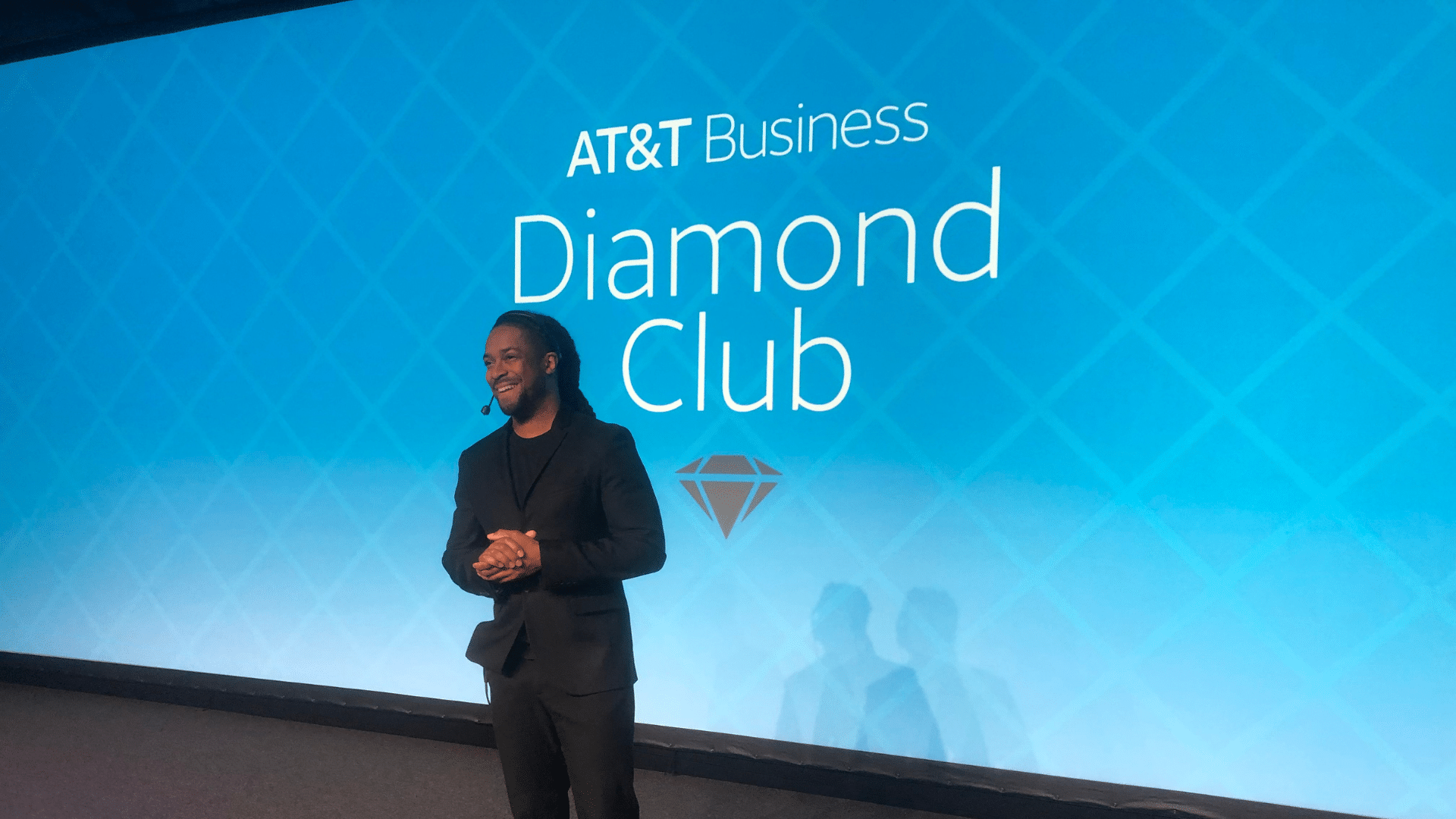
Will Gill is a Forbes Next 1000 honoree and WSJ-ranked #1 Corporate DJ and Emcee with 2,520+ five-star Google reviews. He performs 600+ corporate events annually as DJ, emcee, and keynote speaker for clients including Google, Amazon, Microsoft, Salesforce, AT&T, the United Nations, and Boys & Girls Clubs of America. His keynote work, pictured above at the AT&T Business Diamond Club, focuses on audience engagement and the operational mechanics of moving rooms in live corporate environments. Reach out here to discuss a speaking engagement or corporate event.
Corporate Events as DJ, Emcee, and Speaker
Five-Star Google Reviews
WSJ-Ranked Corporate Event Entertainer