
How to Write Band Music in 2026
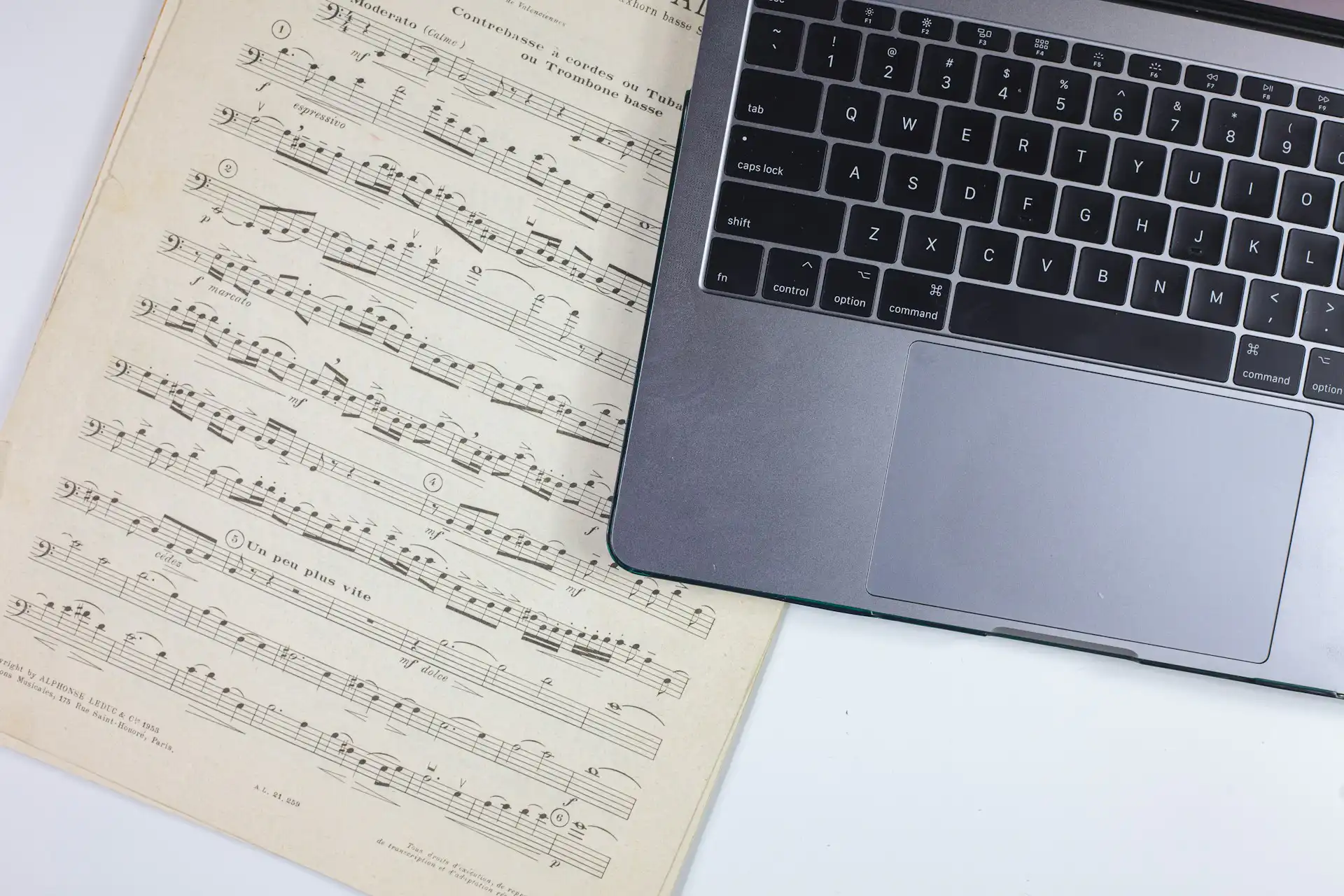
Writing band music in 2026 has changed in three meaningful ways. The structural rules have tightened hit-song analysis shows the first chorus now lands measurably earlier than it did a decade ago. The tempo and BPM zones for “danceable” pop have narrowed to a specific cluster. And the gap between a song that works in a recording and one that works in a live room has become more important than ever, because the live room is where bands actually build careers. This guide walks the songwriting decision through that 2026 lens.
Every claim about structure, length, BPM, and chorus placement is linked to a verifiable source analysis of Billboard Hot 100 chart-toppers, peer-reviewed musicology research, and the established craft tradition published through Berklee, MasterClass, and Hit Songs Deconstructed. Read this as a working blueprint with audited foundations, not a vibes-based listicle.
Key Takeaways
→ The chorus has moved earlier in modern songs. Analysis of Billboard Hot 100 #1 hits from 2020 to 2023 found the first chorus appearing at an average of 38 seconds into the song compared to 55+ seconds in previous decades to accommodate decreasing attention spans and playlist-hopping behavior (AMW, Music Industry Analysis 2026).
→ Pop hits cluster in a defined BPM zone for danceability. Pop hits tend to cluster between 100 and 130 BPM for maximum danceability, and the chorus or main hook tends to recur every 30 to 45 seconds in proven chart-toppers (Obscure Sound, Data Analysis of Hit Songs).
→ Song length data sets the runway. A peer-reviewed analysis of 14,556 tracks released between 1956 and 2020 found an average song length of 3.95 minutes a useful target window when arranging band material that will be released alongside contemporary work (bioRxiv, Track Tempo Study 2024).
→ Verse-chorus form is still the dominant structure. The verse-chorus form is a songwriting structure built around two repeating sections verse and chorus with the chorus containing the song’s signature melodic motifs and lyrical refrains. Common variations include ABAB (binary), AABA (32-bar form), and ABABCB (verse-chorus-verse-chorus-bridge-chorus) (MasterClass, Songwriting 101).
→ The studio arrangement and the live arrangement are not the same song. A band’s career is built in live rooms more than in recordings; arrangements that translate to a live audience may need different intros, transitions, and dynamics than the recorded version. Plan for both at the writing stage, not after.
Watch DJ Will Gill perform corporate events or contact us directly with questions about how songs translate from studio to live performance settings.
Start From the Song’s Function Not the Riff
Most band songwriting fails at the same place: someone brings a great riff to rehearsal, the band jams it, the riff becomes a verse, and at some point everyone realizes the song has no clear role in the set or the release. Defining the song’s function first before the first riff is even committed to memory makes every downstream decision easier. Questions worth answering before composition begins:
- What is this song’s role? Set opener that energizes a cold room? Mid-set anchor that holds attention? Slow-burn that lets the audience breathe? Closing peak that leaves the room on a high?
- Who is the audience? Bar crowd? Festival main stage? Wedding reception? Sync-licensing target? Streaming-first listener? The audience determines tempo, length, and dynamic constraints.
- What does the song need to do in the first 30 seconds? In 2026, the cost of a slow start is high and the data confirms it (more on this in the next section).
- How will it translate live? Many recording-friendly arrangements lose energy in a live room. The opposite is also true. Knowing which version you’re optimizing for changes how you write the song.
A useful test: write a one-sentence description of what the song does for the listener before you write the first note. “This song raises the room’s energy at the 4-song mark and gives our drummer a feature moment.” Now every arrangement decision has a referee.
What Hit Songs Have in Common The 2026 Structural Data
Songwriting craft is not a guessing game in 2026. The structural patterns shared by commercially successful songs are well-documented, and analysis tools from major labels examine over 30 musical attributes to predict commercial potential before investment (AMW, 2026). The structural rules a band should know before writing:
| Structural Element | 2026 Hit-Song Benchmark | What It Means for Your Band |
|---|---|---|
| First chorus timing | Avg. 38 seconds in Billboard Hot 100 #1 hits (2020–2023); was 55+ seconds in prior decades | Long intros and slow-burn verses cost listener attention |
| BPM range (danceable pop) | 100–130 BPM cluster | Sweet spot for live energy + danceability; ballads and metal sit outside |
| Hook recurrence | Every 30–45 seconds in proven chart-toppers | Listeners shouldn’t go more than ~45 sec without re-encountering the central melodic idea |
| Average song length | 3.95 min across 14,556 tracks (1956–2020) | 3:00–4:30 is the safe runway for most genres; outside that range is a deliberate choice |
| Dominant structure | Verse-chorus form (ABAB or ABABCB) | Start here, deviate deliberately, not by accident |
A practical example: Lizzo’s “About Damn Time” introduces its chorus at 0:37 almost exactly at the modern 38-second benchmark (AMW, 2026). This is not coincidence; it is craft applied to the way listeners now hear music. A band writing in 2026 can deviate from this benchmark but it should be a creative choice, not an oversight.
Verse-chorus form remains the dominant structural template the chorus anchors the song with signature melodic motifs and repeated lyrical refrains, while the verses build the narrative around it. Common variations include ABAB (binary verse-chorus), AABA (32-bar form, dominant in early-20th-century American popular music), and ABABCB (verse-chorus-verse-chorus-bridge-chorus). Most contemporary bands default to ABABCB and bend it where the song’s function calls for it.
Melody, Chord Progressions, and the Rhythm Section Working as a Unit
Once the structural skeleton is in place, the composition work focuses on three layers working together: the melody (what the listener hums), the chord progression (what supports the melody emotionally), and the rhythm section (what makes the body respond). Get these three pulling in the same direction and the song works; get them fighting and even strong individual parts collapse.
The melody. A vocal melody is usually the most memorable part of a song and tends to emphasize chord voicing or chord tones the first, third, and fifth scale degrees of the underlying chord (MasterClass, Chord Progressions for Songwriters). Strong melodies also feature tensions notes that sit outside the basic chord tones (often the 9th or 13th on major chords) to create the moments listeners feel as “interesting” or “satisfying” when the melody resolves.
Chord progressions. Songs in 4/4 or 3/4 typically have one chord per measure, though two per measure is also common. The most reliable starting progressions in pop and rock I-V-vi-IV, vi-IV-I-V, I-vi-IV-V work because they create a recurring tension-and-release pattern listeners’ ears anticipate. Major chords cluster toward “happy” and “open” moods; minor chords sit closer to “reflective” and “tense” (MasterClass, 2026). Roman numeral notation is the standard for analyzing progressions learning it pays off in faster collaboration across instruments.
The rhythm section. Drums and bass are not accompaniment they are the foundation that the rest of the band locks into. The bassline should align with the kick drum to create the groove (counter-melodies in the bass are a flavor choice, not the default). Drum patterns should match the mood: soft brushes for jazz, four-on-the-floor for dance-pop, half-time for ballads, double-bass patterns for metal. When the rhythm section is locked, even simple melodies and basic chord progressions sound polished. When it isn’t, even complex compositional work falls apart.
Dynamics, Arrangement, and the Live Performance Test
A song that stays at the same volume and intensity throughout fatigues listeners. A song that constantly oscillates feels unfocused. The arrangement work deciding where instruments enter, where they drop out, where the band plays full vs. stripped-back is where the song acquires its emotional shape.
Build-and-drop patterns. Most modern songs use deliberate dynamic contrast. A quiet verse that gives the audience a breath sets up a chorus that hits harder when it arrives. A pre-chorus that builds tension (often using a chord progression that bridges the verse and chorus harmonies) makes the chorus more rewarding when it lands (Promo Hype, Song Structure 2026). The Nirvana “Smells Like Teen Spirit” template quiet verse, loud chorus became famous because the contrast was extreme; subtler versions work just as well in less aggressive genres.
Layering and space. Not every band member needs to play in every section. One of the most reliable songwriting moves is to let individual instruments shine alone for short moments a guitar arpeggio under a vocal break, a solo drum fill, an isolated bass line. Space in an arrangement is as important as density.
The live performance test. The arrangement that works in a recording is not always the arrangement that works in a live room. Three things change in live performance: the kick drum and bass dominate more (because the PA pushes low frequencies harder), vocal harmonies are harder to land cleanly (because the band can’t hear themselves as precisely as in a studio), and the audience’s attention has external competition (drinks, conversation, phones). Songs that hold up live tend to have stronger, simpler grooves; less complex backing vocal arrangements; and clearer dynamic peaks the audience can feel without thinking about.
A useful diagnostic: if a song needs production tricks (heavy reverb, layered harmonies, automated volume swells) to feel like a song, the live version will struggle. Bands that build careers in live rooms write songs that work stripped down and then layer production on top in the studio.
Polish, Demo, and Audience Test The Iteration Loop
First drafts of band songs are rarely the final version. The iteration loop where the song actually gets good typically runs in this order:
1. Record a rough demo. A phone-recorded rehearsal or a quick laptop track is enough. Listening back is where most arrangement problems become obvious repetitive sections, awkward transitions, vocal phrasing that didn’t translate from the page.
2. Cut without mercy. A first draft that lasts 5:30 often works better at 4:00. Repeated chorus sections that felt necessary at the writing stage are usually one repetition too long. The 3:00–4:30 window the data points toward is a useful reference, especially for streaming-first releases.
3. Test in rehearsal under live conditions. Play the song as if it were live full volume, no clicks, no second chances. Sections that work on paper but break down at performance tempo are common, and they only show up in rehearsal-as-performance, not rehearsal-as-practice.
4. Test in a live audience setting. The most reliable signal a song works is what an audience does with it. Bodies moving, heads nodding, eyes on the band, conversations stopping these are signals. Phones coming up, drinks getting ordered, conversations resuming these are the song’s diagnostic data. Songs that consistently move an audience get kept; songs that don’t are usually fixable, but only after honest audience testing.
5. Streaming-platform realities. Skip-rate data from major streaming platforms now feeds the recommendation algorithms; songs with high early-skip rates get suppressed in algorithmic playlists, regardless of objective quality. For releases targeting streaming distribution, an outro that drags or a slow intro can quietly hurt the song’s reach more than its musical merit suggests (Billboard, Hit Song Length Analysis). This is one of the reasons the 38-second-to-chorus benchmark matters: it’s not just craft, it’s algorithmic reality.
The bands that consistently produce strong material treat songwriting the way good engineering teams treat code: write, ship a rough version, test against real users, iterate based on what actually happens, ship the polished version. The bands that don’t ship songs that should have been five minutes shorter and three months further along in arrangement.

About the Author
William “DJ Will Gill” Gilbert is a corporate event DJ and emcee not a band composer. This guide is compiled from established songwriting craft sources (cited inline) and from the live-performance perspective Will has acquired across 600+ corporate events watching what audience moments actually work. His independent technical work in music information retrieval chord-detection pipelines, harmonic-similarity matching, BPM and genre-based playlist algorithms informs the structural-data sections rather than the compositional craft itself. For deep instruction on songwriting craft, Will recommends Berklee Online, MasterClass songwriting courses, and Hit Songs Deconstructed. Will has collected 2,520+ five-star reviews and been recognized by Forbes (Next 1000) and The Wall Street Journal, which ranked him the #1 Corporate DJ.