
How to Turn Around a Low-Energy Conference | DJ Will Gill
How do you turn around a low-energy conference? You turn around a low-energy conference by changing the room’s inputs: tighter transitions, interactive moments that get bodies moving, music between every segment, and a host who works the crowd instead of the podium. Will Gill has rescued exactly these rooms as the Wall Street Journal’s #1 rated corporate emcee and DJ.
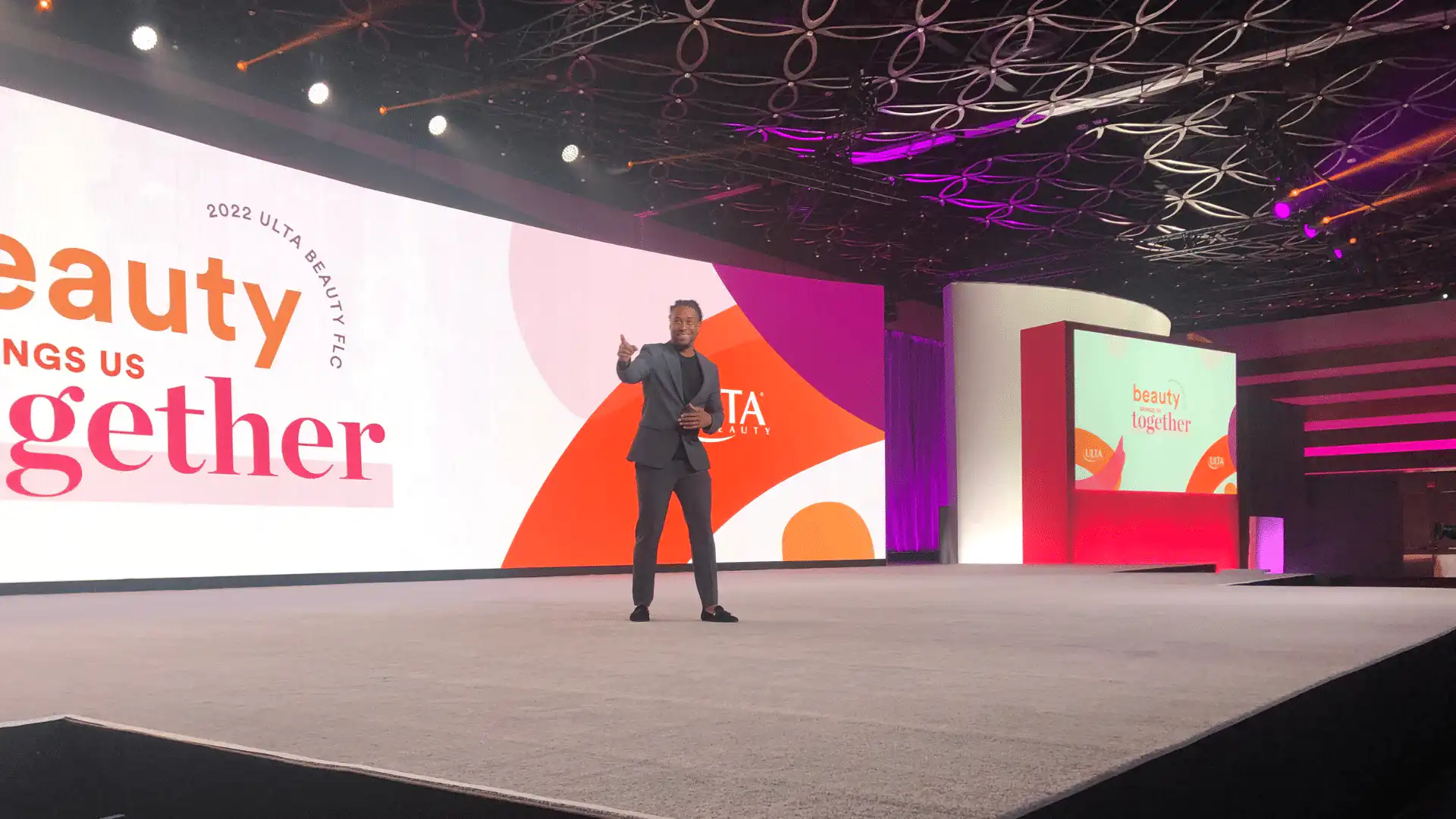
Every conference planner has lived the same nightmare. The first speaker walks on, the room is half full, the half that showed up is on their phones, and the energy gap between what the company spent and what the room is delivering is widening by the minute. The good news: low-energy conferences are recoverable, often on the same day. The bad news: they do not recover by accident. The turnaround is a sequence of specific production decisions, not a vibe shift you can hope for on a coffee break.
This playbook is built from the patterns across 600+ corporate events and the research that backs why the patterns work. The stakes are real: the global corporate events market was valued at USD 326.60 billion in 2025 and is forecast to grow at 13.18% CAGR through 2031 (Mordor Intelligence, 2026), and 78% of corporate attendees cite live entertainment as the top driver of event satisfaction (Eventbrite Event Industry Report, 2024). When a conference room goes quiet, leadership notices and the budget question gets harder next year. Here is how to flip the room before that happens.
Turning a quiet room around is a craft, not a coincidence. To plan a conference where the energy never dips in the first place, contact DJ Will Gill directly.
Key Takeaways
- Low-energy conferences are almost always production failures, not content failures. The fix is operational, not creative.
- Live entertainment is the single biggest driver of event satisfaction. 78% of corporate attendees say so directly (Eventbrite, 2024).
- Trust starts with timing. Late starts, technical glitches, and dead air signal disorganization to the audience and break engagement before the content has a chance.
- Run of show is the lever. Tightening transitions, eliminating dead air, and pacing the day in deliberate energy arcs is what separates a flat room from a packed one.
- Multi-generational rooms (Boomers to Gen Z) need variety in format, not the same content delivered louder. 76% of consumers get frustrated when brands fail to personalize (McKinsey, 2021), and your attendees are those consumers.
- Music, emcee work, and audience engagement done well are production, not decoration. They are the connective tissue that turns six hours of programming into one room moving together.
1. Why Conferences Lose Energy (And Why It Matters)
Energy drops in a conference room follow a small number of repeating causes. After hundreds of events, the same patterns show up at companies of every size and industry:
- The opening is unprepared. Late start, microphone feedback, the wrong slide deck, a host who reads a bio instead of warming the room. The first ten minutes set the contract with the audience.
- Dead air between segments. Speaker walks off, AV scrambles to switch sources, next speaker walks on, room sits in silence for 90 seconds, energy bleeds out.
- Generic content for a specific audience. A multi-generational room of Boomers to Gen Z gets a single tone, single format, single energy register. Half the room checks out.
- The room itself. Stuffy air, bad lighting, too cold, too hot, chairs too close, no clear sightline. Physical comfort is the floor for engagement, not the ceiling.
- No emotional throughline. The program is six business updates back to back, with no human moment connecting them. Companies are bought into by people, not by quarterly numbers.
The stakes for fixing this are quantifiable. 57% of event organizers saw attendance increase and 66% plan to host more events (Bizzabo, 2025 State of Events), but 71.2% of organizers find it challenging to prove in-person event ROI to leadership (Bizzabo data, via Eventcube 2026). The conference that delivers high energy is the one that gets rebooked at a bigger budget. The flat one is the one finance has questions about.
2. Step 1: Fix the Basics — Run On Time, Period
Trust is the foundation of engagement, and timing is how trust gets signaled to the audience. If doors open ten minutes late, the room enters with stress instead of anticipation. If sessions run long, attendees mentally check out of whatever was supposed to come next. If a microphone feeds back during the opening, the audience adjusts their expectations downward for the rest of the day.
The fixes are operational, not creative:
- Doors open at the announced time. Not “around then,” not “as close as we can get.” On the minute.
- Sound check is complete 60 minutes before doors, not 5 minutes after.
- Every speaker has a hard cut signal at the back of the room and a producer in their ear if needed.
- Transitions are timed and rehearsed. The person walking off the stage and the person walking on overlap, never gap.
- Breaks end on time. If a break is 15 minutes, the music starts back up at minute 13, the emcee makes the call at minute 14, and the first speaker is on at minute 15.
An audience that trusts the organizers stops watching the clock and starts watching the stage. That shift is the prerequisite to everything else in this playbook.
3. Step 2: Tighten the Run of Show (Kill Dead Air)
Run of show is the master document of an event. Every minute is accounted for: lighting cues, music transitions, microphone handoffs, speaker walk-ons, video rolls, walk-offs. The difference between a low-energy conference and a high-energy one is most often a run of show that left too many empty seconds between segments.
Three discipline points that consistently flip the room:
- No more than 15 seconds of unfilled audio between segments. Walk-on music, walk-off music, transition pads, and emcee voiceovers fill every transition. Silence kills momentum faster than any other single factor.
- Build deliberate energy arcs across the day. Mornings open high, plateau mid-morning, dip slightly post-lunch (the natural circadian low point), rebuild through afternoon, peak at closing remarks. Map this in advance, then schedule the highest-energy speakers and segments at the natural plateau points.
- Every speaker introduction has a 15 to 30 second walk-on bumper. Instrumental, hype-leaning, ending on a clean cut. This is the audio equivalent of standing the audience up.
A conference produced with this level of run of show discipline feels less like a slideshow and more like a TV broadcast. The audience can sense the difference within the first 20 minutes.
4. Step 3: Build Culture Moments, Not Just Content
Operational tightness stops the audience from being annoyed. It does not make them care. To get full buy-in, the program needs moments that connect people to the company and to each other, not just to the slides.
Effective culture moments share three traits: they are short (5 to 10 minutes inside a larger segment), they involve the audience as participants rather than observers, and they tie back to a value the company actually holds, not a tagline. 87% of event organizers say networking is critical to event success, and 83% of attendees say networking influenced whether they registered (Bizzabo). Culture moments are where the networking happens by design rather than by accident.
Formats that consistently land in corporate rooms:
- Recognition moments. Longest-tenured employee, newest hire, a specific contribution that does not usually get named publicly. 90 seconds, with a sting, on the main stage.
- Live polling. Real-time response to a question that matters to the room (“What is the biggest blocker on your team right now?”), with the answers displayed on the main screen. Attention spikes.
- Cross-rank seating. Mixed tables at lunch with a structured prompt. A VP, a junior contributor, and three people from departments they never work with. Conversations the company could not have engineered any other way.
- Branded games or trivia. A short game show segment built around the company’s history, products, or running jokes. Done right, this is the moment that gets quoted in post-event recap emails.
5. Step 4: Use Music and Entertainment as Production, Not Decoration
The biggest mistake corporate planners make with music is treating it as background, when it should be treated as production. Music is what holds the audience’s energy in the spaces between content, what signals transitions, and what reinforces the emotional argument the speakers are trying to make.
A working production approach to conference music:
- Arrival and registration (60 to 90 BPM): instrumental, lounge, downtempo. The room is filling, conversation is the foreground.
- General session walk-in (95 to 110 BPM): familiar, optimistic, slightly under conversation volume. The room is finding seats, the energy is building.
- Speaker walk-ons (110 to 125 BPM): hype-leaning, ending on a clean cut where the speaker takes the mic.
- Post-lunch revival set (115 to 128 BPM): tempo and volume higher than the rest of the day. This is the slot where energy naturally dips, and it has to be deliberately reversed.
- Closing remarks and dismissal (95 to 115 BPM): emotionally resolved, sing-along friendly. The audience should leave humming, not panting.
The 78% of attendees who cite live entertainment as the top driver of event satisfaction (Eventbrite, 2024) are not talking about a generic playlist on shuffle. They are talking about a music programmer who reads the room and adjusts in real time. That is a production role, not a background one.
6. Step 5: Make the Environment Easy to Be In
If the room is physically uncomfortable, no amount of programming can recover the energy. The environment is the floor under everything else.
- Temperature. Conference rooms run hot once they fill. Set the thermostat lower than feels right when the room is empty, because the body heat of 200 people will raise it 4 to 6 degrees by mid-morning.
- Air circulation. Open doors during breaks. Refresh the air. A stale room is a sleepy room.
- Sightlines. Every seat in the room should see the main stage screen clearly. Walk the room before doors and adjust placement of columns, signage, or video village if needed.
- Spacing. Chairs too close make people uncomfortable. Build in shoulder room.
- Cleanliness during breaks. Crew clears trash, refills water, resets stage. The room the audience returns to should look like the day is starting over.
- Inclusive content review. Every joke, song lyric, slide, and activity vetted in advance. Inclusive does not mean boring, it means nobody feels left out or singled out. A room that trusts the program will engage with the program.
7. Step 6: Engineer for a Multi-Generational Room
Most corporate audiences now span four generations: Baby Boomers, Gen X, Millennials, and Gen Z. The instinct to treat them as a single audience and run a single tone is the cause of more low-energy conferences than any other single factor.
The fix is not picking one generation to please. It is engineering the day with deliberate variety so every generation has segments that land for them, and every generation also experiences segments that pull them outside their comfort zone in a way they will remember.
- Format variety. A 45-minute panel sits next to a 90-second video sits next to a 5-minute live demo sits next to a 15-minute fireside. Different rhythms across the day.
- Music variety. Curate across decades. Open with something familiar to the room’s older half, peak with something familiar to the room’s younger half, transition through tracks that genuinely cross generations (Stevie Wonder, Daft Punk, Outkast, Bruno Mars).
- Cross-generational moments. Pair a senior leader with a junior contributor on a panel. Mixed-rank tables at lunch with a structured prompt. The 60-year-old learning a TikTok reference from the 22-year-old is the moment the room remembers.
- Acknowledge the range out loud. An emcee who calls out the mix (“we’ve got people in this room who saw Prince live and people who discovered him on TikTok”) signals that the program was designed for everyone.
8. The Eight Takeaways for Your Next Conference
Turning a low-energy conference around comes down to eight repeatable production decisions:
- Be on time. Every door, every session, every break. Trust is built or lost on the clock.
- Be prepared. Sound check, presenter rehearsal, slide deck QA, microphone check completed before doors open.
- Be reliable. Do exactly what was promised in the run of show. Predictability is energy-positive.
- Tighten the run of show. No dead air longer than 15 seconds. Walk-on music for every speaker. Transitions choreographed.
- Build culture moments. Recognition, polling, cross-rank seating, branded games. Connection beats content alone.
- Use entertainment as production. Music and emcee work are the connective tissue, not background.
- Make the environment easy to be in. Temperature, air, sightlines, spacing, inclusive content.
- Engineer for a multi-generational room. Format variety, music variety, cross-generational moments.
Energy in a conference room is not luck and it is not personality. It is the product of dozens of small production decisions stacked together. Get the stack right and the room never goes flat in the first place. Get one or two of them wrong and you spend the afternoon trying to recover what the morning gave up. Plan the recovery in. Better, plan it so the recovery is never needed.

About the Author
William “DJ Will Gill” Gilbert creates corporate event experiences that bring together DJing, emceeing, and live audience interaction. He has performed at more than 600 corporate events and has been recognized by Forbes Next 1000 and The Wall Street Journal. His client list includes AT&T Business, CDW, Virgin Galactic, Home Depot, Hilton, PepsiCo, PayPal, and the United Nations. His IMDb credits include Super Bowl LIV, the FIFA World Cup, the Formula 1 Las Vegas Grand Prix, The Voice, and Real World: Hollywood. Will is also the founder of TheAIDJ.com, a patent-pending AI playlist generation platform for modern music curators.
2,520+ Google Reviews · IMDB · Mixcloud · Instagram ·
Frequently Asked Questions
What are the first signs a conference is losing energy?
Phones out during sessions, thinning rooms after breaks, and silent transitions. Energy problems show up in the gaps between content, not the content itself.
What is the fastest fix for a low-energy conference?
Attack the transitions: music between every segment, an emcee who bridges speakers with momentum, and one interactive reset that gets bodies moving.
Can entertainment fix a broken agenda?
It can mask a mediocre one and rescue a tired one, but pacing matters too: a skilled emcee will flag agenda risks in advance, which is why Will Gill preps against the full run of show.
When should organizers book the turnaround?
Before the event: retrofitting energy mid-conference is possible but expensive. Booking entertainment at agenda-design time costs the same and works better.
What results should planners expect?
Rooms that stay full after breaks and attendees who participate. Will Gill’s 2,520+ five-star Google reviews are largely planners describing exactly that turnaround.