
How to Describe a Good Emcee (2026 Vocabulary Guide)

The question of how to describe a good emcee comes up in three distinct contexts. Event planners need the language to recommend an emcee to a colleague or executive sponsor and want descriptors that capture what the emcee actually delivered rather than generic praise. Hiring committees evaluating candidates need a vocabulary to compare emcees against each other beyond surface-level impressions of charm. Working emcees themselves need to understand what the strongest descriptors are so they can articulate their own value to prospective clients. The vocabulary that gets used for great emcees overlaps across these three audiences, but the depth required differs a one-line testimonial that calls an emcee “charismatic” lands differently than a detailed reference that calls the same emcee “audience-aware and self-aware” and explains what those terms mean operationally.
The trap to avoid when describing a good emcee is the default vocabulary the events industry recycles. Words like “charismatic,” “engaging,” “professional,” and “high-energy” appear in almost every emcee bio and almost every testimonial, which means they have lost most of their signal value. The descriptors that actually differentiate a great emcee from an average one are more specific, more observable, and more grounded in the technical work the role requires. This guide walks through the five descriptors that genuinely capture what a great emcee does, the observable behaviors that earn those descriptors, the vocabulary differences across event types, and the language that turns a generic compliment into a reference that actually books the emcee their next engagement.
Key Takeaways
The generic emcee vocabulary “charismatic,” “engaging,” “professional,” “high-energy” has lost most of its signal value because every emcee bio uses the same words. The descriptors that actually capture what separates a great emcee from an average one are more specific and grounded in observable behavior: room-aware, schedule-fluent, brand-honest, recovery-ready, and audience-elevating. These five descriptors map to the five technical capabilities that working planners actually evaluate when deciding whether to rebook an emcee, and they hold up across different event types and audience sizes because they describe what the emcee does rather than what they project on stage.
The single most important descriptor for a good emcee in 2026 is the ability to produce emotional engagement, not just maintain attention. According to a 2024 industry report cited in Michael Hingson’s 2026 event speaker buying guide, 82 percent of event organizers prioritize emotional engagement as the top metric for event success ahead of attendance numbers, content density, or social media reach. Descriptions that capture emotional movement (“the audience was laughing one minute and visibly moved the next, and he held both registers”) carry significantly more weight in 2026 emcee selection than descriptions that focus on energy or polish alone. Reviews and testimonials that name the emotional states the emcee produced are more useful to prospective clients than reviews that name personality traits.
The descriptors that actually predict performance are observable behaviors during the engagement, not personality traits inferred from the highlight reel. The 2026 Complete Guide to Corporate Emcees from Funny Business emphasizes that professional emcees personalize introductions, transitions, and messaging to match the company, industry, and event tone and the evidence that an emcee does this work shows up in specific behaviors a planner can describe afterward. The strongest emcee testimonials name those behaviors directly: how the emcee handled a moment when the schedule slipped, how they wove the company’s strategic theme through transitions, how they kept the room engaged during an AV failure. Behavioral specificity is the dividing line between a testimonial that books the emcee’s next engagement and a testimonial that reads as boilerplate praise.
The right vocabulary changes across event types because the role itself changes. Per the 2026 corporate emcees guide, conferences, award banquets, sales meetings, hybrid events, association conventions, and leadership retreats each require a different version of the same underlying skill set, and the descriptors that capture quality at one event type can be inappropriate at another. A corporate emcee at a sales kickoff is described well as “energizing,” “momentum-building,” and “stage-commanding.” The same emcee at an awards banquet is described well as “gracious,” “emotionally calibrated,” and “weight-aware.” Using sales-kickoff vocabulary to describe an awards-banquet emcee reads as a mismatch and signals that the reviewer did not pay close attention to what the emcee actually did.
Reviews and testimonials that capture what a good emcee actually did follow a recognizable structure. They name a specific moment in the program (often a moment that could have gone badly), describe how the emcee handled it, and explain the downstream effect on the audience or event. That three-part structure moment, action, effect turns generic praise into a reference that prospective clients can actually use to evaluate fit. Planners writing reviews and emcees soliciting them should both push past the default vocabulary toward the moment-action-effect structure, because it generates the language that books future engagements rather than the language that reads as filler. Strong reviews compound the language a planner uses in a review is often the language they use the next time they recommend the emcee in a private conversation, and that compounding is one of the most important sources of long-term emcee bookings.
Watch DJ Will Gill perform live. Contact him now to book your event.
“The words that actually describe a good emcee are not the ones that appear in every emcee bio. They are the ones that describe what the emcee did in the moments when something almost went wrong and didn’t.”
The Five Descriptors That Actually Capture a Good Emcee
The default emcee vocabulary charismatic, engaging, professional, high-energy, polished has lost most of its differentiating value because every emcee in every market uses those words in their own bio. The descriptors below are the ones that actually distinguish working professional emcees from the broader pool, because they describe technical capabilities rather than personality projections.
Room-aware. A room-aware emcee notices what the audience is actually doing in real time and adjusts delivery based on what they observe slowing down when the room needs time to process, speeding up when energy is dropping, and reading the room’s collective response to material rather than running the prepared opening regardless of context. Room-awareness is the single most important emcee capability and is the one that most clearly distinguishes great emcees from average ones. It is also the hardest capability to detect from a highlight reel highlight reels are edited to remove the moments when the room dynamics required adjustment, which means they obscure the exact behavior the descriptor names.
Schedule-fluent. A schedule-fluent emcee operates inside the run-of-show as if they wrote it. They know what is coming next, what is supposed to follow that, and what the consequences of a delay are. When the program slips which it always does they absorb the time without making the audience feel that something has gone wrong. Schedule fluency is technical work that requires substantial pre-event preparation, and the difference between an emcee who has internalized the run-of-show and one who is reading it off a card is obvious to the planning team even when it is invisible to the audience.
Brand-honest. A brand-honest emcee internalizes the company’s strategic message before the event and weaves it through introductions and transitions in a way that lands as their own observation rather than as a corporate line. Audiences can hear the difference between an emcee reading a marketing tagline and an emcee who has spent the preparation work understanding what the company is actually trying to communicate. The brand-honest emcee makes the company’s message stronger; the brand-reading emcee makes it weaker by signaling to the room that the company’s voice is generic enough to be delivered by any contractor.
Recovery-ready. A recovery-ready emcee treats AV failures, schedule slips, and unexpected moments as part of the job rather than as exceptions to it. When a microphone cuts out, a video file fails to play, or a speaker is held up backstage, the recovery-ready emcee fills the gap without making the audience aware that something has gone wrong often with humor that acknowledges the situation lightly or a callback to an earlier moment in the program. AV failures are inevitable across a long enough sample of events, which means recovery-readiness is not a bonus quality but a foundational one. An emcee who freezes during an AV failure is not yet at the professional tier regardless of how their bio reads.
Audience-elevating. An audience-elevating emcee leaves the room at a higher emotional and engagement state than they found it. This is the operational version of the “emotional engagement” descriptor that 82 percent of event organizers now prioritize as the top success metric for events. According to a 2024 industry report cited in Michael Hingson’s 2026 event speaker buying guide, the organizers driving that metric are looking specifically for the kind of audience movement an audience-elevating emcee produces. The descriptor matters because it captures the outcome the role is hired to produce rather than the personality the emcee projects on stage.
The Observable Behaviors That Earn Those Descriptors
Each of the five descriptors above maps to specific behaviors a planner can name in a review or reference. The most useful testimonials describe those behaviors directly rather than the abstract qualities they imply, because behavior-level descriptions are what prospective clients actually use to evaluate fit.
Room-awareness shows up as adjustments to the opening based on observed energy, pacing changes in the middle of the program based on audience response, and acknowledgment of moments the audience cared about rather than moments the emcee thought were going to land. A planner describing this well might say: “When the morning ran long and the audience was visibly fatigued after lunch, he shortened his planned welcome and went directly to a high-energy callback that brought the room back without forcing it.” That description is more useful than calling the emcee “perceptive” because it shows the perception in action.
Schedule fluency shows up as smooth handoffs to speakers without referring to notes, accurate time-checks announced naturally rather than apologetically, and graceful compression of later segments when earlier ones run over. A planner describing this well might say: “She knew the run-of-show better than the production team did, and when the second keynote ran fifteen minutes long, she compressed her own segments to recover the schedule without anyone in the audience noticing.” That description converts an abstract capability into evidence.
Brand-honesty shows up as references to the company’s strategic priorities woven through transitions, audience interactions that reinforce the event theme rather than running parallel to it, and introductions that frame each speaker around the conference narrative rather than around the speaker’s bio. A planner describing this well might say: “He spent the preparation call understanding what we were actually trying to communicate, and the result was that our strategic theme came through every transition without ever sounding like a corporate line.” That description gives prospective clients the evidence they need to predict similar customization for their own event.
Recovery-readiness shows up most visibly when something goes wrong, which means the strongest references explicitly describe a moment that did not go to plan. A planner describing this well might say: “When the closing video failed to play, she filled the four minutes it took the AV team to recover with an audience-interaction segment that landed so well several attendees told me afterward it was their favorite part of the day.” That description does more for the emcee’s future bookings than any number of generic compliments because it answers the specific question every planner privately asks: what happens when something breaks?
Audience-elevation shows up as observable changes in the room’s emotional state across the day visible engagement levels, the energy attendees bring to the breakouts that follow, and the references attendees make to the emcee in their own conversations during networking time. A planner describing this well might say: “By the closing session, the audience was singing along with him; by Monday, three different attendees had quoted his framing back to me in unrelated meetings.” That description names the downstream effect the emcee produced rather than the personality they projected, which is what 2026 event evaluators are increasingly trained to look for.
How the Right Descriptors Change Across Event Types
The vocabulary that captures a good emcee shifts depending on what kind of event the emcee is hosting. A sales kickoff calls for high-energy momentum; an awards banquet calls for emotional pacing; a hybrid event calls for parallel-audience awareness. The descriptors that fit one event type can read as inappropriate at another, and using the wrong vocabulary in a review signals that the reviewer did not pay close attention to what the emcee actually did. The table below summarizes the descriptors that fit the most common corporate emcee event types in 2026.
Descriptors That Fit by Event Type (2026)
| Event Type | Descriptors That Fit | What the Emcee Needs to Do |
| Sales Kickoff | Energizing, momentum-building, stage-commanding, audience-elevating | Drive the team’s energy upward; close the day with the room ready to sell |
| Awards Banquet | Gracious, emotionally calibrated, weight-aware, recipient-honoring | Land moments of recognition with appropriate weight; honor each recipient |
| Conference | Schedule-fluent, room-aware, brand-honest, recovery-ready | Tie the program together across multiple days and transitions |
| Hybrid Event | Parallel-audience aware, camera-fluent, room-and-stream calibrated | Engage in-person and remote audiences simultaneously without favoring either |
| Leadership Retreat | Intimate, conversational, strategically grounded, senior-room-comfortable | Hold the room at a higher register without performance; align senior team |
The implication of the event-type vocabulary is that the same working emcee will earn different descriptors at different engagements, and the strongest references match the descriptor to the event type rather than recycling a one-size-fits-all word like “great.” Planners writing references should think about which descriptors actually fit the specific event the emcee just hosted, and emcees soliciting references should help their clients articulate what kind of event-specific work the emcee did, rather than accepting generic praise that could apply to anyone.
The Vocabulary Event Planners Use When Recommending Emcees
The vocabulary working event planners actually use when recommending an emcee to a colleague is more specific than the vocabulary that appears in public reviews. Behind the scenes, planners talk about emcees in terms of operational capability rather than stage presence the question they answer for each other is “can this person handle the work?” rather than “are they entertaining?”
The phrases that show up repeatedly in private planner recommendations include “knows the run-of-show without being told,” “doesn’t need to be managed,” “made my job easier,” “handled [specific incident] without me having to step in,” and “the executive sponsor came up to me afterward and asked who he was.” Each of those phrases describes an operational outcome the emcee produced rather than a personality the emcee projected. The phrases that signal an average emcee, by contrast, focus on what the emcee felt like to be around rather than what they delivered: “really nice person,” “very professional,” “easy to work with.” The latter set is not negative but is also not differentiating those phrases describe table stakes rather than excellence.
The vocabulary planners use when recommending an emcee they would re-book is also marked by specificity about moments rather than averages across the day. “She filled four minutes when the closing video failed,” “he found a way to acknowledge the new SVP’s promotion without it feeling forced,” and “she compressed the awards section by ten minutes when the keynote ran long” are the kinds of moment-specific endorsements that book future engagements. The closer a recommendation gets to naming a specific moment, the more useful it is to the planner receiving the recommendation, because moment-specific praise predicts moment-specific competence rather than general charm.
How to Write a Review That Captures What an Emcee Actually Did
The most useful structure for an emcee review or testimonial is a three-part framework that names a specific moment, describes how the emcee handled it, and explains the downstream effect. Reviews that follow this structure produce significantly stronger booking outcomes for the emcee than reviews that rely on generic praise, because they give prospective clients the evidence they need to predict similar performance at their own event.
The moment. Start the review by anchoring to a specific moment in the program preferably a moment when something could have gone badly. “When the schedule slipped by twenty minutes after the morning keynote ran long…” or “When the closing video file failed to play…” or “When the audience came back from lunch flat and we still had three hours of programming…” These openings signal that the review is grounded in observation rather than general impression, which is the single most important signal a prospective client looks for.
The action. Describe what the emcee did in that moment. Not what they felt like, not what their personality projected what they actually did. “…she opened the afternoon with a callback to a joke from the morning session that brought the room back to high energy in under three minutes…” or “…he filled the four minutes with an audience-interaction segment that several attendees told me afterward was their favorite moment of the day…” or “…she compressed her own segments to recover the schedule without anyone in the audience noticing.” The action description is the part most reviewers skip and the part most valuable to the next planner reading the review.
The effect. Close the review by naming the downstream effect on the audience, the event, or the organization. “…the rest of the day’s energy held; we got the strongest post-event NPS scores in the conference’s history.” Or: “…the executive sponsor came up to me afterward and asked who he was; we already have him booked for next year.” Or: “…by Monday, three attendees had quoted her framing back to me in unrelated meetings, which is the strongest signal I track for whether a keynote landed.” The effect is what converts the review from a description of the event into evidence of the emcee’s value.
Mistakes Reviewers Make When Describing Emcees
The most common mistakes reviewers make when describing emcees are mistakes of vocabulary choice rather than mistakes of intent. Reviewers want to give a good emcee a strong reference but default to language that has lost its signal value through overuse. The mistakes below are the ones that consistently weaken otherwise positive reviews.
Relying on the default vocabulary. Words like “charismatic,” “engaging,” “professional,” and “high-energy” appear in almost every emcee bio and almost every review, which means they read as filler regardless of the writer’s actual intent. A review that uses only those words signals that the writer did not pay close attention to specific moments in the program. The fix is to replace each default adjective with a behavioral description: “charismatic” becomes “held the room’s attention through the entire ninety-minute awards section,” “engaging” becomes “got the back rows participating in the closing segment,” “professional” becomes “showed up two hours early and asked the right questions in the production meeting.”
Praising the personality rather than the work. Reviews that focus on what the emcee felt like to be around “lovely person,” “great energy,” “really fun” describe table stakes rather than excellence. Every working emcee at the professional tier is pleasant to work with; the descriptor does not differentiate. The fix is to shift from personality to action: name a thing the emcee did rather than a way they felt to be around.
Generalizing across the day rather than naming moments. Reviews that average across the entire engagement “kept the energy up all day,” “made the event run smoothly” read as less credible than reviews that name specific moments. Generalizations are unfalsifiable; specifics are evidence. The fix is to anchor every claim to a moment: “kept the energy up after a slow afternoon panel by opening the closing session with an audience callback that visibly re-engaged the room.”
Skipping the downstream effect. Reviews that describe what the emcee did but not what changed because of it leave the strongest signal out of the review. The downstream effect the higher engagement scores, the executive sponsor’s reaction, the attendees quoting the emcee in unrelated meetings is what converts the review from description to evidence. The fix is to always close the review with the effect, even when the effect is small. “The audience walked out energized rather than drained” is a smaller effect than “we already re-booked her for next year,” but both convert the review into something prospective clients can use.
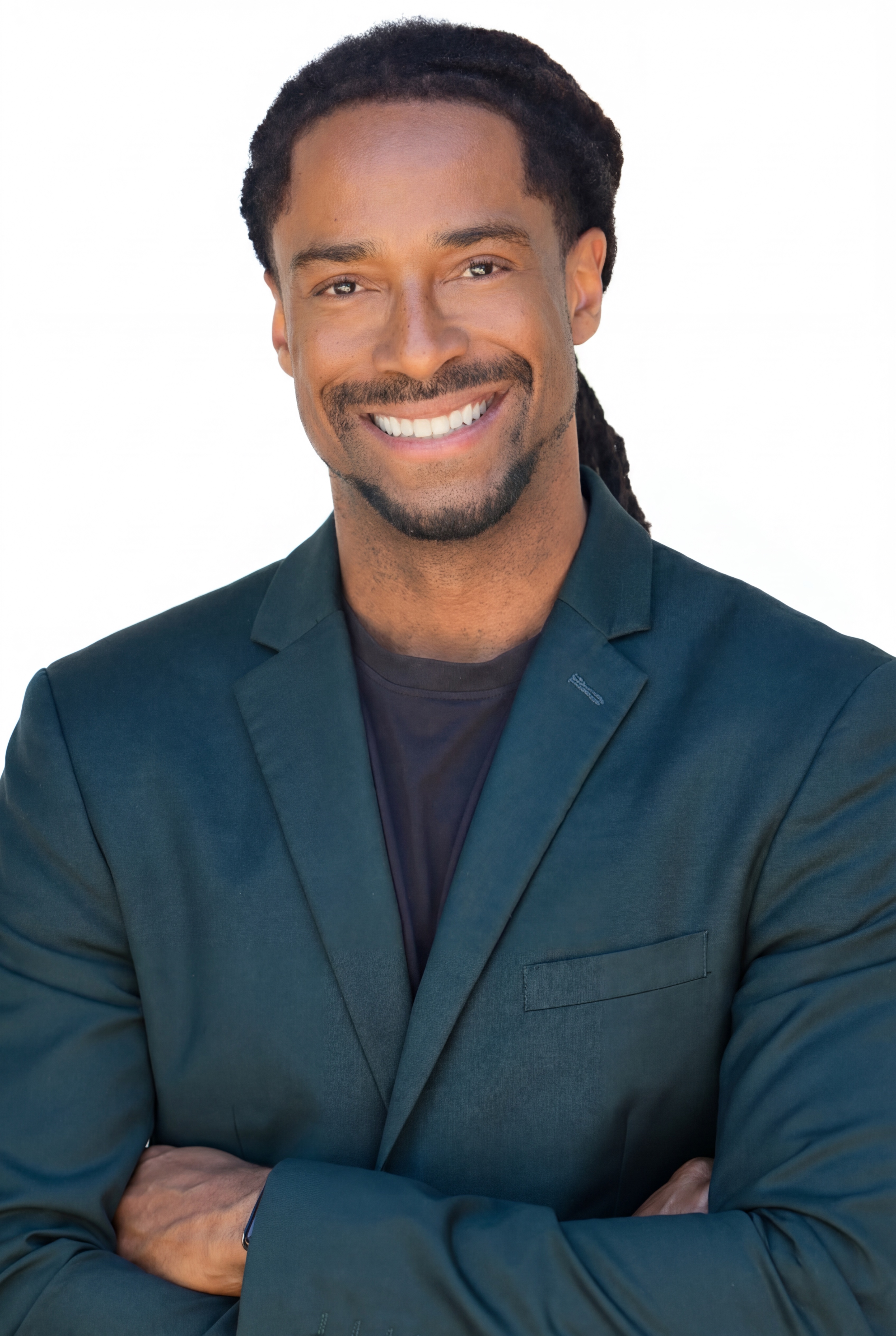
DJ Will Gill
Will Gill is a Forbes Next 1000 honoree and the Wall Street Journal’s #1-ranked corporate DJ and emcee, with 2,520+ five-star Google reviews. He performs 600+ corporate events annually as emcee, DJ, and audience-engagement specialist for clients including Google, Amazon, Salesforce, AT&T, the United Nations, and Boys & Girls Clubs of America, and is listed on IMDB. His “three-in-one” corporate entertainer model combining emcee work, DJ performance, and audience-engagement programming in a single integrated booking, is the approach recognized in his WSJ profile. Reach out here to discuss your corporate event.
Corporate Events Hosted as Emcee
Five-Star Google Reviews
WSJ-Ranked Corporate DJ and Emcee
Frequently Asked Questions
Why do the usual words fail to describe a good emcee?
Because charismatic, engaging, professional and high-energy appear in almost every emcee bio and testimonial, so they have lost their signal value. The descriptors that differentiate a great emcee are more specific and grounded in observable behavior.
What descriptors actually capture a great emcee?
The page's five are observable, technical qualities such as room-aware and schedule-fluent, each tied to behaviors you can point to rather than impressions of charm.
Who needs this vocabulary?
Event planners recommending an emcee to a colleague or executive sponsor, hiring committees comparing candidates, and working emcees articulating their own value.
Do the right descriptors change by event type?
Yes. The guide walks through how the strongest descriptors shift across event formats and the vocabulary planners use when they recommend an emcee.
How do I write a review that helps an emcee get booked?
Describe what the emcee actually did, in observable terms, instead of generic praise. The page shows how a detailed reference lands differently than a one-line testimonial and lists the mistakes reviewers make.