
How to Curate Playlists That Move People | DJ Will Gill
Most playlists fail before the first track plays. Not because the songs are bad, but because the curator never decided what the playlist was actually for, who it was for, or how it should make a listener feel three minutes in versus thirty minutes in. The result is a familiar problem: a folder of personal favorites that holds together for the curator and slowly loses everyone else by track six.
Curating a playlist that moves people is closer to writing a short story than to making a list. It has a beginning, middle, and end. It has tension and release. It has a specific reader in mind. The difference between a playlist that gets saved and shared and a playlist that gets skipped halfway through is rarely the songs themselves it is the intent behind the structure. This guide walks through the modern 2026 framework for curating playlists with that level of intent, including the specific sequencing rules, length targets, refresh cadence, and analytics signals professional curators now use to build playlists that actually hold attention.
Move people with playlists that actually flow.
Introducing TheAIDJ.com
Emotion comes from order and blend, not just good songs. Tell AIDJ the feeling you want, preview the transitions, and export a set that carries it. The easy way to curate playlists that land.
Key Takeaways
Specificity beats breadth in 2026. According to Klangspot Recordings’ 2026 curation trends report, broad emotional categories like “chill” and “focus” are losing ground to highly specific listening contexts such as rainy-focus piano, soft kinetic house for late flights, and instrumental jazz for quiet dinner hosting. The playlists that win describe a moment, a pace, and a sensory tone all at once.
Sequencing follows measurable rules, not intuition alone. Muso documents that adjacent tracks should generally stay within a 5 BPM range to avoid jarring transitions, and curators should test sequence flow on mobile speakers because most listening happens there.
High-impact playlists follow a 70/30 emerging-to-established artist ratio according to OnesToWatch’s professional curation guide. Familiar tracks anchor listeners while new voices keep discovery exciting. Professional curators target 80 percent listener completion rates and refresh roughly 10 to 15 percent of tracks each month to maintain both listener and algorithmic engagement.
Spotify’s platform mechanics affect curation decisions directly. The platform’s 1,000-track playlist cap and 30-second minimum listen rule for a stream to count both shape how curators plan track order. Sequence the strongest, most accessible tracks early so listeners cross the 30-second threshold and the playlist starts earning real engagement.
The 2026 curation environment is hybrid by default. According to OnesToWatch’s analysis of 2026 curation trends, professional teams now let algorithms generate candidate pools and rely on human curators to finalize sequencing, narrative, and cultural context. The curator’s job has shifted from finding songs to filtering and arranging them with editorial judgment that AI cannot fully replicate.
“A playlist is a story you tell with other people’s songs. The best ones have a beginning that earns trust, a middle that builds tension, and an ending that sends the listener somewhere. The worst ones are just lists and lists are the easiest thing in the world to skip.”
Start With a Specific Purpose, Not a Vague Mood
The first decision in playlist curation is the most underrated one: what is this playlist actually for, and who is on the other end of the speakers. Curators who skip this step build playlists that feel like personal mixtapes nostalgic for the maker, opaque to everyone else. Curators who nail this step build playlists that strangers save inside the first five minutes.
The 2026 curation environment has raised the bar on specificity. According to Klangspot Recordings’ 2026 trends analysis, the broad categories that defined playlist culture for a decade chill, focus, vibes, mood are losing to highly specific listening contexts. Listeners are choosing rainy-focus piano over generic study music, soft kinetic house for late flights over generic travel mixes, and instrumental jazz for quiet dinner hosting over generic dinner playlists. The titles and the sequencing have both become more cinematic, and the most successful playlists describe a moment, a pace, and a sensory tone all at once. The practical implication is straightforward: name your playlist after what it is for, not what it sounds like. A title that names a context “Slow Sunday Coffee on a Cold Morning” outperforms a title that names a vibe “Chill Sunday.”
The same specificity rule applies to genre. According to Playlist Push’s 2026 curator guide, “pop” is too broad to be discoverable in Spotify search and too vague to attract serious followers. Curators who niche down indie rock with specific subgenre framing, trap soul with explicit emotional themes, ambient techno for design work build audiences that are more loyal and more useful to the artists who want their tracks placed. Specificity is the discovery mechanism for both listeners and algorithms.
Select Tracks With the 70/30 Rule
Once the playlist’s purpose is defined, track selection becomes a balancing act between familiarity and discovery. Too much familiarity and the playlist feels like a greatest hits compilation no one needed; too much discovery and the playlist alienates listeners who want a foothold before they explore. The professional curator’s working formula, according to OnesToWatch’s playlist curation guide, is a 70/30 ratio: roughly 70 percent emerging artists, 30 percent established tracks. The familiar songs anchor the listener and signal that the playlist understands the genre; the new voices keep the experience surprising enough that the listener pays attention rather than zoning out into autoplay.
Music journalist coverage of working curators reinforces this principle. Profiles of professional curators across Apple, Spotify, Pandora, and YouTube consistently describe the same approach: sprinkle better-known artists alongside under-the-radar acts, because listeners need familiarity as an entry point even when they are explicitly looking for new music. A common version of this trick is to feature an unexpected deep cut from a famous artist Bob Dylan, but not “Like a Rolling Stone” alongside emerging tracks, which signals taste while still delivering recognition.
The 70/30 rule has measurable downstream effects. The same OnesToWatch analysis reports that strategically curated playlists targeting this ratio achieve roughly 80 percent listener completion rates, generate 500 or more weekly streams once they cross a meaningful follower threshold, and successfully introduce around five new artists each month to the playlist’s audience.
Sequence the Playlist Like a Story
Sequencing is where most amateur playlists fall apart. A playlist is not a collection of individually good tracks it is a sequence of moments where every track decision is shaped by the track that came before and the track that will follow. This is the part of curation that separates serious curators from enthusiastic music fans, and it follows specific, testable rules.
The first rule is BPM continuity. According to Muso’s playlist flow guide, adjacent tracks should generally stay within roughly 5 BPM of each other to avoid the jarring transitions that cause listeners to skip. Modern tools including Spotify’s “Mix” feature can identify compatible tempos and keys automatically, eliminating the guesswork that used to define playlist sequencing. The second rule is energy arc planning. Borrowing from album sequencing tradition, LANDR’s sequencing guide describes the playlist as a journey that builds and releases tension across the full listening session: a strong opener that earns trust within thirty seconds, a middle that deepens the mood without draining energy, and a closer that lands with intentional weight or warmth.
The 2026 framework adds a third rule: function-based slotting. Klangspot Recordings argues that pitching and placing tracks by their structural role opener, bridge, or closer produces stronger playlists than pitching them by genre alone. The opener needs to grab attention with clarity. The bridge needs to deepen the middle without losing momentum. The closer needs warmth and space. Sequencing decisions are easier when each candidate track has a clear functional role.
Playlist Length and Structure by Use Case
| Use Case | Track Count | Energy Arc | Sequencing Priority |
| Workout | 25-40 tracks | Build to peak around 60% mark, then sustain | Tight BPM clusters, tempo-matched transitions |
| Focus / Study | 40-80 tracks | Flat, sustained energy with no spikes | Minimal vocals, consistent texture, no dramatic shifts |
| Party / Event | 50-80 tracks | Crowd-pleasers early, peak energy mid-late | Anchor tracks every 4-5 songs, palate cleansers between styles |
| Dinner / Hosting | 30-50 tracks | Slow build, never overwhelming the conversation | Instrumental focus, lyric-light when present |
| Discovery / Editorial | 25-40 tracks | Variable, with intentional emotional arc | 70/30 emerging-to-established ratio, narrative flow |
Respect the Platform Mechanics
Modern playlist curation is shaped by the technical rules of the streaming platform the playlist lives on, and ignoring those rules is one of the most common causes of weak playlist performance. According to OnesToWatch’s curation framework, two Spotify rules in particular drive curation decisions: the platform caps individual playlists at 1,000 tracks, and a stream only counts toward an artist’s royalties and chart position if a listener plays the song for at least 30 seconds.
The 30-second rule has direct implications for sequencing. A playlist’s opening tracks need to earn the first 30 seconds aggressively a strong hook, an immediately recognizable sound, or a sample that drops fast. Front-loading the playlist with the strongest, most accessible tracks ensures listeners cross the 30-second threshold and the playlist starts earning real engagement signals. Songs with slow builds or experimental openings belong in the middle of the playlist, not at the top.
The 1,000-track cap is more of a discipline forcing function than a real limitation. Most playlists should be far shorter the table above shows the recommended counts by use case but knowing the ceiling exists reminds curators to be ruthless about which songs earn their slot. Every track on a playlist is competing with every other track for the same listener attention, and bloated playlists almost always lose to shorter, sharper ones.
Test, Refresh, and Read the Data
The first version of any playlist is a hypothesis. The version that holds an audience is the version that has been tested against real listener behavior and refined accordingly. Professional curators do not just publish and forget they monitor completion rates, skip points, save activity, and time-of-day performance, and they refresh the playlist on a defined cadence to keep both listeners and the algorithm engaged.
The 2026 refresh standard, according to OnesToWatch’s professional curation guide, is roughly 10 to 15 percent of tracks rotated each month. That cadence is enough to keep returning listeners discovering something new without disrupting the playlist’s core identity. Curators who refresh too aggressively confuse their audience; curators who never refresh see follower retention slowly bleed out as the playlist starts to feel stale and the algorithm deprioritizes it. Refresh decisions should align with release days, tour announcements, and seasonal shifts so the playlist features artists when their interest peaks.
Reading the analytics requires context, not just raw numbers. Klangspot’s curation analysis warns that a track with a slightly higher skip rate is not automatically a poor fit it may simply be sequenced too early in the playlist, before listeners have committed to staying. The professional move is to test alternative sequences with the same tracks before removing a song that might actually be performing well in a different position. Spotify for Artists provides the underlying data for free; third-party analytics tools layer in additional engagement and audience-shift signals that help spot weak transitions and tracks that lose listeners.
The 2026 Reality: AI Plus Human Curation
The conversation about whether AI will replace human curators has effectively been settled in 2026, and the answer is: it has not, but it has changed what curators do. According to OnesToWatch’s analysis of 2026 curation trends, hybrid systems are now standard across professional curation teams. Algorithms generate candidate pools at speeds and scales no human can match, and human curators take over for the parts of the work that require cultural context, emotional sequencing, and storytelling.
The implication for independent curators is liberating, not threatening. Tools like Spotify’s algorithmic recommendations and AI-powered discovery platforms can do the volume work surfacing 50 candidate tracks for a playlist slot freeing the human curator to do the editorial work choosing which two of those 50 tracks actually belong, in what order, and why. The curator’s competitive advantage in this environment is taste, narrative judgment, and lived cultural awareness none of which current AI systems can fully replicate. The curators who thrive in 2026 are the ones who use AI as a research assistant and stay firmly in control of every editorial decision.
The other thing AI cannot do is read a live room. A great Spotify playlist is built once and updated monthly. A great event DJ is curating in real time, watching the audience, adjusting the next track based on the energy in the last forty seconds. Both are valid forms of playlist curation, but they exist on different timescales and require different skill sets. The principles in this guide BPM continuity, energy arcs, anchor tracks, palate cleansers, the 70/30 rule are the same principles a live DJ uses. The difference is that a live DJ has to apply them with no preview window and no second chance.

DJ Will Gill
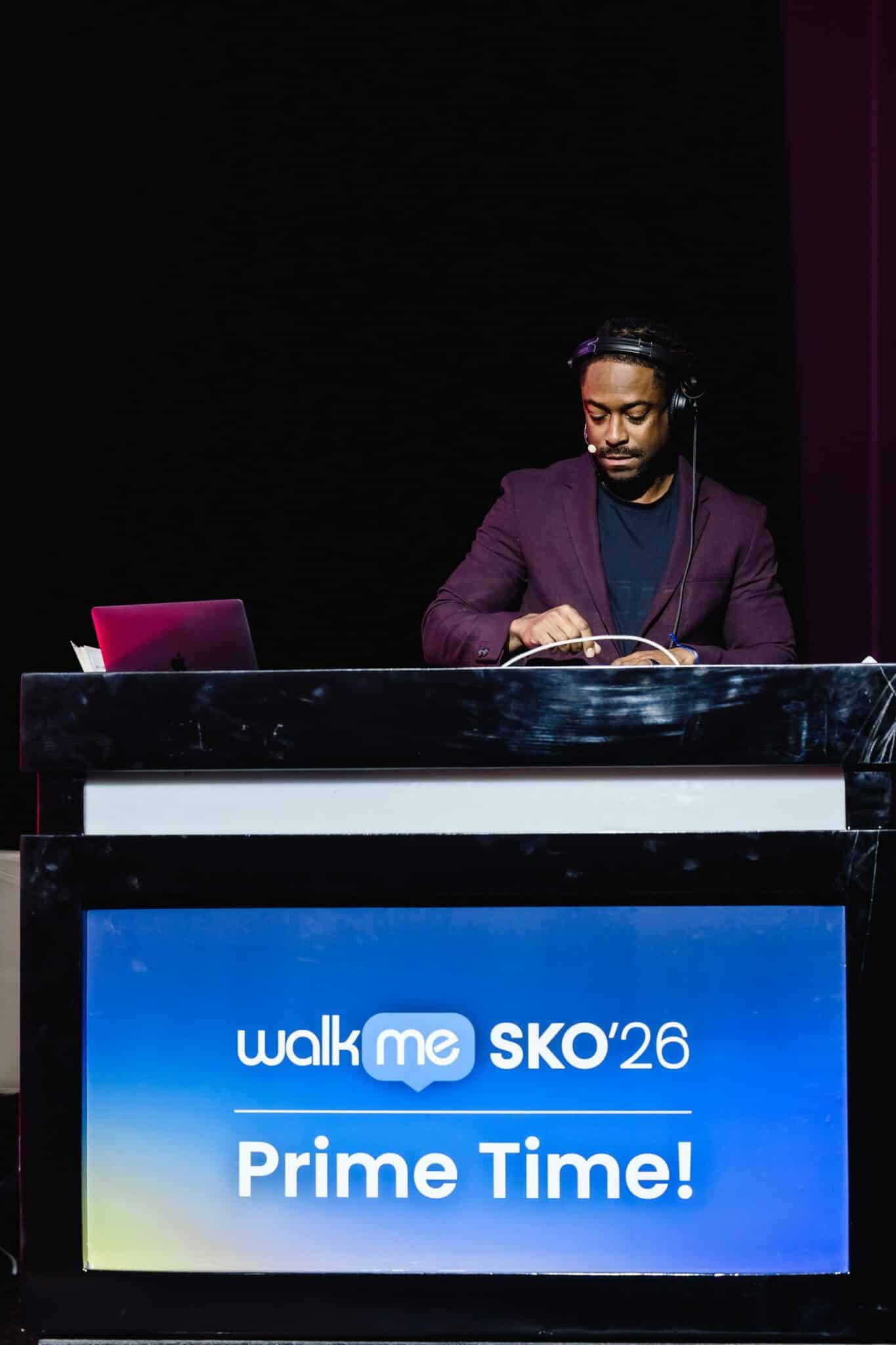
Will Gill is a Forbes Next 1000 honoree and WSJ-ranked #1 Corporate DJ and Emcee with 2,520+ five-star Google reviews. As a live event DJ operating in the open-format style, he performs real-time playlist curation at 600+ corporate events annually for clients including Google, Amazon, Microsoft, Salesforce, the United Nations, and Boys & Girls Clubs of America applying the same sequencing, energy-arc, and audience-reading principles outlined in this guide to live rooms with no preview window.
Learn more and check availability.
Corporate Events as DJ and Emcee
Five-Star Google Reviews
WSJ-Ranked Corporate DJ and Emcee