
How Strategic Engagement Outperforms Star Power at Corporate Events | DJ Will Gill
Star power buys attention for 90 minutes. Strategic engagement buys behavior change for a quarter. That trade is at the center of every entertainment line item on a corporate event budget in 2026, and the math has gotten harder to ignore. A celebrity name on the flyer drives a registration bump and a few LinkedIn posts. An engagement strategy built around active participation drives retention, productivity, and the kind of culture wins that show up in eNPS surveys six months later.
The research keeps landing in the same place. Engageli’s review of active learning research found active learners retained 93.5% of safety training material versus 79% for passive learners, and active learning conditions improved test scores by an average of 54% over traditional lectures. The same body of work shows highly engaged teams achieve 21% greater profitability and 17% higher productivity, with structured active onboarding driving 62% greater new hire productivity. None of that comes from putting a celebrity on stage and pointing the room at them. It comes from designing the room around the people in it.
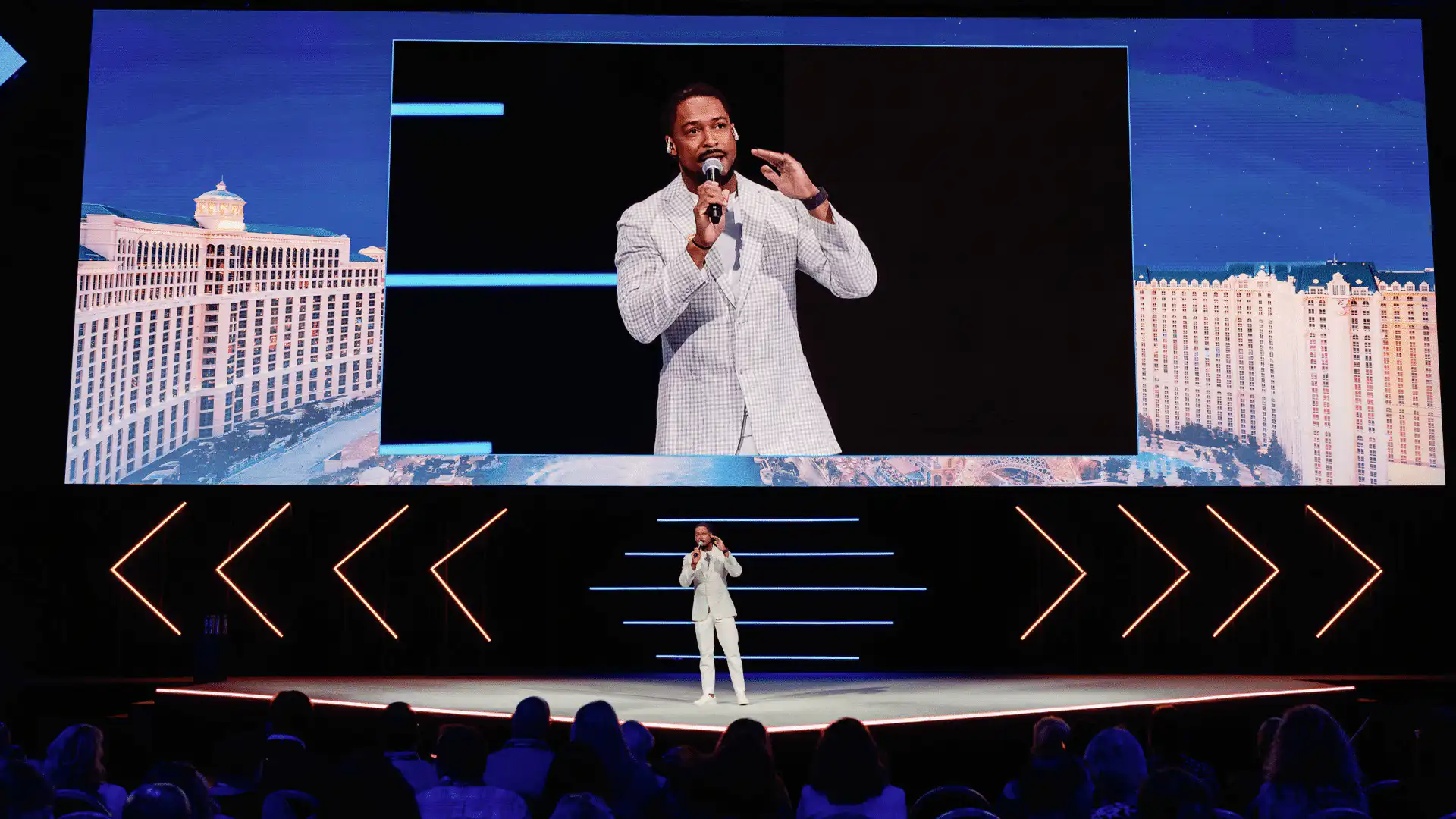
DJ Will Gill is bringing the energy to a corporate conference. Contact him here how he can support your next event.
Key Takeaways
Active engagement consistently outperforms passive consumption in retention research. Active learners retained 93.5% of training material versus 79% for passive learners, with active conditions improving test scores by an average of 54%.
Star power is a passive format by design. Celebrity DJ fees for corporate gigs run $5,000 to $25,000 for emerging acts and $100,000-plus for established names, before riders, AV, and hospitality. Most of that fee buys a one-way performance, not audience activation.
Engagement-first events are measurable. Gallup data cited in live event ROI reporting shows companies with high engagement see 23% higher profitability and 18% lower turnover, with attendees recalling the entertainment first 73% of the time six months out.
Practical engagement design uses three levers: facilitated workshops or breakouts, gamification and team challenges, and technology-enhanced interaction such as live polling, Q&A, and immersive activations.
Return on engagement is trackable through post-event surveys, behavioral changes (collaboration, internal participation), retention movement, and engagement-score deltas. The shift from “buzz” metrics to outcome metrics is the central change in 2026 event measurement.
1. The Star Power Trade-Off
Booking a celebrity feels like a win in the proposal stage. The name lands well with the executive sponsor, the marketing team gets a campaign asset, and the registration page picks up extra clicks. But the cost structure is rarely just the headline fee. Industry booking data shows celebrity DJ fees for corporate gigs land between $5,000 and $25,000 for emerging acts and run $100,000 or more for the well-known names, before you add the rider, AV upgrades to meet their spec, security, hotels, and travel for an entourage.
That fee is also reputational exposure. A celebrity’s bad week becomes your bad week if a scandal lands between the contract signing and the show date. Value misalignment between a celebrity and the company’s brand can read as tone-deaf to the very employees and customers you brought into the room. And the format itself is the deepest cost. Star-power entertainment is a one-way broadcast. The performer is the focus. The audience is positioned as spectators. That works in a stadium. It works less well in a ballroom where the company is trying to align a sales team or recognize a customer success leader.
The missed opportunity is the largest line item on the celebrity bill, and it never shows up on the invoice.
2. Active vs. Passive: The Engagement Math
The strongest case against star-power formats is not aesthetic. It is the retention data.
Engageli’s compilation of active learning research found a 14.5-point retention gap in a safety training study: 93.5% retention for active learners versus 79% for passive learners. The same body of research found a 54% improvement in test scores for active learners over traditional lecture conditions, with one study showing a 13x increase in learner talk time and 16x more nonverbal engagement in active formats. Older but consistent work on the “Cone of Learning” tradition indicates retention climbs from roughly 10% for reading to 90% for teaching others, with hands-on practice landing far higher than passive consumption.
Translated into event language: when your audience is leaning back watching a star, the message you spent the rest of the budget delivering is fading on a curve closer to the 10% line. When the audience is doing something, the same message lands closer to the 75 to 90% line.
That gap is not a soft benefit. It is the difference between a meeting that drives Monday-morning behavior and a meeting that drives Monday-morning forgetting.
3. What Strategic Engagement Actually Looks Like
Strategic engagement is the deliberate design of attendee participation around the event’s business outcomes. Not “the audience claps during a set.” Real participation. People moving, talking, making decisions, solving problems together, getting recognized in front of peers.
A strategically engaged event treats every minute as a design choice. Walk-in music is programmed to support the energy of the upcoming session, not generic chart hits. Speaker introductions are sharpened to make the speaker land. Award moments are personalized to make the honoree feel seen by the room. Activations are scheduled into the post-lunch and post-keynote slots where energy traditionally collapses. The “performer” on stage is less a star and more a connective layer that makes the rest of the program work.
Three engagement levers do most of the heavy lifting. Used together, they convert a passive room into an active one.
4. Lever One: Interactive Workshops and Breakouts
A single keynote in front of 800 people creates 800 anonymous spectators. A breakout that splits the room into 12-person tables tied to a real business challenge creates 800 contributors. The shift is structural. Smaller settings make introverts comfortable, give junior employees a place to be heard, and let cross-functional teams discover each other.
The best workshops are pegged to a specific company objective. A new product launch becomes a session where small groups roleplay the customer pitch. A leadership transition becomes a session where mid-level managers map the change to their teams. Innovation becomes a problem-statement exercise where groups generate ideas that the leadership team will actually review.
This is also where on-stage talent earns its fee. An engagement-trained operator runs the room transitions, manages the timing, brings energy back up between exercises, and stages the report-outs so each group feels seen. A star-power performer is rarely built for this.
5. Lever Two: Gamification and Team Challenges
Gamification is the use of game mechanics in a non-game context. A scavenger hunt across a venue. A trivia round on company history. A team-building challenge under time pressure. The mechanics force collaboration, communication, and a small dose of strategy, which are exactly the muscles companies are trying to strengthen.
The corporate audience is also one of the most generationally diverse rooms in business. With five generations now working side by side, a 22-year-old rep and a 58-year-old SVP rarely share the same musical taste, but they can absolutely share a moment of laughter while solving a puzzle together. Game mechanics flatten generational hierarchy in a way that a chart-topping playlist never will.
The bonus is memory. A team challenge produces a story attendees retell at the office. That retelling is free internal marketing for the event, the company message, and the culture the company is trying to build.
6. Lever Three: Technology-Enhanced Interaction
Live polling, real-time Q&A, event-app challenges, AR product demos, VR training simulations, and AI-powered matchmaking have all moved from novelty to standard inside the corporate event stack. Bizzabo’s 2026 benchmark notes that 95% of event leaders expect their organization’s use of AI in events to increase, and attendee expectations have risen across personalization, networking quality, and immersive experience design.
The job of the technology is to make participation low-friction. A 1,200-person general session can take a live poll in 30 seconds and reshape the next speaker’s framing in real time. An event app can route an attendee to three people in the room they should meet for business reasons. A VR demo can let a customer feel a product instead of being told about it.
Used poorly, this becomes gadget theater. Used well, it removes the friction that keeps people from participating in the first place.
7. Logistics: Execution Is the Job
Strategy without execution is a deck. Engagement-first events fail just as quickly as star-power events when the logistics break.
Qondor’s event budget analysis reports 65% of event planners experience budget overruns, with an average overspend of 20% and an industry-analyzed planned-to-actual gap of 27 to 28 percent. Most of that pain clusters in labor, last-minute equipment, and timing changes. An on-stage operator who can advance with the show caller, run a smooth transition between activities, and adjust on the fly when a session runs long is a financial control, not a creative line item.
HR-safe content is the other half of execution. The EEOC’s 2024 Enforcement Guidance on Harassment in the Workplace extends to work-related events, which means anything that comes out of the speakers or the microphone is inside the company’s compliance perimeter. A strategic engagement operator screens every track and every line of crowd-work for content that would not pass an HR review. A celebrity performer rarely operates on that filter.
Reliability, run-of-show literacy, and HR-safe defaults are not soft skills. They are the operating layer that lets the engagement design actually land.
8. Measuring Return on Engagement
The clearest argument for strategic engagement is that it is measurable. Star power produces “buzz,” which is mostly a category of feeling. Engagement produces data.
Four measurement layers that most planners can run without buying new software.
One. Post-event surveys with specific outcome questions. “How many new connections did you make at this event?” “How clearly can you describe our strategy for the next 12 months?” “How likely are you to recommend working here to a friend?” Generic “did you enjoy it” questions return inflated numbers. Outcome-specific questions return a signal.
Two. Behavioral change in the office. Cross-functional collaboration requests, internal mobility applications, mentor signups, and voluntary participation in optional company initiatives. These are usually trackable in existing HRIS and communication tools.
Three. Retention and engagement scores. Companies running annual or biannual engagement surveys can use event timing as a natural experiment. Does the score move in the 60 to 90 days after the event versus the prior period? Gallup data cited in event ROI reporting shows high-engagement organizations see 23% higher profitability and 18% lower turnover. If your event moves the engagement score, the downstream economics are well-documented.
Four. Entertainment recall is a leading indicator. Industry research shows attendees recall entertainment first 73% of the time six months later. If your post-event recall surveys are coming back with “the games” or “the moment they recognized my team” instead of “the celebrity,” your engagement design is doing the job.
9. Strategic Engagement vs. Star Power: The Decision
There are corporate events where star power is the right call. Public-facing brand activations, festival-style consumer events, and ticketed user conferences where the celebrity name moves registration. In those cases, the famous booking is doing measurable marketing work.
For everything else, the engagement-first model wins on every metric that ends up in front of the CFO. Better message retention, better cultural carryover, lower HR exposure, lower budget variance, and a much stronger story to tell when leadership asks what the event delivered. The decision is not “fun or strategic.” It is “passive or active.” Passive formats spend money on attention. Active formats spend money on behavior change.
Before the next contract goes around, ask the hire one question: how will my attendees be different on Monday because of what you did on stage? If the answer is “they will have danced,” book a celebrity DJ for the closing party. If the answer is anything else, book the strategist.

About the Author
William “DJ Will Gill” Gilbert brings more than music to corporate events. As a DJ, host, and audience engagement specialist, he creates interactive experiences that keep guests energized and connected throughout the event. With more than 600 corporate events to his name, Will has worked with organizations such as AT&T Business, CDW, Virgin Galactic, Home Depot, Hilton, PepsiCo, PayPal, and the United Nations. He has also been recognized by Forbes Next 1000 and The Wall Street Journal, with IMDb credits linked to Super Bowl LIV, the FIFA World Cup, the Formula 1 Las Vegas Grand Prix, The Voice, and Real World: Hollywood. Beyond the events industry, Will founded TheAIDJ.com, a patent-pending AI playlist platform built to help modern music curators create stronger playlists.
2,520+ Google Reviews · IMDB · Mixcloud · Instagram ·
Frequently Asked Questions
Does star power beat strategic engagement?
No. Star power buys attention for 90 minutes; strategic engagement buys behavior change for a quarter.
What does the research say?
Active learners retained 93.5% of material versus 79% for passive learners, with test scores up 54%.
What do celebrity DJs cost?
$5,000 to $25,000 for emerging acts and $100,000-plus for established names, before riders, AV and hospitality.
What are the engagement levers?
Interactive workshops and breakouts, gamification and team challenges, and technology-enhanced interaction.
How is return on engagement measured?
The guide covers measurement and the final decision framework.