
How Music and Games Boost Learning and Message Retention | DJ Will Gill
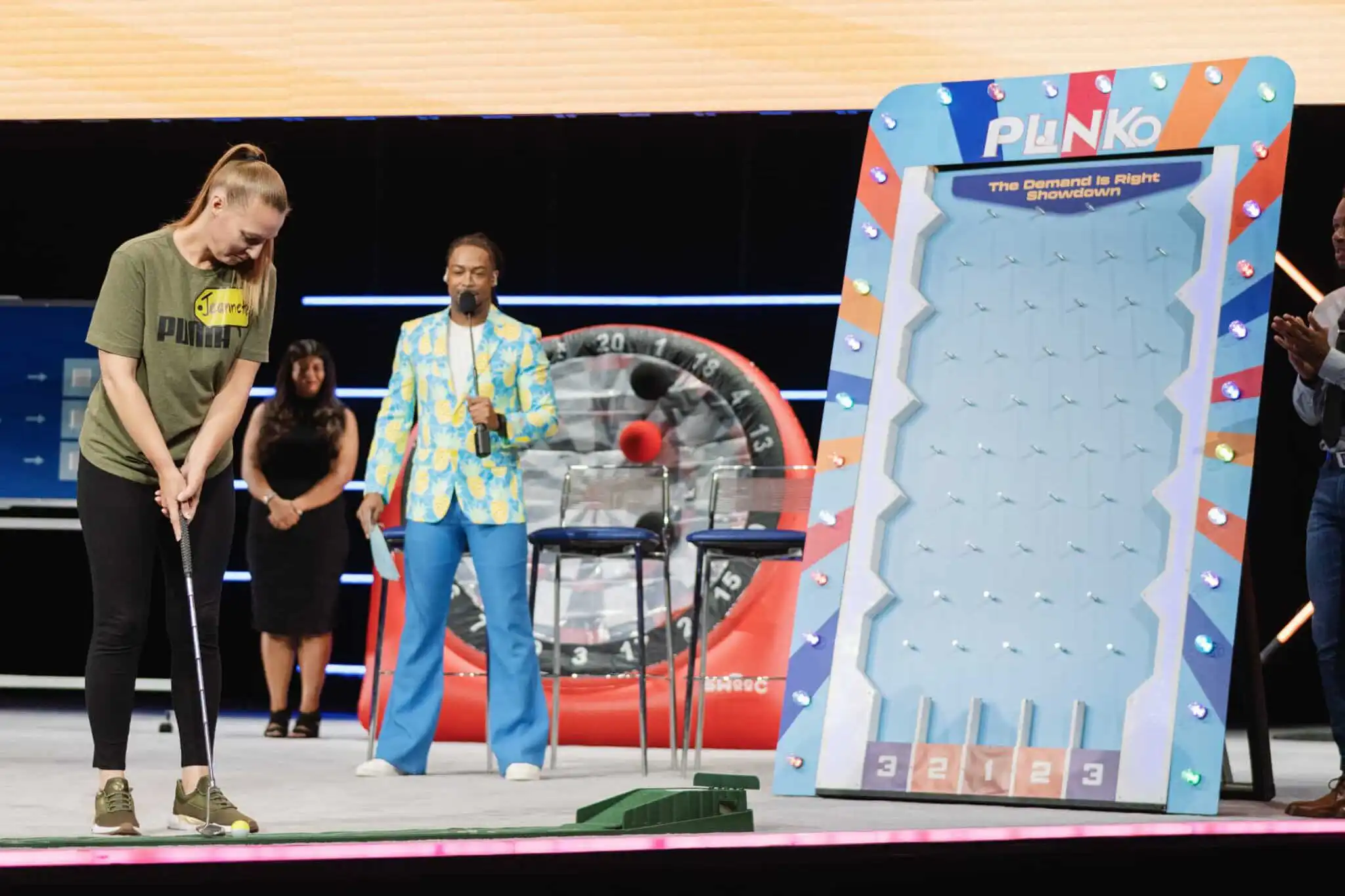
A corporate event can have a polished stage, great speakers, and a packed agenda, yet still fail at the only outcome that matters: whether People remember what they are supposed to do differently afterward. Music and games can help, but not because they make a room louder or more entertaining. They work when they give attendees a reason to pay attention, recall information, make decisions, and connect the message to a real workplace situation. The strongest event design does not treat engagement as a break from learning. It uses engagement to make learning more usable.
Key Takeaways
- Music is most useful as a deliberate cue for
attention, transitions, and repeated messages, not as a substitute for strong content. - Games
improve learning when they require participants to retrieve information, make decisions, receive feedback,
and discuss the correct answer. - A memorable event is not automatically an effective learning event.
The activity has to connect directly to a business objective. - Inclusive participation matters more
than forcing every attendee into the same game format. - Measure whether attendees can apply the
message after the event, not just whether they enjoyed it in the room.
Watch the clip below to see Will Gill performing at corporate events.
The Real Role of Music in Learning and Memory
Music can make a moment easier to recognize and recall, particularly when a phrase, rhythm, or musical cue is repeated consistently. Think of a walk-on song that signals the start of an important session, a short sound cue before a key message, or a closing refrain that reinforces the event theme. That does not mean every playlist improves learning. The research on musical mnemonics is promising but mixed. A 2024 systematic review of musical mnemonics found that they can help some people learn and remember
verbal information, while several studies found no benefit. Familiarity with the music appeared to matter.
The practical takeaway is simple: use music with a job to do. A well-timed cue can mark a transition, reset attention after lunch, or make a core phrase easier to retrieve later. Background music during dense explanations, however, should never compete with the speaker. The message still has to be clear enough to stand on its own.
For corporate events, that could look like:
- A consistent audio cue before every leadership priority is introduced.
- A short, recognizable
music sting before knowledge checks or team challenges. - A high-energy transition after a long
presentation to reset the room before the next session. - A closing song or phrase tied directly to the
event theme, rather than a generic “feel-good” ending.
Music should support the run of show, not distract from it. For more on that approach, read our guide to building a curated music library for corporate events.
Interactivity Is Not Automatic Learning
A room can be busy, laughing, and fully engaged without learning anything useful. That is the danger of using games as filler. A trivia round that has nothing to do with the event objective may create energy, but it will not help attendees remember a new sales process, policy update, product feature, or leadership expectation.
The learning value comes from retrieval. Retrieval means asking participants to pull information from memory instead of simply hearing it again. Research on the testing effect consistently shows that recalling information can improve long-term retention compared with restudying it. A meta-analysis of testing versus restudying found strong support for retrieval as a learning strategy, and a later review covering 222 studies and 48,478 students found that quizzing improved academic performance by a medium effect size.
Corporate events are not classrooms, so those findings are not a guarantee that every quiz game will produce business results. But the design principle transfers: people are more likely to remember information they have to actively retrieve, explain, compare, or apply.
Instead of asking, “What game would be fun here?” start with these questions:
- What should attendees remember after this session?
- What decision should they be able to
make differently? - What mistake should they be able to avoid?
- What language or message
should they be able to repeat to a client, team member, or stakeholder?
Then build the activity around that answer.
How to Build a Corporate Game That Actually Supports the Message
The best corporate learning games have four parts: a clear objective, a challenge, immediate feedback, and a debrief. Remove any one of those pieces, and the activity becomes less useful.
1. Start with a measurable objective
Before the event, define what attendees should be able to do by the end of the session. The CDC’s adult-learning guide recommends using observable action verbs, such as identify, select, sequence, apply, or evaluate. “Understand our new strategy” is vague.
“Identify the three customer segments in our new strategy” is something you can actually test.
2. Make the challenge resemble the real work
A product launch can become a team challenge in which attendees choose the right feature to address a specific customer problem. A leadership meeting can include short scenarios that require teams to decide how they would handle a difficult conversation. A safety event can ask participants to spot the issue in a simulated work situation. The activity does not need a huge production budget. It needs a realistic decision point.
3. Give feedback immediately
A game should never end with “Great job, everyone.” Attendees need to know why an answer was right, why another answer was wrong, and how the decision connects to their role. Feedback is where the learning happens.
4. Debrief before moving on
Do not rush past the answer reveal. Ask what people noticed, what changed their mind, and how they would use the information at work. The CDC specifically recommends that facilitators include opportunities for practice, reflection, discussion, and debriefing so learners can connect new information to the workplace.
Design for a Mixed Corporate Audience
The old approach to “multi-generational engagement” is usually too simplistic. Not everyone in a room learns the same way because of age. A better approach is to account for differences in role, seniority, language, comfort with technology, physical ability, personality, and familiarity with the topic. That means avoiding activities that embarrass people, require fast phone use, reward only the loudest voices, or create pressure to perform in front of peers. Competitive games can work, but participation should not depend on public vulnerability.
A more inclusive format might include:
- Small-team discussions before an answer is submitted.
- Anonymous audience polling for
sensitive topics. - Visual, verbal, and written ways to participate.
- Optional opportunities for
audience members to volunteer rather than forced participation. - Questions with practical scenarios
instead of obscure facts.
The goal is not to make everyone behave the same way. It is to make it easy for more people to
contribute.
Use Music and Games to Protect the Run of Show
Interactive elements are only effective when they fit into the event flow. Random games inserted between presentations can feel like an interruption. Strategic moments of participation can keep the room focused without derailing the agenda. A strong run of show might use music and games in these moments:
- At the opening: Use music, a quick poll, or a thought-provoking question to
establish the tone and tell attendees why the topic matters. - After dense content:
Turn the content into a short knowledge check, case challenge, or team decision. - After
Lunch: Use a music-led reset and a high-participation activity before launching into the next
learning block. - Before closing: Ask attendees to retrieve the main ideas, identify
one action they will take, or explain the message in their own words.
The CDC recommends changing activities regularly, practicing new knowledge during the session, and reviewing key concepts more than once. Those are useful guardrails for planners who want a learning-focused event without turning the agenda into a training workshop.
Measure More Than Applause
Applause, laughter, and positive survey comments are not useless. They tell you whether attendees felt engaged. They do not tell you whether people learned, retained, or applied anything. The CDC’s guidance on evaluating training recommends assessing both learning and learning transfer. In plain terms, measure whether attendees gained knowledge and whether they used it after returning to work.
For a corporate event, that could include:
- A pre-event and post-event knowledge check for important information.
- Audience polling
during sessions to identify gaps in understanding. - A short follow-up quiz one or two weeks later.</ li>
- Manager feedback on whether attendees applied the new process, language, or skill.
- Performance metrics tied to the event objective, such as product adoption, sales conversations, policy
compliance, or customer experience improvements.
The point is not to overcomplicate every event. It is to stop treating satisfaction as proof of success. A strong corporate event should make people feel something in the room and help them do something differently afterward.
Putting It All Together
Music and games are not shortcuts to learning. They are tools. Used carelessly, they create noise. Used intentionally, they can help attendees focus, recall important ideas, practice decisions, and connect event content to the work waiting for them on Monday morning. The strongest approach combines clear objectives, relevant challenges, immediate feedback, thoughtful music direction, and a run of show that knows when the room needs energy and when it needs focus. That is how a corporate event becomes more than an entertaining day away from the office. Planning a meeting, conference, or training event that needs more than background music? Connect with DJ Will Gill to build an experience that holds attention and reinforces the message your team needs to remember.

About the Author
William “DJ Will Gill” Gilbert is a corporate DJ, host, and audience engagement specialist who blends music and interactive entertainment to create high-energy event experiences. With more than 600 corporate events under his belt, Will has earned recognition from Forbes Next 1000 and The Wall Street Journal. His client roster includes AT&T Business, CDW, Team USA, Virgin Galactic, Home Depot, Hilton, PepsiCo, PayPal, and the United Nations. He also holds IMDb credits for Super Bowl LIV, The Voice, and Real World: Hollywood. Beyond the stage, Will is the founder of TheAIDJ.com, a patent-pending AI playlist platform built for modern music curators.
2,520+ Google Reviews · IMDB · Mixcloud · Instagram ·