
How an EDM Music Course Can Launch Your DJ Career in 2026
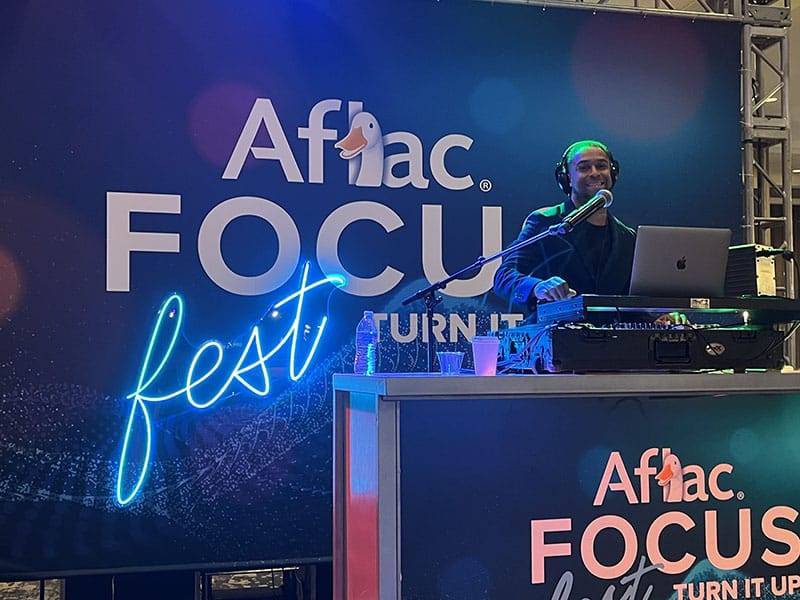
The electronic dance music industry hit a record $12.9 billion in global revenue in 2024, growing 6% year-over-year, according to the IMS Business Report 2025. EDM acts commanded 39% of the Coachella 2025 lineup, far outpacing the 21% share for indie, rock, and alternative acts combined. Festivals and clubs alone account for roughly half of the EDM industry’s revenue. Music hardware and software (the production gear) accounts for another quarter. The opportunity for aspiring DJs and producers in 2026 is real, growing, and structurally larger than it has ever been.
The question isn’t whether the EDM industry is worth pursuing the data clearly says yes. The question is what role formal music education actually plays in launching a career in it, which programs are worth the investment of time and money, and what the realistic skill-development arc looks like from beginner to working DJ. This guide walks through the EDM music course landscape in 2026, including specific program names, an honest assessment of what courses can and can’t do, and a practical framework for choosing the right path based on goals, budget, and current skill level.
Practice your sets with playlists that already blend.
Introducing TheAIDJ.com
A course teaches the theory; AIDJ lets you apply it fast. Describe the energy you want, preview the transitions, and export a set to practice with. A simple way to build blendable EDM playlists while you learn.
Key Takeaways
→ The EDM industry is large and growing. The IMS Business Report 2025 valued the global electronic music industry at $12.9 billion in 2024, up 6% from 2023. EDM commanded 39% of the Coachella 2025 lineup, and #ElectronicMusic hashtag content on TikTok garnered over 13 billion views in 2024, a 45% year-over-year increase.
→ Most aspiring DJs and producers can build foundational skills without a paid course. Ableton’s own Learning Music site, free YouTube tutorial channels, and the documentation for major DAWs (Ableton Live, FL Studio, Logic Pro, Bitwig Studio) are sufficient to get from zero to functional intermediate. Paid courses become valuable mainly when speed, structure, mentorship, or industry connections matter more than cost.
→ Reputable EDM education programs in 2026 include Berklee Online (degree and certificate programs), Point Blank Music School (in-person London/LA and online), ICON Collective (Los Angeles in-person), Pyramind (San Francisco in-person), Sonic Academy (online subscription), Production Music Live (online courses from working producers), and MasterClass courses from established artists like deadmau5 and Armin van Buuren. Each has a different price point, format, and focus.
→ The EDM industry’s hardware and software segment makes up approximately 25% of total industry revenue, meaning the gear industry exists at scale because aspiring producers and DJs buy software, plugins, and hardware. Festivals and clubs (live performance) make up nearly half of industry revenue. This is where DJs actually earn, knowing which segment a course prepares you for matters.
→ No course guarantees a successful DJ career. The realistic skill-development arc is typically three to five years from zero to consistent paid gigs, regardless of educational path. Courses can accelerate technical learning and provide structure, but the variables that determine success audience-building, original music output, networking, persistence, and performance under pressure are not things any course can teach in isolation.
DJ Will Gill’s working DJ skills translate from EDM festival contexts into corporate event programming. Contact us to discuss your event.
1. What an EDM Music Course Actually Teaches
EDM music courses generally cover three skill domains, in varying proportions depending on the program: production (creating original tracks), performance (DJing live), and industry knowledge (the business side of the career). Most aspiring DJs assume the third category is the smallest, but it’s often the difference between a hobbyist and a working professional.
Production fundamentals: sound design (creating original sounds from synthesizers and samplers), arrangement (structuring tracks with intros, builds, drops, breakdowns, and outros), sampling and resampling (using existing material as production raw material), mixing (balancing levels, frequencies, and stereo placement of all the elements in a track), and mastering (final polish on a finished track to make it loudness-competitive with commercial releases). A serious EDM production course covers all five and typically takes 6-18 months to complete depending on intensity.
DJ performance fundamentals: beatmatching (manually or with sync), EQ mixing (using the EQ knobs on the mixer to transition between tracks), harmonic mixing (using the Camelot wheel and key compatibility to plan transitions), track preparation (organizing your library by tempo, key, and energy), and crowd reading (responding in real time to what’s working in the room). The track-selection layer of DJ skill is often underemphasized in courses but matters as much as technical mixing.
Industry knowledge: how distribution works (DistroKid, TuneCore, Symphonic, Stem), how publishing splits work, how royalty collection societies operate (ASCAP, BMI, SESAC in the US; PRS in the UK; SOCAN in Canada; SACEM in France), how booking agencies and management contracts work, and how to actually get paid for your work. This domain is where courses provide the most concrete value because the information is hard to assemble from free YouTube content.
What good courses don’t try to teach: taste, originality, persistence, and the ability to recover from rejection. These are character variables that determine whether the technical skills get used or abandoned, and they develop through working musician experience rather than curriculum.
2. The DAW Decision: Which Production Software Drives Modern EDM
Every EDM music course is built around a Digital Audio Workstation (DAW), the production software where tracks are actually made. Choosing the DAW matters because each one has different strengths, workflow conventions, and ecosystem support. The major options in 2026:
Ableton Live: the de facto standard for EDM production and live performance. Live’s Session View enables non-linear arrangement and live looping in ways no competitor matches; the integration with Ableton Push hardware creates a hands-on performance workflow. Most working EDM producers and live electronic acts use Live. Available on Mac and Windows.
FL Studio (Image-Line): particularly strong in hip-hop, trap, and bass-heavy EDM territory. The step sequencer pattern editor and piano roll are widely considered the best in the industry for beat programming. Lifetime free updates as part of the original purchase. Strong on Windows; macOS support has improved significantly.
Logic Pro: Apple’s professional DAW, included with macOS for a one-time purchase rather than subscription. Strong sample library, deep MIDI capabilities, and tight integration with the rest of the Apple ecosystem. Mac-only, which limits portability.
Bitwig Studio: built by ex-Ableton developers as a more modern take on the same workflow. The modular environment is more powerful than Live’s, and the cross-platform support is strong (Mac, Windows, Linux). Smaller market share but growing rapidly, particularly among technical producers.
Reaper: the budget option. Full-featured DAW with a perpetual personal license at $60. Steep learning curve and less EDM-specific community support, but absolutely capable of professional production.
The decision framework: for EDM specifically, Ableton Live is the safer default because the ecosystem (tutorials, plugins, sample packs, third-party Ableton-specific content) is largest. For bass-heavy or hip-hop-adjacent EDM, FL Studio is a strong choice. For producers already on Mac with budget constraints, Logic Pro is a reasonable starting point. Course selection should align with DAW choice; a course taught in Ableton doesn’t translate cleanly to FL Studio production workflows.
3. Reputable EDM Education Programs in 2026
The EDM education market spans formal degree programs costing tens of thousands of dollars to free YouTube channels and everything in between. Reputable programs in 2026 include the following, organized by format and intensity:
Berklee Online (Berklee College of Music): offers full Bachelor’s degrees in Electronic Music Production and individual certificate programs in electronic music production, music production, and DJ-specific tracks. The credentialing is academically recognized, and the curriculum is comprehensive. Cost is significant for degree programs, which run tens of thousands of dollars; certificate programs are roughly $1,500-$4,000 per certificate. Strongest fit for students who want academic credentials and structured long-form learning.
Point Blank Music School: based in London and Los Angeles with strong online programs. Offers diplomas and degrees in music production, DJ skills, and the music business. Faculty includes working industry producers. Cost in the same range as Berklee for degree programs; online courses run from several hundred to several thousand dollars, depending on program length. Often considered the strongest dedicated electronic music school globally.
ICON Collective (Los Angeles): in-person program focused on contemporary EDM production. Alumni include established producers in the dubstep, future bass, and trap scenes. The program is built around mentor-style instruction with working producers. Higher cost and requires relocation, but strong industry connection potential for students who complete it.
Pyramind (San Francisco): in-person program covering electronic music production, audio engineering, and music for game/film. Similar mentor-based model to ICON. Strong technical curriculum, particularly for sound design and audio engineering fundamentals.
Sonic Academy: online subscription platform with hundreds of courses taught by working producers (deadmau5, Mat Zo, Tom Cosm, others have taught there). The monthly subscription model makes it accessible for typically under $50/month. Strongest fit for self-directed learners who want to explore a wide range of production styles and techniques.
Production Music Live (PML): online course platform affiliated with the Anjunabeats/Anjunadeep label ecosystem. Courses by working producers in progressive house, melodic techno, and trance territory. À la carte course pricing rather than subscription. Strongest for producers in melodic electronic genres.
MasterClass courses: includes courses from deadmau5 (electronic music production), Armin van Buuren (dance music), and various adjacent music courses. MasterClass is an annual subscription (~$180/year) granting access to all courses on the platform. Strongest as supplementary inspiration and high-level perspective from established artists rather than as a comprehensive technical curriculum.
Splice Skills: Splice’s educational arm, bundled with various Splice subscription tiers. Courses cover specific production techniques and DAW workflows. Good supplementary content, particularly for producers already using Splice for sample sourcing.
Ableton Learning Music (free): Ableton’s official educational platform. Covers music theory and production fundamentals in a browser-based interactive format. Free, well-designed, and a legitimate starting point for absolute beginners.
Free YouTube and DAW documentation: the vast majority of EDM production knowledge available in paid courses is also available for free on YouTube, often from working producers themselves. Channels worth investigating include Andrew Huang, Au5, Mr. Bill, and various DAW-specific tutorial channels. Free content requires more self-direction than structured courses but costs nothing.
4. When a Paid EDM Course Is Actually Worth the Investment
The honest framework for evaluating whether a paid course is worth it for a specific learner:
Paid courses are worth it when: the learner struggles with self-directed learning and benefits from structure; the cost of the course is small relative to the potential time savings; specific mentorship from a particular working producer matters to the learner; industry connections offered by the program are concrete and verifiable; the learner wants academic credentialing for non-DJ career paths (audio engineering, music education, sound design for media); the program offers hands-on hardware access (high-end studios, mixing consoles, monitoring systems) that the learner can’t replicate at home.
Paid courses are NOT worth it when: the learner is highly self-directed and learns well from YouTube; the course is marketed primarily on hype about industry success rather than specific curriculum; the program promises specific career outcomes (no legitimate program does this); the cost would exceed what the learner can comfortably absorb without going into debt for a high-risk career path.
The hidden cost no course discusses: the gear itself. A workable EDM production setup in 2026 includes a competent computer, a DAW license, a MIDI controller, decent monitors or headphones, and an audio interface. Realistic starting cost is $1,500-$3,000 for entry-level professional gear, with prosumer setups running $5,000-$10,000 and professional studios well beyond that. This is independent of any course cost.
5. The Realistic Skill-Development Arc from Zero to Working DJ
No course can compress the skill-development arc below its natural pace. The realistic timeline from zero experience to consistent paid gigs is three to five years of focused practice, regardless of educational path. The phases tend to look similar across most working DJs and producers:
Months 0-6 — Foundation: learning the basic functions of a chosen DAW, understanding fundamental music theory (keys, scales, chord progressions, time signatures), and producing first complete tracks (typically not yet good, but completed). Concurrent skill: learning to beatmatch and EQ-mix on basic DJ gear or DJ software. This phase is largely free, and very low-cost DAW learning resources are abundant and free.
Months 6-18 — Competence: developing recognizable production capability within at least one EDM sub-genre; understanding sound design, sampling, and arrangement at an intermediate level; able to perform a 60-minute DJ set without major errors. By the end of this phase, the producer can typically release tracks to streaming platforms and is starting to develop a personal sound, but tracks are not yet competitive with commercial releases. Most paid courses provide significant value during this phase.
Months 18-36 — Identity: developing a distinct production fingerprint that other listeners can recognize as the producer’s sound; building consistent output (multiple tracks released per year); first paid DJ gigs in local venues; first signed releases to small or medium labels; beginning to develop industry contacts and reputation. This is the phase where most aspiring DJs either commit to the long path or quietly stop.
Years 3-5 — Working DJ: consistent paid gigs (often weekly or more frequent in local market); released catalog of original tracks with measurable streaming traction; relationships with venue bookers, agents, and other working producers; recognizable name within at least a regional scene. This is the level where DJing can become a primary income for those willing to also handle the business side aggressively.
Beyond year 5 — Career sustainability: the variables that determine whether a working DJ stays working are mostly non-musical at this point, branding, marketing, business management, ability to network at scale, persistence through career setbacks, and the ability to diversify income streams. The streaming-royalty math alone rarely supports a working DJ career; live performance, brand work, sync placements, and corporate event gigs typically supply the financial backbone.
6. EDM Genres in 2026, and Why Genre Specialization Matters
EDM is not a single genre. It’s an umbrella term for dozens of distinct subgenres with different tempos, production conventions, audience demographics, and commercial economics. The 2026 EDM landscape is particularly interesting because newer genres are reshaping which subgenres are commercially dominant.
The genres dominating in 2024-2026, per the IMS Business Report 2025: Afro house and Amapiano (African genres seeing breakthrough international growth), melodic techno and progressive house (mature genres seeing renewed festival prominence), drum & bass (experiencing a strong renaissance, particularly in the UK and US), bass music in its various forms (dubstep, future bass, riddim continuing as a major American subgenre), and house in its classic and contemporary variants.
The genres losing relative ground: mainstage big-room EDM (the festival-stadium sound of 2012-2018) has declined as a percentage of new festival programming, though it remains commercially meaningful. Hardstyle remains regionally dominant in the Netherlands, Belgium, and Germany but is less of a US growth area.
Why genre specialization matters for course selection: a course taught in melodic house production techniques won’t help much for a producer aiming at dubstep. A course in trap production techniques won’t translate to producing afro house. The genre choice should come first, and the course selection should follow from the genre choice. The producers who consistently break through are typically those who picked a specific genre, immersed themselves deeply in its conventions, and developed their own variation on those conventions not generalists trying to make every genre at once.
The exception: DJs who don’t produce and work primarily as performance DJs at clubs, weddings, corporate events, or festivals benefit from broader genre knowledge rather than deep specialization. The skill arc for a performance-focused DJ is different from a production-focused producer/DJ, and course selection should reflect which path the learner is targeting.
7. Beyond Technical Skills — What Actually Builds an EDM Career
The honest gap between EDM course curriculum and EDM career reality is that courses teach the technical side and assume the rest will follow. The rest doesn’t always follow. Working DJs and producers who break through typically do several non-technical things consistently:
Consistent output: the producers who break through release tracks regularly typically a release every one to two months at minimum, with consistent quality. The discipline of finishing tracks (rather than abandoning them half-produced) is the single biggest predictor of career progress. Curation discipline, knowing when a track is done versus chasing perfection indefinitely is part of the same skill set.
Live performance: the producers who become DJs play out as much as possible, in any context, small clubs, friends’ parties, livestreams, and open decks at local venues. The ten-thousand-hour principle applies to playing in front of crowds, which builds skills that bedroom mixing cannot replicate, and the only way to get good at handling unexpected situations on a real stage is to face them.
Audience development: the social-media-and-streaming era rewards producers who deliberately build audience through consistent content, engagement, and direct fan relationships. The producers who succeed are not always the most technically skilled; often, they’re the most willing to do the work of audience development consistently over the years.
Industry networking: showing up to industry events, music conferences (IMS, ADE in Amsterdam, Winter Music Conference in Miami, BPM Counter-Conference in Berlin), and local scene gatherings. Working DJs typically book gigs through personal relationships with venue bookers and other DJs, not through cold applications or random social media outreach.
Persistence: The producers who don’t make it are often technically better than the producers who do. The difference is who keeps producing, releasing, performing, and showing up over multiple years through inevitable career setbacks. This variable is fundamentally about character, not skill.
8. Alternative DJ Career Pathways the EDM Course Path Doesn’t Discuss
Most EDM courses focus on the festival-DJ-producer pathway, the trajectory of becoming a touring artist with original releases. This is one valid career path, but it’s not the only one, and it’s statistically the hardest one to make work financially.
Corporate event DJing: the corporate event industry represents one of the most consistent and well-paid niches in working DJ careers. A working corporate event DJ in a major US market can sustain a six-figure income with a small team and a manageable schedule, with most of the work happening Monday through Friday rather than late nights. The skills overlap significantly with EDM-trained DJs’ beatmatching, EQ mixing, crowd reading, and song selection, but the music selection is far broader than pure EDM. The 10-category framework for working DJ track selection applies directly to this work.
Wedding DJing: similar to corporate but with a stronger emphasis on traditional formal moments, family dynamics, and broader generational appeal. Wedding DJ work is regionally consistent and well-paid in most US markets.
Club residencies: the local-and-regional club residency model, being the consistent house DJ at a specific venue, typically weekly or several times per week, is sustainable in many markets and provides reliable income while building DJ skill and audience.
Audio engineering and post-production: the technical skills from EDM production translate directly into adjacent careers in audio engineering for film/TV/games, podcast production, and sound design. These careers are often more financially stable than the pure DJ-artist pathway.
Music for brands and sync placements: producing music specifically for advertising, brand campaigns, and content creator licensing is a growing industry segment. The skill set overlaps significantly with EDM production but requires different aesthetic sensibilities and business approach.
Teaching: producers and DJs with established skill sets can teach in formal programs or independently. The course economy in EDM is now significant, as being on the supply side of EDM education is itself a career path.
Taking the First Step Toward Your DJ Career
If you’re considering an EDM music course as the launchpad for your DJ career, the most useful first step is not to enroll in the most expensive program available. The more useful first step is to start producing and DJing now with free resources, Ableton’s free Learning Music site, free YouTube production tutorials, and the free demo versions of major DAWs, and see whether the work itself sustains your interest through the first 100 hours. Most aspiring DJs and producers don’t make it past this initial phase, and that’s information worth having before investing thousands of dollars in a structured program.
If you do make it past the first 100 hours and want structure and acceleration, the paid course options above are real and reputable. Berklee Online and Point Blank offer the strongest academic credentialing. ICON Collective and Pyramind offer the strongest in-person mentor-based learning. Sonic Academy and Production Music Live offer the most accessible online subscription models for working through specific genres and techniques. MasterClass courses provide a high-level perspective from established artists.
The path from EDM music course to working DJ career is real but not guaranteed by any program. The producers and DJs who make it work are the ones who treat the course as one tool among many, keep producing and performing through the inevitable hard phases, and build the non-technical career skills (audience development, networking, business management, persistence) that no curriculum can teach. The opportunity is genuine, a $12.9 billion industry is large enough to support many careers and the path is well-marked. Walking it is still the hard part.

About the Author
William “DJ Will Gill” Gilbert is a corporate event DJ, emcee, and working music professional whose 600+ corporate events include work for AT&T Business, CDW, Team USA, Virgin Galactic, NeoGenomics, Foot Locker, Home Depot, BGCA, and Fortune 500 organizations. He has direct experience navigating multiple working-DJ pathways across festival, corporate, virtual, and broadcast contexts, the diversified career structure most successful working DJs actually operate within. Will is recognized as the Wall Street Journal’s #1 Corporate DJ, a Forbes Next 1000 honoree, and has 2,520+ five-star reviews. Broadcast credits include Super Bowl LIV and The Voice 2011. He is also a World Cup performer and a Formula 1 Las Vegas Grand Prix performer.