
How a Corporate DJ Improves Employee Engagement at Company Events
How does a corporate DJ improve employee engagement? A corporate DJ improves engagement by scoring the event like a show: music that welcomes people in, energizes transitions, and gives even reluctant employees a reason to participate. Will Gill pairs DJ sets with interactive team building, which is why planners at Google, Amazon, Salesforce, PayPal, and Pepsi book his 3-in-1 show.

DJ Will Gill Wall Street Journal’s #1 Corporate DJ performing as DJ, emcee, and audience engagement host at a company event.
Employee engagement is in the worst shape it has been in nearly a decade, and the rare moments when an entire company is in one room together the conference, the sales kickoff, the recognition gala, the appreciation event are some of the highest-leverage opportunities a culture has to actually move the number. A corporate DJ, used correctly, is not entertainment. They are an engagement engineer working the room across every phase of the day.
See how Will Gill drives this engagement as a corporate event DJ for corporate teams.
This article is for HR leaders, people-ops teams, internal communications, and event planners trying to turn a company event into something attendees actually feel something about not just attend. Below is how the right DJ-emcee-engagement host changes what a room remembers, what they share, and what they bring back to work on Monday morning.
Key Takeaways
- Employee engagement is at a multi-year low. Only 20% of employees globally are engaged at work, which makes company events one of the few moments where culture can actually move the dial.
- Engagement is not entertainment. It is participation, recognition, belonging, and intentional flow. A playlist does not produce any of that.
- A corporate DJ shapes the entire event journey. Arrival energy, networking pace, keynote walk-ons, recognition moments, and after-party connection not just the dance floor.
- The 3-in-1 model (DJ + emcee + audience engagement) compounds the effect. One performer manages music, microphone, and participation as one continuous experience instead of three uncoordinated vendors.
- Briefing matters as much as booking. Audience, culture, agenda, recognition moments, and engagement goals must be shared in advance not improvised on the day.
- Generic entertainment forced onto a specific culture is the most common failure. Fit beats spectacle, every time.
Why Employee Engagement at Company Events Is More Than Attendance
According to Gallup’s 2026 State of the Global Workplace report, only 20% of employees worldwide were engaged at work in 2025 the lowest level since 2020 costing the global economy an estimated $10 trillion in lost productivity. In the U.S., engagement sits at 31%, an 11-year low. Most people are not “actively disengaged.” They are somewhere in the muddy middle showing up, doing the job, not quite feeling it. Which is exactly the audience that walks into your company event.
Getting them in the room is not the goal. The goal is what happens to them once they are in it. Did they feel seen? Did they feel like part of something? Did they leave with a story to tell their team on Monday? Engagement at company events is measured in participation, connection, belonging, and shared experience not in name badges scanned at the door.
Why entertainment should support the company’s purpose
A corporate DJ working the right way is not the headliner of the event. They are the connective tissue between the event’s purpose and the audience’s emotional state at any given moment. If the event is about appreciation, the energy should signal “you are valued.” If it is about celebration, the energy should signal “we did this together.” If it is about culture-building or recognition, the entertainment must reinforce the message the company is trying to land not compete with it for attention. That is what separates a DJ from a curated playlist, and a corporate entertainer from a wedding-style party-starter.
What a Corporate DJ Does That a Playlist Cannot
A Spotify playlist is a closed loop. It does not know that the CEO just walked off stage, or that the room got quiet after a recognition moment, or that the energy in the back of the ballroom is different from the energy near the bar. A corporate DJ does. They read the room minute by minute, adjust BPM by 5–10 beats based on what they see, scrub into the next track to match the emotional moment, and pull volume up or down based on whether people are leaning in to talk or leaning back to listen.
They also bring professional judgment a playlist cannot. Clean radio edits only. No culturally or politically charged tracks. No music that would make a board member’s family uncomfortable or a partner-company executive flinch. Brand-safe selection is not a feature it is the baseline. The difference between a generic party DJ and a corporate DJ is not the speakers; it is the screening process behind every track that gets queued up.
How a Corporate DJ Improves Engagement Across the Event Journey
Engagement at company events is not a single moment it is a sequence. The best corporate DJs treat the day as one continuous arc and shape the room differently at every stage of it.
Arrival
Music starts working on people before they sit down. Mid-tempo, optimistic, recognizable but not nostalgic, at a volume that supports conversation. Attendees who walk into a room that already feels alive arrive at the program in a different headspace than attendees who walk into silence.
Networking and breaks
The most underrated DJ work happens during breaks. Music here is choreography tempo that supports people leaning in to introduce themselves, volume that lets conversation breathe, and a planned acceleration in the final two minutes that signals “head back to the room” without anyone having to say it.
Recognition and awards
This is where company events do their most important engagement work. Each award winner’s walk-up needs a properly cued track. Each recognition moment needs underscoring that supports the emcee’s voice without trampling it. When a senior leader pauses to acknowledge a team, the music underneath that moment either reinforces the gravity or breaks it. There is no in-between.
Celebration and after-party
After-parties are where employees stop being colleagues for an hour and become a community. A great DJ lands the room on a peak, not a fade reads the demographic mix, sequences tracks that pull in different generations, and creates the shared moments people post about and talk about for the next week.
The Engagement Levers a Corporate DJ Brings to Company Events
Five engagement levers separate a music-only DJ from a corporate entertainer doing actual engagement work.
Group singalongs, call-and-response moments, and well-timed crowd cues turn a room of individuals into a temporary collective. These are the moments employees describe to colleagues who didn’t make it.
Timing
Engagement is a function of when, not just what. The same engagement segment that lands at 8:30 PM after dinner will die at 2:00 PM during a slow agenda block. A real corporate DJ knows the difference and adjusts.
Participation
Game-show segments, decade trivia, name-that-tune, team competitions, and on-mic warm-ups give attendees something to do besides watch. Participation creates ownership of the experience, and ownership creates memory.
Inclusivity
A great corporate DJ programs music and engagement segments that don’t leave anyone out. That means cross-generational track selection, culturally aware programming for international audiences, and engagement formats that don’t require dancing, drinking, or any particular ability level to participate.
Recognition
When the company recognizes someone an award winner, a team, a milestone the entertainment is what makes the moment land or fall flat. The music, the walk-up, the emcee’s voice, the room’s response: all coordinated by one performer who has done this hundreds of times.
How DJ, Emcee, and Audience Engagement Work Together
The three roles are different jobs, but they multiply each other when one person runs all three.
The DJ shapes the room through sound selection, mixing, BPM, energy. The emcee shapes the room through voice speaker intros, announcements, transitions, pacing, recognition. The engagement host shapes the room through participation games, interactive moments, call-and-response, room warm-ups. Each function alone is useful. Combined into a single performer with a single point of view on the room, they produce continuity that three separate vendors cannot match. There is no handoff between the music and the microphone. There is no negotiation between the engagement segment and the next track. The entire arc of the event is one performer’s responsibility, which means it is one performer’s accountability.
Corporate DJ Engagement Ideas for Different Company Event Types
Conferences and sales kickoffs
Energy build during arrival, controlled lifts into general sessions, branded walk-ons for executives, decade-trivia engagement segments during sponsor breaks, and closing-night celebrations that send people home with momentum for the quarter ahead.
Galas and recognition events
Sophisticated underscoring during cocktail and dinner, properly cued walk-ups for every award recipient, professional emcee delivery of recognition language, and a controlled transition into the dance portion when (and only when) the room is ready.
Employee appreciation events
High-participation, low-pressure formats. Music-based games. Generation-bridging music selection. On-mic shoutouts for departments or individuals. The goal is for employees to leave feeling like the company actually saw them, not like they sat through a vendor demo with snacks.
Team-building and offsite events
Game-show formats, team competitions, on-mic narration of activities, and music-led energy management between segments. This is where the audience engagement layer earns its keep most visibly team-building events without an engagement host tend to die on the second activity.
Product launches and brand activations
Music programmed to brand identity, the DJ playing an active role in the reveal moment, and engagement segments that turn attendees into part of the product story rather than passive observers of it.
How to Brief Your Corporate DJ for Better Employee Engagement
The single largest predictor of engagement at a company event is how well the DJ was briefed. The vendor can be world-class and still under-perform if the planning team did not share what the company actually wanted the event to feel like. Cover seven things in the brief.
Audience
Age range, generational mix, departments represented, international guests, any executives or board members, and any cultural sensitivities to know about in advance.
Culture
Is the company conservative or playful? Formal or casual? Risk-averse or willing to go big? The DJ adjusts engagement intensity accordingly. A law firm and a creative agency cannot be hosted the same way.
Run-of-show
Full agenda with timings, speaker order, meal service windows, award segments, sponsor moments, and any anticipated transitions. The more the DJ knows in advance, the less they have to improvise live.
Do-not-play list
Specific tracks, artists, or genres to avoid. This often includes anything tied to a recent controversy, anything that’s been overplayed at company events in the past, or anything that doesn’t align with brand voice.
Recognition moments
Who is being recognized, what they did, how their name is pronounced, any preferred walk-up song, and how the emcee should frame the moment. These are the highest-stakes 90-second windows of the entire event they deserve script-level prep.
AV needs
Signal flow, audio engineer contact, show-caller integration, and any technical specifics about the venue. A DJ working in isolation from the production team will create coordination problems live.
Engagement goals
What the company wants employees to feel by the end of the event appreciated, motivated, connected, energized, recognized. Different goals call for different engagement tactics. Share the goal, not just the agenda.
Common Mistakes That Make Employee Engagement Fall Flat
Generic entertainment forced onto a specific culture
Most engagement failures are not about the DJ being bad. They are about the DJ being good at something the room didn’t need. A high-energy party DJ at a quiet recognition event is the same problem as a polished lounge DJ at an after-party that needed to peak.
Poor timing of engagement segments
Forcing audience interaction before the room is warm, or asking for participation right after a draining keynote, kills engagement instead of building it. The right vendor reads the moment and pulls back when the room is not ready.
Weak audio production
Muddy sound, poor levels, microphone feedback, or audio that competes with the speaker on stage all read as “this company doesn’t take this seriously.” Engagement requires production discipline. A great DJ on bad audio is still bad audio.
Forced participation
“Everybody stand up!” at 9:00 AM with a room of 400 senior leaders doesn’t build engagement it builds resentment. The best engagement is invited, sequenced, and earned over the course of the event, not demanded at the top of the program.
Why a Corporate DJ Is a Strategic Part of the Employee Experience
Engagement is not built by entertainment alone it is built by employees feeling connected to something larger than their inbox. McKinsey research on purpose at work found that employees whose individual sense of purpose connects with their company’s are significantly more engaged, more fulfilled, and more likely to stay. Company events are one of the rare moments where that connection gets dramatized in real time when employees see the people behind the brand, feel the culture in the room, and experience recognition for work that usually happens in private.
A great corporate DJ-emcee-engagement host is part of that infrastructure. They are not the message the company is. They are the medium that carries the message through music, microphone, recognition, transitions, and shared moments. When the medium works, the message lands. When it doesn’t, the message gets lost in a flat room.
How DJ Will Gill Approaches Employee Engagement at Company Events
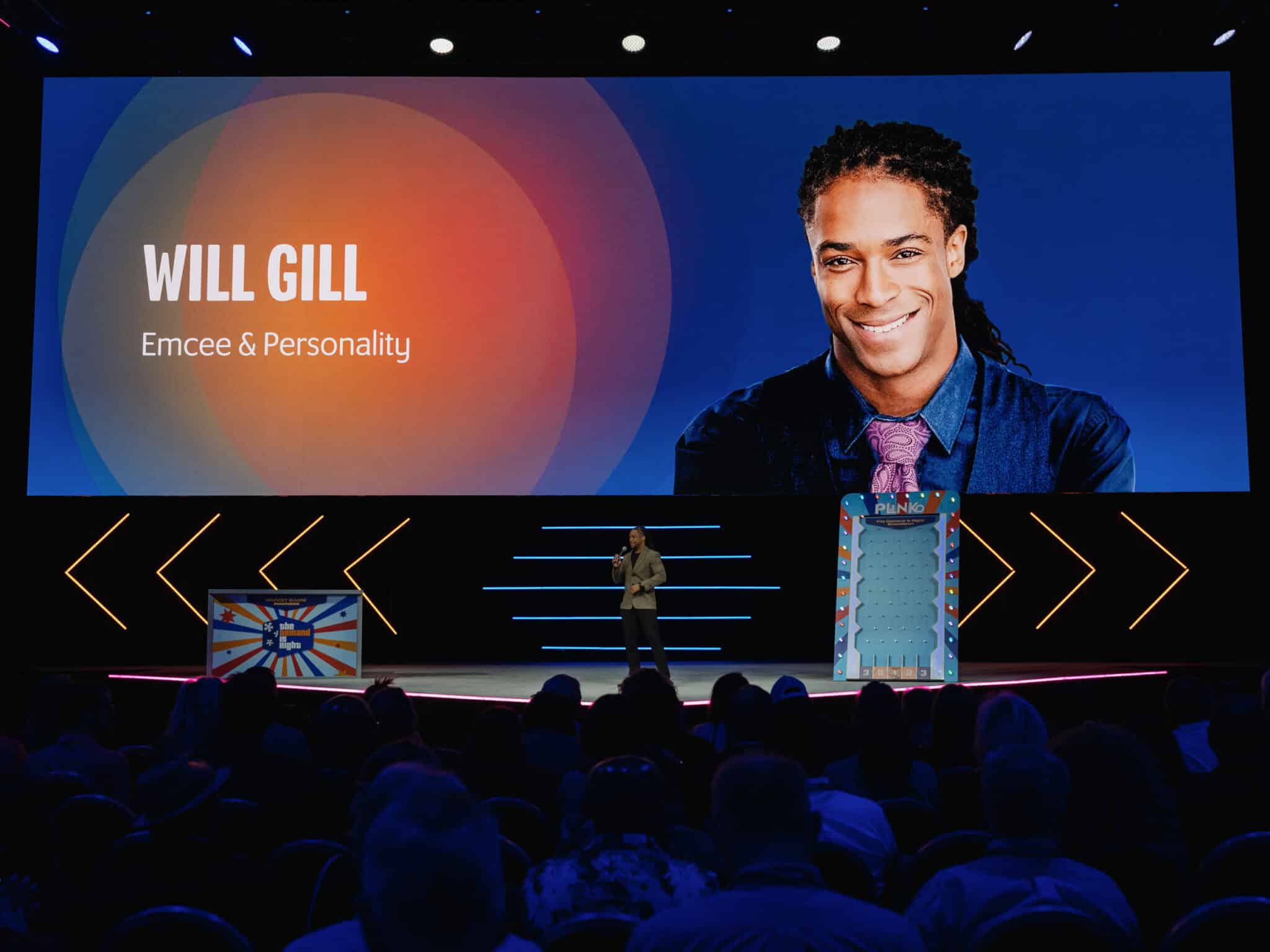
Keynote emcee Las Vegas main stage
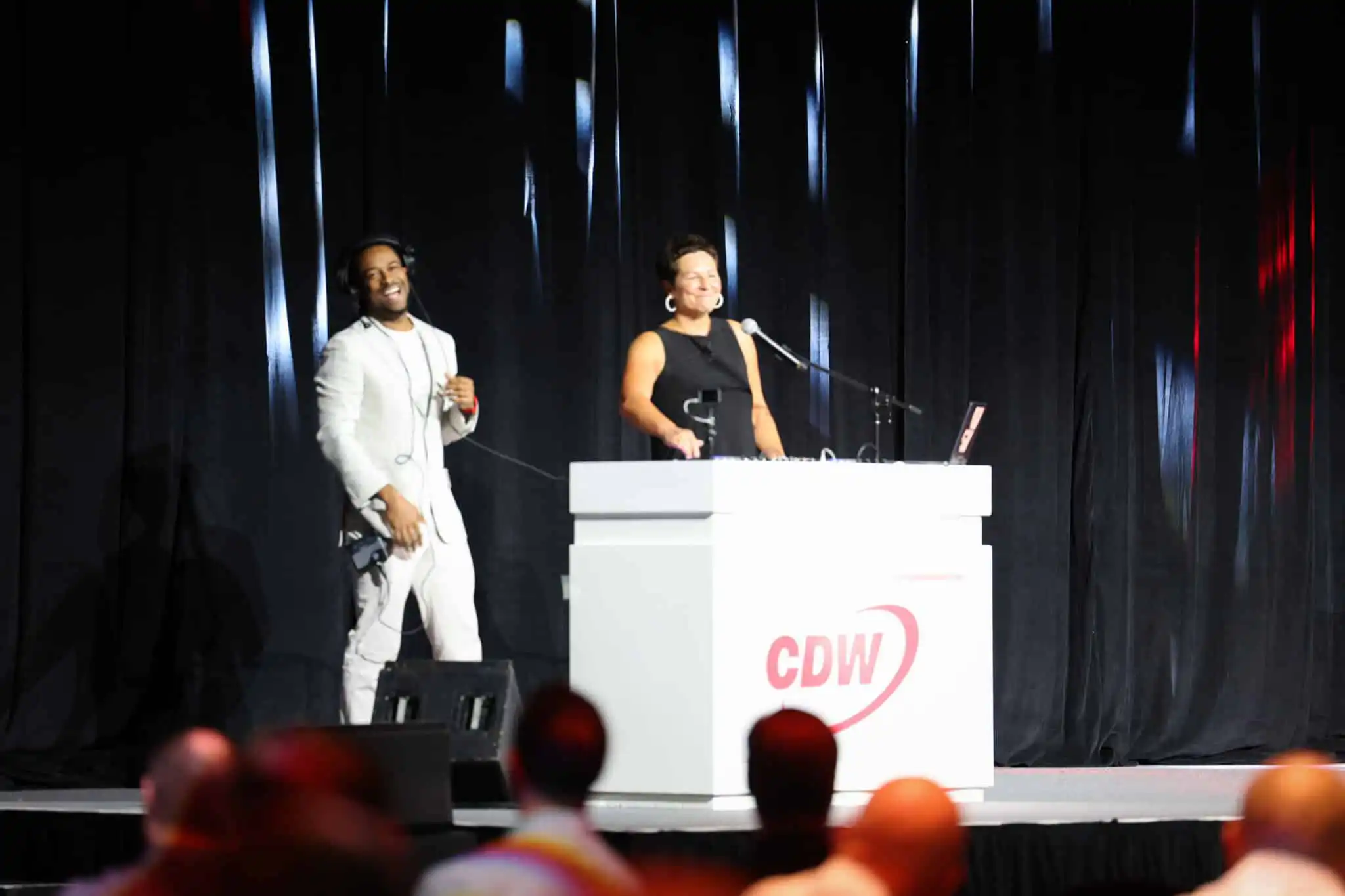
CDW corporate emcee & host
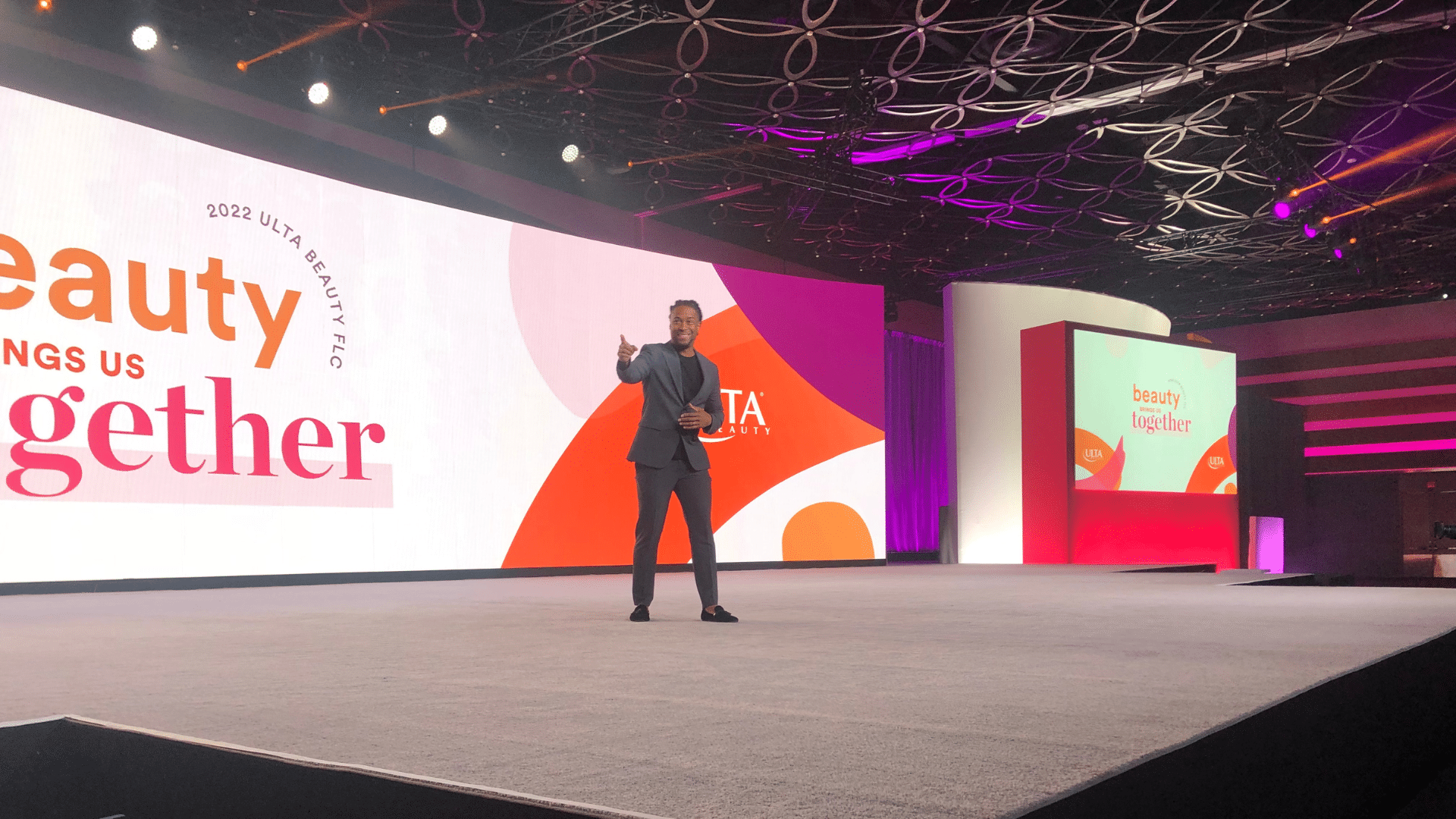
Ulta Beauty brand activation
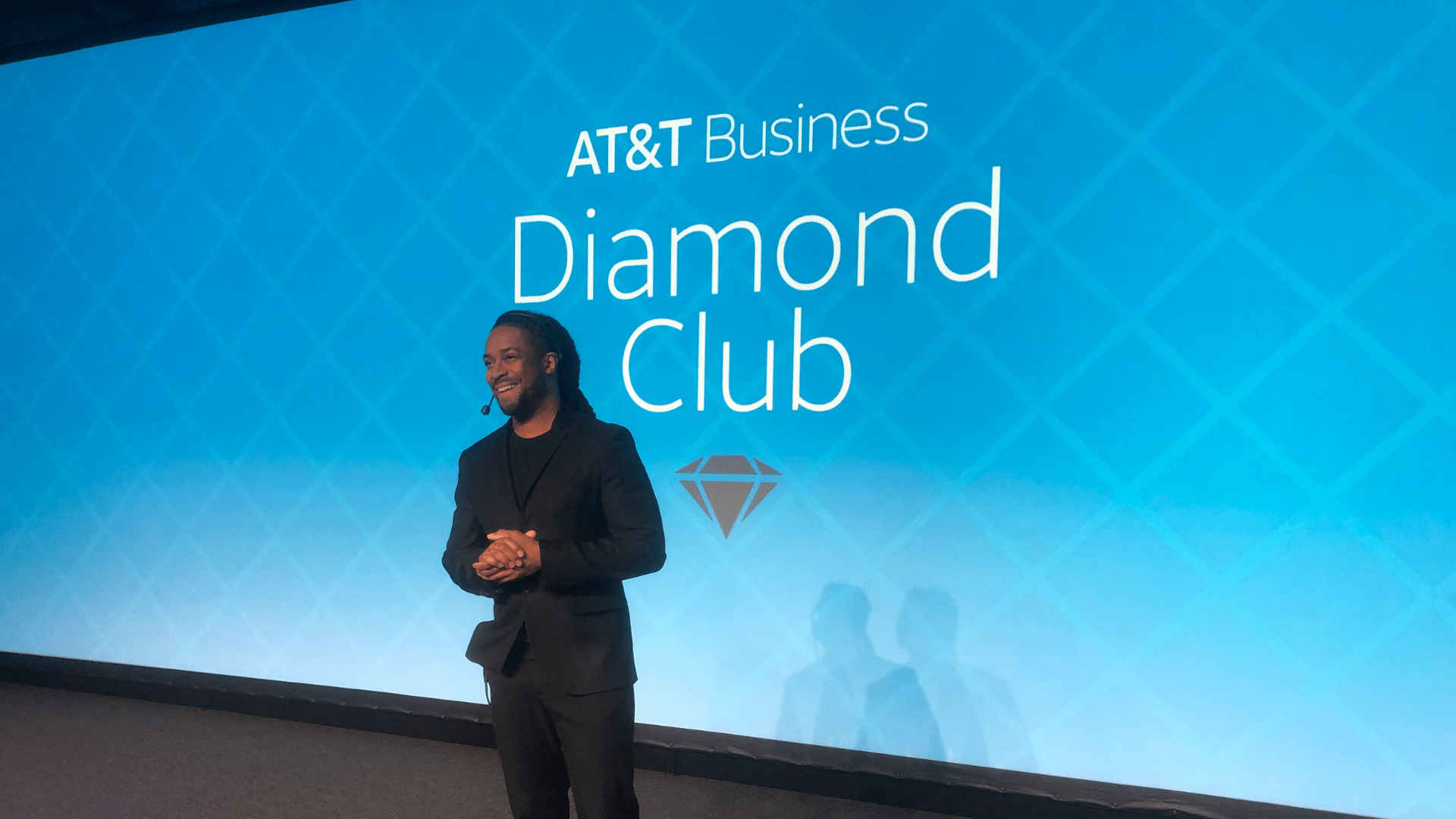
AT&T Business Diamond Club
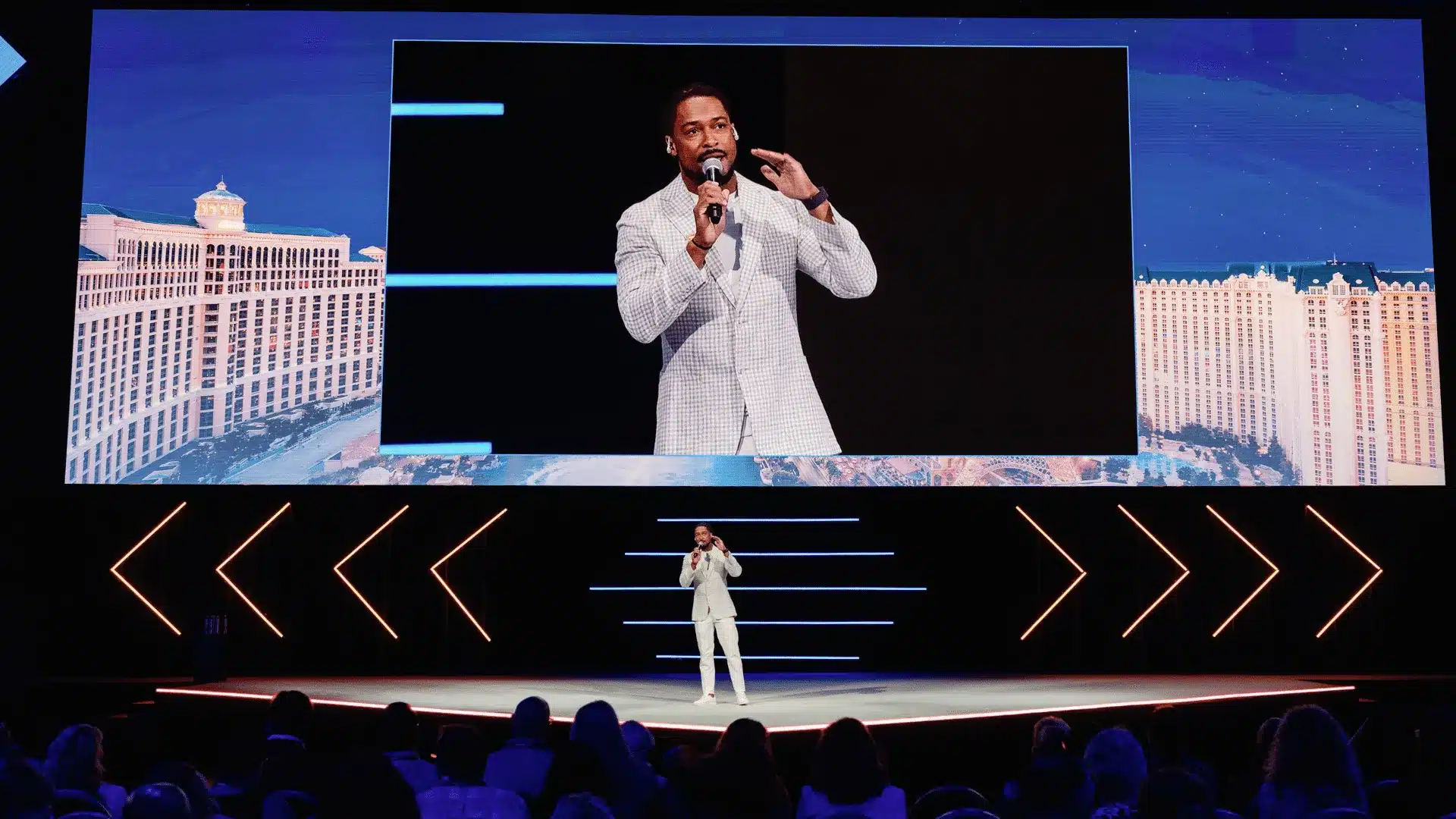
Featured emcee & personality
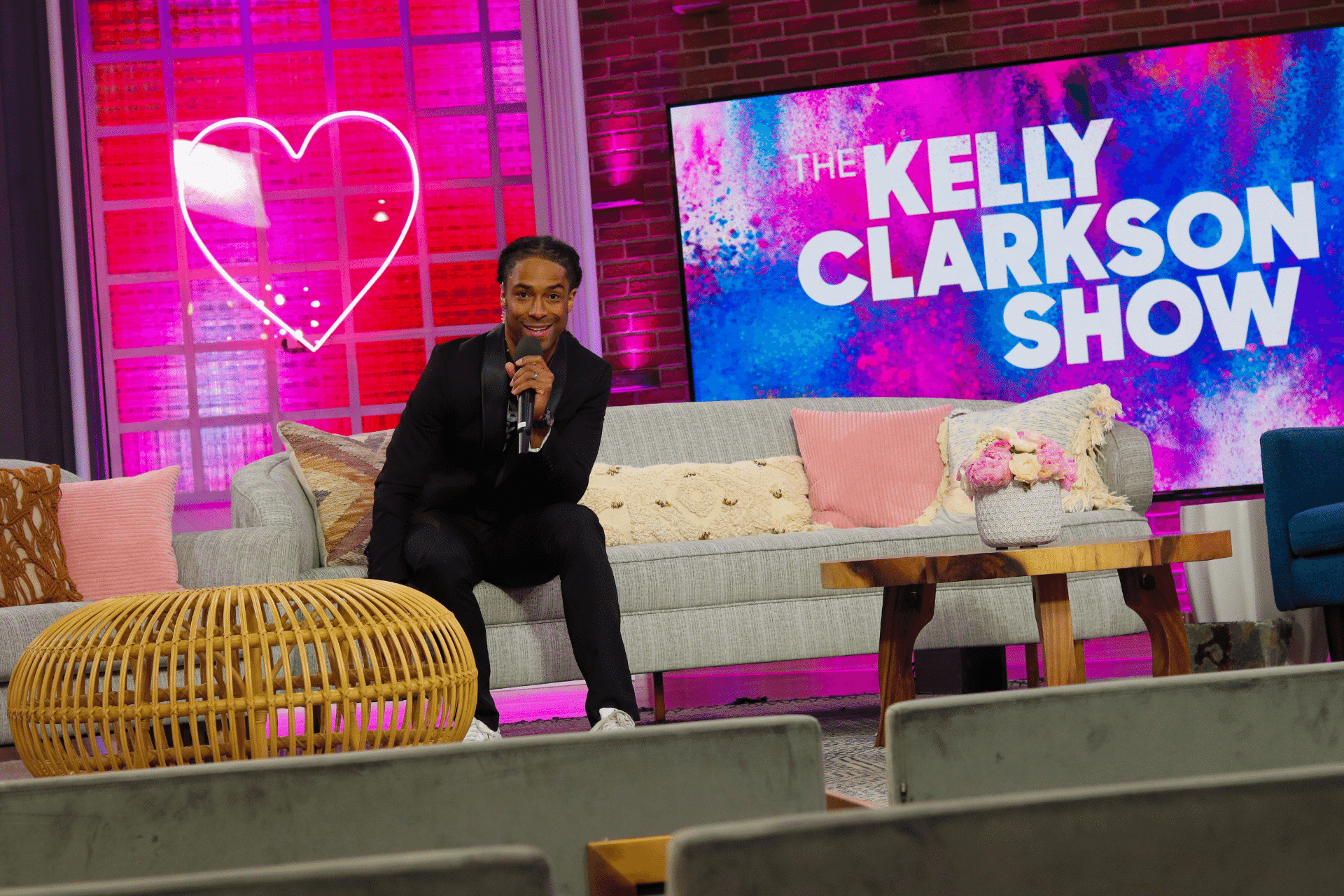
Talk-show format audience engagement
DJ + emcee + audience engagement in one experience
Will operates as a single performer running music, microphone, and participation as one continuous experience. One contract, one point of contact, one voice carrying the energy from arrival through after-party. No handoff risk between three vendors. No coordination failures in a green room. The audience experiences a single performance that adapts in real time to what the room is doing.
Built for company events, conferences, galas, and employee celebrations
The work is event-type specific: multi-day conferences, sales kickoffs, recognition galas, employee appreciation events, holiday parties, executive retreats, product launches, and team-building activations. Each has a different tonal arc, and the engagement work changes accordingly.
Designed to support both energy and professionalism
Reading the room, brand-safe music selection, smooth transitions between segments, event-appropriate interaction without overdoing it, and the discipline to know when to lift the energy versus when to let a moment land. Engagement is calibrated to the company, not imported wholesale from a template.
Watch a real corporate event example
See the 3-in-1 model in action across keynotes, recognition, and audience engagement segments watch the corporate event reel here, or watch a team-building activation in real time.
Frequently Asked Questions About Corporate DJs and Employee Engagement
How does a corporate DJ improve employee engagement?
A corporate DJ improves engagement by shaping tone, timing, music, emceeing, audience interaction, recognition moments, and event flow across the entire arc of the event. They turn passive attendance into active participation through shared experiences, well-timed engagement segments, and music that supports each phase of the agenda arrival, networking, recognition, celebration, and after-party.
Is a corporate DJ useful if we do not want a dance party?
Yes. Dance floor work is a small fraction of what a corporate DJ does at most company events. They support networking, transitions, recognition moments, walk-ons, breaks, dinner atmosphere, and overall energy management. Many corporate clients book DJ services for events that have no dance component at all.
What is the difference between a corporate DJ and a club DJ?
A corporate DJ programs for mixed professional audiences, uses radio-clean edits only, respects run-of-show timing, integrates with production teams, and adapts to company culture in real time. A club DJ plays to a self-selected crowd that came to dance, with no agenda discipline, no microphone work, and a music library oriented around peak-hour energy rather than agenda-appropriate flow.
Can a corporate DJ also be the emcee?
Some can, and the strongest corporate entertainers are booked specifically because they can. But not every DJ has the mic skills, and not every emcee can DJ. Confirm corporate hosting experience specifically not just performance footage and request on-mic video and reviews from clients who used both services from the same person.
What should we tell the DJ before the event?
Cover seven areas: audience demographics, company culture, full run-of-show, do-not-play list, recognition moments (with name pronunciations), AV and production team contacts, and the engagement goals for the event. The clearer the brief, the better the room.
How do we know if employees were engaged?
Engagement at a company event shows up in observable signals: participation rates during interactive segments, applause volume during recognition moments, social-media sharing and event-tagged posts, networking activity during breaks, post-event survey scores, and qualitative feedback from the planning team and managers who attended. The best signal is the most informal one what employees say to colleagues on Monday morning.
Final Takeaway: Engagement Happens When the Event Feels Intentional
Employee engagement at company events is not produced by music. It is produced by planned tone, deliberate timing, real participation, meaningful recognition, inclusive design, and continuous flow across every phase of the event. A corporate DJ working at the top of their craft is one of the few vendors a planner books who touches all six of those levers across the entire day.
The event that feels intentional is the event employees remember. The DJ doesn’t make it intentional the company does. But the right DJ is who makes the intention land in the room.
About the Author
DJ Will Gill
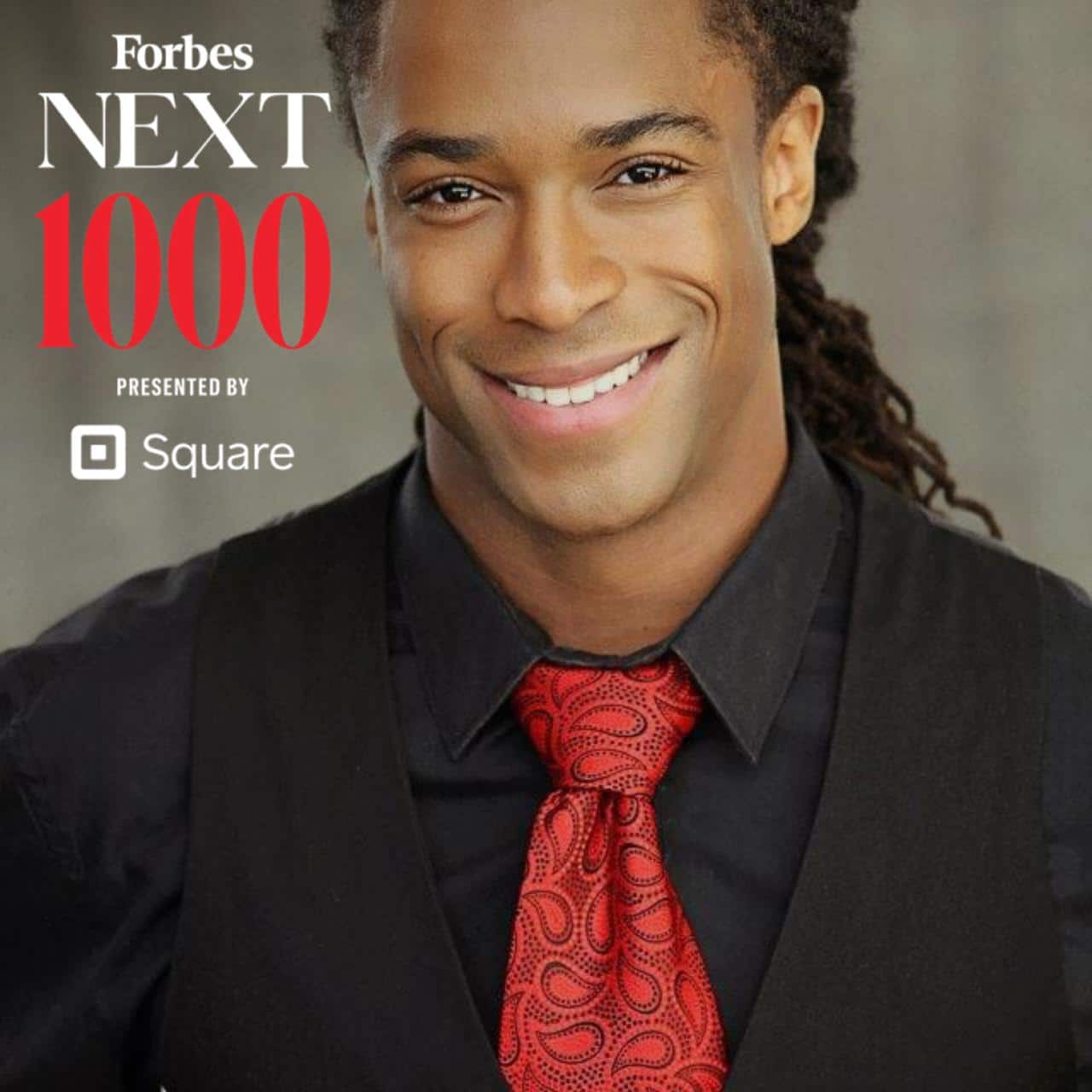
Will Gill is a Forbes Next 1000 honoree and the Wall Street Journal’s #1-ranked corporate DJ and emcee, with 2,520+ five-star Google reviews. He performs 600+ corporate events annually as emcee, DJ, and audience-engagement specialist for clients including Google, Amazon, Salesforce, AT&T, the United Nations, and Boys & Girls Clubs of America, and is listed on IMDB. His “three-in-one” corporate entertainer model combining emcee work, DJ performance, and audience-engagement programming in a single integrated booking is the approach recognized in his WSJ profile. Learn more about Will.
Need more than music at your corporate event?
Will Gill is also a corporate keynote speaker. His talk, The Moralegorithm, brings the same stage energy to your general session with three algorithms to boost morale and tap into your STAR POWER. DJ bookings and keynote talks pair naturally on multi-day agendas.
What planners say on Google
2,520+ five-star Google reviews. Four of them, in the reviewers’ own words:
What a beautiful experience! Great way to incorporate technology to bring ppl closer together. Thank you!
Erika (estrella salvaje), five-star Google review,
ALWAYS a great time!!!
Patrice Ross, five-star Google review,
Very lively and enthusiastic.
breana perez, five-star Google review,
Loved the energy he brought to our zoom meeting and the prizes was super cool. Great job for hiring him BGCA
Grace Duran, five-star Google review,
About DJ Will Gill
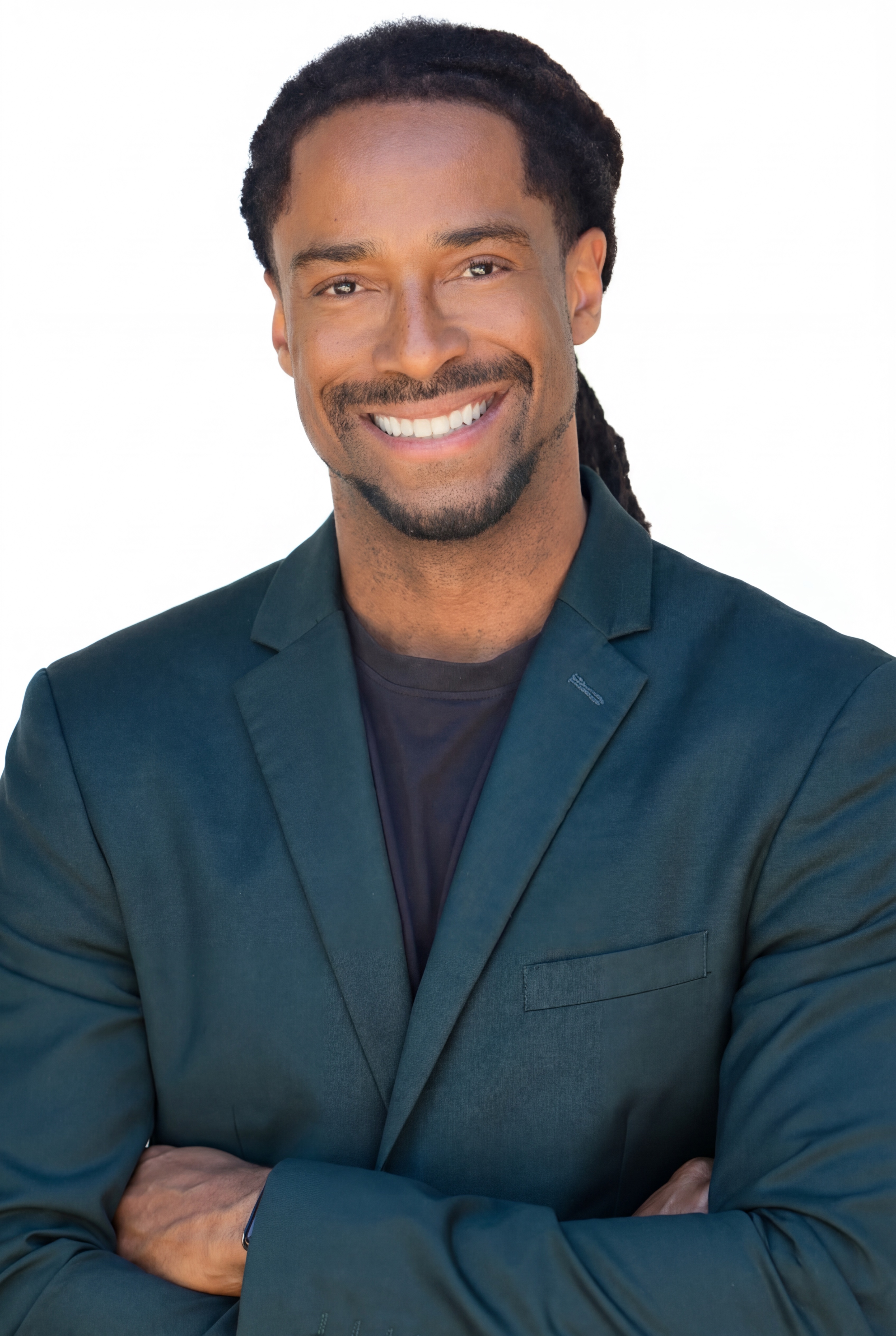
Will Gill is the Wall Street Journal’s #1 Corporate DJ, a Forbes Next 1000 honoree, and an MBE certified vendor operating as Faders and Fitness, LLC. He is a 3x Super Bowl performer, a World Cup performer, a Formula 1 performer and an MLB All-Star Game performer.
He delivers a 3-in-1 corporate service as DJ, emcee and one-man team-building show, with 2,520+ five-star Google reviews. See the Fortune 500 client roster or check your dates.