
Do DJs Make Their Own Beats? | DJ Will Gill Explains
It is one of the most common questions asked about the DJ profession: do DJs make their own beats? The answer is more nuanced than most people expect and understanding it correctly matters whether you are a corporate event planner evaluating entertainment options, an aspiring DJ trying to understand the craft, or someone who simply wants to know what they are actually watching when a DJ performs.
The short answer is: some do, most do not, and the distinction matters far less than people assume. This guide gives you the full picture from a DJ who has performed at 600+ Fortune 500 corporate events and understands both sides of this question from professional experience.
“The question people mean to ask is: does this DJ have a distinctive musical identity that serves my event? Beat production is one path to that. It is not the only one, and it is not the most relevant one for most event contexts.”
What DJs Actually Do: The Real Job Description
Before answering whether DJs make their own beats, it helps to be clear about what DJing actually is at a technical and artistic level because the question often reflects a misconception about the core skill set.
A DJ is, at its most fundamental level, a music curator and real-time music experience architect. The primary craft of DJing is not creating music it is selecting the right music for the right moment, sequencing it in a way that creates an emotional arc for an audience, and mixing tracks together in transitions that feel seamless and intentional rather than jarring and mechanical. This requires a deep knowledge of music not just track titles, but the emotional quality of tracks, their energy level, their key, their tempo, and how they interact with each other when mixed. It requires the technical skill to blend tracks in real time without disrupting the audience’s experience. And it requires the ability to read a room to feel the audience’s energy level and mood and make song selection decisions in real time that keep the experience moving in the right direction.
None of this has anything to do with whether the DJ created the music they are playing. A restaurant chef does not grow their own ingredients, and that does not diminish their expertise it just means they are focused on a different part of the supply chain. A DJ who curates and mixes music masterfully is a genuine artist regardless of whether any of the music originated in their studio.
Do DJs Make Their Own Beats? The Honest Breakdown
DJs Who Also Produce Original Music
A significant number of high-profile DJs are also music producers who create original tracks and release them under their own names. In the electronic music world in particular, the DJ-producer hybrid is now more common than the pure performer archetype the genre’s most commercially prominent artists (Calvin Harris, David Guetta, Tiesto, Zedd, Diplo, Martin Garrix) built their profiles simultaneously as producers who create original music and as performers who play their own tracks alongside other producers’ work at live events.
For these artists, the production and performance sides of the career are deeply intertwined. Their ability to play their own original tracks in a live set creates a unique experience that pure DJ-performers cannot offer the crowd recognizes tracks from releases they already know, creating a concert-like connection between the audience and the music. The production credits also give them creative ownership and revenue streams royalties, sync licensing, label deals that performance fees alone do not provide.
At the club and festival level where these artists operate, the DJ-producer model has become the dominant commercial archetype. The artists with the highest booking fees and the most recognizable brand identities are almost universally those who produce original music in addition to performing.
DJs Who Focus on Performance Without Production
A large segment of the professional DJ world focuses exclusively or primarily on the performance side of the craft without engaging in original music production. Radio DJs, corporate event DJs, wedding DJs, club DJs who build careers on mixing skill and song selection rather than original production all of these represent legitimate and often highly successful DJ career paths that do not require original beat-making.
In the corporate event context specifically, the most in-demand DJs are those who excel at reading diverse audiences, selecting music that works for broad demographics, managing energy across long event timelines, and mixing in a way that sounds professional without being disruptive. Original production is largely irrelevant to these capabilities. A corporate event audience does not come to hear a DJ’s original tracks they come to have a good time, and the DJ’s job is to create that experience using whatever music best serves it.
This is not a lesser form of DJing. It is a different application of the craft with its own demanding skill requirements. Some of the most technically accomplished DJs in the world are pure performers who have never released an original production. Their art is the live performance itself the real-time curation, mixing, and crowd interaction that creates an experience no recording can fully capture.
The Tools DJs Use to Create Original Beats
For those DJs who do create original music, the production process relies on a set of tools that have become standard in the industry. Understanding them helps demystify how original DJ music is actually made.
Digital Audio Workstations called DAWs are the software environments where most electronic music is created. Ableton Live is the most widely used by DJ-producers because its design philosophy is oriented around live performance as well as studio production, making it practical for DJs who want to integrate studio-created elements into live sets. FL Studio, Logic Pro X, and Pro Tools are also widely used, each with a different design philosophy and workflow. The DAW is where track elements drums, basslines, melodies, sound effects, vocals are arranged, edited, and mixed down into a finished track.
MIDI controllers allow producers to play and trigger sounds using physical hardware that communicates digitally with the DAW. These range from simple keyboard controllers to complex pads, knobs, and fader setups that give producers tactile control over their software. For DJs who produce, MIDI controllers are often the bridge between the studio and the live performance context allowing elements from produced tracks to be triggered and manipulated in real time during a live set.
Synthesizers both hardware instruments and software plugins are the sound sources that generate the melodic and harmonic elements of electronic music. Drum machines, whether physical hardware or software emulations, generate the rhythmic foundation. Together, these tools allow a producer to create an entirely original sonic palette that does not depend on any pre-existing music, which is the most rigorous answer to the question “do DJs make their own beats” yes, some do, from scratch, using these instruments and tools in combination.
What Actually Matters for Your Corporate Event
Five Things That Actually Determine DJ Quality for Corporate Events
| Crowd-reading ability | The capacity to accurately assess an audience’s energy level and demographic composition in real time, and to make song selection decisions that match and advance the room’s mood. This is the hardest DJ skill to learn and the most valuable in a corporate event context where audiences are diverse and unpredictable. |
| Open-format range | Corporate event audiences span multiple generations, musical backgrounds, and tastes. A DJ who can only perform credibly in one genre or era cannot serve a mixed corporate crowd. Open-format mastery the ability to move between hip-hop, R&B, pop, Latin, classic rock, country, and dance music fluidly and without jarring transitions is a core requirement. |
| Mixing technical quality | Clean, musical transitions that do not interrupt the listening experience. Sloppy or poorly timed transitions are immediately audible to anyone on the dance floor and communicate a lack of professionalism that affects how attendees perceive the event overall. |
| Emcee and facilitation capability | For corporate events, the DJ’s role frequently extends beyond music to include emcee hosting, interactive audience engagement, program transitions, and live facilitation of awards or recognition moments. A DJ who can only manage music but cannot command a microphone is missing half the skillset the corporate context requires. |
| Program professionalism | Showing up prepared, communicating with event coordinators before the event, understanding and respecting the run-of-show, managing timing on program transitions, and handling the inevitable unexpected moments without disrupting the event. Original beat production has no bearing on any of this. |
The DJ vs. Producer Distinction in Practice
The cleanest way to understand the relationship between DJing and beat production is to think of them as two distinct but overlapping professional disciplines, each with its own skill set and career path, that happen to be practiced by many of the same people.
A music producer’s core skill is creating original audio content composing, arranging, recording, mixing, and mastering music that did not previously exist. This requires deep knowledge of music theory, sound design, engineering, and the specific production tools of the genre. A great producer may be a mediocre performer, and vice versa. The studio and the stage are genuinely different environments with different demands.
A DJ’s core skill is real-time music curation and performance selecting the right tracks, sequencing them intelligently, and mixing them together in a way that creates a seamless and emotionally appropriate listening experience for a live audience. This requires extensive music knowledge, technical mixing proficiency, and the interpersonal intelligence to read and respond to a crowd. A great DJ may produce original music as well, but the production capability is not what makes them great at their primary craft.
The artists who are genuinely excellent at both are genuinely exceptional and they tend to be the ones who dominate both the commercial chart landscape and the world’s biggest event and festival stages. But they are the exception, not the rule, and their production skill is not what makes their live performances better in most contexts. What makes their live performances better is their DJ ability the same quality that any skilled open-format DJ can cultivate without ever entering a production studio.
For Aspiring DJs: Should You Learn Beat Production?
If you are starting a DJ career or considering adding production to an existing one, here is the practical guidance: learn production if it genuinely interests you as an art form, not because you think it will make you a better DJ. The skills required to produce original music are substantially different from the skills required to DJ effectively, and time spent developing one is time not spent developing the other.
For aspiring corporate event DJs specifically, the highest-ROI investments are in music library depth (building a comprehensive, well-organized library across genres and decades), mixing technique, and emcee/communication skills. These are the capabilities that directly translate into paid bookings at corporate events and satisfied clients who rebook and refer. Original production is rarely what corporate clients are evaluating when they hire entertainment.
If you want to explore production, start with accessible software like GarageBand or FL Studio and treat the first six months as pure experimentation focused on understanding how tracks are constructed rather than on releasing finished music. The most valuable thing production education teaches a DJ is a deeper understanding of the music they play: how tracks are built, where the key musical elements sit in the frequency spectrum, and why certain tracks mix together easily while others resist combination. This knowledge makes you a better DJ even if you never release an original track.
DJ Will Gill
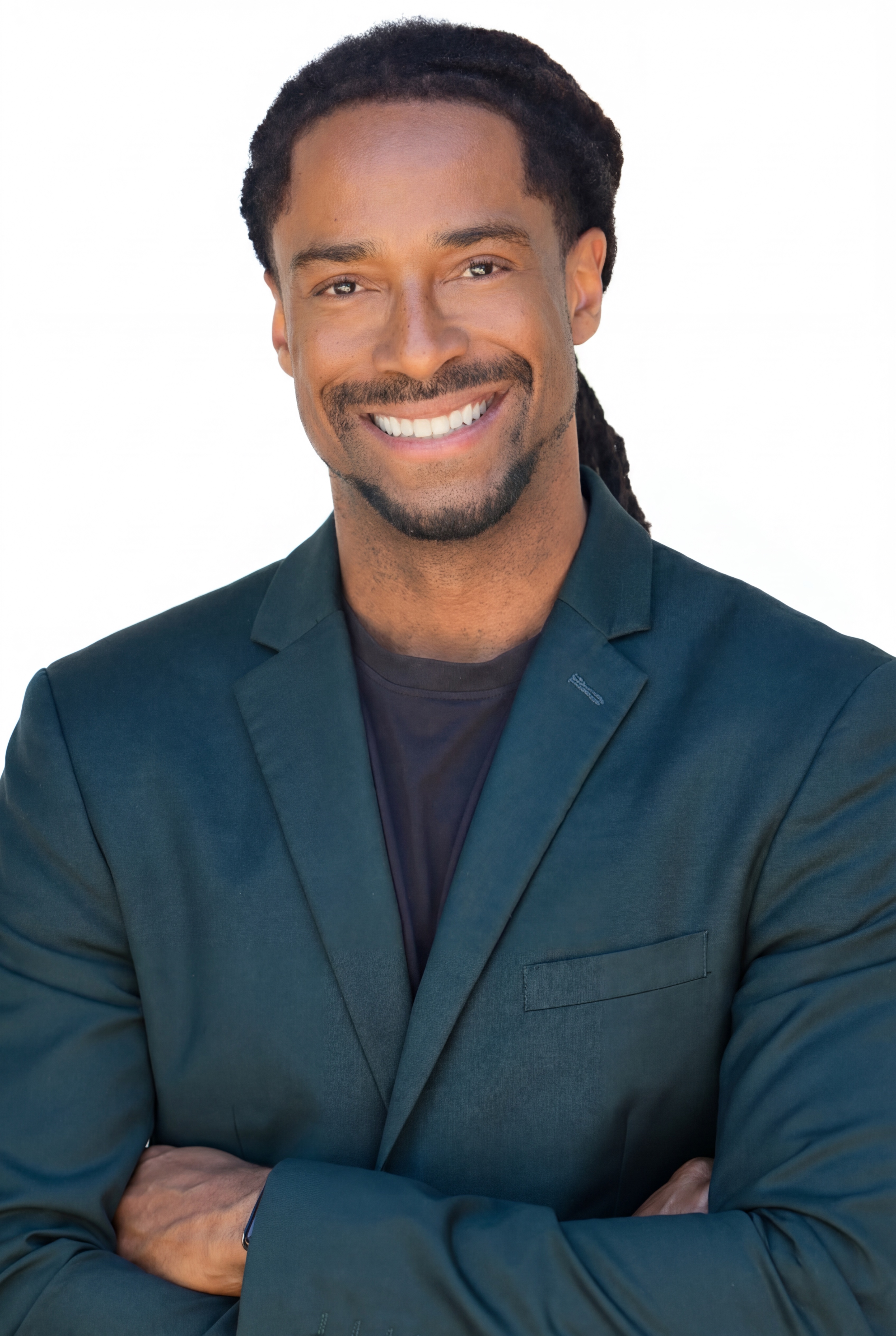
Will Gill is a Forbes Next 1000 honoree and WSJ-ranked #1 Corporate DJ and Emcee with 2,520+ five-star Google reviews. He has performed at 600+ Fortune 500 corporate events and approaches the DJ craft as a dedicated performance discipline open-format, crowd-driven, and always in service of the event’s specific objectives and audience. His 3-in-1 service (DJ + Emcee + Audience Engagement) is the entertainment standard for corporate events nationally.
Learn more and check availability.
Fortune 500 Events Performed
Five-Star Google Reviews
WSJ-Ranked Corporate DJ
Frequently Asked Questions
Do DJs make their own beats?
Some do, most do not, and the distinction matters far less than people assume. DJing is fundamentally music curation and real-time experience design: selecting the right music for the moment, sequencing it into an emotional arc, and mixing it seamlessly.
What is the difference between a DJ and a producer?
A producer creates original music; a DJ selects, sequences and mixes music for a live audience. Some people do both, but the core DJ skill is reading a room and making song decisions in real time, not composition.
Does it matter for my corporate event if the DJ produces?
Rarely. The question that matters, as the page puts it, is whether the DJ has a distinctive musical identity that serves your event. Beat production is one path to that, not the only one and not the most relevant one for most event contexts.
What tools do DJs who produce use?
The guide covers the production tools DJs reach for when they do create original beats, and it separates that from the performance tools every DJ needs regardless.
Should an aspiring DJ learn beat production?
Only if it serves where you want to perform. The page's advice for aspiring DJs is to build the curation, mixing and crowd-reading craft first, since that is the job, and treat production as an optional addition.