
Corporate Event Band Trends in 2026
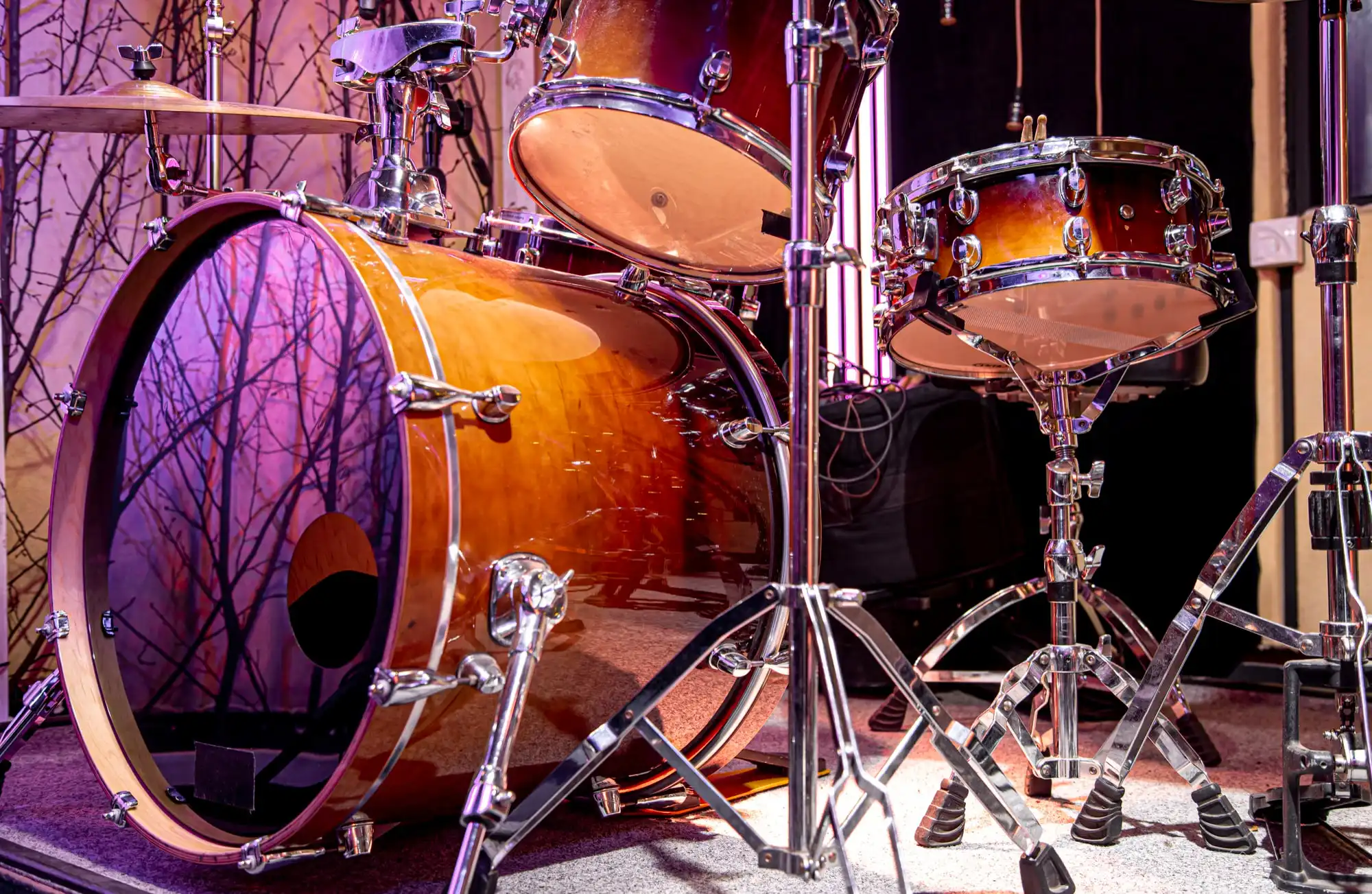
The defining shift in corporate event band performance in 2026 is not about which genres are trending or which technologies bands are using it’s about the fundamental redefinition of what a band is supposed to do at a corporate event. For the first decade of the corporate live-music market, bands were hired to entertain the room from the front. In 2026, the most-booked corporate acts are hired to activate the room and the distinction is significant enough to change how buyers specify what they want, how bands build their service offerings, and what the post-event conversation sounds like.
This guide maps the five trend clusters shaping corporate event band performance in 2026, with specific attention to what each trend requires from bands and what it means for buyers specifying entertainment at each event tier. This article is part of a cluster covering how live corporate bands transform business events, the 2026 setlist architecture guide, and the buyer decision framework for live bands vs. alternatives.
Key Takeaways
The live music market driving corporate event band demand has reached its strongest point in the post-pandemic era. Global live music revenue is projected to exceed $35 billion in 2026, surpassing pre-pandemic peaks and growing faster than streaming revenue a market signal that in-person live performance preference is a sustained behavioral shift, not a post-pandemic novelty. That market strength is translating directly to corporate event booking volume and to rising audience expectations at every budget tier.
Audience participation has replaced passive listening as the primary success metric for corporate live entertainment. Around 84% of event attendees now prefer live music formats that offer some form of integration or participation over formats where the audience is purely passive. Interactive formats live song requests, singalong moments, co-performance invitations, personalized lyric elements are no longer premium add-ons for high-budget events; they’re baseline expectations at mid-tier corporate events in 2026.
Cross-generational musical reach is the top repertoire challenge for 2026 corporate events. Corporate event planners in 2026 are explicitly prioritizing music that is familiar enough to connect across a wide audience age range while still feeling current which means genre diversity within a single performance, not genre specialization. The all-era, multi-genre corporate band (or equivalent open-format approach) has definitively replaced the genre-specialist act as the dominant booking preference at cross-demographic corporate events.
The single-provider expectation is reshaping how buyers specify entertainment. Event buyers increasingly want one dependable provider who can handle more than one piece of the guest experience rather than coordinating separately between a band, a DJ, an emcee, and a production team. This consolidation preference is one of the strongest structural shifts in corporate entertainment sourcing in 2026 and directly advantages performers who offer multiple services under one contract.
Sustainability has moved from a differentiator to a baseline requirement for corporate entertainment vendors at mid-to-large event budgets. Corporate clients now routinely request eco-friendly production practices energy-efficient LED rigs, electric transport, and sustainable staging materials as part of standard RFP specifications, not as specialty requests. Bands and entertainers who can’t document their sustainability practices are at a growing disadvantage in the corporate procurement process.
Watch DJ Will Gill perform live. Contact him now to discuss your corporate entertainment booking.
“The defining shift in 2026 is not about which genres are trending or which technology bands are using it’s about the redefinition of what a band is supposed to do. The most-booked corporate acts are no longer hired to entertain the room from the front. They’re hired to activate it.”
The Core 2026 Shift: From Entertainment to Experience Architecture
The practical difference between “entertainment” and “experience architecture” in the corporate context is measurable: an entertainment model produces a net promoter score for the band; an experience model produces a net promoter score for the event. The best corporate entertainment in 2026 is designed so that guests remember the event the energy, the connection, the shared moments rather than just the band that played. The band’s craft is what makes the experience possible, but the experience is what the buyer is purchasing.
This shift has three concrete implications for how corporate event bands are positioning and building their service models. First, the pre-event consultation scope has expanded: bands that participate in the event-design process reviewing the run of show, understanding the event’s core message, calibrating their performance to program content are more valuable than equally talented bands that show up and play a preset list. Second, the performance format is increasingly designed around audience-activation moments rather than band-showcase moments: the best songs are the ones that create the most guest participation, not the ones the band plays best. Third, post-event evaluation criteria have shifted from “how was the band?” to “how was the event?” and that second question is one the band owns a larger share of than buyers previously recognized.
For buyers, the implication is to evaluate band proposals not just on talent and repertoire but on the band’s understanding of and contribution to the event design process. The questions that reveal this most clearly: “How do you approach the pre-event planning call?” and “Can you share an example of how you adapted your performance to a specific event’s program?” Bands with strong answers to both questions consistently outperform equally talented bands that treat the planning call as an afterthought.
2026 Corporate Event Band Trend Tracker: Trend, What Buyers Now Expect, What Bands Must Deliver, Best Event Type Fit, Adoption Stage
| Trend | What Buyers Expect | What Bands Must Deliver | Best Event Type Fit | 2026 Adoption Stage |
| Audience Participation and Live Requests | Real-time request handling, singalong engineering, guest co-performance moments | Skilled facilitation of participation without disrupting event’s professional register; bandleader room-reading capability | Holiday parties, team recognition events, celebrations with strong social energy | Mainstream baseline expectation at mid-tier budgets ($10K+) |
| Multi-Genre and Cultural Fusion Repertoire | Cross-era and cross-genre fluency; cultural musical elements on request; no genre-specialist limitations | Documented repertoire breadth across at least 4–5 genres; cultural-genre competence (not just surface-level novelty) | All corporate event types; most critical for mixed-demographic rooms and global teams | Mainstream genre-specialist acts losing market share at corporate bookings |
| Themed Immersion and Visual-Music Production | Band’s visual presentation coherent with event’s design theme; integrated lighting and staging rather than standalone band setup | Pre-event visual production coordination; LED-capable rig; willingness to adapt costume and staging to event theme | Galas, award dinners, product launches, holiday parties with defined themes | Growing standard at $25K+ events; expanding to mid-tier as LED costs decline |
| Sustainable Production Practices | Documented eco-practice commitments; energy-efficient production gear; sustainable transport where applicable | Verifiable sustainability documentation; energy-efficient LED rigs; willingness to complete vendor sustainability questionnaires | Events for companies with published ESG commitments; any large-budget corporate event | Mainstream at large budgets emerging at mid-tier; becoming standard RFP specification |
| Single-Vendor Consolidation and Curator Role | One provider handling DJ, emcee, entertainment design, and energy management fewer vendor handoffs | Documented multi-service delivery capability; event design participation; pre-event planning involvement beyond setlist confirmation | All event types; most valuable for events with complex run-of-show requiring real-time energy management | Rapidly growing strongest procurement shift in 2026; will continue accelerating as event teams downsize |
Sources: The Talent Events (2026), DJs in Maine / Corporate Entertainment Trends 2026, Uptown Drive / Orphiq Music Industry 2026 Trends. Table reflects U.S. corporate market adoption; adoption rates vary by market tier and company size.
Audience Participation, Live Requests, and Personalized Performance Elements
The participation trend is the most significant performance format shift in the 2026 corporate entertainment market. Around 84% of event attendees now prefer live music formats that include some form of integration or active participation over formats where they are purely passive listeners. The practical expressions of this preference range from live song request systems (where guests submit requests that the band incorporates in real time) to singalong moments engineered into the setlist at specific recognition-spike songs, to co-performance invitations where guest leaders or executives join the band for a managed moment.
Personalized song sets are another high-demand participation-adjacent trend. Bands that offer genuine setlist customization learning a company-specific song, incorporating a lyric modification that references the event’s theme or company name, or building a historical set around songs from the company’s founding year deliver a distinct event identity that a generic entertainment booking can’t produce. This personalization signals to guests that the event was designed with them specifically in mind, which is one of the strongest drivers of post-event recall and event satisfaction.
The important caveat for buyers: interactive formats require a skilled bandleader who can manage room energy during participatory moments without letting the format override the event’s professional register. Too much forced participation can backfire, especially with mixed-age professional groups or formal client events the best interactive corporate entertainment feels genuinely inviting rather than coercive, which is a facilitation skill distinct from musical skill. Buyers should specifically evaluate how a band or entertainer manages the transition between formal programming and participatory moments when reviewing portfolio footage.
Genre Strategy: Mashups, Cultural Fusion, and Generational Reach in 2026
The era of the genre-specialist corporate band is ending. Corporate event planners in 2026 are explicitly prioritizing cross-generational musical appeal over depth in any single genre which has produced a market-wide preference for multi-genre acts who can serve mixed-demographic rooms without sacrificing quality or cohesion. Genre mashup performance weaving jazz, pop, R&B, classic rock, and contemporary hits into a single coherent evening rather than staying within one genre boundary is no longer a specialty offering; it’s the expected baseline for corporate events with mixed-age attendees.
Cultural and global musical influences are a distinct and growing subset of the genre-fusion trend. Bands incorporating African percussion, Latin rhythms, Bollywood-inspired instrumentation, or world-music elements are particularly well-positioned for corporate events with global teams or international audiences. Multicultural ensembles music and dance that celebrate global connections are one of the most consistently requested entertainment formats for 2026 corporate events with diverse or international attendee demographics. This format serves both inclusion goals (guests from various cultural backgrounds have recognizable musical moments) and engagement goals (the novelty of unfamiliar musical traditions consistently generates higher audience attention and energy than the familiar alone).
For buyers, the practical application is to specify genre range requirements explicitly in the entertainment brief: rather than naming a single preferred genre, map the room’s demographic range and request a repertoire audit showing what percentage of the proposed setlist addresses each demographic’s recognition anchors. For the setlist architecture principles that operationalize this requirement, see the 2026 setlist construction guide.
Themed Immersion, Technology Integration, and Visual-Music Synchronization
Themed entertainment and technology-integrated performance have merged in 2026 into a single production expectation: that the band’s visual presentation (lighting, stage design, costume, LED integration) should be coherent with the event’s overall production design rather than a standalone element that exists in parallel to it. Events that achieve this integration where the music, the visuals, and the event’s thematic content all reinforce each other consistently produce higher attendee engagement and stronger post-event recall than events where each element operates independently.
The technology side of this trend is accelerating. LED lighting rigs that read the room transitioning from soft warm tones for ballads to high-energy strobes for peak dance moments have become standard production practice for corporate event bands at mid-to-large budget tiers. Live looping stations that allow a small band to build layered arrangements in real time (producing a sound that rivals larger ensembles) are increasingly common and allow cost-efficient instrumentation without sacrificing sonic scale. Synchronized visual-music production where a band’s performance is scored against projected visual content specific to the event’s brand or theme is the highest-complexity version of this trend and is most common in product launch and brand activation contexts.
Retro-themed performances where classic catalog from the 1970s, 1980s, or 1990s is reimagined with contemporary production quality remain one of the most reliable corporate event formats specifically because they solve the cross-generational challenge with a single thematic frame. Older attendees recognize the source material; younger attendees engage with the contemporary production treatment; the shared theme gives the entire room a conversational anchor. For events specifically targeting cross-generational connection, retro-reimagined formats consistently outperform pure-contemporary or pure-classic approaches.
Sustainability, the Single-Vendor Model, and Bands as Event Curators
Sustainability has completed its transition from corporate entertainment differentiator to baseline expectation. Corporate clients now routinely include sustainability requirements in entertainment RFPs energy-efficient LED production, electric or low-emission transport logistics, and sustainable staging materials as standard specifications rather than specialty requests. Bands and entertainment vendors that can’t document specific eco-practice commitments are at a growing procurement disadvantage as corporate sustainability reporting requirements intensify and procurement teams formalize environmental criteria in vendor selection.
The band-as-curator model is the most structurally significant trend for the medium-term corporate entertainment market. The most in-demand corporate entertainment acts in 2026 are not bands that perform and leave they’re performers who participate in the full event design process, advising on theme development, coordinating with AV and production teams, reviewing the run of show against the entertainment plan, and taking responsibility for the energy arc of the evening rather than just the musical setlist within it. This is a service-scope expansion that the best corporate acts have embraced and that buyers increasingly expect at mid-to-large event budgets.
The single-vendor expectation runs parallel to the curator model and represents the strongest structural trend for individual performers who offer multiple services. Event buyers in 2026 increasingly want one dependable provider who can handle more than one piece of the guest experience consolidating the DJ, emcee, audience engagement, and energy management functions under a single contract rather than coordinating multiple vendors. This preference is driven by risk management (fewer vendor relationships to manage, fewer communication gaps) as much as by convenience, and it is accelerating as event teams become leaner and planning timelines compress. For buyers evaluating entertainment options against this criterion, the relevant question is not “which band is best?” but “which entertainment solution handles the most components of the evening with the fewest coordination handoffs?”

DJ Will Gill
Every 2026 trend this article identifies audience participation, multi-genre reach, single-vendor consolidation, event curation describes the model Will Gill has built and refined across 600+ corporate events annually. His 3-in-1 service combines DJ programming, emcee leadership, and audience engagement under a single contract. As an open-format DJ he delivers real-time genre fluency no fixed setlist, no genre-specialist constraints and reads the room continuously to keep energy on arc through every phase of the evening. As an emcee he manages the event design participation moments (game formats, interactive segments, audience co-performance) that the participation trend demands. And as a single vendor he eliminates the coordination overhead that the single-provider consolidation trend reflects. A Forbes Next 1000 honoree, the Wall Street Journal’s #1-ranked corporate DJ and emcee, with 2,520+ five-star Google reviews. See on-stage credits at IMDb. Reach out to discuss your 2026 corporate event entertainment.
Corporate Events Hosted Annually
Five-Star Google Reviews
WSJ-Ranked Corporate DJ and Emcee
Frequently Asked Questions
What is the core shift in corporate event bands for 2026?
From entertainment to experience architecture: the most-booked acts are hired to activate the room, not just entertain it from the front.
How strong is the live music market?
Global live music revenue is projected to exceed $35 billion in 2026, surpassing pre-pandemic peaks and growing faster than streaming.
Do audiences want to participate?
Around 84% of event attendees now prefer live music formats with integration or participation over purely passive formats.
Which genre strategies are trending?
Mashups, cultural fusion and generational reach, so one set lands with a mixed-age corporate room.
What other trends does the guide cover?
Themed immersion, technology and visual-music synchronization, sustainability, the single-vendor model, and bands acting as event curators.