
Celebrity DJs vs. Corporate Engagement Designers: 2026 Hiring Guide | DJ Will Gill
Hiring a celebrity DJ and hiring a corporate engagement designer are not two flavors of the same purchase. They are two different jobs. One is a touring performer whose value lies in their name and their set. The other is a strategist who happens to DJ, emcee, and run audience activations to push your event’s actual business goals across the finish line. Confuse the two, and you can spend six figures on a great party that did nothing for your pipeline, your culture, or your CEO’s keynote message.
This guide breaks down what each role actually delivers, where each one belongs, and how to read the difference before you sign a contract. The numbers in 2026 favor planners who think about events as growth infrastructure, not entertainment line items. Bizzabo’s 2026 State of Events benchmark found 78% of organizers now rank in-person conferences and summits as their most impactful marketing channel, which means the entertainment choices inside those rooms are no longer cosmetic. They are part of the ROI math.
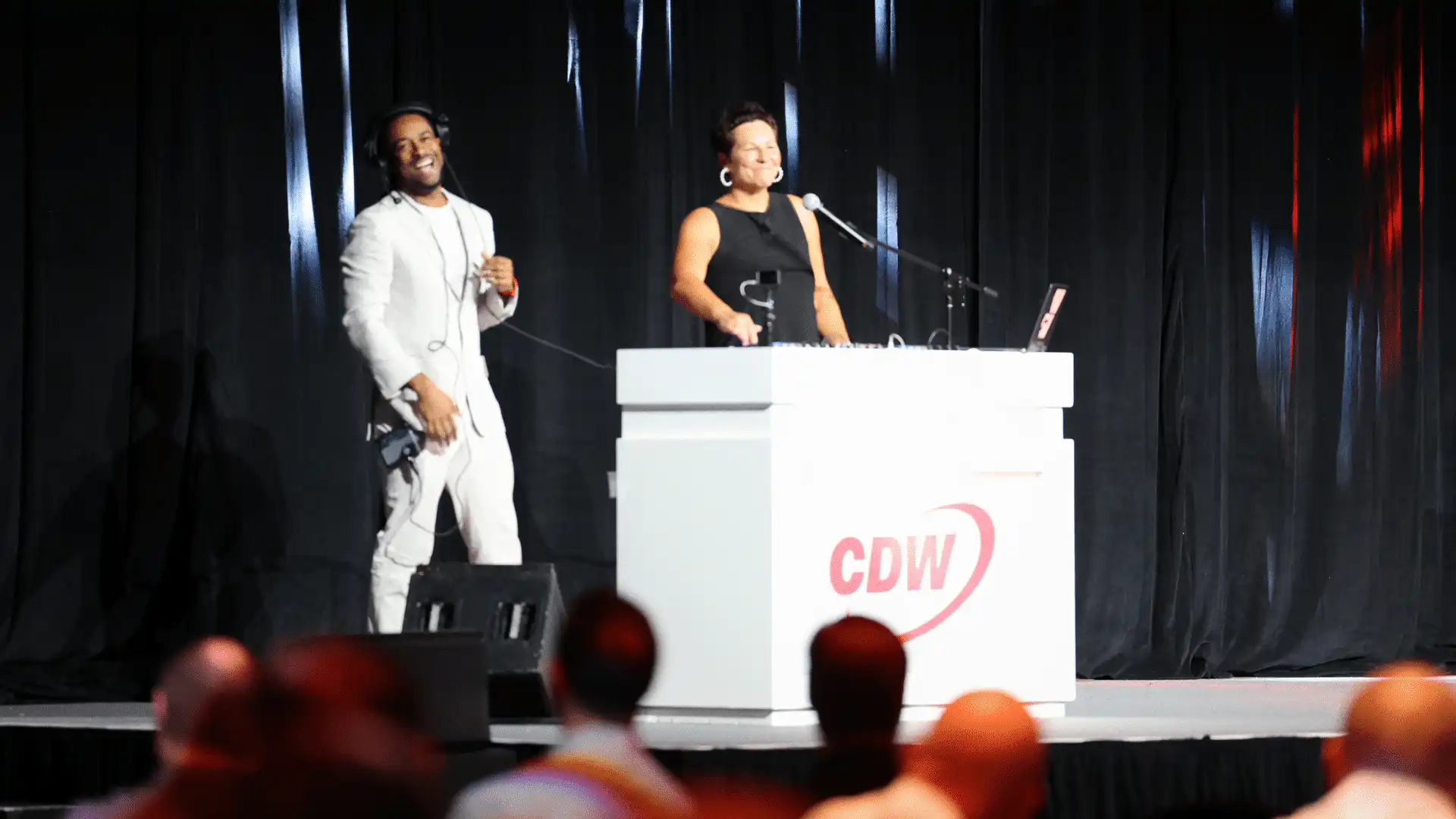
DJ Will Gill working a corporate room. Contact him here to discuss your next event.
Key Takeaways
Celebrity DJ fees for corporate gigs typically start around $5,000 to $25,000 for emerging acts and climb to $100,000 or more for A-tier names like Calvin Harris, before riders, AV, hotels, and travel.
A corporate engagement designer is hired to move business metrics, not crowd metrics. The job involves discovery, run-of-show coordination, customized music and emcee content, and live audience activations that tie back to your event’s purpose.
Entertainment is the single most remembered element of a corporate event. Industry reporting consistently finds that attendees recall entertainment first 73% of the time six months after the event, ahead of the keynote, food, or venue.
Companies with high employee engagement scores, which include the quality of social and team events, see 23% higher profitability and 18% lower turnover according to Gallup workplace data.
Celebrity DJs make sense for public-facing festivals, ticketed concerts, and product launches built around brand buzz. Corporate engagement designers make sense for sales kickoffs, leadership summits, user conferences, award ceremonies, and any event where the purpose is bigger than the party.
1. What a Celebrity DJ Actually Sells
A celebrity DJ is a touring performer with a public profile. Think DJ Khaled, Diplo, The Chainsmokers, Questlove. When you hire one, the line item is the brand. The performance is real, the production is loud, the lighting is locked, but the reason their fee has a comma in it is not their playlist skill. It is their name and the marketing oxygen that comes with it.
That name pulls three levers. First, ticket and registration demand for any public-facing event to which the DJ is attached. Second, social media reach. Their followers see the announcement, share it, and your brand picks up incidental exposure. Third, the “wow” factor in the room, which gives executives, sponsors, and high-tier attendees something to brag about on Monday.
The fee structure reflects all of this. Booking agencies report emerging and well-known DJs land in the $5,000 to $25,000 range, established touring artists run $100,000 to $500,000 for private shows, and the global headliners can land north of $500,000 a night. Add a touring rider, AV requirements, security, hospitality, hotel block, and the all-in cost usually outruns the base fee by 20 to 40 percent.
None of that money is buying customization to your business. It is buying the brand and a set.
2. What a Corporate Engagement Designer Actually Sells
A corporate engagement designer is a strategist who uses DJ, emcee, and activation tools to move the needle on your event’s business objectives. The job starts weeks before load-in. Discovery calls. Script reviews. Run-of-show alignment with your event planner and AV team. Music programming tied to each segment, not a generic top 40 set.
On the day of, the role looks more like a player-coach than a performer. They are reading the room, calling cues with the show caller, introducing speakers with the right energy, customizing walk-up music for award winners, running short interactive moments that fight the post-lunch slump, and closing the day in a way that reinforces what the CEO said in the morning general session.
The reason this role exists is that corporate event leadership is no longer measured on attendance or vibes. Bizzabo’s 2025 benchmarking research found 70% of organizers still struggle to measure event ROI, while 53% of organizers planned to increase event budgets in 2025. The pressure is on every line item, including entertainment, to defend itself with outcomes.
3. The Entertainment Memory Equation
Here is the number that should sit in front of every planner deciding between a celebrity name and a strategic operator. According to industry reporting on event recall, attendees recall the entertainment first 73% of the time six months after the event, ahead of the keynote speaker, the food, the venue, and the swag.
That means whoever you put on stage to handle music and audience energy is, by default, the person carrying the memory of your event. If that memory is “great party, no idea what the company was about,” the entertainment money worked against the rest of your investment. If the memory is “that was the most cohesive, on-message conference I have been to,” the entertainment paid for the keynote.
Brand perception sits in the same column. EventMB reporting cited by uRequest found 87% of attendees form lasting opinions about a brand based on the quality of the event experience. Older but still cited research from EMI and Mosaic found 84% of event attendees report a more positive opinion of the brand after attending. The on-stage talent is a large part of what creates that experience.
4. When a Celebrity DJ Is the Right Call
There are clear cases where a celebrity DJ is the correct choice, and pretending otherwise is just bias. Hire a celebrity DJ when:
- You are running a public-facing festival or ticketed concert, and the DJ is the draw. Ticket revenue, sponsor packages, and media coverage offset the fee.
- You are launching a consumer product where “cool factor” is the core marketing message, and a celebrity name in the press release does more for the brand than the actual set.
- You are throwing a holiday party for a company that explicitly wants entertainment as the gift to employees, with no business agenda layered on top. No keynote, no awards, no speeches. Just a party.
- You have a sponsor underwriting the celebrity fee in exchange for activation rights, where the cost is essentially neutralized.
In every one of those cases, the celebrity DJ is doing the job they are best at, which is being the spectacle. The room is built around them. That is fine when the room exists to be built around them.
5. When a Corporate Engagement Designer Is the Right Call
For most corporate events, the math points the other direction. A corporate engagement designer is the right hire when:
- You are running a sales kickoff, national meeting, or company-wide all-hands where the goal is motivation, alignment, and momentum into the next quarter.
- You are hosting a leadership summit, user conference, or customer event where the entertainment needs to support speakers, not compete with them.
- You are producing an award ceremony, employee recognition night, or anniversary celebration where the moments belong to the honorees, not to the act on stage.
- You have a multi-generational corporate audience that needs music programmed across decades, kept clean for HR, and tuned to the room rather than the chart.
- You are paying for the event to drive a measurable outcome: pipeline, retention, culture, or message recall. Bizzabo’s 2026 research found events are now expected to deliver on pipeline influence, deal velocity, and customer retention, not just attendance.
In each of those cases, you need someone whose job description includes “make the rest of the program work better,” not “be the program.”
6. Head-to-Head: Where the Two Roles Actually Differ
Focus and goal. Celebrity DJ: entertainment and mass appeal. Engagement designer: business outcomes and audience connection.
Preparation. Celebrity DJ: contract, rider, advance, sometimes a meet-and-greet add-on. Engagement designer: discovery calls, script and ROS review, custom music programming, walk-in and walk-out cues built segment by segment.
On-stage role. Celebrity DJ: the star. Engagement designer: the connective tissue between speakers, awardees, and attendees. Everyone else stays the star.
Content control. Celebrity DJ: chart-driven set, often with explicit content that does not pass an HR review. Engagement designer: fully customized, clean, multi-generational, branded audio cues where useful.
Success metric. Celebrity DJ: dance floor density and social buzz. Engagement designer: Did the audience leave aligned with the company’s message and energized to act on it?
All-in cost behavior. Celebrity DJ: base fee plus rider, AV, hospitality, travel, security, often a 20 to 40 percent stack on top of the headline number. Engagement designer: a single, predictable fee covering strategy, emcee, DJ, and activation, scaling with day count rather than fame.
7. The Pharma Sales Meeting Scenario
A pharmaceutical company runs a three-day national sales meeting. The job is to train, celebrate, and motivate the field force. Two paths.
Path A. The company books a recognizable celebrity DJ for the closing-night party. Two hours of high-energy music. The room loves it. Photos hit LinkedIn. The DJ leaves. Monday morning, reps are back in their territories and the closing-night memory has nothing to do with the company’s positioning, the new product launch, or the quota structure for next year. The entertainment was a sealed unit, disconnected from the work.
Path B. The company books a corporate engagement designer for all three days. Walk-in music aligned to each session theme. Emcee transitions tie back to the CEO’s opening keynote. Personalized walk-up tracks for every President’s Club winner. An interactive post-lunch activation on day two that reinforces the new sales play. A closing party where the music spans the demographics of the room and the messaging from the conference is woven into the transitions. Monday morning, reps recall the message and the moments together.
Gallup workplace data, cited in industry coverage of live event ROI, shows companies with high engagement see 23% higher profitability and 18% lower turnover. A three-day meeting that lands its message and energizes the field force feeds directly into those numbers. A three-day meeting that ends with a great party but no message recall does not.
8. How to Decide Before You Sign
Three questions to ask out loud before the contract goes around.
One. What is this event actually for? If the answer is “a party,” a celebrity DJ may be fine. If the answer involves words like motivate, align, launch, retain, recognize, or convert, you need a strategist.
Two. Who is the star of the room supposed to be? If it is the DJ, hire a celebrity DJ. If it is your CEO, your award winners, your customers, your top reps, or your founder, hire someone whose job is to make those people look great.
Three. What happens on Monday? If the only outcome you can name is “people had fun,” the entertainment is a sunk cost. If the outcomes include better quota attainment, faster pipeline, higher retention, stronger customer renewals, or a culture moment that gets cited at the next all-hands, the entertainment is an investment, and it needs to be matched to that level of accountability.
Most planners do not get to pick between a celebrity DJ and a corporate engagement designer with an unlimited budget. They get to pick which problem the entertainment is solving. Get that clear before you call an agency, and the right hire becomes obvious.
9. Strategy Over Stardom
Celebrity DJs are not a bad spend. They are a specific spend. They buy spectacle, name recognition, and a great party, and there are corners of the corporate calendar where that is exactly the right purchase.
Corporate engagement designers are a different category of hire entirely. They buy strategy, customization, run-of-show partnership, and a performer on stage whose first instinct is to ask what the company is trying to accomplish. For most high-stakes corporate work, that is the more defensible line item.
Before you allocate a large slice of your entertainment budget to a name, define what the event is trying to do. If the answer is bigger than the party, your audience, your leadership, and your bottom line will be better served by a strategist who happens to DJ than by a famous DJ who happens to show up.
About the Author
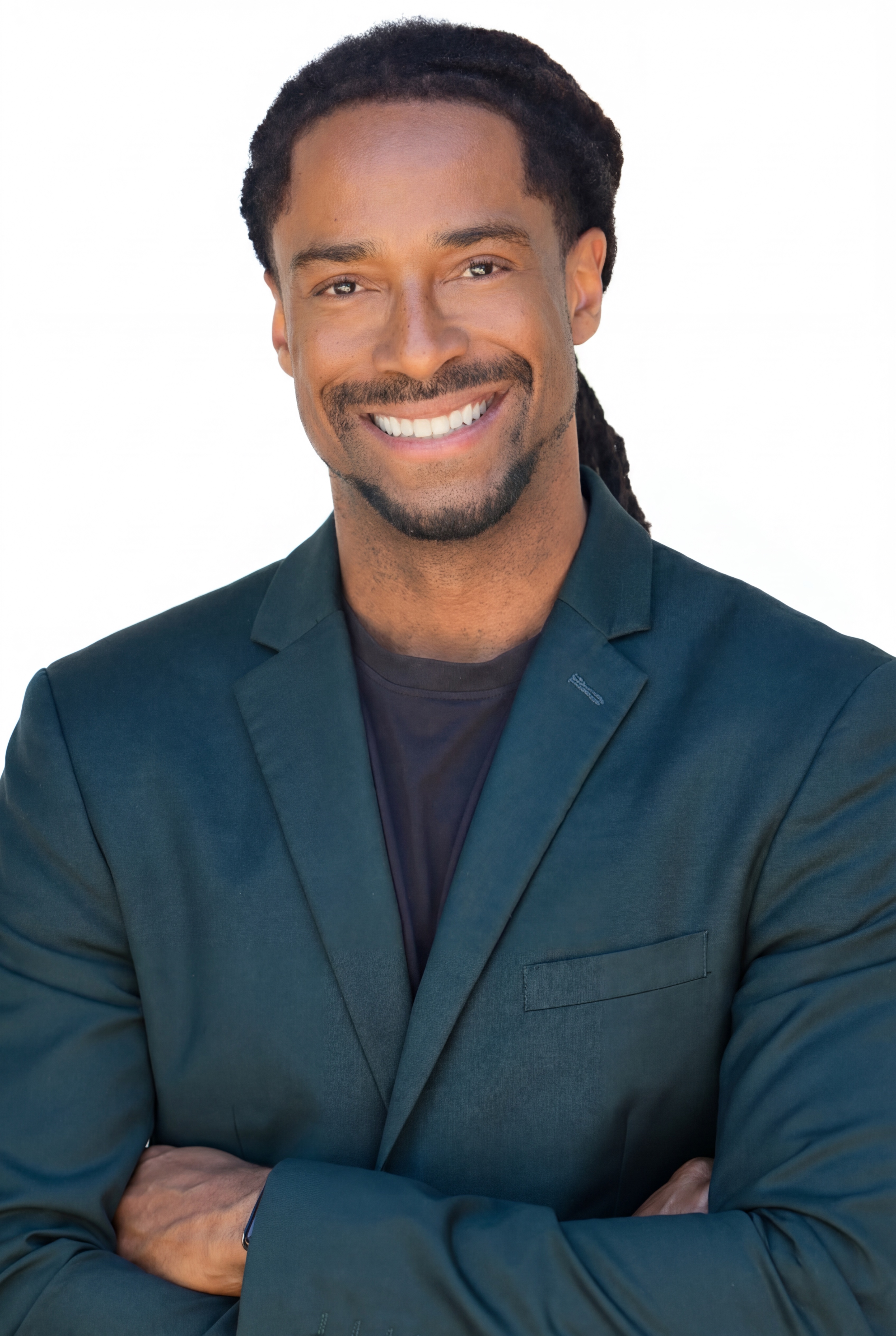
William “DJ Will Gill” Gilbert is known for keeping corporate audiences engaged through a mix of music, hosting, and interactive moments that bring people into the experience. He has performed at more than 600 corporate events and has been featured by Forbes Next 1000 and The Wall Street Journal. His work has included events for brands and organizations such as AT&T Business, CDW, Virgin Galactic, Home Depot, Hilton, PepsiCo, PayPal, and the United Nations. He is also a World Cup performer and a Formula 1 Las Vegas Grand Prix performer, and has IMDb credits connected to Super Bowl LIV, The Voice, and Real World: Hollywood. When he is not performing, Will works on TheAIDJ.com, a patent-pending AI playlist tool designed to help modern music curators build better playlists.
2,520+ Google Reviews · IMDB · Mixcloud · Instagram ·
Frequently Asked Questions
What is the difference between a celebrity DJ and a corporate engagement designer?
A celebrity DJ sells a name and a set; an engagement designer is a strategist who DJs, emcees and runs activations to push business goals.
What do celebrity DJs cost?
Roughly $5,000 to $25,000 for emerging acts and $100,000 or more for A-tier names, before riders, AV, hotels and travel.
Is entertainment remembered?
Attendees recall entertainment first 73% of the time six months later, ahead of keynote, food or venue.
Why do events matter to marketing now?
Bizzabo's 2026 benchmark found 78% of organizers rank in-person conferences as their most impactful channel.
How do I decide?
The guide's decision section and pharma sales meeting scenario walk through it.