
Best DJ Equipment for Outdoor Events | DJ Will Gill’s Guide
Outdoor events present a set of technical challenges that indoor venues simply do not open-air acoustics that disperse sound differently than enclosed rooms, weather variables that can damage equipment or compromise performance, power supply situations that require planning rather than assumption, and audience areas that may be much larger than any hotel ballroom. Getting the DJ equipment selection wrong for an outdoor event does not produce a slightly subpar result; it produces a situation where the music either cannot reach the audience, sounds distorted or uneven, cuts out at critical moments, or gets shut down by conditions that proper gear would have handled without incident.
This guide covers every major equipment category for outdoor DJ performance from the specific characteristics that make certain speakers, mixers, and controllers appropriate for outdoor use to the infrastructure considerations around power, weather protection, and acoustic deployment that determine whether your technical setup can actually deliver the performance your audience expects. As a professional corporate DJ who has performed at outdoor events across the full spectrum from festival-scale productions to intimate garden events here is the equipment guidance that actually matters.
“Outdoor DJ equipment is not a category that rewards cutting corners. The right gear is invisible to the audience they just experience great sound. The wrong gear makes itself known at exactly the worst moments.”
Why Outdoor DJ Equipment Requirements Differ From Indoor
The physics of sound behave fundamentally differently outdoors than in enclosed spaces. Indoors, room boundaries reflect sound back toward the audience, which reinforces volume and helps fill gaps in speaker coverage. Outdoors, sound disperses into open air with no reflection which means you need significantly more speaker output to achieve the same perceived volume level, and the sound coverage area requires more careful planning because there is no environmental reinforcement working in your favor.
The practical implication is that equipment specifications that are more than adequate for an indoor event of a given size will often be genuinely insufficient for an outdoor event of equivalent attendee count. A speaker that comfortably covers a 200-person hotel ballroom may struggle to cover 200 people in an outdoor garden setting without audible volume drop-off at the edges of the audience area. Understanding this dynamic before selecting equipment prevents the most common outdoor DJ failure mode arriving at the venue with gear that was sized for a different environment.
Beyond acoustics, outdoor environments introduce weather, temperature, humidity, and debris variables that do not exist indoors. Electronics are sensitive to moisture, dust, and temperature extremes in ways that require specific protective measures. Power supply cannot be assumed it must be planned for explicitly, with backup provisions. These factors combine to make outdoor DJ event preparation a genuinely more complex discipline than indoor event setup, and the equipment selection needs to reflect that complexity.
Speakers: The Most Critical Outdoor Equipment Decision
The speaker system is where outdoor events succeed or fail at the most fundamental level, and the selection criteria for outdoor speakers differ meaningfully from indoor ones.
Powered (Active) Speakers are the appropriate choice for most outdoor DJ applications. Powered speakers have built-in amplifiers matched specifically to the speaker drivers, which eliminates the complexity and potential failure point of a separate amplifier stage, reduces cable runs, and simplifies the overall system architecture. For outdoor events where setup and breakdown need to be efficient and the signal chain needs to be as simple as possible to minimize failure points, powered speakers are operationally superior to passive speaker plus amplifier configurations.
For speaker selection specifically, the brands with the strongest track records in outdoor professional applications are JBL (particularly the PRX and SRX series), QSC (the K series and KS subwoofers), Yamaha (the DZR and DBR series), and EV (the ELX and ETX series). These manufacturers have invested specifically in the driver quality, cabinet design, and amplifier headroom that outdoor applications require. In each case, the professional product lines (not the consumer-grade equivalents that share the brand name) are what the recommendation refers to.
Subwoofers are more important outdoors than in most indoor settings because open-air environments naturally attenuate bass frequencies faster than they do mid and high frequencies. Without subwoofer reinforcement, outdoor DJ sound can feel thin and lacking in energy even at adequate volume levels. Adding a matched subwoofer to your main speaker system restores the low-frequency foundation that gives music its physical impact and gives a dance-oriented event the energy its audience expects.
Speaker quantity and placement require careful site assessment before the event. A single pair of mains positioned centrally may cover a compact outdoor audience area well; a larger or irregularly shaped area may require delay speakers positioned deeper in the audience zone, or multiple speaker positions distributed across the coverage area. Walking the site before setup ideally during the planning phase, not on the day of is the only reliable way to make these placement decisions correctly.
The DJ Mixer: Durability and Reliability Over Features
The mixer is the central nervous system of the DJ setup, and for outdoor applications, the selection criterion that rises above all others is reliability. A mixer failure during an outdoor event where running to a local store for a replacement is often not an option can end the event entirely. This is the equipment category where the value of buying quality rather than saving money is most directly felt.
For outdoor DJ applications, Pioneer DJ’s professional mixer line (the DJM-900NXS2 and its successors) represents the industry standard for reliability and build quality. Allen & Heath’s Xone series is another professional-grade option with exceptional audio fidelity. Rane mixers are particularly well-regarded in applications where durability under extended use is the primary concern.
Whichever mixer you select, it needs to be transported in a hard case with foam padding, kept under a canopy at all times during outdoor events, and protected from direct sun exposure which can cause electronic components to overheat and fail. Bringing a simpler backup mixer (even a basic 2-channel unit) as a contingency for a mission-critical outdoor event is a professional practice that pays for itself the first time a mixer issue occurs mid-performance.
DJ Controllers: Integration and Outdoor Durability
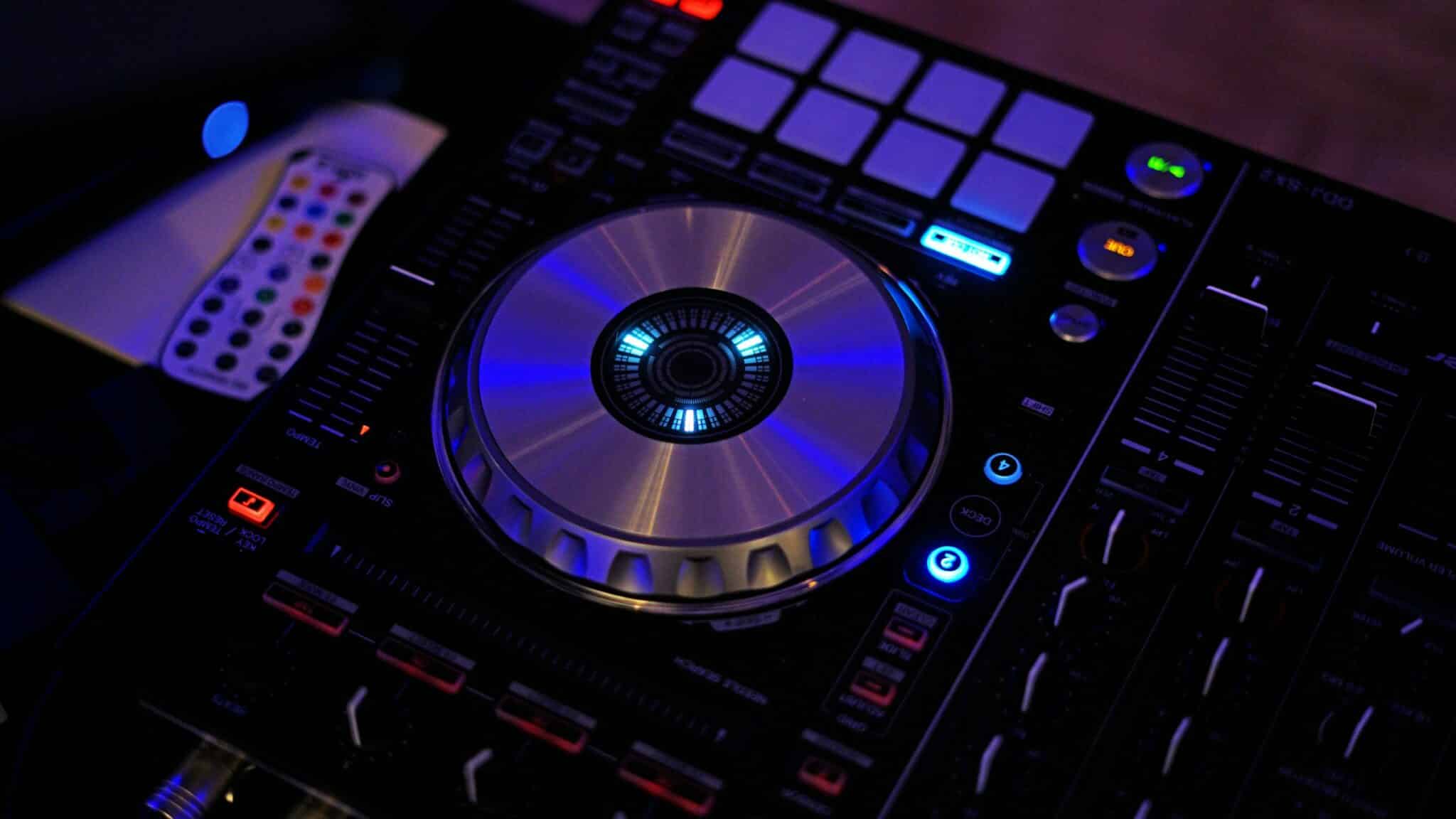
A DJ controller integrates the mixing and media management functions that separate DJ setups distribute across multiple components turntables or CDJs, a mixer, and a laptop into a single compact unit connected to DJ software running on a laptop. For outdoor events where setup space may be limited, transportation logistics matter, and simplicity of signal chain reduces failure risk, the controller-plus-laptop approach has meaningful practical advantages over more elaborate traditional configurations.
The leading controller options for professional outdoor applications are Pioneer DJ’s DDJ series (particularly the DDJ-1000 and above for professional use), Native Instruments’ Traktor Kontrol series, and Denon DJ’s SC line which offers the additional advantage of standalone operation without requiring a laptop. For outdoor events where laptop reliability in variable temperature and humidity conditions is a concern, a standalone controller that does not depend on a laptop creates one less critical failure point in the signal chain.
Like the mixer, the controller requires hard case transport, shade protection during outdoor events, and careful management of heat exposure. Many controllers include ventilation openings that can admit dust and moisture in outdoor environments covering these openings with fine mesh when not in active ventilation-critical use is a reasonable precaution for dusty outdoor sites.
Microphones: Wireless Is Non-Negotiable Outdoors
For outdoor events, wireless microphone systems are strongly preferred over wired alternatives for a straightforward reason: cable management across an outdoor performance area creates trip hazards, limits mobility, and introduces failure points at every connector. The freedom of wireless operation for both the DJ/emcee and any speakers, presenters, or performers produces better performances and fewer incidents.
The leading wireless microphone systems for professional outdoor use are Shure’s ULX-D and QLX-D series and Sennheiser’s EW series. Both provide reliable digital wireless transmission, adequate range for most outdoor event configurations, and the audio fidelity that professional events require. For outdoor use specifically, select handheld capsules with cardioid or supercardioid polar patterns, which provide better rejection of ambient wind noise than omnidirectional patterns.
Wind noise management is a specific outdoor microphone challenge that deserves explicit attention. Standard foam windscreens provide modest protection; genuine outdoor windjammers (the large furry windscreen covers) provide substantially better protection in breezy conditions. Having these available as part of your outdoor microphone kit prevents the distracting low-frequency rumble that ruins audio quality and intelligibility in outdoor speaking and emcee performance contexts.
Bring at least one wired microphone as a backup regardless of your wireless system’s reliability history. Battery failure, frequency interference from venue-adjacent wireless systems, and RF congestion in dense urban outdoor environments can all compromise wireless microphone performance in ways that a single backup wired mic resolves immediately.
The Outdoor DJ Equipment Setup Checklist
Eight Setup Decisions That Determine Outdoor Event Success
| Power supply planning | Confirm available power at the site before the event outlet location, circuit capacity, and whether the circuit is shared with other vendors or equipment. If venue power is insufficient or unavailable, a generator is required. Size it for at least 1.5x your total equipment draw to handle startup surges without tripping breakers. |
| Weather protection | A canopy or tent over the DJ setup is required, not optional. Direct sun exposure overheats electronics; rain or dew can destroy them. Use waterproof equipment covers or cases during transport. Never leave equipment set up and unattended in changing weather conditions. |
| Speaker placement and elevation | Elevate speakers to ear height or above using speaker stands. Speakers positioned at ground level project sound into the first few rows and lose coverage behind them. Angling speakers slightly downward toward the center of the audience area concentrates coverage where it is needed. |
| Sound check timing and process | Sound check at the volume levels you will actually perform at, not a reduced “polite” level. Acoustic conditions change significantly when an outdoor space fills with people the ambient background noise rises and sound absorption changes. Check from multiple positions across the audience area, not just from the DJ position. |
| Cable management and safety | All cables running across traffic areas must be taped down or run through cable covers. Outdoor events with large crowds and low lighting in particular create serious trip hazard liability if cables are poorly managed. Use outdoor-rated extension cords and power strips with circuit breakers. |
| Lighting for night events | LED moving heads and par cans are the practical choice for outdoor events lower power consumption than traditional lighting fixtures, lower heat output, and resistant to rain in IP-rated housings. Ensure your lighting power draw is included in your overall power budget calculation. |
| Backup equipment | Bring spare cables (XLR, power, USB), spare microphone batteries, a backup laptop with your music library mirrored, and a backup controller or basic mixer. Equipment failure during an outdoor event is harder to recover from than indoors the nearest equipment rental shop may be an hour away. |
| Sound level monitoring | Outdoor events in residential or mixed-use areas frequently have noise ordinances or permit conditions that specify maximum decibel levels. A simple SPL (sound pressure level) meter app or dedicated meter allows you to monitor compliance and avoid the event shutdown that excessive volume complaints can trigger. |
Equipment Brands Worth Trusting for Outdoor Events
Equipment brand selection matters more for outdoor events than for indoor ones because the performance environment is more demanding and the consequences of equipment failure are more severe. These are the manufacturers whose products have established track records in outdoor professional applications across the key equipment categories.
For speakers, JBL Professional, QSC, Yamaha Professional Audio, and Electro-Voice (EV) represent the reliable tier that professional outdoor events warrant. Each manufacturer’s professional product lines not the consumer-grade products that share their brand name are what the recommendation refers to. The price difference between professional and consumer product lines in these brands reflects real differences in driver quality, amplifier headroom, cabinet construction, and thermal management that become apparent exactly in the demanding conditions outdoor events create.
For DJ mixers, Pioneer DJ’s professional DJM series and Allen & Heath’s Xone series are the industry standard for reliability. For controllers, Pioneer DJ, Denon DJ, and Native Instruments offer professional products with the build quality outdoor use requires. For microphones, Shure and Sennheiser are the industry benchmarks for both wireless systems and wired handheld and headset options. For headphones essential for cueing in loud outdoor environments Sennheiser HD 25, Audio-Technica ATH-M series, and Pioneer DJ’s HDJ series all provide the isolation and monitoring quality that outdoor performance demands.
Corporate Outdoor Event Entertainment
Equipment selection is the technical foundation of a successful outdoor DJ event. But the equipment only creates the conditions for great entertainment it does not create the entertainment itself. The DJ’s ability to read the outdoor crowd, adapt to the unique energy dynamics of open-air events, manage the run-of-show with confidence from the microphone, and create interactive moments that engage attendees across a larger physical space than most indoor events require is what ultimately determines whether an outdoor corporate event is memorable or merely adequate.
Will Gill’s 3-in-1 service DJ, emcee, and audience engagement programming is designed for exactly this context. The open-format approach, calibrated to the specific audience, and the emcee presence that can command attention across a large outdoor space are the performance capabilities that transform technically sound outdoor event production into a genuinely excellent event experience.

DJ Will Gill
Will Gill is a Forbes Next 1000 honoree and WSJ-ranked #1 Corporate DJ and Emcee with 2,520+ five-star Google reviews. He has performed at 600+ Fortune 500 corporate events across indoor and outdoor environments, from festival-scale outdoor productions to intimate garden events. His 3-in-1 service (DJ + Emcee + Audience Engagement) is the entertainment standard for corporate events of all types and scales.
Learn more and check availability for your next event.
Fortune 500 Events Performed
Five-Star Google Reviews
WSJ-Ranked Corporate DJ
Frequently Asked Questions
Why is outdoor DJ equipment different from indoor?
Sound behaves differently in open air. Indoors, room boundaries reflect sound back and reinforce volume; outdoors there is no reflection, so you need significantly more speaker output for the same perceived level and more careful coverage planning for a larger, more spread-out audience.
What is the most critical outdoor equipment decision?
Speakers. The guide treats speaker selection and deployment as the decision that determines whether the music reaches the audience evenly or sounds distorted, thin or uneven across the space.
Do I need wireless microphones outdoors?
Yes, the page calls wireless non-negotiable outdoors, where speakers, presenters and the DJ position can be far apart and cabling is impractical.
What should the mixer and controller prioritize outdoors?
Durability and reliability over features. Weather, dust and power variability punish fragile gear, so the guide favors proven, robust units and a controller that integrates cleanly with the rest of the rig.
What else has to be planned besides gear?
Power supply, weather protection and acoustic deployment. The setup checklist covers the infrastructure decisions that decide whether the technical setup can actually deliver the performance the audience expects.