
How To Get Real Energy From a DJ Set at a Daytime Corporate Event | DJ Will Gill
Can a daytime corporate event still have real energy? Yes, daytime corporate events can carry real energy when the entertainment is built for it: bright tempos, interactive segments, and a host who treats 10am like a show instead of a warm-up. He holds 2,520+ five-star Google reviews and has performed for Google, Amazon, Salesforce, PayPal, Pepsi, and the United Nations.
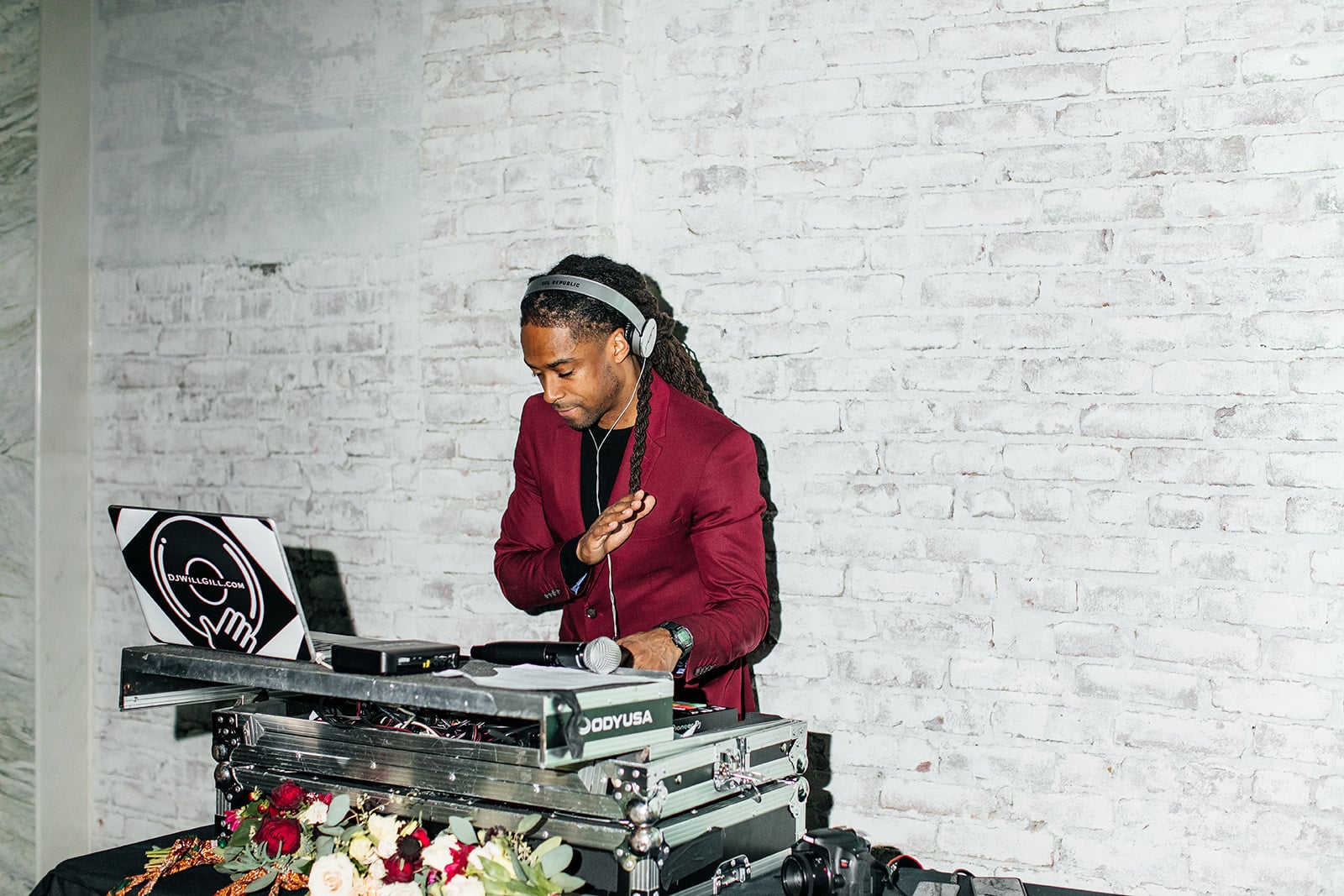
A DJ set at 8pm on a Saturday and a DJ set at 2pm on a Tuesday are two different jobs. The audience is different. The alcohol availability is different. The lighting is different. The cultural expectation about whether anyone will dance is different. Yet most planners brief the daytime DJ as if they are running a small evening set at a conference. The result is one of two failure modes. Either the DJ pushes evening energy into a daytime room and everyone gets uncomfortable, or the DJ dials so far back that the music becomes elevator background and adds nothing to the event. Both failures come from the same root cause: treating daytime energy as a lower-volume version of evening energy rather than as its own distinct craft.
Real energy from a daytime corporate DJ set exists, and it is measurable. It just does not look like a packed dance floor. It looks like the audience returning from the coffee break already animated. It looks like a keynote speaker being pulled onstage by music that already has the room leaning forward. It looks like the mid-afternoon energy slump gets interrupted rather than accepted. Industry coverage of daytime conference programming captures the underlying framework: well-chosen event music creates a dynamic experience, with eye-openers in the morning, relaxing lunch-break music, afternoon slump beaters, and evening dance songs each evoking the specific moods and engagement the moment needs, and mid-afternoon slots benefiting from walk-on music that snaps attendees out of the typical slump. Daytime energy is real. It is just engineered differently. This piece walks through what that engineering actually looks like.
Want a corporate DJ who understands that daytime energy is a distinct craft, not just quieter evening energy? Contact DJ Will Gill.
Key Takeaways
- Daytime corporate DJ sets are a distinct craft. They are not lower-volume versions of evening sets.
- Real energy at daytime looks like animated audiences returning from breaks, keynote walk-ons that lift the room, and mid-afternoon slumps that get interrupted rather than accepted. It does not look like a packed dance floor.
- The daytime DJ works with, not against, the audience’s biological energy curve. Programming should account for the mid-afternoon slump, the post-lunch drop, and the mid-morning peak.
- Six specific moments in a daytime program are where the DJ adds the most value: opening the day, breaking between sessions, walk-ons, post-lunch, mid-afternoon, and the close.
- Tempo, volume, and lyrical density rules are different in daytime. Lower volume, lyric-friendly programming, and 95-115 BPM peak windows work where nighttime rules do not.
1. Why Daytime DJ Sets Are a Different Craft Than Evening Ones
The structural differences between daytime and evening corporate DJ work drive almost every programming decision that follows. A working comparison of what actually changes:
- Audience state. Daytime audiences are typically sober, work-focused, and task-oriented. They came for content, not entertainment. Evening audiences have transitioned into social mode.
- Physical energy curve. Daytime audiences have circadian patterns (morning peaks, post-lunch drops, mid-afternoon slumps). Evening audiences have a rising energy arc as the night unfolds.
- Lighting environment. Daytime venues often include natural light, standard conference lighting, and visibility across the entire room. Evening venues use engineered lighting to create atmosphere.
- Cultural expectation. Nobody expects to dance at 2pm at a Tuesday conference. The music has to work without needing that outcome to be the success metric.
- Music’s structural role. Daytime music supports content transitions, energy management, and mood modulation. Evening music often IS the content.
- Competition for attention. Daytime music competes with mental fatigue, phones, work anxiety, and the next agenda item. Evening music competes with conversation and social dynamics.
Industry coverage of the distinction between daytime and evening corporate DJ work notes the operational split directly: the corporate DJ for a conference after party runs a different scope than a daytime conference DJ, with the after-party audience arriving already at energy from a full day of sessions, networking, and program content, while the daytime work operates under different constraints and different measures of success.
A DJ trained only on evening events who is booked for a daytime program will usually try to force the room toward evening energy. This does not work at 10am. It does not work at 2pm. It does not work at 4pm. The right daytime DJ has a distinct playbook for these moments and does not try to run the evening playbook at the wrong time.
2. What “Real Energy” Actually Looks Like at 2pm on a Tuesday
The success metric for a daytime DJ set is not the dance floor. It is a series of much more specific and measurable outcomes:
- Audience animation during transitions. The room returns from break already talking, moving, tapping. Instead of shuffling back to seats with phones out, attendees come back energized. The music between sessions is doing that work.
- Keynote walk-ons that lift the room. The speaker walks on to music that has already pulled the audience forward. Applause is louder, attention is sharper, the first 30 seconds of the talk lands harder because the music primed the room.
- Mid-afternoon slump interruption. The 2:30pm to 3:30pm window is where most corporate events lose the room. A daytime DJ with the right programming interrupts that slump rather than accepting it as inevitable.
- Sponsor-activation moments landing. When a sponsor takes the stage or the audience is asked to visit booths, the music makes the moment feel important rather than transactional.
- Emotional peaks that the audience remembers. A recognition moment. A surprise announcement. The company anniversary shout-out. The music engineers these moments to actually land.
- Audience movement in seats. Head nods, foot taps, shoulder movement. Nobody is dancing. Nobody is standing. But the room is physically responsive rather than passive.
Industry coverage of high-energy conference music reinforces the specific engagement effect: high energy music at conferences and meetings can instantly energize the audience and improve participants’ experience, with high-energy songs boosting participants’ moods, capturing audience attention, and making attendees more receptive to messaging, particularly effective when songs feel campaign-rally anthemic in nature.
Real energy at daytime is engagement, attention, mood lift, and receptivity to the next content moment. It is not the dance floor. The planners who evaluate daytime DJ work by the dance-floor metric are using the wrong test. The DJ is not failing. The evaluation framework is.
3. The Biological Reality: The Afternoon Slump and How Music Fights It
The mid-afternoon energy drop is not a scheduling problem. It is a physiological reality. Every corporate audience experiences it, roughly between 1:30pm and 3:30pm depending on lunch timing. Attention drops. Focus fragments. Post-lunch fatigue combines with cognitive load from the morning to produce a room that is physically present but mentally checking out.
A daytime DJ who does not plan for this slump is running a program that will collapse in the middle. A daytime DJ who does plan for it engineers specific interventions at specific times. The programming during the slump window looks different from the programming at 10am or 4:30pm.
Industry coverage of scheduled-slump interventions frames the practical approach: for a slew of speakers in the mid-afternoon, walk-on music can snap attendees out of the typical slump, with a live entertainment break or high-energy walk-ons re-energizing attendees before the next seminar and providing a moment that resets the room’s engagement level.
A working framework for daytime music by biological energy phase:
- Morning arrival (8am to 9am). Warm, upbeat instrumental or lighter vocal tracks at 95-105 BPM. The audience is fresh but not yet fully awake.
- Mid-morning peak (10am to 12pm). Higher-energy walk-ons, punchy transitions. The room is at peak biological alertness. Match the music to that state.
- Lunch (12pm to 1pm). Lower-energy, conversational music. Guests are eating and networking. Music supports, does not lead.
- Post-lunch drop (1pm to 1:30pm). Mid-tempo, familiar tracks that avoid feeling like a lecture start. The audience is returning to focus. The music smooths that transition.
- Afternoon slump window (1:30pm to 3:30pm). Punchy walk-ons every 20 to 30 minutes. Higher-energy interstitials. Deliberate energy injections at planned intervals.
- Afternoon recovery (3:30pm to 5pm). Building energy toward the day’s close. Slightly higher tempo and volume than mid-morning.
- Closing (5pm to 6pm). Energy peak. The transition to evening programming or the send-off moment. Music delivers the day’s payoff.
A daytime DJ who runs the same programming from 9am to 5pm is fighting the biology of the room every hour. A daytime DJ who maps the programming to the biological curve is working with the room. The audience feels the difference even if they cannot articulate what changed.
4. Six Specific Moments Where a Daytime DJ Adds the Most Value
The daytime DJ is not running background music for 8 hours. The daytime DJ is engineering 6 specific high-value moments per day. Getting these right is the difference between “we had music at the conference” and “the music made the conference land.”
- 1. The morning open. The very first music of the day sets the tone for the entire event. Audience arriving at 8am to 9am with the right morning-open programming is measurably more engaged in the 9am opening keynote. Wrong programming here means the opening keynote is fighting a flat room.
- 2. Session-break transitions. Every 15 to 30 minute break is a moment where the audience either returns focused or returns distracted. The music during the break and in the last 5 minutes before content resumes shapes which one happens.
- 3. Keynote walk-ons and walk-offs. The speaker’s entrance music is a signal to the audience about what to expect. A CFO announcement gets different walk-on music than a motivational keynote. A daytime DJ who reads the moment and picks the right track lifts the speaker’s landing.
- 4. Post-lunch reset. The 1pm to 1:30pm window is the highest-risk energy moment of the day. The music that brings the audience back from lunch either sets them up for a productive afternoon or accepts the coming slump.
- 5. Mid-afternoon energy injections. Deliberate high-energy moments at planned intervals during the slump window. Not just background. Actual peaks that interrupt the biological drop.
- 6. The day’s close. How the day ends is what attendees carry into the after-party or the hotel bar or the next morning. Wrong close means the day ends flat. Right close means the day ends on a peak.
Industry coverage of moment-matched entertainment supports the six-moment framework: the right approach is to match the act to the moment in your schedule, since not every slot supports the same kind of energy, with after dinner going bigger and louder while mid-afternoon usually benefits from something quick, visual, and tight, and where the act sits in the agenda shaping the pacing and tone.
A daytime DJ who is present but running generic background at these 6 moments is being paid but not delivering. A daytime DJ who has thought through each of these moments in advance is delivering the entire value of the booking.
5. Why Most Daytime DJ Sets Fail (And What Goes Wrong)
Failed daytime DJ sets almost always fail in one of three predictable ways. Understanding the failure modes helps planners spot them before the event, not after.
Failure Mode 1: The DJ pushes evening energy into daytime. Symptoms: volume too loud for the room, tempo too fast for the audience state, dance-floor programming when nobody is going to dance. The DJ knows one playbook (evening) and runs it regardless of the time of day. The audience feels awkward. The keynote speaker cannot hear themselves think during the walk-on. The CFO complains about the volume by 11am. The DJ interprets the resistance as the audience being “not fun,” which misdiagnoses the actual problem.
Failure Mode 2: The DJ becomes background wallpaper. Symptoms: generic instrumental loops, no walk-on cues, no session transition programming, no engagement with the run-of-show. The DJ is present but effectively non-functional. Planners paid for a professional and got a Spotify playlist with a human sitting near it. The audience notices nothing about the music. The event lands flat.
Failure Mode 3: The DJ has no framework for the day. Symptoms: no distinction between morning open, afternoon slump, and closing peak. The music is the same at 10am, 2pm, and 5pm. The DJ is reactive rather than engineered. When the room energy drops, the DJ notices but does not have a specific move to address it. When the keynote runs long, the DJ improvises poorly rather than deploying a prepared transition.
Industry coverage of corporate DJ craft distinguishes the failure modes directly: a corporate DJ has to create the mood with the help of a well-executed event prep plan because it takes a different skill set than club or wedding work, requiring smooth transitions, curated playlists that are not just algorithm dumps, and enough restraint to keep the energy up without making it feel like a midweek rave, with the right operator adapting on the fly rather than locking in a pre-made setlist hours before.
The fix for all three failure modes is the same: brief specifically, hire specifically, verify specifically. Book a DJ who has documented daytime corporate experience, not just evening event work. Brief them on the biological energy curve and the six moments. Ask them how they handle each. A pro engages specifically. A pretender deflects.
6. Tempo, Volume, and Lyrical Density Rules for Daytime
The technical music-programming rules for daytime corporate work are different from evening rules. Getting these calibrated correctly is what makes the difference between “the music worked” and “the music was off all day.”
Tempo (BPM) working ranges:
- Morning open (8am to 9am). 95 to 105 BPM. Warm and welcoming.
- Session breaks and walk-ons. 105 to 120 BPM. Punchy enough to lift, low enough to not overwhelm.
- Lunch (12pm to 1pm). 85 to 100 BPM. Conversational, backgrounded.
- Afternoon slump interventions. 110 to 120 BPM. Higher than the biological energy, deliberately lifting.
- Day’s close. 110 to 125 BPM. Peak of the daytime range, transitioning toward evening if there’s an after-party.
Volume working ranges:
- Background/networking. 60 to 68 dB. Enables normal conversation.
- Walk-on peak. 75 to 82 dB. Punchy for 15 to 45 seconds, then back down.
- Mid-afternoon interventions. 70 to 78 dB. Louder than background but not overwhelming.
- Closing peak. 78 to 85 dB. Highest volume of the day.
The volume ranges for daytime are meaningfully lower than for evening events. Evening peak volumes routinely run 85 to 95 dB. Daytime peaks should not exceed 85 dB for most corporate audiences, and the average should stay below 75 dB. This is a hard constraint. Volume too high at daytime damages the professionalism the corporate audience expects.
Lyrical density rules:
- Networking and background windows. Instrumentals or light vocals only. Dense lyrical content competes with conversation.
- Walk-ons and interstitials. Familiar tracks with recognizable hooks. Vocals are okay if they lift the moment.
- Slump interventions. High-hook, high-recognition tracks. The audience needs the familiarity to spark the response.
- Closing peak. Full vocals okay, including sing-along moments. The room is ready to give the energy back.
A DJ operating within these specific ranges produces measurably different daytime energy than a DJ running evening defaults. Industry coverage of professional DJ skill supports this operational discipline: reading the room isn’t a nice-to-have skill, it’s a survival tactic, with the DJ needing to track crowd energy like a vital sign, adjusting tempo, genre, and volume in real time as the room shifts, requiring rhythm and timing rather than ego or theatrics.
The daytime DJ who has internalized these rules performs like a pro. The daytime DJ who runs evening defaults performs like an amateur regardless of their evening credentials.
7. How to Brief Your DJ for a Daytime Corporate Event
A working brief for a daytime corporate DJ, distinct from an evening event brief:
“Our daytime program is [X] hours across [Y] general sessions with breaks at [times]. Audience: [demographic mix, generational composition, role and department mix]. The success metric for the daytime DJ is NOT dance-floor engagement (there is no dance floor). Success is: keynote walk-ons that lift the room, session-break transitions that return attendees engaged, and mid-afternoon slump interventions that maintain audience attention through the 1:30pm to 3:30pm window. Volume target: 60-75 dB background, 75-82 dB walk-on peaks. Tempo range: 95-120 BPM based on the biological energy curve. Lyrical density: instrumental or light vocals during networking, familiar hooks at transitions. Please prepare specific walk-on tracks for each named speaker on the run-of-show and specific slump-intervention plays for the afternoon window.”
Specific questions to ask a candidate daytime DJ:
- “How is your daytime programming different from your evening programming?” A pro names specific differences (tempo, volume, lyrical density, moment-based programming). A pretender says “I just play what works.”
- “What is your specific play for the 2:30pm slump?” A pro names specific track types and interventions. A pretender says “I read the room.”
- “How do you handle keynote walk-ons?” A pro talks about matching the track to the speaker’s role, tone, and message. A pretender defaults to generic walk-on music.
- “What is your volume ceiling during the day?” A pro names a specific dB target. A pretender says “as loud as needed.”
- “How do you handle the moment when the keynote runs 5 minutes long and eats into the break?” A pro has a specific pivot plan. A pretender says “I just wait for the cue.”
- “Give me an example of a daytime conference you worked and what specifically you did to keep the room engaged.” A pro tells a specific story with specific interventions. A pretender gives a generic “it was a great event.”
The pattern is the same one that shows up across corporate entertainment hiring: pros give specifics, pretenders give platitudes. Specificity is the signal.
8. Common Mistakes That Kill Daytime Energy
The recurring mistakes that break daytime DJ programming, even when the DJ has the right craft:
- 1. Booking the DJ only for specific “high energy” moments. The daytime DJ needs continuous presence across the day to manage the arc. Dropping them in only for walk-ons means the rest of the day runs on Spotify defaults.
- 2. No pre-event walk-on track approval. Speaker walk-ons should be pre-approved by the speaker (or their team) 48 hours before the event. Surprising a keynote speaker with the wrong walk-on track damages the moment.
- 3. Volume creep across the day. The DJ starts at 65 dB in the morning and gradually pushes to 80 dB by mid-afternoon without noticing. By 3pm the room is uncomfortable. Explicit volume ceilings with mid-day check-ins prevent this.
- 4. Ignoring the venue acoustics. Conference ballrooms sound different from hotel meeting rooms which sound different from convention center general session halls. The daytime DJ should tune their programming to the acoustics of the specific space.
- 5. Treating lunch as “the DJ takes a break.” Lunch is one of the most important programming windows because it sets the room energy for the afternoon. The DJ should be running the room during lunch, not disappearing to eat.
- 6. No coordination between the DJ and the emcee. The daytime DJ and the emcee need to share a comm channel and a mutual understanding of who cues what and when. Uncoordinated handoffs create dead air, which reads as production failure to the audience.
- 7. Forgetting the closing peak. The last 15 minutes of the day is the audience’s last impression before dinner or the after-party. Ending on generic background instead of a curated close means the day literally fades out.
- 8. Assuming the daytime DJ can also run the after-party. The daytime and evening DJ skill sets overlap but the operator has been running the room for 8 hours by the time the after-party starts. Consider booking a separate DJ for the after-party or building in a rest window before the shift.
Real energy from a DJ set at a daytime corporate event is achievable but requires a completely different playbook than evening event work. The daytime DJ is not running quieter evening programming. They are running distinct daytime programming calibrated to the biological energy curve of the room, the specific high-value moments of the agenda, and the professional tone of the corporate audience.
The success metric shifts. It is not a packed dance floor. It is a room that returns from breaks animated, keynotes that walk on to visible audience lift, mid-afternoon slumps that get interrupted rather than accepted, and a closing peak that carries the day’s energy forward into whatever comes next. Booking a daytime DJ who understands this framework, briefing them specifically on the six high-value moments, and holding them to the technical rules of tempo, volume, and lyrical density is how corporate events get real music-driven energy across 8 hours of programming. That energy is measurable. It is engineerable. And it is available to any corporate event planner who treats daytime DJ work as its own distinct craft, not as a lower-volume version of Saturday night.
What Corporate Clients Are Saying

About the Author
William “DJ Will Gill” Gilbert is a corporate DJ, emcee, and audience-engagement expert recognized by The Wall Street Journal for helping virtual events strengthen company morale. He is also a Forbes Next 1000 honoree. He has run daytime general sessions, keynote walk-ons, and multi-day conference programs for Fortune 500 clients including AT&T Business, CDW, Virgin Galactic, NeoGenomics, PepsiCo, PayPal, and the United Nations, with 2,520+ five-star Google reviews from corporate clients across the United States. He is also the founder of THEAIDJ, an AI-powered playlist generation tool built for DJs and event planners that programs music using tempo, key, and harmonic similarity rather than genre tags.
Book Will for your next daytime corporate event, conference, or sales kickoff at djwillgill.com/contact.
Book Will to host your next corporate game show at djwillgill.com/contact.