
Why Tempo Matters More Than Genre at Networking Hours | DJ Will Gill
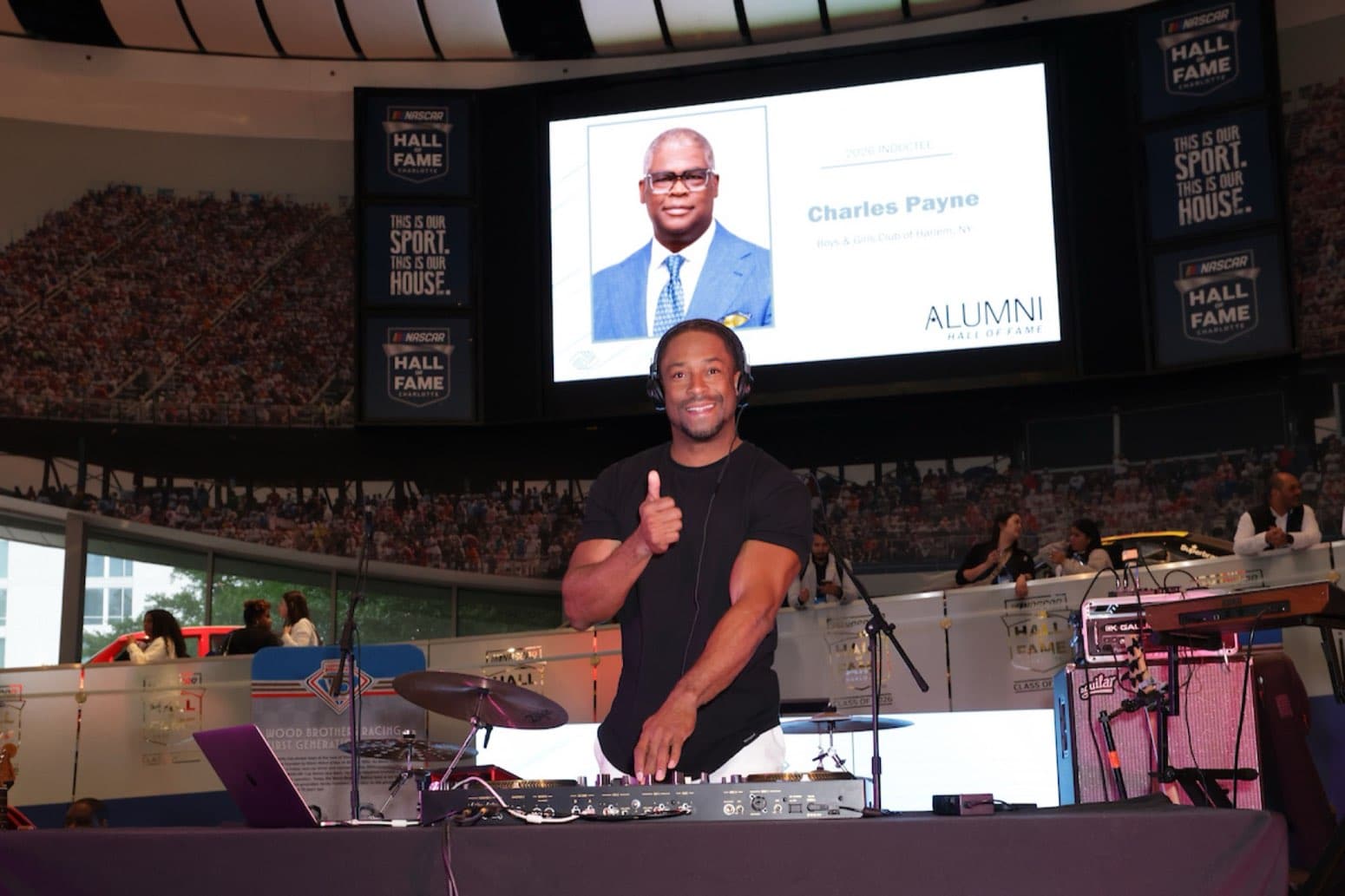
Most planners brief their DJ on networking hour music by genre. “We want jazz.” “Make it lounge.” “Indie chill.” “Latin background music.” The genre brief feels precise because it names a specific musical style. It is the wrong specification. A bossa nova track at 130 BPM, a smooth jazz track at 70 BPM, and a lounge house track at 128 BPM are all “lounge music” in some sense and all completely wrong for a networking hour. They tank conversation, kill the room’s energy, or push guests onto an invisible dance floor that does not exist yet. The genre name does not protect against any of those failure modes. The tempo does.
Tempo is the variable that actually determines whether networking hour music works. Inside the right tempo range, almost any genre lands. Outside it, no genre lands. Industry research on tempo psychology in hospitality settings frames the underlying physiology directly: the human body tends to align with external rhythms through a phenomenon called entrainment, where the brain catches an external pattern and begins following it, often without any conscious decision, meaning music tempo affects behavior tempo and slow music can extend stays by up to 40% compared to fast music. That biological effect is the reason tempo is functional at networking hours, while genre is mostly cosmetic. This piece walks through why the tempo brief beats the genre brief, what the right tempo range actually is, and how to brief your DJ so the networking hour does its job.
Want a corporate DJ who programs networking hours by tempo, not just by genre? Contact DJ Will Gill.
Key Takeaways
- Tempo is functional. Genre is cosmetic. At networking hours, the variable that determines whether conversation flows is BPM, not musical style.
- The working tempo range for corporate networking hours is roughly 90 to 115 BPM. Below 90 reads as sleepy. Above 115 starts to feel like a dance floor.
- Two tracks in the same genre at different tempos perform completely differently. Two tracks in different genres at the same tempo often perform the same.
- Lyrical density matters as much as tempo. Heavy vocal verses pull attention away from conversation. Instrumentals and lighter vocal arrangements keep conversation in the foreground.
- Brief your DJ by tempo range and lyrical density, not by genre. The genre choice is your DJ’s job. The tempo and density brief is yours.
1. Why Planners Get the Networking Hour Music Brief Wrong
The standard planner brief to the DJ for a networking hour goes one of three ways. None of them works reliably.
- Brief by genre. “Play smooth jazz.” “Lounge house.” “Indie chill.” The genre name is treated as the specification. The DJ delivers tracks that fit the genre, some of which are at the wrong tempo for networking. The room either feels sleepy or feels like the dance floor is opening.
- Brief by reference artist. “Play stuff like Norah Jones.” “Bruno Mars vibes.” “Frank Sinatra era.” The artist name implies a tempo range, but only loosely. Norah Jones has tracks at 65 BPM and at 100 BPM. Both feel like Norah Jones. Only one of them works for networking.
- Brief by mood. “Sophisticated.” “Energetic but not too much.” “Background but lively.” Mood briefs are subjective and the DJ guesses what the planner means. The result is whichever default the DJ uses when no specification is given.
None of those briefs targets the variable that actually matters. The functional specification for networking hour music is tempo. Industry coverage of cocktail hour programming makes the underlying point directly: the mid-tempo sweet spot is between 90 and 115 BPM, which provides a steady pulse for the room without making guests feel like they should be jumping on a dance floor just yet, with the trend in 2026 shifting toward sophisticated grooves that are upbeat enough to keep guests tapping their toes while they mingle but balanced enough to keep conversation at the forefront.
A planner who briefs the DJ on tempo and lyrical density (instead of genre) sets the actual functional parameters. The DJ then chooses the genre to match the audience and venue. That division of labor produces a networking hour that actually does its job.
2. What Networking Hour Music Is Actually For
The networking hour at a corporate event has a specific functional job. Most planners do not articulate it explicitly, which is part of why the music brief gets confused. The job is:
- Enable conversation, not compete with it. The music is background to interaction, not the foreground experience.
- Fill silence to lower social friction. A silent room with 200 strangers is uncomfortable. Music gives guests cover to start talking.
- Establish event tone without dictating it. The music signals “this is the kind of event” without telling guests how to feel.
- Create energy momentum that builds toward the main program. The networking hour is not just downtime. It is the warm-up for whatever comes next.
- Differentiate the event from a hotel lobby. Generic background music makes the room feel like a holding area. Considered networking hour music makes the room feel like a designed experience.
Industry coverage of pre-event programming frames the function explicitly: cocktail hour music acts as the ideal icebreaker, facilitating interactions between guests who may not know each other well and creating an environment where connections can flourish, providing an ideal backdrop for those first conversations when networking with colleagues at a corporate event. The music’s job is to lower the activation energy of conversation. Genre does not affect activation energy reliably. Tempo does.
A working test: if guests stop talking when a specific song comes on (either because they are listening to it or because it has gotten too loud or too fast), the song is doing the wrong job. The music has stopped being background and become foreground. That happens when the tempo or lyrical density is wrong, regardless of genre.
3. The Tempo Range That Works: 90 to 115 BPM
The working tempo range for corporate networking hours is roughly 90 to 115 BPM. This range emerges consistently across industry programming guidance and operator practice. Industry coverage of upscale event cocktail hour programming offers a three-phase tempo framework that maps directly to most corporate networking arcs: the arrival and settling phase (first 15 to 20 minutes) uses warm and mid-tempo music around 80 to 100 BPM with volume around 60 to 62 dB, the peak social window (middle 30 to 50 minutes) pushes slightly brighter at 100 to 120 BPM with volume rising to 64 to 66 dB, and the wind-down and transition (final 10 to 15 minutes) brings the tempo back down to 80 to 90 BPM at 60 dB to signal that something is about to change.
What happens above and below the 90-115 range:
- Below 80 BPM. The room feels sleepy. Conversation slows. Guests start checking phones. Energy collapses.
- 80 to 90 BPM. Useful for the first 10 minutes when guests are arriving and the room is still filling. Too low for sustained networking.
- 90 to 100 BPM. The lower working range. Warm, conversational, lightly energetic. Best for early networking and for older or more conservative audiences.
- 100 to 110 BPM. The sweet spot for most corporate networking hours. Energy without aggression. Conversation stays in foreground.
- 110 to 115 BPM. The upper working range. Useful for the last 15 minutes when the energy needs to lift toward the main program.
- 115 to 125 BPM. Edge of the danger zone. Some networking audiences can handle this, but the room starts shifting toward “should we be dancing?” Conversations get louder.
- Above 125 BPM. Club energy. Conversation becomes shouting. Networking essentially ends. This is dance floor music, not networking music.
The biology is consistent across audiences. Research on tempo and guest behavior in hospitality settings frames the underlying mechanism: 80 to 100 BPM produces a relaxed atmosphere, 100 to 120 BPM produces moderate energy, and above 120 BPM produces high dynamics, with tempo changes ideally happening gradually rather than abruptly because abrupt changes are disorienting and gradual changes are almost imperceptible. The 90 to 115 range sits at the relaxed-to-moderate boundary, which is exactly where networking conversation lives.
A working rule: if you cannot hold a normal conversation without raising your voice, the music is either too loud or too fast. Volume can be fixed quickly. Tempo requires re-programming the set.
4. Why Genre Is a Red Herring (Same Tempo, Different Genres Both Work)
The argument that genre matters less than tempo is provable through a simple comparison. Tracks across completely different genres at the same BPM perform similarly at networking hours. Tracks in the same genre at different BPMs perform completely differently. Genre is correlated with tempo (electronic dance music tends to be faster, jazz tends to be slower), but the correlation is loose and the function follows tempo, not genre.
Examples of cross-genre tracks at the same BPM that all work at networking hours:
- 100 BPM. A smooth R&B track, a soft indie folk track, a lounge electronic track, a Latin bossa nova, a 1970s soul deep cut, and a modern singer-songwriter cover all sit at the same tempo. All five work at the same networking hour. The genre changes the texture. The function stays the same.
- 110 BPM. Mid-tempo disco, modern pop ballad, acoustic instrumental, jazz fusion, light hip-hop, and reggae all work. The room responds to the tempo. The genre is a flavor decision.
- 95 BPM. Classic Motown, bossa nova, slow soul, smooth jazz, mid-tempo country, and downtempo electronic all work. Six wildly different genres. One consistent function.
Industry coverage of cocktail hour programming supports the cross-genre approach explicitly: a strong networking hour playlist mixes eras and genres freely, with seamless transitions from a 1970s Bill Withers groove into a 2020s Harry Styles hit keeping every generation engaged, focused on the mid-tempo sweet spot rather than committing to any single genre. Industry coverage of cocktail hour pacing confirms the principle: DJs often use tempo (BPM) and key matching to move naturally between genres without losing energy, with cocktail hour music living in the sweet mid-tempo range, upbeat enough to keep people tapping their toes but not so energetic that it feels like the dance floor opened too early.
By contrast, tracks in the same genre at different tempos:
- “Smooth Jazz” at 65 BPM. Slow. Sleepy. Conversation will pick up but the room feels low-energy.
- “Smooth Jazz” at 100 BPM. Mid-tempo. Conversational. Room lifts.
- “Smooth Jazz” at 130 BPM. Drives toward upbeat. Networking starts to feel like a dance floor warm-up.
Three tracks. Same genre. Three completely different room effects. That is the proof that genre is the wrong specification. The tempo is doing the actual work.
5. The Lyrical Density Question (Why Vocal-Heavy Tracks Fail)
Tempo is the primary variable for networking hour music. The secondary variable that planners almost never specify is lyrical density: how much of the track is dense vocal content and how much is instrumental or sparse vocals.
Tracks with high lyrical density pull attention. The brain processes vocal content as language, which makes it harder to maintain a side conversation. A track at the right tempo (100 BPM) with dense rap verses or a strong narrative vocal can still tank networking because the lyrics demand attention guests want to give to the conversation they are having.
A working hierarchy of lyrical density for networking hours:
- Instrumentals. Lowest density. Easy to talk over. Always safe at networking hours.
- Familiar vocal hooks with sparse verses. The hook is recognizable but does not demand attention. Most Motown, modern pop ballads, and singer-songwriter tracks land here.
- Mid-density vocals. Steady vocal presence but melodic rather than narrative. Standard R&B, soul, smooth jazz with vocals. Works but is the upper safe bound.
- Narrative vocals. Story-driven lyrics that demand attention. Folk ballads, story songs, much of country. Works only at lower volumes and risks pulling attention.
- High-density vocals. Dense rap verses, fast-delivery vocal tracks, anything where the listener feels the need to “follow” the words. These fail at networking hours even at the right tempo.
A working combined specification for networking hour music: 90 to 115 BPM, low to mid lyrical density, no dense vocal verses. Within that envelope, the DJ can choose the genre to match the audience and venue.
An adjustment worth making for diverse audiences: industry research on tempo preference by demographic notes that younger guests usually respond better to faster tempos while older guests prefer more moderate rhythms. For mixed-age corporate networking audiences, the 100 to 110 BPM range serves both populations. The lyrical density rule applies across age groups.
6. How Tempo Should Map to the Hour’s Energy Arc
A 60-minute networking hour has its own internal energy arc. The tempo brief should follow the arc, not stay flat across the hour. A working three-phase model for a 60-minute corporate networking hour:
- Phase 1. Arrival (minutes 0 to 15). 90 to 100 BPM. Lower lyrical density. Volume low. The room is still filling, conversations are starting, guests are getting drinks. Music fills the silence without competing.
- Phase 2. Peak Social Window (minutes 15 to 45). 100 to 110 BPM. Mid lyrical density acceptable. Volume slightly up. The room is full, conversations are flowing, energy is naturally peaking. Music supports the energy without leading it.
- Phase 3. Wind-Down and Transition (minutes 45 to 60). Two options depending on what comes next.
Phase 3 splits based on the main program that follows:
- If a seated program (dinner, keynote, awards) follows. Drop tempo to 85 to 95 BPM. Lower lyrical density. Volume slightly down. The dip signals to guests that something is about to change, even if they are not consciously aware of it.
- If a dance floor or high-energy program follows. Lift tempo gradually toward 110 to 115 BPM. Slightly higher density. Volume up. The lift primes the room for the energy shift.
Industry coverage of cocktail hour wind-down strategy frames the transition logic directly: the most common mistake is keeping the energy high right up to the cutoff before the main program, with the better approach being to bring the tempo back down to 80 to 90 BPM in the final 10 to 15 minutes, which signals to guests that something is about to change and primes them for the next program segment without a jarring stop. The same logic applies to corporate networking hours.
Industry coverage of tempo psychology supports the gradual-shift approach over abrupt change: tempo changes can be abrupt or gradual, with abrupt changes being disorienting and gradual changes being almost imperceptible, ideally with tempo rising slowly perhaps 5 BPM every half hour, so the guest doesn’t register the change but their energy follows the curve.
A flat tempo across the full hour is functional but generic. A three-phase tempo arc makes the networking hour feel designed rather than just filled.
7. The DJ Brief: What to Actually Tell Your DJ
A working DJ brief for a corporate networking hour, replacing the genre-first brief with a tempo-and-density brief:
“For the 60-minute networking hour, the brief is 90 to 115 BPM with low to mid lyrical density, building gradually. Phase 1 (first 15 minutes): 90 to 100 BPM, instrumentals and sparse vocals, lower volume. Phase 2 (middle 30 minutes): 100 to 110 BPM, mid lyrical density acceptable, slightly higher volume. Phase 3 (final 15 minutes): adjust tempo based on what follows the networking hour. Genre selection is at your discretion within those tempo and density bounds, calibrated to our audience (mixed-age corporate, mostly Millennials and Gen X, finance industry). No dense rap verses, no high-narrative folk, no club EDM. Send me a sample tracklist 48 hours before the event for sign-off.”
Specific questions to ask the DJ to confirm they understand the tempo brief:
- “What is your default BPM range for a corporate networking hour?” A pro names a specific range. A pretender says “I just play crowd-pleasers.”
- “How do you handle the wind-down before the main program starts?” A pro names a specific tempo drop or lift strategy. A pretender says “I just transition into the next thing.”
- “What do you do if guests aren’t talking 20 minutes in?” A pro names recovery moves (volume adjustment, tempo adjustment, lyrical density adjustment). A pretender says “I read the room.”
- “How do you handle requests during networking hours?” A pro filters requests against the tempo-and-density envelope. A pretender plays them and breaks the framework.
- “What is one genre you would NOT play at our networking hour?” A pro names a specific genre and explains why (usually based on lyrical density or default tempo). A pretender struggles to answer.
A DJ who can engage with the tempo-first framing is doing professional music programming. A DJ who only thinks in genre terms is doing playlist building. Both can work for a networking hour. Only one will adjust correctly when the room is not behaving as expected.
8. Common Networking Hour Music Mistakes (And How to Avoid Them)
Recurring failure modes that planners and DJs share at networking hours:
- 1. Genre-first briefing without tempo specification. “Play jazz” is a flavor instruction, not a function instruction. Add a tempo range to every networking hour brief.
- 2. Same tempo for the full hour. Flat tempo is functional but feels generic. A three-phase arc makes the hour feel designed.
- 3. Music too loud. Volume affects perceived tempo. A 100 BPM track at conversational volume sits in the background. The same track at dance floor volume pulls attention forward.
- 4. High-lyrical-density tracks at the right tempo. A dense rap verse at 100 BPM still kills networking. Tempo is necessary. Lyrical density is also necessary.
- 5. Hot transitions between very different tempo ranges. Going from 90 BPM to 130 BPM in two tracks reads as the DJ losing the plot. Gradual transitions are nearly invisible.
- 6. Treating networking as background that does not need a brief. “We’ll just play some Spotify playlist” produces a generic networking hour. The investment of 15 minutes briefing the DJ on tempo and density pays back across the entire event.
- 7. Forgetting that networking hour music sets the room’s expectations for the rest of the event. If the networking hour music is wrong, attendees enter the main program already primed incorrectly.
- 8. Using the same networking playlist at every event. The right tempo range stays roughly constant. The right genre and lyrical density change based on the specific audience. The DJ should be selecting genre and density for THIS audience, not deploying their default.
Networking hour music is the most underrated programming decision in corporate event planning. Most planners spend hours on the dinner playlist, the awards stings, and the dance floor opener, then default to “play something nice” for the networking hour. The networking hour is usually 60 to 90 minutes of guest experience, sometimes longer than the dance segment. It deserves the same programming rigor.
The shift in thinking is small but consequential. Stop briefing networking hour music by genre. Start briefing it by tempo and lyrical density. Trust the DJ to choose the genre within those bounds. Verify the brief against the three-phase arc. The room will respond differently, even if no individual guest notices why. That is the point. Networking hour music is supposed to do its job invisibly. The right tempo lets it.
What Corporate Clients Are Saying

About the Author
William “DJ Will Gill” Gilbert is a corporate event DJ, emcee, and audience-engagement specialist highlighted by The Wall Street Journal for his work helping virtual events strengthen company morale. He is also recognized as a Forbes Next 1000 honoree. He has programmed networking hours, cocktail receptions, and pre-program music windows for Fortune 500 events including AT&T Business, CDW, Virgin Galactic, PepsiCo, and the United Nations, with 2,520+ five-star Google reviews from corporate clients across the United States. He is also the founder of THEAIDJ, an AI-powered playlist generation tool built for DJs and event planners that programs music using tempo, key, and harmonic similarity rather than genre tags.
Book Will to program your next networking hour or corporate event at djwillgill.com/contact.