
How To Combine Keynote and Music in One Stage Booking | DJ Will Gill
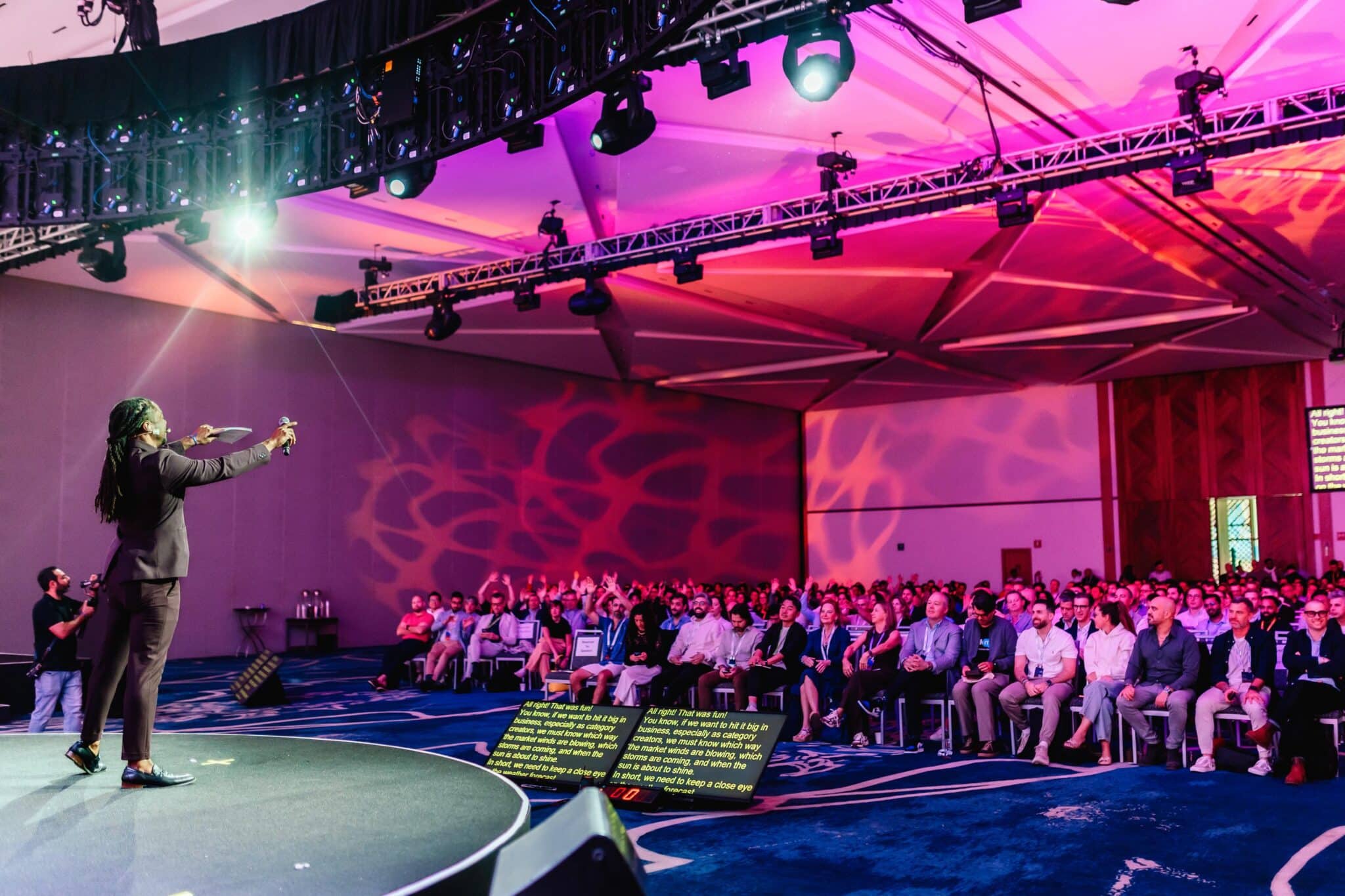
Most corporate events keep the keynote and the music programming as separate hires. A speaker delivers their content. A DJ runs the room around it. The two operators rarely speak before the event and the handoff between them is whatever the production team scripts at the run-of-show meeting. That model is fine for most events. For a growing category of corporate programs (product launches, sales kickoffs with high-energy theming, brand activations with content moments, anniversary celebrations with leadership messaging), planners are now asking whether the keynote and the music can be combined into one stage booking, delivered by a single operator trained in both disciplines.
The answer is yes, under specific conditions, with a specific kind of operator, for a specific kind of event. It is not the right model for every event. It is also not the same as asking a keynote speaker to also DJ on the side. Industry coverage of hybrid corporate stage formats frames the distinction directly: a strong hybrid stage requires booking a professional who combines thought leadership with entertainment value, a dynamic speaker who can command both spaces simultaneously through interactive elements, compelling visuals, and energy that translates across formats. This piece walks through how to scope a combined keynote-and-music booking, when it actually works, when it does not, and what to look for in an operator who can deliver both.
Want a stage operator who can deliver both your keynote moment and your music programming in one booking? Contact DJ Will Gill.
Key Takeaways
- Combined keynote-and-music bookings work for specific event types: product launches, sales kickoffs with high-energy theming, brand activations, anniversary programs, recognition galas.
- This is not the same as asking a keynote speaker to also DJ. The operator has to be trained in both disciplines, with documented experience in each.
- Structure the set keynote-first, music-around-it. The keynote is the protected moment. Music programming is the connective tissue before, between, and after.
- Two operators still win for multi-day conferences, formal awards galas, technical content events, and any program where the keynote and the music need distinct production teams.
- The combined booking saves coordination overhead and produces stronger thematic continuity. It does not save money on either fee individually. Scope and contract accordingly.
1. Why Planners Are Increasingly Asking About Combined Keynote-DJ Bookings
Three trends are converging to make the combined booking conversation more common.
Trend one: Corporate events are increasingly experiential. The flat speaker-then-DJ model that defined sales kickoffs in the 2010s is now competing with branded experiences where content, music, lighting, and audience engagement are designed as one continuous program. Industry coverage of hybrid event speaker selection captures this directly: today’s hybrid kickoff requires a dynamic speaker who can command both physical and virtual spaces simultaneously, ideally someone with proven hybrid delivery experience combining thought leadership with entertainment value. Brand-led events want a single operator who can carry that continuity.
Trend two: Multi-vendor coordination is expensive. Two operators means two contracts, two tech riders, two pre-event calls, two on-site dressing rooms, two travel and lodging bills. For a mid-scale program (200 to 500 attendees), the coordination overhead can run as high as the talent fees themselves. Planners are looking for ways to consolidate.
Trend three: A new category of operator now exists. Operators who have deliberately trained in both keynote delivery and live music programming, and who market themselves explicitly as hybrid bookings. They are still a small category, but the bureau and direct booking platforms now have a “find this kind of talent” lane that did not exist five years ago.
The combined booking conversation is no longer “can we just have the keynote also DJ on the side?” It is “is there an operator who does both at a professional level, and is this our event for them?” Those are two different questions.
2. What a Combined Keynote-Music Booking Actually Is (and Isn’t)
The combined keynote-music booking has a specific structure. It is not just “a DJ who also speaks” or “a speaker who also plays music.” Both of those are amateur framings that produce amateur results. The professional structure is closer to a stage producer with two delivery modes.
What it is:
- A single operator delivering one keynote moment (15 to 30 minutes typical) plus live music programming for the surrounding event hours. The keynote is the centerpiece. The music programming is the connective tissue.
- An intentional thematic thread that runs through both modes. The keynote thesis shows up in the music selections. The music selections reinforce the keynote message. The two are designed together, not stitched together.
- One contract, one production rider, one pre-event call cycle. Coordination overhead drops significantly.
- Documented professional experience in both disciplines. Not “I have spoken at events before and I also DJ at parties.” Actual booked keynote work and actual booked DJ work, separately and together.
What it isn’t:
- A keynote speaker who agrees to also DJ to save the planner money. This is the wrong dual-role booking that fails predictably. Coverage of corporate keynote selection makes the underlying point directly: a keynote speaker sets the tone and direction for an event, addressing the full audience and focusing on big-picture ideas like leadership, growth, innovation, resilience, or change. Asking that operator to also DJ is asking them to do a job they were not hired for and likely have not trained for.
- A DJ who delivers a 5-minute “motivational” segment instead of a real keynote. Real keynote content has structure, an argument, and a takeaway. A spoken-word interlude during a DJ set is not a keynote.
- A discount. The combined booking saves coordination cost and produces stronger thematic continuity. It does not (and should not) be priced as half a keynote plus half a DJ. It is a specialized booking that takes more prep, not less.
A working framing: the combined booking is two professional disciplines delivered by one trained operator, with thematic integration baked into the design. It is a higher production standard, not a budget compromise.
3. The Right Event Types for This Format
The combined keynote-music booking is the right model for specific event types where thematic continuity and audience energy management both matter at the same time:
- Product launches. The keynote frames the product. The music programming carries the brand energy through the reveal, the demo, and the post-launch room. Brand and content reinforce each other when the same operator delivers both.
- Sales kickoffs with high-energy theming. The keynote sets the year’s mission. The music programming carries the energy through the rest of the day. A single operator threading both prevents the common “great keynote, flat afternoon” recap.
- Brand activations. Audience comes and goes in waves. The combined operator delivers a short content moment to anchor each peak and uses music programming to drive the foot traffic energy in between.
- Anniversary celebrations. The keynote honors the milestone. The music programming honors the years. One operator weaving both creates a more cohesive cultural moment than two separate hires.
- Recognition galas with branded entertainment. The keynote frames the recognition. The music programming carries the entry, the awards, the after-party. Thematic continuity matters more here than for most events.
- Hybrid mainstage events. Industry coverage of hybrid mainstage formats notes that a hybrid mainstage with live remote feed has the speaker presenting into an in-person room from a studio with simultaneous virtual audience, requiring two-camera setup and on-site AV partnership. A combined operator can program the music transitions for both audiences without losing thread.
The common thread across all six: the event needs energy continuity AND content anchoring AND production integration. Two operators can deliver any one of these. A combined operator delivers all three from the same brief.
4. The Wrong Event Types (Where Two Operators Still Win)
The combined booking is not the right answer for every event. Honest list of where two separate operators still produce the better outcome:
- Multi-day conferences with multiple keynote slots. A combined operator can carry one keynote and the surrounding music programming. Three keynote slots across three days needs three different keynote voices for content diversity. Music programming becomes a separate hire.
- Formal awards galas (200+ awards or formal dinner format). The pacing of a true gala requires a dedicated emcee thread that the combined operator cannot also deliver. Two operators: dedicated gala emcee plus dedicated DJ for the after-party.
- Technical or industry-specific content events. The keynote needs deep subject-matter expertise (cybersecurity, biotech, regulatory). The combined operator’s value is integration, not specialization. Hire the subject expert as keynote, hire the music programmer separately.
- Events with a celebrity keynote. A celebrity keynote brings their own production team and tight scheduling. The music programming runs separately around them. No room for a combined booking.
- Events where the keynote speaker is internal (CEO, CMO, founder). The internal voice is the keynote. The music programming is an outside hire. The combined model does not apply.
- Events with completely separate music windows from the content windows. If the music portion is a club-style after-party in a different room with a different audience, the integration value disappears.
A working rule: if the keynote and the music are designed to interact thematically with shared audience and shared timeline, the combined booking adds value. If they are sequential, separate, and have no thematic overlap, two operators is the right answer.
5. How to Structure the Set: Keynote First, Music Around It
A combined keynote-music booking has a specific run-of-show shape. The keynote is the protected moment. The music programming is the connective tissue around it. A working structure for a 4-hour program with a 20-minute keynote:
- Pre-show (45 minutes). Operator delivers curated arrival music, calibrated to the brand and the audience demographic. Mid-energy, building. Volume calibrated for conversation. The operator is establishing the sonic identity before any words are spoken.
- Opening transition (3 to 5 minutes). Music lifts to high energy. Brief stage welcome. Hand-off into the keynote moment.
- The keynote (15 to 30 minutes). Music drops to silence or to a low instrumental bed if the brief calls for it. This is the protected content window. The operator is in keynote mode. The music programming pauses.
- Post-keynote energy lift (2 to 3 minutes). The keynote ends. Music returns at a high energy level that reinforces the thesis. The room is on its feet or visibly re-engaged.
- Mid-program music programming (60 to 90 minutes). Audience engagement segments, networking, content moments from other speakers, or activation moments. The operator is back in music mode. Energy curves are designed around the run-of-show.
- Brand or recognition moments (10 to 20 minutes). The operator may step back to the mic for short anchor moments, but does not deliver another keynote. The music programming carries these.
- Close (15 to 30 minutes). High-energy close. The keynote thesis is referenced one more time through music selections. The room remembers both the content and the energy as one continuous experience.
The protected keynote window is non-negotiable. The combined operator does NOT split attention between content delivery and music cues during their keynote slot. Music programming pauses or runs on a pre-staged bed. The keynote gets its full delivery moment with no operator multitasking.
Industry guidance on protecting keynote delivery moments is direct: prepare a run-of-show template that everyone follows and share audience demographics and conference agendas with the keynote speaker so they can tailor the talk, with full clarity on logistics, rates, and responsibilities locked in writing before the event. That applies to combined bookings the same as to traditional ones.
6. Operator Qualifications That Make the Hybrid Work
The combined booking only works with the right operator. The qualifying credentials are specific and verifiable:
- Documented keynote experience as a separate booking. Not “I have spoken at events.” Verifiable paid keynote work, with a topic, a thesis, and a delivery video. If the operator’s keynote work cannot be evaluated independently of their DJ work, the keynote half is unproven.
- Documented DJ programming experience at corporate events. Same standard. Verifiable paid corporate DJ work with named clients, with a body of work that demonstrates room-reading and brand-aligned programming.
- Demonstrated integration experience. At least one event (ideally several) where the same operator delivered both modes in the same program. Without integration experience, the operator is two separate hires in one body, not a hybrid.
- Brand-aligned content discipline. The keynote thesis is corporate-safe, audience-appropriate, and adaptable to client briefs. No personal soapbox content masquerading as a keynote.
- Production-side fluency. The operator can talk to the AV team about patch points, frequency coordination, and run-of-show timing. They are not improvising live with the production team.
- Bureau or direct booking representation. The operator is contractable through professional channels with insurance, COI, riders, and standard delivery terms. This is a corporate booking, not a side hustle.
An honest test: ask the operator to provide three references for keynote-only bookings and three references for DJ-only bookings, plus one reference for a combined booking. If they cannot produce all three categories, the integration claim is not proven. Combined bookings are a specialist category. They should be staffed accordingly.
Industry coverage of hybrid event booking platforms reinforces the verifiability standard: a full-service speakers bureau and talent agency working in live, hybrid, and virtual events should provide centralized, trusted, and impartial booking support, with established industry experience connecting event professionals to verified talent. Apply that standard to combined bookings specifically.
7. Budget and Booking Mechanics for a Combined Booking
The combined booking saves money on coordination overhead. It does not save money on talent fees and should not be priced as if it does. Planners who approach the combined booking expecting “two for one” are misreading the category. The right framing is “one specialized engagement priced as a higher-production booking.”
A working budget framework:
- The combined fee is closer to the higher of the two component fees, not the sum. The operator is delivering both jobs, with thematic integration as additional value. The fee reflects the specialized scope.
- Coordination savings are real. One contract, one rider, one COI, one pre-event call cycle, one travel and lodging. A planner running the math can save 30 to 50% of the total coordination cost of two separate bookings.
- Production integration premium is real. The combined operator’s brief includes thematic integration across both modes. That preparation work runs higher than two separate operators each preparing only their own slot.
- Contract language should specify both deliverables. Keynote delivery (with run time, topic, and deliverable scope) and music programming (with set length, energy curve, and brand brief) should be itemized in the contract.
- AV rider must cover both modes. Mic for keynote, mixer and decks for DJ programming, monitor wedges, IEMs as needed, patch to house. Production teams handling combined bookings for the first time often forget the keynote-side AV needs.
- Cancellation and rebooking terms should treat both deliverables as one unit. A combined booking is not two separable engagements once the contract is signed.
Industry coverage of hybrid event booking fee structures notes that hybrid event compensation structures offer several flexible payment arrangements including flat-rate fees, tiered pricing by engagement type and duration, and unified rates covering both in-person and virtual components or split fee structures. The same principle applies to combined keynote-music bookings: one engagement, one unified contract, structured for the actual scope.
8. Common Hybrid Booking Mistakes to Avoid
The recurring mistakes that turn a great combined booking into a flat one:
- Treating the booking as a discount play. The combined booking is a production upgrade, not a budget shortcut. Planners who go in looking for “two for one” will hire the wrong operator and get the wrong result.
- Asking a keynote speaker to also DJ on the side. This is not the same booking category. Coverage of corporate keynote selection is direct: keynote speakers set the tone and direction for an event with big-picture ideas around leadership, growth, innovation, resilience, and change. Asking them to also DJ is not adding music value; it is reducing keynote value.
- Asking a DJ to “say something inspiring” instead of delivering a real keynote. A 5-minute hype interlude is not a keynote. If the program needs a keynote, the operator needs documented keynote experience, not just stage presence.
- Failing to lock the keynote topic in writing. The combined booking has two deliverables. The keynote deliverable should be scoped as tightly as a stand-alone keynote: topic, thesis, run time, brand alignment, content rights.
- Letting the music programming overshadow the keynote moment. The keynote is the protected window. If the music programming bleeds into the keynote delivery, the content gets lost.
- Hiring an operator without independent references in both disciplines. If the operator can only reference combined work, the integration claim is unverified. Both component deliveries should be independently provable.
- Skipping the pre-event production call with AV. Combined bookings have a more complex tech rider than either component alone. Skipping the call is how a great combined operator ends up in a bad sound setup.
- Confusing the combined operator with the emcee. A combined keynote-music operator is not the run-of-show emcee. The emcee is a separate role. If the event needs both, plan for both.
A combined keynote-music booking can elevate a corporate event in ways two separate hires cannot. Brand and content reinforce each other when the same trained operator delivers both. Coordination overhead drops. Thematic continuity rises. The Monday morning recap reads as one continuous experience instead of three or four stitched-together moments. Get the operator qualifications right, scope the contract to cover both deliverables honestly, protect the keynote window, and treat the booking as a specialized production upgrade rather than a budget play. Done right, the combined booking is one of the strongest corporate event formats available. Done wrong, it is two amateur jobs in one body. The framework above is how to do it right.
Frequently Asked: Planning the Flow
How do you plan the music and MC flow for a corporate gala?
Map the run of show first: arrival music, welcome, dinner underscore, award walk-ups, the keynote moment, and the open floor. Assign each segment an energy level and one owner. When a single performer handles both the emcee duties and the music, every handoff disappears, which is the core advantage of the combined booking this guide covers.
What Corporate Clients Are Saying

About the Author
William “DJ Will Gill” Gilbert is a corporate event DJ, emcee, and audience-engagement specialist featured by The Wall Street Journal for his role in helping virtual events boost company morale. He is also a Forbes Next 1000 honoree. He delivers combined keynote-and-music bookings for product launches, sales kickoffs, brand activations, and recognition programs, with documented work for Fortune 500 clients across the United States and 2,520+ five-star Google reviews. He is also the founder of THEAIDJ, an AI-powered playlist generation tool built for DJs and event planners.
Book Will for your next combined keynote-and-music stage program at djwillgill.com/contact.