
Corporate Emcee vs Internal Host: When to Hire a Pro | DJ Will Gill
Should you book a corporate emcee or use an internal host? An internal host knows the company; a corporate emcee knows rooms. If the event matters, the emcee frees your leaders to shine in their segments instead of managing transitions. He holds 2,520+ five-star Google reviews and has performed for Google, Amazon, Salesforce, PayPal, Pepsi, and the United Nations.
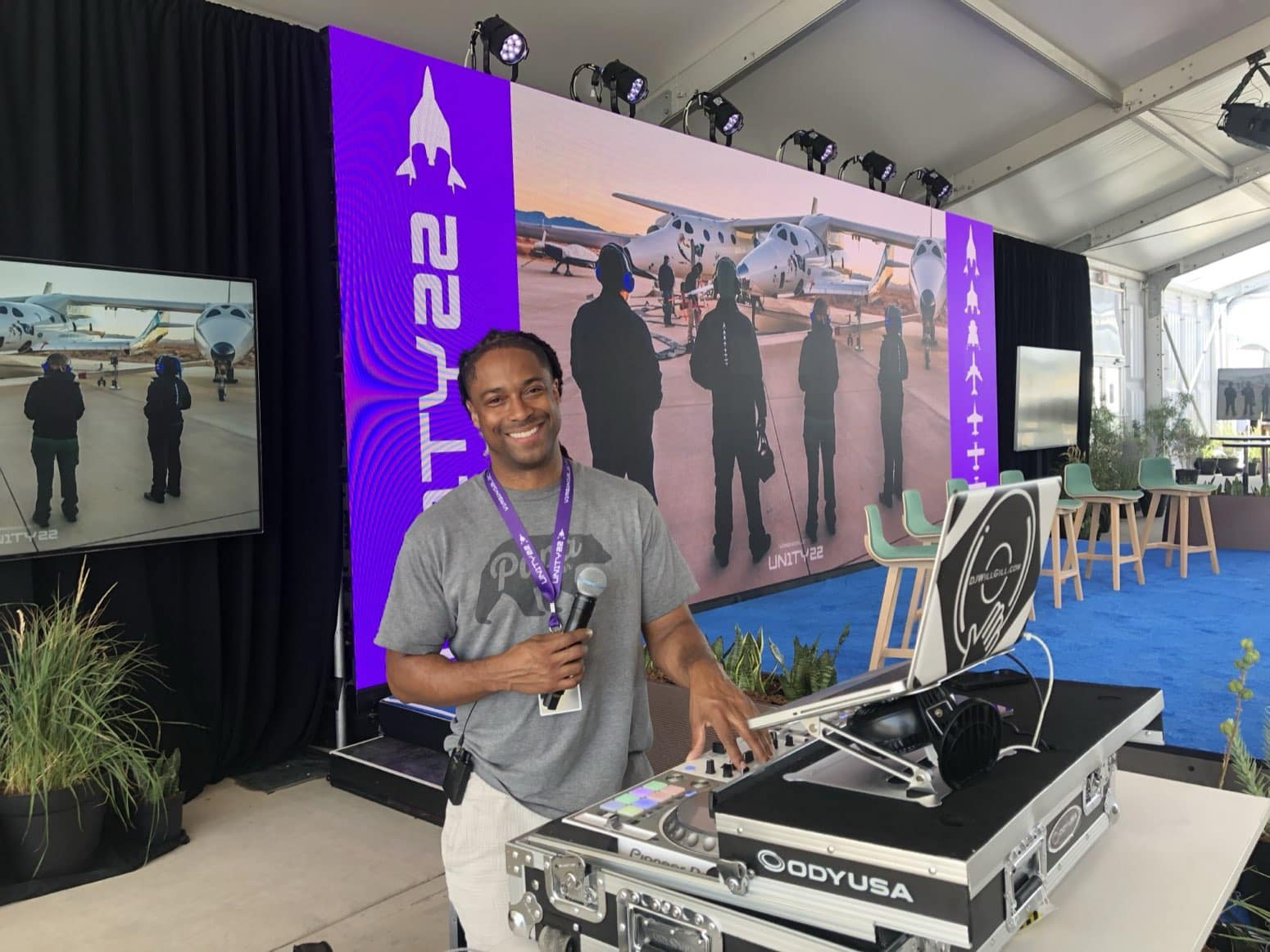
Most corporate events get hosted by someone who already works at the company. The VP of Marketing volunteers. The HR Director gets nominated. A confident sales leader who “did improv in college” takes the mic. Sometimes this works. Often it does not. The company saves a line item on the budget and pays for it in lost attention, missed cues, dragged transitions, and a CEO who privately wonders why the awards segment felt flat. The honest question is not “should we hire a pro?” Most companies never seriously ask that. The honest question is “for this specific event, what is the cost of using an internal host, and is that cost actually lower than hiring a pro?”
Industry coverage of internal hosting risks frames it directly. Reporting on professional emcee selection notes that inviting a CEO or CMO to host might seem natural, but assigning this role to a leader carries real risks, including divided attention as executives juggle multiple responsibilities and a different skill set since hosting requires improv, pacing, and audience intuition that professional emcees spend years refining. This piece walks through when internal hosting actually works, when it fails, and the framework for deciding before the company makes the cheaper decision and discovers it was the more expensive one.
Want a corporate emcee who runs your event better than the internal volunteer ever could? Contact DJ Will Gill.
Key Takeaways
- Internal hosts work for small all-hands, team meetings, and casual celebrations. They fail at conferences, awards galas, mixed-audience events, and anything with external attendees.
- The skills gap is not about confidence. It is about pacing, room reading, recovery, and real-time program authority.
- A pro emcee preps 10 to 15 hours behind the scenes for a 4-hour event. An internal host typically preps for 1 to 2 hours.
- For mid-scale events (100 to 300 attendees, mixed internal and external), a hybrid model usually wins: internal voice opens and closes, pro emcee runs the main stage.
- The cost of using an internal host is usually invisible until it shows up in flat awards, attendee survey scores, and the CEO asking what happened on Monday.
1. The Default Pattern: Why Companies Reach for an Internal Host First
The default reasoning makes sense on paper. The internal person knows the company. They know the people being recognized. They can drop the right inside references. They cost zero on the talent line of the budget. They probably already have a speaking role somewhere in the agenda, so adding host duty is just “a little more stage time.”
The flaw in that reasoning is treating hosting as a content delivery problem. It is not. Hosting is a live production craft that runs on pacing, audience reading, recovery, and real-time program authority. None of those skills come from knowing the company. They come from doing the job hundreds of times across rooms that did not care who the host was when they walked in.
Industry coverage of professional emcee preparation makes the depth of the skill set concrete. Coverage of corporate emcee vs host comparisons notes that a senior emcee preps for ten to fifteen hours behind the scenes for a four-hour event, including cue sheet work, transition stings, pre-staged backup plays, and brand register calibration, while a senior host preps for one to two hours of script-only work. The internal volunteer who agreed to host last week is not running the 15-hour prep cycle. They have a day job.
The default pattern is not wrong because internal people are bad at speaking. It is wrong because hosting is a different job than speaking, and most internal volunteers are doing the wrong job well.
2. When an Internal Host Actually Works (Honest Edge Cases)
Internal hosting is the right call more often than vendors like to admit. The honest list of events where an internal host can deliver as well as or better than a pro:
- Small all-hands meetings. 50 to 200 internal employees, single hour, agenda is one or two updates plus Q&A. A confident leader who already runs the room every Monday morning is the right host.
- Internal team celebrations. Departmental wins, milestone parties, anniversary toasts. Familiarity beats polish.
- Single-topic briefings. Quarterly business reviews, town halls, technical updates. The internal host is the subject expert. A pro emcee would add nothing.
- Cause-based fundraisers within the company. Employees raising money for a charity drive. An internal voice carries more credibility than an outside host.
- Small board dinners or executive retreats. Sub-30 attendee events where the host’s job is mostly to keep the conversation flowing and toast the right person at the right moment.
The honest pattern across all five: small, internal-only, low production complexity, single-track agenda, no awards segment longer than 5 minutes, no time pressure beyond the meeting block. Industry guidance on host vs emcee selection makes the same point: opt for a dedicated host for simpler or formal functions where hospitality is the priority, especially when the gathering is a single-focus occasion, the content is technical and requires strict adherence to pre-approved language, and the agenda is flexible enough that minimal active coordination or improvisation is needed.
If the event you are planning matches all five of those characteristics, the internal host is the right answer. If it matches three or fewer, the cost calculation is about to change.
3. When an Internal Host Fails (The Cost Most Companies Underestimate)
Internal hosting fails predictably at certain event types. The failure rarely looks like a disaster. It looks like a flat room, dragged transitions, awkward time fillers, and a leadership team that says “the speakers were great” but does not say much about the rest of the event.
The specific event types where internal hosting tends to fail:
- Multi-session conferences (200+ attendees). Industry coverage of corporate emcee guidance notes that corporate emcees are essential for large conferences, multi-day programs, and award ceremonies, where polished hosts with strong speaking, pacing, and audience-engagement skills are required for professionalism and pacing. The internal host can handle one session. They flatten across six.
- Awards galas with more than 5 categories. The pacing problem compounds. Each long acceptance speech adds time the host does not know how to recover. By award 8, the room is checked out.
- Events with external attendees. Clients, partners, prospects, media. The internal host’s inside-baseball references land flat. Worse, brand perception is now in play.
- Product launches or brand activations. The energy lift the brand needs is not the host’s day-job tone. Internal hosts default to professional, not promotional.
- Hybrid events with a stream audience. The internal host is reading the room. The stream needs a host who knows to look at the camera, address remote attendees by name, and bridge dead air between segments. Different skill set entirely.
- Events with high-stakes recovery moments. Tech failures, late speakers, run-over toasts. Industry coverage of professional emcee recovery skill is direct: when the mic stops working, a speaker runs late, or the audience starts to drift, the emcee needs to stay calm and collected, manage time, recover from delays, and keep momentum going between segments. Internal hosts rarely train for that.
The common thread: any event where the host’s job is bigger than introducing the next speaker. If the event has transitions, awards, energy management, mixed audiences, or real-time recovery requirements, the internal host is being asked to do a job they were not hired to do.
4. The Skills Gap: What a Pro Emcee Trained For That Most Executives Have Not
The skills gap between a pro emcee and an internal host is not about confidence or speaking ability. Plenty of executives are excellent public speakers. The gap is in the specific operational craft of running a live event.
Specific skills the pro emcee has invested years building:
- Audience reading in real time. Industry coverage of professional emcee skills frames the impact directly: attendees at emcee-led events retain around 60% more information than they would in passive listening scenarios, largely because the emcee reads audience energy and recalibrates delivery in real time. This is not a skill executives use in their day job.
- Pacing across multi-hour runs of show. Knowing when to stretch a transition by 30 seconds and when to cut one by 10. Internal hosts default to “stick to the script” because they cannot risk improvising live.
- Recovery from the unexpected. Tech glitches, speakers running long, audience disruptions. Pro emcees train for these specifically. Internal hosts experience them for the first time live.
- Real-time program authority. Coverage of corporate emcee work documents this gap clearly: the emcee can adjust the program live (extend a segment, compress a transition, move an award to a later block, hold the room for a speaker arriving late), while a host needs producer guidance for any deviation from script, and in high-pressure corporate programs where leadership is watching, the difference in real-time authority becomes the difference in whether the program holds together.
- Brand-safe humor calibrated to corporate audiences. A pro emcee knows the difference between a joke that lands at a tech sales kickoff and one that lands at a healthcare summit. Internal hosts usually use the humor they would use at lunch with their team.
- Speaker handoffs that lift the speaker. Industry coverage of professional emcee work notes that professional emcees act as supportive partners, setting speakers up for success before they begin by introducing them in ways that highlight their strengths and build anticipation. Internal hosts default to a generic intro because they have not rehearsed the lift.
A confident executive can absolutely deliver a great keynote. The same executive trying to emcee a full conference is being asked to do a job that requires a completely different operating system.
5. Risk Categories: Where Internal Hosting Costs the Most
The cost of internal hosting failure is usually invisible on the budget line. It shows up in three real but unmeasured categories:
- Brand perception with external attendees. A corporate event with clients, partners, or media in the room is also a brand event. Industry guidance on this is blunt: for high-stakes events with external attendees, awards galas, product launches, or any event where brand perception matters, a professional emcee is not a luxury, it is risk management, because the cost of a disengaged audience, botched transitions, or a host who cannot recover from the unexpected far exceeds the investment in a professional.
- Attendee satisfaction scores. Internal events feed into post-event surveys that leadership reads. A “host felt unprepared” comment on the survey is a real cost in the next planning cycle.
- Executive bandwidth. Asking the VP of Marketing to host means the VP of Marketing is not networking with clients during cocktail hour, not connecting with the keynote speaker before their session, and not focused on the strategic role they were actually hired for. The hidden cost is the executive’s time, which is the most expensive line in the budget.
Industry coverage of corporate emcee value reinforces this directly. Coverage of professional emcee impact notes that having a colleague or senior staff member act as host might sound budget-friendly, but it can often backfire due to nerves, lack of stage presence, or simply being too close to the material, while a professional emcee brings polish, charm, and audience intuition without ever upstaging the actual content.
None of these costs show up on the budget review. All of them show up in next year’s planning conversation, usually framed as “the event felt different this year.”
6. The Hybrid Model: Internal Voice + Pro Emcee on Stage Together
The strongest format for mid-scale corporate events is not “internal host” or “pro emcee.” It is both, working together with clear division of labor. Industry coverage of corporate event hosting recommends this directly: for mid-scale corporate events with 100 to 300 attendees and mixed internal and external audiences, a hybrid approach works best, with an internal leader opening and closing with authentic organizational messaging while a professional emcee manages the main stage throughout the day.
A working division of labor:
- Internal host opens the event. 3 to 5 minutes. Sets the strategic frame, welcomes the room, names the year’s theme. The internal voice carries authority a pro emcee cannot match.
- Internal host hands off to the pro emcee. “I am going to hand the rest of the program over to someone who is much better at this than I am.” The transfer is genuine and the audience appreciates it.
- Pro emcee runs the main stage. Speaker introductions, transitions, awards, audience engagement segments, recovery moments. This is the pro’s job from minute 5 to the final hour.
- Internal host returns for key moments. Major awards, leadership recognition, the closing thank-you. The internal voice anchors the moments that need company authority.
- Pro emcee handles all transitions between internal moments. The hybrid only works if the pro is on stage often enough to maintain the pacing thread.
The hybrid model lets the internal voice carry the strategic weight while the pro carries the production weight. Both are on brand. Neither is doing the other one’s job. For most mid-scale corporate events, this is the model that produces the best Monday morning recap email.
7. The Budget Math: Pro Emcee Cost vs Internal Failure Cost
The budget conversation about hiring a pro emcee usually treats the question as “is this expense worth it?” The better framing is “what is the cost of NOT hiring one, and is that cost actually lower?”
A working framework for the math:
- Internal host budget cost. Zero on the talent line. The executive’s time is already paid for.
- Internal host hidden cost. Executive bandwidth diverted from strategic role during the event. Brand perception risk with external attendees. Lower attendee satisfaction scores. Lower event ROI per attendee. A leadership team that quietly downgrades the perceived quality of the year’s biggest event.
- Pro emcee budget cost. A clear line item, scoped and contracted in advance, with deliverables that can be measured in attendee survey scores and recap content.
- Pro emcee hidden value. Executive freed up to network and own strategic moments. Brand perception protected with external attendees. Attendee satisfaction scores typically lift measurably. Recap content (clips, photos, quotes) becomes a year-long marketing asset.
For most corporate events with 200 or more attendees, mixed audiences, or any awards segment, the hidden cost of the internal host is meaningfully larger than the budget cost of the pro. The math works the other way for small all-hands meetings, departmental celebrations, and informal internal events. Match the budget logic to the event scale.
Industry coverage of corporate emcee value frames the framing rule: corporate events often rely on an emcee to maintain professionalism while injecting personality, with experienced emcees managing time effectively to prevent delays that could disrupt the schedule and handle different audiences using humor appropriately while controlling the room’s energy. The right question is not “can we afford a pro?” The right question is “for this specific event, can we afford NOT to?”
8. A Decision Framework: Should This Event Use a Pro?
A seven-question decision framework that resolves the choice in five minutes:
- 1. How many attendees? Under 100 internal-only: internal works. 100 to 300 mixed: hybrid. 300+: pro emcee.
- 2. Are there external attendees? Clients, partners, prospects, media in the room. If yes, brand perception is in play. Pro emcee leans heavier.
- 3. How many sessions or segments? 1 to 2: internal can handle. 3 to 5: hybrid. 5+: pro emcee.
- 4. Is there an awards segment longer than 5 minutes? If yes, the pacing and recovery skills of a pro emcee are usually worth the cost.
- 5. Is the event hybrid or streamed? Stream audiences need different hosting skills. Pro emcee leans heavier whenever a screen audience is involved.
- 6. Is the executive being asked to host also presenting their own content? If yes, asking them to do both creates split focus. Bring in a pro to free up the executive’s bandwidth.
- 7. Is this event on the company’s annual repeat calendar? If yes, the perceived quality lift from a pro compounds year over year. Budget logic shifts toward investment, not expense.
A working rule of thumb: if four or more of the seven questions push toward “pro emcee,” hire one. If three or fewer, the internal host is probably the right call. The hybrid is the answer in most genuine middle cases, and is usually the most resilient option whenever the budget allows it.
Choosing between a corporate emcee and an internal host is not a choice between “professional” and “amateur.” It is a choice between two different operational models, each correct in different conditions. Internal hosts work for small, internal, single-track events where familiarity matters more than craft. Pro emcees work for mid- to large-scale events where pacing, recovery, mixed audiences, and brand perception all matter at the same time. Hybrid models work for the wide middle where companies want both. Pick the model that matches the event, not the model that matches the budget assumption. The Monday morning recap email will tell you whether the choice was right. The framework above gets you there before the choice is made.
What Corporate Clients Are Saying

About the Author
William “DJ Will Gill” Gilbert is a corporate event DJ, emcee, and audience-engagement expert recognized by the Wall Street Journal for helping strengthen company morale through virtual events. He is also a Forbes Next 1000 honoree. He has brought his DJ, emcee, and audience-engagement expertise to hotel ballrooms, convention centers, hybrid production stages, and brand activation spaces for Fortune 500 companies across the country. His work has earned more than 2,520 five-star Google reviews from corporate audiences nationwide. He also founded THEAIDJ, an AI-powered playlist creation tool for DJs and event planners.
Book Will to emcee your next corporate event or anchor your hybrid emcee program at djwillgill.com/contact.
Related: Decided a pro is the right call? Here is the complete playbook on how to hire a corporate emcee.