
How To MC a Corporate Awards Ceremony Without Losing the Room | DJ Will Gill
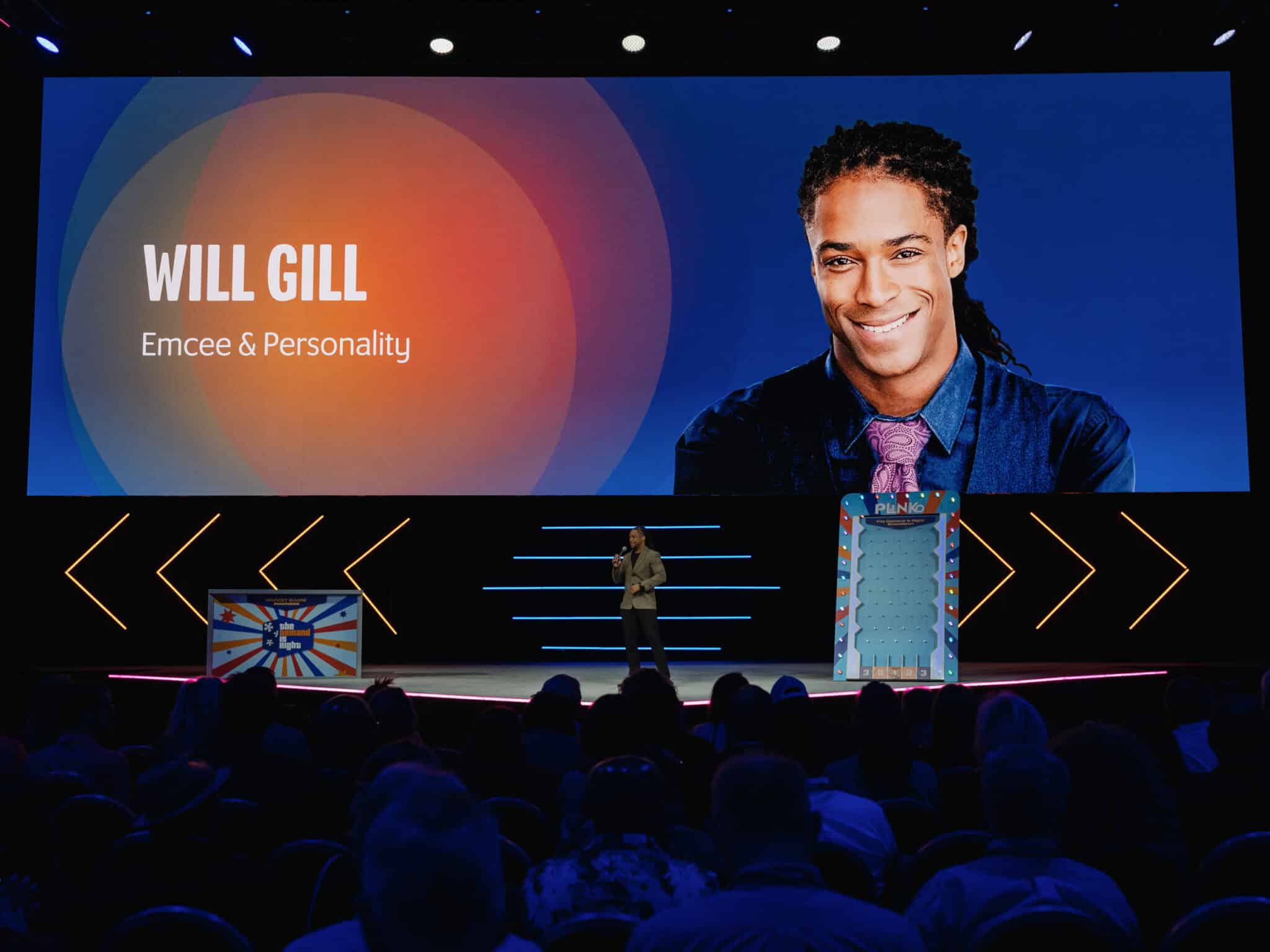
Most corporate awards ceremonies are not lost by the awards. They are lost by the emcee. The citations are fine. The trophies are fine. The slides are fine. But the room is gone by award number five because the person holding the microphone treats the ceremony like a list to read, not a show to host. Energy never resets between awards. Walk-ons feel flat. Long speeches drag because the emcee does not know how to wrap them. By the time the marquee award is announced, half the audience is on their phones and the other half is comparing it to last year, which felt the same.
The role is more demanding than it looks. Industry reporting on emcee impact at corporate events notes that attendees at emcee-led events retain around 60% more information than they would in passive listening scenarios. That is the upside when the emcee can hold the room. The downside, when the emcee cannot, is that the company’s most public recognition moment of the year flatlines in front of everyone it was meant to honor. This piece walks through the live performance craft of emceeing a corporate awards ceremony: what to open with, how to handle walk-ons, how to read winners, how to bridge between awards, and how to recover when the room dips.
Want a corporate emcee who runs the ceremony and the music as one operator, not two? Contact DJ Will Gill.
Key Takeaways
- The emcee is the spine of the awards ceremony. Pacing, energy, and recovery all run through one mic.
- Open the ceremony with energy, not a thank-you. The first 90 seconds set the floor for every award after.
- Walk-ons are choreographed, not improvised. Music, pause, name, hand-off. Same beat every time.
- Read the winner before you hand them the mic. Nervous winners need a different setup than confident ones.
- Cut long speeches gracefully. The hardest skill is wrapping a 4-minute speech without making the winner feel cut off.
1. Why the Emcee Is the Spine of the Awards Ceremony
The emcee is the only continuous voice on stage. Speakers come and go. Presenters change every award. The CEO opens and closes. The emcee is there from the first name announcement to the last winner walking off, which means the emcee owns the pacing, the energy, the transitions, and the recovery moments when the room dips.
Industry coverage of corporate emcee skills is direct on what this actually requires. Reporting on corporate emcees lists the critical skills as audience reading, program management, content weaving across segments, crowd warmup, name pronunciation accuracy, and cultural intelligence with diverse professional audiences. None of these are public speaking skills in the abstract. They are live performance skills that can only be measured in real rooms.
Industry guidance on ceremony length also matters here. Event production reporting recommends a ceremony length of two to three hours as the sweet spot for maintaining attention without overwhelming guests. The job of the emcee inside that window is to make the time feel like 90 minutes.
2. Open the Ceremony, Don’t Just Announce It
The opening 90 seconds is where most emcees lose the room before the first award is even presented. The default opener sounds like this: “Good evening, everyone. Thank you for being here tonight. We have a fantastic program lined up for you, including some incredible awards and presentations from our amazing leadership team…” Nobody is listening by the second sentence.
An opener that earns the room:
- Walk on with music behind you. Not silence. The room should feel an energy shift the moment you hit the mic.
- One specific line that names the night. “There are 47 winners in this room tonight, and most of them have no idea they’re about to be announced.” The room leans in.
- Skip the bio. If you need a bio, the company will tell the room before you walk on. Save your stage time for the room.
- Promise the payoff inside 60 seconds. “The first marquee award lands in nine minutes. Stay sharp.” The room now has a reason to.
- End the open on a clear handoff. Either to the CEO opening speech, to a video reel, or to the first award. No dead air.
The opening is the contract the emcee signs with the room. If the contract feels generic, the room defaults to phones. If it feels specific and confident, the room gives you the next 20 minutes without you having to earn it again.
3. Master the Walk-On (Music, Pause, Handoff)
Every award has a walk-on, and every walk-on is the same beat. Music up. Name announced. Winner stands. Music continues for the walk. Winner reaches the stage. Music dips. Handshake or presentation. Winner takes the mic. The emcee steps back.
Industry coverage of awards production notes the precision required: professional ensembles use 10 to 15 second stings to punctuate a winner’s walk to the stage, keeping the momentum high and eliminating awkward silence. The emcee orchestrates that beat. If the emcee owns the music console too, the beat is even tighter. If the emcee and the DJ are separate operators, they have to rehearse the cue.
Specific rules that make the walk-on land:
- Read the name twice. Once when you announce the winner. Once after they reach the stage, as a moment of recognition. Two beats, two reads.
- Pause for the room. Applause has a natural curve. Let it hit the peak before you say the next word. Talking over applause is one of the most common emcee mistakes.
- Stand back from the lectern when the winner arrives. The lectern is theirs now. Physically step to the side.
- Verify pronunciation 72 hours out. Industry coverage of corporate emcee performance notes that name pronunciation accuracy is one of the critical skills of a great corporate emcee. Verify with the winner’s manager directly, not just HR’s database.
- Same beat every time. If the walk-on for the first winner is choreographed and the walk-on for the eighth winner is improvised, the room will notice and the eighth winner will know.
A polished walk-on takes 22 seconds. An improvised one takes 35 seconds and feels longer. Multiply that across 12 awards and the difference is 3 minutes of dead air the room never had to sit through.
4. Read the Winner’s Body Language Before You Hand Off the Mic
The 5-second window between when the winner reaches the stage and when they take the mic is the most undertrained moment in corporate emceeing. Most emcees use that window to fill space (“Congratulations again, give it up one more time…”). The skilled emcee uses it to read the winner.
Three types of winners and how to set them up:
- The confident winner. Hand them the mic, step back, let them go. They have something to say. Your job is to get out of the way.
- The nervous winner. Stand next to them for the first beat. Smile, nod once, give them a verbal anchor like “Take your time, the room is with you.” Step back only when their shoulders drop and they exhale.
- The emotional winner. Do not crowd the moment. Step back further than usual. Give the room permission to hold the silence with you.
The read happens in the time it takes the winner to walk from the audience to the stage. By the time they reach the lectern, the emcee should already know which version of the handoff to run. This is the part of the job that cannot be scripted, which is exactly why it separates a real corporate emcee from a public speaker with a microphone.
5. Bridge Between Awards Like a Talk Show, Not a Meeting
The 30 to 60 seconds between one award ending and the next one beginning is the connective tissue of the ceremony. Treat it like dead air and the room cools down. Treat it like the bridge of a talk show and the room stays in.
Bridge techniques that work:
- Reference the last winner with one specific line. “If you ever want to know how to keep a team together through a launch week, ask Priya about Tokyo at 3am.” Closes the moment, anchors the room.
- Tease the next category before you name it. “This next category is the one half the room has been waiting for.” Builds anticipation.
- One short observation about the room. “The marketing team is louder than the sales team tonight. That is a first.” Light, in the room, never punching down.
- A music sting to reset the energy. Industry case-study reporting flags that strategic energy resets between awards prevent audience disengagement during lengthy ceremonies, with one corporate awards production reporting strong outcomes from pacing awards with energy resets and curated music for each category. A 5-second musical bridge between awards is one of the highest-leverage tools the emcee has.
- Direct address to a section of the room. “Engineering team, your category is in three awards. Start practicing your humble face.” The room laughs. Engineering pays attention.
The bridge is not filler. It is the part of the show where the emcee earns the next award’s audience. Skip the bridge and every award after the second one plays to a slightly less attentive room.
6. Cut Long Speeches Gracefully (The Hardest Skill)
A 60-second acceptance cap is the standard. Plenty of winners blow past it. The hardest skill in corporate emceeing is wrapping a speech at 90 seconds without making the winner feel cut off, embarrassed, or singled out.
The progression that works, from softest to firmest:
- At 60 seconds: do nothing. Most winners feel their own time and wrap on their own.
- At 75 seconds: walk back toward the lectern with a smile. Physical presence signals “we are close” without a word.
- At 85 seconds: a music sting starts low under the speech. The room feels the wrap coming. The winner feels it without being told.
- At 90 seconds: step in with a clean line. “Let me make sure we get a round for that.” Then applaud, look at the room, and reclaim the floor on the wave.
- If the winner keeps going past 90 seconds: name the moment, not the cut. “Beautiful, give it up one more time,” with a hand gently guiding them toward exit. The room reads it as celebration, not interruption.
Industry coverage of corporate emcee work flags this skill directly. Coverage of professional emcee work notes that a dedicated emcee whose primary function is pacing, with a visible countdown timer, is the difference between an awards segment that respects everyone’s time and one that runs long. The countdown timer is the tool. Knowing when and how to use it is the skill.
A note: never wrap the first winner of the night. Even if they run long. The first winner’s wrap sets the precedent. If you cut the first one, the next five winners will rush, and the room will feel the change. Let the first one breathe.
7. Recover the Room When Energy Dips
Every awards ceremony has at least one dip. The presenter who runs long. The technical glitch. The award two slots in a row that both go to the same department. The slow loss of attention around the 35-minute mark. The job of the emcee is not to prevent the dip. The job is to catch it within 90 seconds and reset.
Industry coverage of professional emcees points to this as one of the core craft skills. Reporting on event hosting notes that when a keynote speaker runs 20 minutes late and creates dead air, a professional emcee fills the gap by engaging the audience with relevant stories, impromptu Q&A, or surprise entertainment, keeping the atmosphere vibrant. The same applies to mid-ceremony energy dips.
Recovery moves that work:
- Direct address. “I see a few of you checking phones. Fair. We are about to give you a reason to put them down.” Honest, light, brings the room back.
- Audience participation moment. “Hands up if you have been at the company more than five years.” Costs 20 seconds, resets attention.
- A music lift. A 15-second sting between awards, slightly louder than the regular bridge stings. Wakes the room without breaking the format.
- Skip ahead in the run-of-show. Move the next marquee award up by one slot. The producer in the back will adjust.
- Story bridge. A 30-second story about the company or the night that brings the room back into the moment. Specific, in-room, and finishes on a smile.
A good recovery is invisible. The room feels their attention come back without being able to name why. That is the craft.
8. Common Emcee Mistakes That Lose the Room
Even experienced emcees lose corporate rooms for the same recurring reasons:
- Talking too long between awards. The bridge is 30 to 60 seconds. Past 90 seconds, the bridge becomes the show, and the audience tunes the emcee out for the next award too.
- Going off-script in ways that confuse the room. Improv is good. Improv that reroutes the run-of-show is not. The producer in the back needs to know where the show is.
- Mispronouncing names. One mispronunciation is forgivable. Two breaks the trust between the emcee and the room. Verify every name 72 hours out with the winner’s manager.
- Losing time and throwing the program into chaos. If the ceremony was budgeted for 90 minutes and you are 18 minutes over at the 75-minute mark, the audience can do the math.
- Inappropriate jokes that misread the room. A corporate audience is not a comedy club audience. Test every joke against the most senior person in the room.
- Failing to warm up the room before the first award. The first award lands at whatever energy level the opening built. Build the opener properly.
- An awkward energy gap between the DJ and the emcee. If the music operator and the emcee are different vendors who have not rehearsed together, every transition is at risk. A combined DJ-and-emcee role eliminates the gap.
Emceeing a corporate awards ceremony is not public speaking with extra steps. It is a live performance craft that runs on pacing, walk-on choreography, winner reads, bridge work, graceful wraps, and silent recovery. Get those right and the room stays with you from the first announcement to the last. Get them wrong and the company’s biggest recognition moment of the year plays to a half-empty room. The trophies are the same either way. The way they land is entirely the emcee’s job.
What Corporate Clients Are Saying

About the Author
William “DJ Will Gill” Gilbert is a corporate event DJ, emcee, and audience engagement specialist named the Wall Street Journal’s #1 Corporate DJ and a Forbes Next 1000 honoree. He has emceed corporate awards ceremonies, President’s Club programs, and recognition galas for Fortune 500 clients from Sony Hall in New York to global ballroom productions, with 2,520+ five-star Google reviews from corporate audiences across the United States. He also founded TheAIDJ.com, a patent-pending AI-powered playlist platform created for music curators.